1527 First Edition
HOMERI POETAE CLARISS. ILIAS
By Homer / Lauren Valla
KEY DETAILS
Condition: Very Good
Format: Vellum, 8vo; Approx. 156 x 110 mm
Published By: Coloniae [Cologne], Eucharius Cervicornus excudebat, Cologne, 1527
Language: Latin
Illustrated By: Anonymous woodcutters
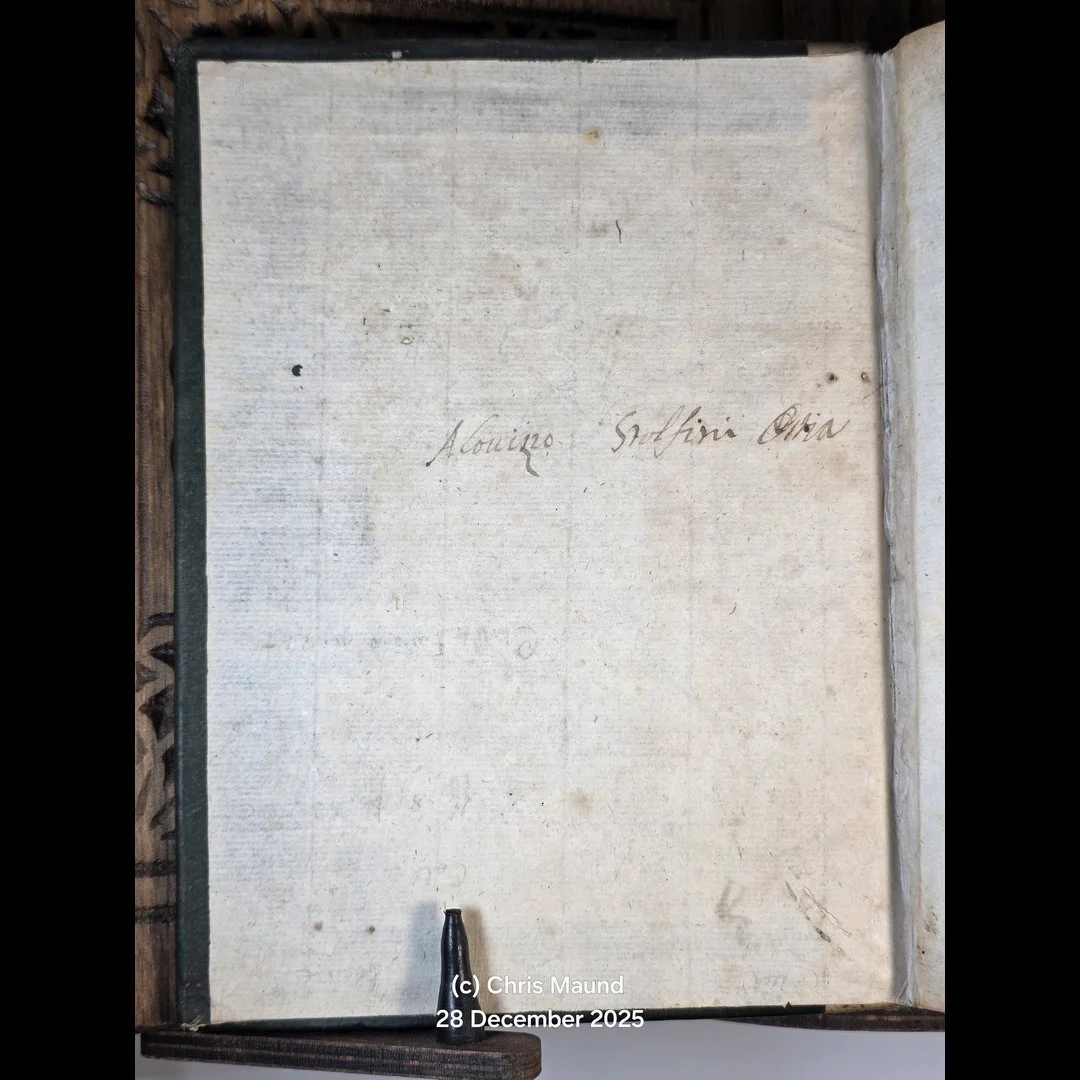
Provenance: No identifiable ownership inscription has been found.
Collation: a–z⁸ A–H⁸ aa–bb⁸.
Dust Jacket: None, as issued
SKU: BTETM0002649
Shipping Info: Approximate Package Dimensions H: 12.5, L: 30, W: 25 (Units: cm), W: 2Kg
Tracked Shipping, Insurance Coverage as per Customer Request
DESCRIPTION
Homeri Poetae Clariss. Ilias
HOMERI POETAE CLARISS. ILIAS. INTERPRETE LAUREN. VALLA.
By Homer
Translated into Latin by Lorenzo Valla & Francesco Griffolini
An attractive and highly individual copy of the 1527 Cologne edition of Homer’s Iliad in the celebrated Renaissance Latin prose translation associated with Lorenzo Valla, printed by Eucharius Cervicornus.
Valla undertook his translation of the Iliad during the 1440s, producing Books I–XVI in an elegant Latin prose intended to make Homer accessible to the learned Latin-reading world of Renaissance Europe. The remaining eight books were completed by his pupil Francesco Griffolini, although early printed editions continued to attribute the translation as a whole to Valla. The completed Latin Iliad first appeared in print at Brescia in 1474; the present edition belongs to the important early-sixteenth-century Cologne transmission of the text. University of Chicago Library
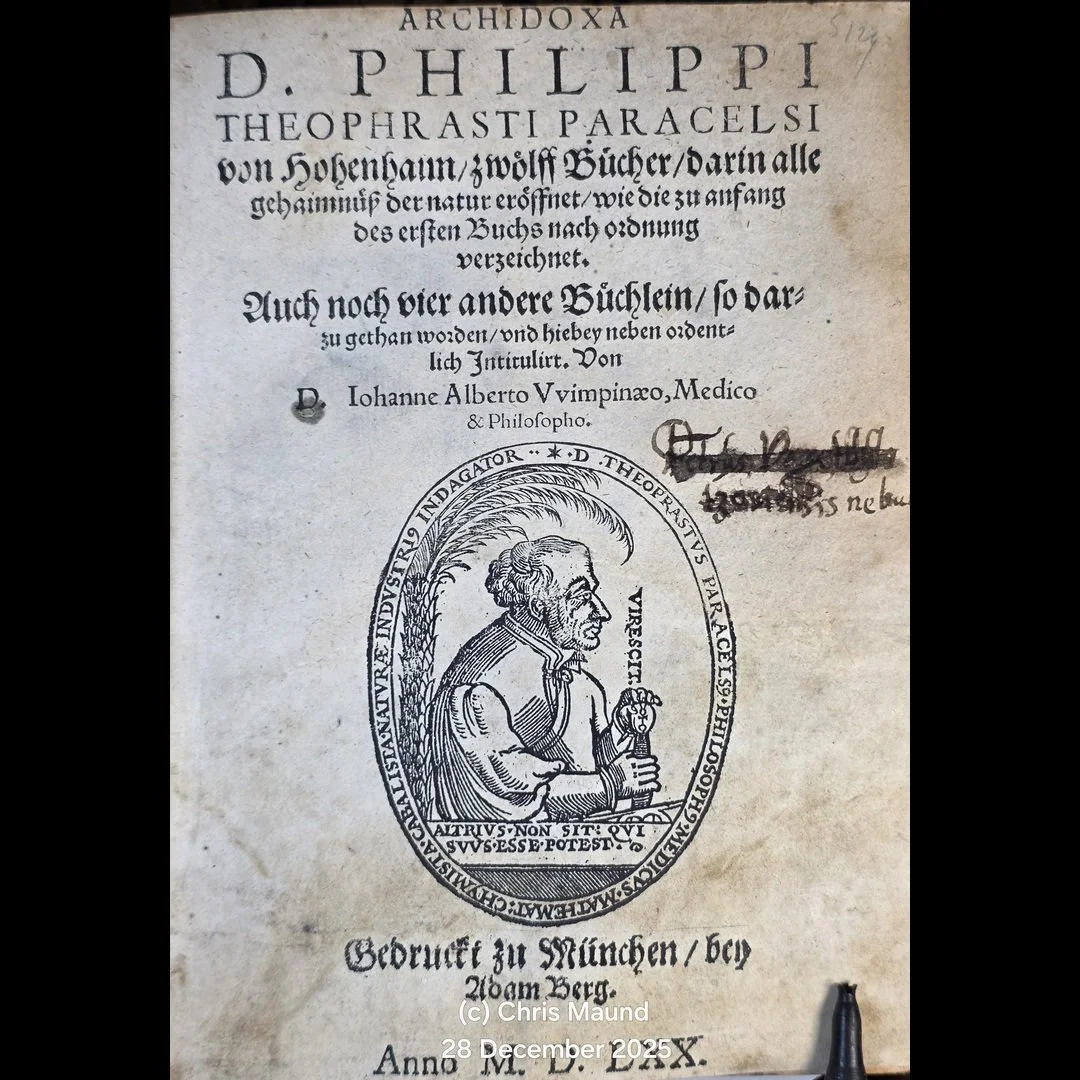
The title is enclosed within a handsome Renaissance woodcut architectural border, with columns flanking the title, the Adoration of the Magi in the lower compartment and heraldic imagery associated with Cologne above. Decorative woodcut initials occur throughout. At the conclusion of the Iliad is a striking full-page woodcut of Saint George slaying the dragon, occupying H8v. The same title border, pagination and terminal St George woodcut are recorded in other copies of this 1527 Cervicornus edition. Antiqbook
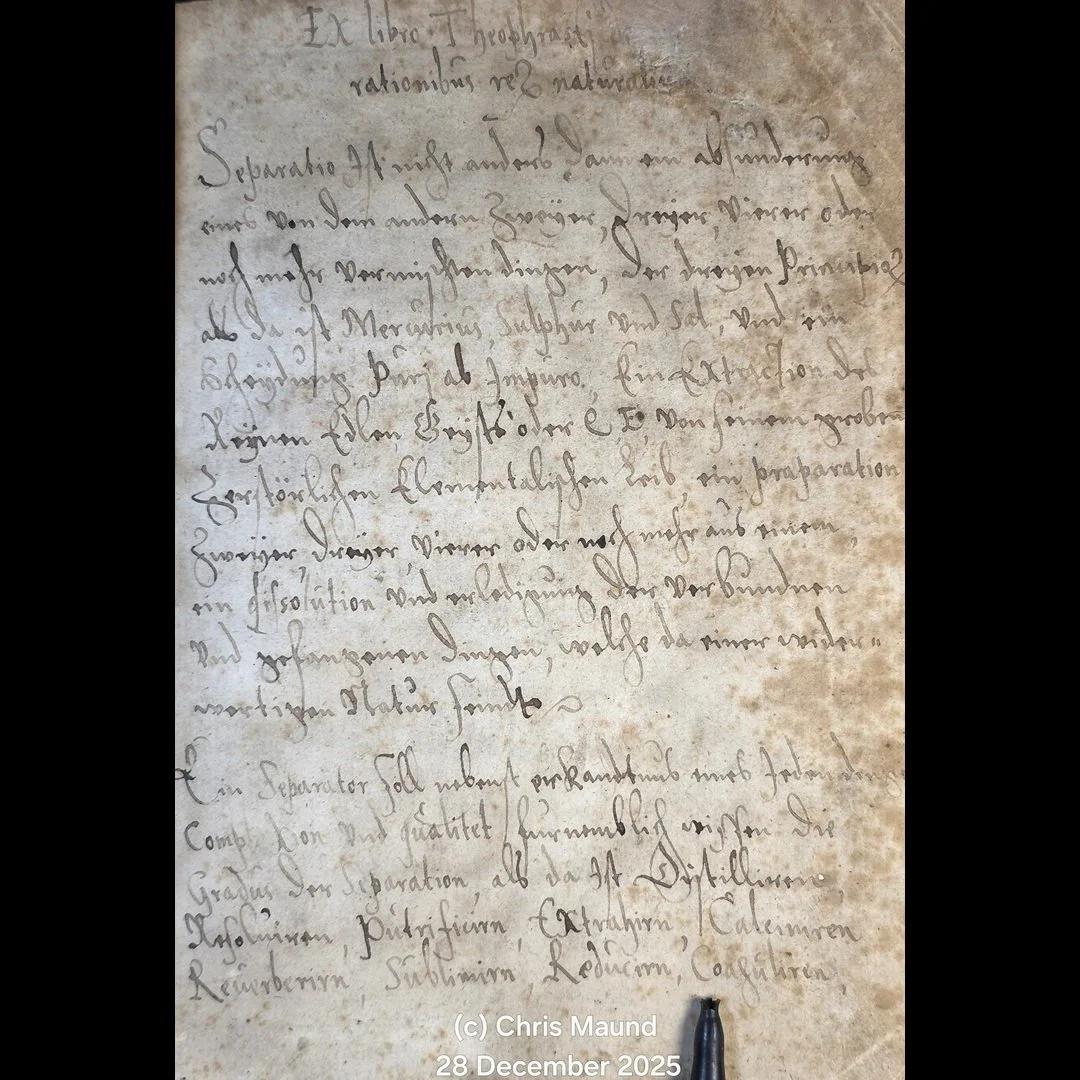
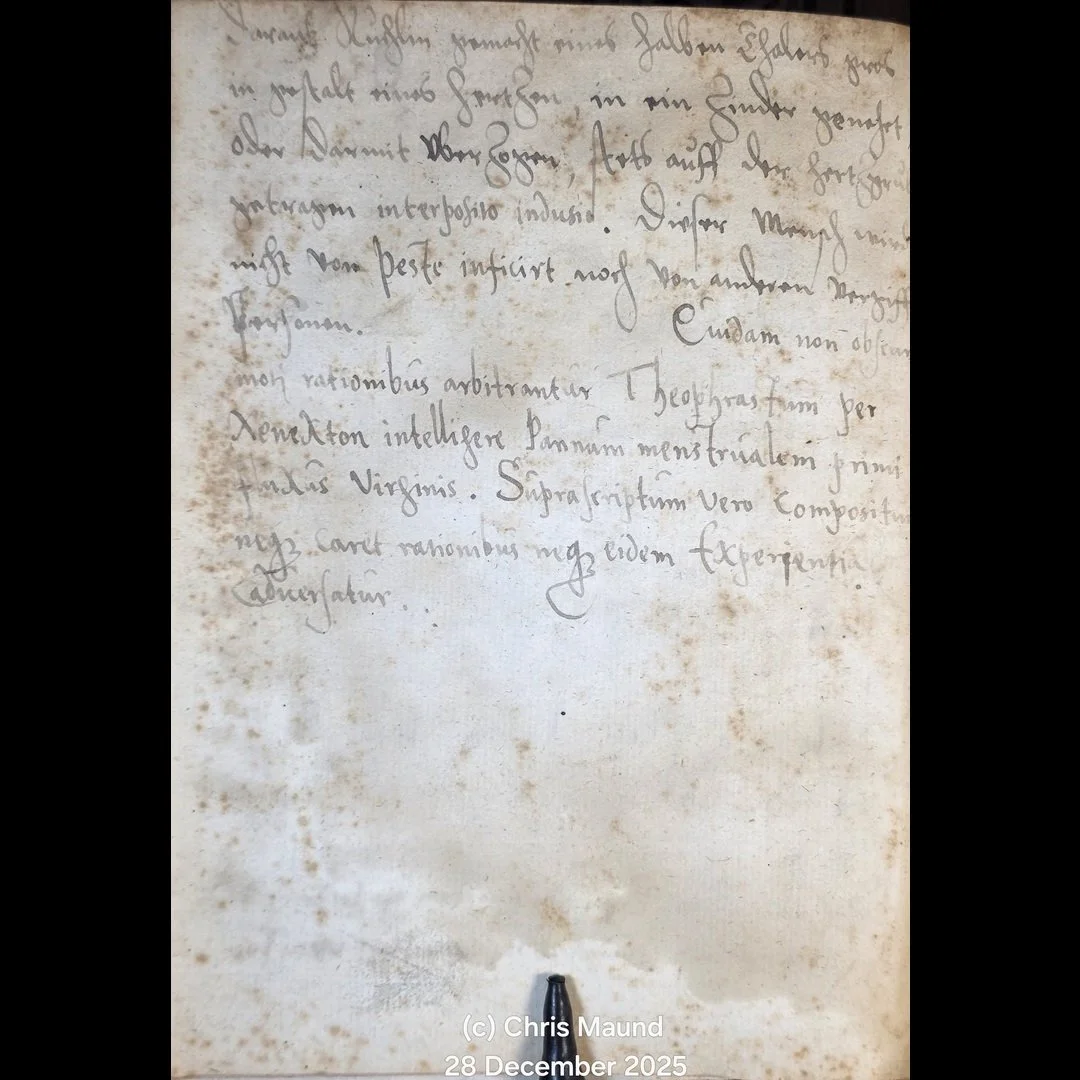
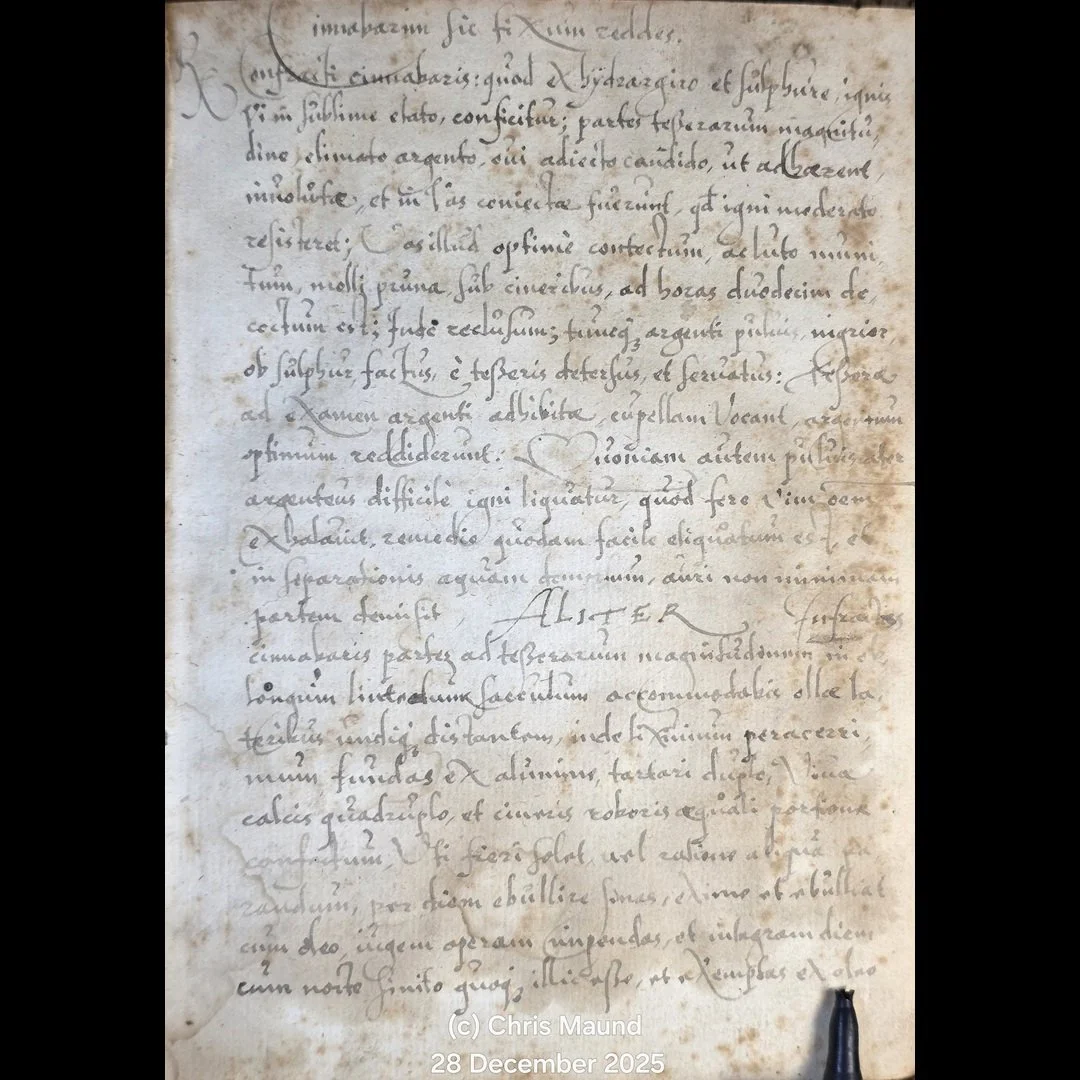
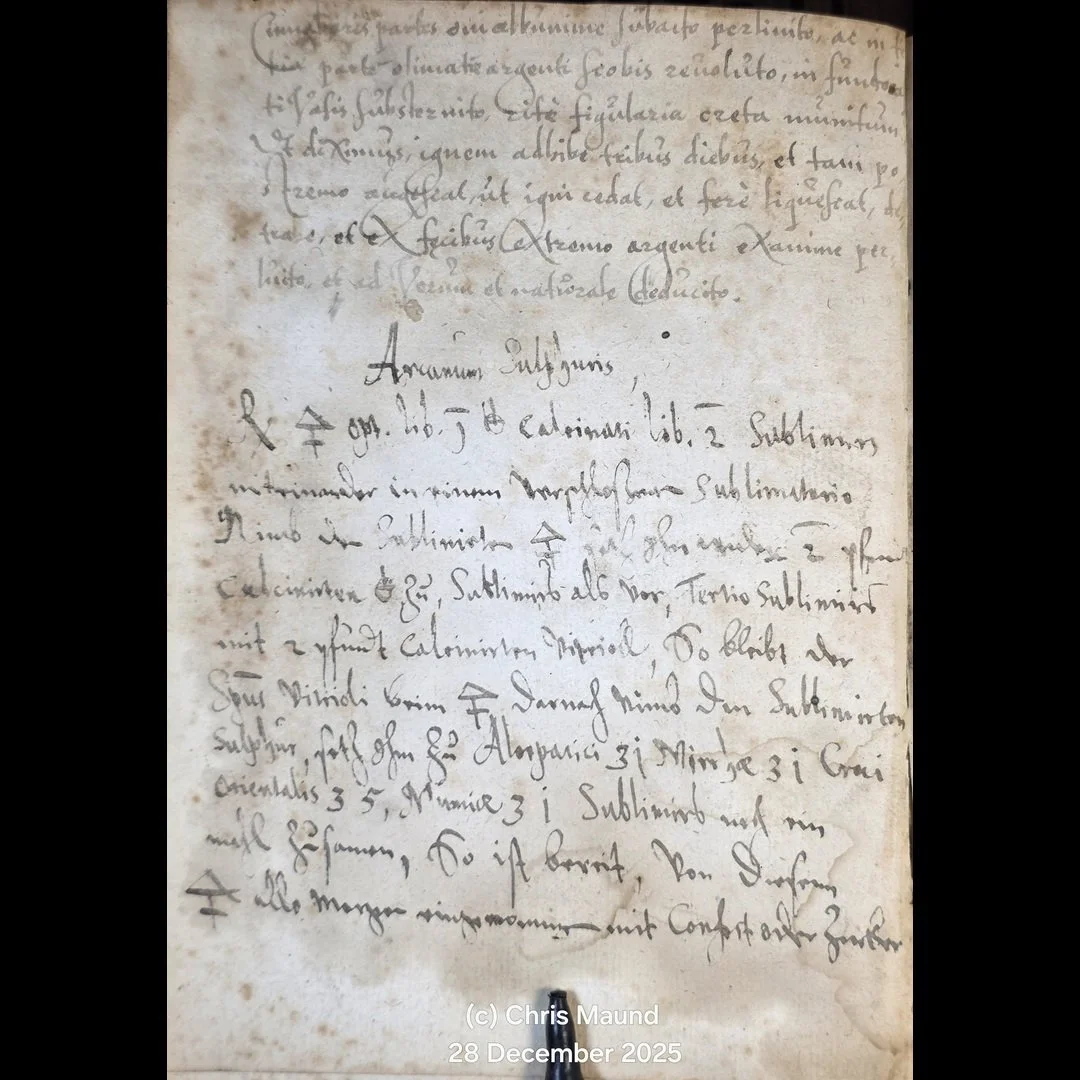
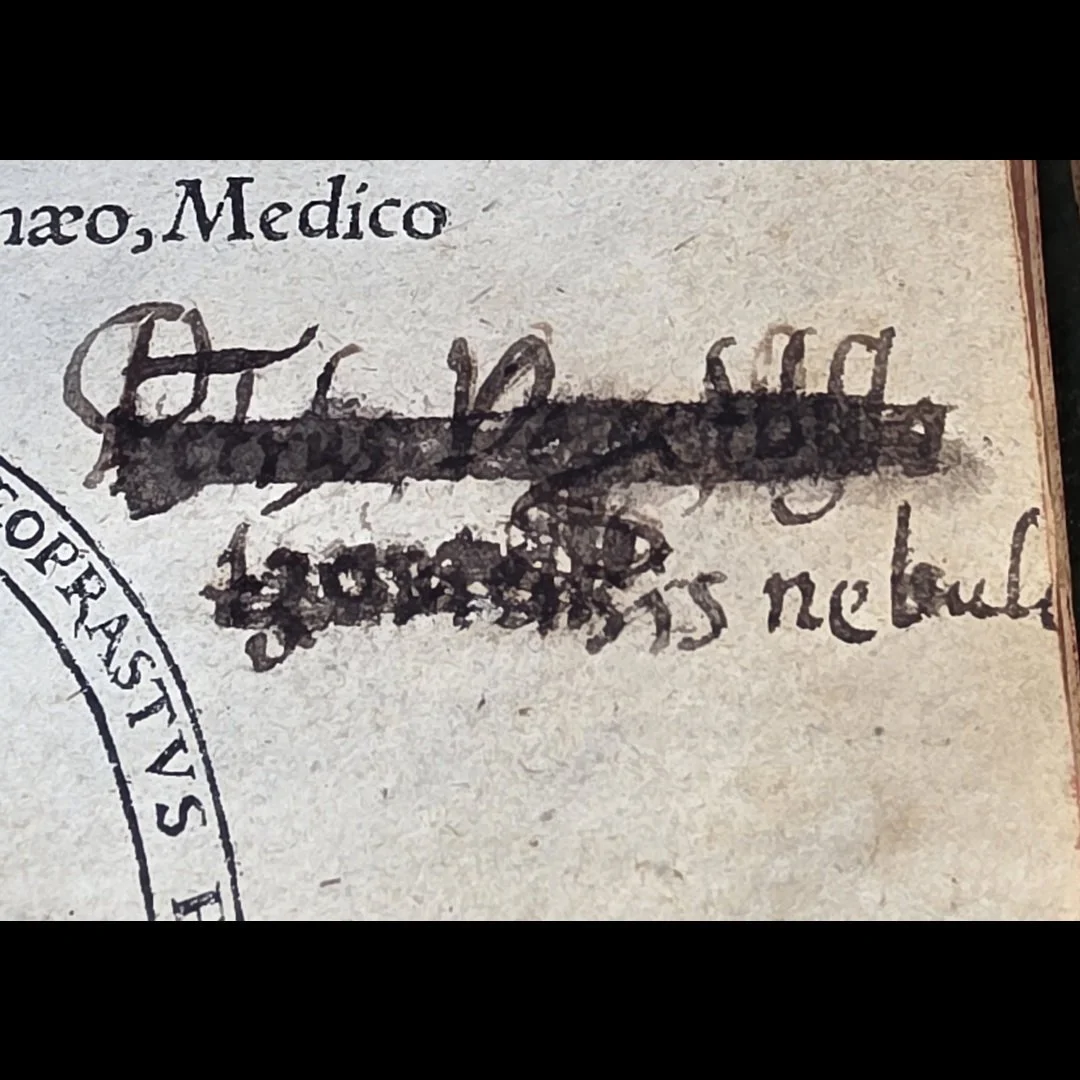
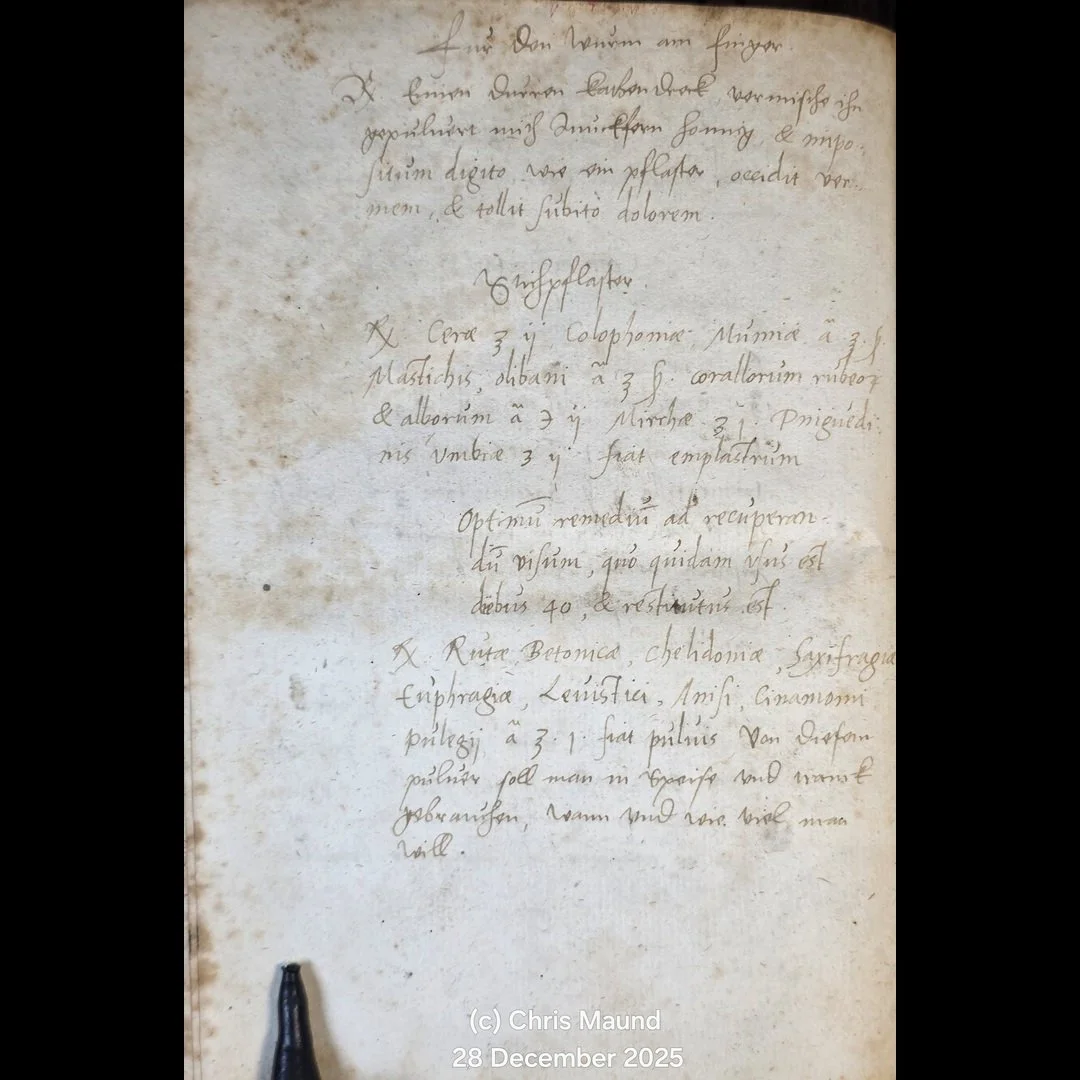
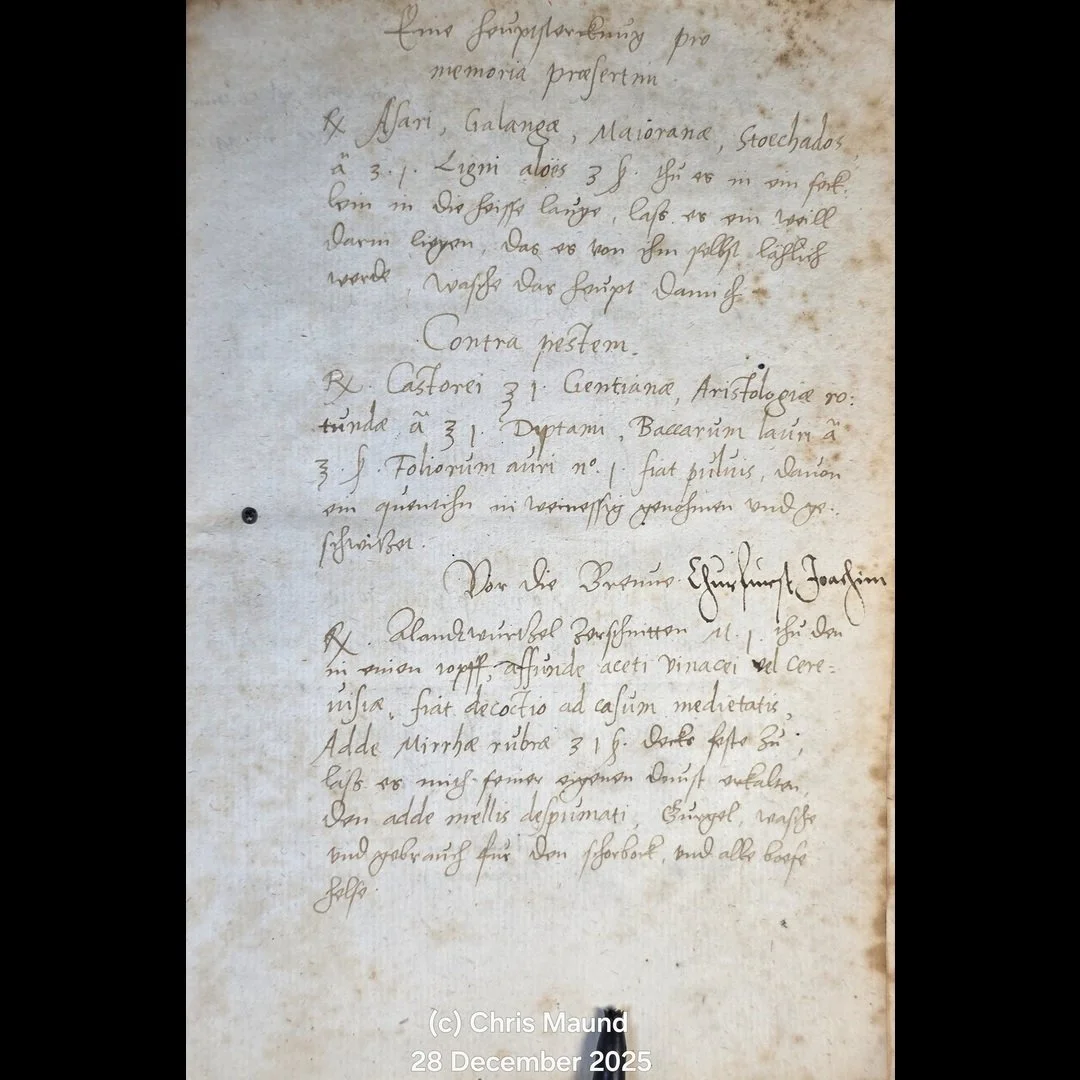
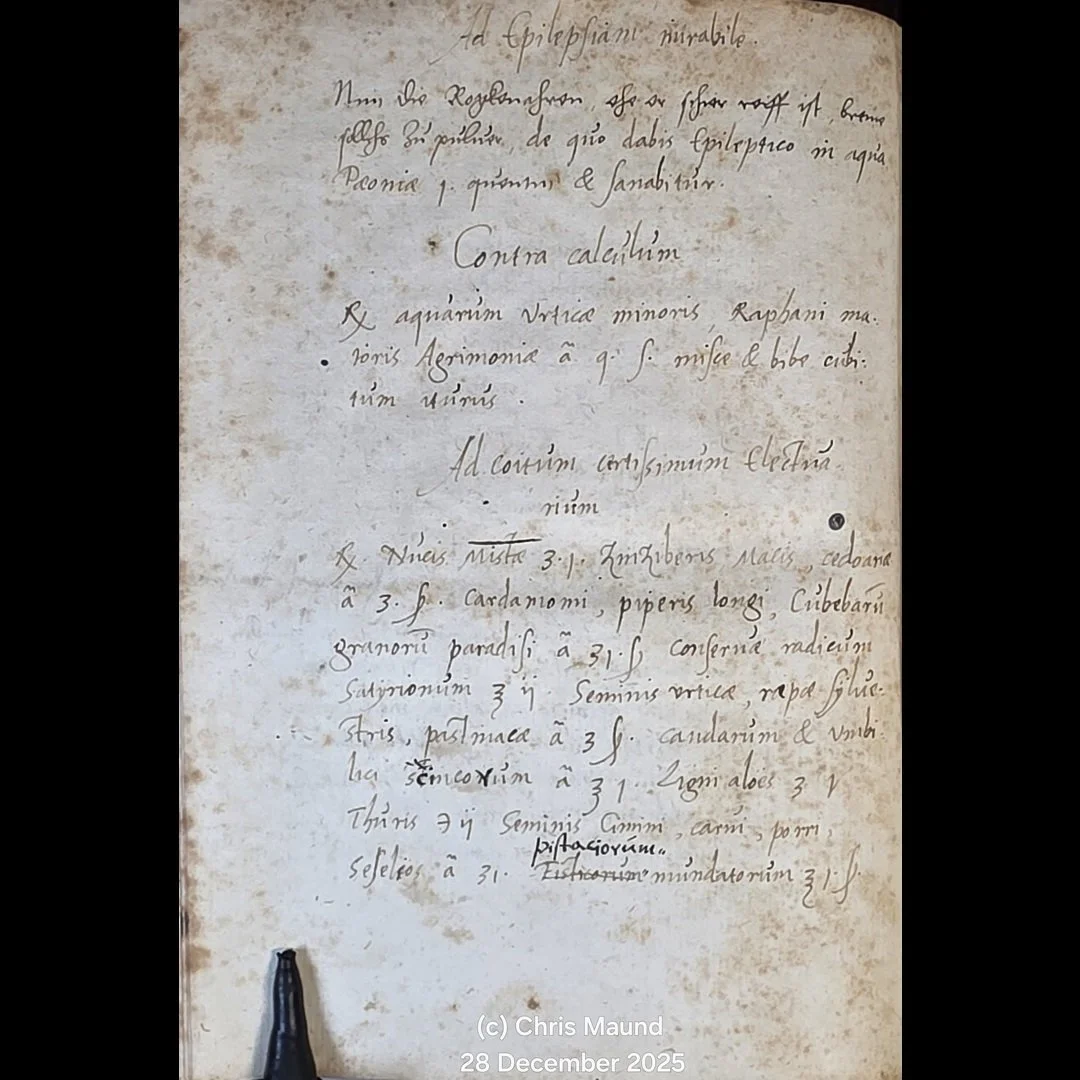
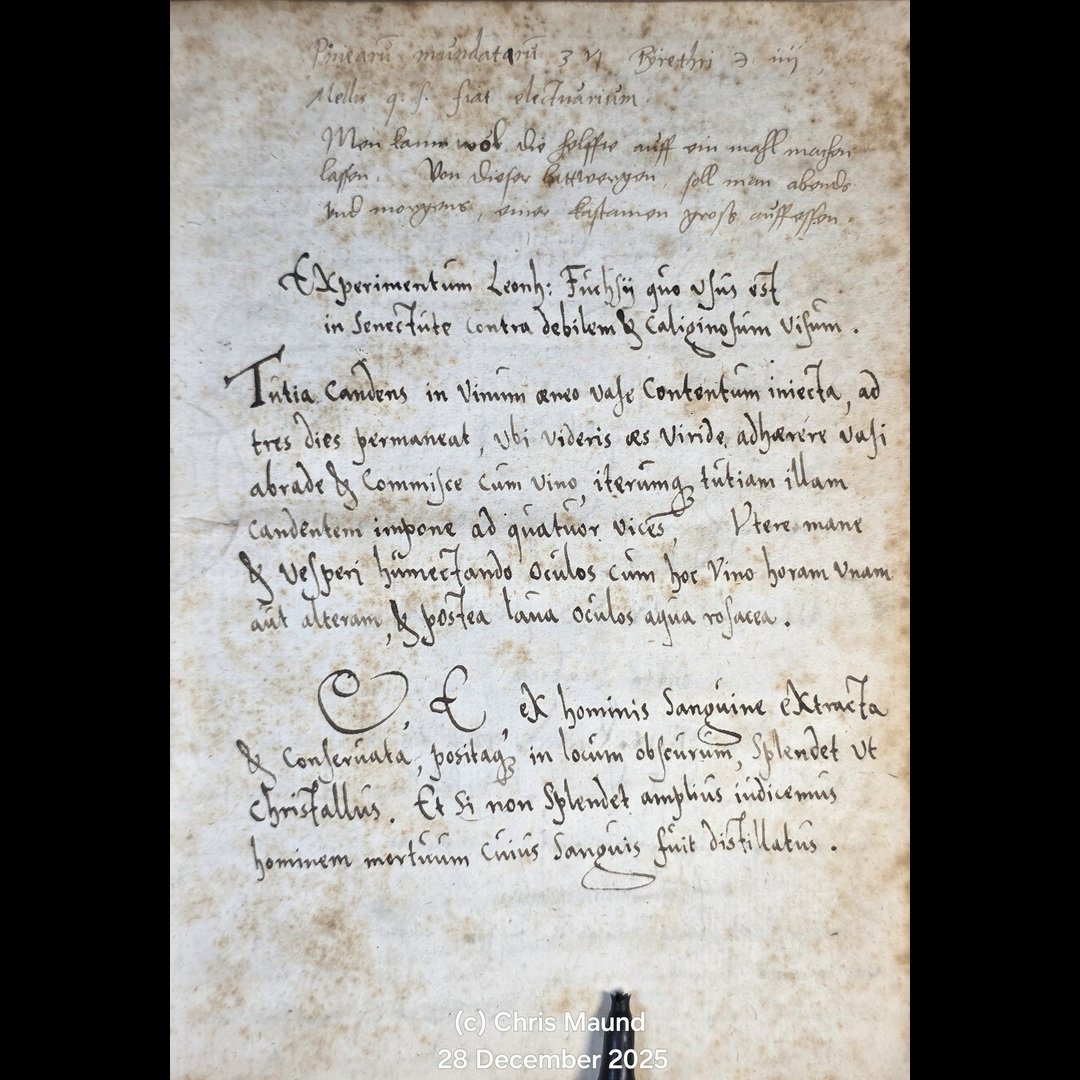
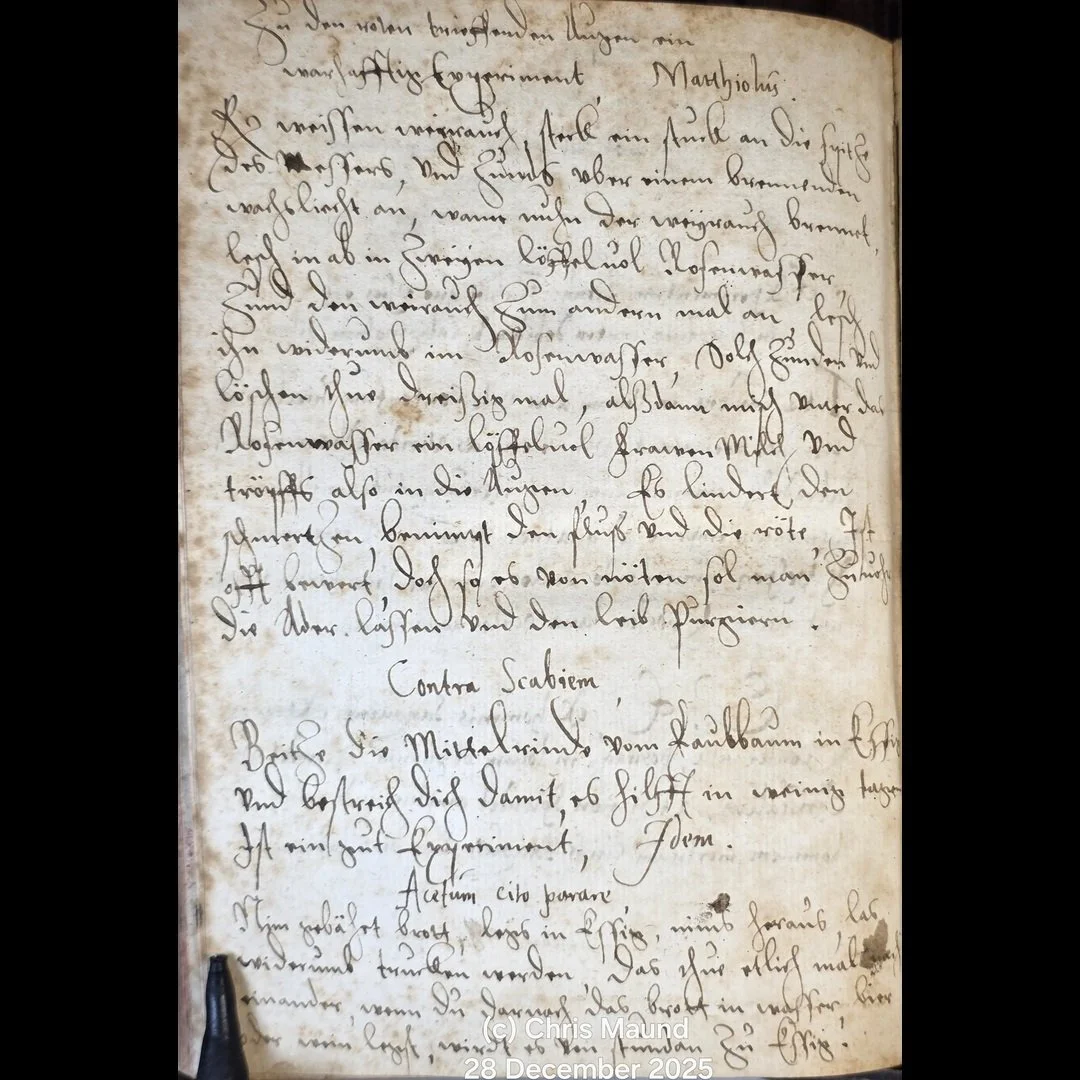
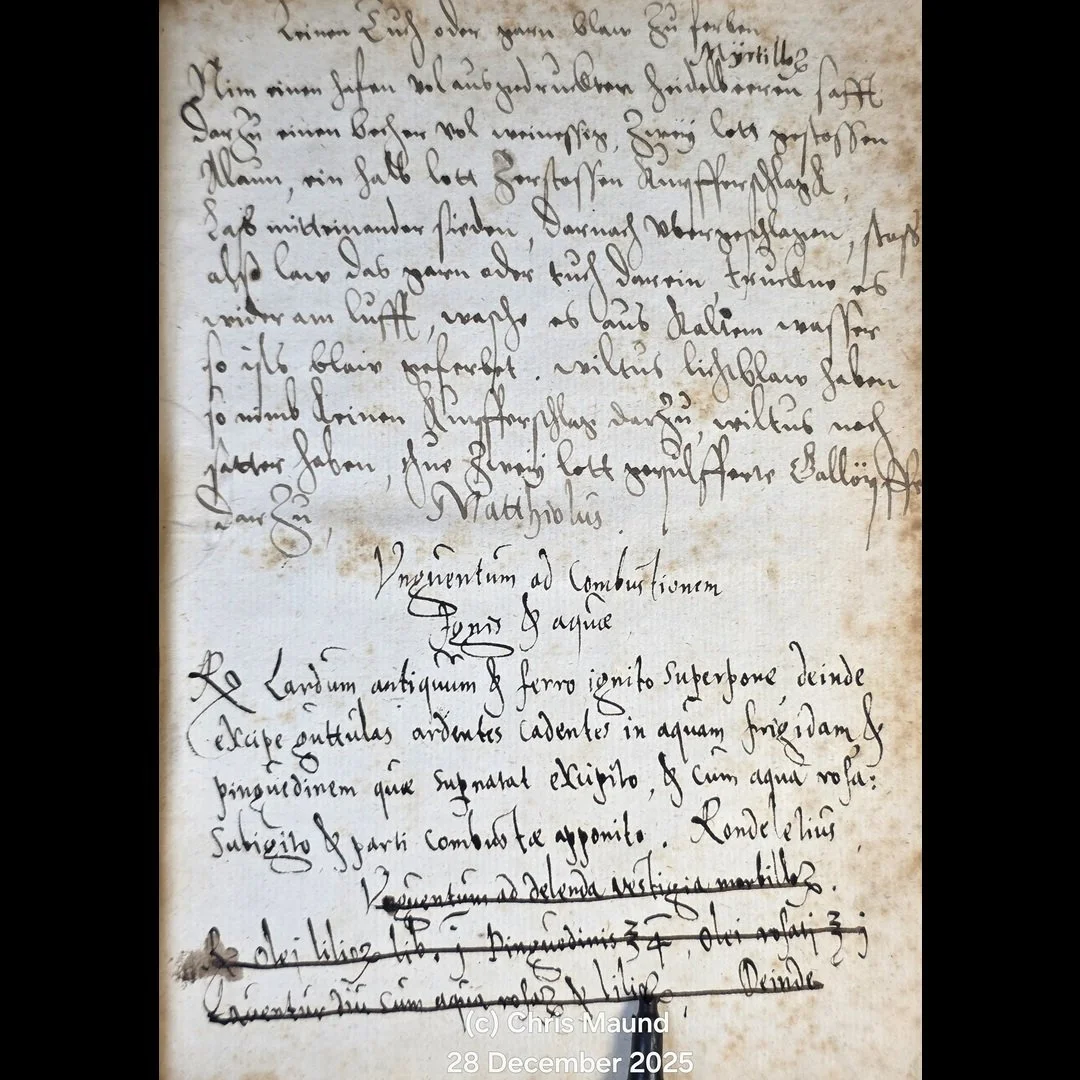
Of particular interest in this copy is the extensive early manuscript annotation, concentrated especially in Books I and II. An early reader — probably of the sixteenth or early seventeenth century — supplements the printed marginal apparatus with character identifications, narrative summaries, cross-references and observations upon notable passages.
The annotations reveal a reader actively organising and studying Homer rather than merely leaving occasional marks. Throughout the Catalogue of Ships, commanders are systematically identified in manuscript, including the differentiation of similarly named figures. Elsewhere the reader extracts narrative episodes and rhetorical images under concise Latin headings. Among the clearest are:
Somnium sub Nestoris specie — “The Dream in the guise of Nestor”
Muscarum examen — “A swarm of flies”
Vulcanus pincerna deorum — “Vulcan, cupbearer of the gods”
Particularly dense annotation accompanies the celebrated Book I confrontation between Achilles and Agamemnon, including Athena’s intervention to restrain Achilles’ anger, while other notes draw attention to passages concerning divine authority, kingship, self-command and proper conduct.
Taken together, the marginalia provide unusually appealing evidence of the volume’s early scholarly or pedagogical use. Rather than indiscriminate scribbling, they form an informal reader-created apparatus alongside that already supplied by the printer: identifying people, isolating significant episodes and making a difficult classical text easier to navigate and recall.
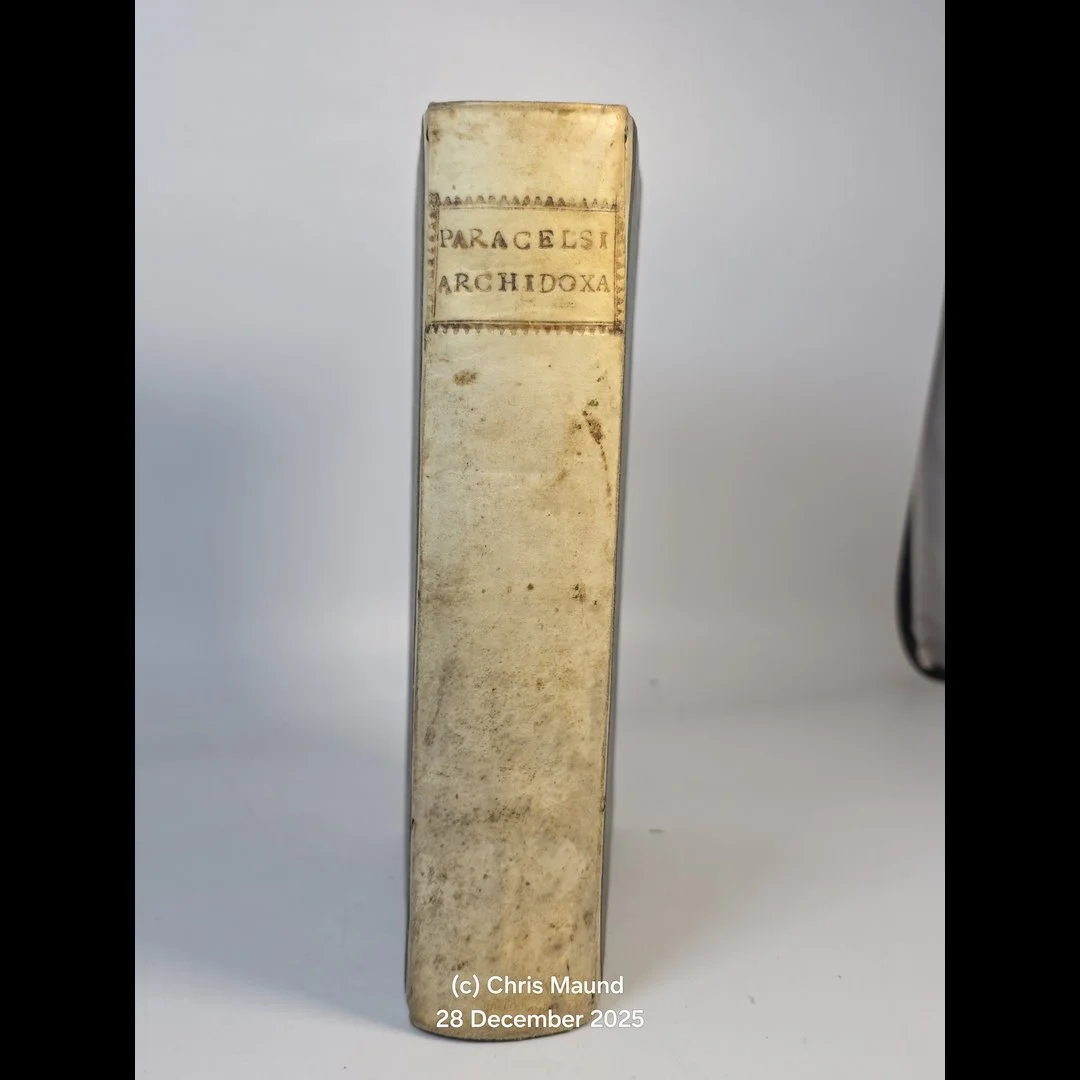
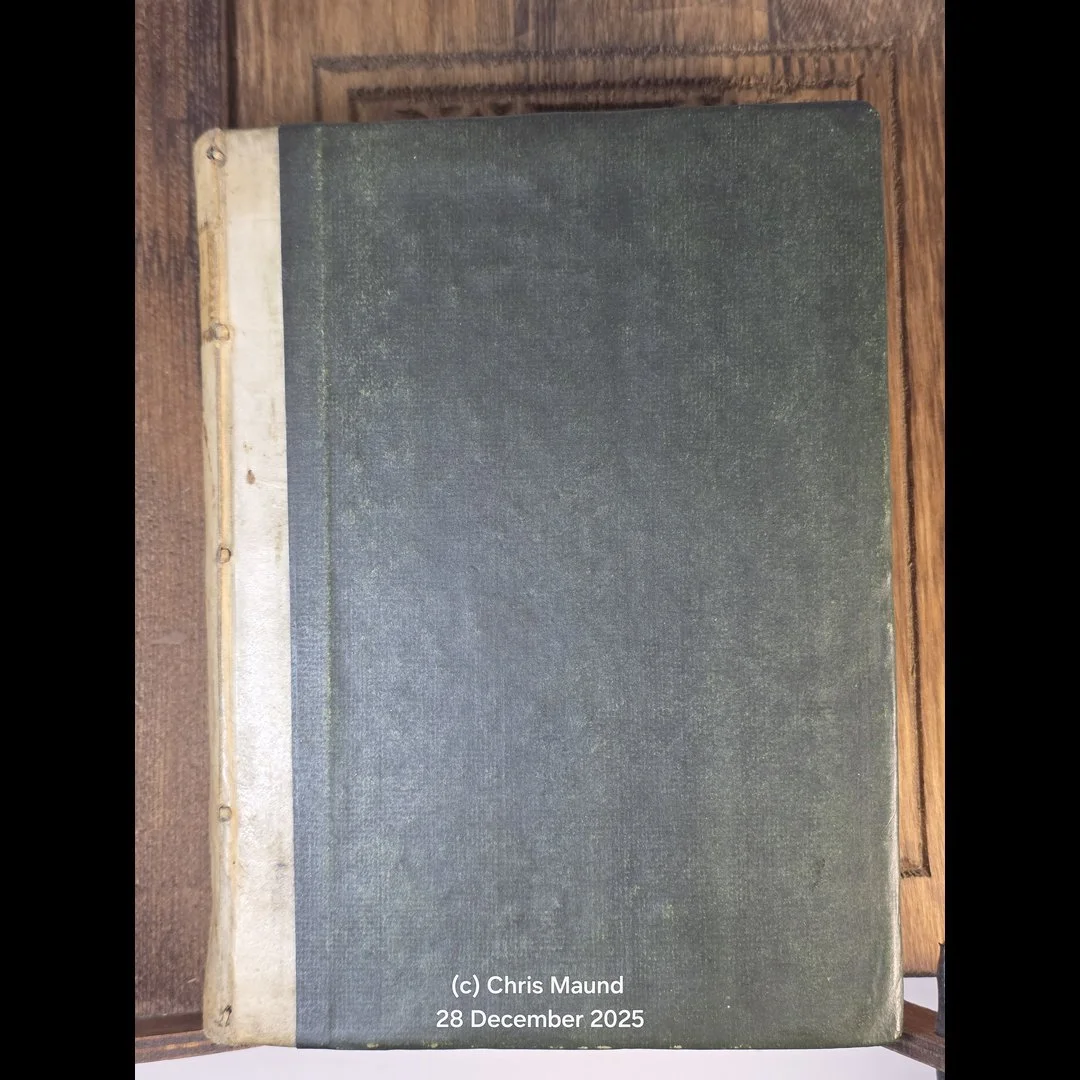
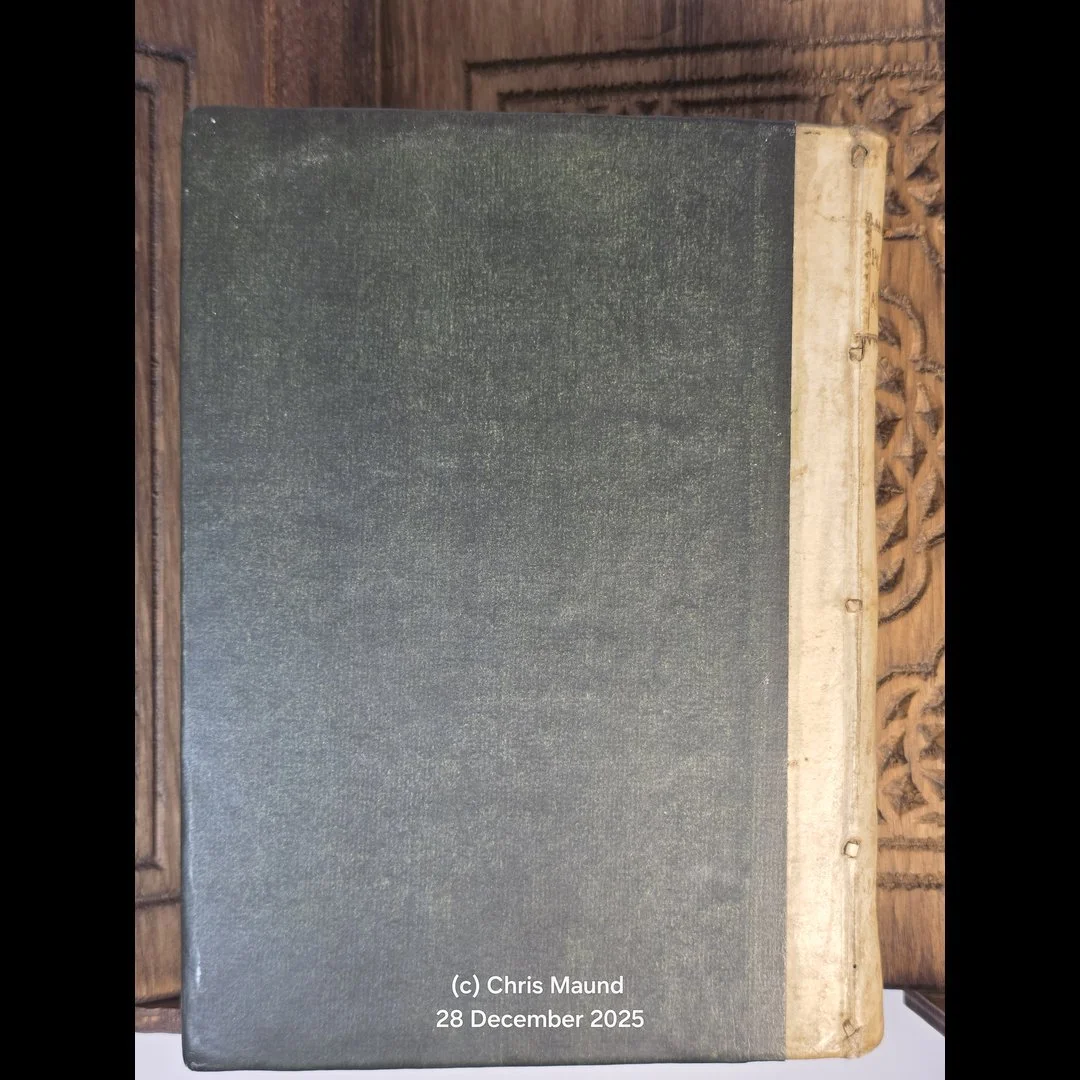
The binding adds another unusual material feature. The volume is in an early full vellum binding which was subsequently repaired or rebacked using a narrow fragment cut from an earlier parchment liturgical choirbook. The exposed manuscript fragment preserves large Gothic liturgical script together with black square-note chant notation upon red four-line staves. The surviving strip was trimmed flush at the head and tail when incorporated into the binding, leaving too little continuous text to identify the individual chant securely. It can therefore be described confidently as a fragment of a late-medieval or early-modern liturgical music manuscript, while a more specific attribution to an antiphonal or gradual cannot presently be established.
An unusually evocative Renaissance Homer combining an important humanist Latin translation, attractive Cologne woodcut printing, extensive early reader annotation and a later manuscript-music binding repair.
PROVENANCE
No identifiable ownership inscription has been found.
The volume nevertheless preserves substantial evidence of early ownership and use through its manuscript annotations. Their distribution is particularly revealing: annotation is concentrated heavily in the opening books, becoming especially systematic through Book II and the Catalogue of Ships before becoming substantially less frequent later in the volume. This pattern is compatible with sustained scholarly or pedagogical study, rather than casual reading.
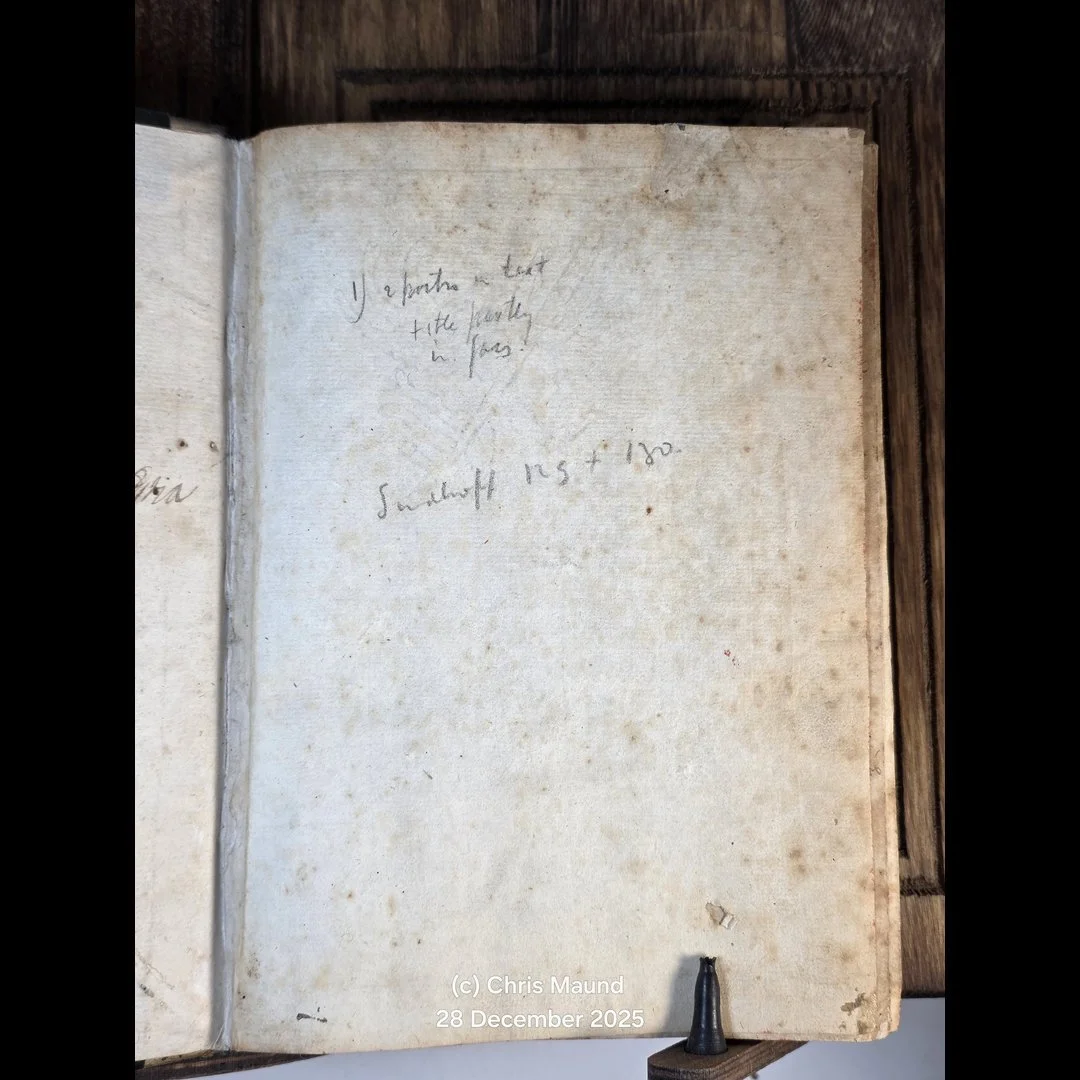
The principal brown-ink annotation appears to belong to one early campaign, probably sixteenth or early seventeenth century, although variations in ink and pen indicate that the work may have been undertaken over more than one sitting. Occasional later markings are also present, including graphite annotation.
Modern provenance: Catawiki, lot 96230512, 18 July 2025.
CONDITION, COLLATION & COPY NOTES
COLLATION
a–z⁸ A–H⁸ aa–bb⁸.
495 pp., [1] p. terminal woodcut, [32] pp. index.
The main text concludes on H8r, p.495, with the full-page woodcut of Saint George slaying the dragon on H8v. The index follows in gatherings aa–bb⁸, comprising sixteen leaves / thirty-two pages, and concludes on bb8v with Indicis in Iliad. finis and an ERRATA section.
The progression of signatures and terminal leaves has been checked photographically against the present copy, including the transition from lower-case to upper-case gatherings and the complete final gathering and index.
Complete.
Woodcut architectural title border; numerous ornamental woodcut initials; full-page terminal woodcut of St George slaying the dragon.
Early full vellum binding with marking, rubbing, staining and general wear consistent with age and use. The spine has been repaired/rebacked with a strip cut from an earlier parchment liturgical choirbook, preserving Gothic script and square musical notation on red four-line staves. The manuscript strip is trimmed at the head and tail and extends onto the adjoining portions of the boards. Wear and old structural intervention are visible around the head and tail of the binding.
The text block shows general age-toning and browning, intermittent staining and damp-marking, occasional small tears, creasing, handling marks and other evidence of more than five centuries of use. These defects are principally marginal and the printed text remains substantially clear and legible. The title-page woodcut border presents well and the impression remains strong. The terminal St George woodcut is present and substantially well preserved.
Extensive early manuscript annotation occurs throughout portions of the volume, particularly Books I–II, as described above. These annotations are regarded as an important part of the history and interest of this individual copy rather than as later defacement.
Please see Photos as part of condition report.
REFERENCES
VD16 H 4663
Hoffmann II, 334
University of Chicago Library, Homer in Print: Humanists, Scholars, & Students — recording Valla’s translation of Books I–XVI and Griffolini’s completion of the remaining books. University of Chicago Library
Biblioteca Apostolica Vaticana, Urb. lat. 349 — manuscript witness to the Valla–Griffolini Latin Iliad tradition and the 1474 Brescia printing. Spotlight
The 1527 Cervicornus edition is bibliographically recorded with 495 pages, terminal woodcut and 32-page index, together with the title-page border and St George woodcut described above.
SYNOPSIS
Homer’s Iliad is the foundational epic of the Trojan War, but its subject is considerably more concentrated than the complete story of Troy. Its opening declaration — the wrath of Achilles — identifies the central theme.
After Agamemnon dishonours Achilles by taking Briseis from him, Achilles withdraws from the Greek army and asks his divine mother Thetis to persuade Zeus to allow the Greeks to suffer in his absence. The resulting reverses place the Greek expedition in increasing danger and bring many of the poem’s greatest warriors into battle.
Achilles remains apart until his closest companion, Patroclus, enters the fighting wearing Achilles’ armour and is killed by Hector. Grief transforms Achilles’ anger. He returns to battle, receives new armour forged by Hephaestus, kills Hector and dishonours his body in vengeance for Patroclus.
The poem reaches its emotional climax not in the destruction of Troy but in an extraordinary encounter between Achilles and Priam, Hector’s elderly father. Priam enters the Greek camp and begs the killer of his son to return Hector’s body. Achilles, confronted with the shared suffering and mortality of both enemies, relents.
The Iliad consequently moves far beyond heroic warfare. It explores anger, honour, leadership, mortality, grief, pity, divine interference and the unstable relationship between personal glory and communal obligation. Its influence upon Western literature, political thought and concepts of heroic identity has been immense.
For Renaissance readers who could read Latin more readily than Greek, the Valla–Griffolini version became an important means by which Homer entered humanist intellectual culture. Valla’s prose translation of the first sixteen books dates from the 1440s; Griffolini completed Books XVII–XXIV, and the combined translation was first printed at Brescia in 1474.
AUTHOR BIO
Homer is the name traditionally associated with the Iliad and Odyssey, the two foundational epics of ancient Greek literature. The circumstances of their composition and the historical identity of Homer remain subjects of scholarly debate, but the poems are generally rooted in the archaic Greek tradition and preserve material developed through a much older oral culture.
The Iliad and Odyssey became central texts of Greek education and exerted profound influence throughout classical antiquity. Their reception in medieval and Renaissance Europe was complicated by the relative scarcity of Greek learning in the Latin West, making Latin translations such as Valla’s particularly important to the recovery of Homer during the Renaissance.
TRANSLATOR BIO
Lorenzo Valla (c.1407–1457) was one of the foremost Italian humanists of the fifteenth century: a philologist, rhetorician, philosopher and critic whose insistence upon historically sensitive analysis of language made him one of the formative figures of Renaissance scholarship.
He is perhaps best known for demonstrating through philological analysis that the purported Donation of Constantine could not be an authentic document of the fourth century. His Elegantiae linguae Latinae similarly sought to restore classical standards of Latin usage.
Valla translated the first sixteen books of Homer’s Iliad into Latin prose during the 1440s. After his death, his pupil Francesco Griffolini completed Books XVII–XXIV. The combined translation was first printed at Brescia in 1474 and became an important vehicle for the Renaissance reception of Homer in Latin Europe. University of Chicago Library
Francesco Griffolini of Arezzo was a humanist scholar and translator associated with Valla. In addition to completing his teacher’s unfinished Iliad, he produced a Latin prose translation of the Odyssey, helping to make both Homeric epics accessible to readers educated primarily through Latin.
ILLUSTRATOR
Anonymous woodcutters
No named designer or woodcutter has been securely associated with the illustrations in the bibliographical records consulted. The edition is nevertheless visually distinguished by its elaborate architectural title-page border, decorative woodcut initials and the full-page terminal image of Saint George slaying the dragon.

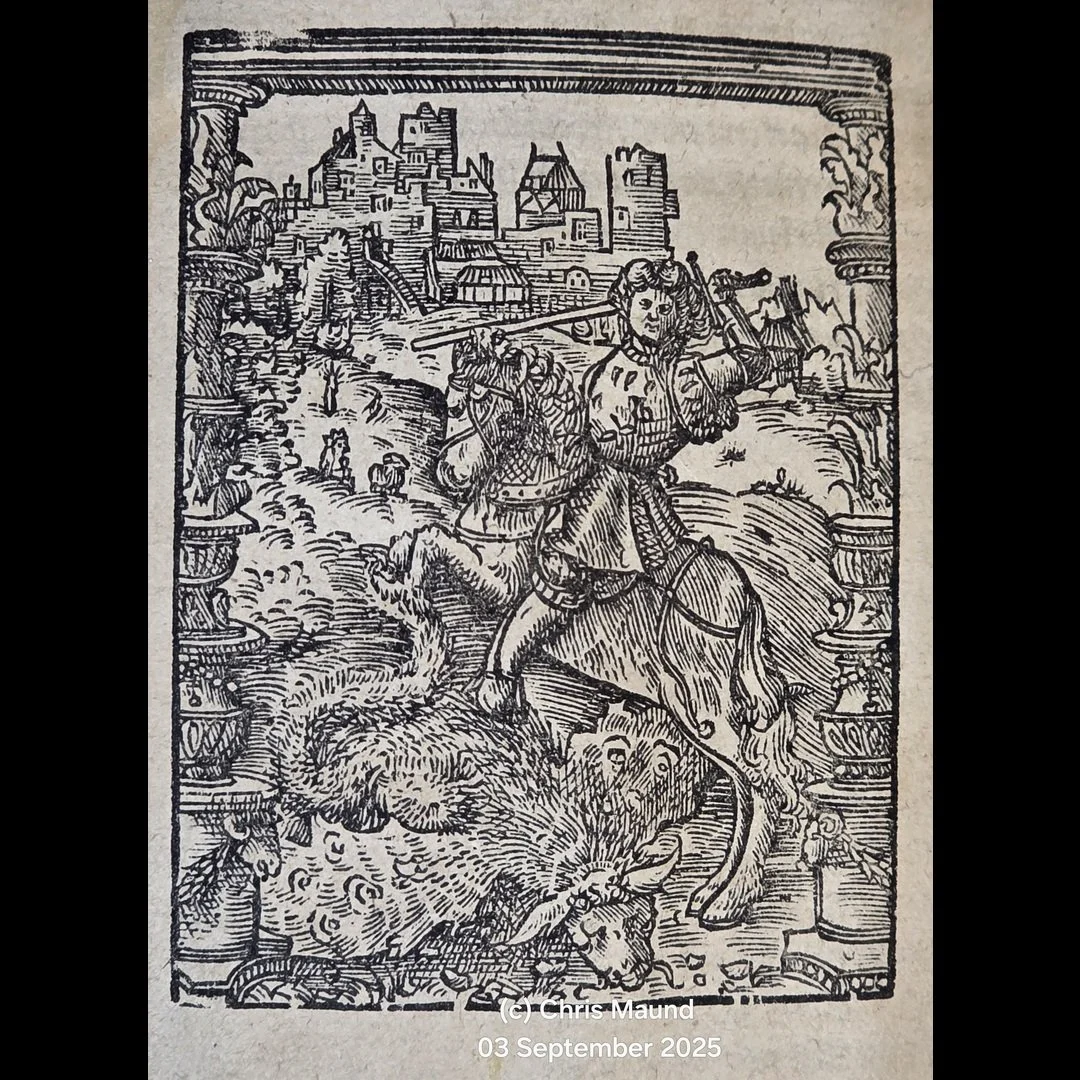 Image 1 of 19
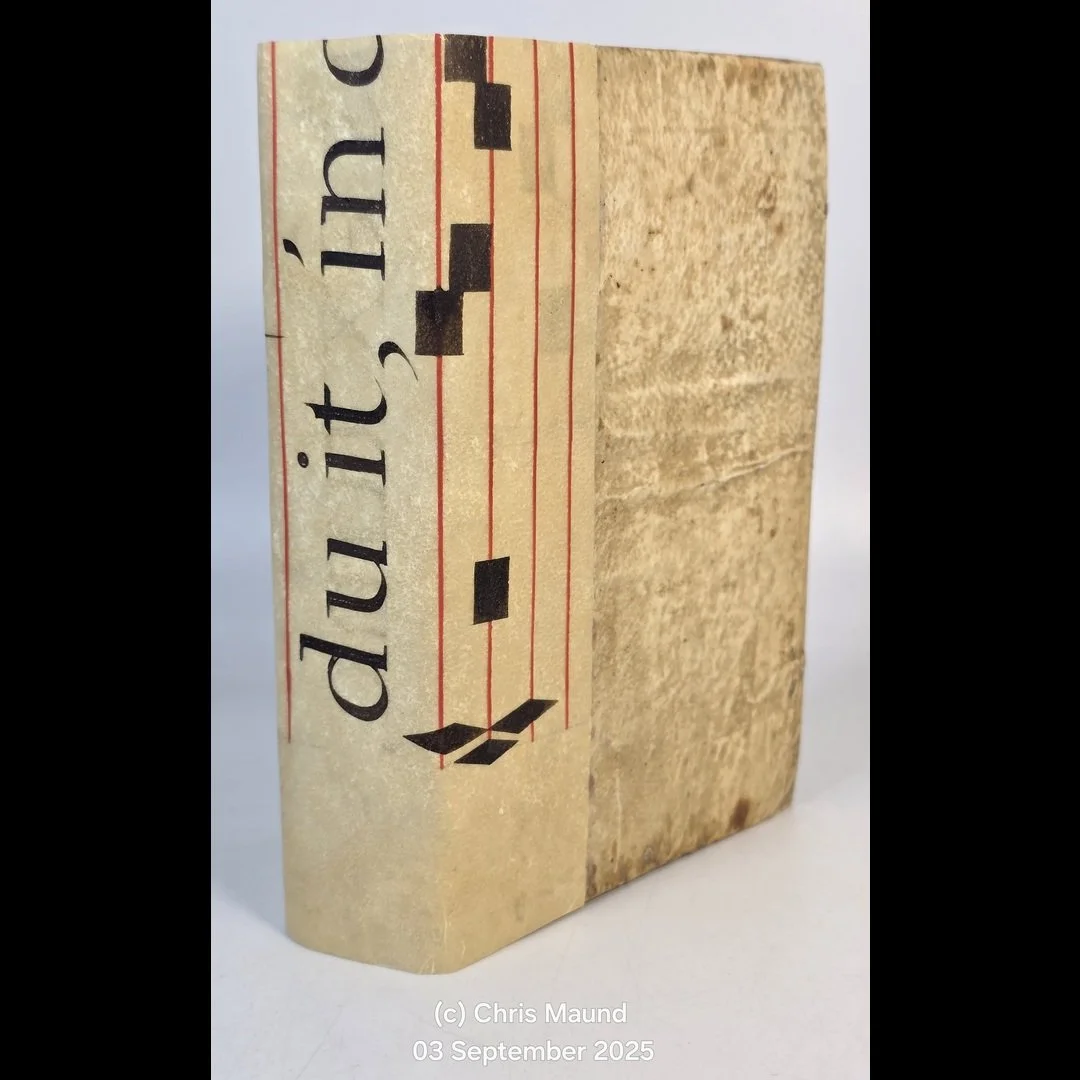 Image 2 of 19
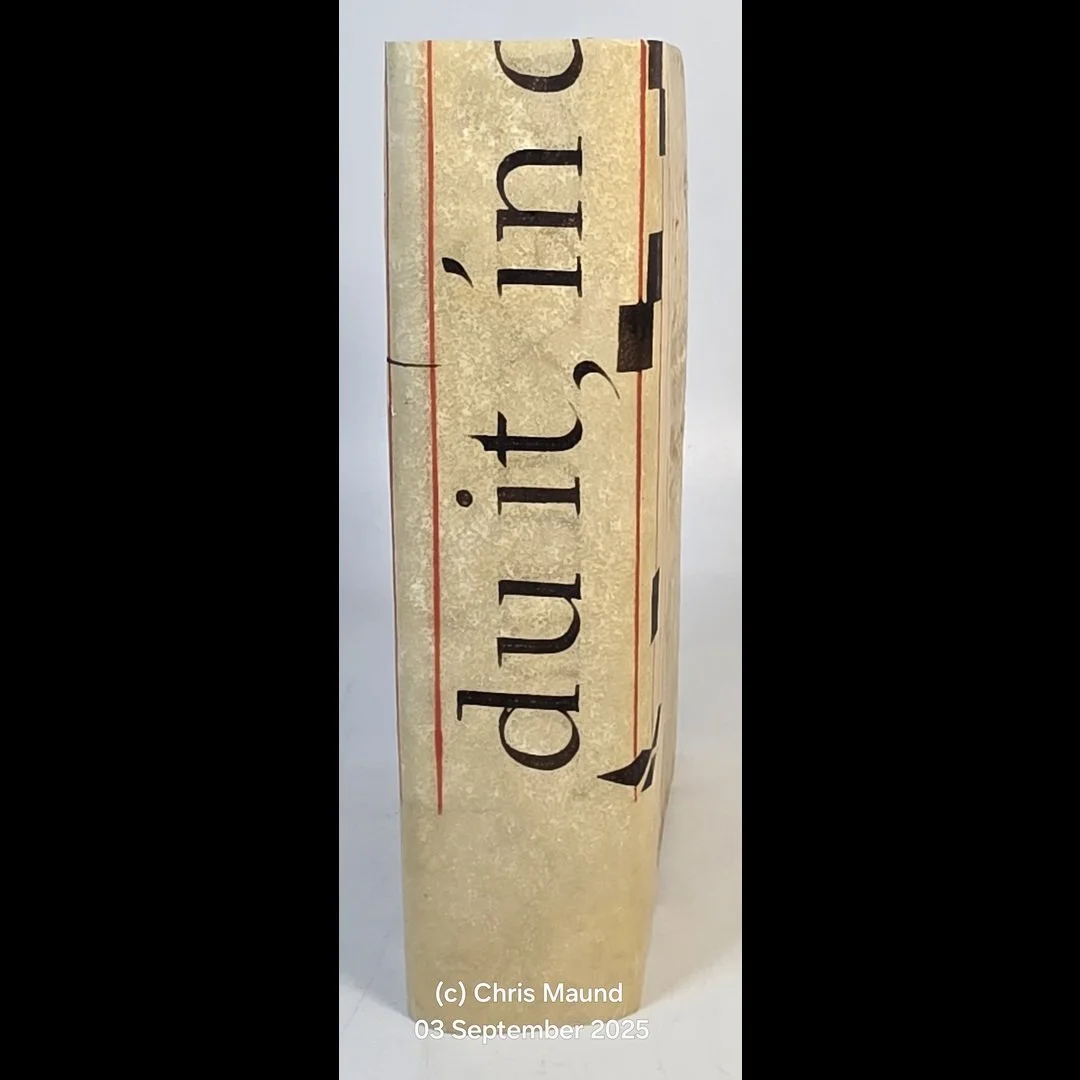 Image 3 of 19
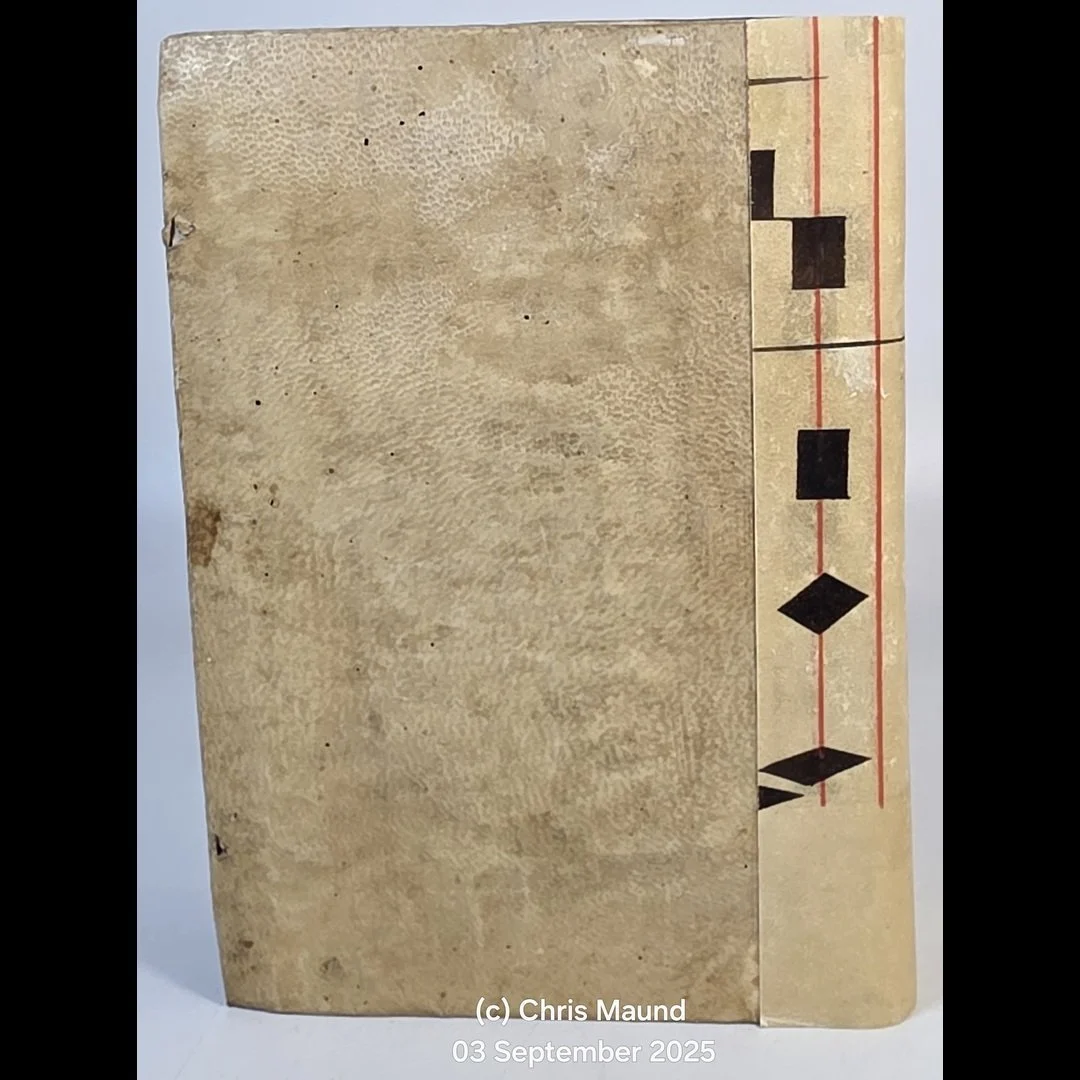 Image 4 of 19
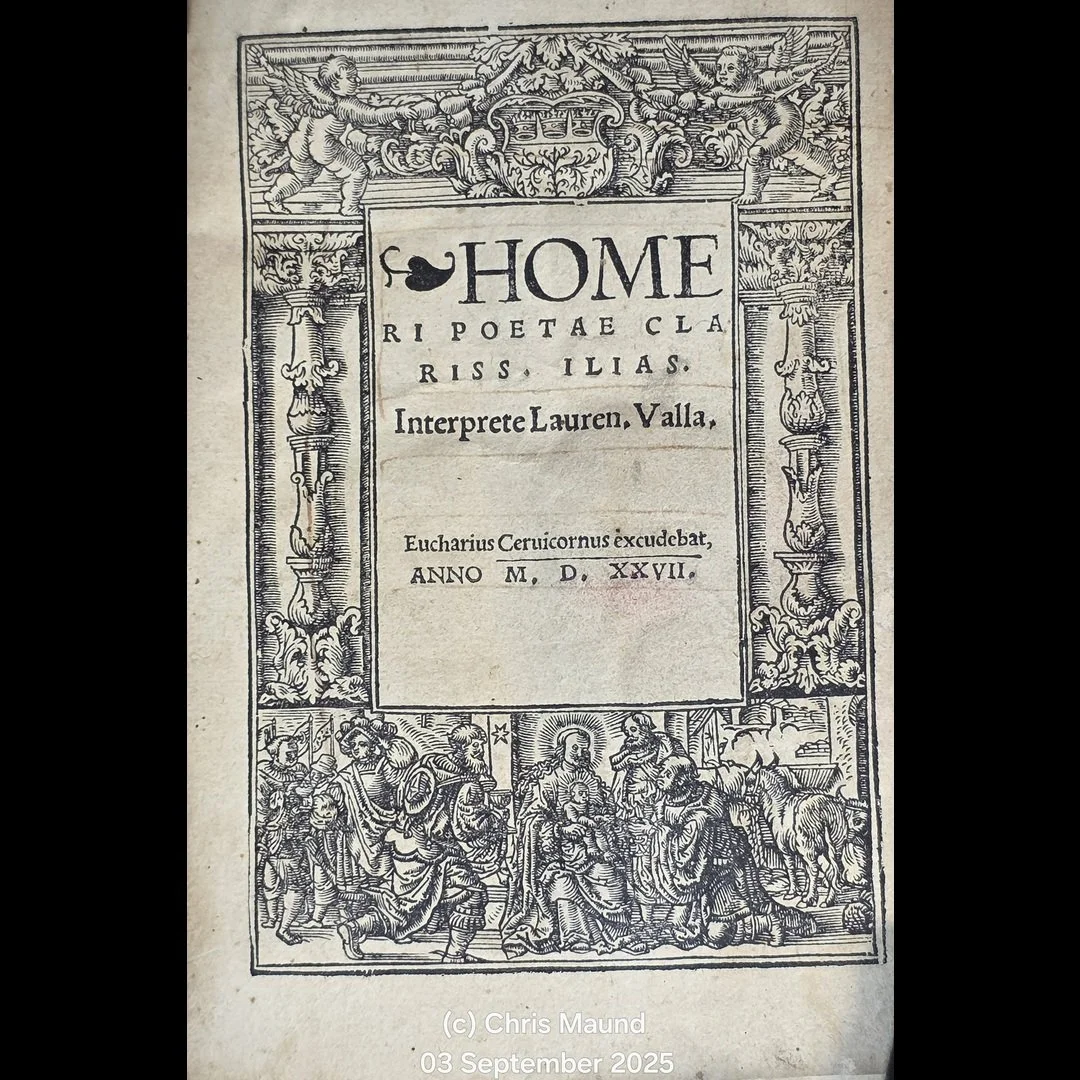 Image 5 of 19
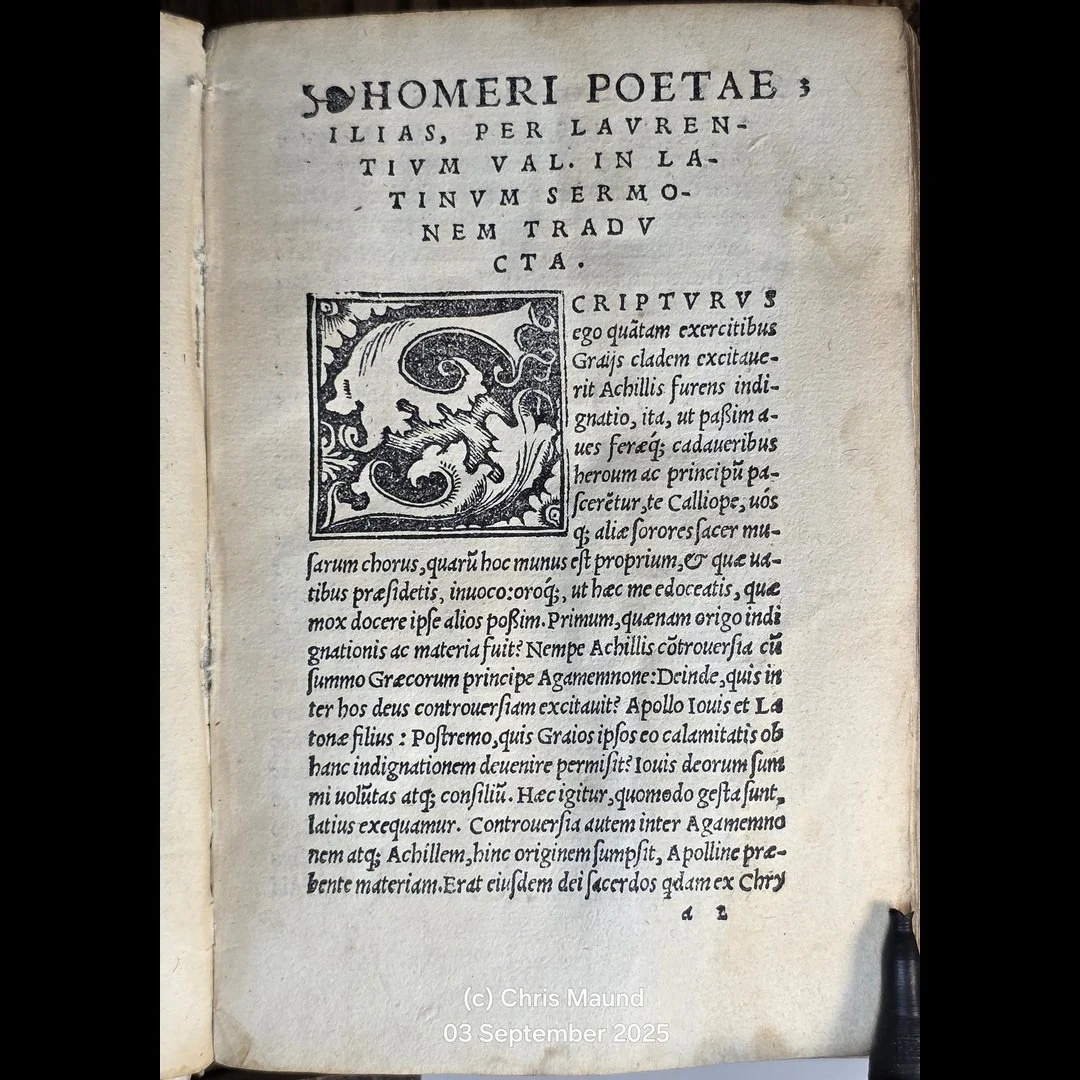 Image 6 of 19
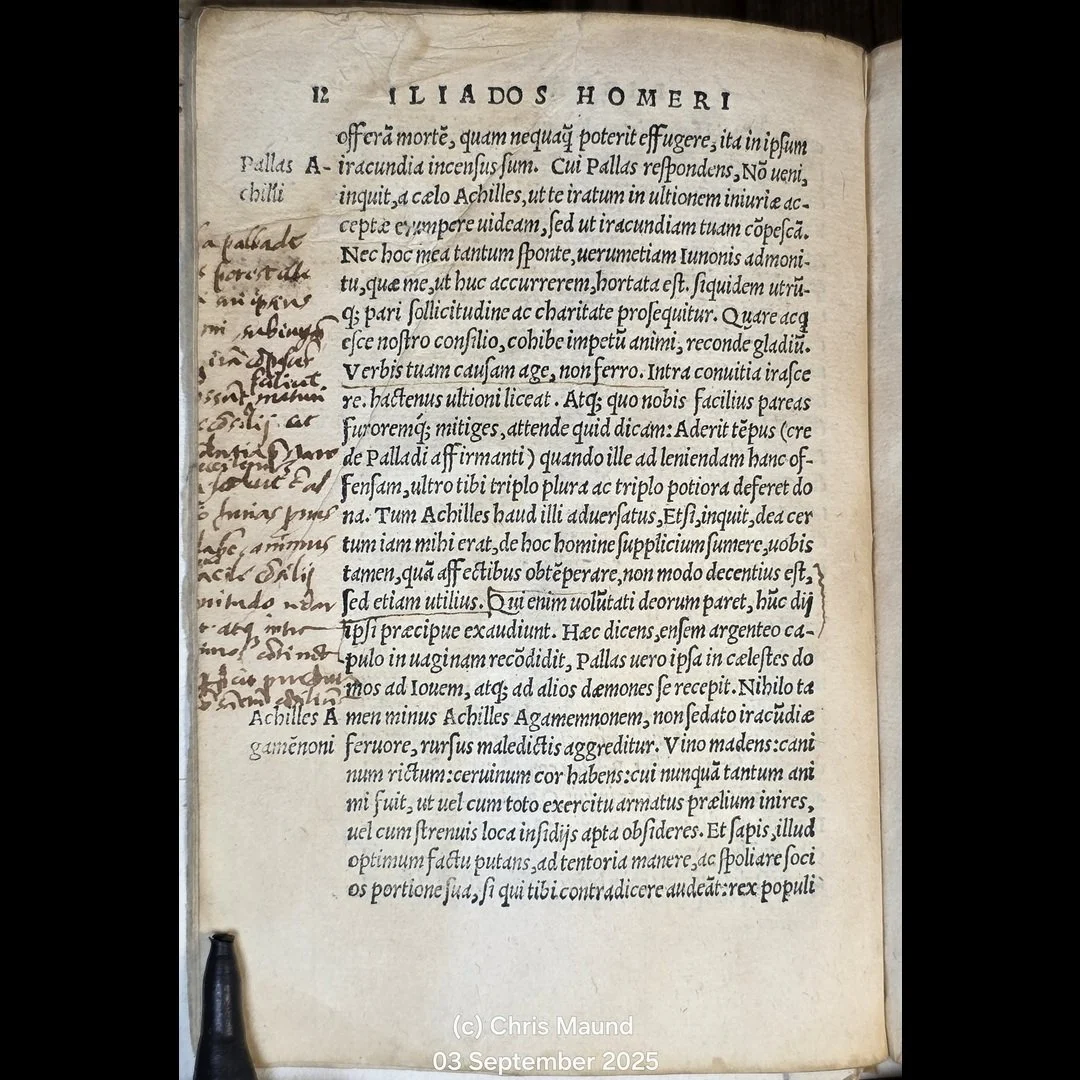 Image 7 of 19
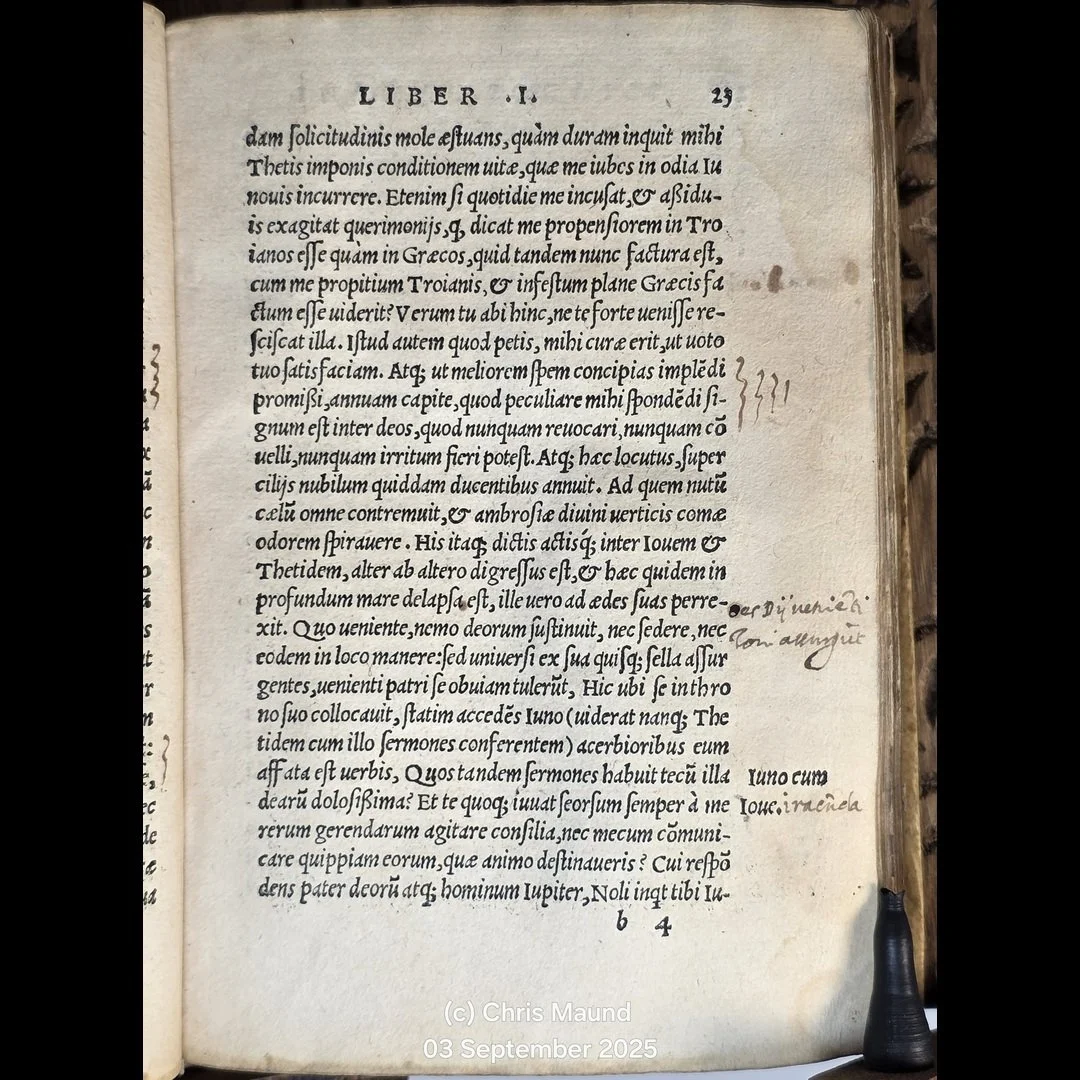 Image 8 of 19
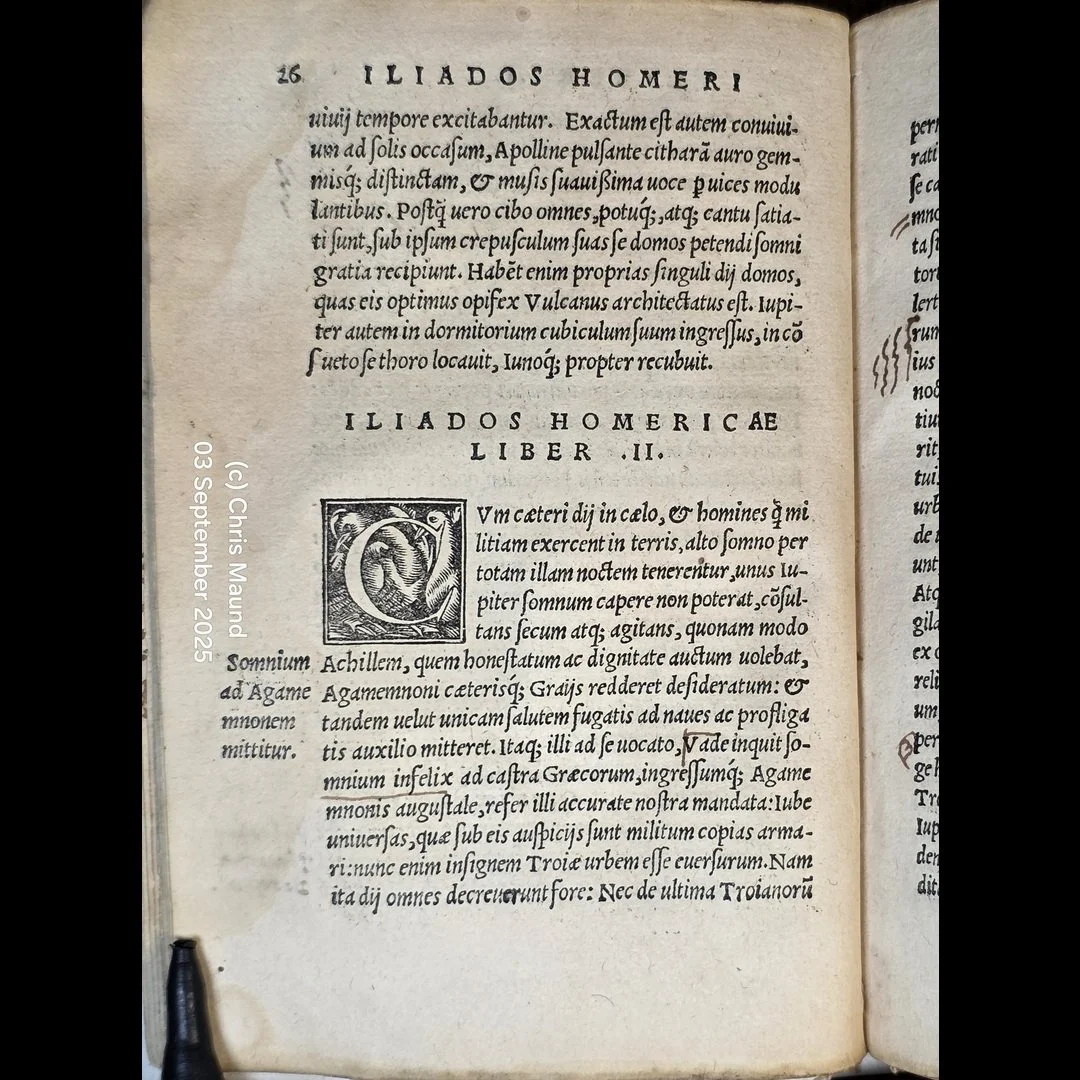 Image 9 of 19
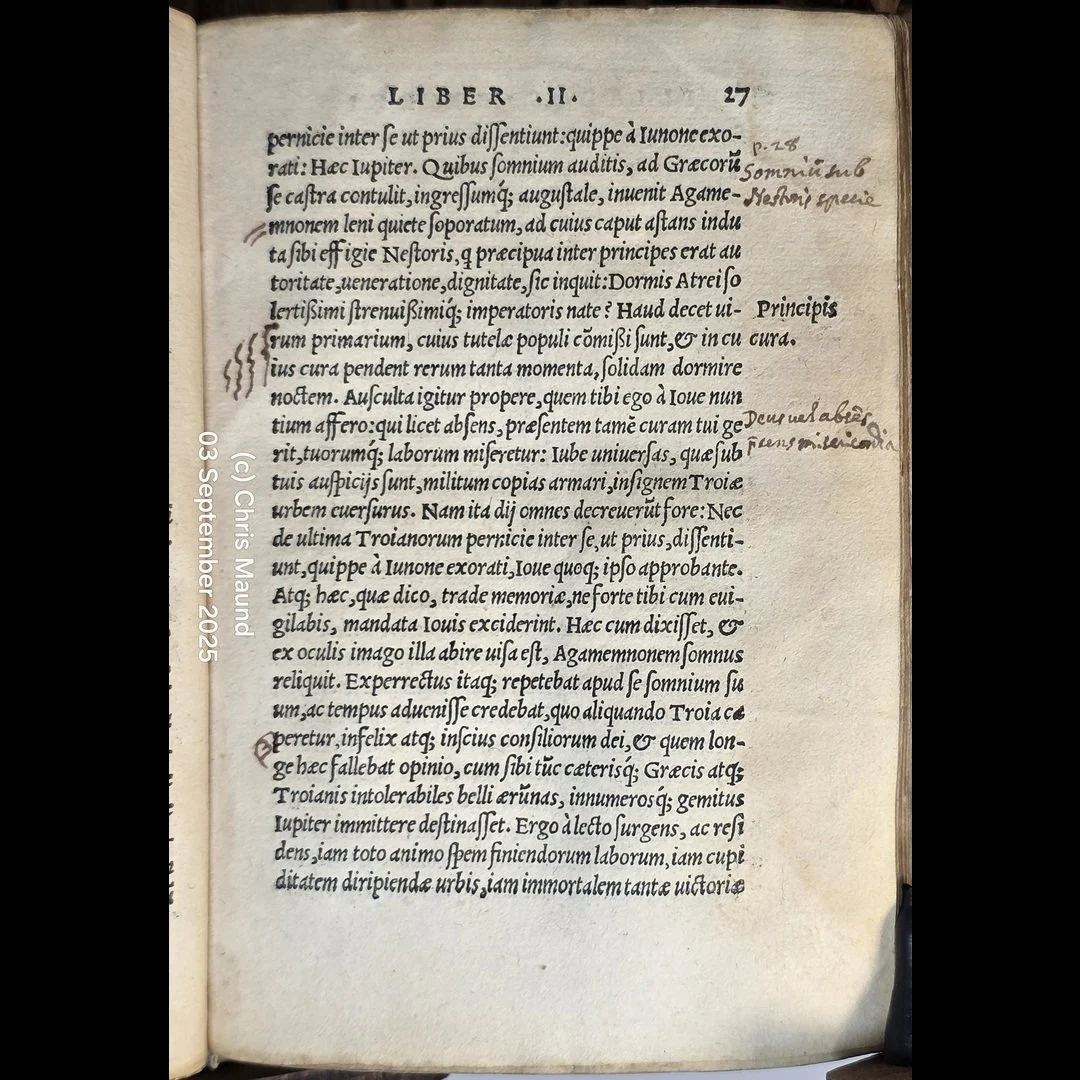 Image 10 of 19
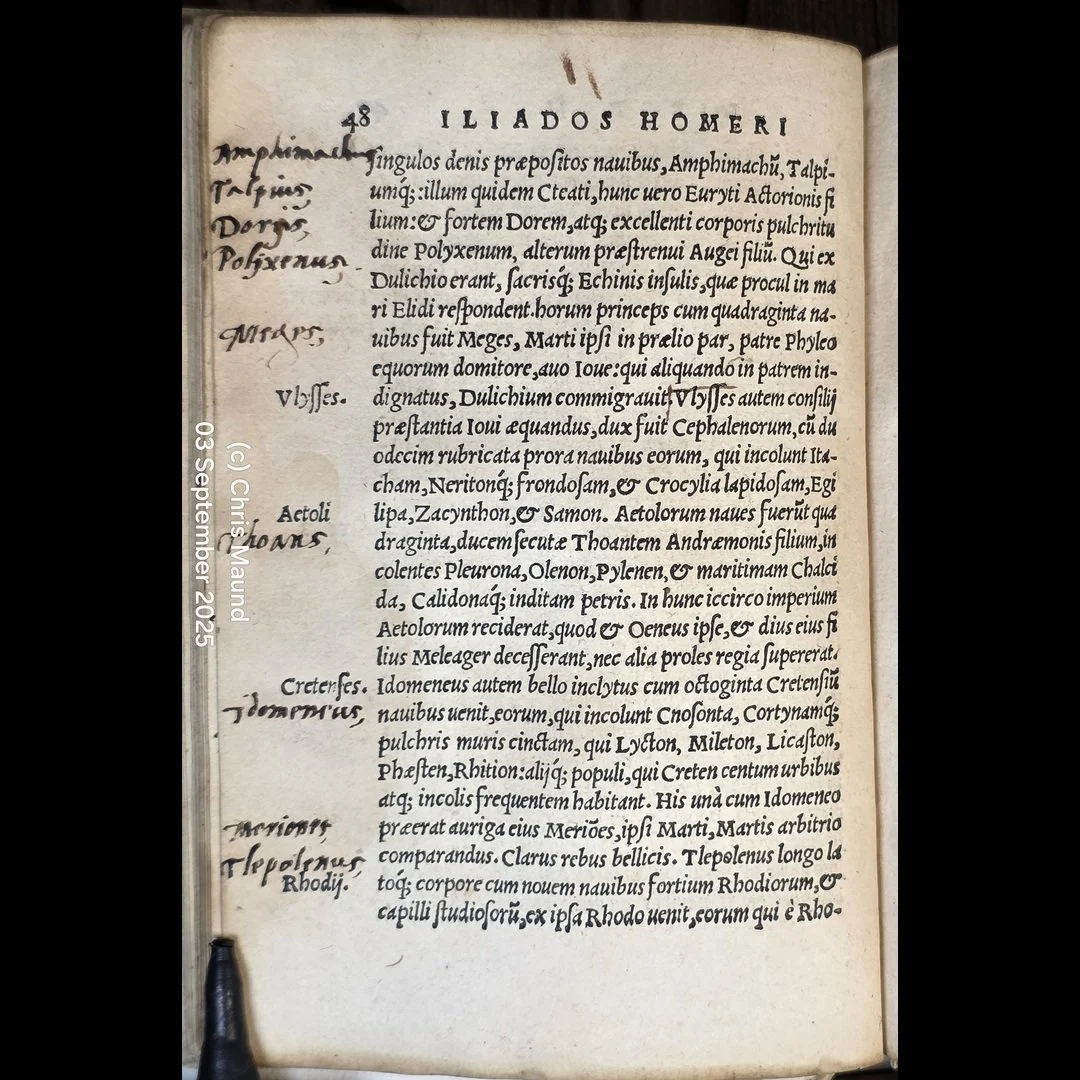 Image 11 of 19
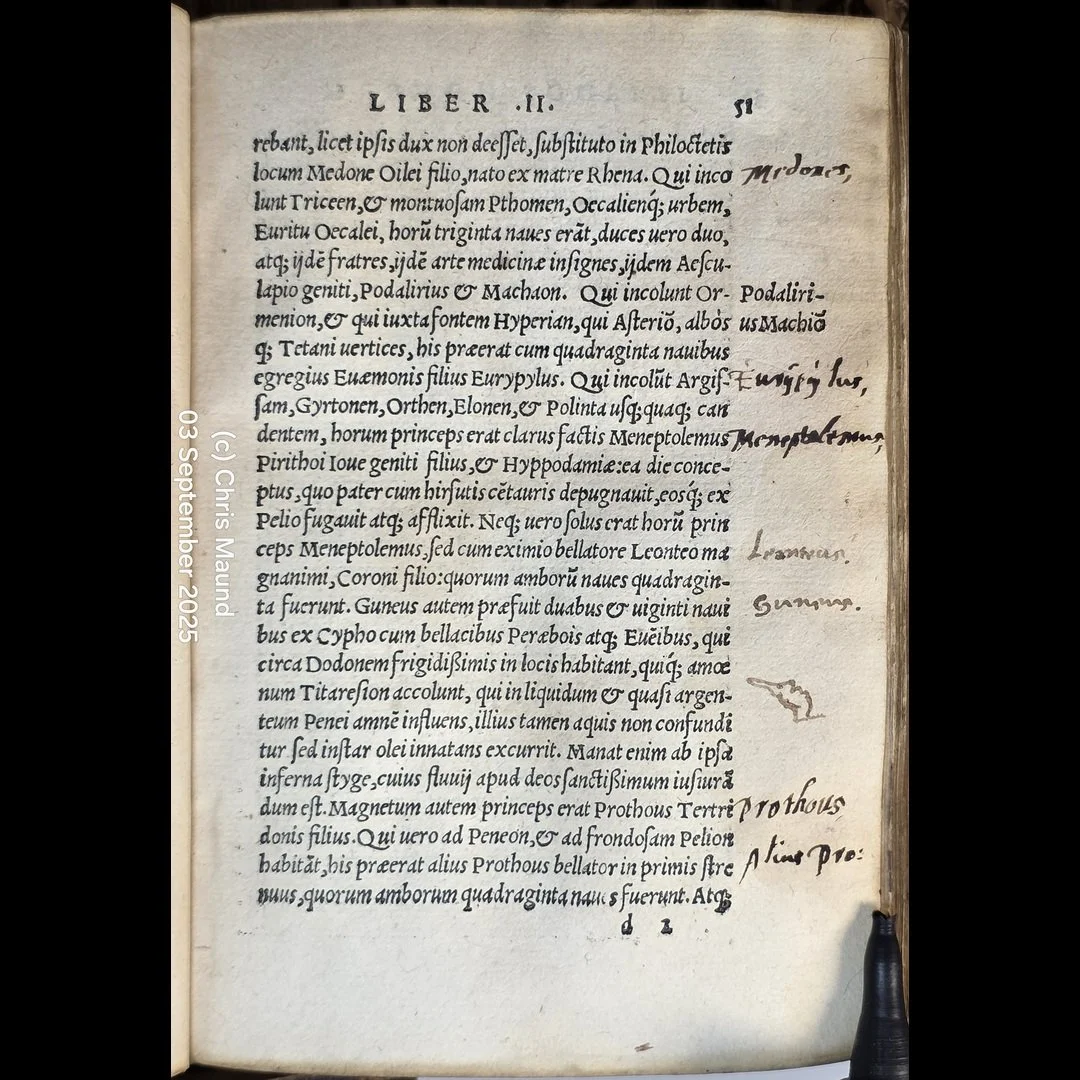 Image 12 of 19
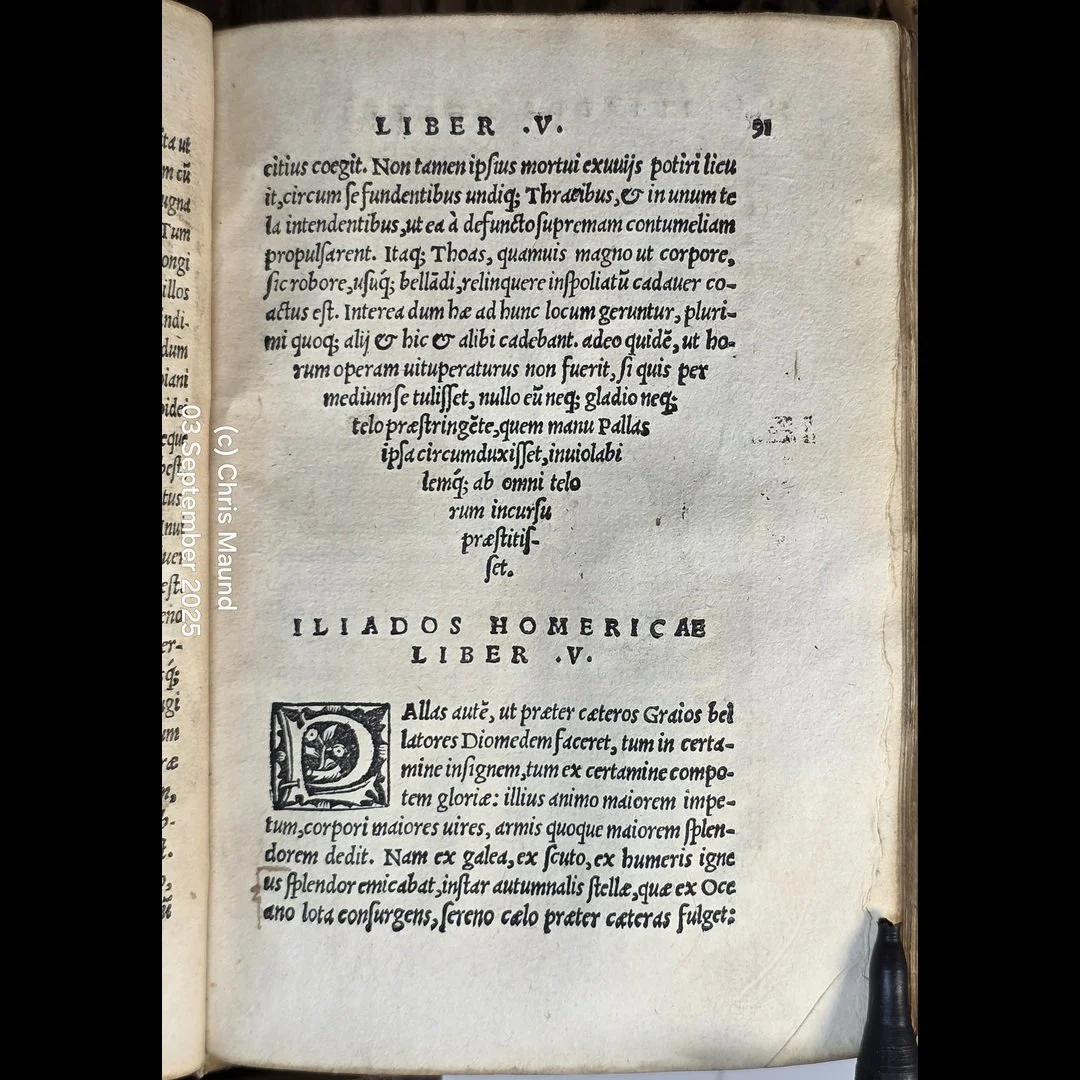 Image 13 of 19
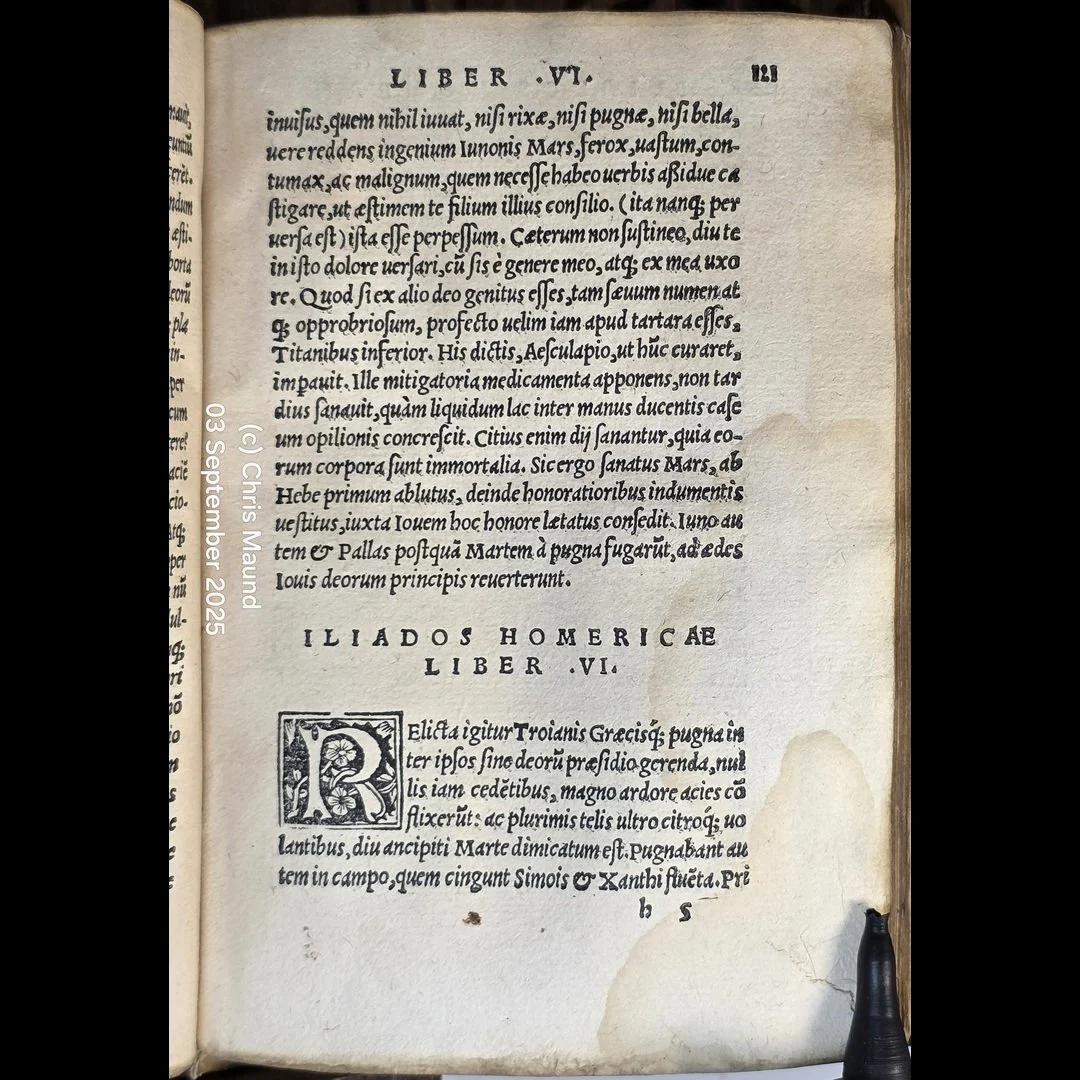 Image 14 of 19
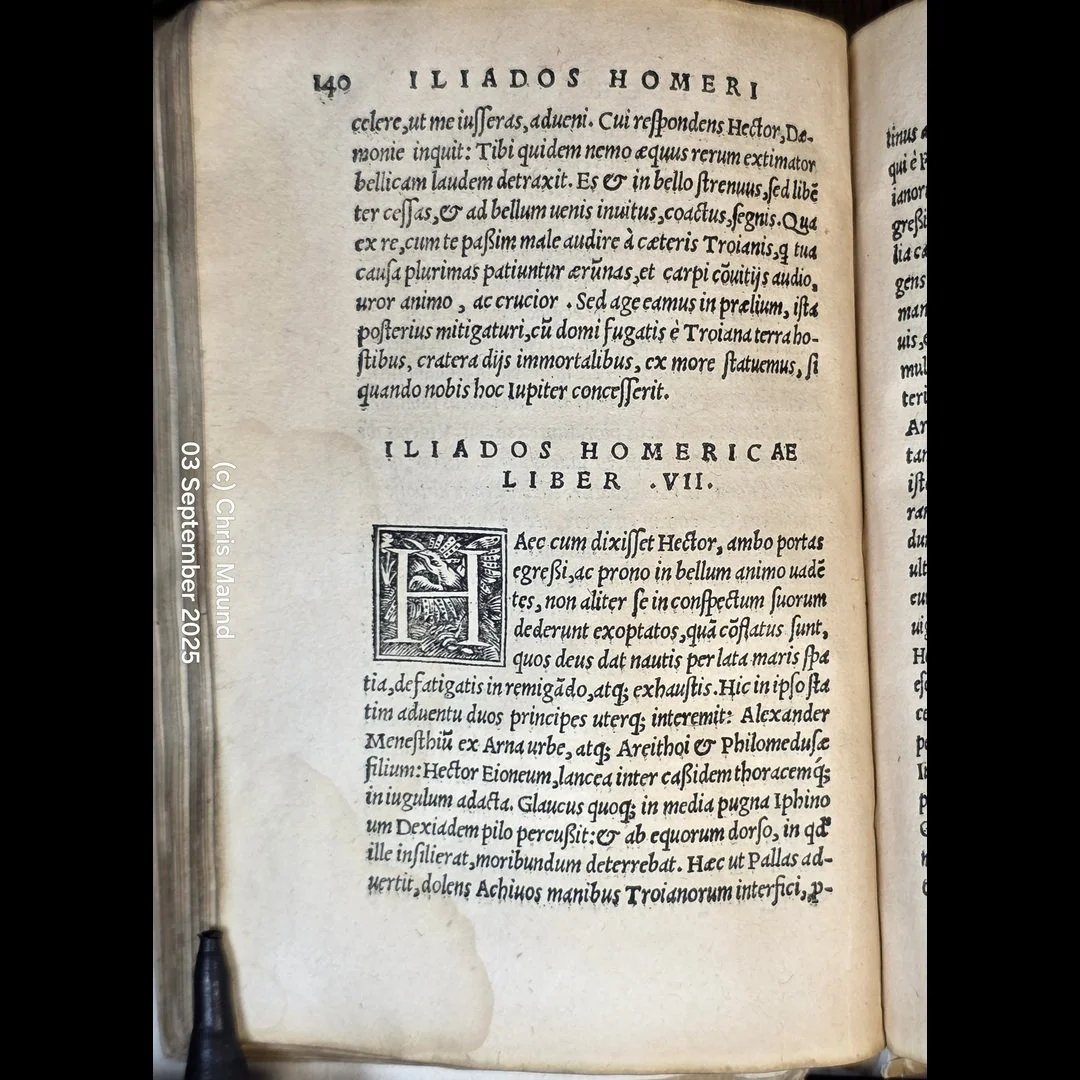 Image 15 of 19
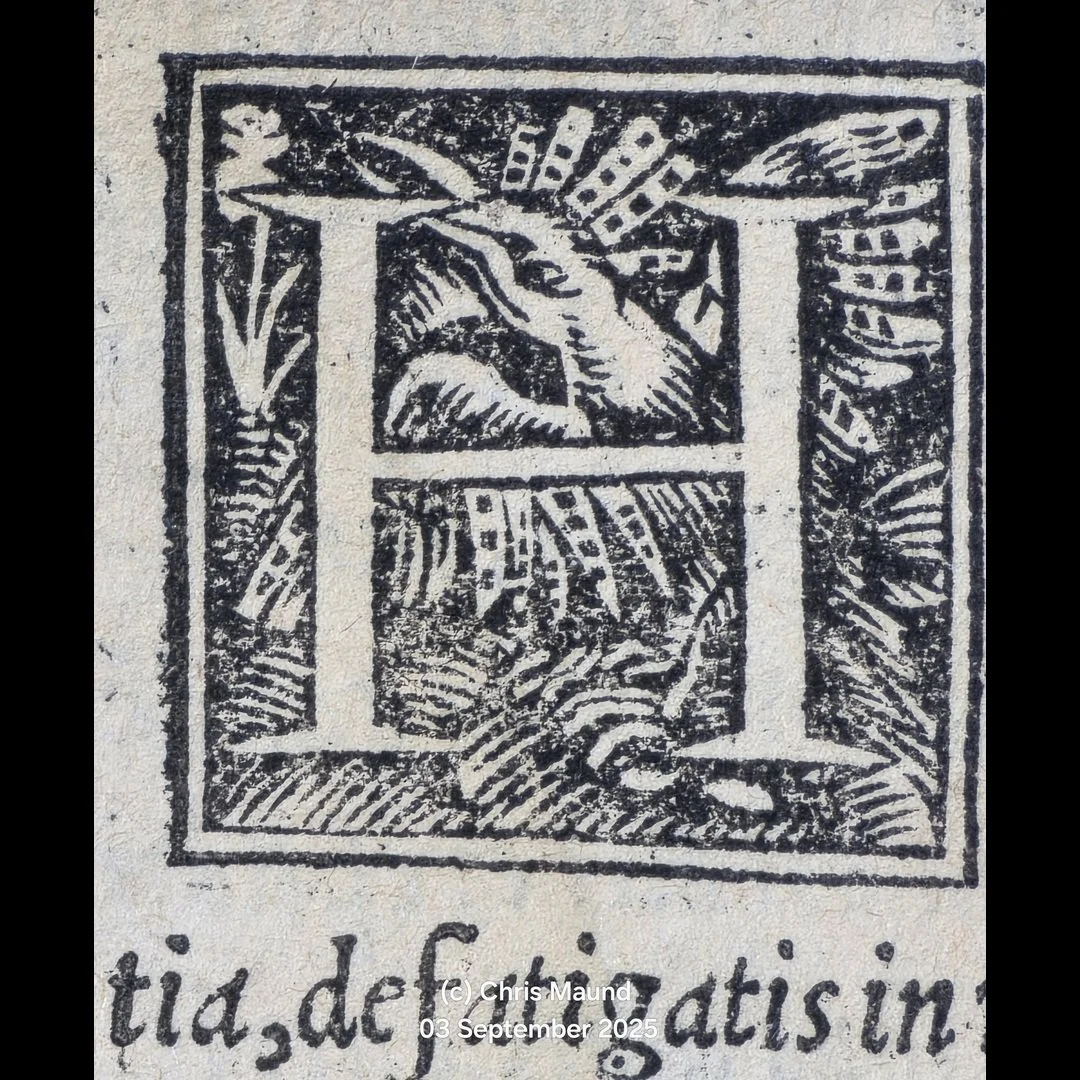 Image 16 of 19
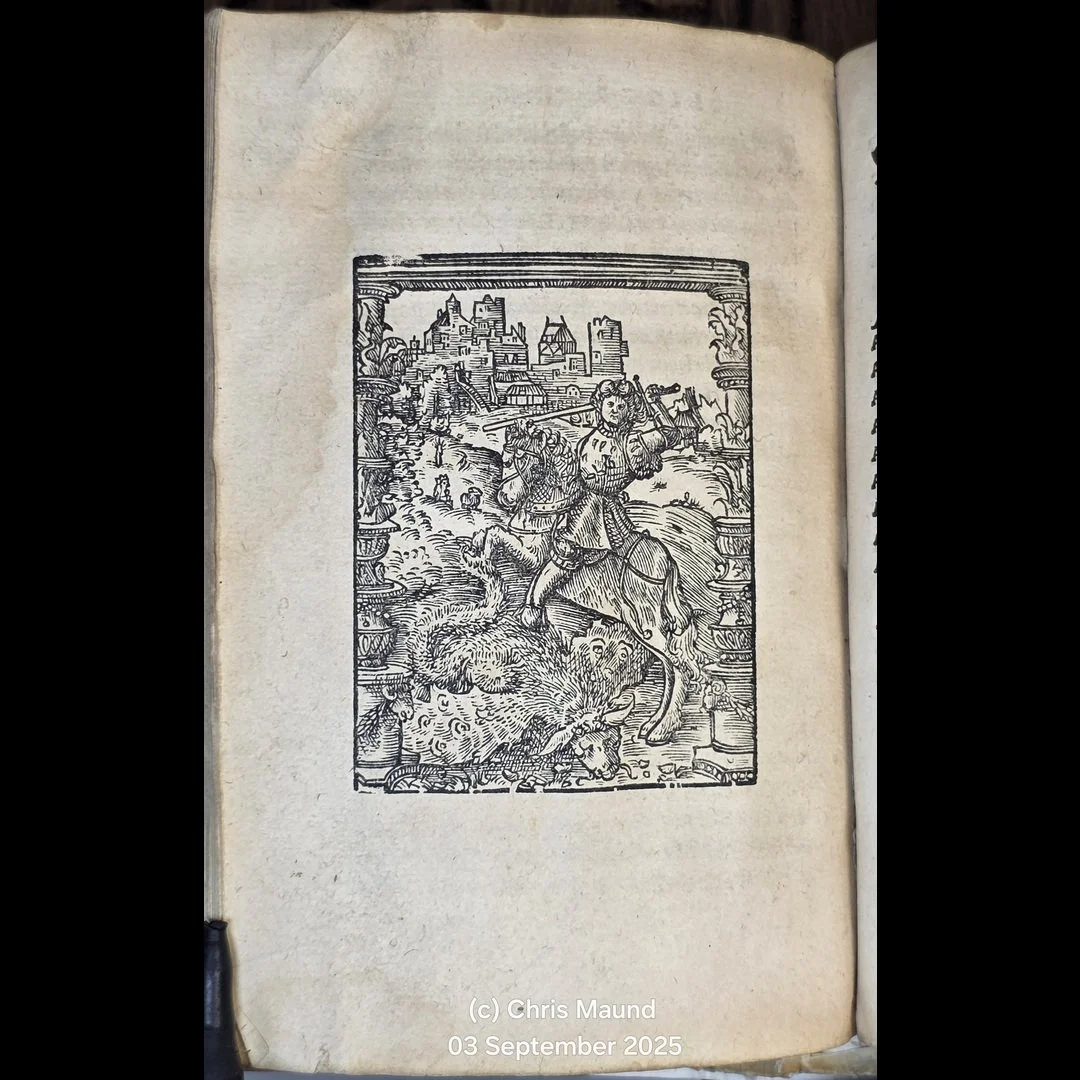 Image 17 of 19
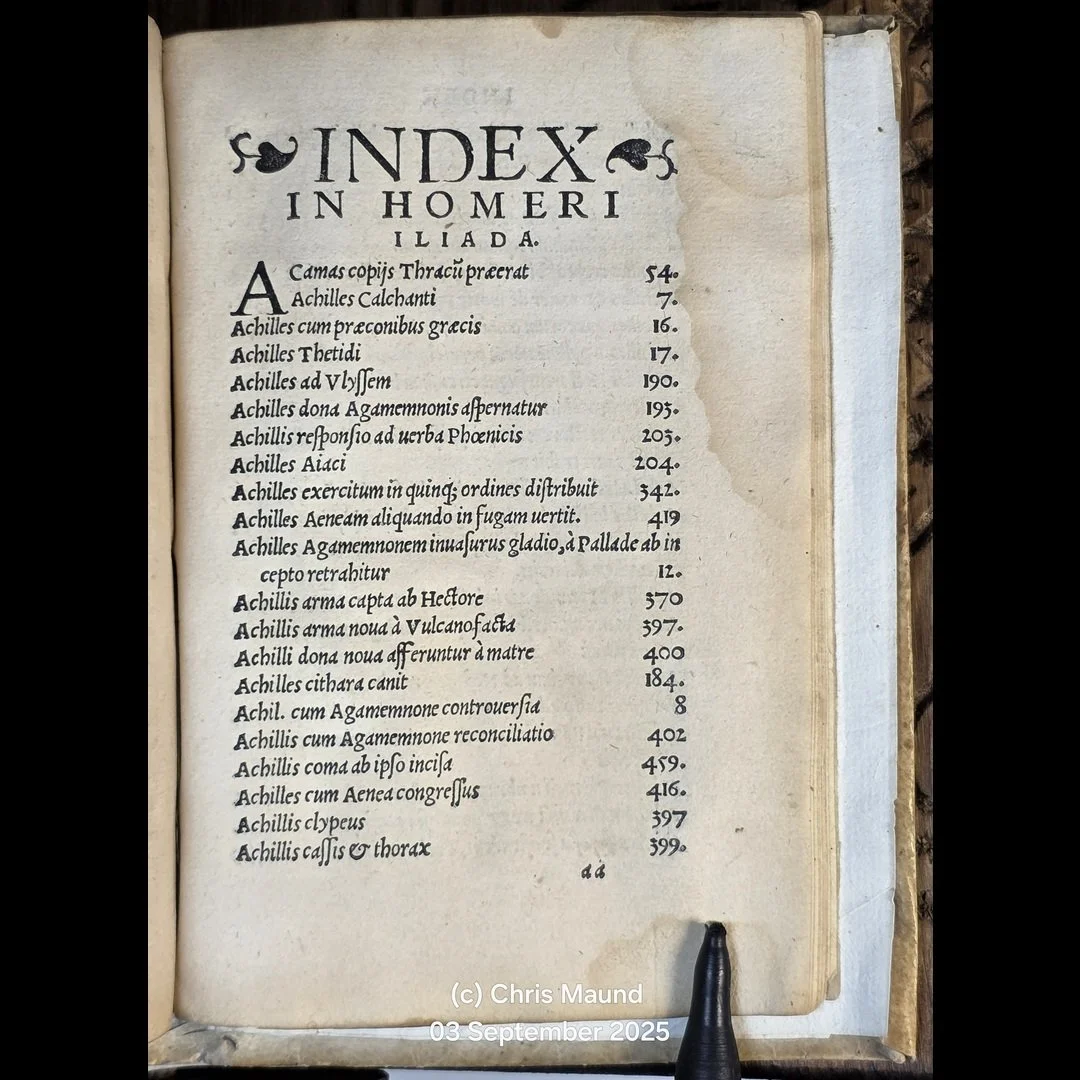 Image 18 of 19
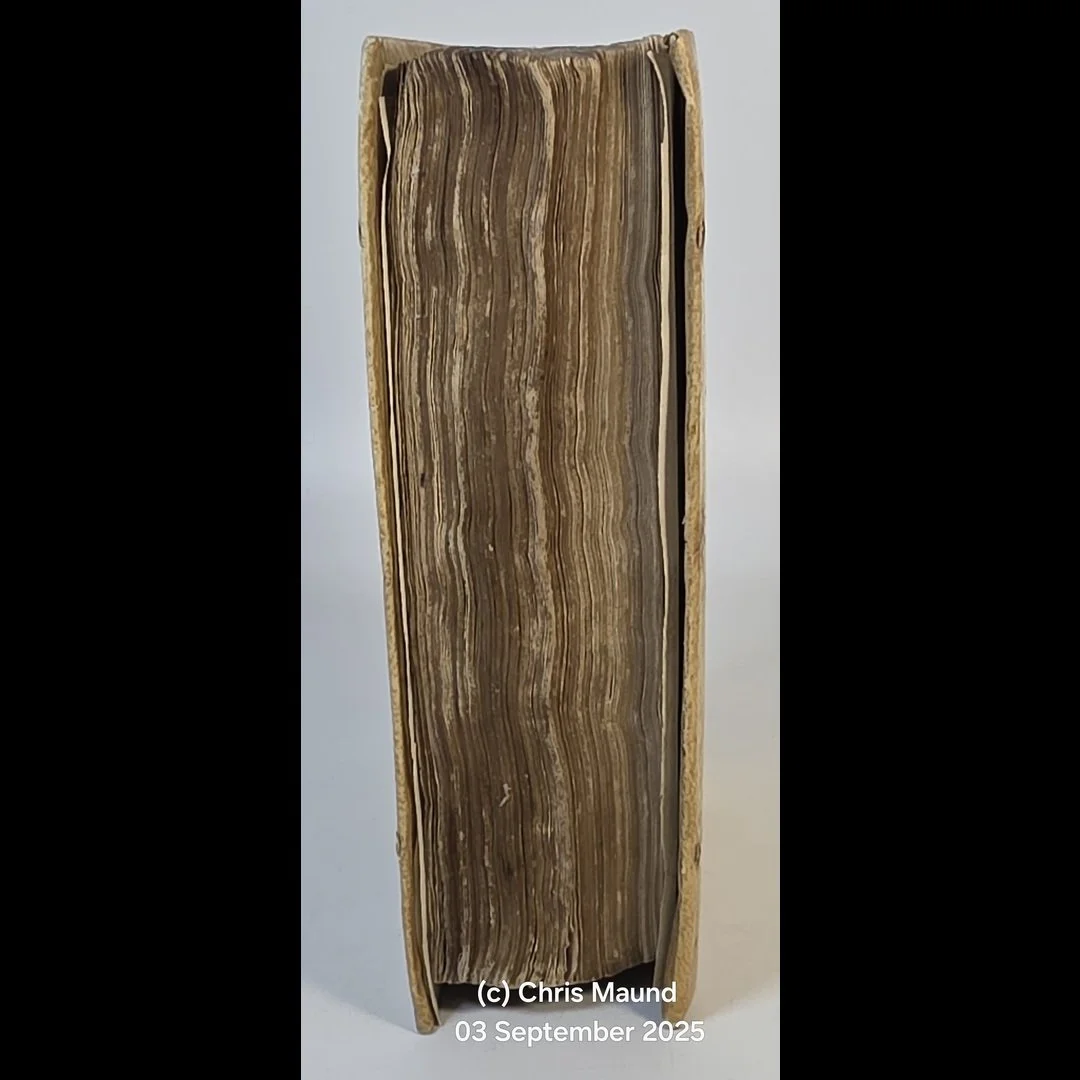 Image 19 of 19