1549 Expanded Galland Edition With Provenance
M. FABII QUINTILIANI ORATORIS
By Marcus Fabius Quintilianus (Quintilian)
KEY DETAILS
Condition: Very Good
Format: Hardcover, folio (fo 12 × 19 in 305 × 483 mm )
Note: Binding/size selection follows standard bibliographic conventions and is approximate; exact measurements may vary.
Published By: Parisiis, apud Vascosanum, in via quae est ad D. Jacobum sub Fontis insigni — Michel de Vascosan, Paris, 1549
Language: Latin
Illustrated By: Anonymous Renaissance woodcut cutter(s)
Provenance: Randolph Greenway Jr. — Thavies Inn, Holborn, London — 1725
Collation: In-folio, 2 parts; 336 leaves:
Dust Jacket: None, as issued, No Jacket
SKU: BTETM0002651
Shipping Info: Approximate Package Dimensions H: 20, L: 30, W: 30 (Units: cm), W: 3Kg
Tracked Shipping, Insurance Coverage as per Customer Request
DESCRIPTION
M. FABII QUINTILIANI ORATORIS
M. FABII QUINTILIANI ORATORIS ELOQUENTISSIMI DE INSTITUTIONE ORATORIA LIBRI XII
With Declamationes XIX and Seneca’s Declamationes with Rudolf Agricola’s Commentary
Edited by Pierre Galland (Petrus Gallandus), with annotations and commentaries by Petrus Mosellanus, Joachim Camerarius, Antonio Pinheiro and Rudolf Agricola.
A handsome and substantial Paris Renaissance folio of one of the foundational works of classical rhetoric and education: Quintilian’s Institutio Oratoria, here in the influential recension of the French humanist Pierre Galland and printed by Michel de Vascosan in March 1549.
This important expanded Galland edition follows the Paris edition of 1543, retaining Galland’s revised and enlarged analytical argumenta while adding a book of Senecan declamations accompanied by Rudolf Agricola’s commentary. The volume brings together Quintilian’s twelve books on the education and formation of the ideal orator, the nineteen Declamationes traditionally attributed to Quintilian, annotations by several leading Renaissance humanists, and the additional Seneca/Agricola text.
An especially attractive copy in an early eighteenth-century polished calf binding, richly gilt to the spine and with marbled endpapers. The volume also preserves a particularly appealing piece of English provenance: the ownership inscription of Randolph Greenway Jr. of Thavies Inn, Holborn, recording his purchase on 15 March 1725, together with his note “Compleat R.G.J.” and an apparent contemporary purchase-price notation of £3 15s 6d.
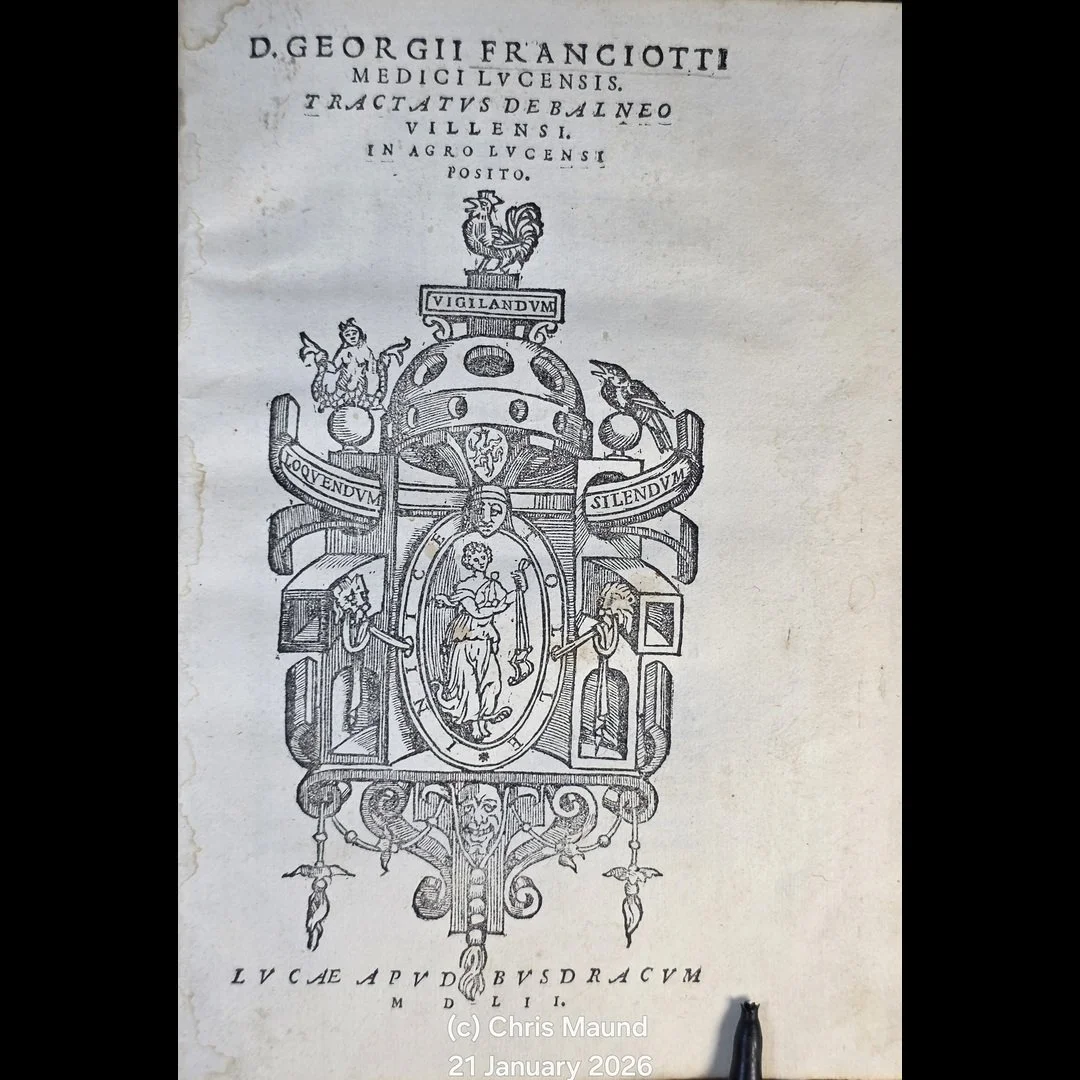
The principal title is enclosed within a striking architectural and figural woodcut border, while the text is enlivened throughout by large historiated and ornamental woodcut initials.
PROVENANCE
Randolph Greenway Jr. — Thavies Inn, Holborn, London — 1725
Contemporary ownership inscription recording:
“Randolph Greenway Junr. of Thavies Inne Holbourne his Book. Bot 15° Martij 1725.”
with the additional notation “Compleat R.G.J.” and apparent purchase price of £3 15s 6d.
Greenway is independently documented as an eighteenth-century English book owner and collector. The British Museum preserves an example of his engraved armorial bookplate identifying him as:
“Randolph Greenway of Thavies Inn London and of Chertsey in Surry Gent.”
Another surviving example of Greenway’s armorial bookplate is recorded in a seventeenth-century Jesuit volume, where he is documented as resident at Thavies Inn in 1731.
The removed-bookplate scar on the front pastedown may conceivably represent Greenway’s former armorial plate, although there is insufficient evidence to make that attribution definitively.
CONDITION, COLLATION & COPY NOTES
Publication Date: March 1549
A handsome and well-preserved sixteenth-century folio in an attractive early eighteenth-century polished calf binding.
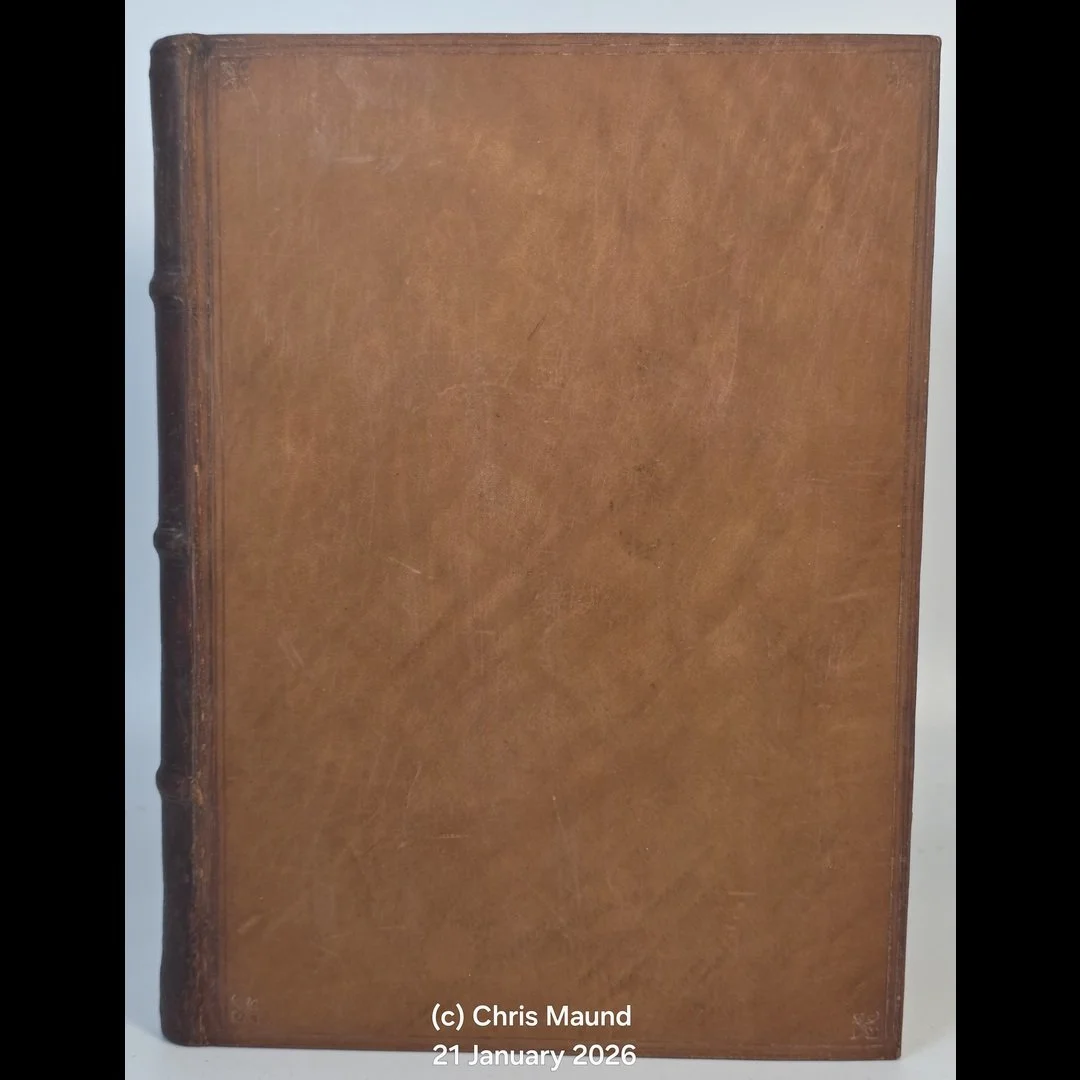
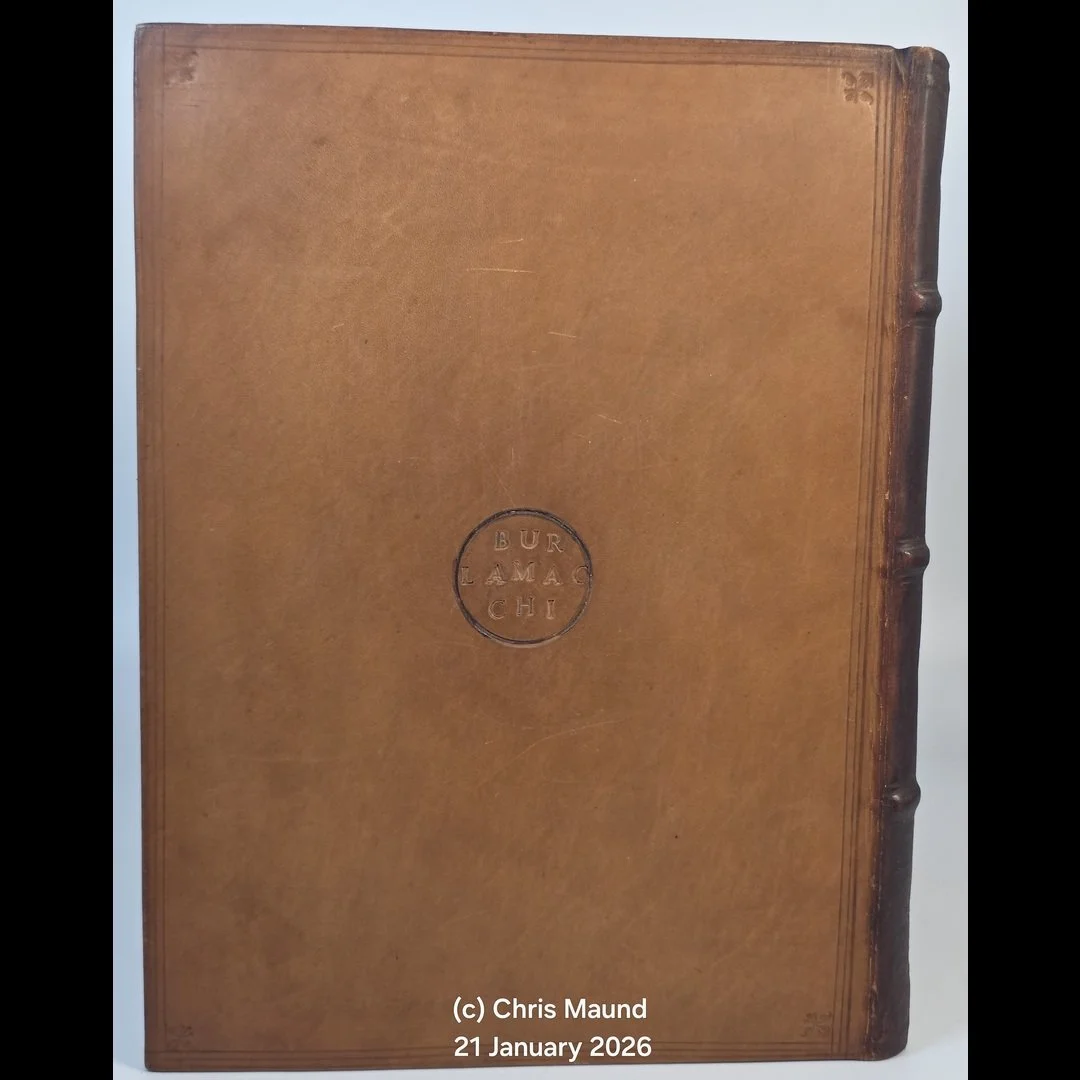
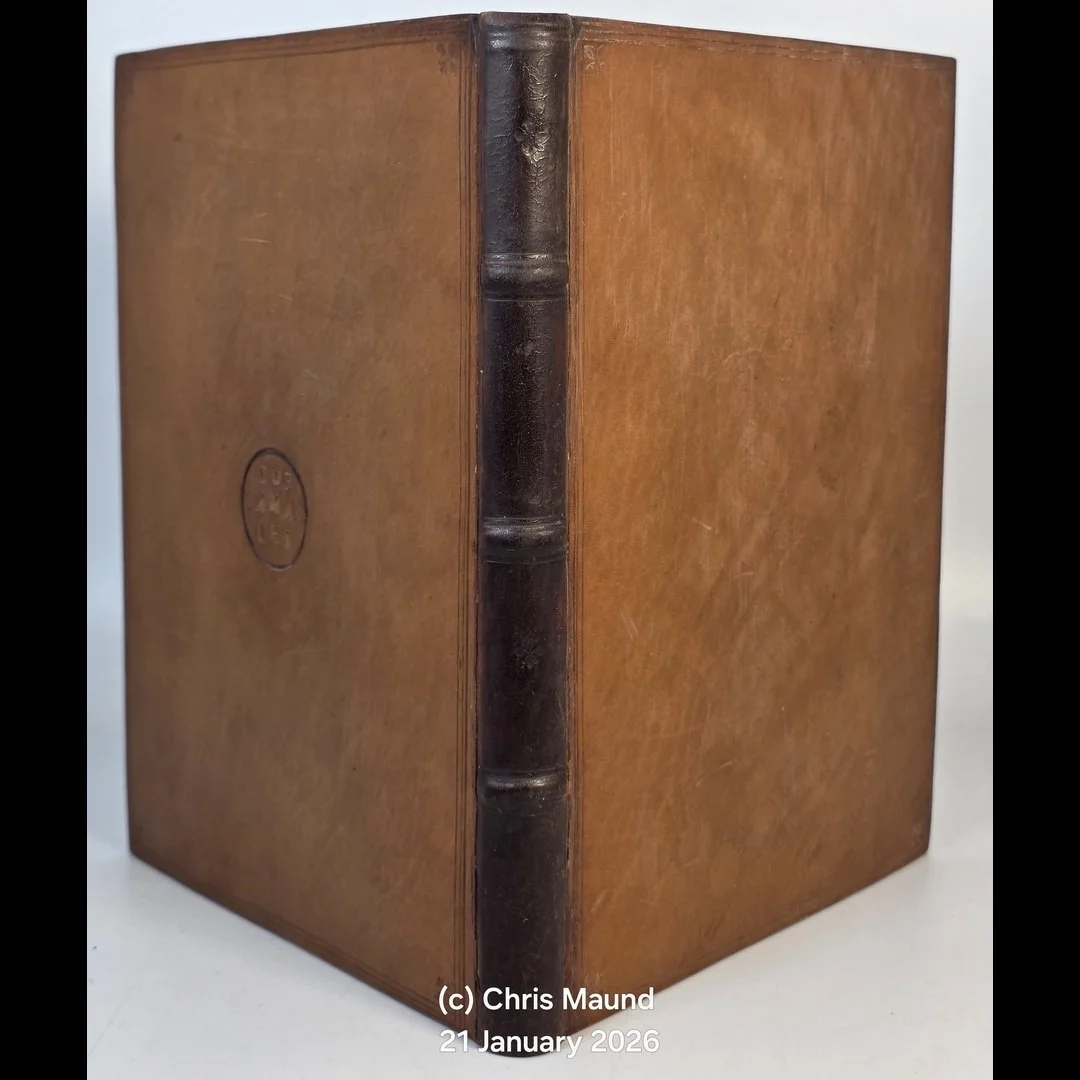
Bound in polished calf, the boards framed with double gilt fillets. Spine with six raised bands forming seven compartments, the second compartment with gilt-lettered dark leather title label, the remaining compartments richly decorated with gilt floral and ornamental tooling. Marbled pastedowns and endpapers.
Binding with expected rubbing, surface marking and minor scratches from age and use, with some wear to corners, edges and spine extremities. The boards remain attached and the binding presents very attractively, with much of the gilt tooling still strong.
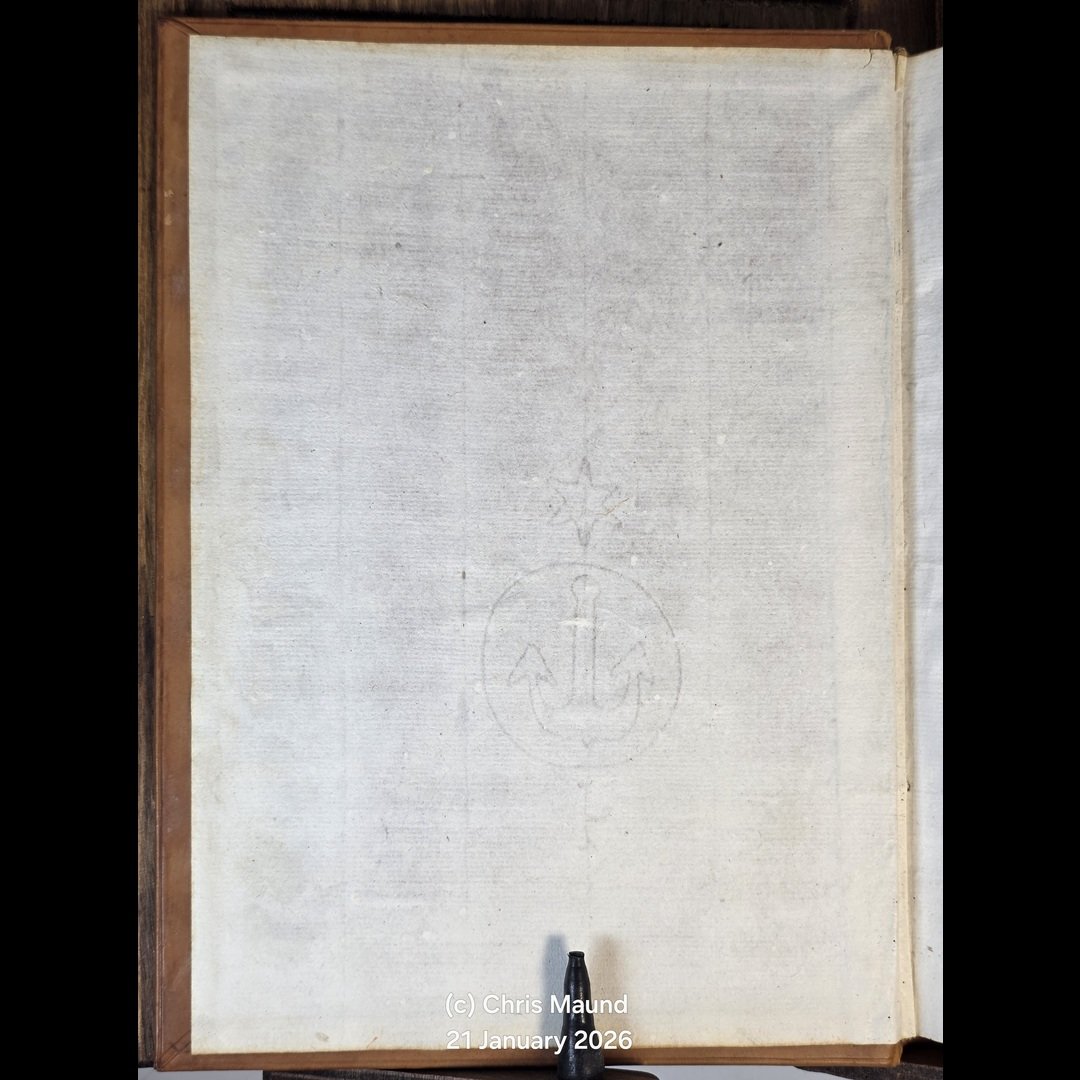
Front marbled pastedown with a conspicuous rectangular area of abrasion/loss consistent with the removal of an earlier bookplate. As Randolph Greenway is independently known to have used an engraved armorial bookplate, the possibility that his plate once occupied this position is intriguing, although this cannot presently be established with certainty.
The front flyleaf bears the contemporary ownership inscription:
“Randolph Greenway Junr. of Thavies Inne Holbourne his Book. Bot 15° Martij 1725.”
Above is the note “Compleat R.G.J.”, apparently Greenway’s own contemporary statement that he had checked the volume as complete. At the upper right is an apparent contemporary price notation of £3 15s 6d.
Principal title page present within a large architectural and figural woodcut border. Separate title page to:
M. Fabii Quintiliani Oratoris eloquentissimi Declamationes XIX
also dated Paris, 1549, with the Vascosan imprint.
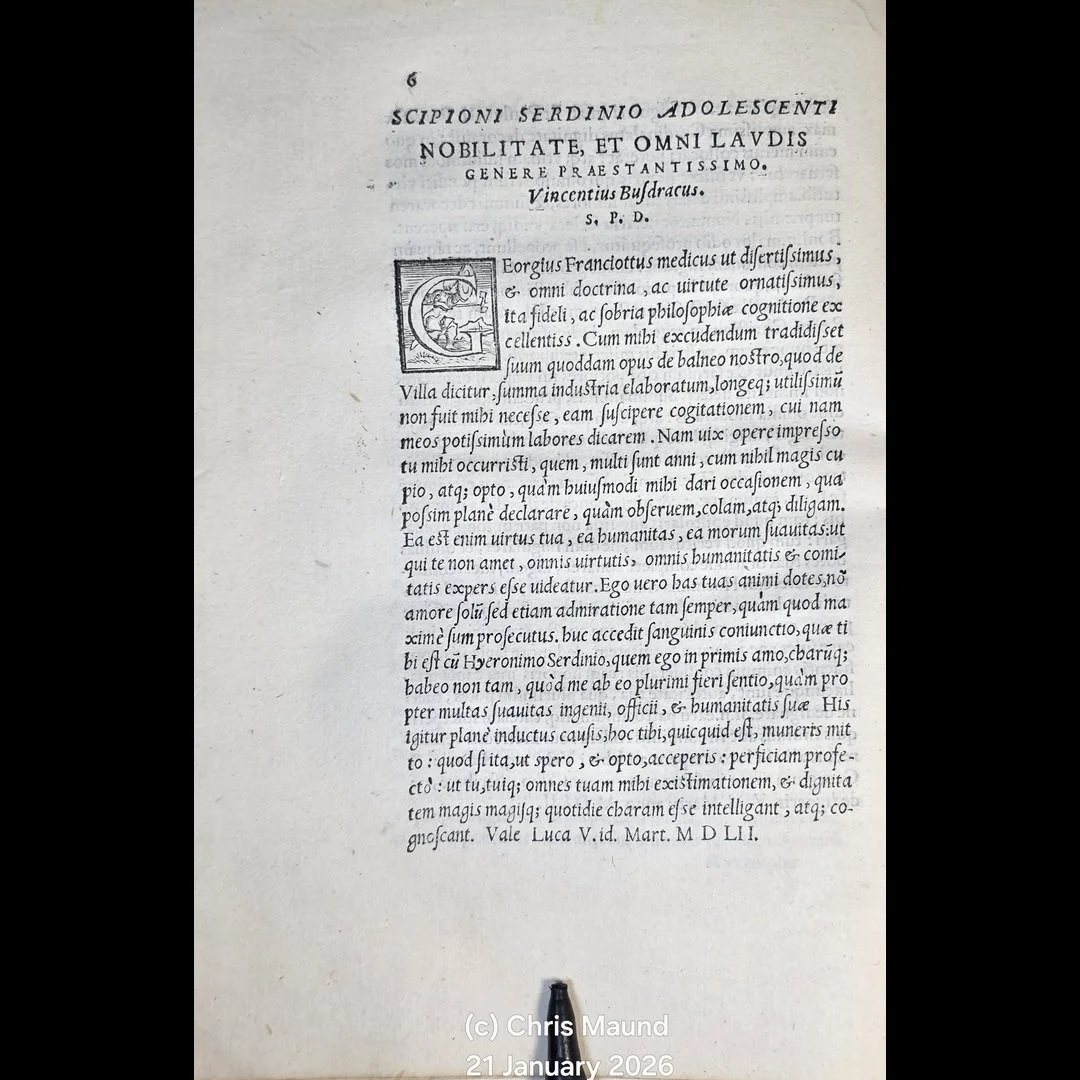
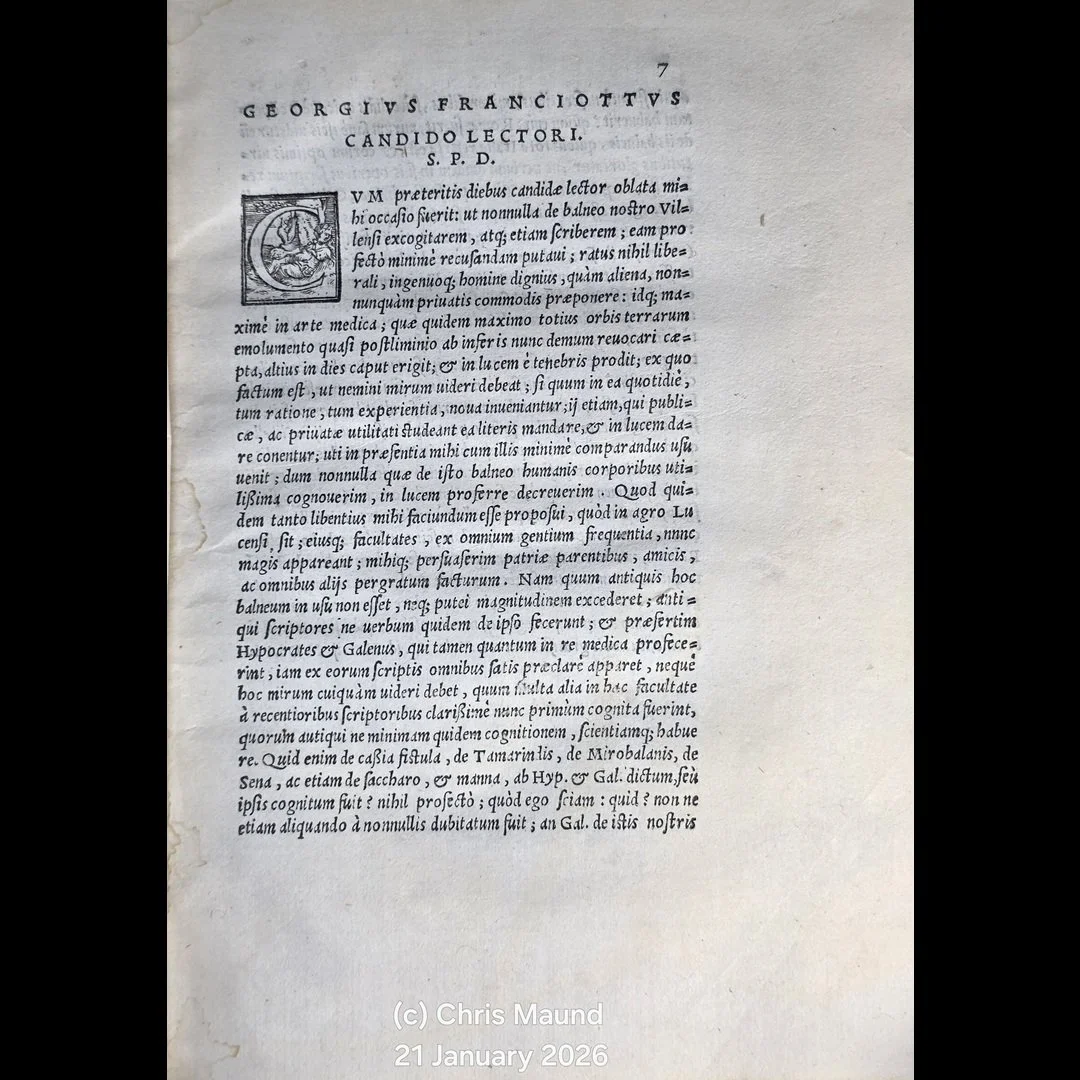
Internally generally very clean and well preserved for a book of this age. Paper remains strong, with generous margins, occasional light age-toning, minor spotting, handling marks and isolated marginal soiling. Printing generally strong and clear. No significant damp staining, extensive worming or material textual loss apparent from the copy examined.
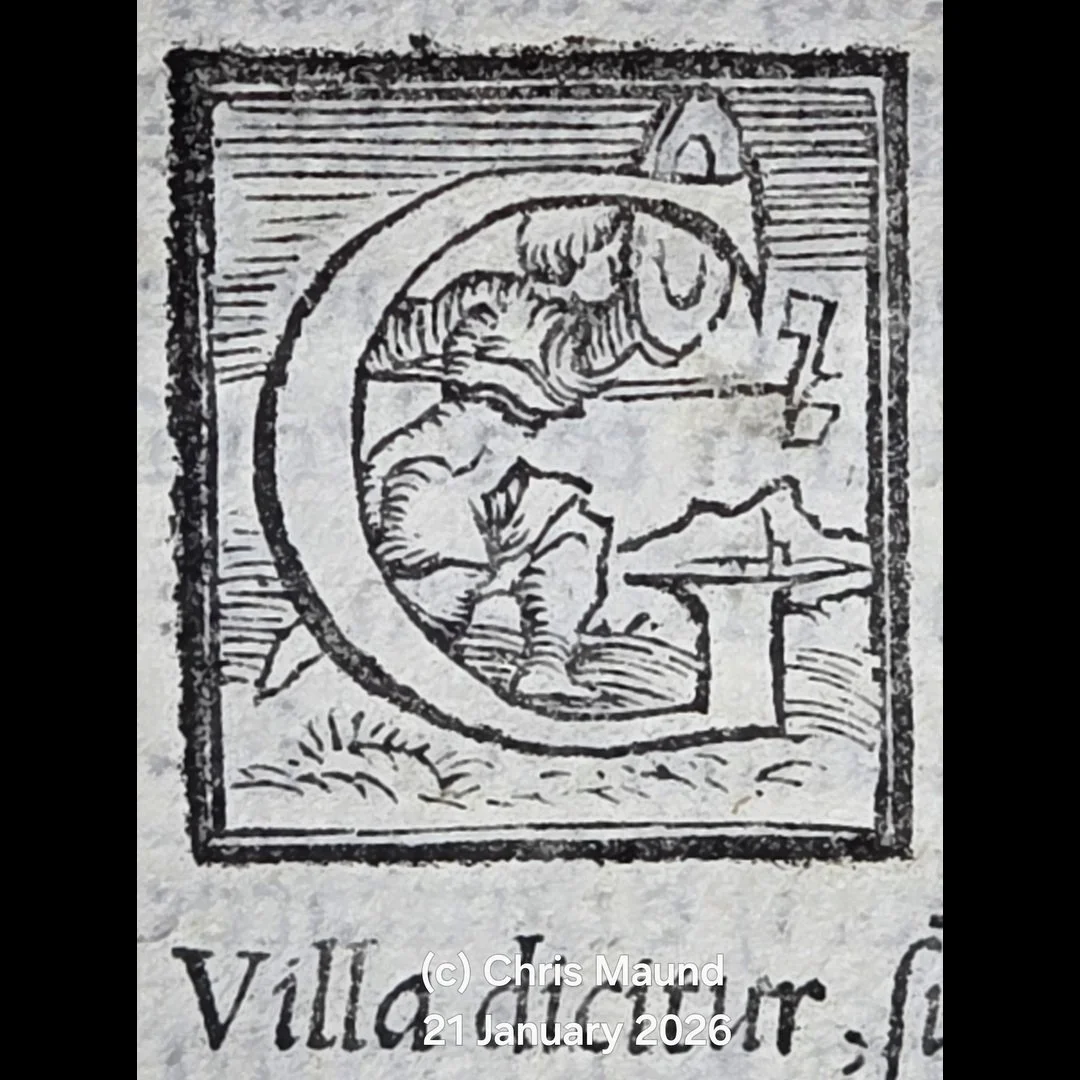
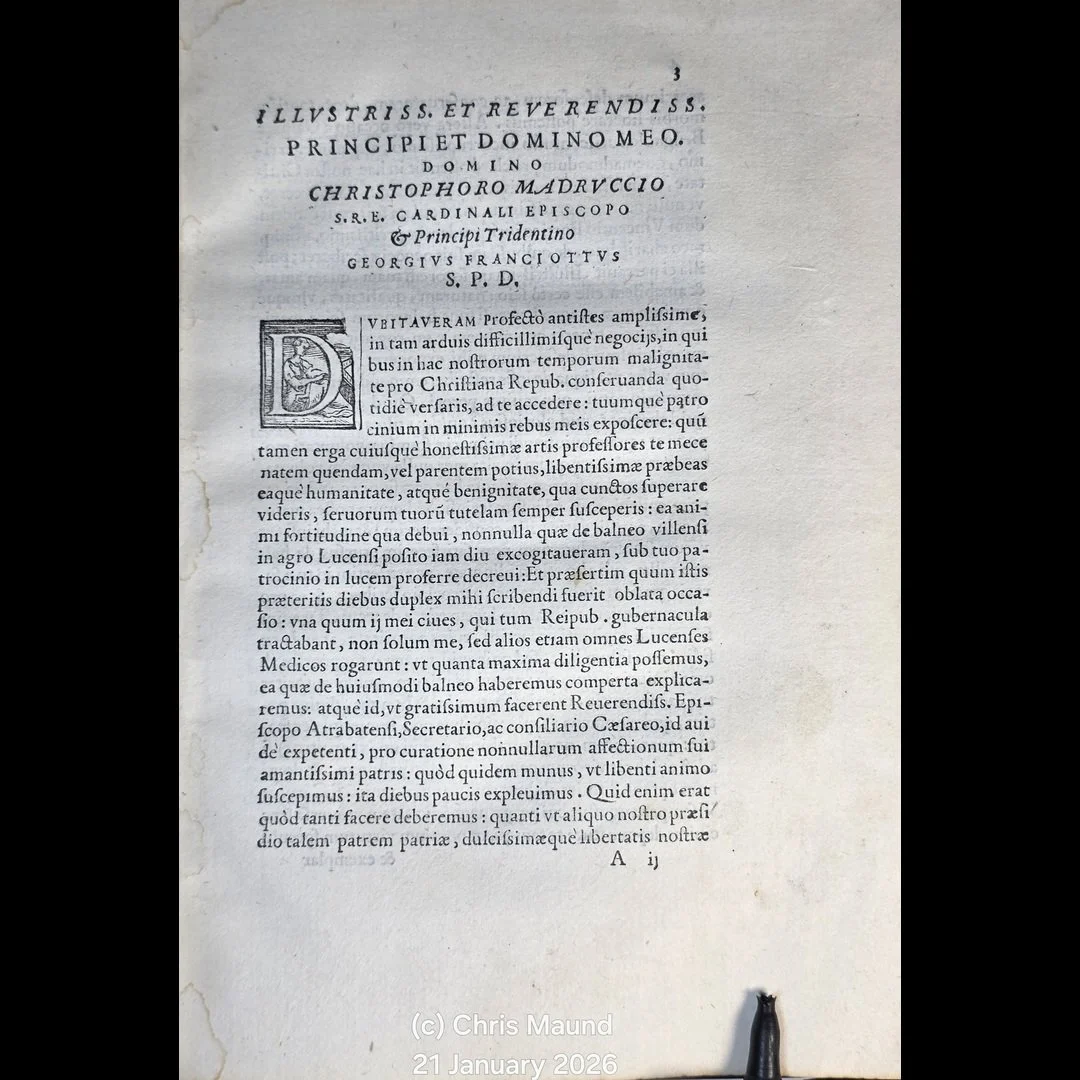
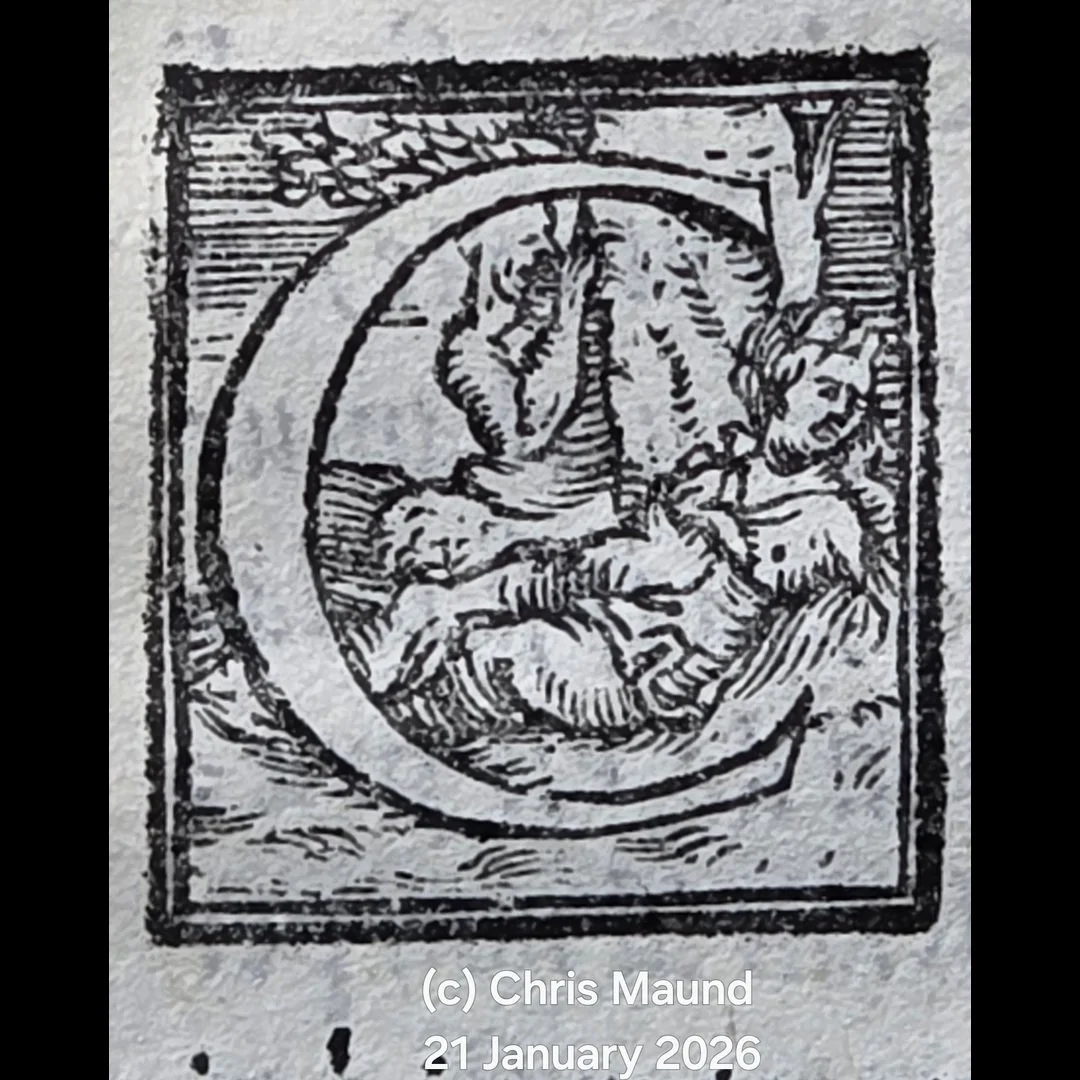
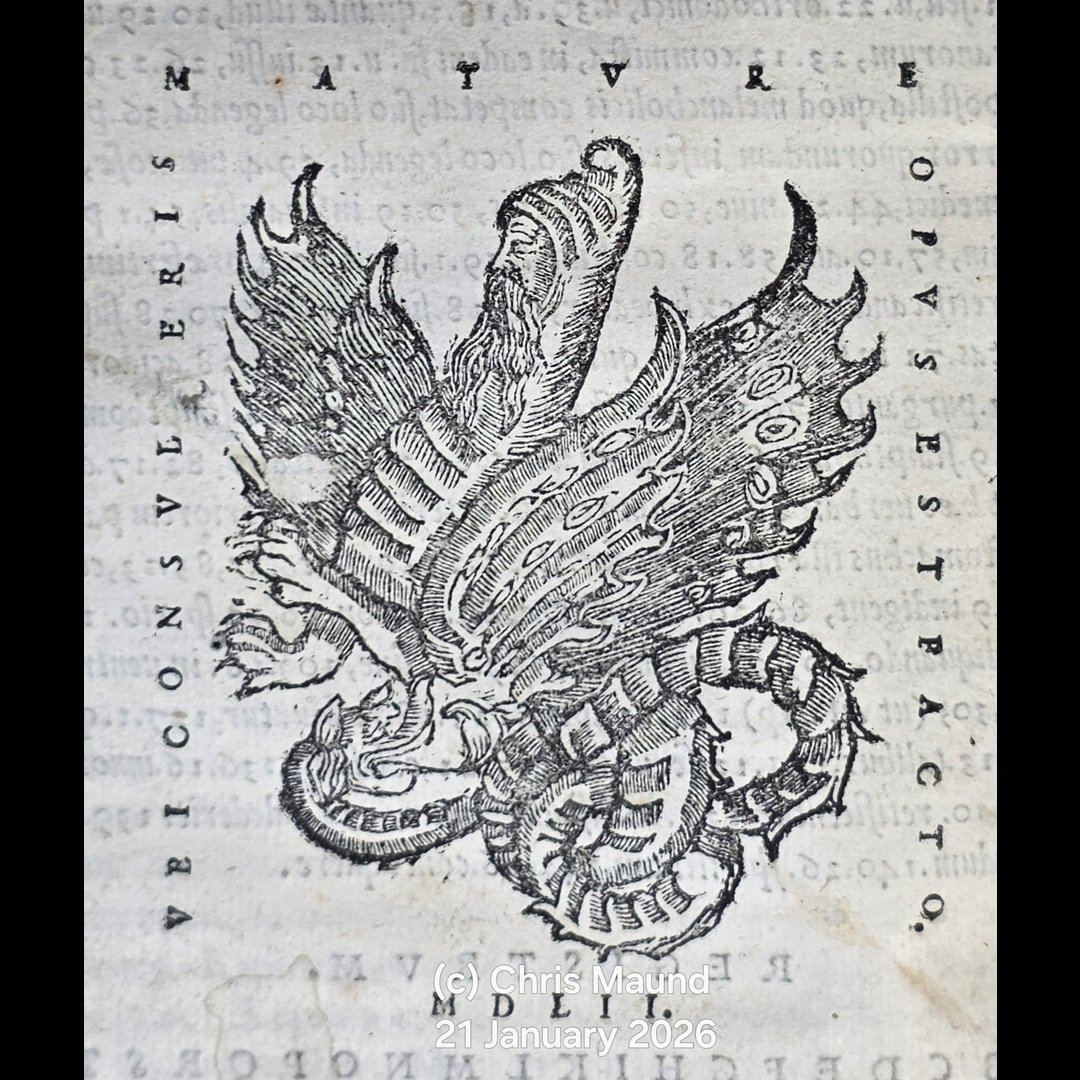
Numerous attractive historiated and ornamental woodcut initials occur throughout, several incorporating human figures, grotesques, foliage and Renaissance ornament.
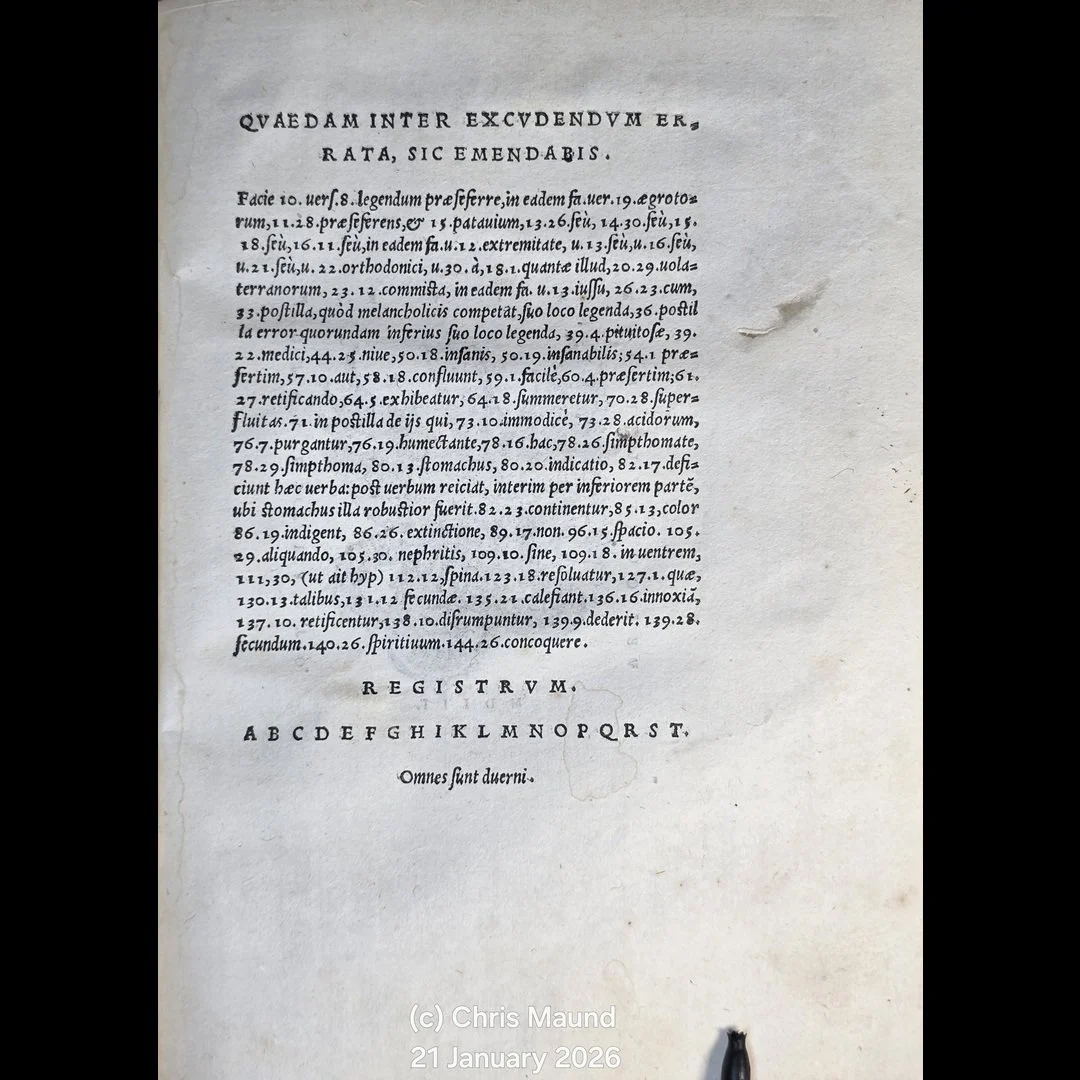
The terminal index is present and bound at the end. Bibliographical descriptions specifically record the index gatherings as occurring either at the end of the volume or after the preliminary gathering; the arrangement in this copy is therefore a recognised issue arrangement.
Please see Photos as part of condition report.
REFERENCES
BP16_113727 — Bibliographie des éditions parisiennes du XVIe siècle
Adams Q40
Biblioteca Nazionale Braidense — 1549 edition, including recorded Vascosan variant to the second title
BnF, De institutione oratoria libri XII, Paris, 1549
Brunet, V, 1032
Renouard — Paris printing / Vascosan bibliography
SYNOPSIS
This 1549 edition marks a major milestone in the humanist revival of Quintilian. Edited by Petrus Gallandus (Pierre Galland, 1495–1559), Royal Professor of Latin at the Collège Royal in Paris, it was the first to present a critically revised text based on comparison of early manuscripts in the royal and Sorbonne collections. Gallandus brought a new philological rigour to Quintilian’s Institutio Oratoria, correcting hundreds of inherited errors from the Aldine and Estienne texts, and prefacing each book with detailed argumenta — concise analytical summaries of content and rhetorical structure. For sixteenth-century students of rhetoric, this Paris folio represented the most authoritative and comprehensive version of Quintilian then available — uniting textual criticism, pedagogy, and typographical excellence at the high point of French humanism.
AUTHOR BIO
Marcus Fabius Quintilianus, usually known in English as Quintilian, was a Roman rhetorician and teacher born in Hispania around AD 35 and active principally at Rome during the Flavian period.
His reputation rests above all upon the twelve books of the Institutio Oratoria, one of antiquity’s fullest surviving discussions of education, rhetoric, literary criticism and the moral responsibilities of public speech.
Quintilian treats the education of the orator as a lifelong process, beginning in childhood and extending through grammar, literature, rhetorical exercises, invention, arrangement, style, memory and delivery. His ideal orator is not simply an accomplished speaker but the celebrated vir bonus dicendi peritus — the good man skilled in speaking.
Rediscovered and enthusiastically studied by Renaissance humanists, Quintilian became a major authority upon education, classical Latin style and rhetoric throughout early modern Europe.
Editor Bio:
Pierre Galland (Petrus Gallandus, c. 1510–1559) was a French humanist and scholar of Latin associated with the intellectual world of the Collège Royal in Paris.
Galland’s first edition of Quintilian appeared at Paris in 1538. His recension became influential through its textual organisation, its use of earlier textual witnesses and particularly its analytical argumenta, placed before the individual chapters to clarify the structure and progression of Quintilian’s argument.
The present 1549 edition represents a mature and expanded form of this editorial tradition. It follows Galland’s 1543 edition while supplementing the Quintilian material with Senecan declamations and Rudolf Agricola’s commentary.
The edition further incorporates scholarly material by Petrus Mosellanus, whose annotations cover the first seven books; Joachim Camerarius, on Books I and II; and Antonio Pinheiro, on Book III.
Printer Bio:
Michel de Vascosan (c. 1500–1577) was one of the leading Parisian humanist printers and booksellers of the sixteenth century.
Originally from Amiens, he became a sworn bookseller of the University of Paris and established himself in the important printing district of the rue Saint-Jacques. His marriage to Catherine Badius, daughter of the celebrated humanist printer Josse Badius Ascensius, placed him within one of the most distinguished printing families of Renaissance Paris; through the Badius family he was also connected by marriage with Robert I Estienne and other major Paris printers.
Vascosan specialised particularly in classical, humanist and scholarly texts and became known for the clarity and elegance of his Roman typography, spacious page design and high-quality printing. In 1561 he received the title of Printer to the King.
The present Quintilian is characteristic of his classical production: generously proportioned, typographically assured and richly supplied with ornamental and historiated woodcut initials.
ILLUSTRATOR
Anonymous Renaissance woodcut cutter(s)
The principal title is set within a large architectural and figural woodcut border incorporating Renaissance ornament and emblematic figures. Throughout the volume are numerous large historiated and floriated initials, several containing human figures, animals, grotesques and scrolling vegetation.
No individual woodcut artist has been securely identified for the edition.
1549 Expanded Galland Edition With Provenance
M. FABII QUINTILIANI ORATORIS
By Marcus Fabius Quintilianus (Quintilian)
KEY DETAILS
Condition: Very Good
Format: Hardcover, folio (fo 12 × 19 in 305 × 483 mm )
Note: Binding/size selection follows standard bibliographic conventions and is approximate; exact measurements may vary.
Published By: Parisiis, apud Vascosanum, in via quae est ad D. Jacobum sub Fontis insigni — Michel de Vascosan, Paris, 1549
Language: Latin
Illustrated By: Anonymous Renaissance woodcut cutter(s)
Provenance: Randolph Greenway Jr. — Thavies Inn, Holborn, London — 1725
Collation: In-folio, 2 parts; 336 leaves:
Dust Jacket: None, as issued, No Jacket
SKU: BTETM0002651
Shipping Info: Approximate Package Dimensions H: 20, L: 30, W: 30 (Units: cm), W: 3Kg
Tracked Shipping, Insurance Coverage as per Customer Request
DESCRIPTION
M. FABII QUINTILIANI ORATORIS
M. FABII QUINTILIANI ORATORIS ELOQUENTISSIMI DE INSTITUTIONE ORATORIA LIBRI XII
With Declamationes XIX and Seneca’s Declamationes with Rudolf Agricola’s Commentary
Edited by Pierre Galland (Petrus Gallandus), with annotations and commentaries by Petrus Mosellanus, Joachim Camerarius, Antonio Pinheiro and Rudolf Agricola.
A handsome and substantial Paris Renaissance folio of one of the foundational works of classical rhetoric and education: Quintilian’s Institutio Oratoria, here in the influential recension of the French humanist Pierre Galland and printed by Michel de Vascosan in March 1549.
This important expanded Galland edition follows the Paris edition of 1543, retaining Galland’s revised and enlarged analytical argumenta while adding a book of Senecan declamations accompanied by Rudolf Agricola’s commentary. The volume brings together Quintilian’s twelve books on the education and formation of the ideal orator, the nineteen Declamationes traditionally attributed to Quintilian, annotations by several leading Renaissance humanists, and the additional Seneca/Agricola text.
An especially attractive copy in an early eighteenth-century polished calf binding, richly gilt to the spine and with marbled endpapers. The volume also preserves a particularly appealing piece of English provenance: the ownership inscription of Randolph Greenway Jr. of Thavies Inn, Holborn, recording his purchase on 15 March 1725, together with his note “Compleat R.G.J.” and an apparent contemporary purchase-price notation of £3 15s 6d.
The principal title is enclosed within a striking architectural and figural woodcut border, while the text is enlivened throughout by large historiated and ornamental woodcut initials.
PROVENANCE
Randolph Greenway Jr. — Thavies Inn, Holborn, London — 1725
Contemporary ownership inscription recording:
“Randolph Greenway Junr. of Thavies Inne Holbourne his Book. Bot 15° Martij 1725.”
with the additional notation “Compleat R.G.J.” and apparent purchase price of £3 15s 6d.
Greenway is independently documented as an eighteenth-century English book owner and collector. The British Museum preserves an example of his engraved armorial bookplate identifying him as:
“Randolph Greenway of Thavies Inn London and of Chertsey in Surry Gent.”
Another surviving example of Greenway’s armorial bookplate is recorded in a seventeenth-century Jesuit volume, where he is documented as resident at Thavies Inn in 1731.
The removed-bookplate scar on the front pastedown may conceivably represent Greenway’s former armorial plate, although there is insufficient evidence to make that attribution definitively.
CONDITION, COLLATION & COPY NOTES
Publication Date: March 1549
A handsome and well-preserved sixteenth-century folio in an attractive early eighteenth-century polished calf binding.
Bound in polished calf, the boards framed with double gilt fillets. Spine with six raised bands forming seven compartments, the second compartment with gilt-lettered dark leather title label, the remaining compartments richly decorated with gilt floral and ornamental tooling. Marbled pastedowns and endpapers.
Binding with expected rubbing, surface marking and minor scratches from age and use, with some wear to corners, edges and spine extremities. The boards remain attached and the binding presents very attractively, with much of the gilt tooling still strong.
Front marbled pastedown with a conspicuous rectangular area of abrasion/loss consistent with the removal of an earlier bookplate. As Randolph Greenway is independently known to have used an engraved armorial bookplate, the possibility that his plate once occupied this position is intriguing, although this cannot presently be established with certainty.
The front flyleaf bears the contemporary ownership inscription:
“Randolph Greenway Junr. of Thavies Inne Holbourne his Book. Bot 15° Martij 1725.”
Above is the note “Compleat R.G.J.”, apparently Greenway’s own contemporary statement that he had checked the volume as complete. At the upper right is an apparent contemporary price notation of £3 15s 6d.
Principal title page present within a large architectural and figural woodcut border. Separate title page to:
M. Fabii Quintiliani Oratoris eloquentissimi Declamationes XIX
also dated Paris, 1549, with the Vascosan imprint.
Internally generally very clean and well preserved for a book of this age. Paper remains strong, with generous margins, occasional light age-toning, minor spotting, handling marks and isolated marginal soiling. Printing generally strong and clear. No significant damp staining, extensive worming or material textual loss apparent from the copy examined.
Numerous attractive historiated and ornamental woodcut initials occur throughout, several incorporating human figures, grotesques, foliage and Renaissance ornament.
The terminal index is present and bound at the end. Bibliographical descriptions specifically record the index gatherings as occurring either at the end of the volume or after the preliminary gathering; the arrangement in this copy is therefore a recognised issue arrangement.
Please see Photos as part of condition report.
REFERENCES
BP16_113727 — Bibliographie des éditions parisiennes du XVIe siècle
Adams Q40
Biblioteca Nazionale Braidense — 1549 edition, including recorded Vascosan variant to the second title
BnF, De institutione oratoria libri XII, Paris, 1549
Brunet, V, 1032
Renouard — Paris printing / Vascosan bibliography
SYNOPSIS
This 1549 edition marks a major milestone in the humanist revival of Quintilian. Edited by Petrus Gallandus (Pierre Galland, 1495–1559), Royal Professor of Latin at the Collège Royal in Paris, it was the first to present a critically revised text based on comparison of early manuscripts in the royal and Sorbonne collections. Gallandus brought a new philological rigour to Quintilian’s Institutio Oratoria, correcting hundreds of inherited errors from the Aldine and Estienne texts, and prefacing each book with detailed argumenta — concise analytical summaries of content and rhetorical structure. For sixteenth-century students of rhetoric, this Paris folio represented the most authoritative and comprehensive version of Quintilian then available — uniting textual criticism, pedagogy, and typographical excellence at the high point of French humanism.
AUTHOR BIO
Marcus Fabius Quintilianus, usually known in English as Quintilian, was a Roman rhetorician and teacher born in Hispania around AD 35 and active principally at Rome during the Flavian period.
His reputation rests above all upon the twelve books of the Institutio Oratoria, one of antiquity’s fullest surviving discussions of education, rhetoric, literary criticism and the moral responsibilities of public speech.
Quintilian treats the education of the orator as a lifelong process, beginning in childhood and extending through grammar, literature, rhetorical exercises, invention, arrangement, style, memory and delivery. His ideal orator is not simply an accomplished speaker but the celebrated vir bonus dicendi peritus — the good man skilled in speaking.
Rediscovered and enthusiastically studied by Renaissance humanists, Quintilian became a major authority upon education, classical Latin style and rhetoric throughout early modern Europe.
Editor Bio:
Pierre Galland (Petrus Gallandus, c. 1510–1559) was a French humanist and scholar of Latin associated with the intellectual world of the Collège Royal in Paris.
Galland’s first edition of Quintilian appeared at Paris in 1538. His recension became influential through its textual organisation, its use of earlier textual witnesses and particularly its analytical argumenta, placed before the individual chapters to clarify the structure and progression of Quintilian’s argument.
The present 1549 edition represents a mature and expanded form of this editorial tradition. It follows Galland’s 1543 edition while supplementing the Quintilian material with Senecan declamations and Rudolf Agricola’s commentary.
The edition further incorporates scholarly material by Petrus Mosellanus, whose annotations cover the first seven books; Joachim Camerarius, on Books I and II; and Antonio Pinheiro, on Book III.
Printer Bio:
Michel de Vascosan (c. 1500–1577) was one of the leading Parisian humanist printers and booksellers of the sixteenth century.
Originally from Amiens, he became a sworn bookseller of the University of Paris and established himself in the important printing district of the rue Saint-Jacques. His marriage to Catherine Badius, daughter of the celebrated humanist printer Josse Badius Ascensius, placed him within one of the most distinguished printing families of Renaissance Paris; through the Badius family he was also connected by marriage with Robert I Estienne and other major Paris printers.
Vascosan specialised particularly in classical, humanist and scholarly texts and became known for the clarity and elegance of his Roman typography, spacious page design and high-quality printing. In 1561 he received the title of Printer to the King.
The present Quintilian is characteristic of his classical production: generously proportioned, typographically assured and richly supplied with ornamental and historiated woodcut initials.
ILLUSTRATOR
Anonymous Renaissance woodcut cutter(s)
The principal title is set within a large architectural and figural woodcut border incorporating Renaissance ornament and emblematic figures. Throughout the volume are numerous large historiated and floriated initials, several containing human figures, animals, grotesques and scrolling vegetation.
No individual woodcut artist has been securely identified for the edition.

 Image 1 of 20
 Image 2 of 20
 Image 3 of 20
 Image 4 of 20
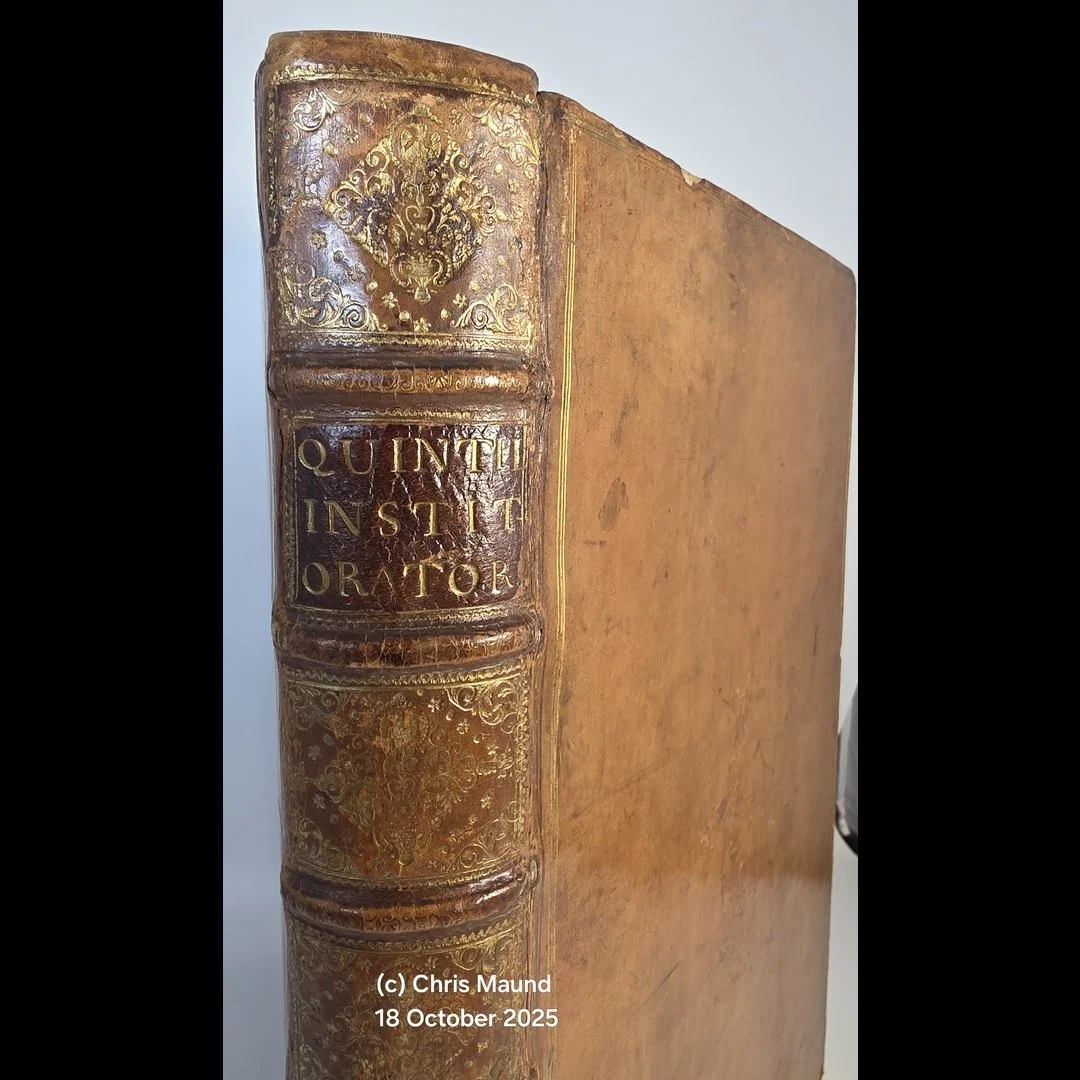 Image 5 of 20
 Image 6 of 20
 Image 7 of 20
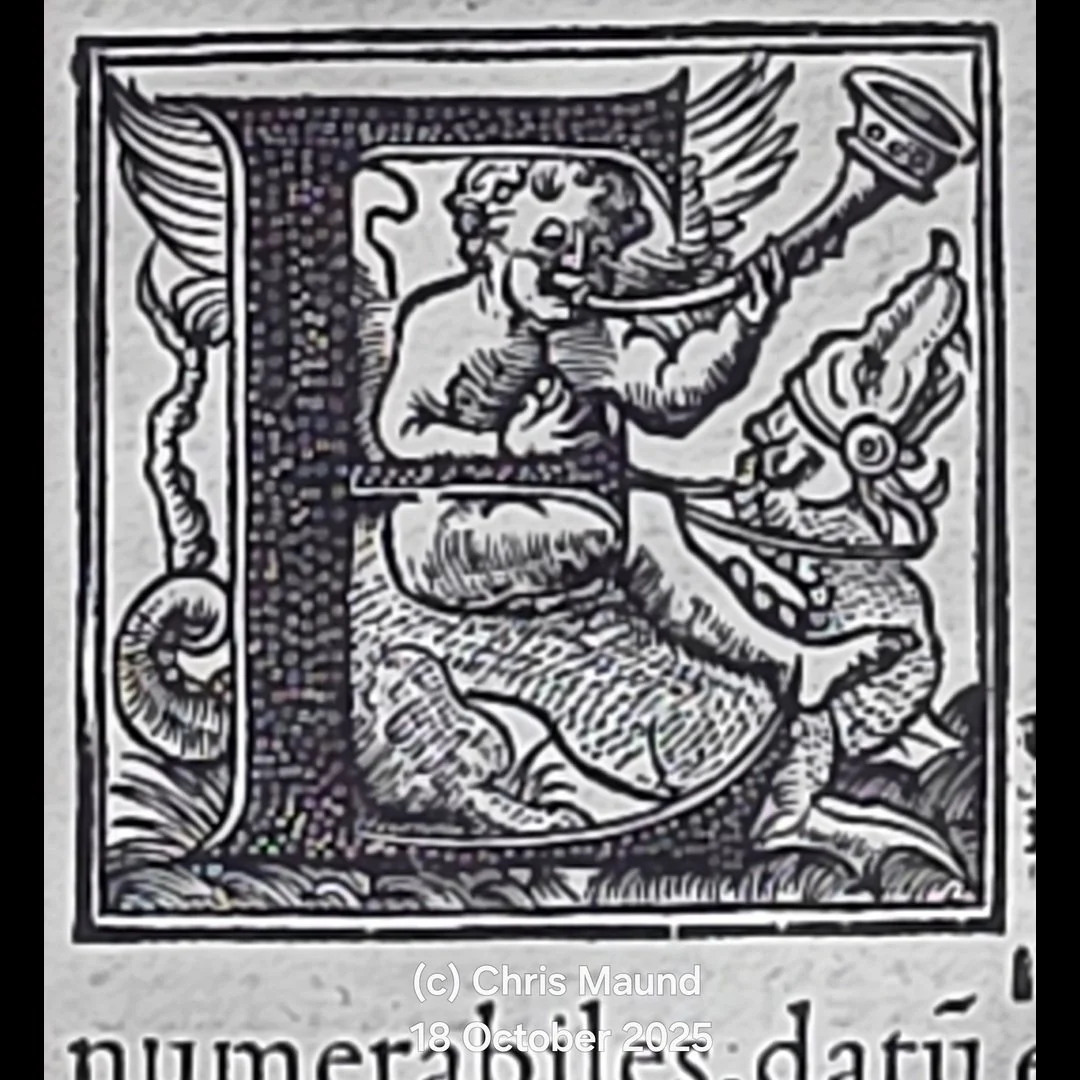 Image 8 of 20
 Image 9 of 20
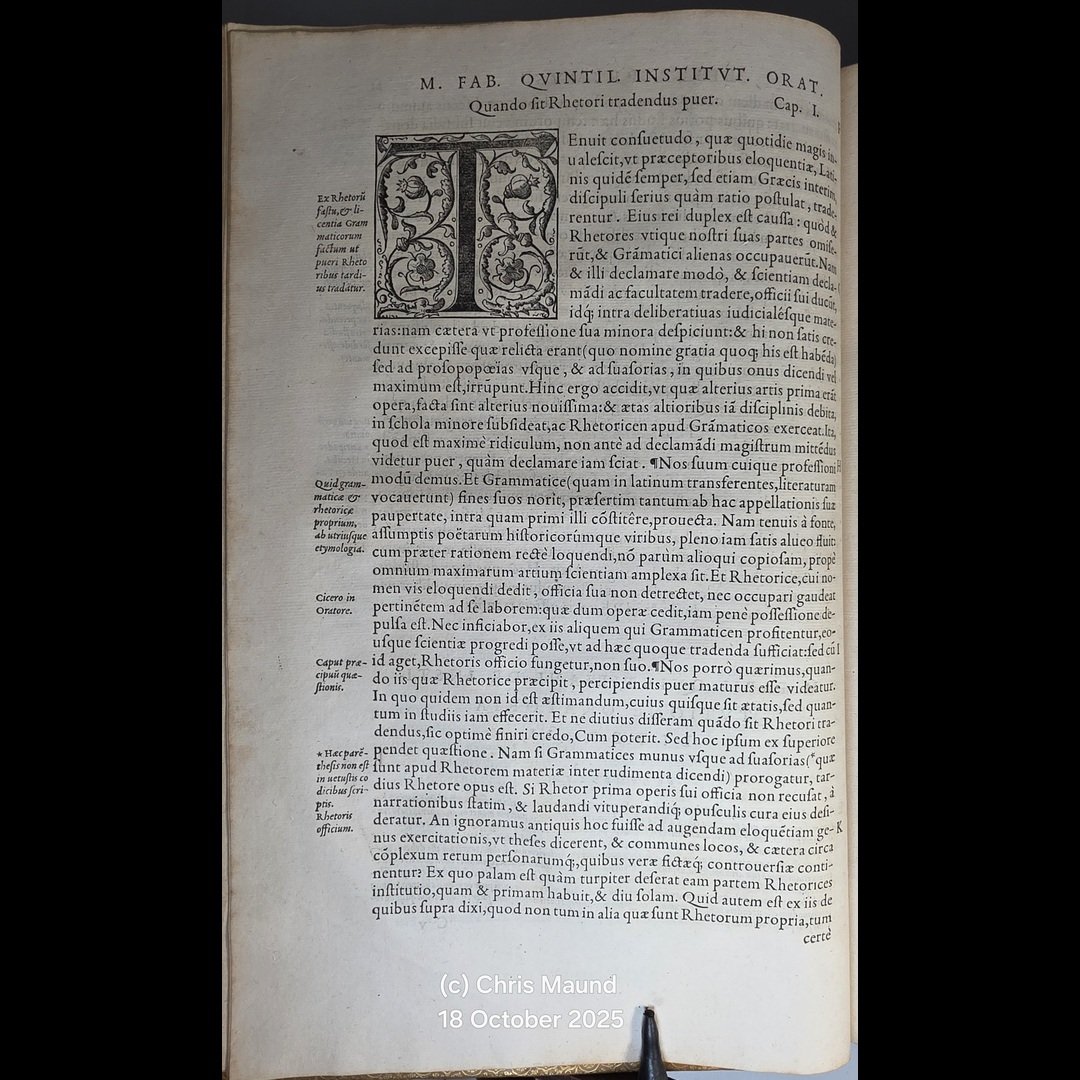 Image 10 of 20
 Image 11 of 20
 Image 12 of 20
 Image 13 of 20
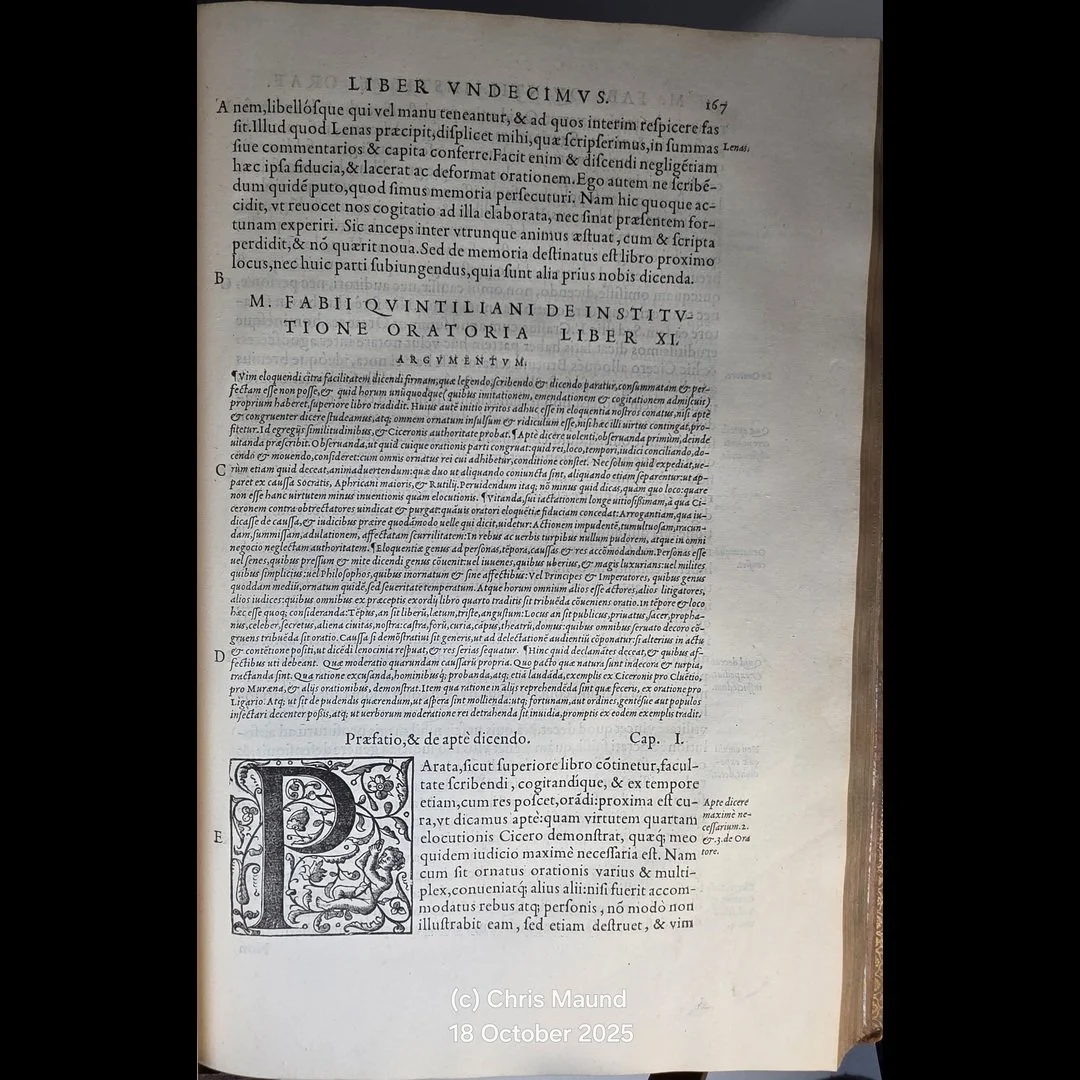 Image 14 of 20
 Image 15 of 20
 Image 16 of 20
 Image 17 of 20
 Image 18 of 20
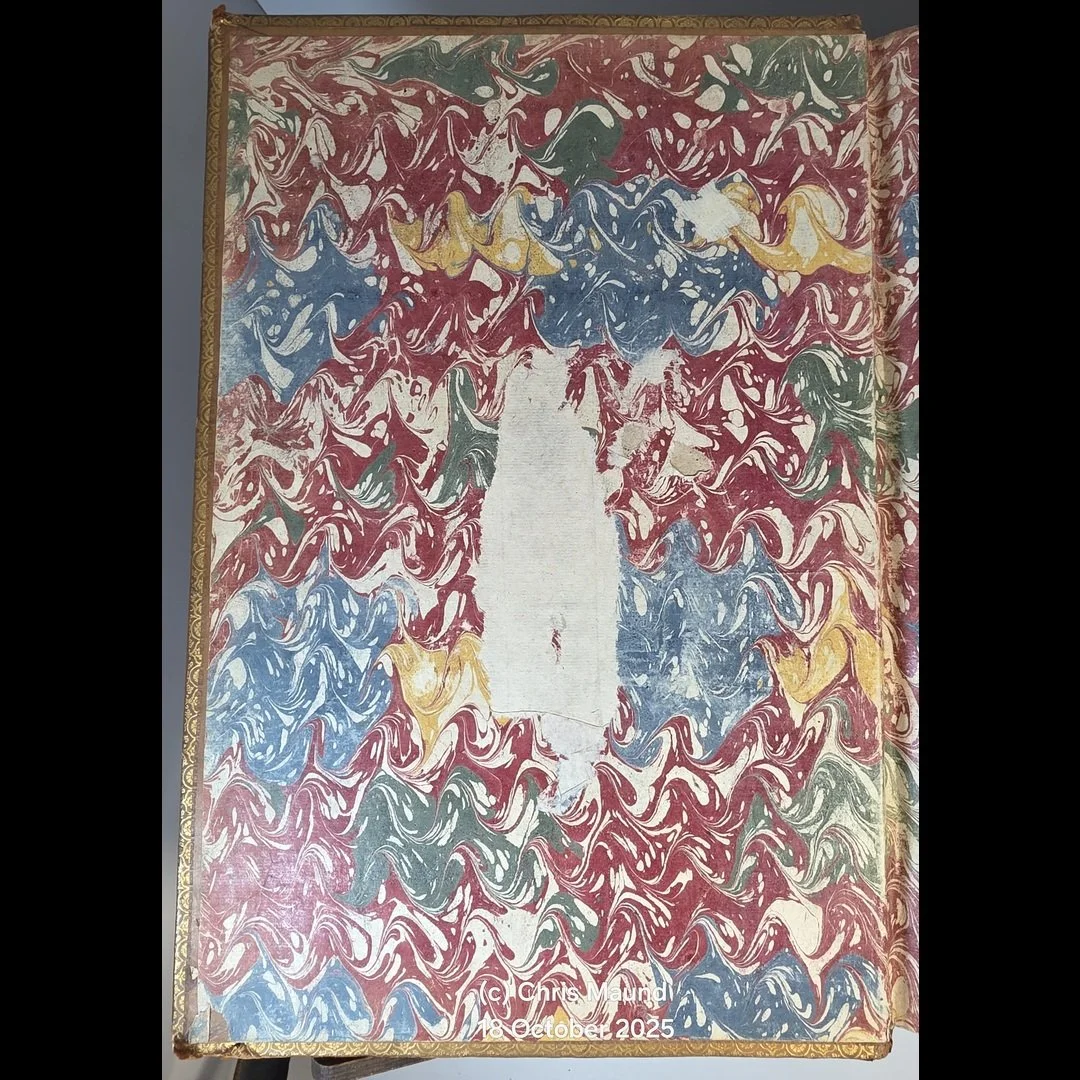 Image 19 of 20
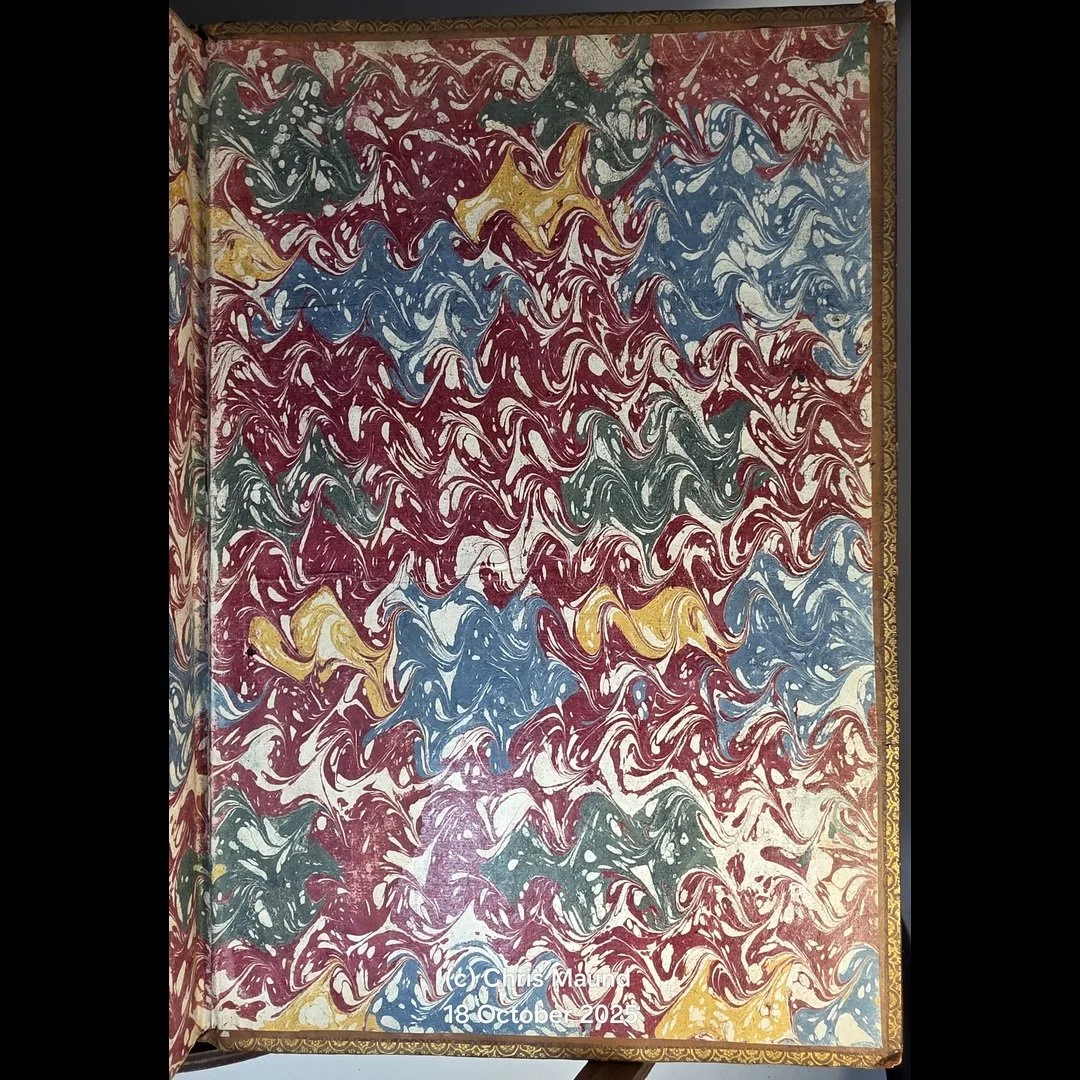 Image 20 of 20