1527 First Edition Distinctive Liturgical-Print Binding
PARADOXA OF THE SYNOD OF HOMBERG
By Francis Lambert
KEY DETAILS
Condition: Very Good
Format: Vellum, 8vo; Approx. 133 x 100mm
Published By: Erfurt: Johann Loersfeld, Germany, 1527
Language: Latin
Provenance: An early manuscript inscription “JESVS.” appears above the opening heading of the Paradoxa. Early manuscript foliation is also present, including the number 45 at the opening of the Epistola ad Colonienses.
Collation: a–g⁸ = 56 leaves; 53, [3] ff., the final leaf blank.; Complete, including the final blank.
Dust Jacket: None, as issued, No Jacket
SKU: BTETM0002652
Shipping Info: Approximate Package Dimensions H: 12.5, L: 30, W: 25 (Units: cm), W: 2Kg
Tracked Shipping, Insurance Coverage as per Customer Request
DESCRIPTION
Paradoxa of the Synod of Homberg
Que Fran. Lambertus Auenionensis, apud sanctam Hessorum Synodum Hombergi congregatam, pro ecclesiarum reformatione, dei verbo disputanda et deservienda proposuit. Eiusdem Epistola ad Colonienses de ipsa venerabili synodo: adversum Nicolaum Herborn Minoritam assertorem et consarcinatorem mendaciorum.
Rare first edition of François Lambert of Avignon's Paradoxa, the propositions presented by Lambert before the Synod of Homberg in October 1526 and forming the theological basis for the debate over the introduction of the Reformation in Hesse.
Small 8vo. 133 × 100 mm. Gothic type. Broad architectural woodcut border to title; decorative woodcut initials.
Printed at Erfurt by Johann Loersfeld in 1527, the volume also contains Lambert's Epistola ad Colonienses, his polemical account and defence of the Homberg proceedings against the Franciscan Nicolaus Herborn, who had challenged the legitimacy of the synod and opposed Lambert's reforming programme.
The Paradoxa are of considerable importance in the history of the early German Reformation. Lambert's propositions were presented before representatives of the Hessian clergy and estates at Homberg and provided the foundation for discussion of ecclesiastical reform. Following the synod, Lambert participated in the preparation of the separate Reformatio Ecclesiarum Hassiae, the proposed church constitution for Hesse.
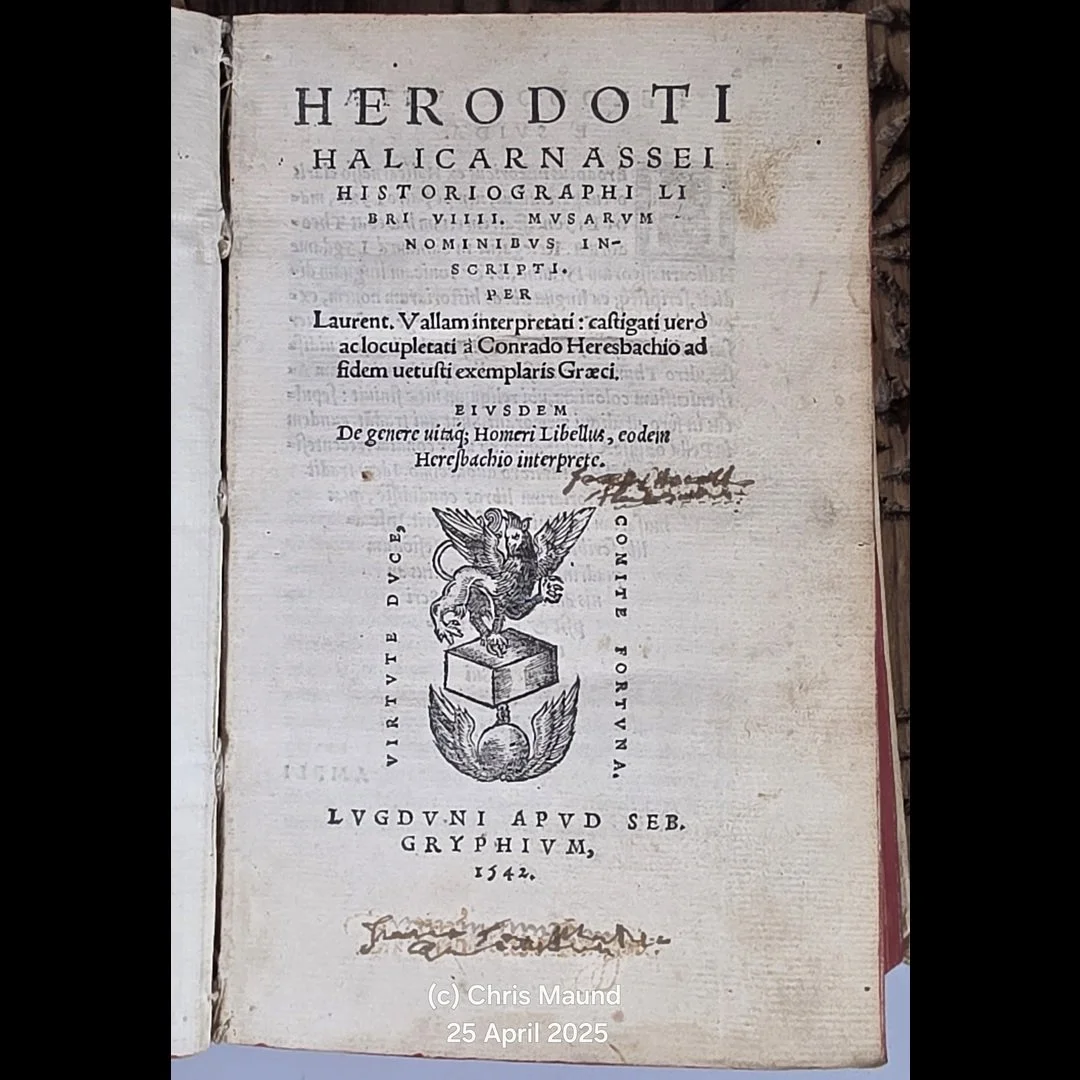
The title is enclosed within a handsome Renaissance architectural woodcut border incorporating columns, foliage and ornamental figures.
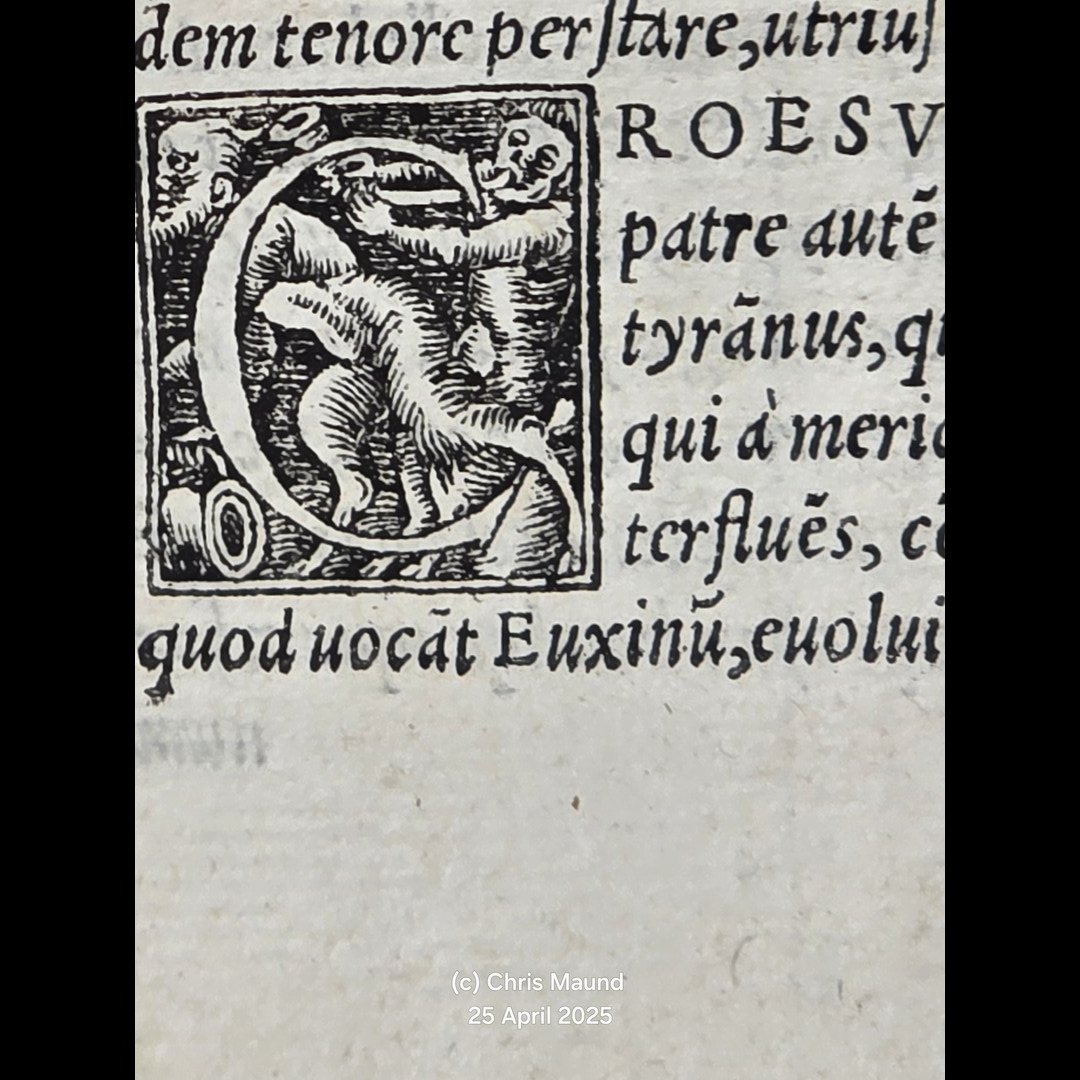
An exceptionally attractive feature of this copy is its later binding: stiff boards covered with leaves taken from a sixteenth-century printed liturgical book, printed in red and black and incorporating square-note musical notation on red four-line staves. Portions of the Preface of the Mass and associated Easter liturgy are visible, together with a large ornamental woodcut initial to the upper cover.
The juxtaposition is visually striking: an early Reformation tract preserved within leaves recycled from the printed Catholic liturgy against which its author's reforming arguments were directed, although the binding itself is later and should not be regarded as contemporary with the publication of the book.
PROVENANCE
An early manuscript inscription “JESVS.” appears above the opening heading of the Paradoxa. Early manuscript foliation is also present, including the number 45 at the opening of the Epistola ad Colonienses.
The present copy corresponds in its distinctive liturgical-print binding, dimensions, collation and recorded condition with the copy sold by Bassenge, Berlin, 8 October 2024, Lot 345.
A copy with corresponding description was subsequently offered through Catawiki in July 2025.
CONDITION, COLLATION & COPY NOTES
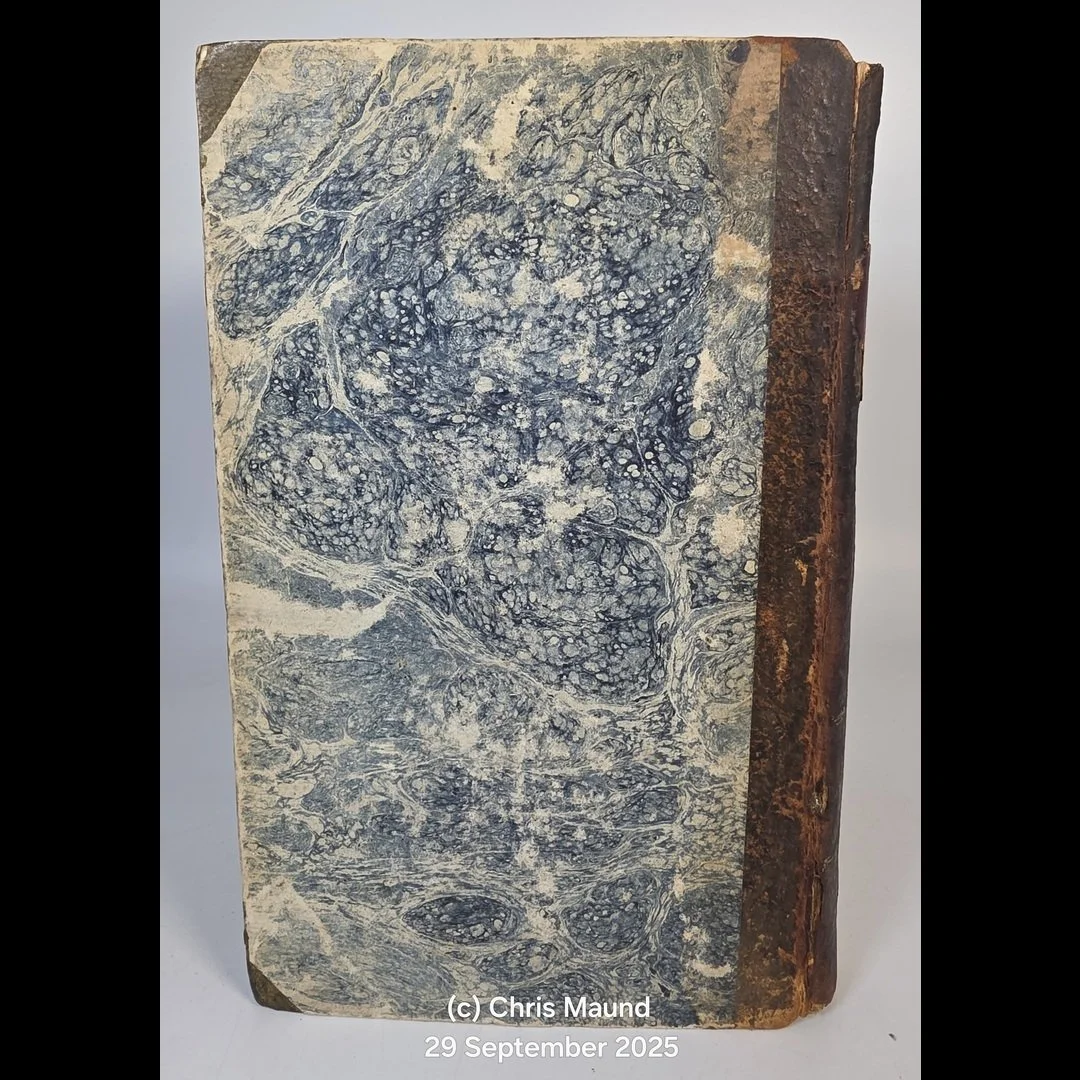
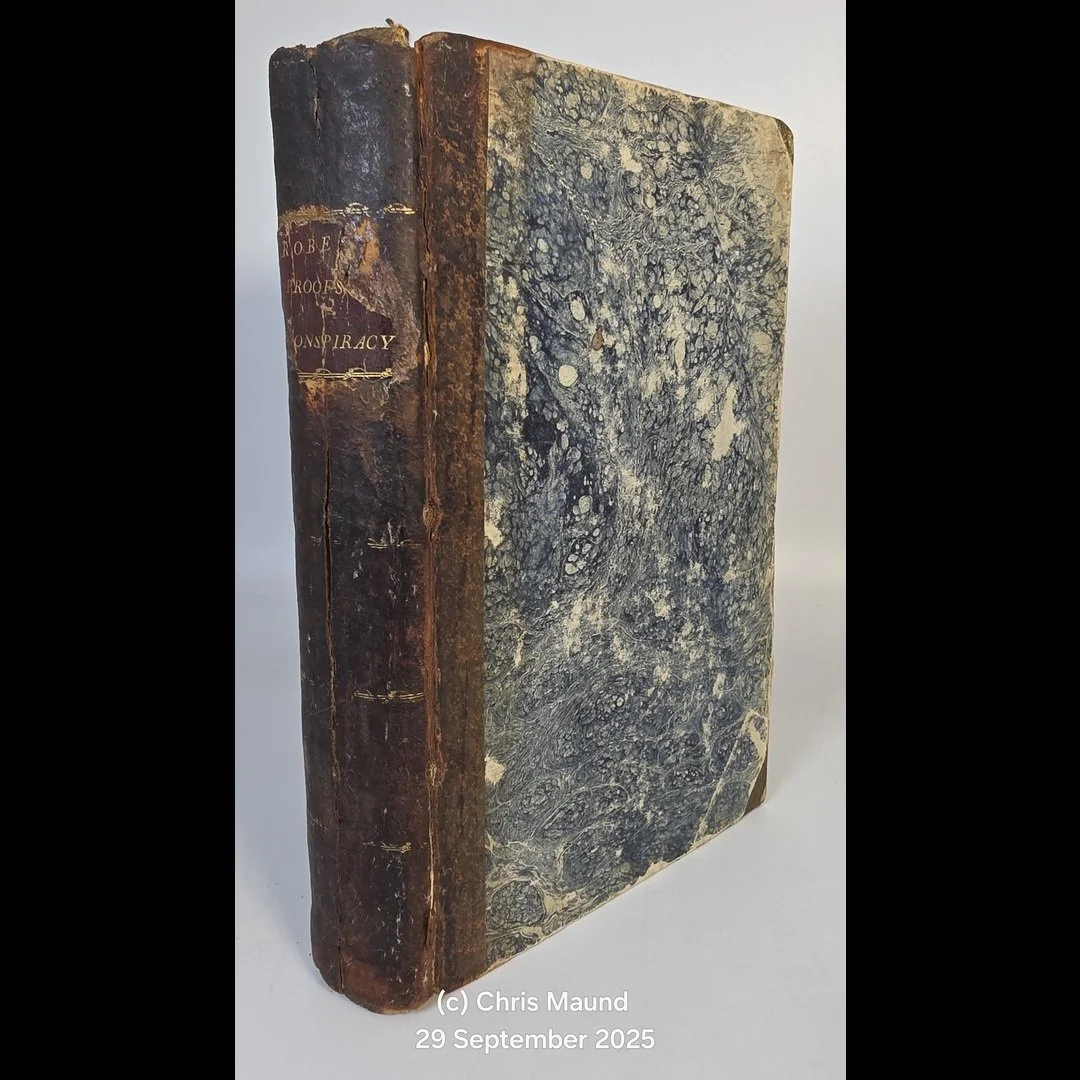
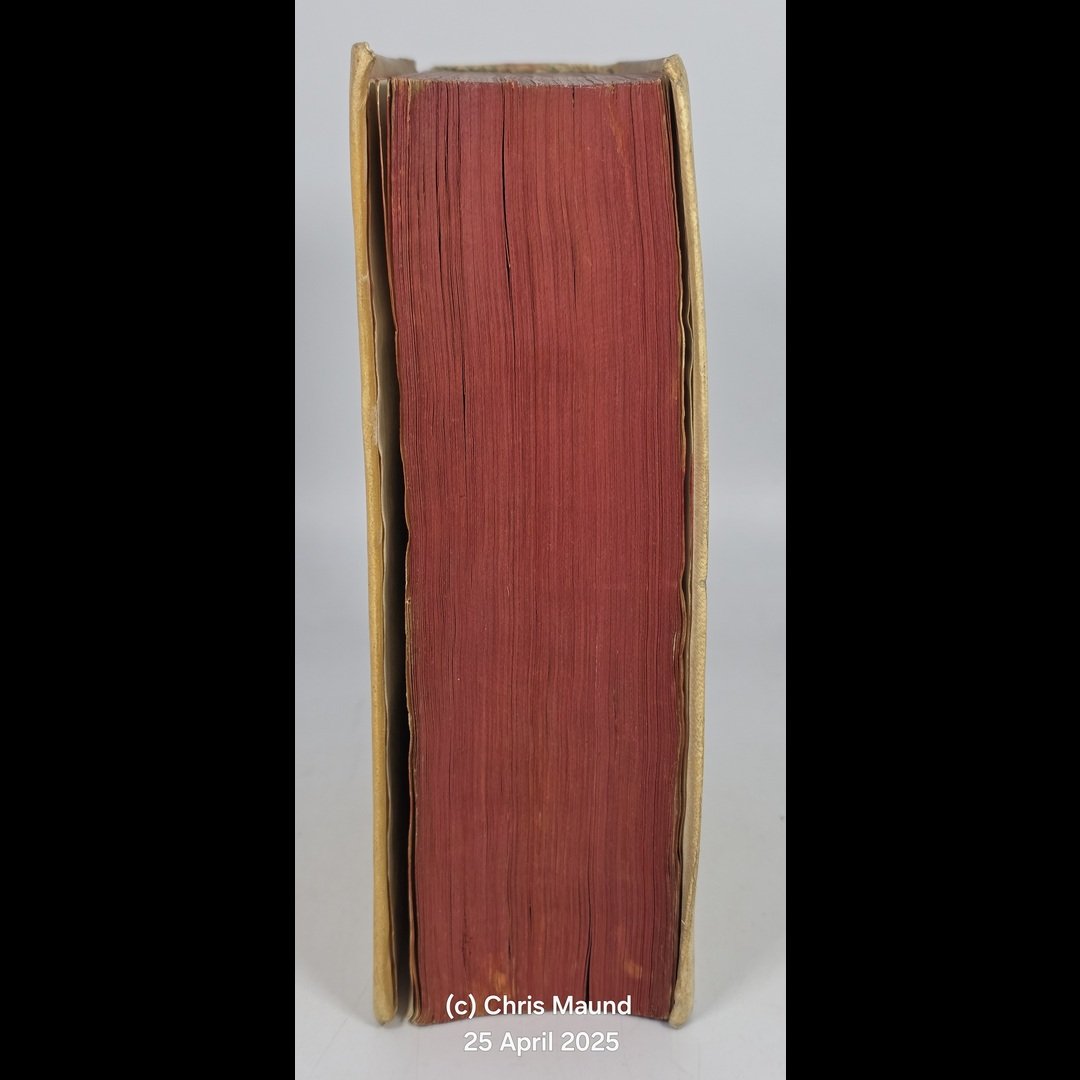
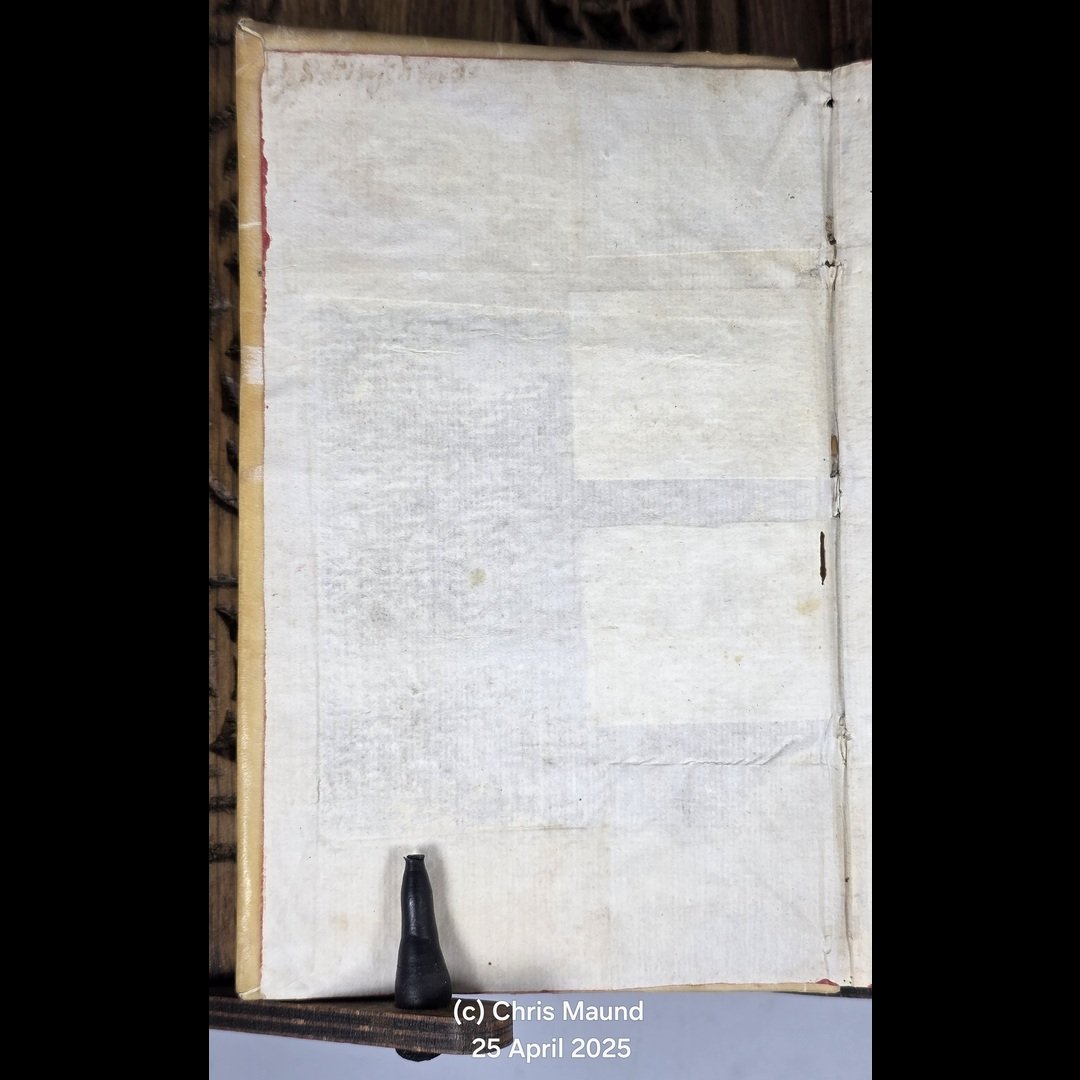
Later stiff boards covered with leaves from a sixteenth-century printed liturgical book, printed in red and black with square-note musical notation on red four-line staves; large woodcut initial to upper cover. Binding sound and visually striking, with expected surface wear and ageing to the reused printed leaves.
Internally generally very good for a small Reformation tract of this date. Paper lightly toned and browned in places, with some mostly marginal damp-staining and tide-marking, occasionally extending into the text area.
Closely trimmed. The outer edge of the architectural title-page border is slightly shaved, and trimming occasionally touches or removes portions of headlines or the uppermost line of text. A short marginal tear to one leaf without substantive loss. Text otherwise generally clean, crisp and readily legible.
Early manuscript “JESVS.” above the opening of the Paradoxa and early manuscript foliation.
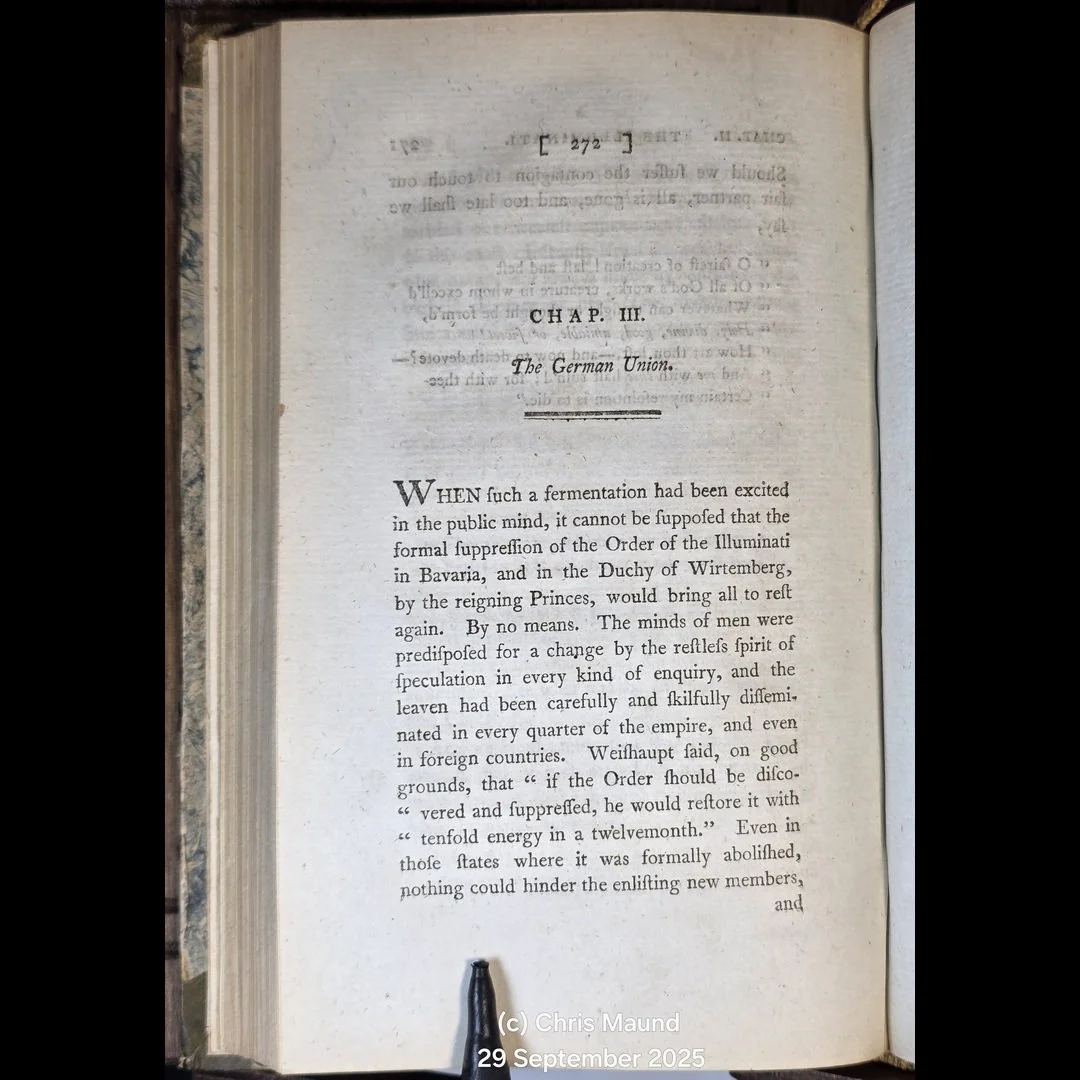
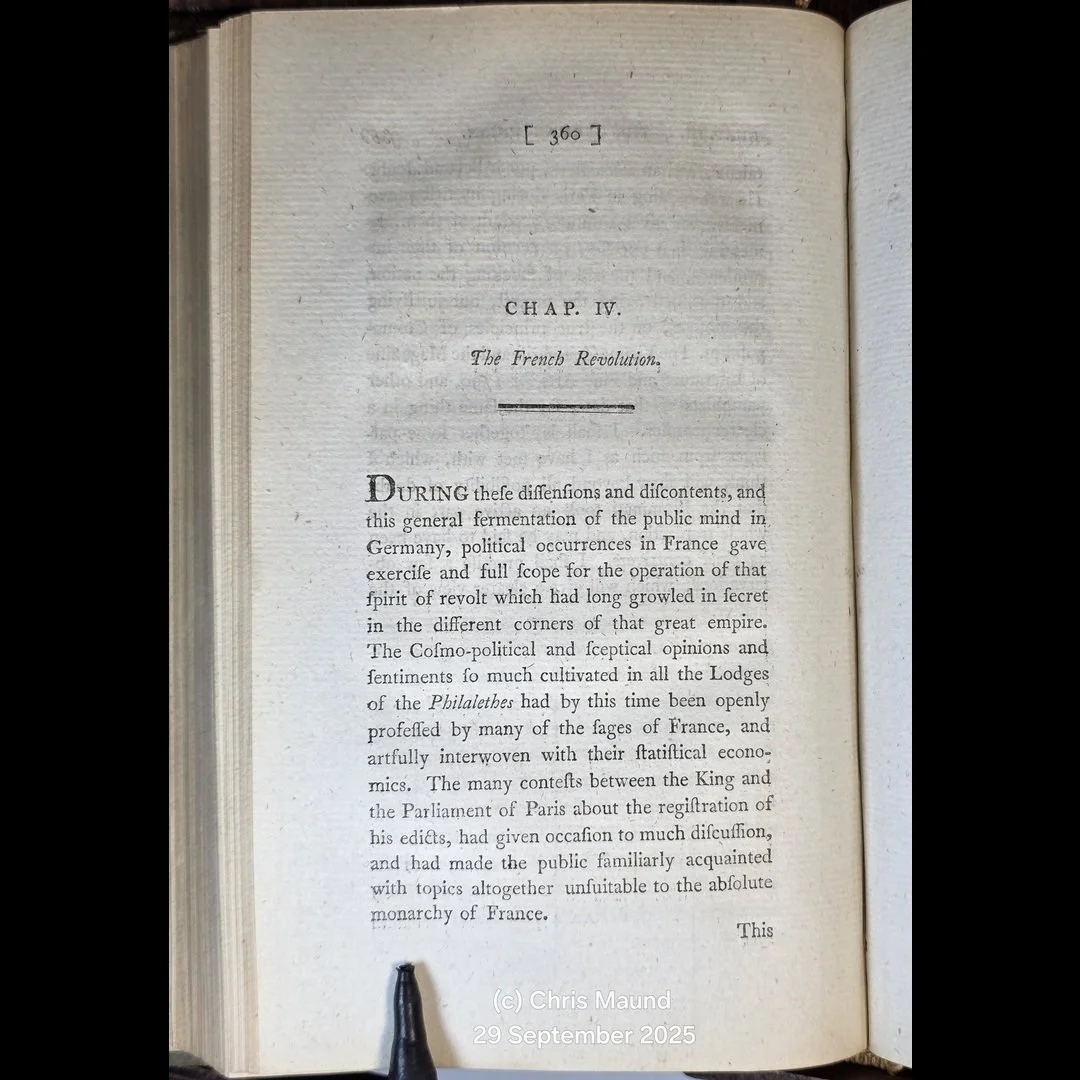
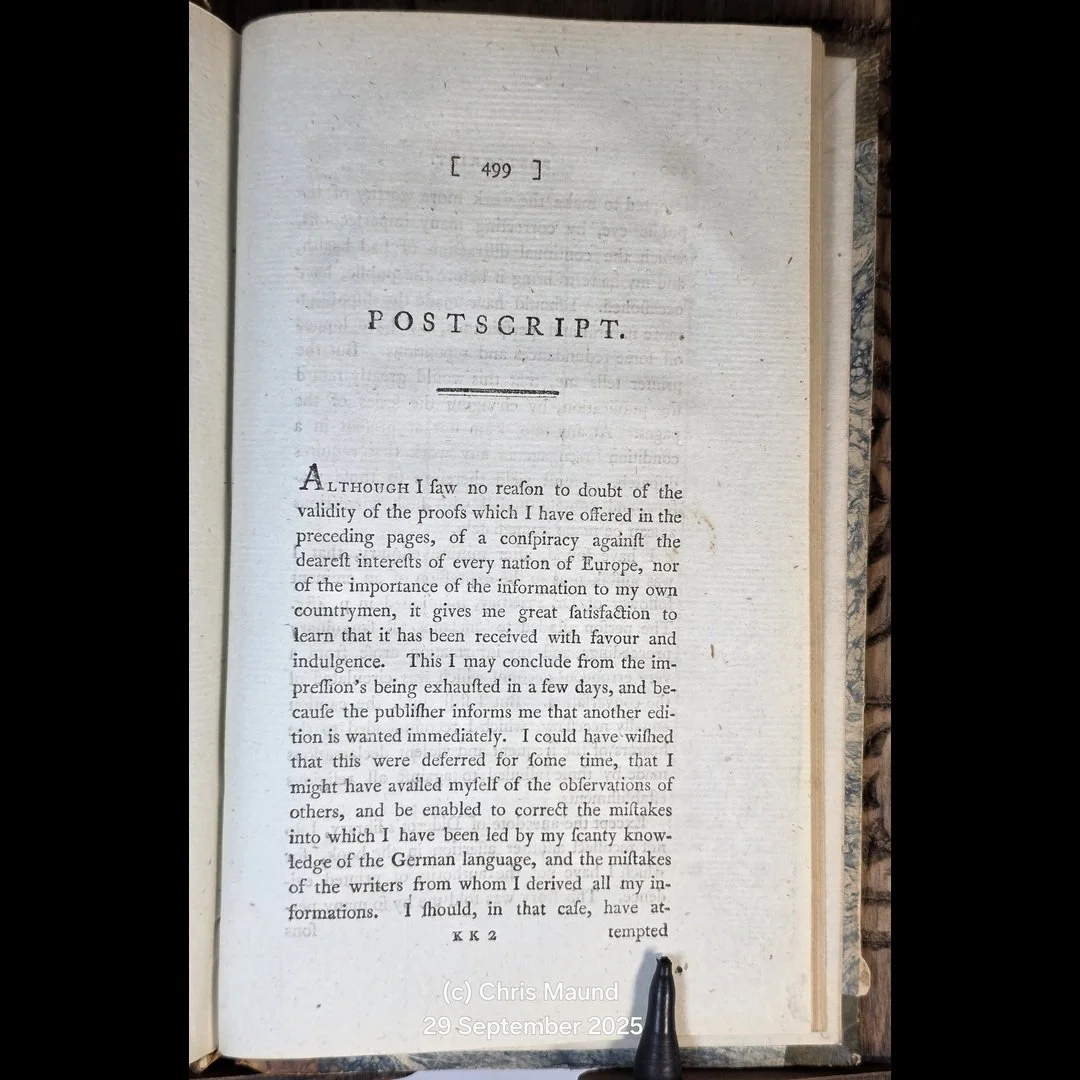
Please see Photos as part of condition report.
REFERENCES
VD16 L 154; L 139.
Panzer, Annales Typographici, VI, 503, 64.
Hase 769.
Bassenge, Wertvolle Bücher, 8 October 2024, Lot 345.
SYNOPSIS
François Lambert's Paradoxa preserve the propositions around which the Synod of Homberg debated the religious future of Hesse in October 1526.
A former Franciscan who had embraced the evangelical Reformation, Lambert was invited into Hesse by Landgrave Philip the Magnanimous and became the principal theological advocate for reform at Homberg. His propositions asserted the authority of Scripture as the governing standard of Christian doctrine and ecclesiastical organisation and challenged practices and structures that Lambert believed lacked scriptural foundation.
The synod did not itself simply enact Lambert's propositions as a church order. Rather, they formed the basis of the debate from which a committee was appointed to formulate proposals for reform. Lambert subsequently played a major role in drafting the Reformatio Ecclesiarum Hassiae, an ambitious scheme for the organisation of the Hessian church.
The second work, the Epistola ad Colonienses, records Lambert's response to Nicolaus Herborn, the Franciscan opponent who had challenged the legitimacy of the Homberg proceedings. It therefore provides not only a statement of evangelical doctrine but a contemporary record of the confrontation between reforming and Catholic positions during a formative moment in the territorial Reformation.
Printed in 1527, immediately following the Homberg Synod and in the same year as the foundation of the Protestant University of Marburg, the volume is an important primary source for the development of the Reformation in Hesse.
AUTHOR BIO
François Lambert of Avignon (c.1486/87–1530) was a French Franciscan friar, theologian and Protestant reformer.
Born at Avignon, Lambert entered the Franciscan order but gradually became critical of aspects of late-medieval Catholic theology and religious practice. During the early 1520s he abandoned the order and associated himself with the developing evangelical movement, travelling through Switzerland and Germany and encountering several of the leading figures of the Reformation.
In 1526 Lambert entered the service of Philip I, Landgrave of Hesse, and became the principal theological figure at the Synod of Homberg. His 158 propositions, subsequently known as the Paradoxa, provided the basis for debate at the synod.
After Homberg he participated in drafting the Reformatio Ecclesiarum Hassiae. Although the proposed constitution was not implemented in its original form, it remains an important document in the history of early Protestant ecclesiology and church government.
When the University of Marburg was founded in 1527, Lambert became one of its first professors of theology. He remained at Marburg until his death in 1530.
A scarce and historically significant first edition from the formative years of the German Reformation, particularly desirable for its direct connection with the 1526 Synod of Homberg, its complete state retaining the final blank, handsome architectural title border, and highly distinctive binding incorporating sixteenth-century printed liturgical music.
1527 First Edition Distinctive Liturgical-Print Binding
PARADOXA OF THE SYNOD OF HOMBERG
By Francis Lambert
KEY DETAILS
Condition: Very Good
Format: Vellum, 8vo; Approx. 133 x 100mm
Published By: Erfurt: Johann Loersfeld, Germany, 1527
Language: Latin
Provenance: An early manuscript inscription “JESVS.” appears above the opening heading of the Paradoxa. Early manuscript foliation is also present, including the number 45 at the opening of the Epistola ad Colonienses.
Collation: a–g⁸ = 56 leaves; 53, [3] ff., the final leaf blank.; Complete, including the final blank.
Dust Jacket: None, as issued, No Jacket
SKU: BTETM0002652
Shipping Info: Approximate Package Dimensions H: 12.5, L: 30, W: 25 (Units: cm), W: 2Kg
Tracked Shipping, Insurance Coverage as per Customer Request
DESCRIPTION
Paradoxa of the Synod of Homberg
Que Fran. Lambertus Auenionensis, apud sanctam Hessorum Synodum Hombergi congregatam, pro ecclesiarum reformatione, dei verbo disputanda et deservienda proposuit. Eiusdem Epistola ad Colonienses de ipsa venerabili synodo: adversum Nicolaum Herborn Minoritam assertorem et consarcinatorem mendaciorum.
Rare first edition of François Lambert of Avignon's Paradoxa, the propositions presented by Lambert before the Synod of Homberg in October 1526 and forming the theological basis for the debate over the introduction of the Reformation in Hesse.
Small 8vo. 133 × 100 mm. Gothic type. Broad architectural woodcut border to title; decorative woodcut initials.
Printed at Erfurt by Johann Loersfeld in 1527, the volume also contains Lambert's Epistola ad Colonienses, his polemical account and defence of the Homberg proceedings against the Franciscan Nicolaus Herborn, who had challenged the legitimacy of the synod and opposed Lambert's reforming programme.
The Paradoxa are of considerable importance in the history of the early German Reformation. Lambert's propositions were presented before representatives of the Hessian clergy and estates at Homberg and provided the foundation for discussion of ecclesiastical reform. Following the synod, Lambert participated in the preparation of the separate Reformatio Ecclesiarum Hassiae, the proposed church constitution for Hesse.
The title is enclosed within a handsome Renaissance architectural woodcut border incorporating columns, foliage and ornamental figures.
An exceptionally attractive feature of this copy is its later binding: stiff boards covered with leaves taken from a sixteenth-century printed liturgical book, printed in red and black and incorporating square-note musical notation on red four-line staves. Portions of the Preface of the Mass and associated Easter liturgy are visible, together with a large ornamental woodcut initial to the upper cover.
The juxtaposition is visually striking: an early Reformation tract preserved within leaves recycled from the printed Catholic liturgy against which its author's reforming arguments were directed, although the binding itself is later and should not be regarded as contemporary with the publication of the book.
PROVENANCE
An early manuscript inscription “JESVS.” appears above the opening heading of the Paradoxa. Early manuscript foliation is also present, including the number 45 at the opening of the Epistola ad Colonienses.
The present copy corresponds in its distinctive liturgical-print binding, dimensions, collation and recorded condition with the copy sold by Bassenge, Berlin, 8 October 2024, Lot 345.
A copy with corresponding description was subsequently offered through Catawiki in July 2025.
CONDITION, COLLATION & COPY NOTES
Later stiff boards covered with leaves from a sixteenth-century printed liturgical book, printed in red and black with square-note musical notation on red four-line staves; large woodcut initial to upper cover. Binding sound and visually striking, with expected surface wear and ageing to the reused printed leaves.
Internally generally very good for a small Reformation tract of this date. Paper lightly toned and browned in places, with some mostly marginal damp-staining and tide-marking, occasionally extending into the text area.
Closely trimmed. The outer edge of the architectural title-page border is slightly shaved, and trimming occasionally touches or removes portions of headlines or the uppermost line of text. A short marginal tear to one leaf without substantive loss. Text otherwise generally clean, crisp and readily legible.
Early manuscript “JESVS.” above the opening of the Paradoxa and early manuscript foliation.
Please see Photos as part of condition report.
REFERENCES
VD16 L 154; L 139.
Panzer, Annales Typographici, VI, 503, 64.
Hase 769.
Bassenge, Wertvolle Bücher, 8 October 2024, Lot 345.
SYNOPSIS
François Lambert's Paradoxa preserve the propositions around which the Synod of Homberg debated the religious future of Hesse in October 1526.
A former Franciscan who had embraced the evangelical Reformation, Lambert was invited into Hesse by Landgrave Philip the Magnanimous and became the principal theological advocate for reform at Homberg. His propositions asserted the authority of Scripture as the governing standard of Christian doctrine and ecclesiastical organisation and challenged practices and structures that Lambert believed lacked scriptural foundation.
The synod did not itself simply enact Lambert's propositions as a church order. Rather, they formed the basis of the debate from which a committee was appointed to formulate proposals for reform. Lambert subsequently played a major role in drafting the Reformatio Ecclesiarum Hassiae, an ambitious scheme for the organisation of the Hessian church.
The second work, the Epistola ad Colonienses, records Lambert's response to Nicolaus Herborn, the Franciscan opponent who had challenged the legitimacy of the Homberg proceedings. It therefore provides not only a statement of evangelical doctrine but a contemporary record of the confrontation between reforming and Catholic positions during a formative moment in the territorial Reformation.
Printed in 1527, immediately following the Homberg Synod and in the same year as the foundation of the Protestant University of Marburg, the volume is an important primary source for the development of the Reformation in Hesse.
AUTHOR BIO
François Lambert of Avignon (c.1486/87–1530) was a French Franciscan friar, theologian and Protestant reformer.
Born at Avignon, Lambert entered the Franciscan order but gradually became critical of aspects of late-medieval Catholic theology and religious practice. During the early 1520s he abandoned the order and associated himself with the developing evangelical movement, travelling through Switzerland and Germany and encountering several of the leading figures of the Reformation.
In 1526 Lambert entered the service of Philip I, Landgrave of Hesse, and became the principal theological figure at the Synod of Homberg. His 158 propositions, subsequently known as the Paradoxa, provided the basis for debate at the synod.
After Homberg he participated in drafting the Reformatio Ecclesiarum Hassiae. Although the proposed constitution was not implemented in its original form, it remains an important document in the history of early Protestant ecclesiology and church government.
When the University of Marburg was founded in 1527, Lambert became one of its first professors of theology. He remained at Marburg until his death in 1530.
A scarce and historically significant first edition from the formative years of the German Reformation, particularly desirable for its direct connection with the 1526 Synod of Homberg, its complete state retaining the final blank, handsome architectural title border, and highly distinctive binding incorporating sixteenth-century printed liturgical music.

 Image 1 of 16
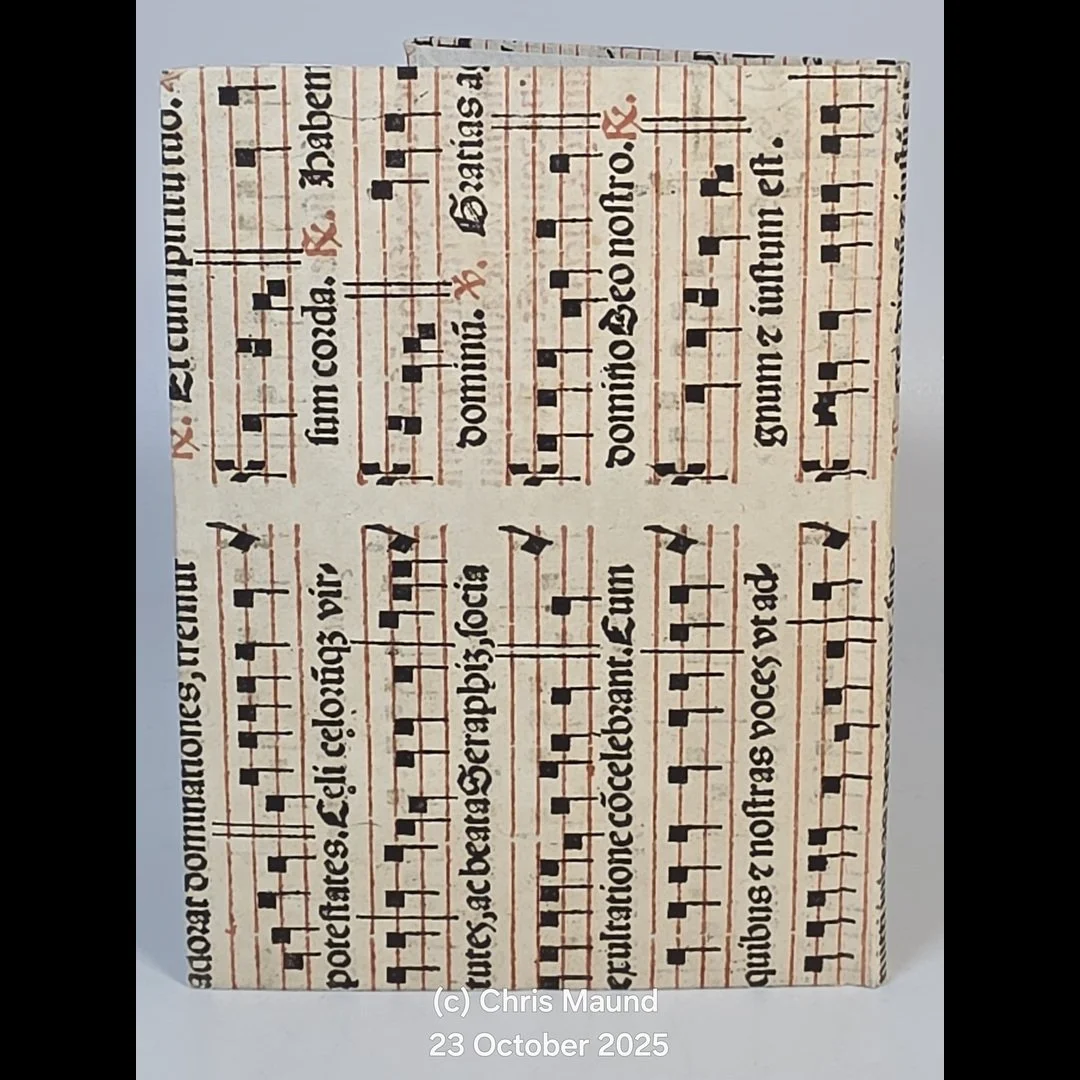 Image 2 of 16
 Image 3 of 16
 Image 4 of 16
 Image 5 of 16
 Image 6 of 16
 Image 7 of 16
 Image 8 of 16
 Image 9 of 16
 Image 10 of 16
 Image 11 of 16
 Image 12 of 16
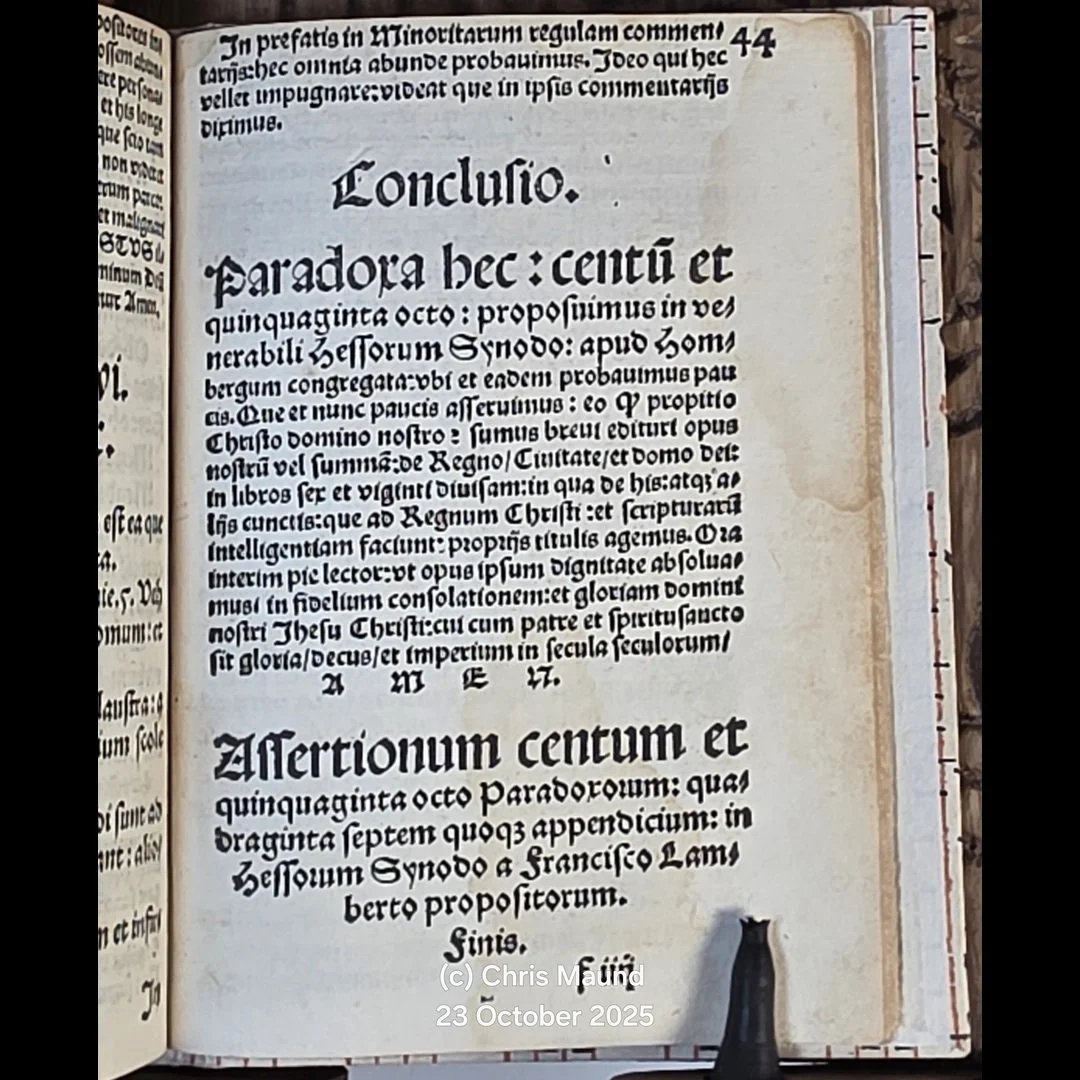 Image 13 of 16
 Image 14 of 16
 Image 15 of 16
 Image 16 of 16