1602 Third Edition With Torrepalma Provenance
DE MILITIA ROMANA LIBRI QUINQUE
By Justus (Iustus) Lipsius
KEY DETAILS
Condition: Very Good
Format: Vellum, quarto (4to 9 1⁄2 × 12 in 241 × 305 mm )
Note: Binding/size selection follows standard bibliographic conventions and is approximate; exact measurements may vary.
Published By: Antuerpiae: Ex Officina Plantiniana, apud Ioannem Moretum, Antwerp, 1602
Language: Latin
Illustrated By: Theodor Galle / Pieter van der Borcht
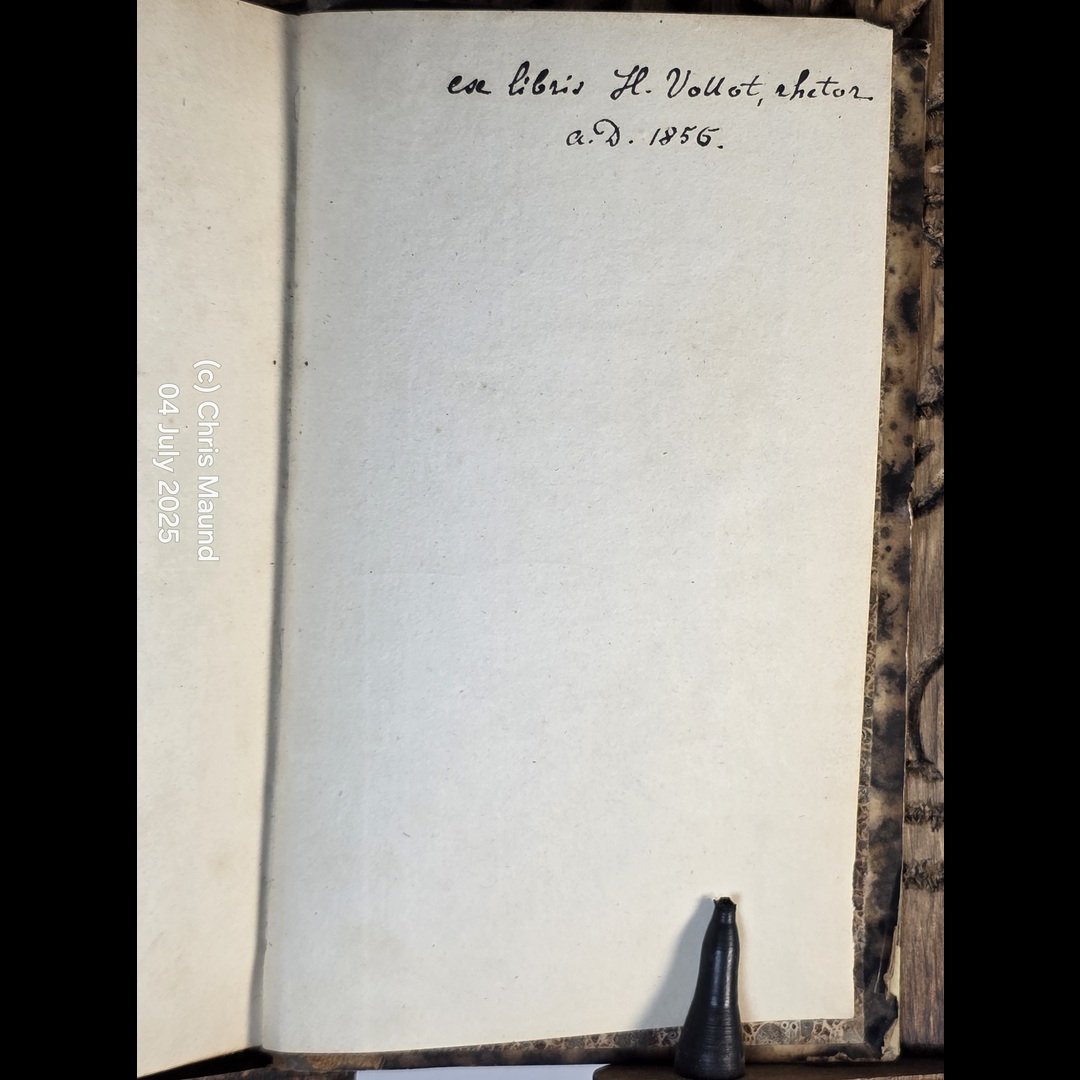
Provenance: Manuscript ownership inscription “L. del C. de Torrepalma”, from the historic library of the Counts of Torrepalma.
Collation: A–Z⁴ a–z⁴; AA–CC⁴ DD⁶. z4 and DD6 blank.; Pagination: 366, [2]; XXIX, [7] pp., plus one folding engraved plate.
Dust Jacket: None, as issued, No Jacket
SKU: BTETM0002653
Shipping Info: Approximate Package Dimensions H: 12.5, L: 30, W: 25 (Units: cm), W: 2Kg
Tracked Shipping, Insurance Coverage as per Customer Request
DESCRIPTION
De Militia Romana libri quinque
De Militia Romana libri quinque Commentarius ad Polybium
Bound with: Analecta sive Observationes reliquae ad Militiam et hosce Libros
A complete and particularly appealing copy of the third, revised edition of Justus Lipsius's celebrated reconstruction of the Roman army, printed at Antwerp by Jan Moretus at the Plantin-Moretus press in 1602, together with its separately titled companion Analecta. One of the major works of Renaissance military antiquarianism, De Militia Romana sought to recover the organisation, discipline, equipment and battlefield practice of Rome through a critical reading of Polybius and other classical authorities.
This copy retains the complete mixed illustrative programme of copper engravings and woodcuts, including the large folding engraved Iconismus aciei vulgatae between pp. 184–185, together with depictions of Roman soldiers, cavalry, armour, standards, weapons, formations, military equipment and ancient coins. The engraved plates are catalogued to Theodoor Galle, while the wider Plantin illustrative tradition of the work is also associated with Pieter van der Borcht. The impressions in this copy are notably strong and dark, with generous margins.
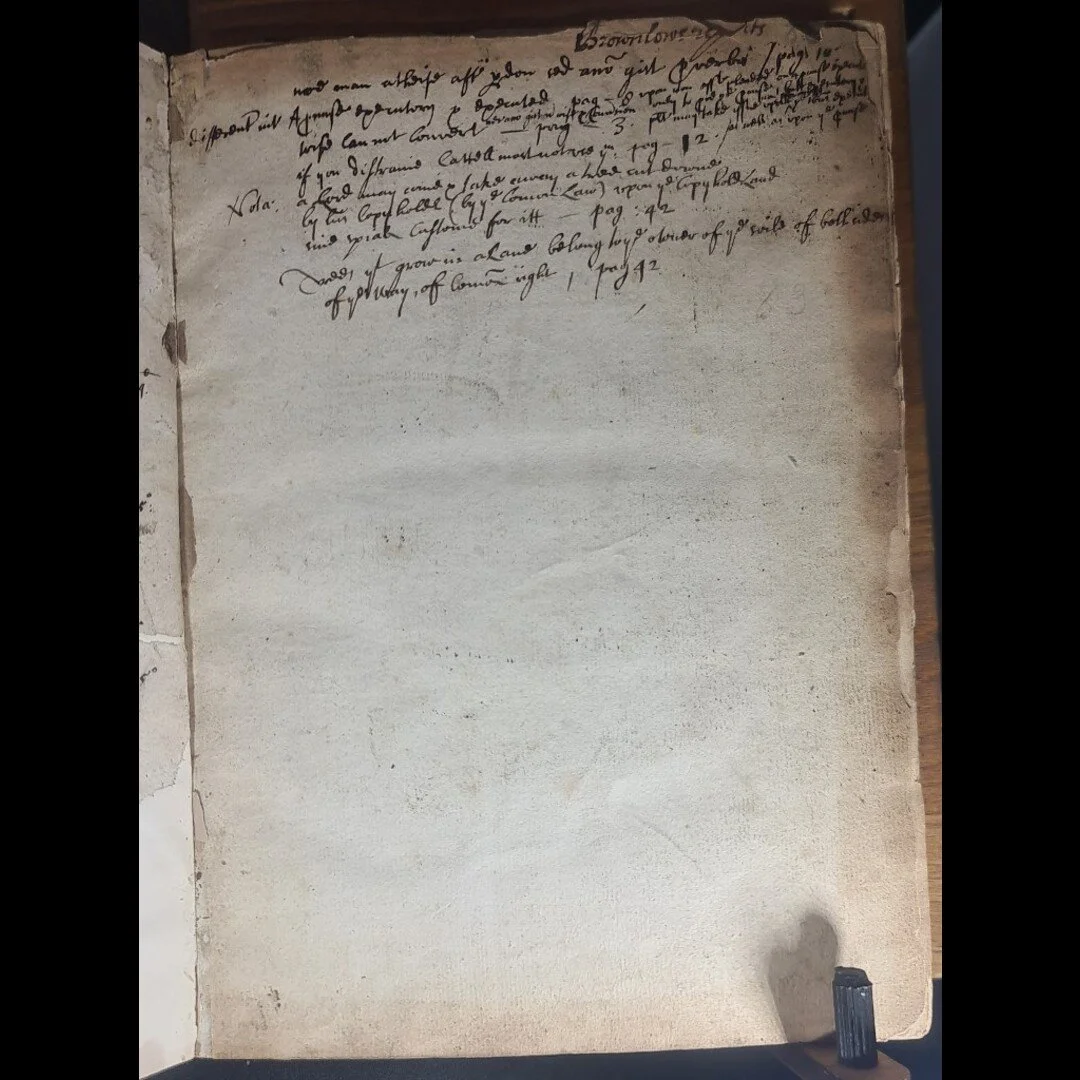
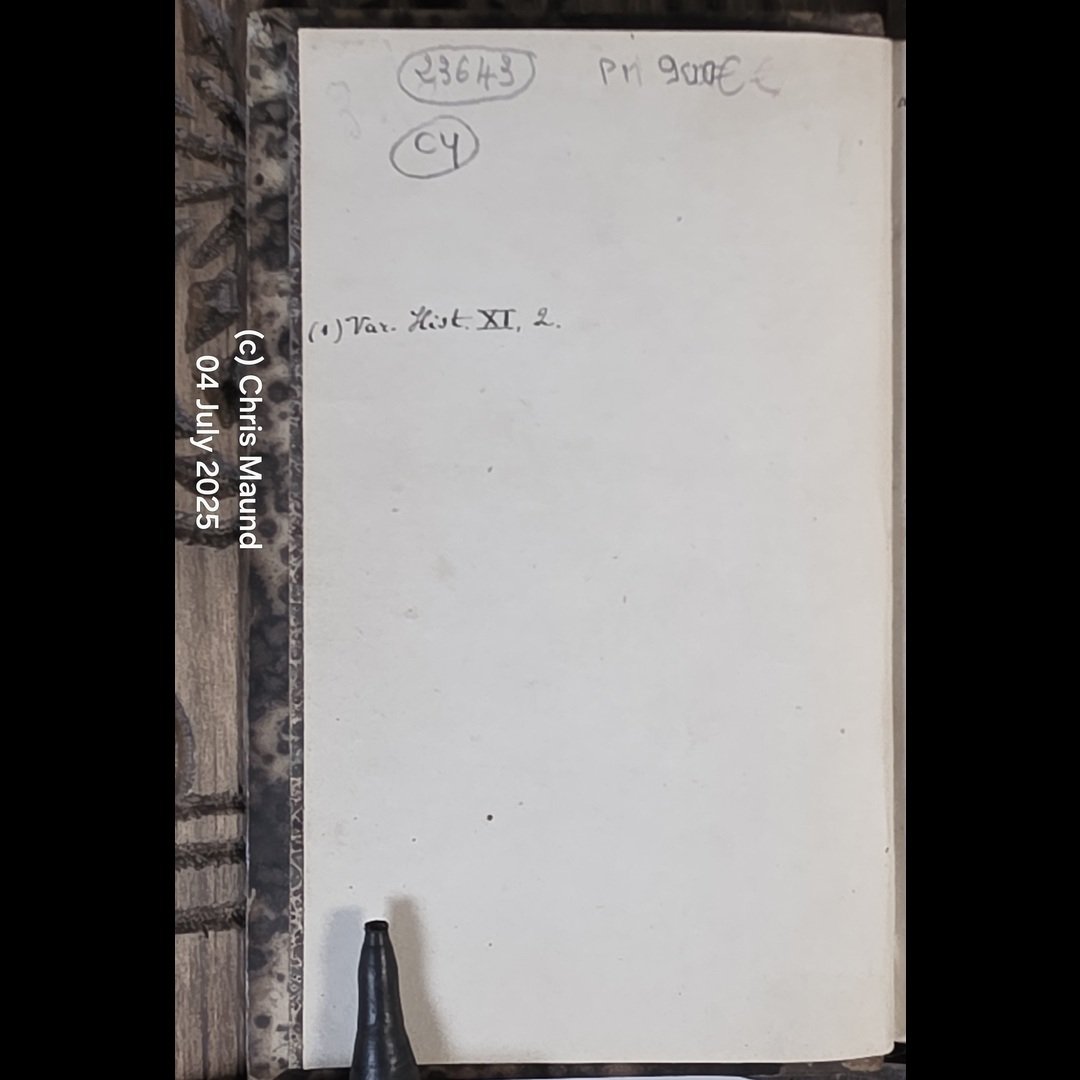
Of particular interest is the early manuscript ownership inscription “L. del C. de Torrepalma”, securely associating the volume with the celebrated library of the Counts of Torrepalma. An identical ownership formula is recorded by the Catálogo Colectivo del Patrimonio Bibliográfico Madrileño in another Plantin-Moretus work by Lipsius — the 1605 Admiranda sive De magnitudine Romana now held by the Universidad Nacional de Educación a Distancia. The close correspondence — same author, same Antwerp press, only three years apart, and the identical abbreviated ownership notation — provides unusually strong evidence for the Torrepalma provenance of this copy.
PROVENANCE
Manuscript ownership inscription “L. del C. de Torrepalma”, from the historic library of the Counts of Torrepalma.
The attribution is supported by an unusually close institutional parallel. A copy of Justus Lipsius's Admiranda sive De magnitudine Romana libri quattuor, printed by the same Plantin-Moretus press under Jan Moretus at Antwerp in 1605, is preserved in the Biblioteca Central of the Universidad Nacional de Educación a Distancia. Its institutional catalogue specifically records on the verso of the title the manuscript annotation:
“L. del C. de Torrepalma.”
The identical formula in two Plantin-Moretus books by Lipsius printed only three years apart strongly establishes the present volume as another book from the Torrepalma library.
The Torrepalma collection developed into an important Spanish aristocratic scholarly library. Pedro Verdugo de Albornoz y Ursúa (1657–1720), II Count of Torrepalma, was instrumental in establishing and enlarging the collection, which was subsequently developed by his son Alonso Verdugo de Castilla (1706–1767), III Count of Torrepalma, a poet, diplomat and member of both the Real Academia Española and Real Academia de la Historia.
The inscription is best treated as a library ownership notation rather than an autograph signature of a particular Count; the precise individual under whom this volume entered the collection cannot presently be established.
CONDITION, COLLATION & COPY NOTES
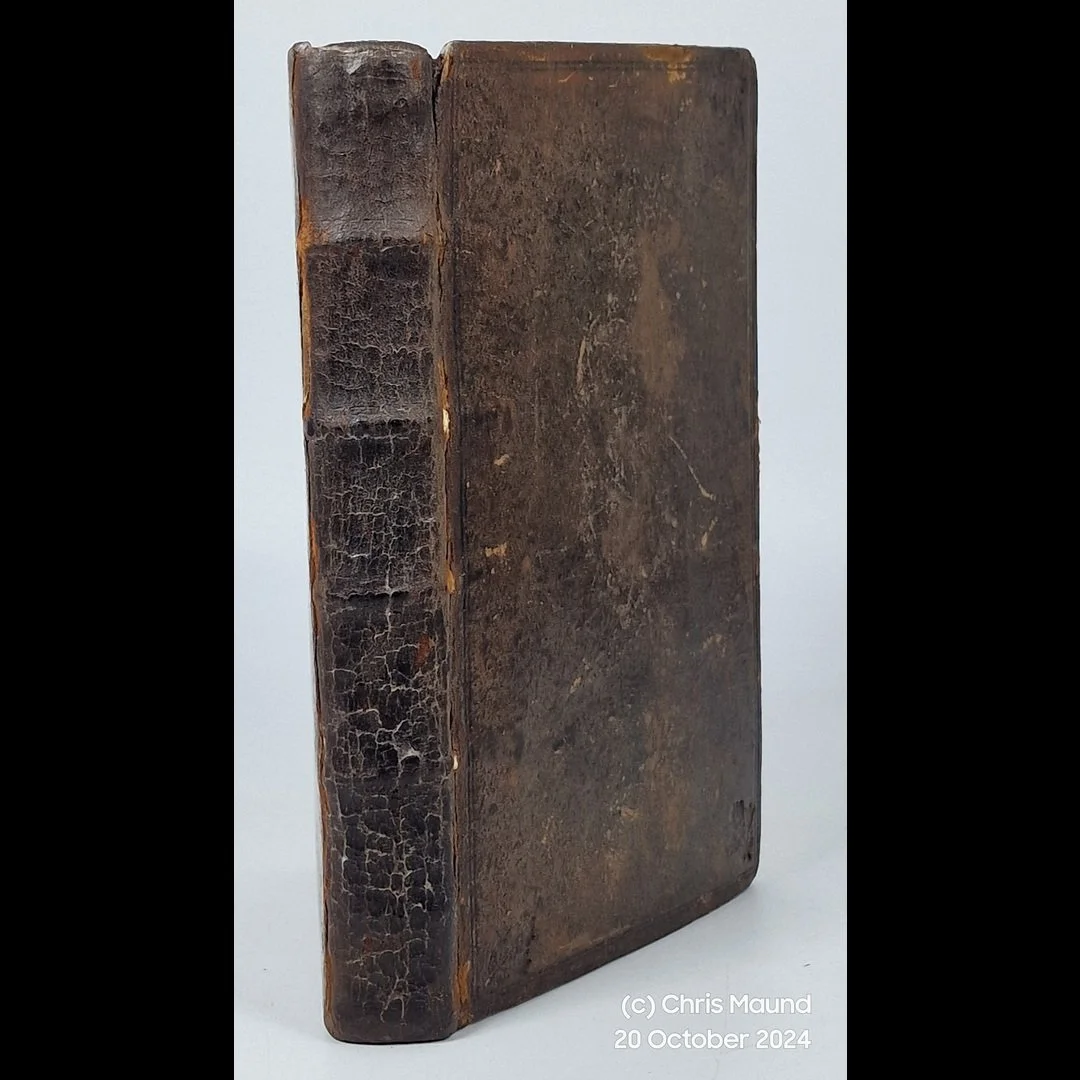
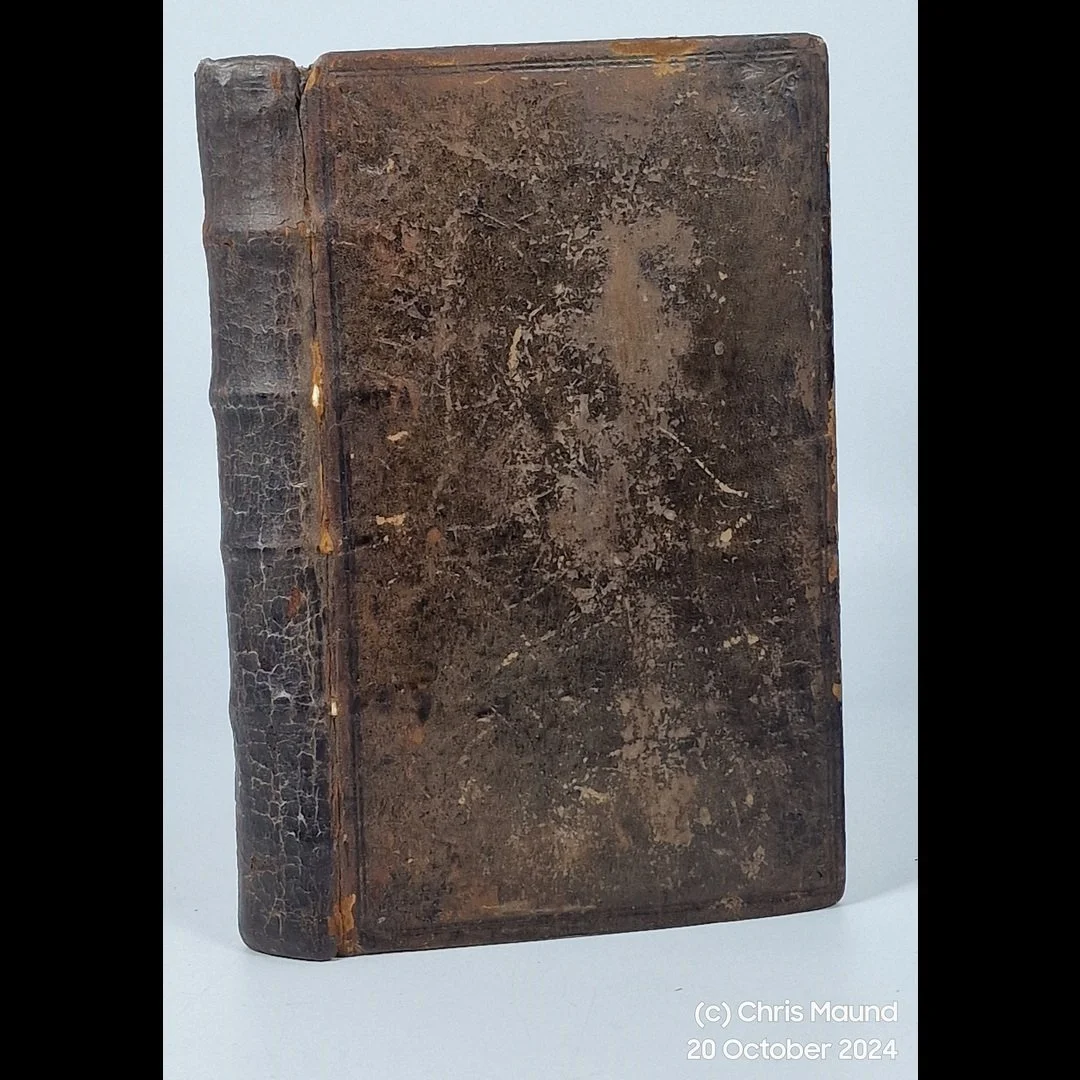
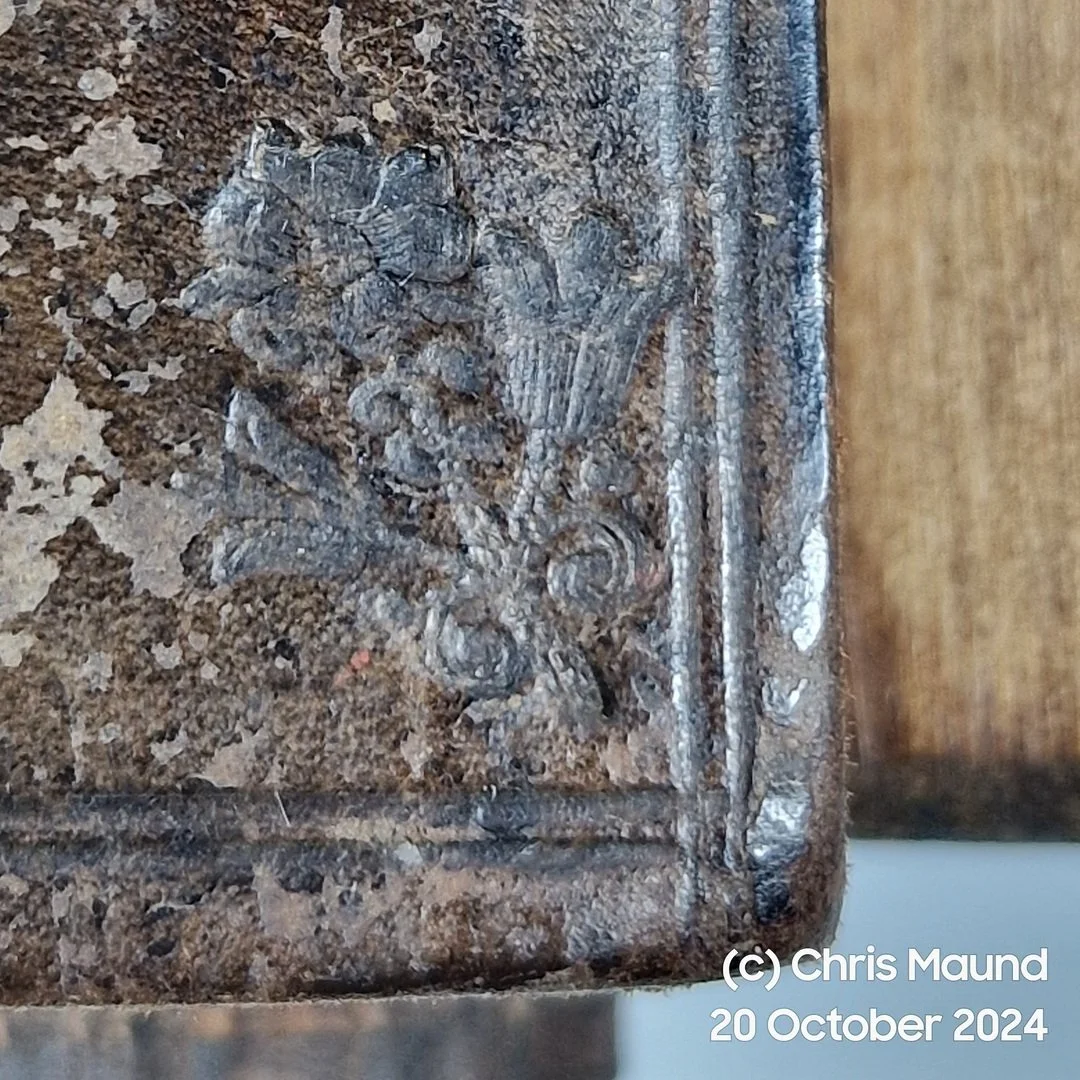
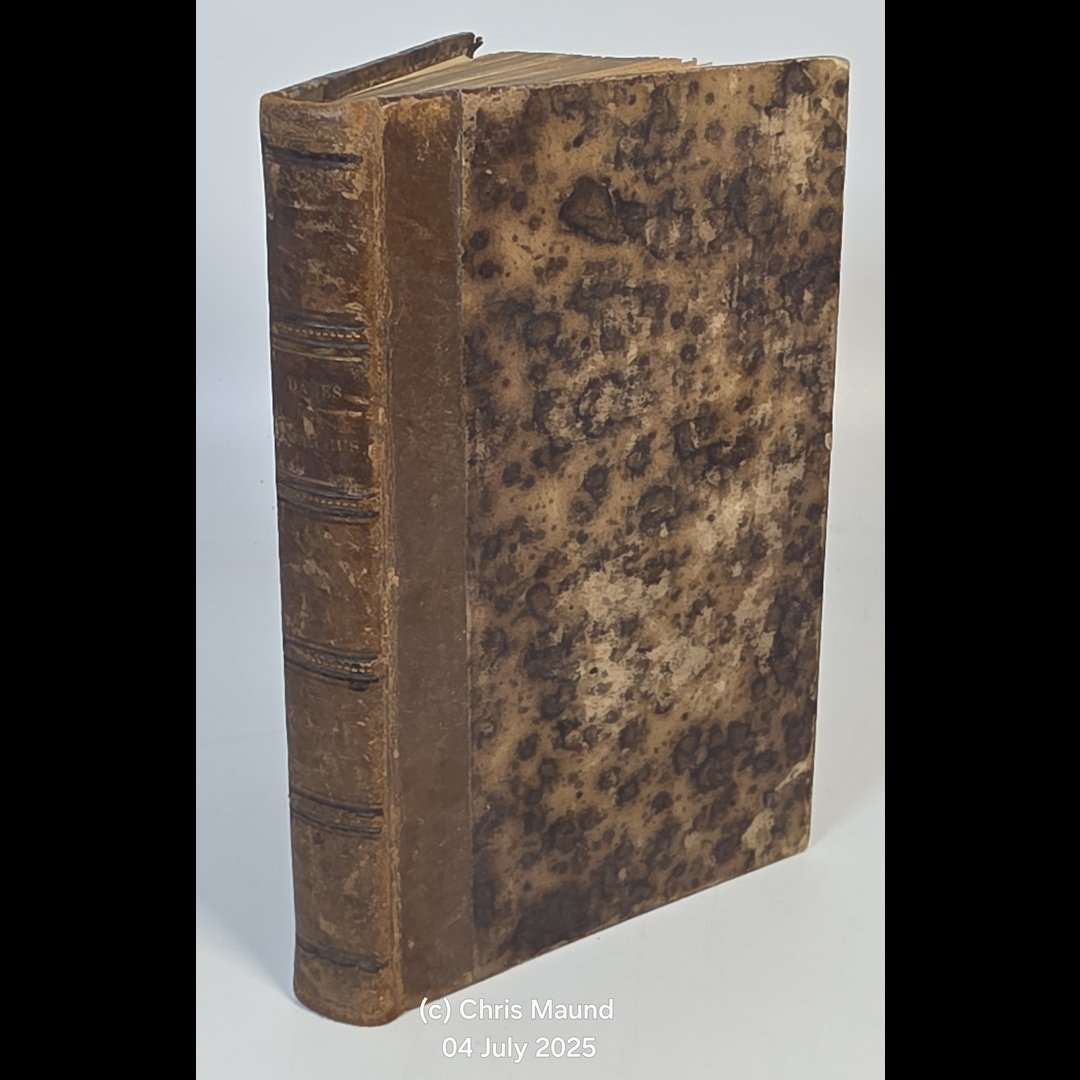
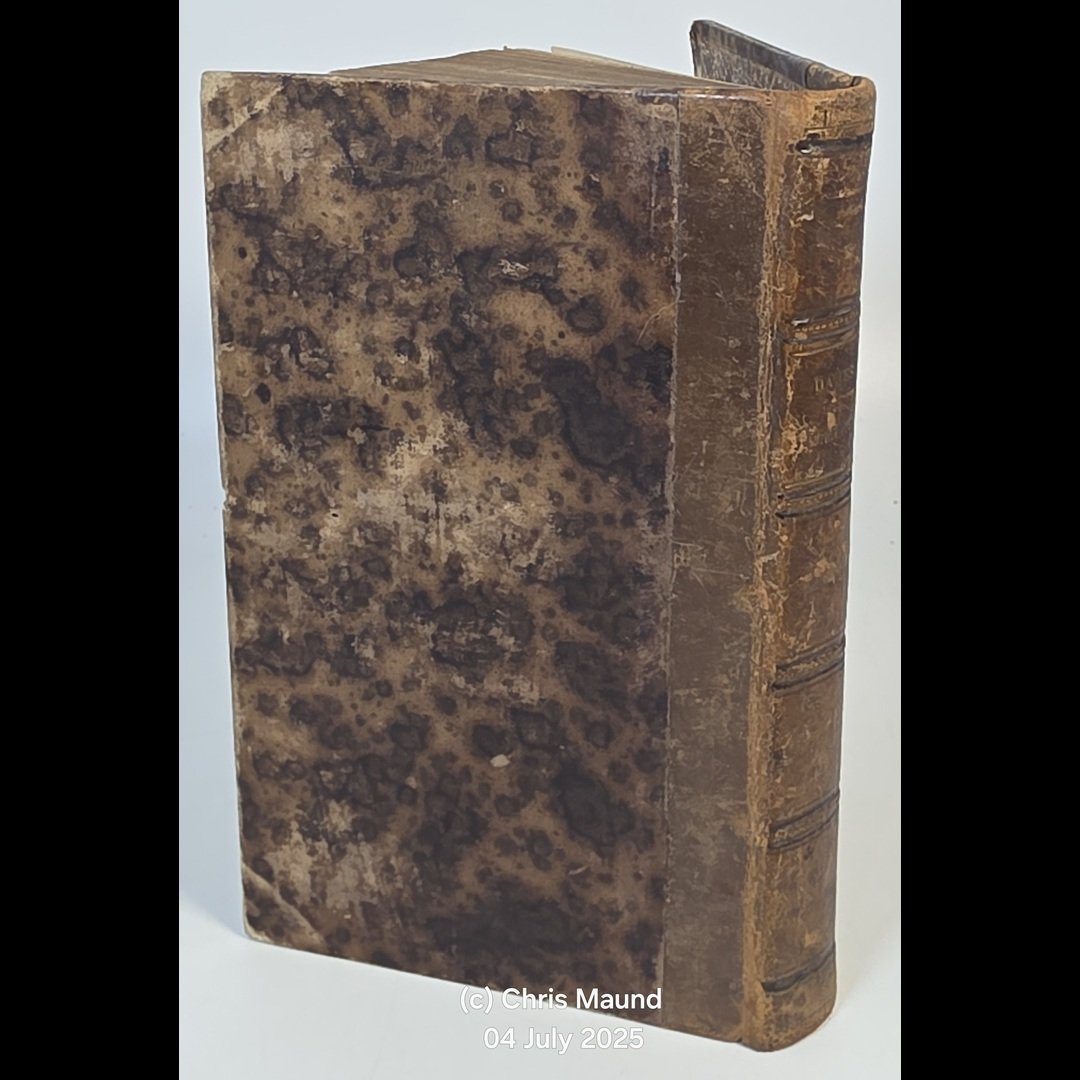
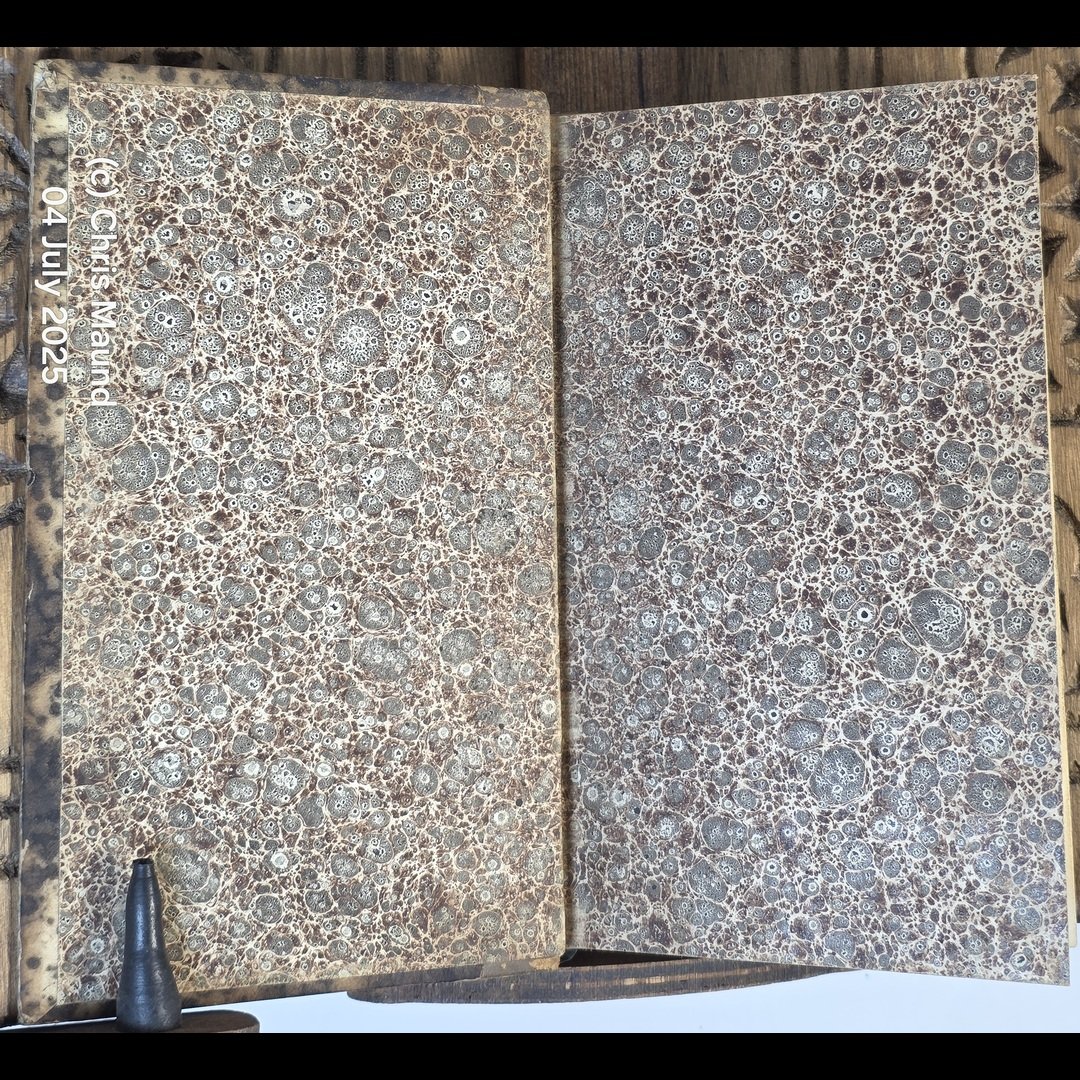
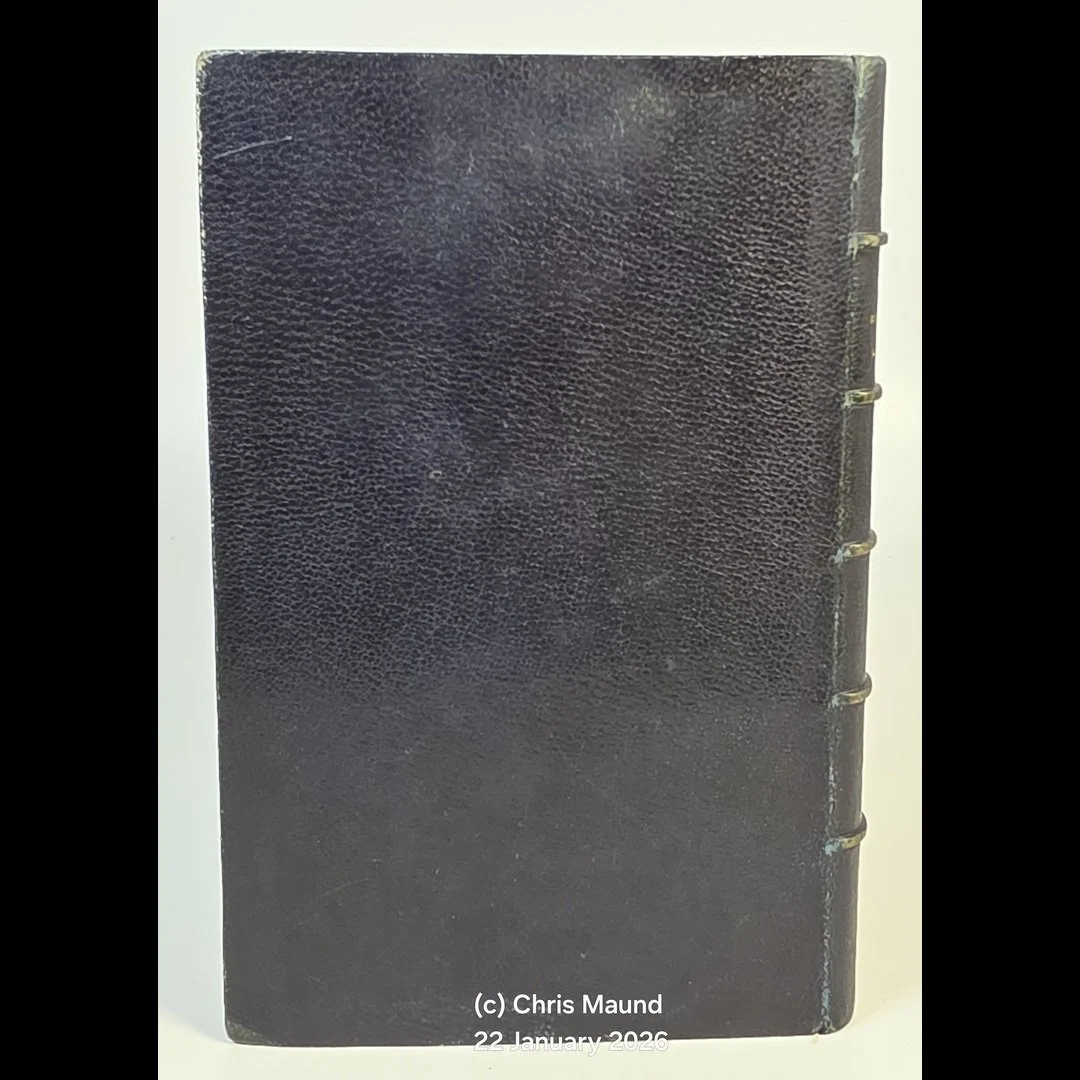
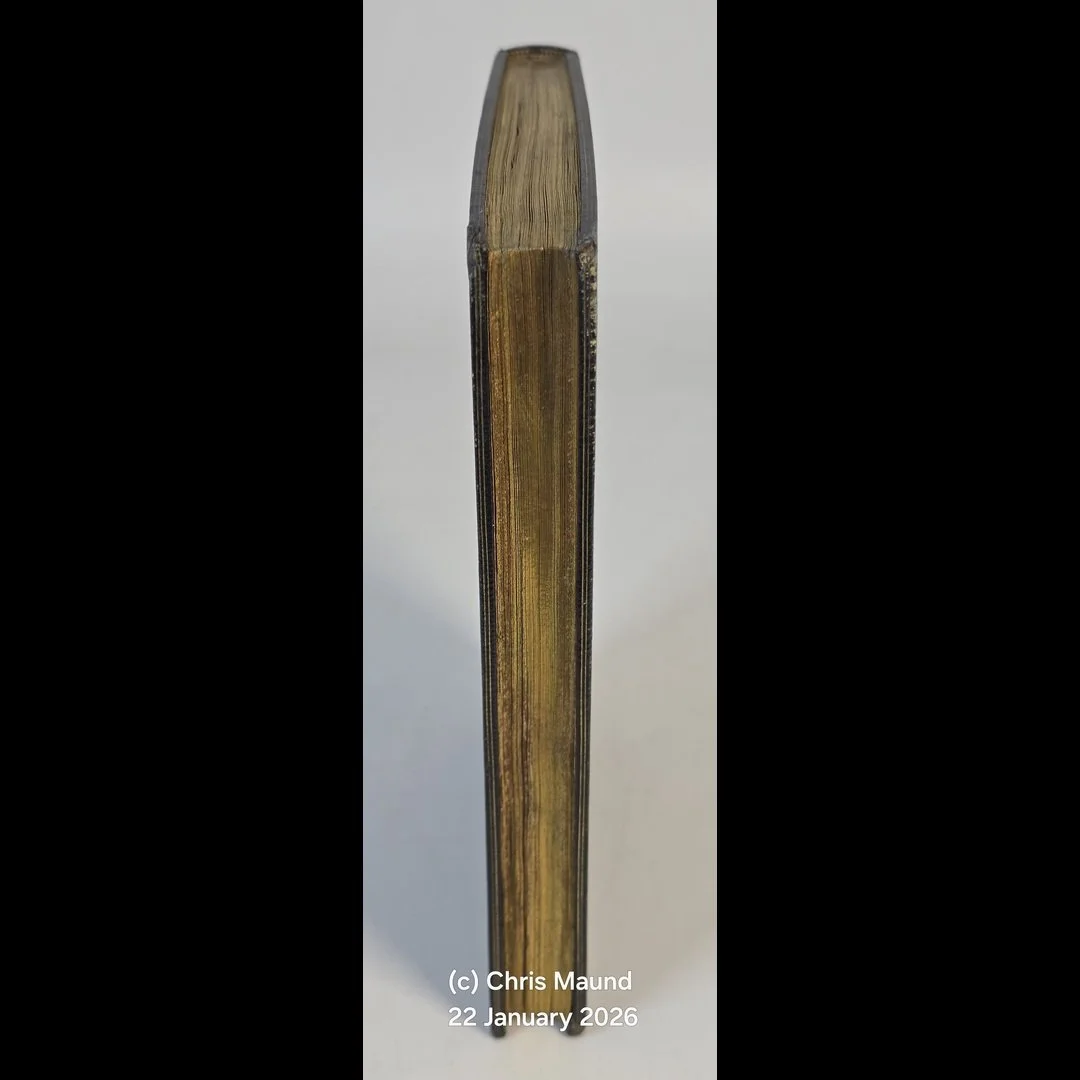
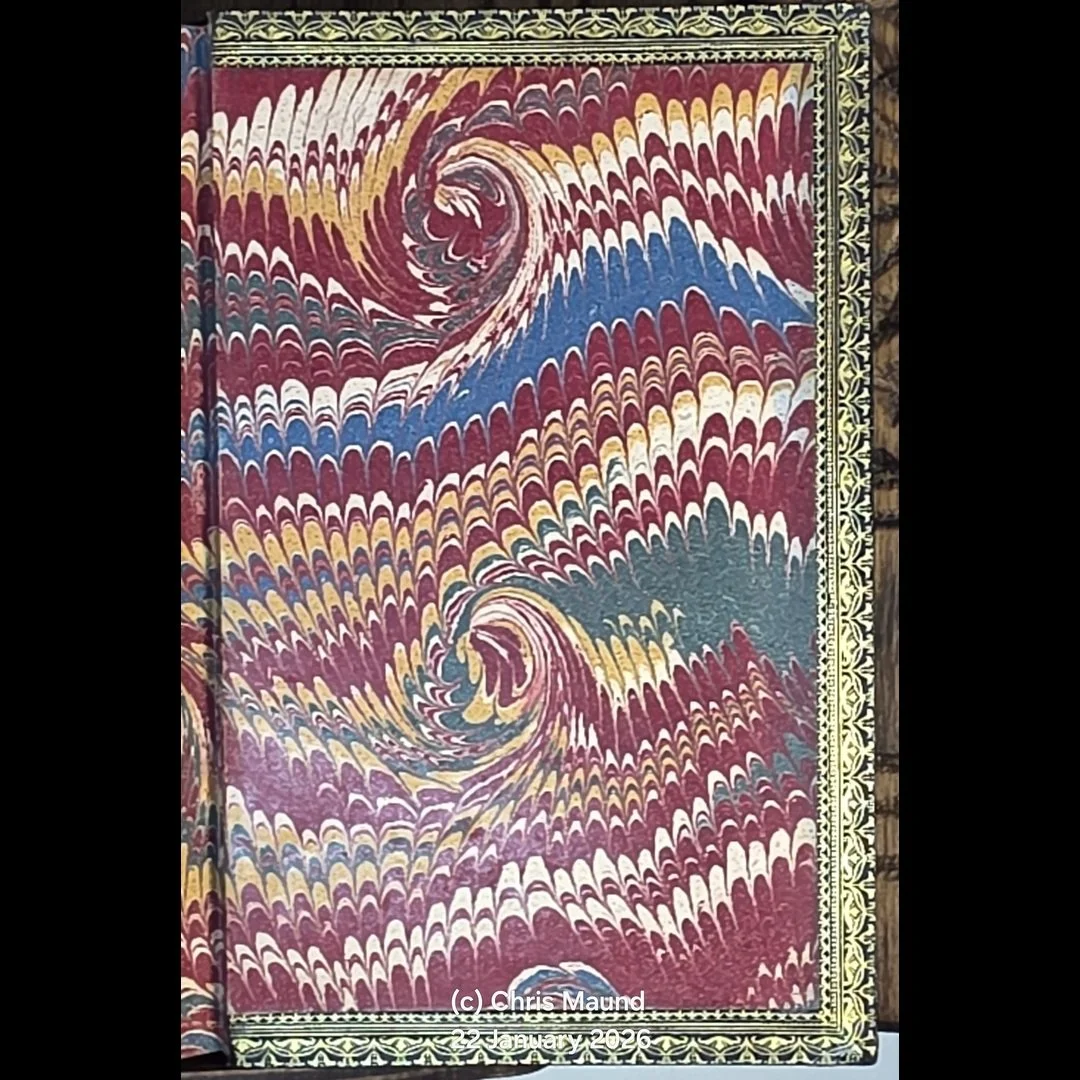
Two works in one volume. Later full vellum over boards in period style, titled in manuscript to spine, with red-sprinkled edges. Binding sound and attractive, with light marking and wear consistent with age and use.
The principal title and several preliminary leaves show old marginal scorching/brown staining with associated paper loss, subsequently restored and infilled, principally to the lower and outer margins. The damage does not materially affect the printed title, Plantin device or main body of text. Further minor age-toning, occasional spotting, marks and signs of historical use throughout, but the text block is generally clean, the margins generous and the illustrative material strongly impressed.
Engraved Plantin printer's device to the principal title; separate title page to the Analecta. Numerous woodcut and copper-engraved illustrations throughout. The large folding engraved Iconismus aciei vulgatae, situated between pp. 184–185, is present and complete, with expected fold wear and light toning but no significant loss.
The book has been physically collated. Complete, including both separately titled parts, the folding plate, the full text and the integral terminal blanks z4 and DD6.
Two binder's blank leaves precede the principal title. The first work concludes on p. 366 with Finis and the large woodcut printer's device, followed by the integral blank z4. The separately titled Analecta follows, ending with Index, imperial privilege and Summa Privilegii, with the integral terminal blank DD6 retained. Additional binder's blank leaf at rear.
Please see Photos as part of condition report.
REFERENCES
USTC 1003386 — De Militia Romana
USTC 1003387 — Analecta sive Observationes reliquae ad Militiam
Imhof L-24
Cockle 620 — work reference, describing the later 1614 edition
Biblioteca Nazionale Braidense BVEE044560
Getty Research Institute copy, 1602
Catálogo Colectivo del Patrimonio Bibliográfico Madrileño — Torrepalma comparative copy, UNED F.A. 055(1)
SYNOPSIS
First issued in the 1590s, De Militia Romana was Lipsius's ambitious attempt to reconstruct the Roman military system from the surviving classical evidence. The present 1602 Editio tertia, aucta variè & castigata — third edition, variously enlarged and corrected — represents a mature revision issued during the author's lifetime. Institutional cataloguing records the edition as comprising 366, [2]; XXIX, [7] pages, with woodcut and copper-engraved illustration and the large folding battle-formation plate.
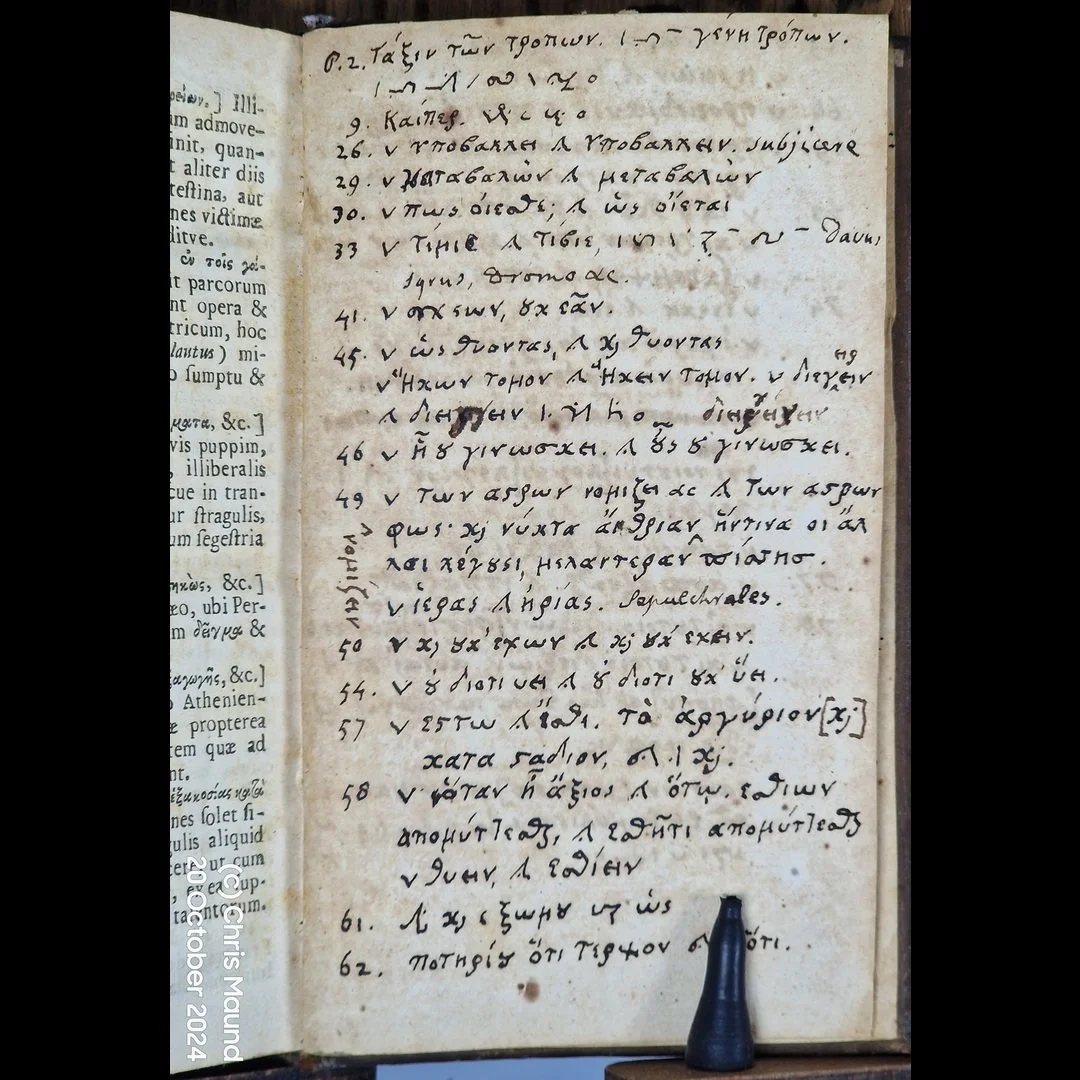
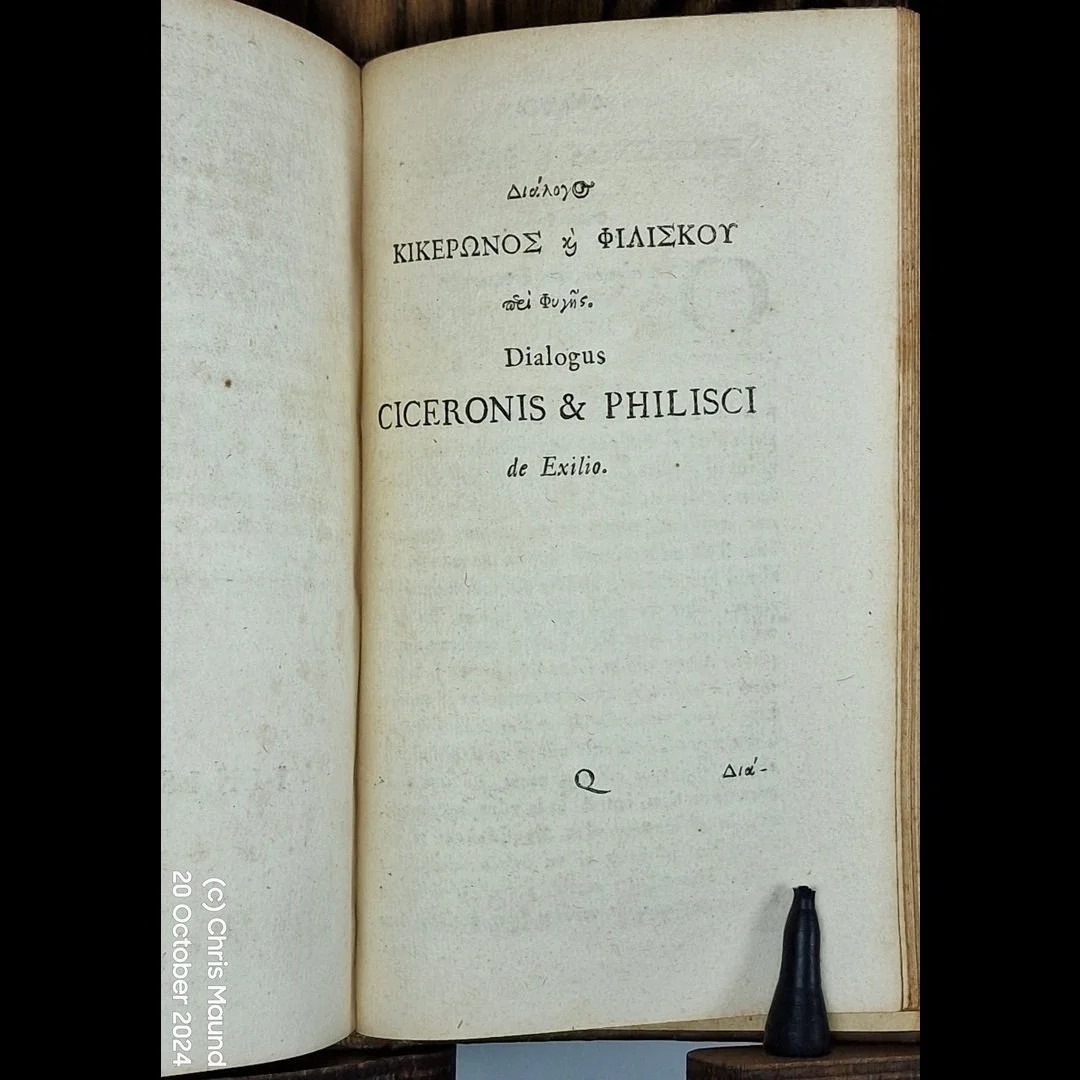
Taking the military chapters of Polybius, Book VI as his principal framework, Lipsius examines the recruitment and constitution of the Roman army, officers and ranks, legionary organisation, cavalry, weapons and armour, standards, camps, battle order, discipline, punishment and reward. Polybius's Greek appears alongside Latin translation and Lipsius's extensive commentary, allowing ancient testimony to become the basis for an exceptionally detailed reconstruction of Roman military institutions.
The importance of the book lies in its purpose as much as its antiquarian learning. Lipsius regarded the Roman army as a model of disciplined organisation whose lessons could speak to the fractured political and military world of his own age. Rather than merely describing picturesque antiquities, he examined the mechanisms by which training, hierarchy, obedience and collective discipline had enabled Rome to exercise military power.
The work therefore occupies an important place at the intersection of Renaissance classical scholarship, military history and early modern political thought. Lipsius's scholarship formed part of the intellectual environment in which ancient drill and discipline were reconsidered by late-sixteenth-century European military reformers, particularly in the Netherlands.
The separately titled Analecta sive Observationes reliquae ad Militiam et hosce Libros supplements the five principal books with additional observations, corrections and antiquarian material. It is an integral companion to De Militia Romana and is present here in its complete 1602 issue.
The illustrations greatly extend the work's appeal. Soldiers, armour, cavalry, standards, tactical formations, weapons, equipment and numismatic evidence transform the classical texts into a form of early visual military archaeology. Foremost among them is the folding Iconismus aciei vulgatae, a diagrammatic reconstruction of the deployment of a Roman army in battle.
A complete, well-margined and strongly illustrated copy of the 1602 third edition, retaining both terminal blanks and the folding battle plate, with the additional distinction of secure provenance from the historic library of the Counts of Torrepalma.
AUTHOR BIO
Justus Lipsius (1547–1606) was one of the outstanding classical scholars and humanists of the late Renaissance: philologist, historian, political thinker and the principal intellectual figure associated with the revival of Stoicism now known as Neo-Stoicism.
Born Joest Lips in the Spanish Netherlands, he taught at Jena, Leiden and Leuven and combined extraordinarily detailed knowledge of classical literature with an interest in the political and institutional problems of contemporary Europe. His writings ranged from textual criticism and ancient history to political theory, ethics and military organisation.
In works such as De Constantia, the Politica and De Militia Romana, Lipsius attempted to recover practical lessons from antiquity for a Europe marked by religious conflict and war. His emphasis upon order, discipline, constancy and organised authority made his work particularly influential in the political and military culture of the late sixteenth and early seventeenth centuries.
ILLUSTRATOR
Theodor Galle / Pieter van der Borcht
Theodoor Galle, with the wider illustrative tradition of the work associated with Pieter van der Borcht
Illustrator Bio:
Theodoor Galle (1571–1633) was a member of the celebrated Antwerp dynasty of engravers founded by Philip Galle. Closely connected with the Plantin-Moretus publishing world, he produced engraved illustrations, portraits and antiquarian subjects for some of the most important scholarly books of the period.
The engraved plates in this 1602 edition are bibliographically attributed to Galle. The illustration programme of De Militia Romana also developed from the earlier Plantin editions associated with Pieter van der Borcht the Elder (c. 1545–1608), one of Plantin's most prolific designers and illustrators. The result is an unusually rich combination of copper engraving and woodcut, turning Lipsius's antiquarian reconstruction into a visual as well as textual study of the Roman army.
1602 Third Edition With Torrepalma Provenance
DE MILITIA ROMANA LIBRI QUINQUE
By Justus (Iustus) Lipsius
KEY DETAILS
Condition: Very Good
Format: Vellum, quarto (4to 9 1⁄2 × 12 in 241 × 305 mm )
Note: Binding/size selection follows standard bibliographic conventions and is approximate; exact measurements may vary.
Published By: Antuerpiae: Ex Officina Plantiniana, apud Ioannem Moretum, Antwerp, 1602
Language: Latin
Illustrated By: Theodor Galle / Pieter van der Borcht
Provenance: Manuscript ownership inscription “L. del C. de Torrepalma”, from the historic library of the Counts of Torrepalma.
Collation: A–Z⁴ a–z⁴; AA–CC⁴ DD⁶. z4 and DD6 blank.; Pagination: 366, [2]; XXIX, [7] pp., plus one folding engraved plate.
Dust Jacket: None, as issued, No Jacket
SKU: BTETM0002653
Shipping Info: Approximate Package Dimensions H: 12.5, L: 30, W: 25 (Units: cm), W: 2Kg
Tracked Shipping, Insurance Coverage as per Customer Request
DESCRIPTION
De Militia Romana libri quinque
De Militia Romana libri quinque Commentarius ad Polybium
Bound with: Analecta sive Observationes reliquae ad Militiam et hosce Libros
A complete and particularly appealing copy of the third, revised edition of Justus Lipsius's celebrated reconstruction of the Roman army, printed at Antwerp by Jan Moretus at the Plantin-Moretus press in 1602, together with its separately titled companion Analecta. One of the major works of Renaissance military antiquarianism, De Militia Romana sought to recover the organisation, discipline, equipment and battlefield practice of Rome through a critical reading of Polybius and other classical authorities.
This copy retains the complete mixed illustrative programme of copper engravings and woodcuts, including the large folding engraved Iconismus aciei vulgatae between pp. 184–185, together with depictions of Roman soldiers, cavalry, armour, standards, weapons, formations, military equipment and ancient coins. The engraved plates are catalogued to Theodoor Galle, while the wider Plantin illustrative tradition of the work is also associated with Pieter van der Borcht. The impressions in this copy are notably strong and dark, with generous margins.
Of particular interest is the early manuscript ownership inscription “L. del C. de Torrepalma”, securely associating the volume with the celebrated library of the Counts of Torrepalma. An identical ownership formula is recorded by the Catálogo Colectivo del Patrimonio Bibliográfico Madrileño in another Plantin-Moretus work by Lipsius — the 1605 Admiranda sive De magnitudine Romana now held by the Universidad Nacional de Educación a Distancia. The close correspondence — same author, same Antwerp press, only three years apart, and the identical abbreviated ownership notation — provides unusually strong evidence for the Torrepalma provenance of this copy.
PROVENANCE
Manuscript ownership inscription “L. del C. de Torrepalma”, from the historic library of the Counts of Torrepalma.
The attribution is supported by an unusually close institutional parallel. A copy of Justus Lipsius's Admiranda sive De magnitudine Romana libri quattuor, printed by the same Plantin-Moretus press under Jan Moretus at Antwerp in 1605, is preserved in the Biblioteca Central of the Universidad Nacional de Educación a Distancia. Its institutional catalogue specifically records on the verso of the title the manuscript annotation:
“L. del C. de Torrepalma.”
The identical formula in two Plantin-Moretus books by Lipsius printed only three years apart strongly establishes the present volume as another book from the Torrepalma library.
The Torrepalma collection developed into an important Spanish aristocratic scholarly library. Pedro Verdugo de Albornoz y Ursúa (1657–1720), II Count of Torrepalma, was instrumental in establishing and enlarging the collection, which was subsequently developed by his son Alonso Verdugo de Castilla (1706–1767), III Count of Torrepalma, a poet, diplomat and member of both the Real Academia Española and Real Academia de la Historia.
The inscription is best treated as a library ownership notation rather than an autograph signature of a particular Count; the precise individual under whom this volume entered the collection cannot presently be established.
CONDITION, COLLATION & COPY NOTES
Two works in one volume. Later full vellum over boards in period style, titled in manuscript to spine, with red-sprinkled edges. Binding sound and attractive, with light marking and wear consistent with age and use.
The principal title and several preliminary leaves show old marginal scorching/brown staining with associated paper loss, subsequently restored and infilled, principally to the lower and outer margins. The damage does not materially affect the printed title, Plantin device or main body of text. Further minor age-toning, occasional spotting, marks and signs of historical use throughout, but the text block is generally clean, the margins generous and the illustrative material strongly impressed.
Engraved Plantin printer's device to the principal title; separate title page to the Analecta. Numerous woodcut and copper-engraved illustrations throughout. The large folding engraved Iconismus aciei vulgatae, situated between pp. 184–185, is present and complete, with expected fold wear and light toning but no significant loss.
The book has been physically collated. Complete, including both separately titled parts, the folding plate, the full text and the integral terminal blanks z4 and DD6.
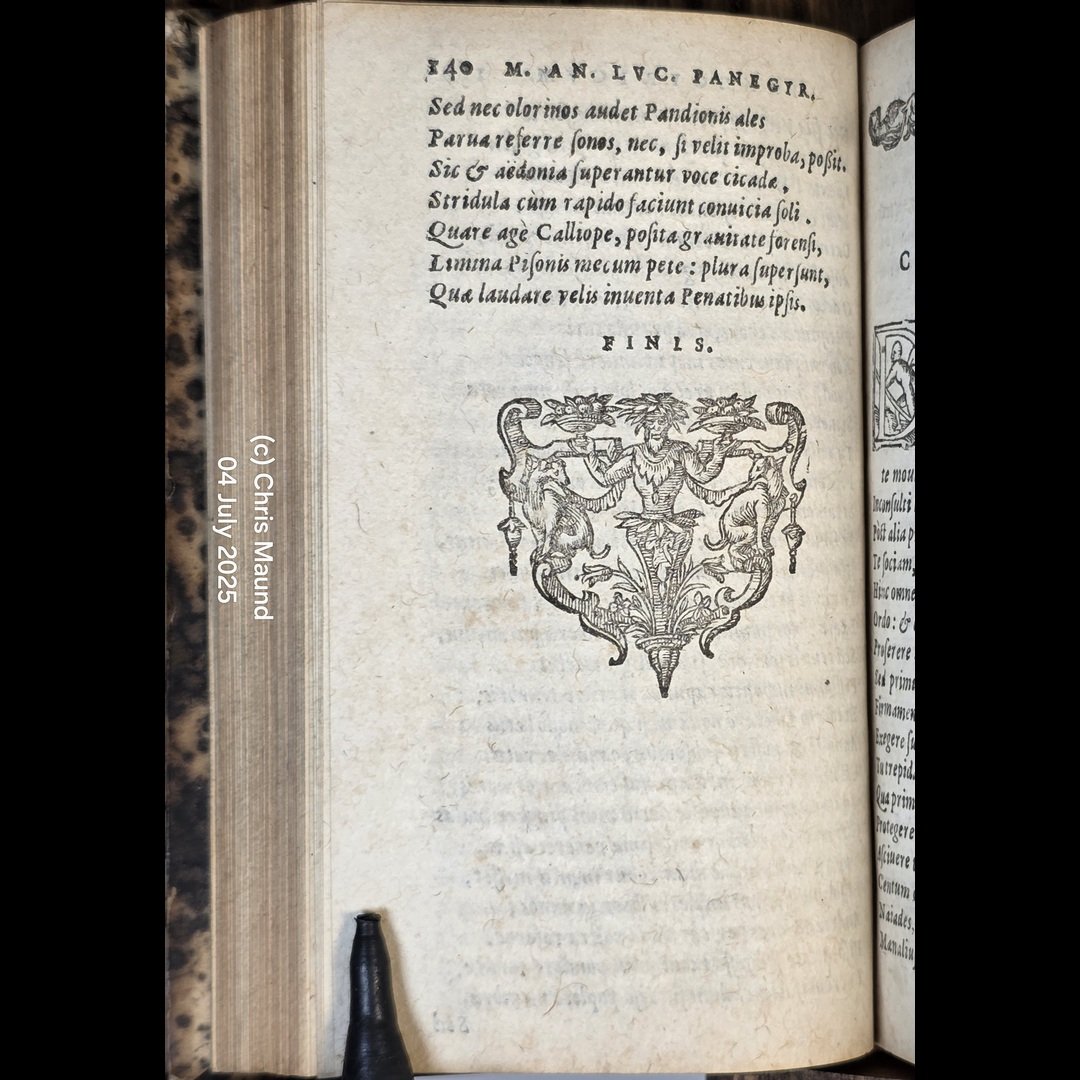
Two binder's blank leaves precede the principal title. The first work concludes on p. 366 with Finis and the large woodcut printer's device, followed by the integral blank z4. The separately titled Analecta follows, ending with Index, imperial privilege and Summa Privilegii, with the integral terminal blank DD6 retained. Additional binder's blank leaf at rear.
Please see Photos as part of condition report.
REFERENCES
USTC 1003386 — De Militia Romana
USTC 1003387 — Analecta sive Observationes reliquae ad Militiam
Imhof L-24
Cockle 620 — work reference, describing the later 1614 edition
Biblioteca Nazionale Braidense BVEE044560
Getty Research Institute copy, 1602
Catálogo Colectivo del Patrimonio Bibliográfico Madrileño — Torrepalma comparative copy, UNED F.A. 055(1)
SYNOPSIS
First issued in the 1590s, De Militia Romana was Lipsius's ambitious attempt to reconstruct the Roman military system from the surviving classical evidence. The present 1602 Editio tertia, aucta variè & castigata — third edition, variously enlarged and corrected — represents a mature revision issued during the author's lifetime. Institutional cataloguing records the edition as comprising 366, [2]; XXIX, [7] pages, with woodcut and copper-engraved illustration and the large folding battle-formation plate.
Taking the military chapters of Polybius, Book VI as his principal framework, Lipsius examines the recruitment and constitution of the Roman army, officers and ranks, legionary organisation, cavalry, weapons and armour, standards, camps, battle order, discipline, punishment and reward. Polybius's Greek appears alongside Latin translation and Lipsius's extensive commentary, allowing ancient testimony to become the basis for an exceptionally detailed reconstruction of Roman military institutions.
The importance of the book lies in its purpose as much as its antiquarian learning. Lipsius regarded the Roman army as a model of disciplined organisation whose lessons could speak to the fractured political and military world of his own age. Rather than merely describing picturesque antiquities, he examined the mechanisms by which training, hierarchy, obedience and collective discipline had enabled Rome to exercise military power.
The work therefore occupies an important place at the intersection of Renaissance classical scholarship, military history and early modern political thought. Lipsius's scholarship formed part of the intellectual environment in which ancient drill and discipline were reconsidered by late-sixteenth-century European military reformers, particularly in the Netherlands.
The separately titled Analecta sive Observationes reliquae ad Militiam et hosce Libros supplements the five principal books with additional observations, corrections and antiquarian material. It is an integral companion to De Militia Romana and is present here in its complete 1602 issue.
The illustrations greatly extend the work's appeal. Soldiers, armour, cavalry, standards, tactical formations, weapons, equipment and numismatic evidence transform the classical texts into a form of early visual military archaeology. Foremost among them is the folding Iconismus aciei vulgatae, a diagrammatic reconstruction of the deployment of a Roman army in battle.
A complete, well-margined and strongly illustrated copy of the 1602 third edition, retaining both terminal blanks and the folding battle plate, with the additional distinction of secure provenance from the historic library of the Counts of Torrepalma.
AUTHOR BIO
Justus Lipsius (1547–1606) was one of the outstanding classical scholars and humanists of the late Renaissance: philologist, historian, political thinker and the principal intellectual figure associated with the revival of Stoicism now known as Neo-Stoicism.
Born Joest Lips in the Spanish Netherlands, he taught at Jena, Leiden and Leuven and combined extraordinarily detailed knowledge of classical literature with an interest in the political and institutional problems of contemporary Europe. His writings ranged from textual criticism and ancient history to political theory, ethics and military organisation.
In works such as De Constantia, the Politica and De Militia Romana, Lipsius attempted to recover practical lessons from antiquity for a Europe marked by religious conflict and war. His emphasis upon order, discipline, constancy and organised authority made his work particularly influential in the political and military culture of the late sixteenth and early seventeenth centuries.
ILLUSTRATOR
Theodor Galle / Pieter van der Borcht
Theodoor Galle, with the wider illustrative tradition of the work associated with Pieter van der Borcht
Illustrator Bio:
Theodoor Galle (1571–1633) was a member of the celebrated Antwerp dynasty of engravers founded by Philip Galle. Closely connected with the Plantin-Moretus publishing world, he produced engraved illustrations, portraits and antiquarian subjects for some of the most important scholarly books of the period.
The engraved plates in this 1602 edition are bibliographically attributed to Galle. The illustration programme of De Militia Romana also developed from the earlier Plantin editions associated with Pieter van der Borcht the Elder (c. 1545–1608), one of Plantin's most prolific designers and illustrators. The result is an unusually rich combination of copper engraving and woodcut, turning Lipsius's antiquarian reconstruction into a visual as well as textual study of the Roman army.

 Image 1 of 32
 Image 2 of 32
 Image 3 of 32
 Image 4 of 32
 Image 5 of 32
 Image 6 of 32
 Image 7 of 32
 Image 8 of 32
 Image 9 of 32
 Image 10 of 32
 Image 11 of 32
 Image 12 of 32
 Image 13 of 32
 Image 14 of 32
 Image 15 of 32
 Image 16 of 32
 Image 17 of 32
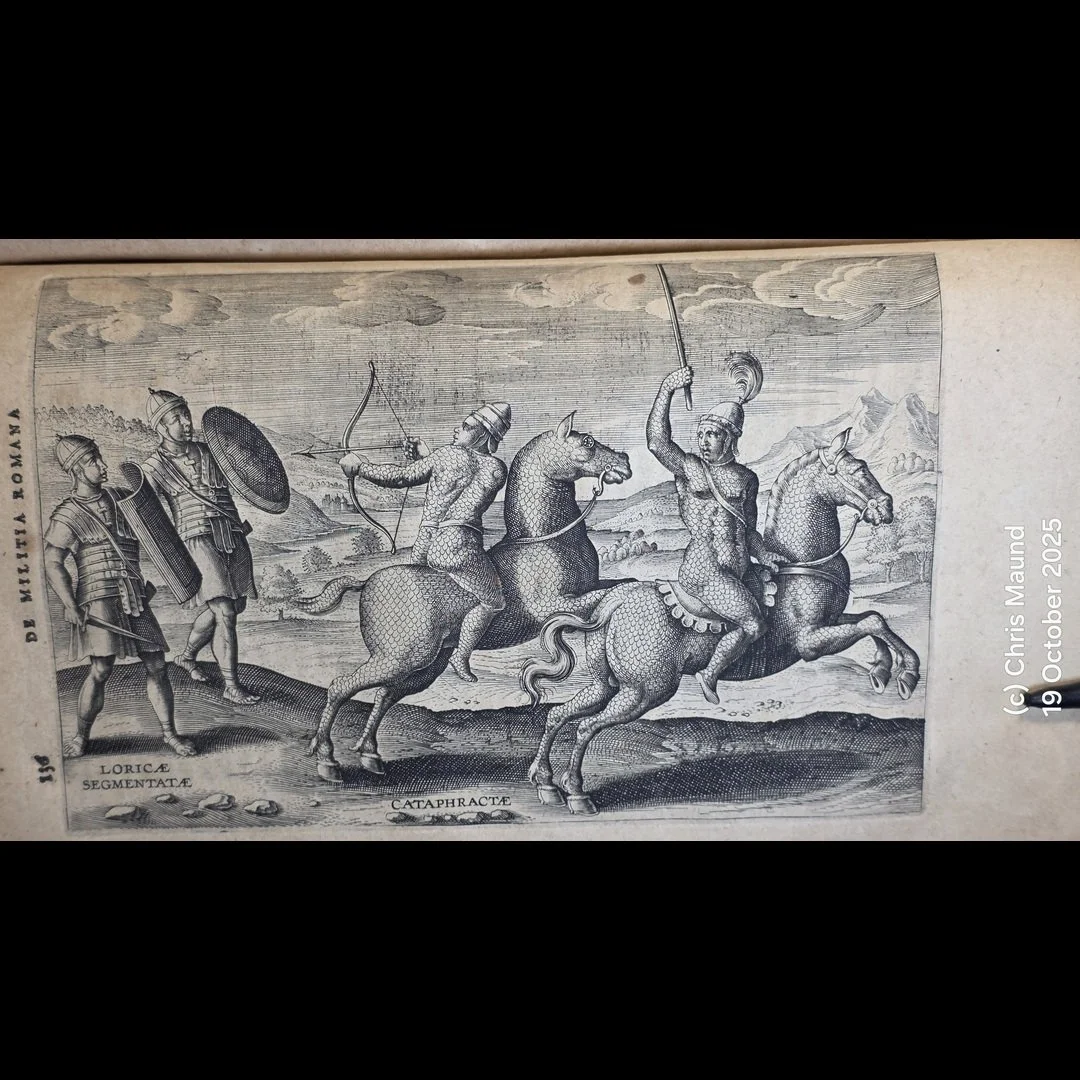 Image 18 of 32
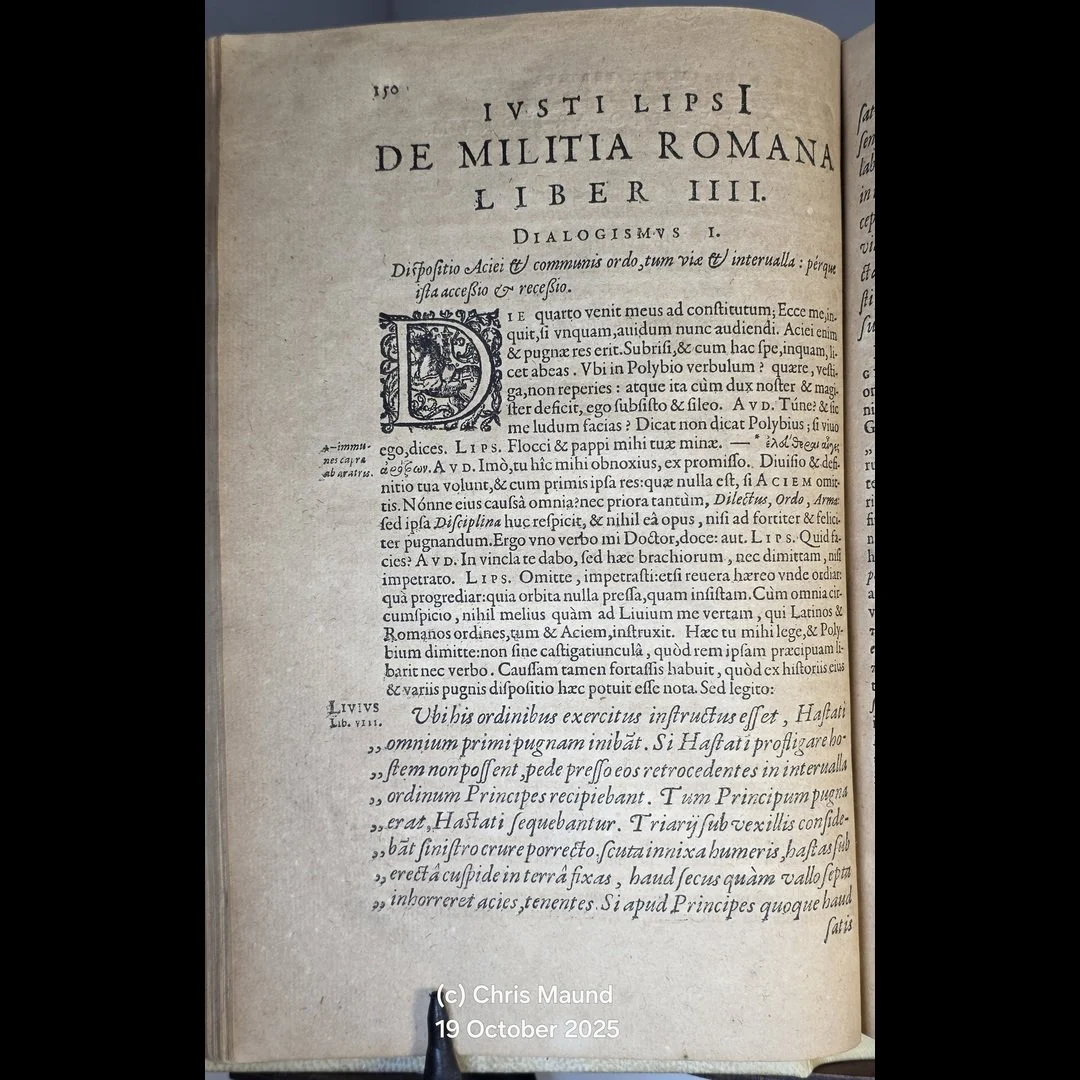 Image 19 of 32
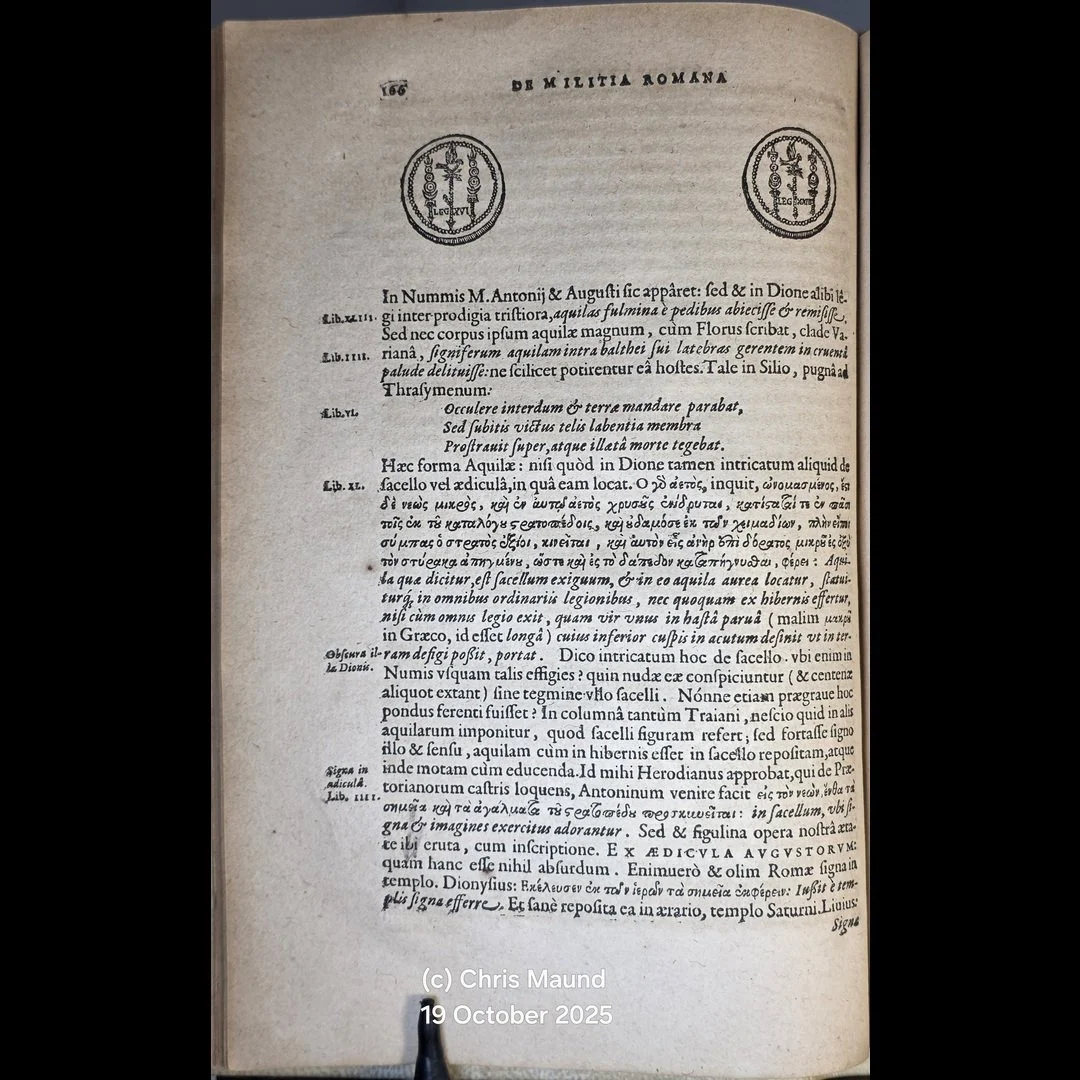 Image 20 of 32
 Image 21 of 32
 Image 22 of 32
 Image 23 of 32
 Image 24 of 32
 Image 25 of 32
 Image 26 of 32
 Image 27 of 32
 Image 28 of 32
 Image 29 of 32
 Image 30 of 32
 Image 31 of 32
 Image 32 of 32