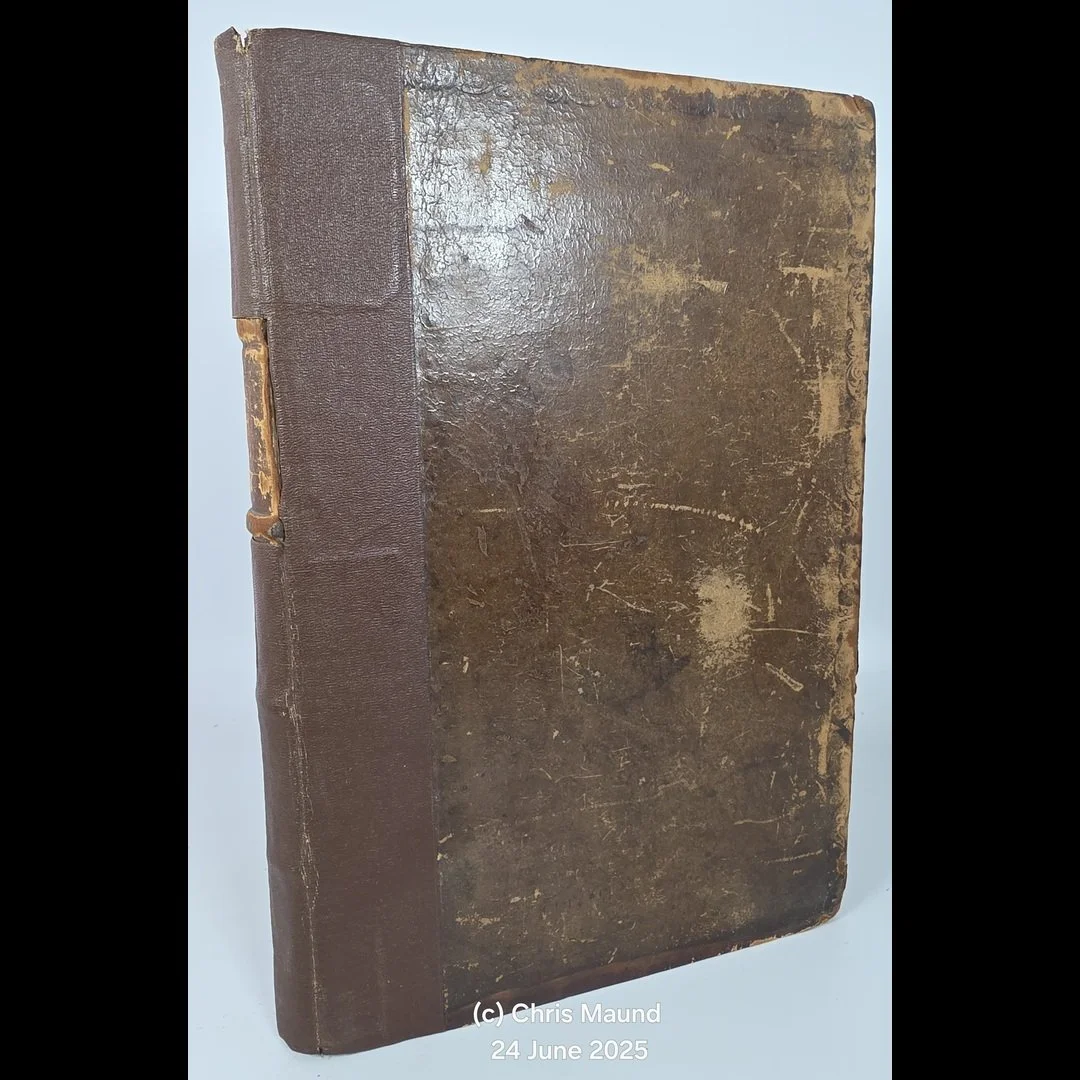
1743 35th/14th ed With Early Cricket Reference and Provenance
MAGNAE BRITANNIAE NOTITIA
By John Chamberlayme
KEY DETAILS
Condition: Good
Format: Contemporary full calf, Octavo (Standard) (8vo 6 × 9 in 152 × 229 mm )
Note: Binding/size selection follows standard bibliographic conventions and is approximate; exact measurements may vary.
Published By: Printed for D. Midwinter, A. Ward, T. Longman, S. Birt, T. Wotton, A. Millar, J. & R. Tonson, C. Ward & R. Chandler, C. Bathurst & G. Hawkins, London, 1743
Language: English
Provenance: Christopher Saunders Collection.
Collation: Engraved portrait frontispiece; [14], 443, [1]; [4], 279, [1]; 67, [1] pp.
Dust Jacket: None, as issued, No Jacket
SKU: BTETM0002672
Shipping Info: Approximate Package Dimensions H: 12.5, L: 30, W: 25 (Units: cm), W: 2Kg
Tracked Shipping, Insurance Coverage as per Customer Request
DESCRIPTION
Magnae Britanniae Notitia
Magnae Britanniae Notitia or, The Present State of Great Britain; with diverse Remarks upon the Ancient State thereof
A substantial Georgian edition of one of the most enduring descriptive handbooks of early modern Britain, combining political, constitutional, ecclesiastical and social history with an extensive contemporary directory of the officers of Church, Crown and State.
First issued by Edward Chamberlayne in 1669 as Angliae Notitia: or, The Present State of England, the work was subsequently continued and enlarged by his son John Chamberlayne. Following the political union of England and Scotland, it developed into Magnae Britanniae Notitia, becoming an exceptionally detailed printed survey of the institutions, customs and administration of Great Britain.
This 1743 edition is the thirty-fifth edition of the South Part, England, and the fourteenth edition of the North Part, Scotland, and retains the extensive supplementary General List, or Catalogue, of all the Offices and Officers Employ'd in the several Branches of His Majesty's Government.
Of particular interest is the celebrated early reference to cricket on p.35. In discussing the recreations of the English people, Chamberlayne records that after their labour they go in the evening to:
“Foot-ball, Cricket, Prison-base, Wrestling, Cudgel-playing…”
The cricket passage had first entered Angliae Notitia in the 1694 eighteenth edition, which Christie's identifies as the first edition of the work to describe cricket among the national recreations. It continued through later editions such as this one and provides an important documentary witness to cricket's place within English popular culture well before the first surviving codified Laws of Cricket of 1744.
The volume is divided broadly between descriptions of England and Scotland, treating geography, population, manners, religion, government, courts, universities, revenues, commerce and recreation, before moving into the extensive lists of office-holders in the royal household and British state.
The result is both a highly useful primary source for Georgian Britain and an attractive association copy with significant provenance for collectors of early cricket, eighteenth-century history and bookplates.
PROVENANCE
Christopher Saunders Collection.
From the collection of Christopher Saunders, noted collector, bookseller and bibliographer of early cricket literature. Saunders assembled a substantial collection of books containing early references to cricket and associated games; major portions of his collection have subsequently been dispersed through specialist cricket and book auctions. Chorley's described his collection specifically as including early books “on and mentioning Cricket.”
This provenance is particularly appropriate to the present volume because of the printed cricket reference on p.35.
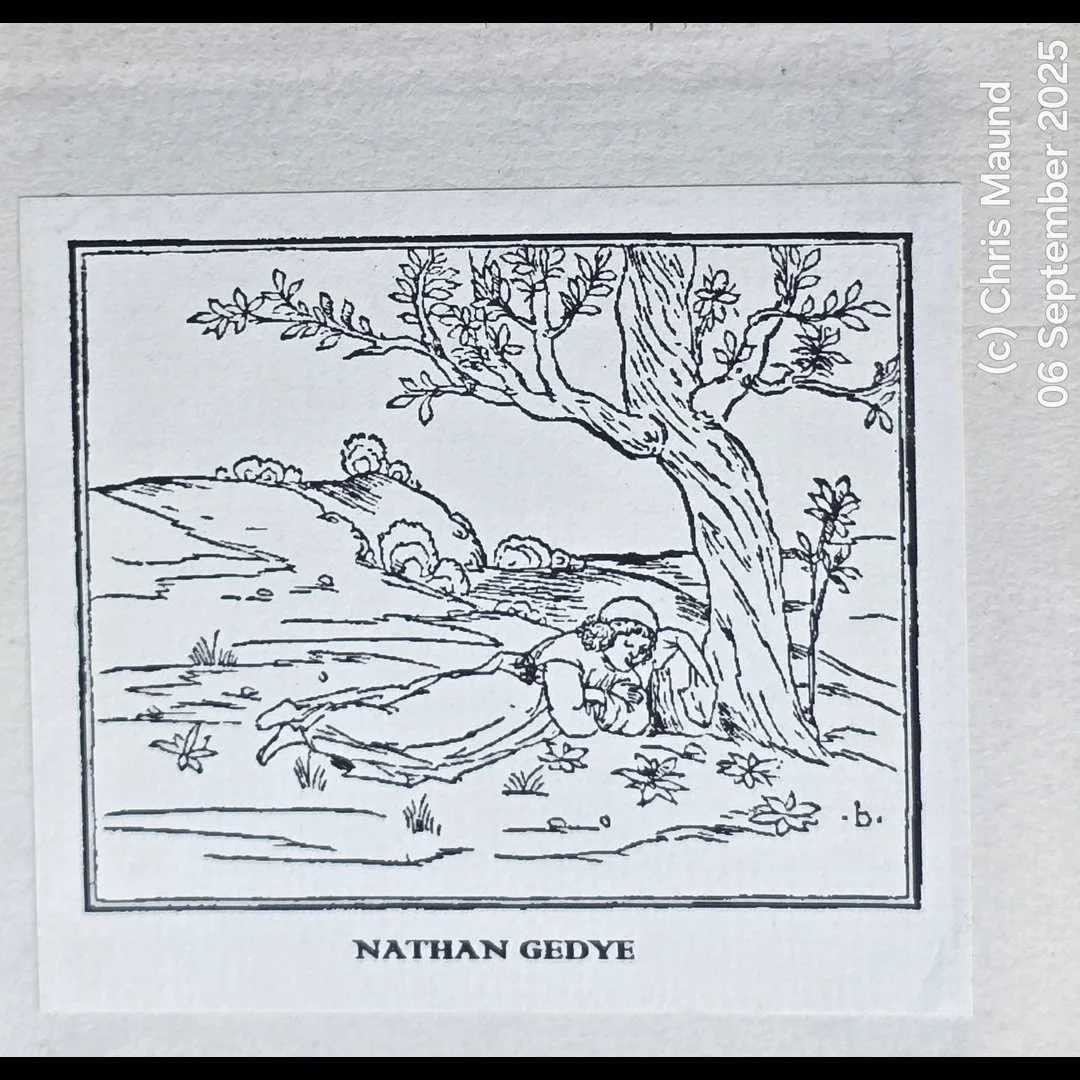
The front pastedown also bears the striking engraved bookpile bookplate of Thomas Percival, Esquire, depicting books surrounding a horse.
The plate is recorded as Franks 23293 and B. N. Lee, Bookpile Bookplates, no. 116. The Bookplate Society identifies the owner as Thomas Percival, M.D., F.R.S., generally associated with Thomas Percival (1740–1804), the influential Manchester physician whose writings on professional conduct played an important part in the development of modern medical ethics.
The attribution should nevertheless be treated with a degree of bibliographical caution, as books bearing the name Thomas Percival have historically also raised the possibility of his namesake Thomas Percival (1719–1762), antiquary and F.R.S.
Later pencil shelf, ownership or bookseller's marks to the front pastedown.
CONDITION, COLLATION & COPY NOTES
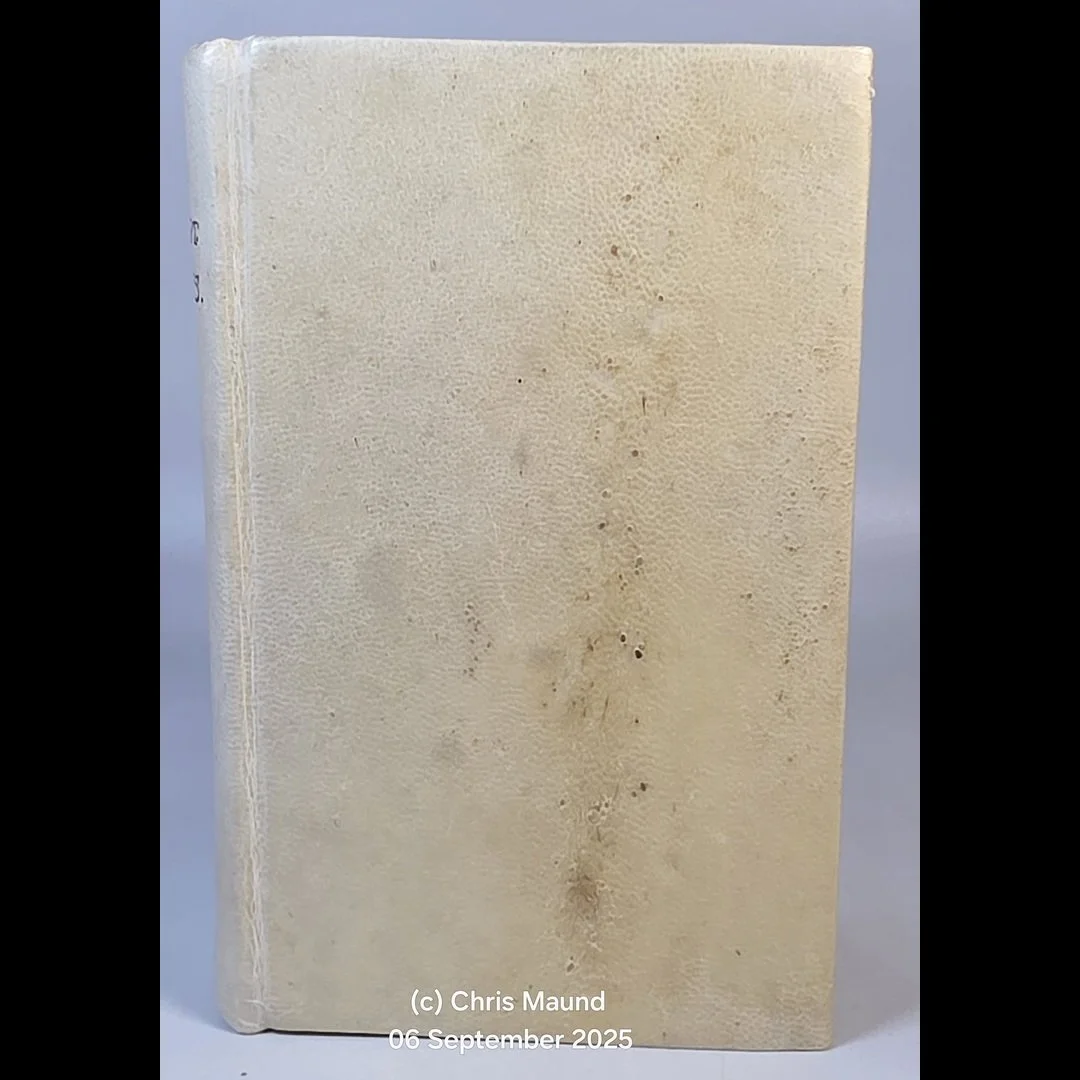
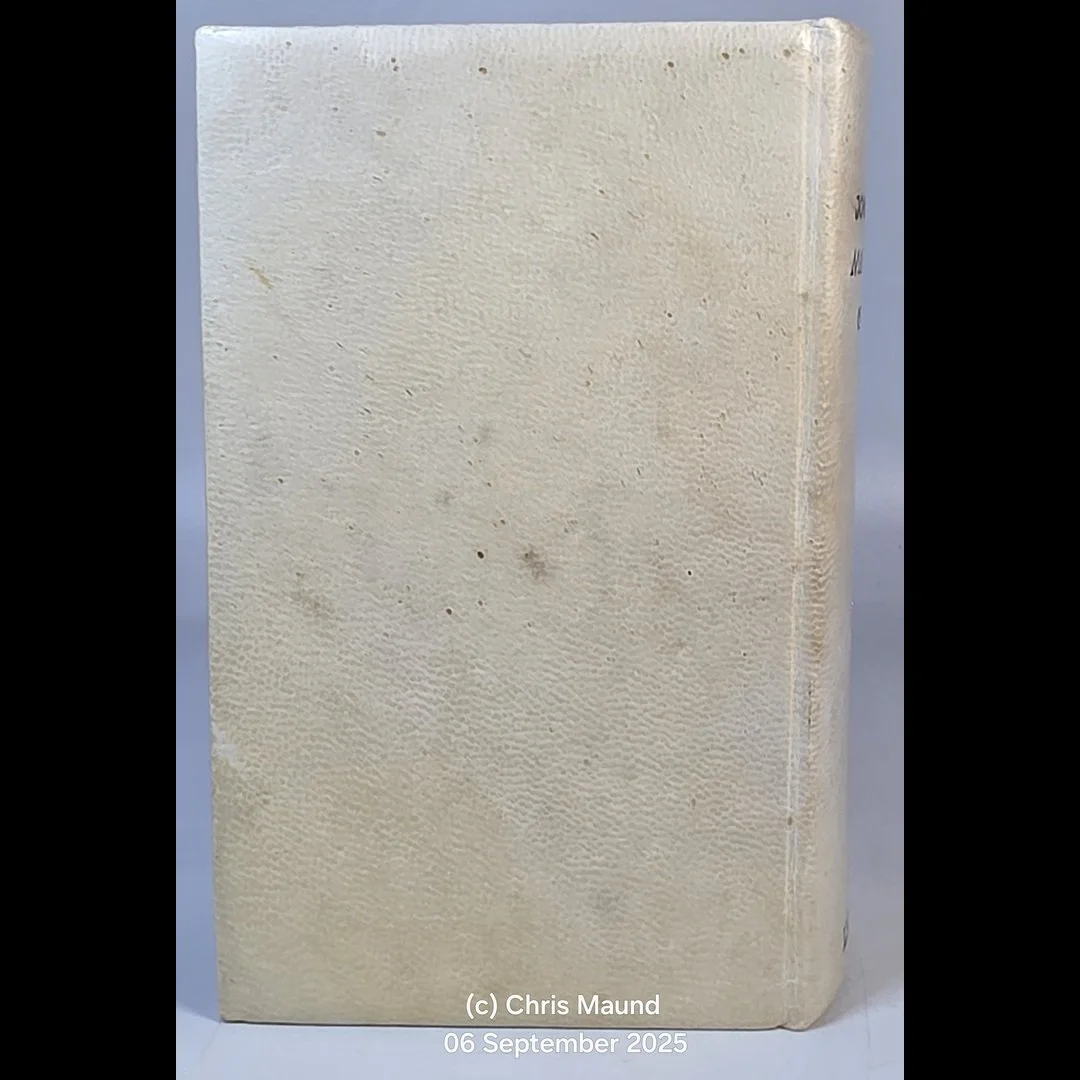
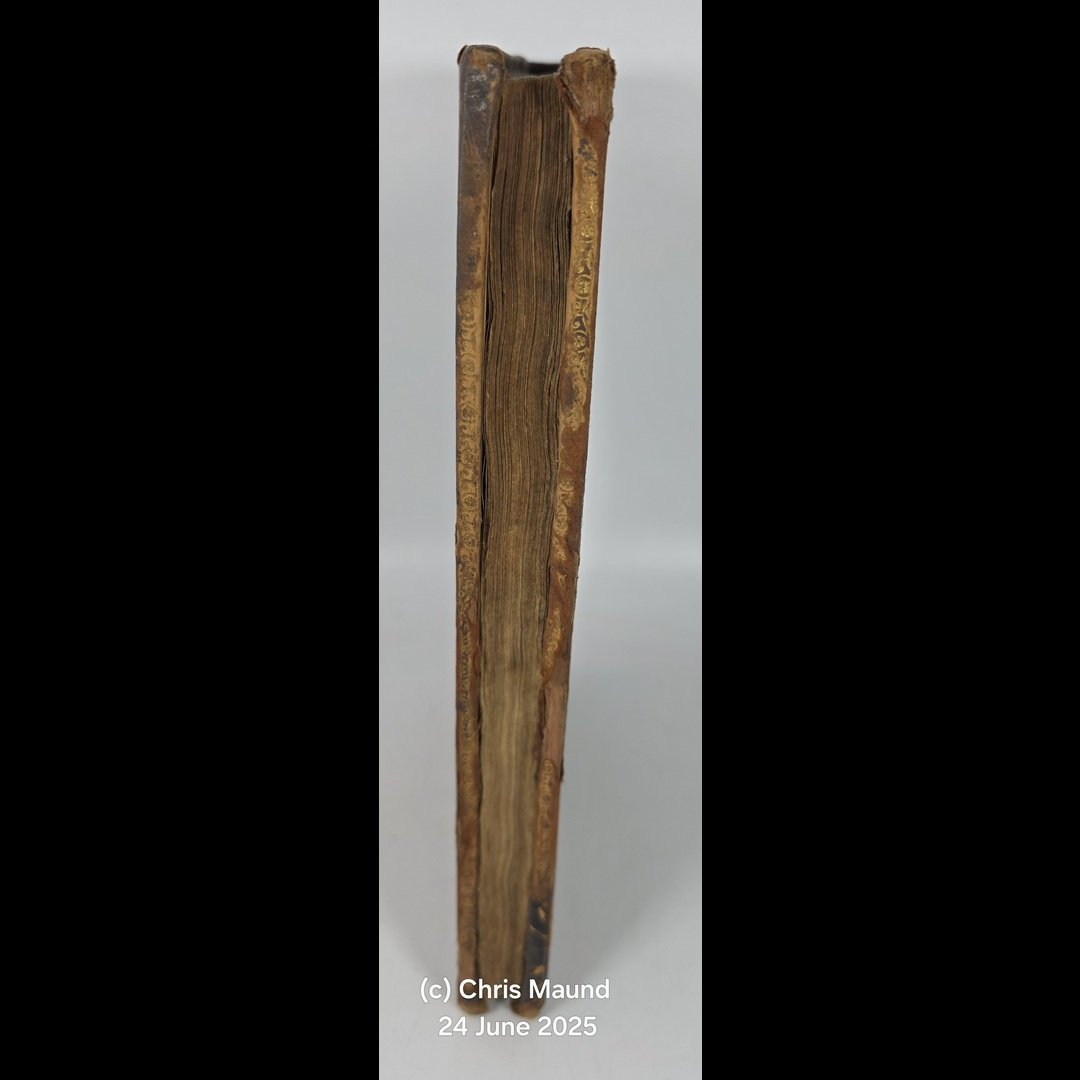
An attractive and characterful copy in contemporary full calf, the boards ruled in gilt, spine with raised bands and red morocco lettering-piece.
Binding rubbed and scuffed overall with age-related wear to the boards and extremities. Corners rounded and worn. More substantial wear at the head of the spine than suggested by the former listing, with loss to the headcap and wear around the upper joints. The boards remain attached and the binding retains considerable period character.
Engraved portrait frontispiece of George II present, with some offsetting to the facing title page. Title page otherwise well preserved. Internally generally clean and crisp for a volume of this age, with normal age-toning, scattered spotting and foxing, principally towards the preliminaries, together with occasional handling marks.
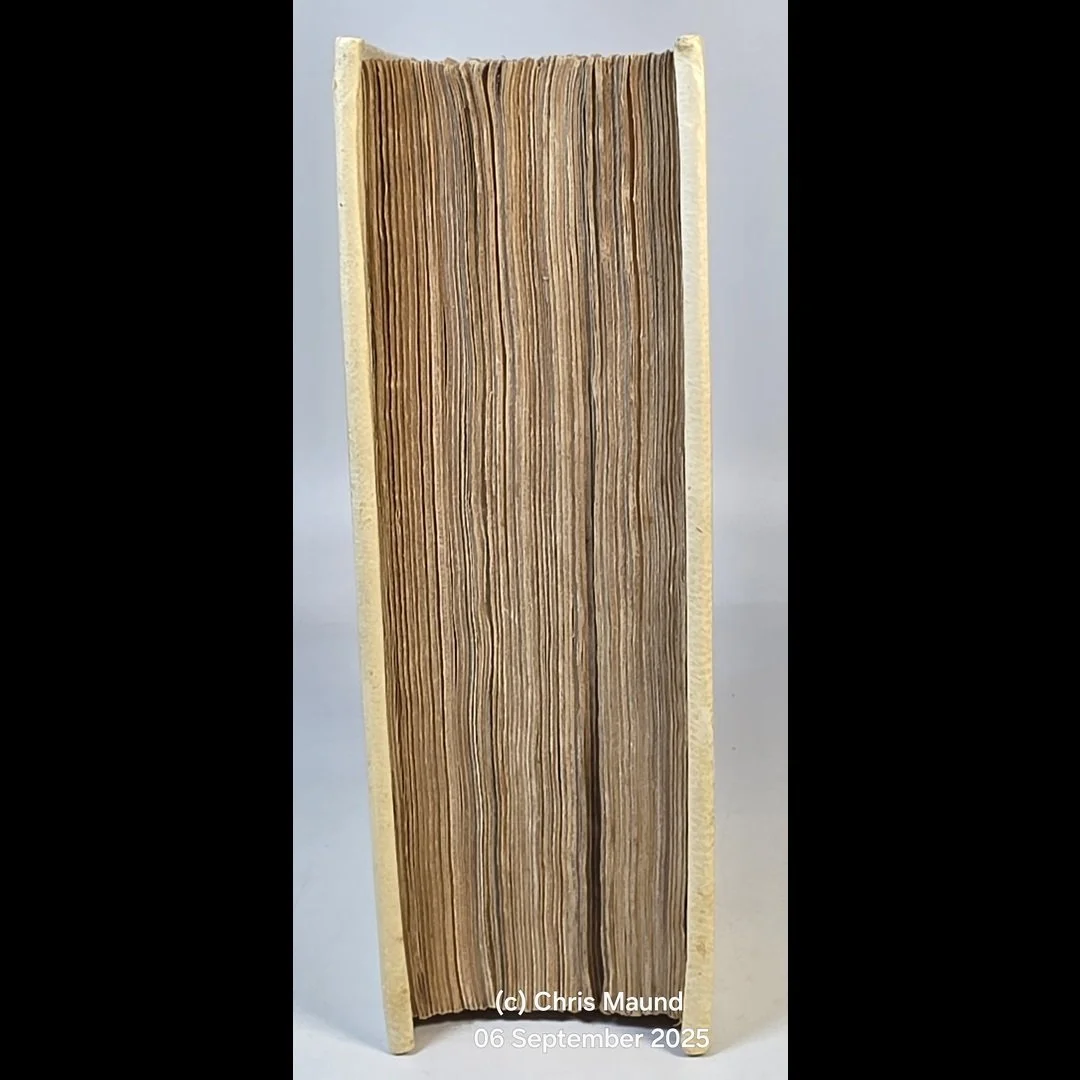
A light tide-mark is visible towards the fore-edge of a small number of terminal leaves, without significant loss of legibility. No significant worming or textual loss noted in the pages examined.
The England section includes “A Description of Scotland in General” beginning at p.288, followed ultimately by the separately titled:
A General List, or Catalogue, Of all the Offices and Officers Employ'd in the several Branches of His Majesty's Government Ecclesiastical, Civil, Military, &c.
The final Scottish sequence concludes on p.67 with “FINIS”, as present in this copy.
The cricket passage is present and clearly legible on p.35.
Please see Photos as part of condition report.
REFERENCES
STC: T54593
Kress Library of Business and Economics: 07956
OCLC: 22874447
Franks: 23293 — Thomas Percival bookplate
B. N. Lee, Bookpile Bookplates: no. 116
Christie's: 1694 Angliae Notitia, eighteenth edition — identified as the first edition of the work to refer to cricket as a national recreation.
Contemporary bibliographical records confirm the 1743 issue as the 35th England / 14th Scotland edition. The Kress catalogue records the edition under no. 07956.
SYNOPSIS
Magnae Britanniae Notitia was one of the great continuously updated reference works of seventeenth- and eighteenth-century Britain.
Beginning with descriptions of the country, its inhabitants and national character, the work proceeds through government, religion, law, education, commerce, revenues, social customs and recreation. Scotland receives parallel treatment following the Union, making the volume an unusually broad portrait of the political and social structure of Great Britain during the reign of George II.
Particularly valuable today are the extensive lists of contemporary office-holders. Ministers, royal servants, ecclesiastical officials, judges, military and civil officers and the personnel of numerous branches of government are recorded, turning the volume into an important source for genealogy, political history and the administrative structure of Georgian Britain.
For the historian of sport, p.35 is especially significant. Cricket appears naturally among the popular evening recreations of ordinary English people alongside football, wrestling and cudgel-playing. Rather than discussing cricket as an organised elite sport, Chamberlayne's text preserves evidence of the game as part of established popular recreation.
The reference originated in the 1694 edition of Angliae Notitia and remained sufficiently characteristic of English life to be repeated half a century later in this 1743 edition.
Combined with its contemporary calf binding, Thomas Percival bookplate and provenance from the Christopher Saunders cricket collection, this is a particularly appealing copy of an important Georgian reference work.
AUTHOR BIO
John Chamberlayne (c.1666–1723) was an English author, translator, courtier and Fellow of the Royal Society, and the son of Edward Chamberlayne, creator of Angliae Notitia.
Educated at Trinity College, Oxford, and at Leiden, Chamberlayne was reportedly an accomplished linguist and held positions at court under Queen Anne and George I. He was elected a Fellow of the Royal Society in 1702 and also served in the early administration of the Society for Promoting Christian Knowledge and the Society for the Propagation of the Gospel. The Royal Society records him as a courtier and author who issued successive editions of his father's Present State of England.
After Edward Chamberlayne's death in 1703, John continued and expanded his father's national survey. His name remained attached to later posthumous editions, including the present 1743 edition, as the work continued to be revised to reflect changes in Britain's governmental and royal establishments.
1743 35th/14th ed With Early Cricket Reference and Provenance
MAGNAE BRITANNIAE NOTITIA
By John Chamberlayme
KEY DETAILS
Condition: Good
Format: Contemporary full calf, Octavo (Standard) (8vo 6 × 9 in 152 × 229 mm )
Note: Binding/size selection follows standard bibliographic conventions and is approximate; exact measurements may vary.
Published By: Printed for D. Midwinter, A. Ward, T. Longman, S. Birt, T. Wotton, A. Millar, J. & R. Tonson, C. Ward & R. Chandler, C. Bathurst & G. Hawkins, London, 1743
Language: English
Provenance: Christopher Saunders Collection.
Collation: Engraved portrait frontispiece; [14], 443, [1]; [4], 279, [1]; 67, [1] pp.
Dust Jacket: None, as issued, No Jacket
SKU: BTETM0002672
Shipping Info: Approximate Package Dimensions H: 12.5, L: 30, W: 25 (Units: cm), W: 2Kg
Tracked Shipping, Insurance Coverage as per Customer Request
DESCRIPTION
Magnae Britanniae Notitia
Magnae Britanniae Notitia or, The Present State of Great Britain; with diverse Remarks upon the Ancient State thereof
A substantial Georgian edition of one of the most enduring descriptive handbooks of early modern Britain, combining political, constitutional, ecclesiastical and social history with an extensive contemporary directory of the officers of Church, Crown and State.
First issued by Edward Chamberlayne in 1669 as Angliae Notitia: or, The Present State of England, the work was subsequently continued and enlarged by his son John Chamberlayne. Following the political union of England and Scotland, it developed into Magnae Britanniae Notitia, becoming an exceptionally detailed printed survey of the institutions, customs and administration of Great Britain.
This 1743 edition is the thirty-fifth edition of the South Part, England, and the fourteenth edition of the North Part, Scotland, and retains the extensive supplementary General List, or Catalogue, of all the Offices and Officers Employ'd in the several Branches of His Majesty's Government.
Of particular interest is the celebrated early reference to cricket on p.35. In discussing the recreations of the English people, Chamberlayne records that after their labour they go in the evening to:
“Foot-ball, Cricket, Prison-base, Wrestling, Cudgel-playing…”
The cricket passage had first entered Angliae Notitia in the 1694 eighteenth edition, which Christie's identifies as the first edition of the work to describe cricket among the national recreations. It continued through later editions such as this one and provides an important documentary witness to cricket's place within English popular culture well before the first surviving codified Laws of Cricket of 1744.
The volume is divided broadly between descriptions of England and Scotland, treating geography, population, manners, religion, government, courts, universities, revenues, commerce and recreation, before moving into the extensive lists of office-holders in the royal household and British state.
The result is both a highly useful primary source for Georgian Britain and an attractive association copy with significant provenance for collectors of early cricket, eighteenth-century history and bookplates.
PROVENANCE
Christopher Saunders Collection.
From the collection of Christopher Saunders, noted collector, bookseller and bibliographer of early cricket literature. Saunders assembled a substantial collection of books containing early references to cricket and associated games; major portions of his collection have subsequently been dispersed through specialist cricket and book auctions. Chorley's described his collection specifically as including early books “on and mentioning Cricket.”
This provenance is particularly appropriate to the present volume because of the printed cricket reference on p.35.
The front pastedown also bears the striking engraved bookpile bookplate of Thomas Percival, Esquire, depicting books surrounding a horse.
The plate is recorded as Franks 23293 and B. N. Lee, Bookpile Bookplates, no. 116. The Bookplate Society identifies the owner as Thomas Percival, M.D., F.R.S., generally associated with Thomas Percival (1740–1804), the influential Manchester physician whose writings on professional conduct played an important part in the development of modern medical ethics.
The attribution should nevertheless be treated with a degree of bibliographical caution, as books bearing the name Thomas Percival have historically also raised the possibility of his namesake Thomas Percival (1719–1762), antiquary and F.R.S.
Later pencil shelf, ownership or bookseller's marks to the front pastedown.
CONDITION, COLLATION & COPY NOTES
An attractive and characterful copy in contemporary full calf, the boards ruled in gilt, spine with raised bands and red morocco lettering-piece.
Binding rubbed and scuffed overall with age-related wear to the boards and extremities. Corners rounded and worn. More substantial wear at the head of the spine than suggested by the former listing, with loss to the headcap and wear around the upper joints. The boards remain attached and the binding retains considerable period character.
Engraved portrait frontispiece of George II present, with some offsetting to the facing title page. Title page otherwise well preserved. Internally generally clean and crisp for a volume of this age, with normal age-toning, scattered spotting and foxing, principally towards the preliminaries, together with occasional handling marks.
A light tide-mark is visible towards the fore-edge of a small number of terminal leaves, without significant loss of legibility. No significant worming or textual loss noted in the pages examined.
The England section includes “A Description of Scotland in General” beginning at p.288, followed ultimately by the separately titled:
A General List, or Catalogue, Of all the Offices and Officers Employ'd in the several Branches of His Majesty's Government Ecclesiastical, Civil, Military, &c.
The final Scottish sequence concludes on p.67 with “FINIS”, as present in this copy.
The cricket passage is present and clearly legible on p.35.
Please see Photos as part of condition report.
REFERENCES
STC: T54593
Kress Library of Business and Economics: 07956
OCLC: 22874447
Franks: 23293 — Thomas Percival bookplate
B. N. Lee, Bookpile Bookplates: no. 116
Christie's: 1694 Angliae Notitia, eighteenth edition — identified as the first edition of the work to refer to cricket as a national recreation.
Contemporary bibliographical records confirm the 1743 issue as the 35th England / 14th Scotland edition. The Kress catalogue records the edition under no. 07956.
SYNOPSIS
Magnae Britanniae Notitia was one of the great continuously updated reference works of seventeenth- and eighteenth-century Britain.
Beginning with descriptions of the country, its inhabitants and national character, the work proceeds through government, religion, law, education, commerce, revenues, social customs and recreation. Scotland receives parallel treatment following the Union, making the volume an unusually broad portrait of the political and social structure of Great Britain during the reign of George II.
Particularly valuable today are the extensive lists of contemporary office-holders. Ministers, royal servants, ecclesiastical officials, judges, military and civil officers and the personnel of numerous branches of government are recorded, turning the volume into an important source for genealogy, political history and the administrative structure of Georgian Britain.
For the historian of sport, p.35 is especially significant. Cricket appears naturally among the popular evening recreations of ordinary English people alongside football, wrestling and cudgel-playing. Rather than discussing cricket as an organised elite sport, Chamberlayne's text preserves evidence of the game as part of established popular recreation.
The reference originated in the 1694 edition of Angliae Notitia and remained sufficiently characteristic of English life to be repeated half a century later in this 1743 edition.
Combined with its contemporary calf binding, Thomas Percival bookplate and provenance from the Christopher Saunders cricket collection, this is a particularly appealing copy of an important Georgian reference work.
AUTHOR BIO
John Chamberlayne (c.1666–1723) was an English author, translator, courtier and Fellow of the Royal Society, and the son of Edward Chamberlayne, creator of Angliae Notitia.
Educated at Trinity College, Oxford, and at Leiden, Chamberlayne was reportedly an accomplished linguist and held positions at court under Queen Anne and George I. He was elected a Fellow of the Royal Society in 1702 and also served in the early administration of the Society for Promoting Christian Knowledge and the Society for the Propagation of the Gospel. The Royal Society records him as a courtier and author who issued successive editions of his father's Present State of England.
After Edward Chamberlayne's death in 1703, John continued and expanded his father's national survey. His name remained attached to later posthumous editions, including the present 1743 edition, as the work continued to be revised to reflect changes in Britain's governmental and royal establishments.

 Image 1 of 32
 Image 2 of 32
 Image 3 of 32
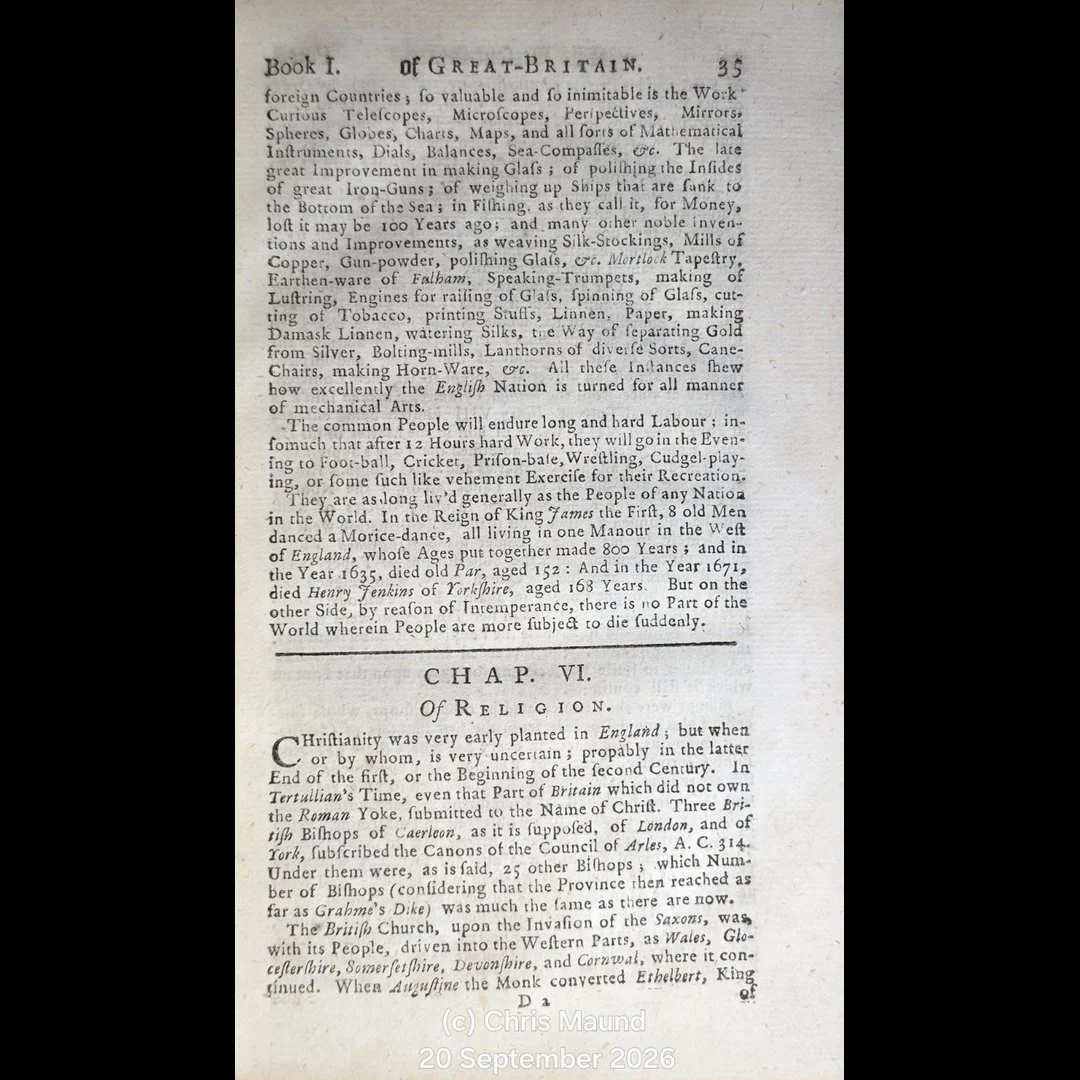 Image 4 of 32
 Image 5 of 32
 Image 6 of 32
 Image 7 of 32
 Image 8 of 32
 Image 9 of 32
 Image 10 of 32
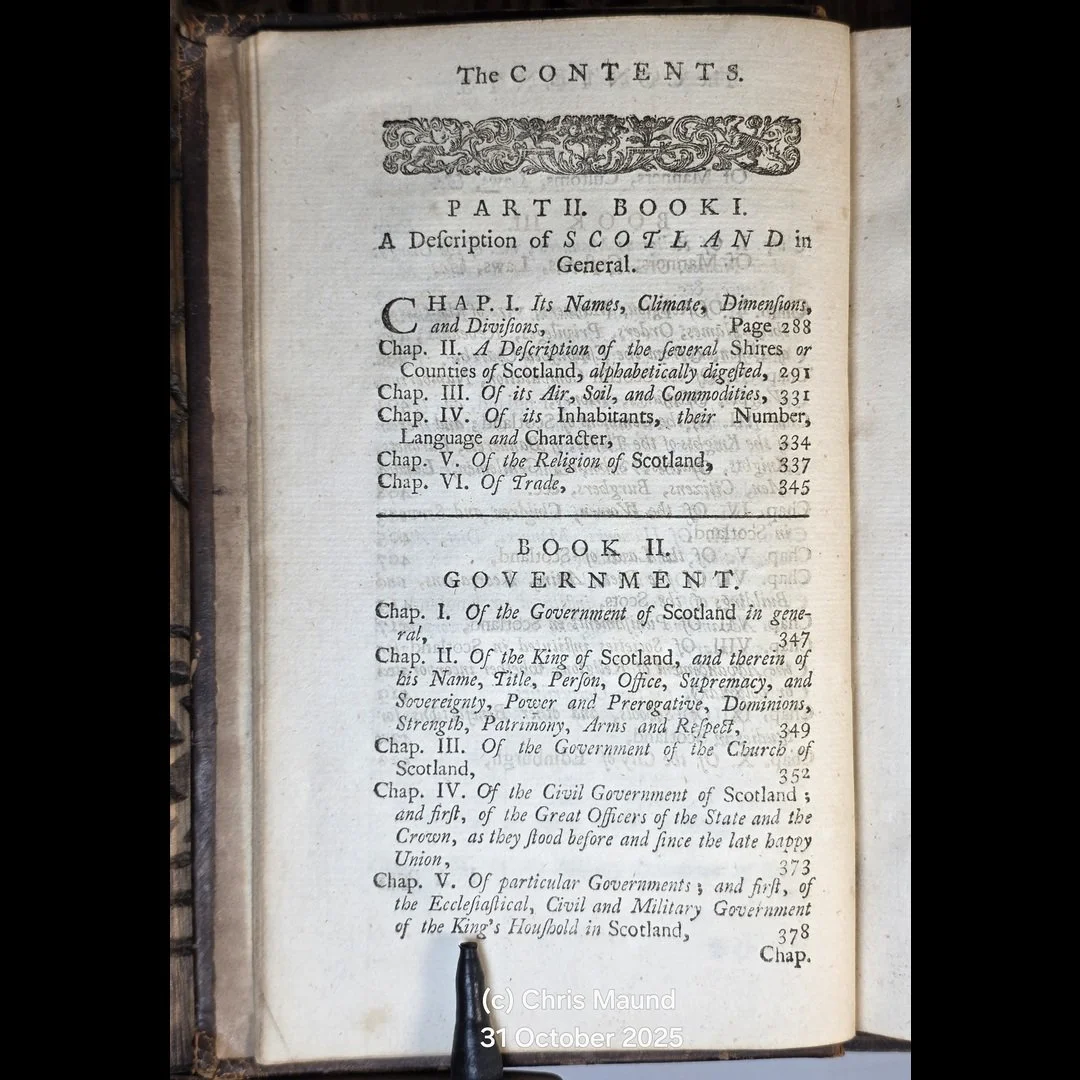 Image 11 of 32
 Image 12 of 32
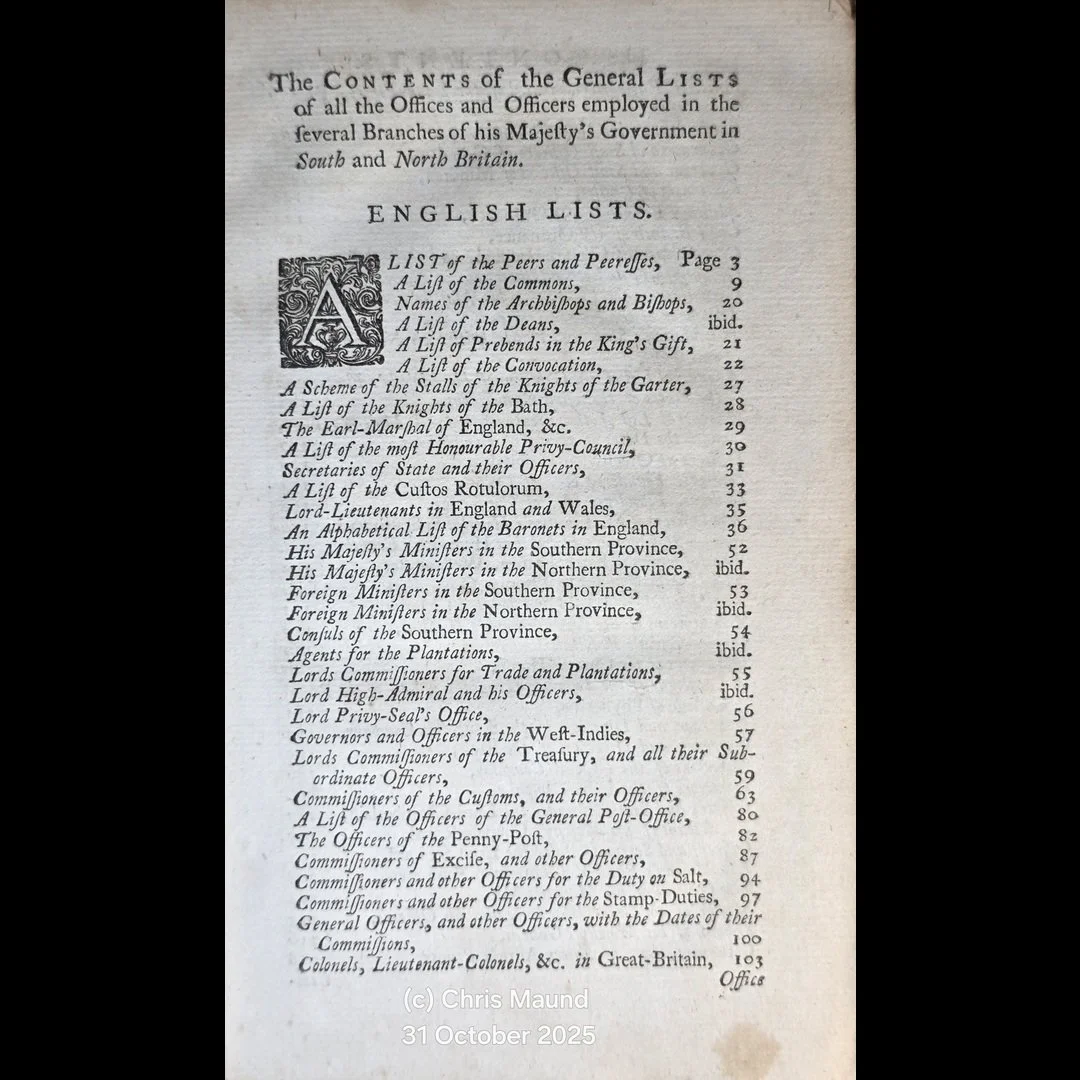 Image 13 of 32
 Image 14 of 32
 Image 15 of 32
 Image 16 of 32
 Image 17 of 32
 Image 18 of 32
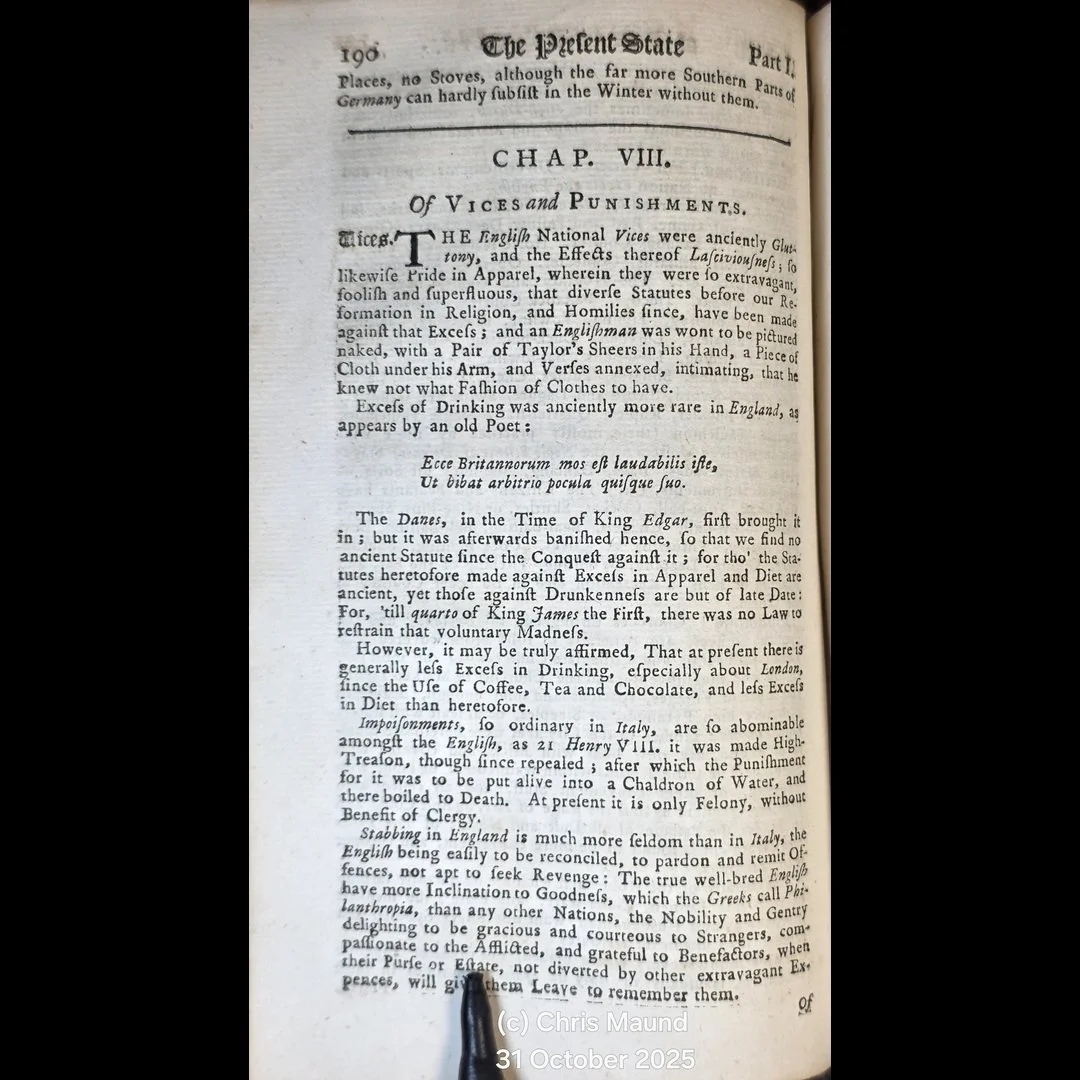 Image 19 of 32
 Image 20 of 32
 Image 21 of 32
 Image 22 of 32
 Image 23 of 32
 Image 24 of 32
 Image 25 of 32
 Image 26 of 32
 Image 27 of 32
 Image 28 of 32
 Image 29 of 32
 Image 30 of 32
 Image 31 of 32
 Image 32 of 32