1711 Oxford Edition With Important Oxford Provenance
PLATONOS KAI XENOPHONTOS SYMPOSIA
By Plato, Xenophon, Plutarch & Lucian Ed. Henry Aldrich
KEY DETAILS
Condition: Very Good
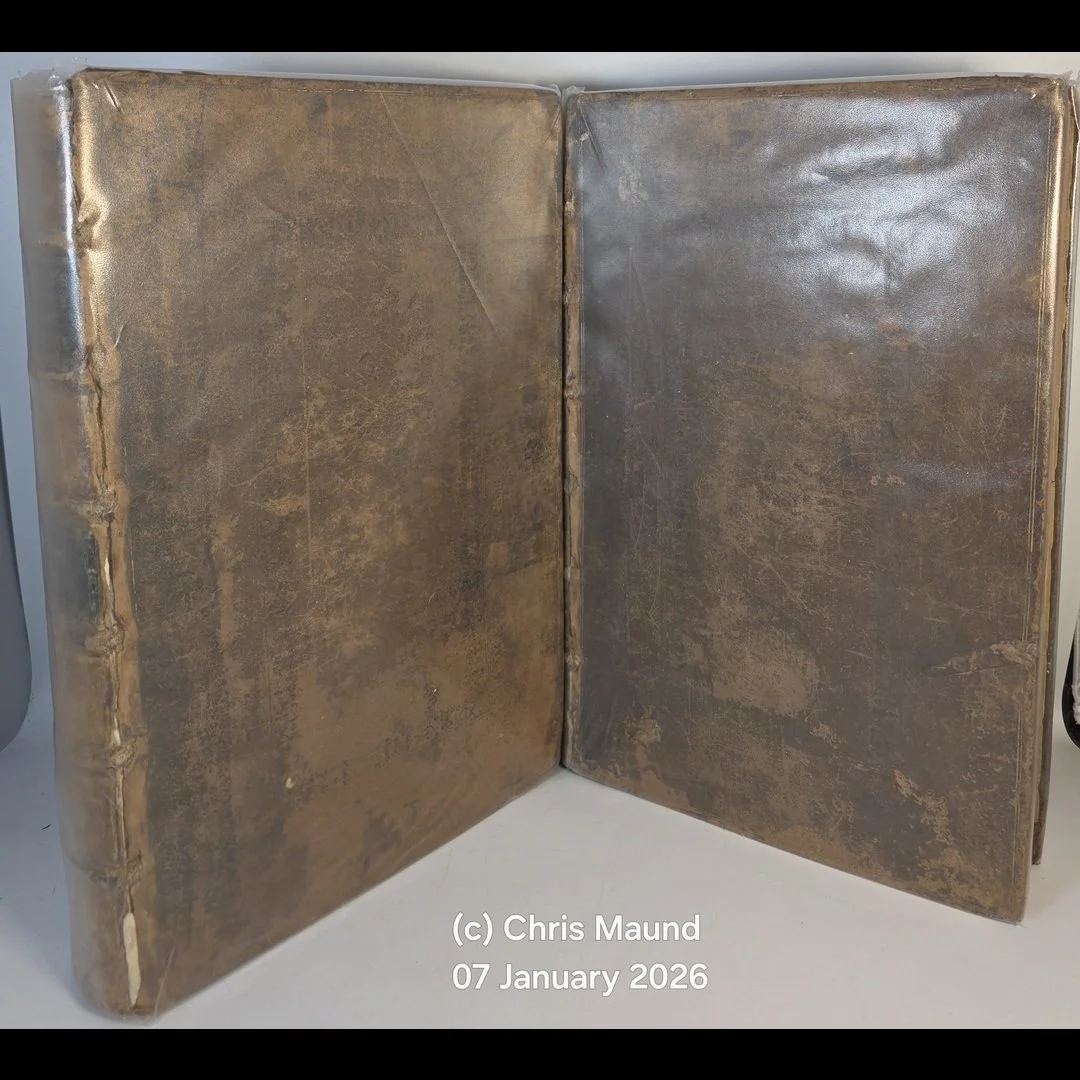
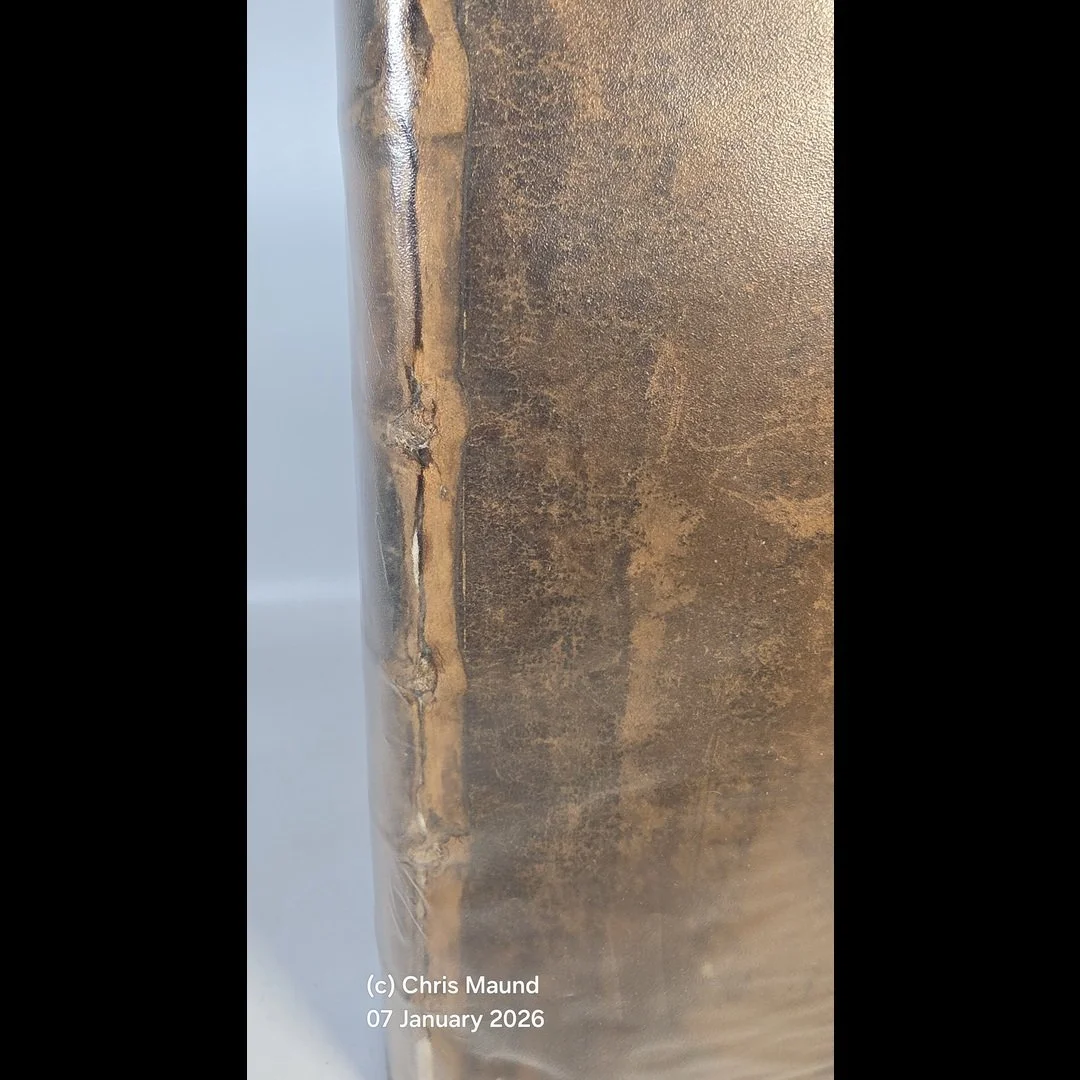
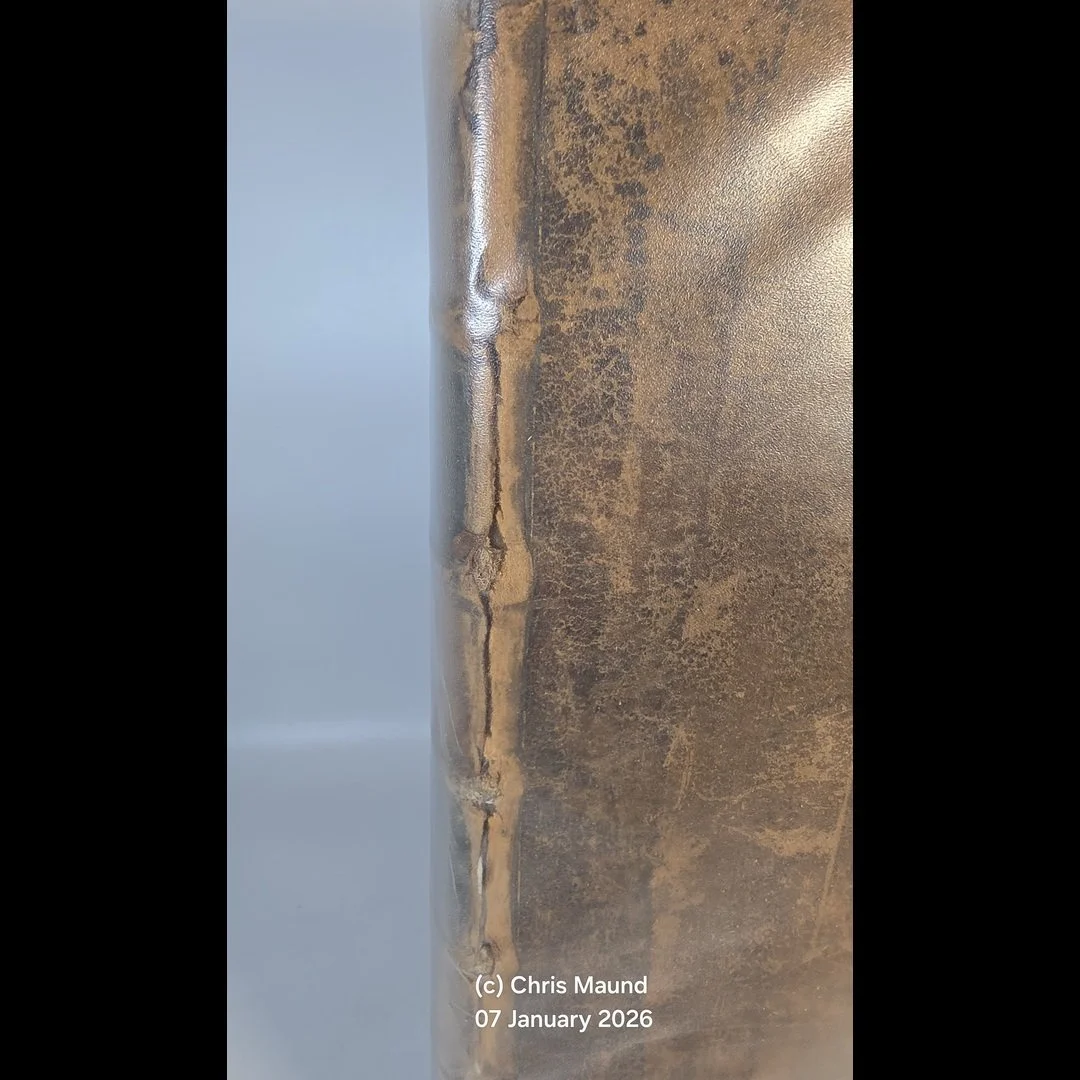
Format: Contemporary panelled calf, Octavo (Standard) (8vo 6 × 9 in 152 × 229 mm )
Note: Binding/size selection follows standard bibliographic conventions and is approximate; exact measurements may vary.
Published By: Sheldonian, Oxford, 1711
Language: Greek, with Latin prefatory and editorial material
Illustrated By: Michael Burghers
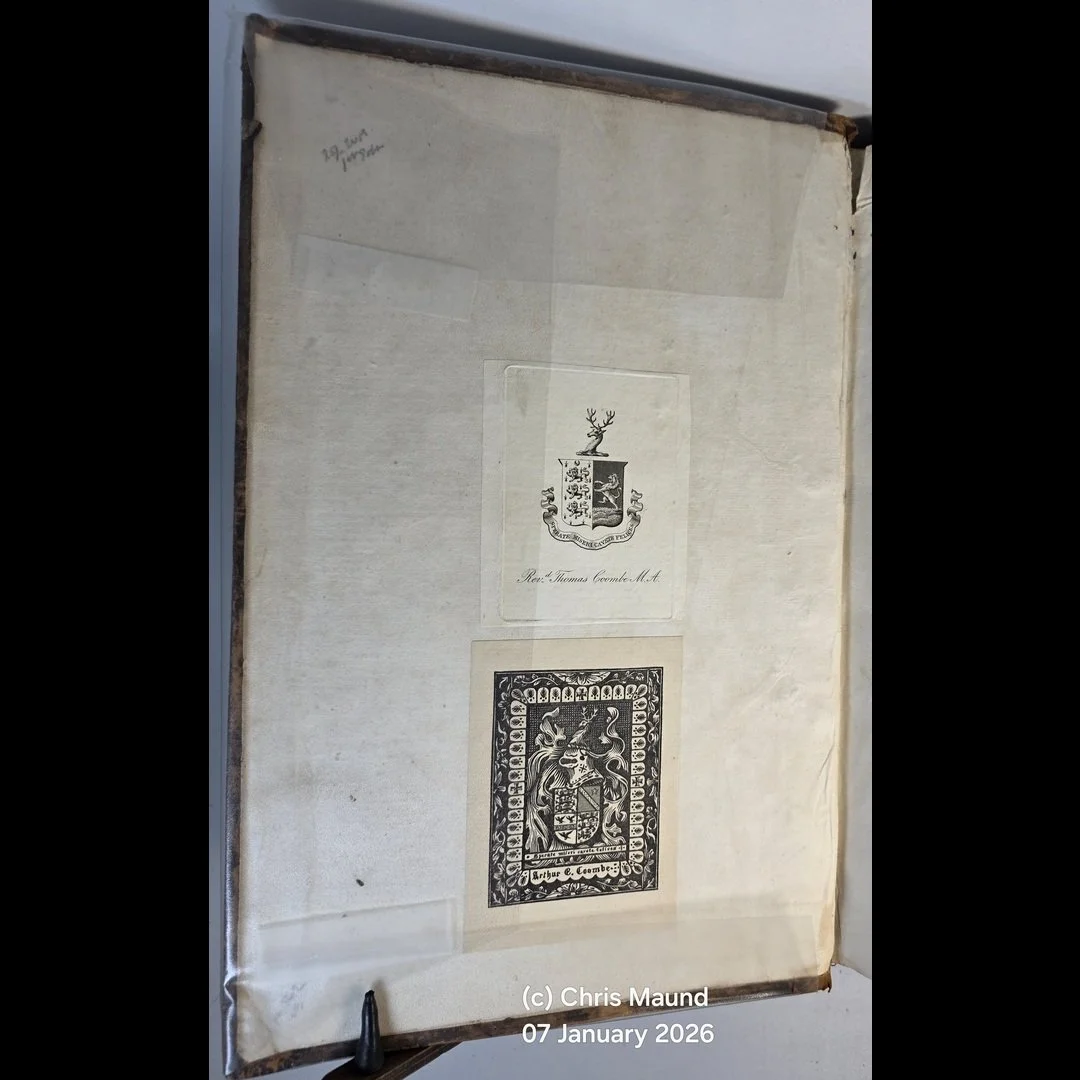
Provenance: Very probably Edwin Sandys (1726–1797), later 2nd Baron Sandys; acquired in 1747 as a gift from his “very dear friend” Ant. Champion, very probably Anthony Champion (1725–1801)
Collation: Unpaginated preliminaries; 94, 52, 11 pp.; terminal errata present
Dust Jacket: None, as issued, No Jacket
SKU: BTETM0002675
Shipping Info: Approximate Package Dimensions H: 12.5, L: 30, W: 25 (Units: cm), W: 2Kg
Tracked Shipping, Insurance Coverage as per Customer Request
DESCRIPTION
Platonos kai Xenophontos Symposia
Ploutarchou Symposion Hepta Sophon, Loukianou Symposion ē Lapithai
An attractive and unusually well-provenanced Oxford Greek anthology bringing together four of antiquity’s great literary treatments of the symposium: Plato’s Symposium, Xenophon’s Symposium, Plutarch’s Banquet of the Seven Sages, and Lucian’s satirical Symposium, or The Lapiths.
Printed at Oxford’s Sheldonian Theatre in 1711 and edited by Henry Aldrich, the volume places the philosophical, Socratic, moral and satirical traditions of the classical banquet beside one another, allowing the symposium to be followed from Plato’s celebrated exploration of love and philosophical ascent, through Xenophon’s convivial portrait of Socrates and Plutarch’s legendary sages, to Lucian’s comic dismantling of philosophical pretension.
The edition is principally in Greek, accompanied by Latin prefatory and editorial material and concluding annotations. The title page is particularly attractive, with a finely engraved view of the Sheldonian Theatre, the Oxford University printing house from which the book was issued.
Institutional and modern auction catalogues attribute the editing of the 1711 Symposia to Henry Aldrich. Aldrich died in December 1710, making this one of the classical works associated with his scholarship to appear immediately after his death. An early nineteenth-century auction catalogue unusually records the edition as “a Fairfax”; the precise basis and identity behind that attribution have not been established, and Fairfax is therefore not retained here as a co-editor.
The present copy is preserved in an appealing contemporary panelled calf binding and is distinguished by an important manuscript provenance from the Oxford classical milieu of the 1740s.
PROVENANCE
Very probably Edwin Sandys (1726–1797), later 2nd Baron Sandys; acquired in 1747 as a gift from his “very dear friend” Ant. Champion, very probably Anthony Champion (1725–1801)
The front flyleaf bears the early ink inscription:
“Ed: Sandys
1747
Ex dono amici charissimi
Ant: Champion”
— approximately, “From the gift of my very dear friend Ant[hony] Champion.”
The “Ed: Sandys” is very probably Edwin Sandys (1726–1797), later 2nd Baron Sandys of Ombersley. Sandys matriculated at New College, Oxford, on 21 May 1743 aged seventeen and became a notable classical scholar and bibliophile. He was later appointed a trustee of the British Museum, and records made at his death attest to a substantial personal library.
The attribution is supported by comparison with securely provenanced books from Sandys’s library, including a 1746 Oxford presentation volume now held by New College Library. The abbreviated form “Ed: Sandys”, the formation of the name and the date of the present inscription are closely consistent with material associated with Sandys during precisely this period of his life.
The donor recorded as “Ant: Champion” is very probably Anthony Champion (1725–1801), poet, lawyer and later parliamentarian. Champion matriculated at St Mary Hall, Oxford, in February 1742/43 aged eighteen, only a few months before the seventeen-year-old Sandys entered New College. He remained at Oxford for approximately two years and received a strong classical education before entering the Middle Temple.
The identification is therefore chronologically and intellectually persuasive: Sandys and Champion were almost exact contemporaries at Oxford, and Champion’s later literary work included Latin as well as English composition. No separate correspondence between the two has yet been located, so the identification of “Ant: Champion” remains qualified; if correct, however, the inscription itself constitutes contemporary primary evidence of their friendship.
The wording should be understood as Sandys recording a gift from Champion rather than as Champion’s own autograph.
Below the ownership inscription is an early manuscript Latin note including the phrase:
“ille princeps ingenii & doctrinae Plato”
— drawn from Cicero’s Epistulae ad Quintum Fratrem I.1.29, describing Plato as pre-eminent in intellect and learning. Its presence is particularly appropriate in a volume opening with Plato’s Symposium.
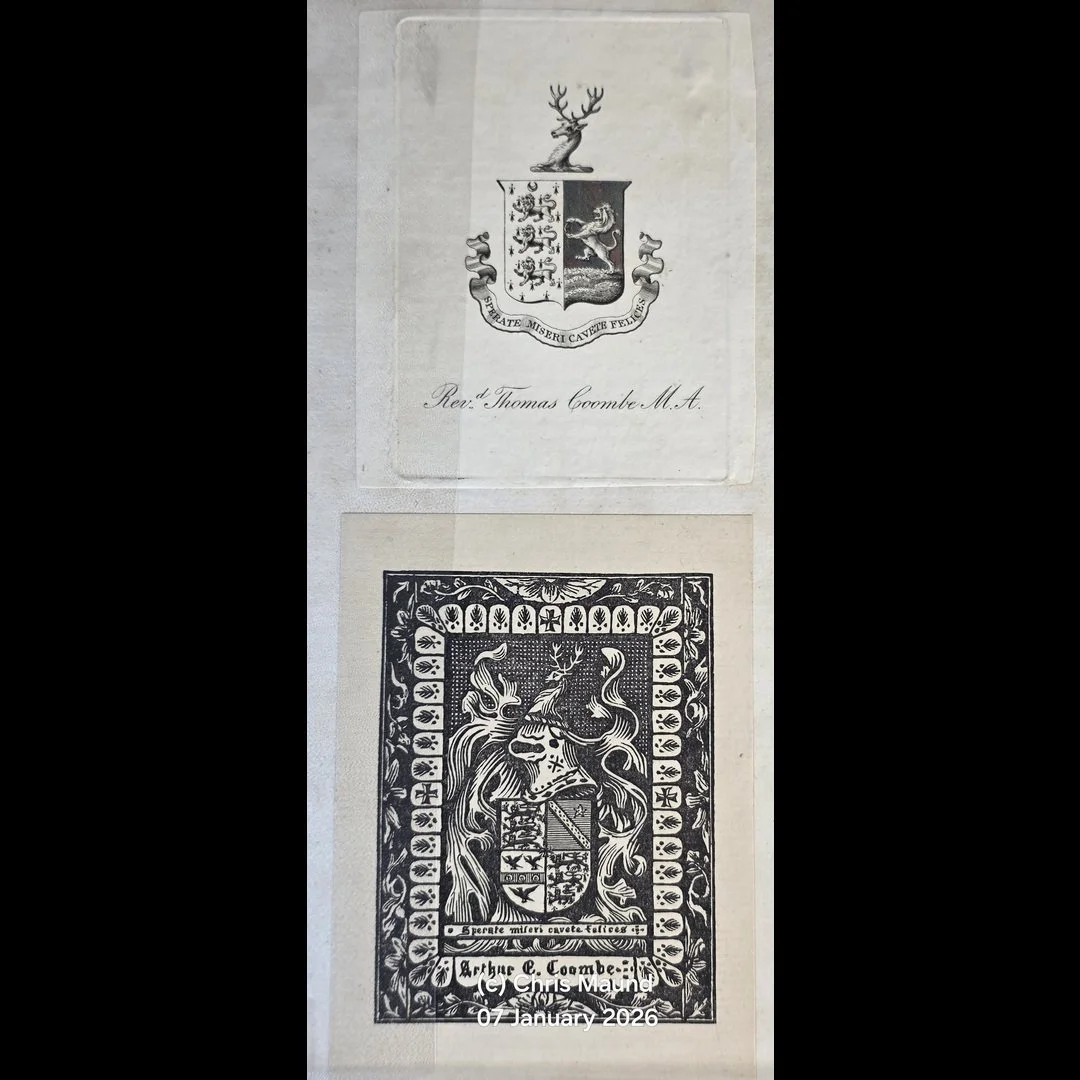
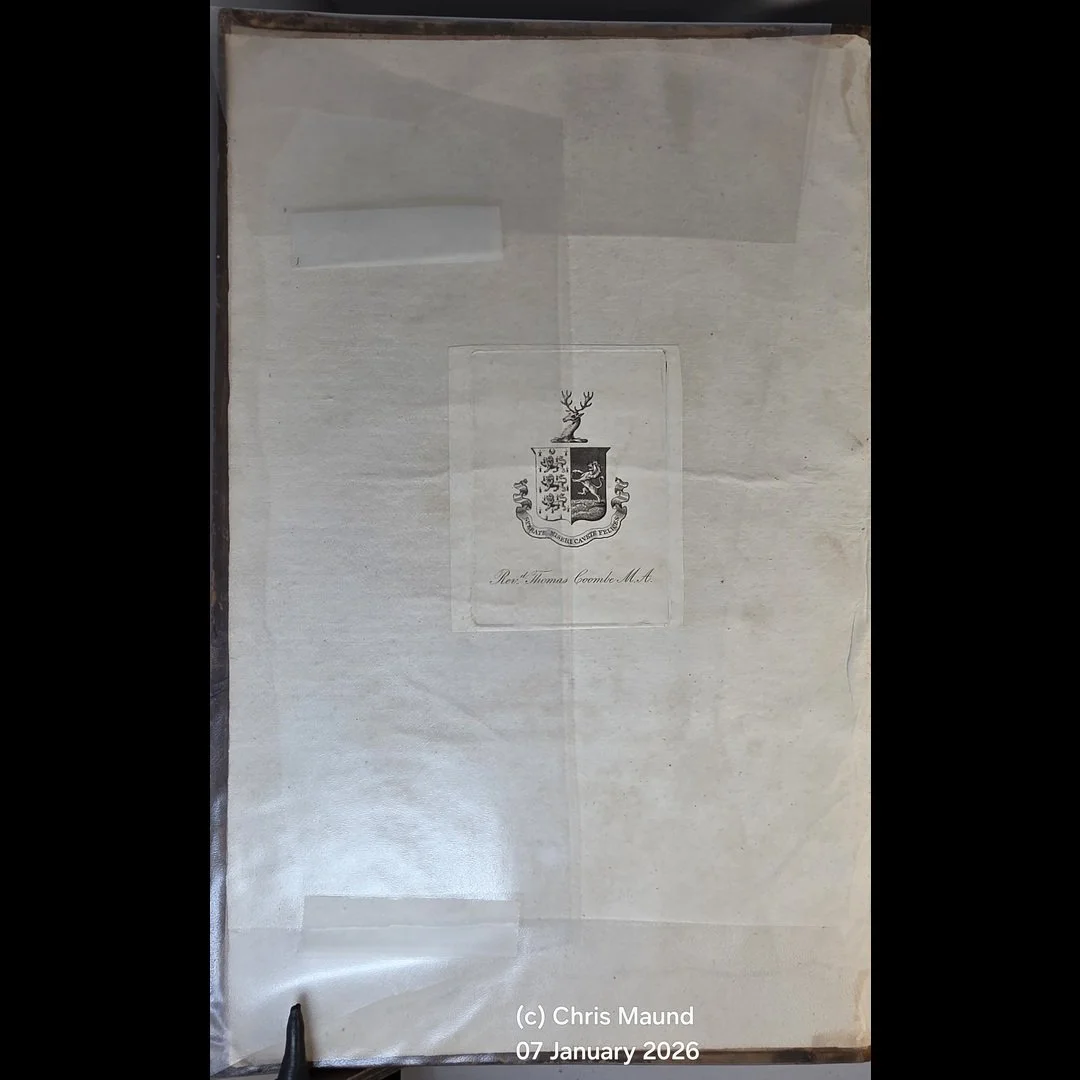
The Sandys Family Library, Ombersley Court, Worcestershire. With the engraved armorial bookplate of Lord Sandys to the front pastedown / in each volume; the Sandys / Edwin Sandys plates are catalogued in the Franks Bequest under the Sandys entries, including “Lord Sandys” and “Edwin Sandys” (Franks 26091, 26093, 26094). Acquired directly by Books That Expand The Mind from the dispersal of the Ombersley Court Library, Chorley’s, The September Auctions 2024, 17 September 2024, Lot 477. Purchaser’s invoice retained with the acquisition records.
CONDITION, COLLATION & COPY NOTES
Edition: Thirty-fifth edition of the South Part, called England; fourteenth edition of the North Part, called Scotland
Illustrations: Engraved portrait frontispiece of George II
Please see Photos as part of condition report.
REFERENCES
John Rylands Library, Catalogue of the Printed Books and Manuscripts — 1711 Symposia recorded in Greek and edited by H. Aldrich.
Christie’s — Plato, Symposia, Oxford, 1711, edited by Henry Aldrich; William Beckford provenance copy.
New College Notes 24 (2025), no. 9 — Edwin Sandys, 2nd Baron Sandys; New College provenance and library history.
Foster, Alumni Oxonienses — Edwin Sandys, New College, matriculated 21 May 1743 aged seventeen.
Dictionary of National Biography — Anthony Champion (1725–1801).
Cicero, Epistulae ad Quintum Fratrem, I.1.29.
Early nineteenth-century auction catalogue, lot 3676 — historical “a Fairfax” attribution.
Library of Congress / Oxford University engraved material — Michael Burghers and the Sheldonian Theatre title-page vignette.
SYNOPSIS
Plato — Symposium
Set at a banquet celebrating the tragedian Agathon, Plato’s Symposium is among the most influential philosophical works on love in Western literature. A succession of speakers offers competing accounts of Eros before Socrates relates the teaching of Diotima, culminating in the celebrated ascent from attraction to an individual beautiful body toward contemplation of Beauty itself. The arrival of the intoxicated Alcibiades transforms the discussion into a vivid and revealing portrait of Socrates.
Xenophon — Symposium
Xenophon offers a contrasting image of Socrates in a more relaxed and convivial setting. At a banquet given by Callias, entertainment, joking, argument and moral discussion intermingle. Xenophon’s Socrates is practical and sociable, discussing beauty, friendship, education, desire and virtue while participating fully in the pleasures and humour of the gathering.
Plutarch — Banquet of the Seven Sages
Plutarch transforms the symposium into a meeting of the legendary Seven Sages of Greece. Their conversation ranges across government, ethics, household life, philosophy and proverbial wisdom, presenting the banquet as a setting in which cultivated conversation itself becomes an expression of civilisation.
Lucian — Symposium, or The Lapiths
Lucian turns the tradition on its head. His philosophers assemble for what should be an elevated intellectual banquet but gradually reveal themselves as quarrelsome, vain and ridiculous. The gathering descends into violence, deliberately recalling the mythical battle between Lapiths and Centaurs. The work is one of Lucian’s sharpest satires on the gulf between philosophical profession and human behaviour.
Taken together, the four works form an unusually coherent anthology: philosophical ideal, Socratic conviviality, proverbial wisdom and outright satire, all viewed through the classical institution of the symposium.
AUTHOR BIO
Plato (c. 428/427–348/347 BC) was the Athenian philosopher whose dialogues became foundational to Western philosophy. A student of Socrates and teacher of Aristotle, his writings address ethics, politics, metaphysics, knowledge, rhetoric, education and love. The Symposium remains among his most widely read and influential dialogues.
Xenophon (c. 430–354 BC), soldier, historian and pupil of Socrates, preserved a markedly different literary portrait of his teacher from that found in Plato. His writings range from history and biography to practical works on leadership, horsemanship and estate management.
Plutarch (c. AD 46–after 119) was a Greek biographer, philosopher and moral essayist whose Parallel Lives and Moralia exercised immense influence on European intellectual and literary culture. The Banquet of the Seven Sages belongs to the convivial literature preserved within the Moralia.
Lucian of Samosata (c. AD 120–after 180) was one of antiquity’s great satirists. Writing in Greek during the Roman imperial period, he repeatedly mocked superstition, pretentious philosophy, literary vanity and credulity. His Symposium deliberately parodies the elevated philosophical banquet tradition represented by Plato and Xenophon.
EDITOR BIO
Henry Aldrich (1648–1710) was an English theologian, classical scholar, logician, musician and architect who served as Dean of Christ Church, Oxford. A major figure in late seventeenth-century Oxford intellectual life, he produced and assisted with editions of a number of Greek authors for students at Christ Church.
His scholarly publications included works of Xenophon, Epictetus and Theophrastus as well as the present collection of Symposia. Aldrich was also closely associated with the architectural life of Oxford and is remembered for his work at Christ Church in addition to his influential Compendium of Logic.
ILLUSTRATOR
Michael Burghers
Michael Burghers (c.1647–1727) was a Dutch-born engraver who settled in Oxford and became one of the principal engravers employed by the University. He produced numerous architectural views, portraits, title-page vignettes and antiquarian illustrations for Oxford publications, including several depictions of the Sheldonian Theatre. His work is closely associated with late seventeenth- and early eighteenth-century Oxford printing and scholarship.
1711 Oxford Edition With Important Oxford Provenance
PLATONOS KAI XENOPHONTOS SYMPOSIA
By Plato, Xenophon, Plutarch & Lucian Ed. Henry Aldrich
KEY DETAILS
Condition: Very Good
Format: Contemporary panelled calf, Octavo (Standard) (8vo 6 × 9 in 152 × 229 mm )
Note: Binding/size selection follows standard bibliographic conventions and is approximate; exact measurements may vary.
Published By: Sheldonian, Oxford, 1711
Language: Greek, with Latin prefatory and editorial material
Illustrated By: Michael Burghers
Provenance: Very probably Edwin Sandys (1726–1797), later 2nd Baron Sandys; acquired in 1747 as a gift from his “very dear friend” Ant. Champion, very probably Anthony Champion (1725–1801)
Collation: Unpaginated preliminaries; 94, 52, 11 pp.; terminal errata present
Dust Jacket: None, as issued, No Jacket
SKU: BTETM0002675
Shipping Info: Approximate Package Dimensions H: 12.5, L: 30, W: 25 (Units: cm), W: 2Kg
Tracked Shipping, Insurance Coverage as per Customer Request
DESCRIPTION
Platonos kai Xenophontos Symposia
Ploutarchou Symposion Hepta Sophon, Loukianou Symposion ē Lapithai
An attractive and unusually well-provenanced Oxford Greek anthology bringing together four of antiquity’s great literary treatments of the symposium: Plato’s Symposium, Xenophon’s Symposium, Plutarch’s Banquet of the Seven Sages, and Lucian’s satirical Symposium, or The Lapiths.
Printed at Oxford’s Sheldonian Theatre in 1711 and edited by Henry Aldrich, the volume places the philosophical, Socratic, moral and satirical traditions of the classical banquet beside one another, allowing the symposium to be followed from Plato’s celebrated exploration of love and philosophical ascent, through Xenophon’s convivial portrait of Socrates and Plutarch’s legendary sages, to Lucian’s comic dismantling of philosophical pretension.
The edition is principally in Greek, accompanied by Latin prefatory and editorial material and concluding annotations. The title page is particularly attractive, with a finely engraved view of the Sheldonian Theatre, the Oxford University printing house from which the book was issued.
Institutional and modern auction catalogues attribute the editing of the 1711 Symposia to Henry Aldrich. Aldrich died in December 1710, making this one of the classical works associated with his scholarship to appear immediately after his death. An early nineteenth-century auction catalogue unusually records the edition as “a Fairfax”; the precise basis and identity behind that attribution have not been established, and Fairfax is therefore not retained here as a co-editor.
The present copy is preserved in an appealing contemporary panelled calf binding and is distinguished by an important manuscript provenance from the Oxford classical milieu of the 1740s.
PROVENANCE
Very probably Edwin Sandys (1726–1797), later 2nd Baron Sandys; acquired in 1747 as a gift from his “very dear friend” Ant. Champion, very probably Anthony Champion (1725–1801)
The front flyleaf bears the early ink inscription:
“Ed: Sandys
1747
Ex dono amici charissimi
Ant: Champion”
— approximately, “From the gift of my very dear friend Ant[hony] Champion.”
The “Ed: Sandys” is very probably Edwin Sandys (1726–1797), later 2nd Baron Sandys of Ombersley. Sandys matriculated at New College, Oxford, on 21 May 1743 aged seventeen and became a notable classical scholar and bibliophile. He was later appointed a trustee of the British Museum, and records made at his death attest to a substantial personal library.
The attribution is supported by comparison with securely provenanced books from Sandys’s library, including a 1746 Oxford presentation volume now held by New College Library. The abbreviated form “Ed: Sandys”, the formation of the name and the date of the present inscription are closely consistent with material associated with Sandys during precisely this period of his life.
The donor recorded as “Ant: Champion” is very probably Anthony Champion (1725–1801), poet, lawyer and later parliamentarian. Champion matriculated at St Mary Hall, Oxford, in February 1742/43 aged eighteen, only a few months before the seventeen-year-old Sandys entered New College. He remained at Oxford for approximately two years and received a strong classical education before entering the Middle Temple.
The identification is therefore chronologically and intellectually persuasive: Sandys and Champion were almost exact contemporaries at Oxford, and Champion’s later literary work included Latin as well as English composition. No separate correspondence between the two has yet been located, so the identification of “Ant: Champion” remains qualified; if correct, however, the inscription itself constitutes contemporary primary evidence of their friendship.
The wording should be understood as Sandys recording a gift from Champion rather than as Champion’s own autograph.
Below the ownership inscription is an early manuscript Latin note including the phrase:
“ille princeps ingenii & doctrinae Plato”
— drawn from Cicero’s Epistulae ad Quintum Fratrem I.1.29, describing Plato as pre-eminent in intellect and learning. Its presence is particularly appropriate in a volume opening with Plato’s Symposium.
The Sandys Family Library, Ombersley Court, Worcestershire. With the engraved armorial bookplate of Lord Sandys to the front pastedown / in each volume; the Sandys / Edwin Sandys plates are catalogued in the Franks Bequest under the Sandys entries, including “Lord Sandys” and “Edwin Sandys” (Franks 26091, 26093, 26094). Acquired directly by Books That Expand The Mind from the dispersal of the Ombersley Court Library, Chorley’s, The September Auctions 2024, 17 September 2024, Lot 477. Purchaser’s invoice retained with the acquisition records.
CONDITION, COLLATION & COPY NOTES
Edition: Thirty-fifth edition of the South Part, called England; fourteenth edition of the North Part, called Scotland
Illustrations: Engraved portrait frontispiece of George II
Please see Photos as part of condition report.
REFERENCES
John Rylands Library, Catalogue of the Printed Books and Manuscripts — 1711 Symposia recorded in Greek and edited by H. Aldrich.
Christie’s — Plato, Symposia, Oxford, 1711, edited by Henry Aldrich; William Beckford provenance copy.
New College Notes 24 (2025), no. 9 — Edwin Sandys, 2nd Baron Sandys; New College provenance and library history.
Foster, Alumni Oxonienses — Edwin Sandys, New College, matriculated 21 May 1743 aged seventeen.
Dictionary of National Biography — Anthony Champion (1725–1801).
Cicero, Epistulae ad Quintum Fratrem, I.1.29.
Early nineteenth-century auction catalogue, lot 3676 — historical “a Fairfax” attribution.
Library of Congress / Oxford University engraved material — Michael Burghers and the Sheldonian Theatre title-page vignette.
SYNOPSIS
Plato — Symposium
Set at a banquet celebrating the tragedian Agathon, Plato’s Symposium is among the most influential philosophical works on love in Western literature. A succession of speakers offers competing accounts of Eros before Socrates relates the teaching of Diotima, culminating in the celebrated ascent from attraction to an individual beautiful body toward contemplation of Beauty itself. The arrival of the intoxicated Alcibiades transforms the discussion into a vivid and revealing portrait of Socrates.
Xenophon — Symposium
Xenophon offers a contrasting image of Socrates in a more relaxed and convivial setting. At a banquet given by Callias, entertainment, joking, argument and moral discussion intermingle. Xenophon’s Socrates is practical and sociable, discussing beauty, friendship, education, desire and virtue while participating fully in the pleasures and humour of the gathering.
Plutarch — Banquet of the Seven Sages
Plutarch transforms the symposium into a meeting of the legendary Seven Sages of Greece. Their conversation ranges across government, ethics, household life, philosophy and proverbial wisdom, presenting the banquet as a setting in which cultivated conversation itself becomes an expression of civilisation.
Lucian — Symposium, or The Lapiths
Lucian turns the tradition on its head. His philosophers assemble for what should be an elevated intellectual banquet but gradually reveal themselves as quarrelsome, vain and ridiculous. The gathering descends into violence, deliberately recalling the mythical battle between Lapiths and Centaurs. The work is one of Lucian’s sharpest satires on the gulf between philosophical profession and human behaviour.
Taken together, the four works form an unusually coherent anthology: philosophical ideal, Socratic conviviality, proverbial wisdom and outright satire, all viewed through the classical institution of the symposium.
AUTHOR BIO
Plato (c. 428/427–348/347 BC) was the Athenian philosopher whose dialogues became foundational to Western philosophy. A student of Socrates and teacher of Aristotle, his writings address ethics, politics, metaphysics, knowledge, rhetoric, education and love. The Symposium remains among his most widely read and influential dialogues.
Xenophon (c. 430–354 BC), soldier, historian and pupil of Socrates, preserved a markedly different literary portrait of his teacher from that found in Plato. His writings range from history and biography to practical works on leadership, horsemanship and estate management.
Plutarch (c. AD 46–after 119) was a Greek biographer, philosopher and moral essayist whose Parallel Lives and Moralia exercised immense influence on European intellectual and literary culture. The Banquet of the Seven Sages belongs to the convivial literature preserved within the Moralia.
Lucian of Samosata (c. AD 120–after 180) was one of antiquity’s great satirists. Writing in Greek during the Roman imperial period, he repeatedly mocked superstition, pretentious philosophy, literary vanity and credulity. His Symposium deliberately parodies the elevated philosophical banquet tradition represented by Plato and Xenophon.
EDITOR BIO
Henry Aldrich (1648–1710) was an English theologian, classical scholar, logician, musician and architect who served as Dean of Christ Church, Oxford. A major figure in late seventeenth-century Oxford intellectual life, he produced and assisted with editions of a number of Greek authors for students at Christ Church.
His scholarly publications included works of Xenophon, Epictetus and Theophrastus as well as the present collection of Symposia. Aldrich was also closely associated with the architectural life of Oxford and is remembered for his work at Christ Church in addition to his influential Compendium of Logic.
ILLUSTRATOR
Michael Burghers
Michael Burghers (c.1647–1727) was a Dutch-born engraver who settled in Oxford and became one of the principal engravers employed by the University. He produced numerous architectural views, portraits, title-page vignettes and antiquarian illustrations for Oxford publications, including several depictions of the Sheldonian Theatre. His work is closely associated with late seventeenth- and early eighteenth-century Oxford printing and scholarship.

 Image 1 of 14
 Image 2 of 14
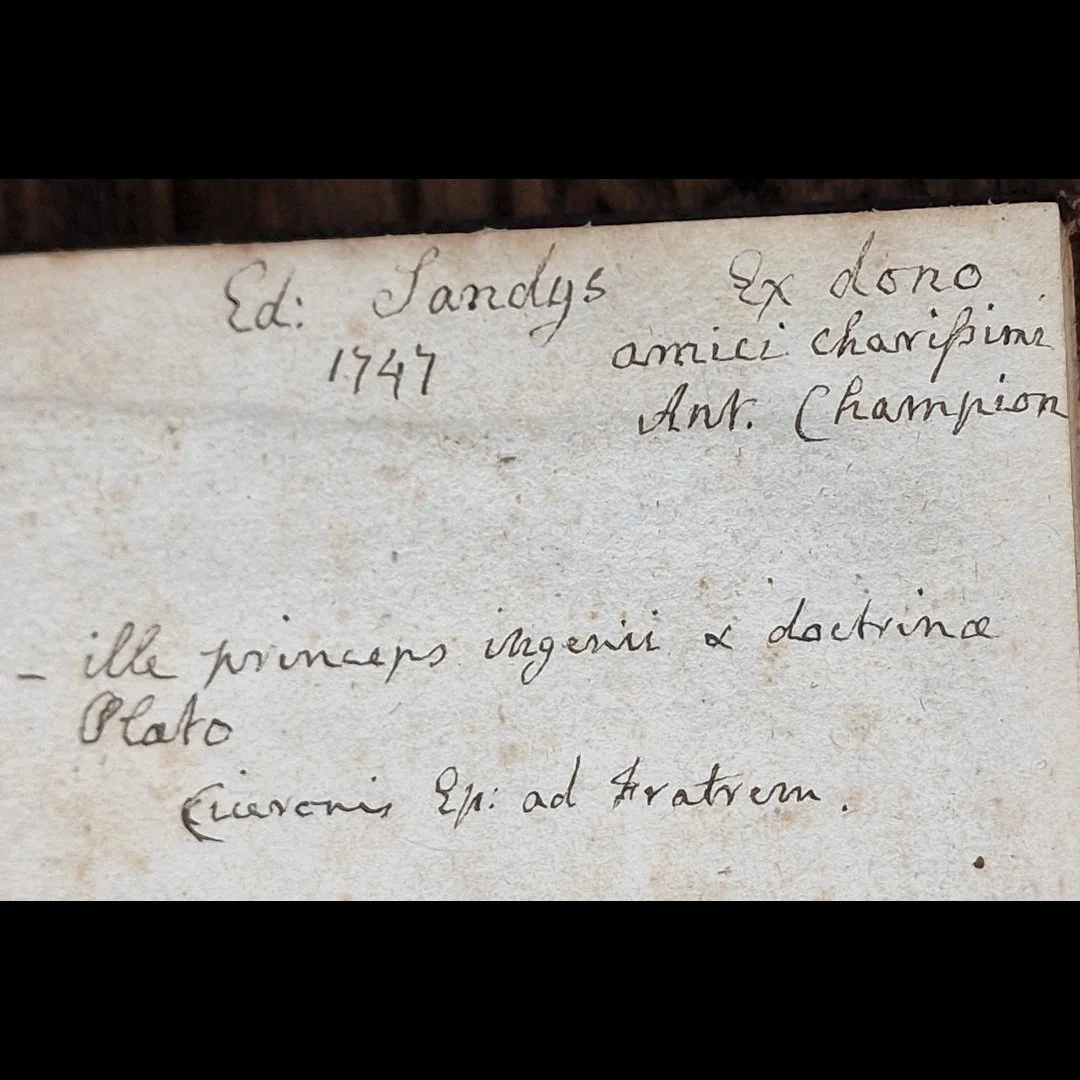 Image 3 of 14
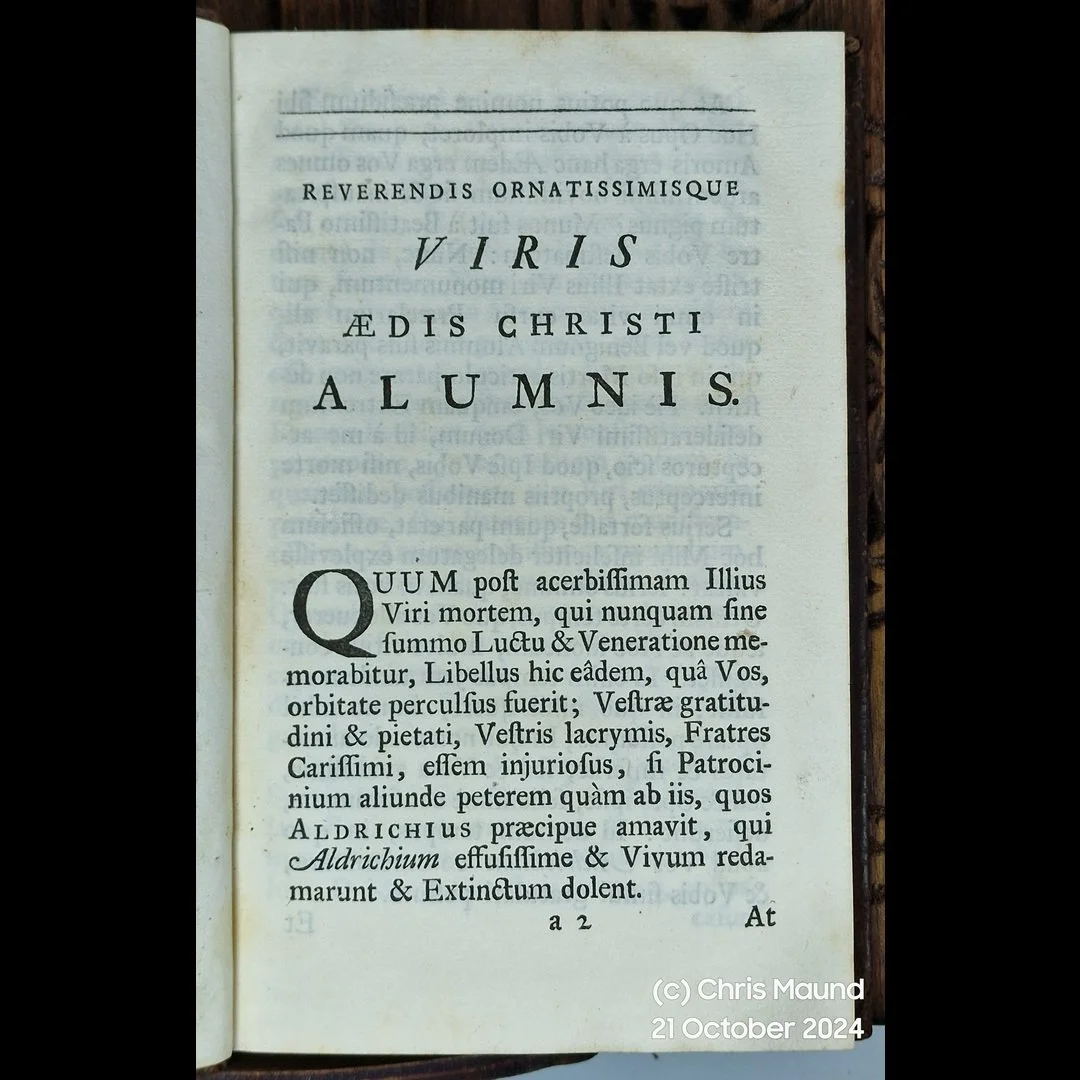 Image 4 of 14
 Image 5 of 14
 Image 6 of 14
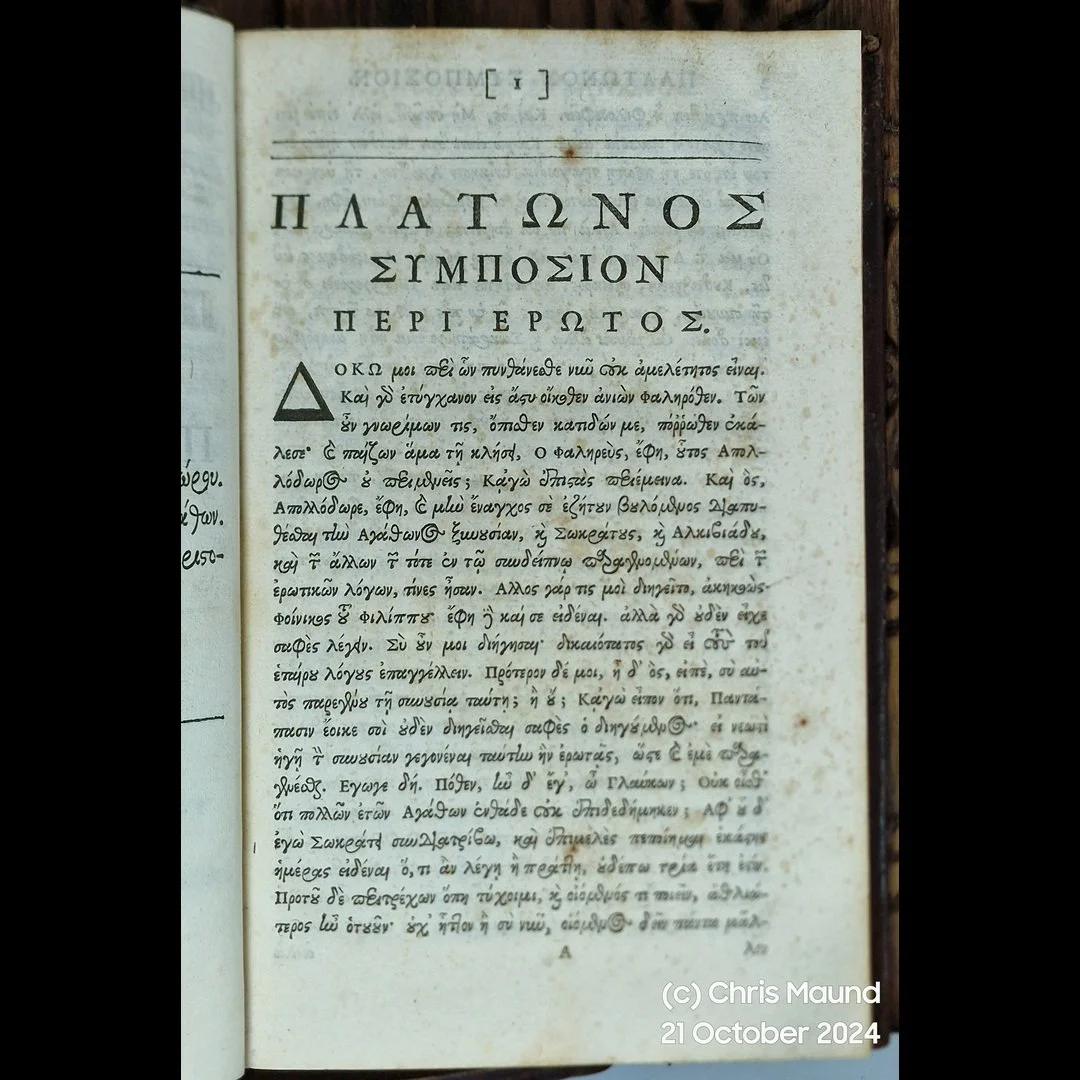 Image 7 of 14
 Image 8 of 14
 Image 9 of 14
 Image 10 of 14
 Image 11 of 14
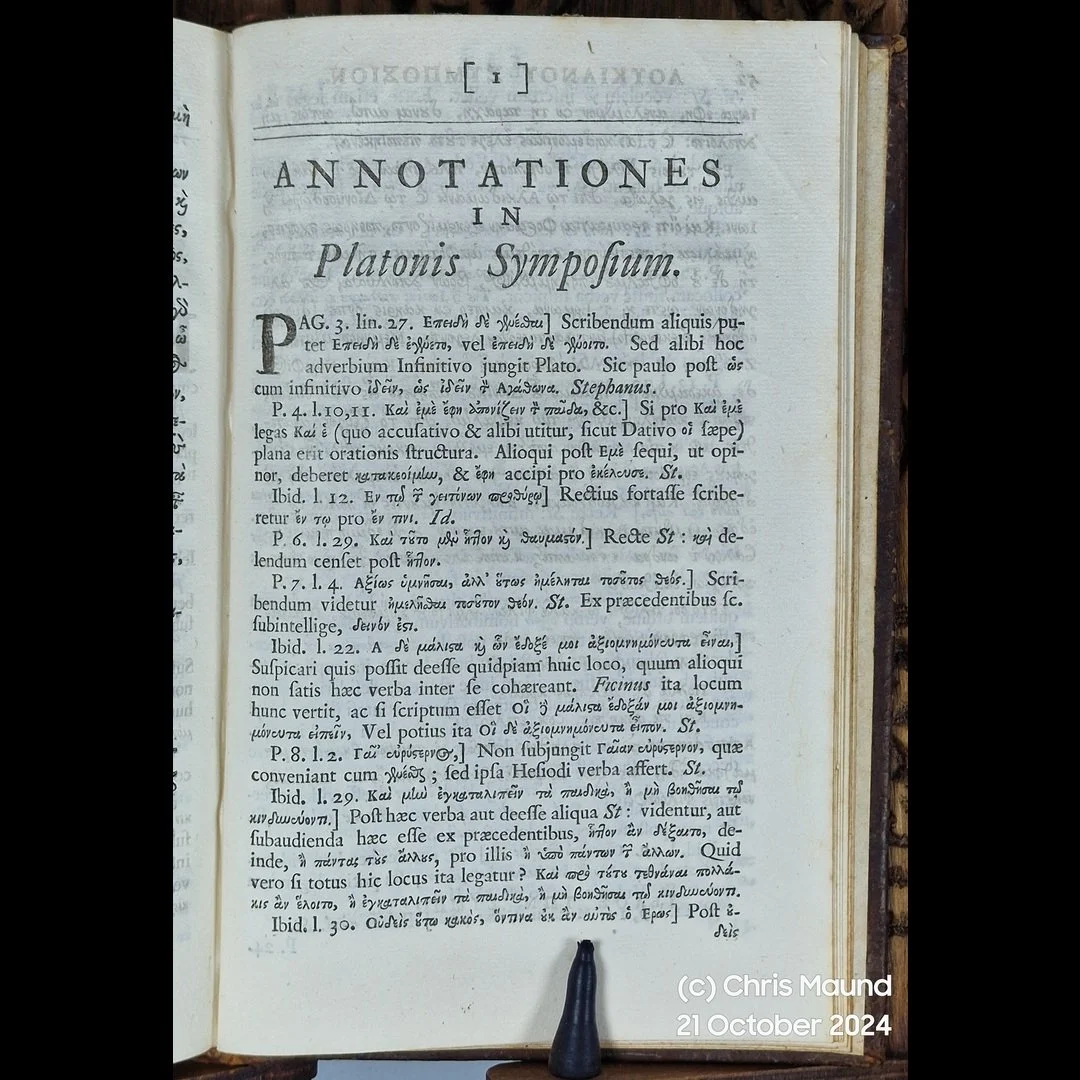 Image 12 of 14
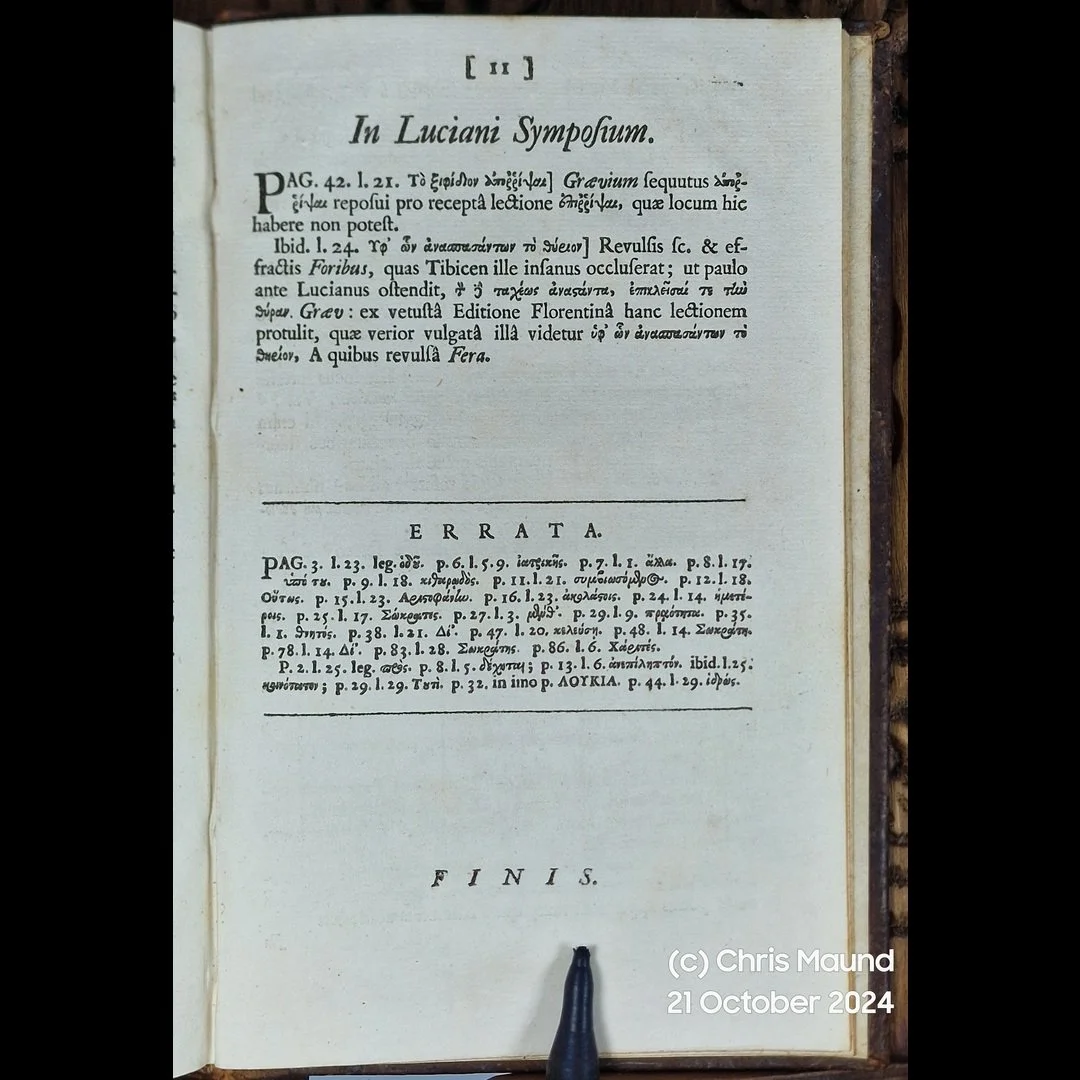 Image 13 of 14
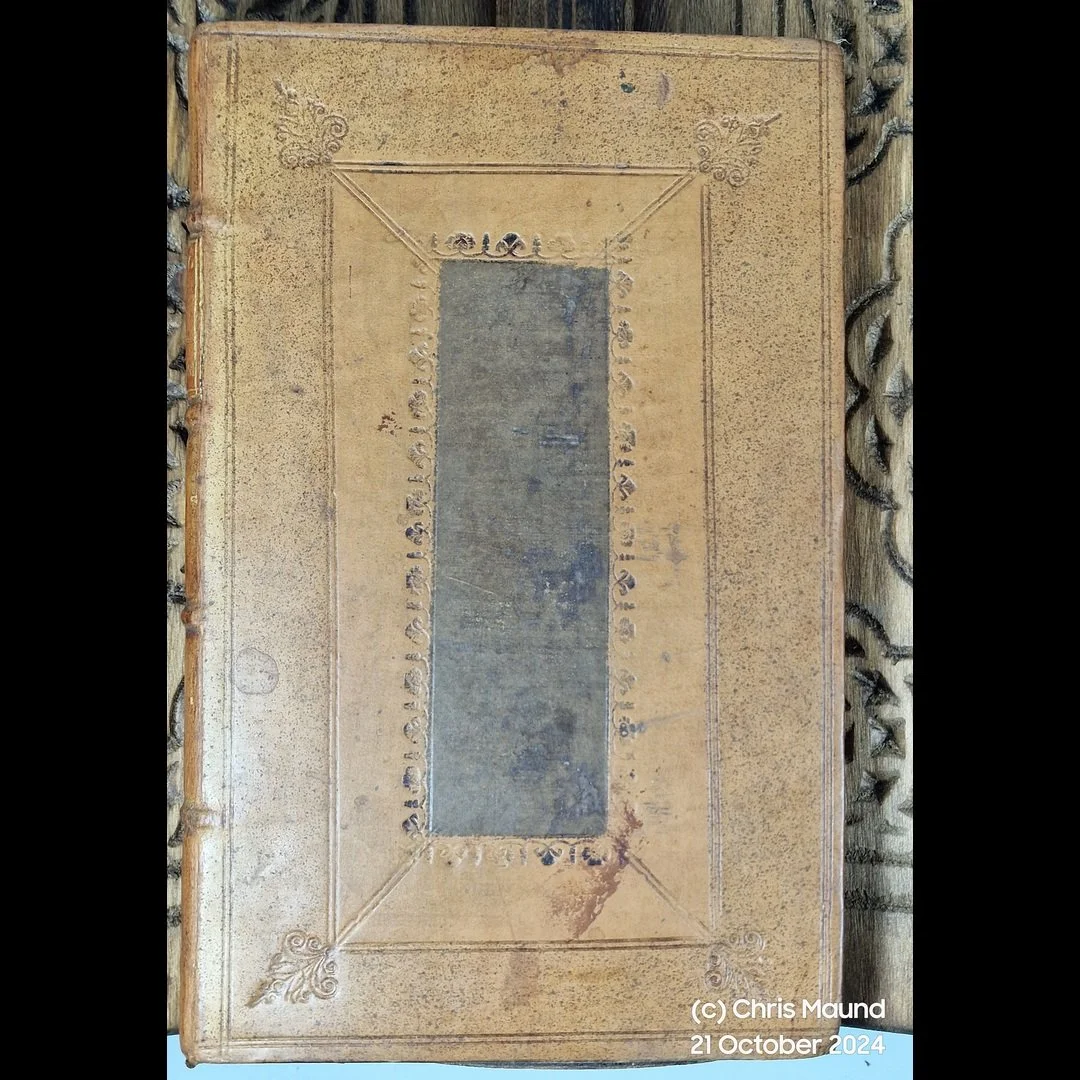 Image 14 of 14








![1777 First English Edtn THE HISTORY OF THE FLAGELLANTS By Somebody Who is Not Doctor of the Sorbonne [Jean-Louis De Lolme] Illus. Anonymous](https://images.squarespace-cdn.com/content/v1/634dab4938c13d5c1f88d382/1721240505822-Q6UDIHPOLJTYYQ2C7ONA/20240717_154202-12.jpg)