1748 Second Edition Engraved Chorography with Early Cricket Scene; With Provenance
THE BRITISH MONARCHY
By George Bickham the Elder
KEY DETAILS
Condition: Good
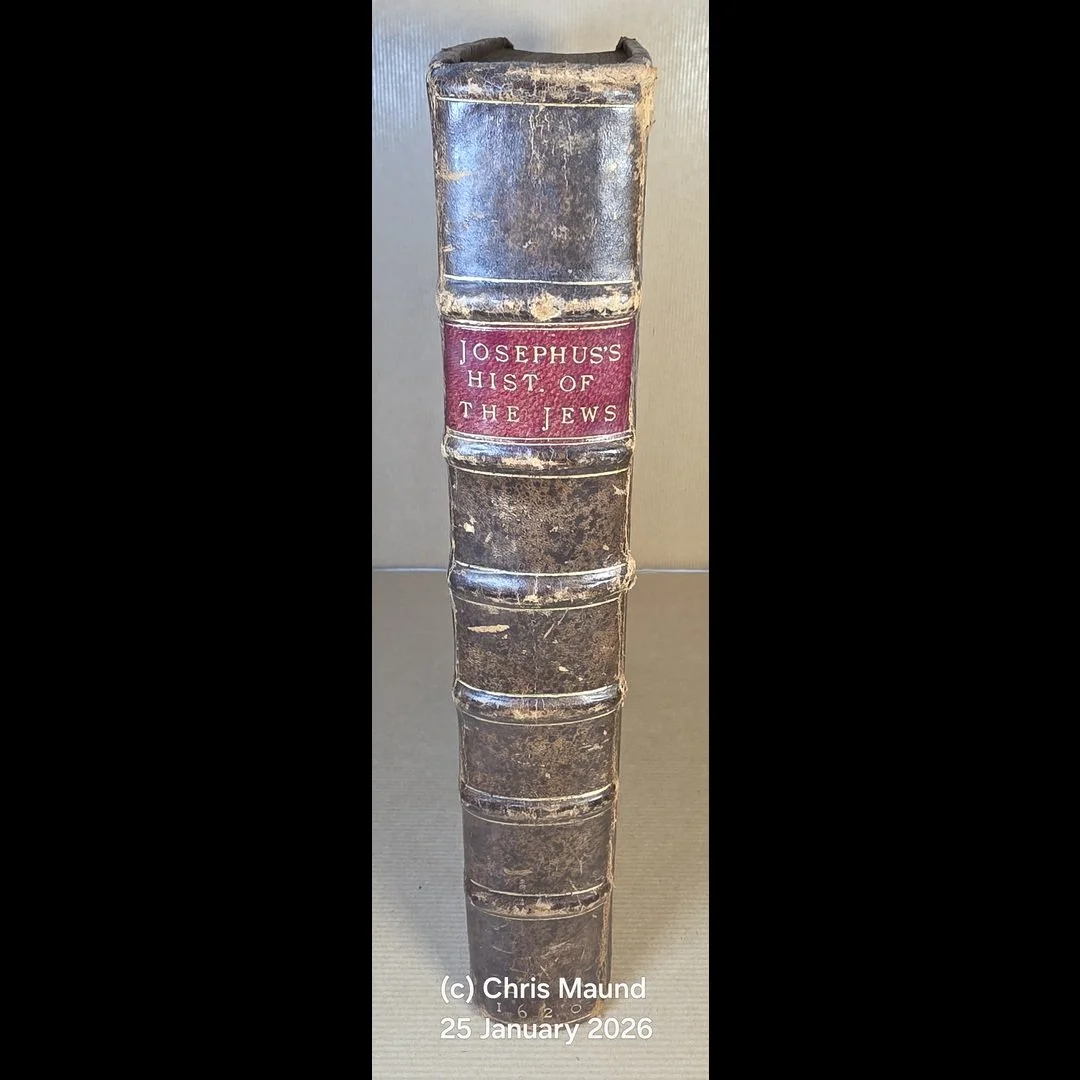
Format: Hardcover, Folio: Contemporary calf gilt; Approx 325mm x 200mm
Published By: George Bickham, operating from James Street, Bunhill-Fields, London, 1748
Language: English
Illustrated By: George Bickham the Elder; Hubert Gravelot (after)
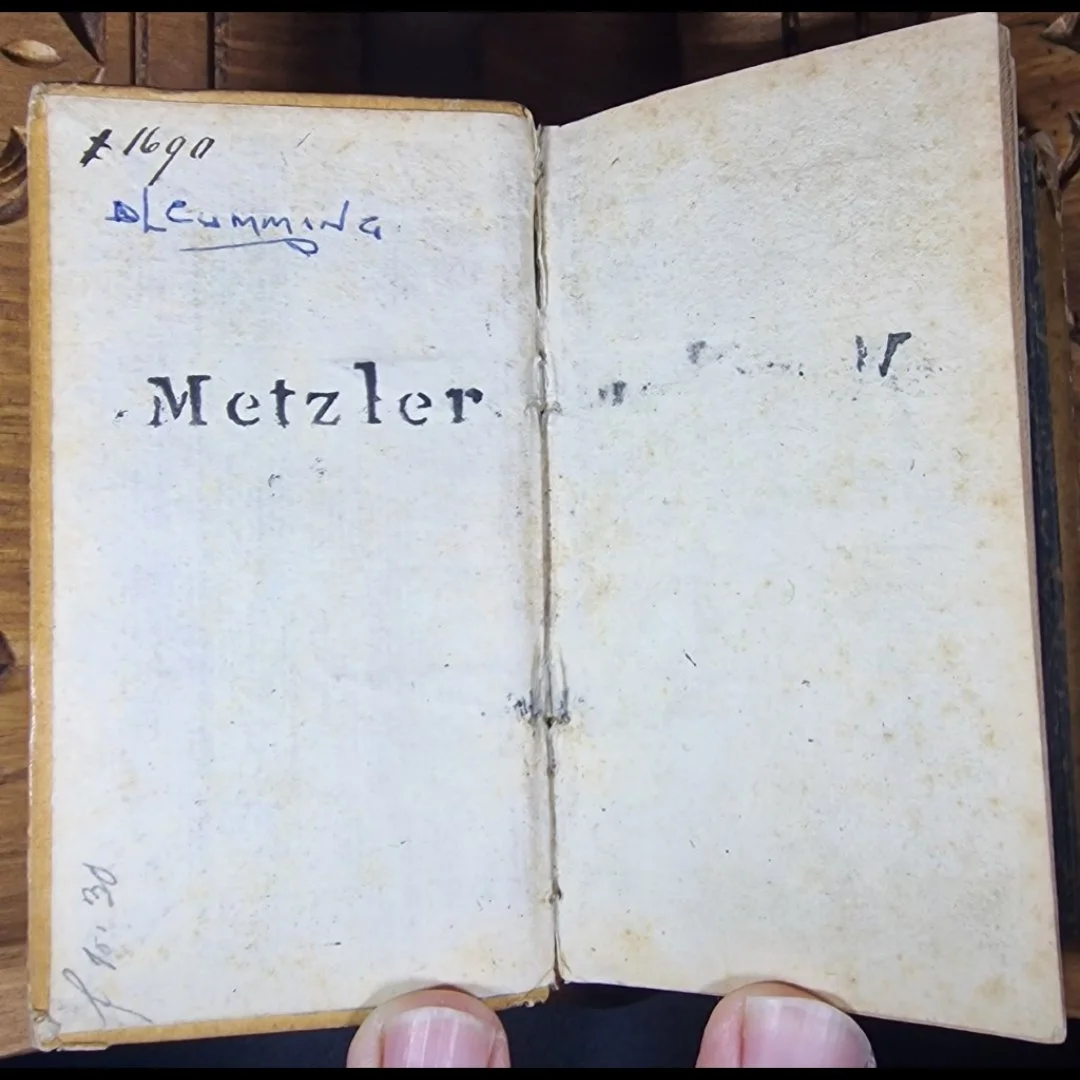
Provenance: Henry Barnes — pictorial bookplate.
Collation: Allegorical frontispiece; engraved title; list of subscribers; engraved sequence numbered 1–190, comprising leaves numbered 1–161 and 164–190, with the intervening folding table intended to account for nos. 162–163; five engraved maps, one folding; numerous engraved vignettes. The second part, A Short Description of the American Colonies, is dated 1747.
Dust Jacket: None, as issued, No Jacket
SKU: BTETM0002677
Shipping Info: Approximate Package Dimensions H: 20, L: 45, W: 30 (Units: cm), W: 3Kg
Tracked Shipping, Insurance Coverage as per Customer Request
DESCRIPTION
The British Monarchy
THE BRITISH MONARCHY: OR, A NEW CHOROGRAPHICAL DESCRIPTION OF ALL THE DOMINIONS SUBJECT TO THE KING OF GREAT BRITAIN
Comprehending the British Isles, The American Colonies, the Electoral States, the African & Indian Settlements
1748 issue, commonly catalogued as the second edition.
The publication history of The British Monarchy is complex, with the work issued and augmented over a number of years and surviving copies sometimes incorporating leaves from different issues or states. This copy corresponds to ESTC T88514 and was catalogued by Chorley’s as the 1748 issue when sold from the Christopher Saunders Collection in September 2025.
A remarkable, entirely engraved eighteenth-century survey of Britain and its overseas dominions by George Bickham the Elder, combining geography, topography, heraldry, history, commerce, calligraphy and pictorial illustration in one of the more distinctive productions of Georgian engraving.
The British Monarchy takes the form of an elaborate chorographical survey of the territories subject to the British Crown. Engraved throughout rather than conventionally typeset, it displays Bickham's skills as writing-master, engraver and publisher on an unusually ambitious scale.
The volume opens with an allegorical frontispiece after Hubert Gravelot, followed by an engraved title and list of subscribers. Five engraved maps are included, one folding, together with a folding statistical table and a profusion of heraldic, ornamental and pictorial vignettes.
The principal British section proceeds geographically through the country, presenting descriptive accounts alongside coats of arms and decorative scenes relating to places, trades, customs, landscapes and contemporary life. The combination of textual information with highly decorative engraved calligraphy makes the work both a geographical survey and an extended specimen of eighteenth-century penmanship and engraving.
EARLY CRICKET SCENE
Of particular importance is the surrounding decoration of the Arms of Shrewsbury on leaf 129, which incorporates an important early representation of cricket.
The scene derives from a design by the French artist Hubert Gravelot, engraved by J. Cole and first published in May 1739 as a decorative border. The design was subsequently issued as a separate print as part of a series of decorations and was later adapted for use on ceramic jugs, bowls and plates.
For its appearance in The British Monarchy the composition has been reversed. As a consequence, the bowler delivers from the left and both bowler and batsman appear left-handed.
The scene depicts a boy bowling underarm towards a batsman holding a raised early curved bat. Behind him stands a very short two-stump wicket, resembling the stool-like wickets of the early game, with a wicketkeeper crouching immediately behind and another batsman waiting his turn.
Gravelot had arrived in London in 1732 and became an important influence in introducing the French Rococo style to British illustration. While in London he taught drawing at the artists' academy in St Martin's Lane and was closely associated with artists including Francis Hayman, whose own depictions of cricket during the 1740s became celebrated images of the developing game.
The presence of the cricket vignette gives this copy particular interest for collectors of the early history and iconography of the sport and explains its inclusion in the specialist Christopher Saunders Collection.
THE AMERICAN COLONIES AND OVERSEAS DOMINIONS
The later portion of the volume extends Bickham's survey beyond Britain to its expanding overseas possessions.
The separately titled A Short Description of the American Colonies, dated 1747, gives accounts of Britain's North American settlements, including New England, New York, Pennsylvania, Maryland, Virginia, Carolina and Georgia, treating their geography, climate, commerce, natural resources and populations.
The work subsequently addresses British interests in Africa and India.
These sections provide the volume with significant crossover interest for collectors of eighteenth-century Americana, colonial history and the development of the British Empire, in addition to its more obvious appeal as a work of British topography and engraving.
PROVENANCE
Henry Barnes — pictorial bookplate.
Christopher Saunders Collection.
Saunders assembled his specialist collection of early books on and mentioning cricket over approximately three decades, bringing together both major works and less obvious publications containing references to the development and culture of the game.
He is the author of Cricket in Print 1672 to 1800, an important specialist bibliography of early cricket literature compiled alongside the established bibliographical work of writers including Padwick and Maun.
The presence of the early cricket scene surrounding the Arms of Shrewsbury made The British Monarchy particularly relevant to Saunders' collecting interests.
Chorley’s, The September Auctions 2025, 23 September 2025, lot 576 — this copy, from the Christopher Saunders Collection.
CONDITION, COLLATION & COPY NOTES
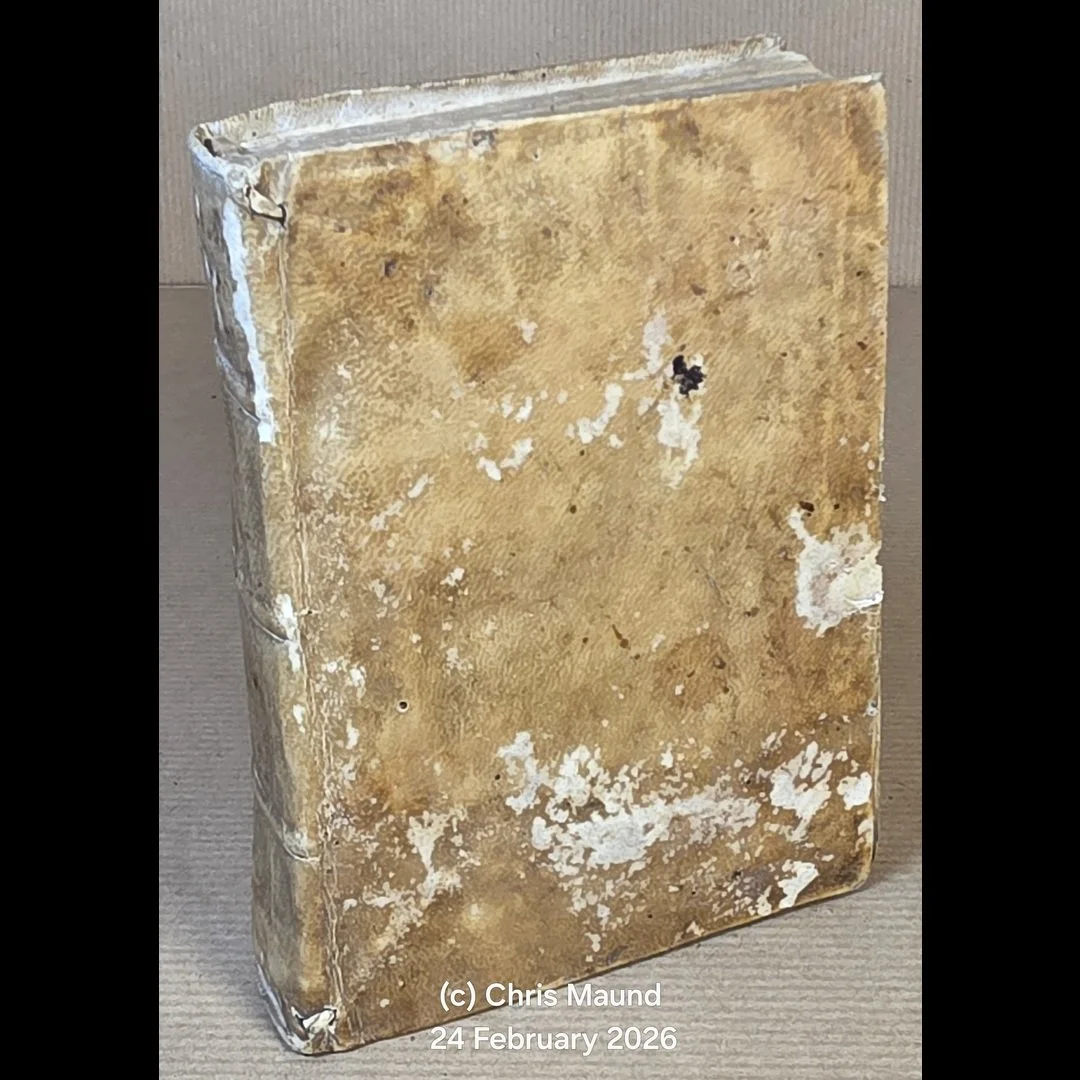
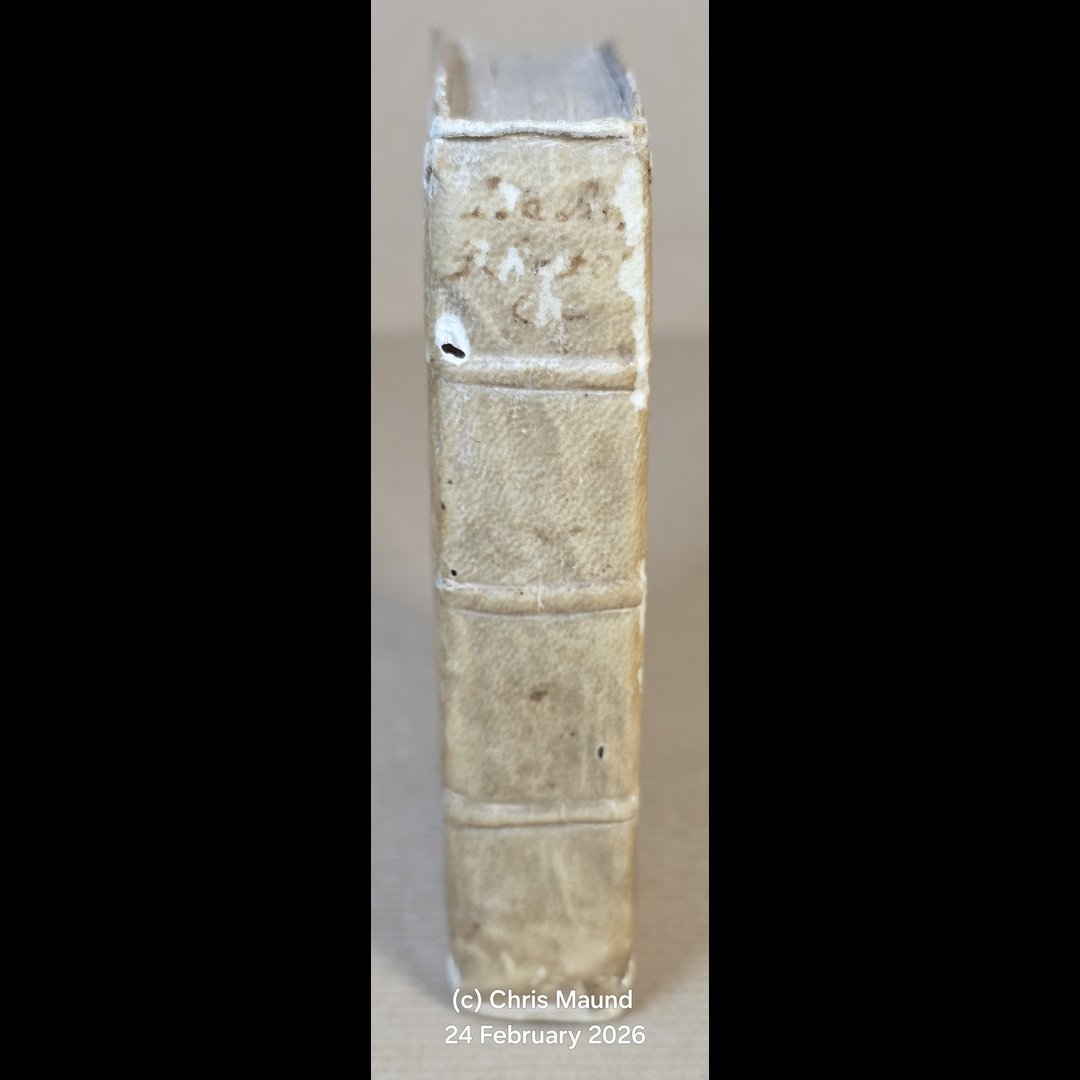
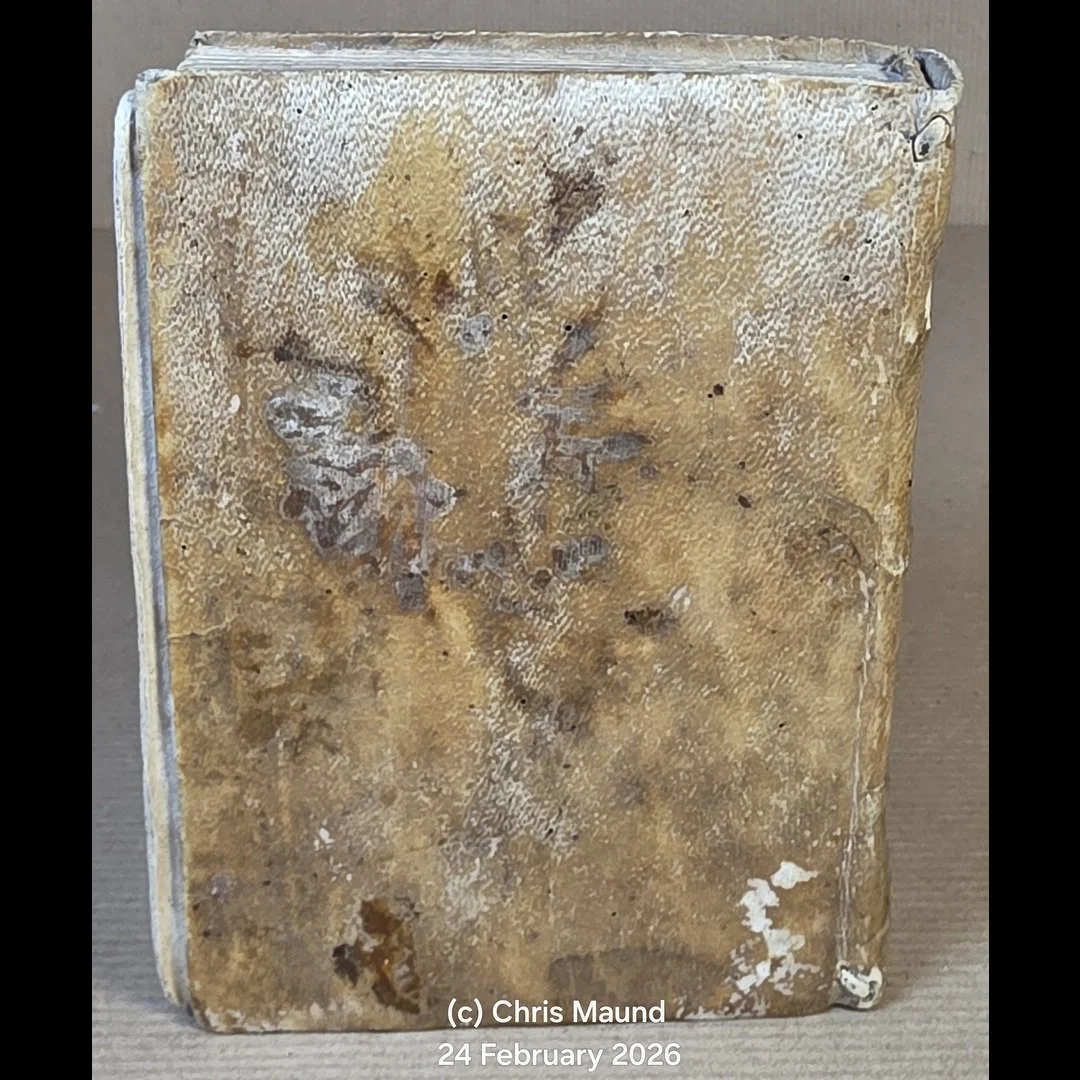
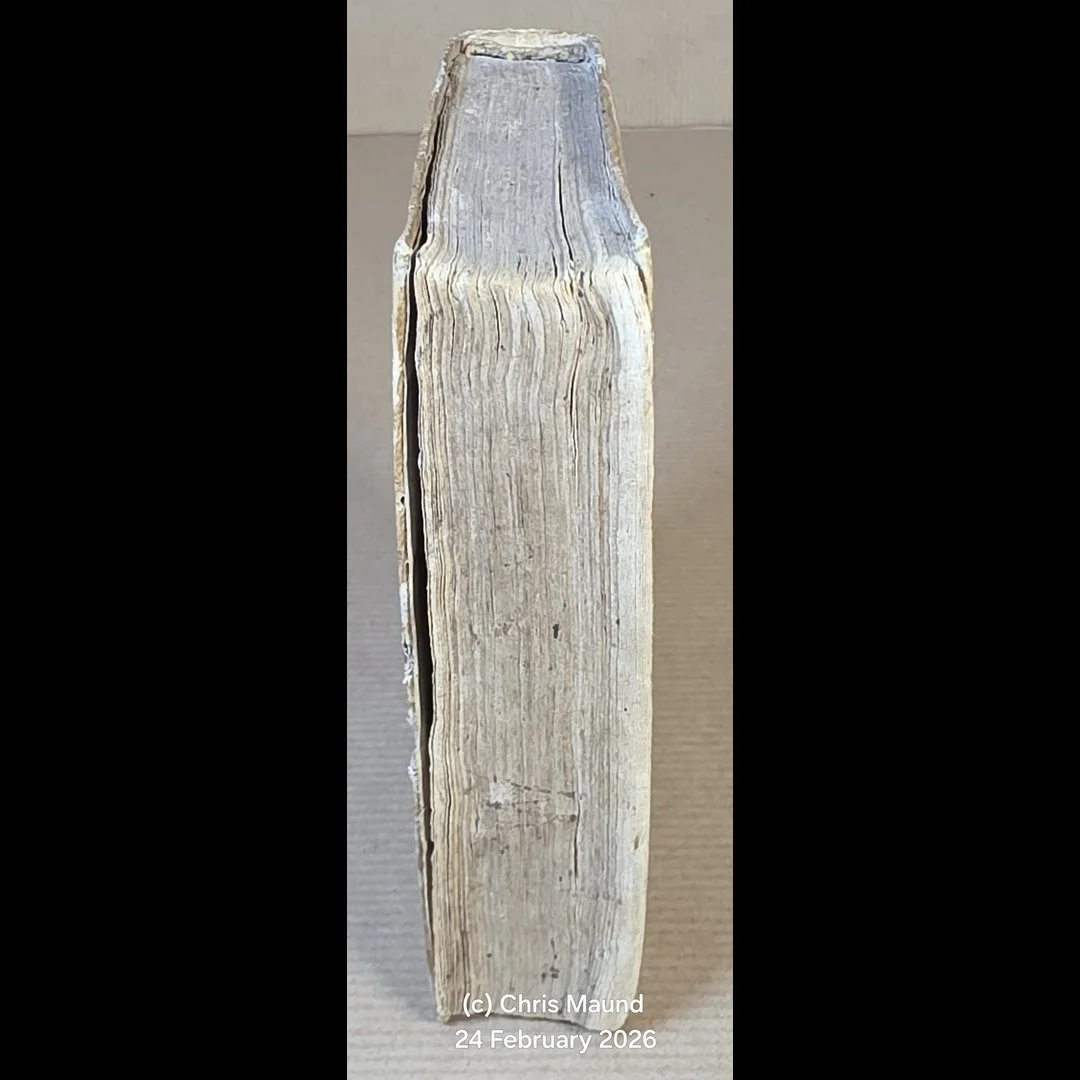
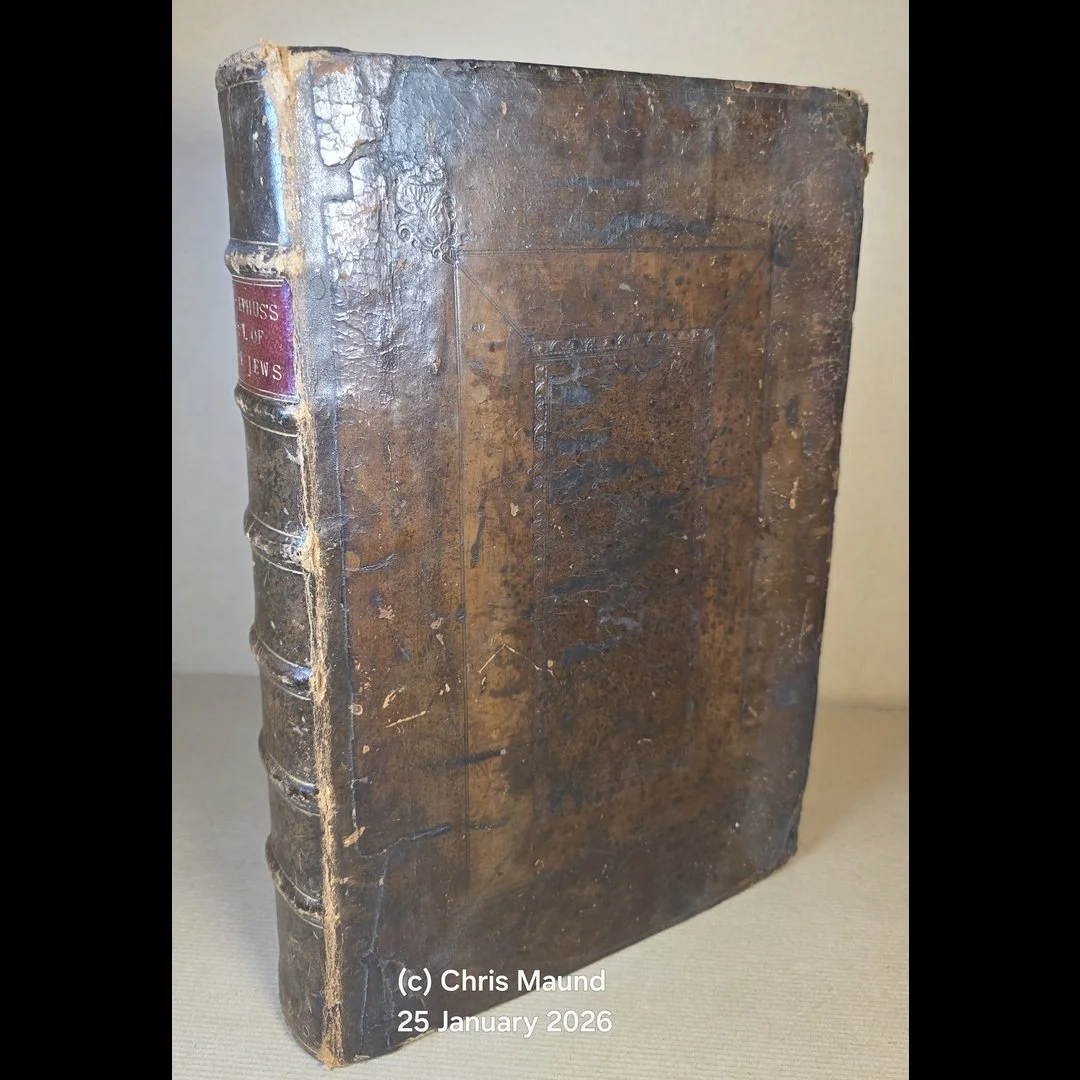
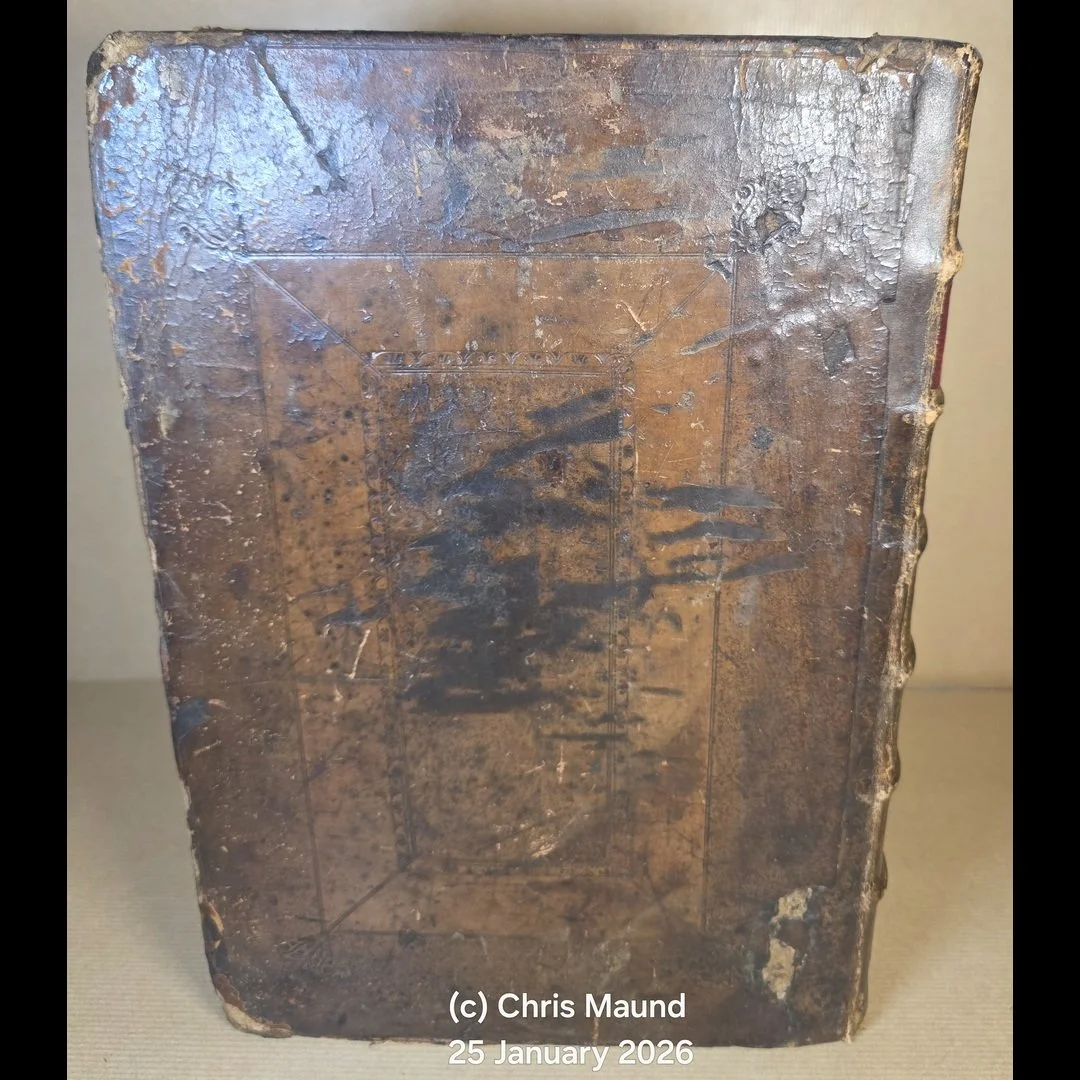
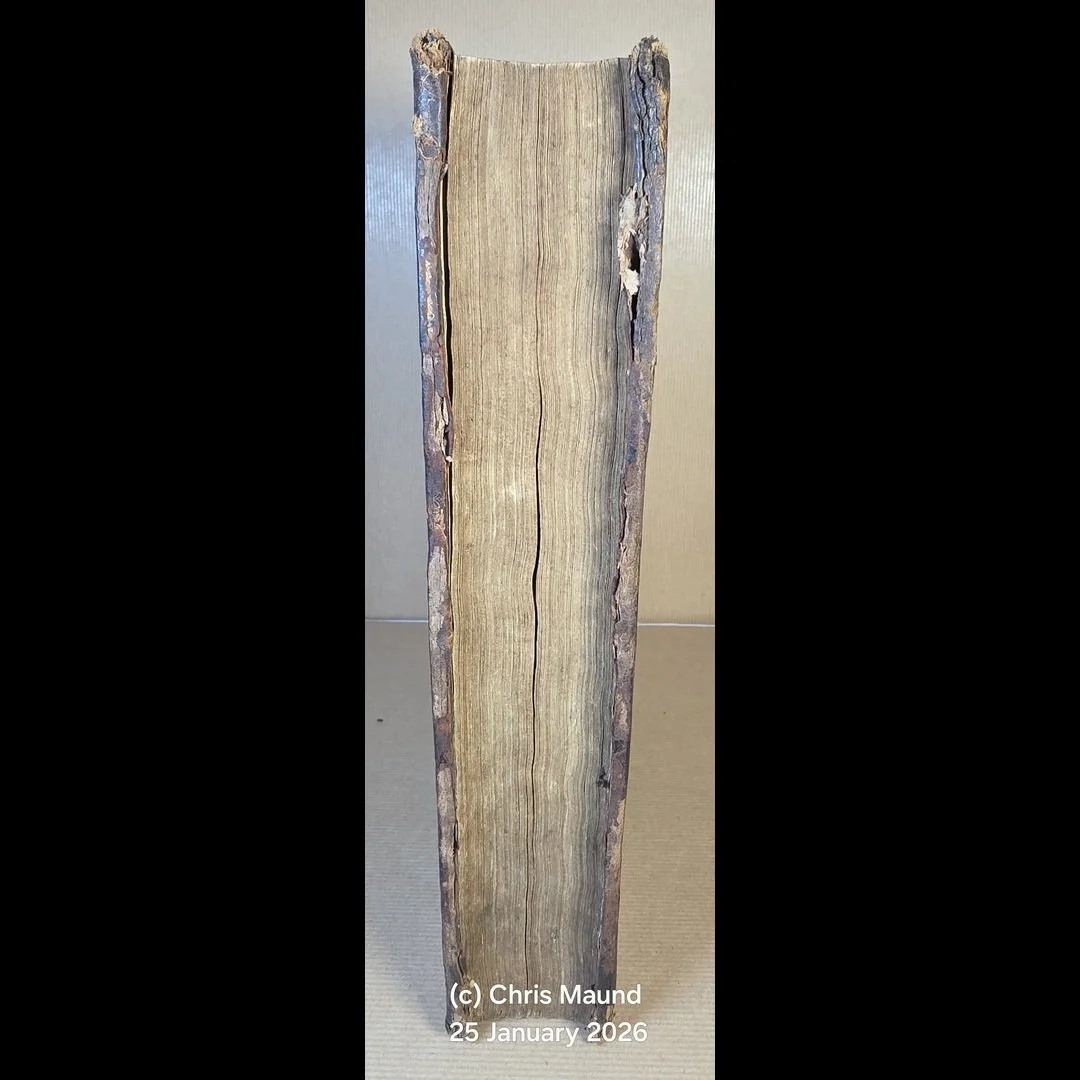
Contemporary calf gilt, sympathetically rebacked, retaining the original boards.
The boards show considerable age-related rubbing, scuffing and surface abrasion, with wear to the extremities and corners. The rebacking provides a sound and serviceable structure while remaining sympathetic to the eighteenth-century binding.
Pictorial bookplate of Henry Barnes internally.
Engraved throughout.
Complete with allegorical frontispiece after Hubert Gravelot, engraved title, list of subscribers, five engraved maps including one folding map, folding statistical table and numerous engraved heraldic, topographical and pictorial vignettes.
The principal engraved sequence runs from 1–161 and then 164–190. The apparent omission of nos. 162–163 does not indicate missing engraved leaves: the intervening folding statistical table is intended to be reckoned as those two numbers. The sequence therefore represents the complete numbered series 1–190.
The second part, A Short Description of the American Colonies, bears the date 1747.
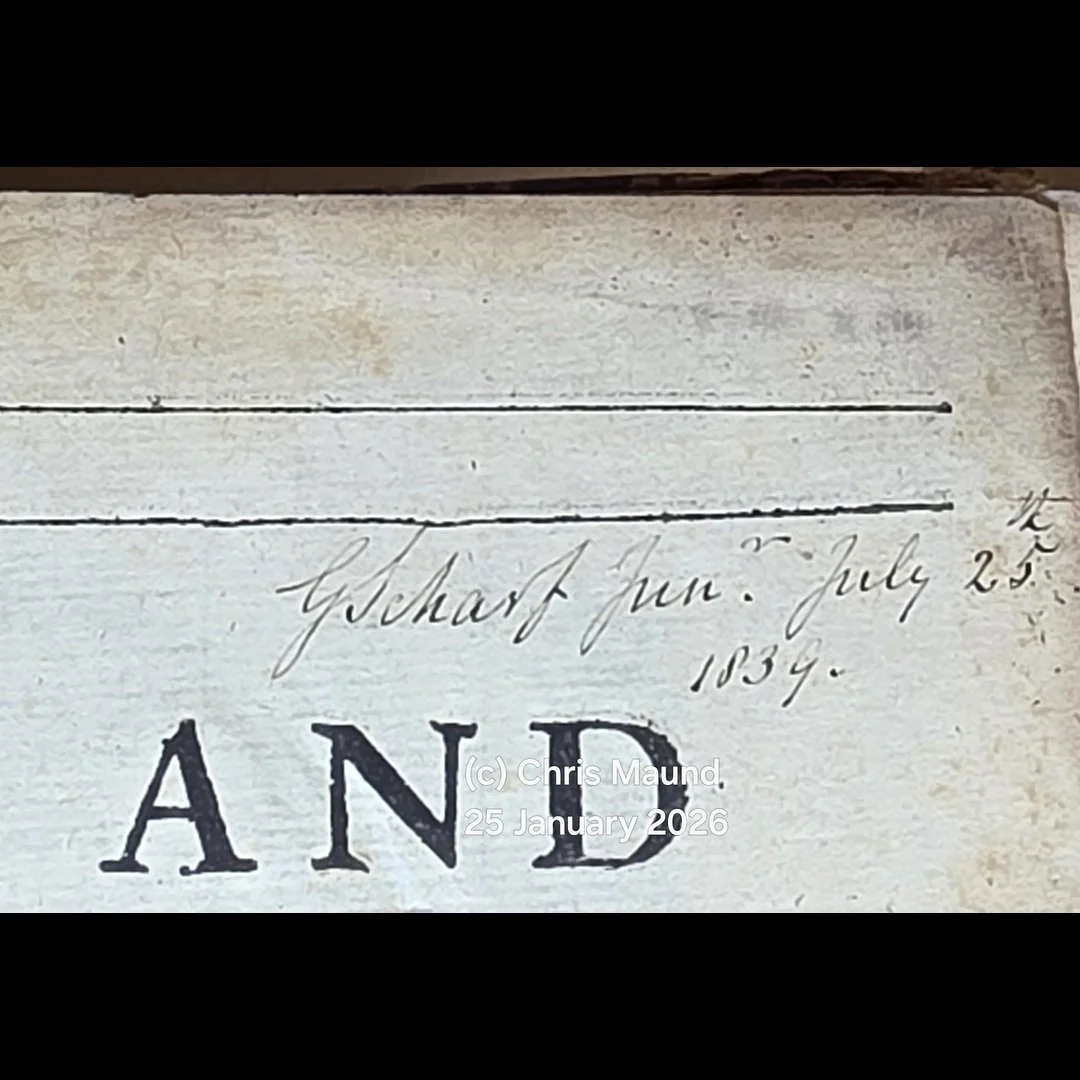
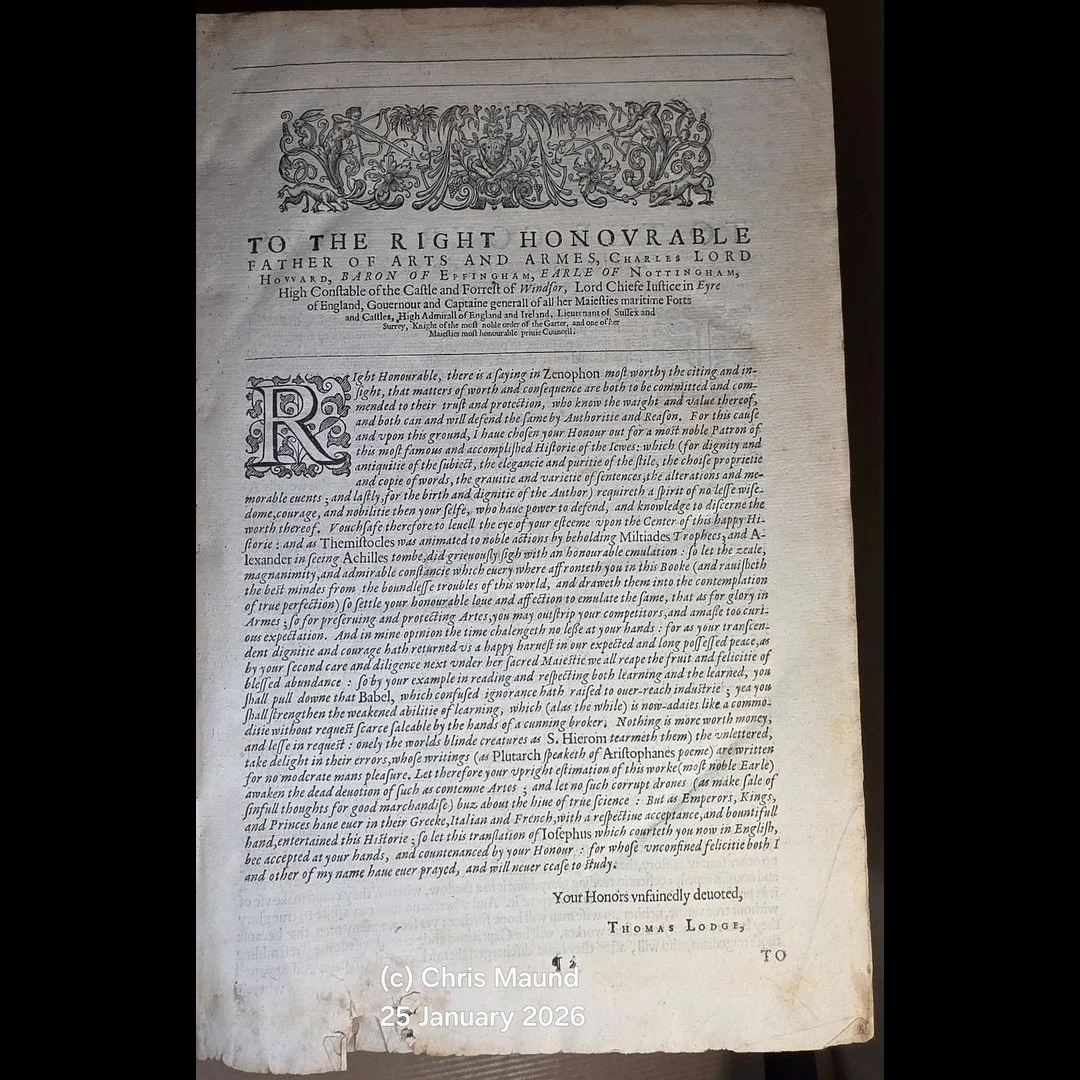
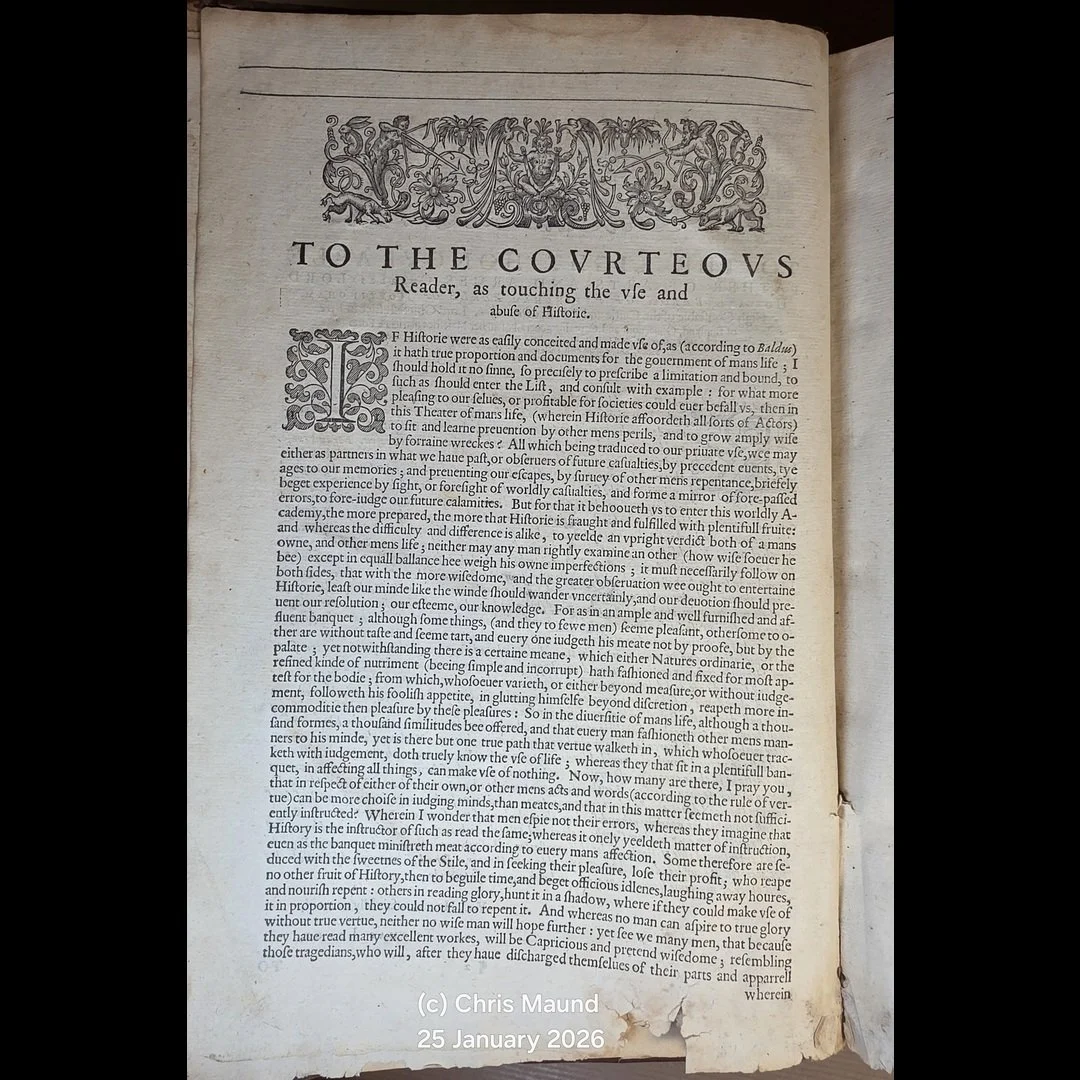
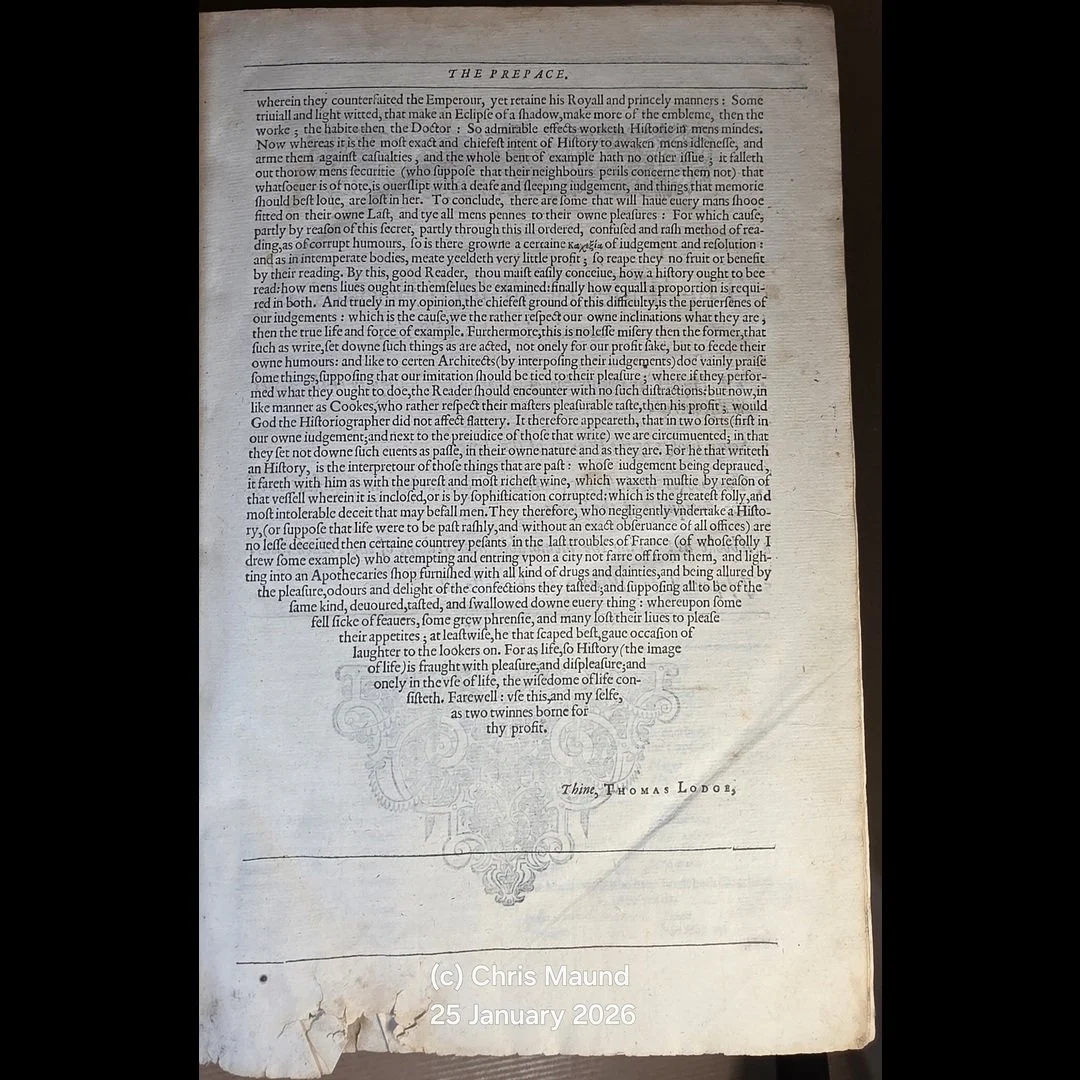
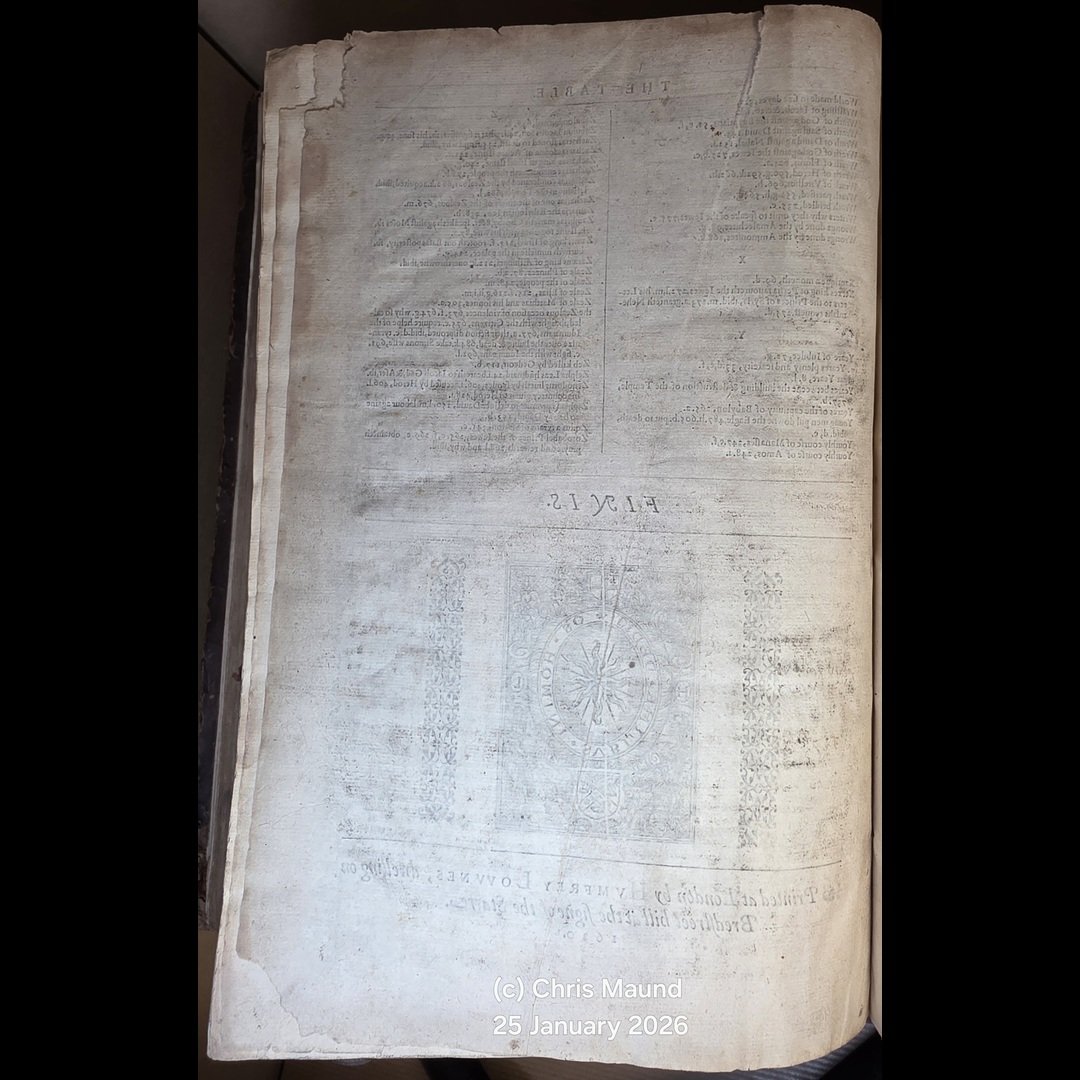
Internally with general age-toning, scattered spotting and occasional handling or marginal marks commensurate with age. Occasional minor marginal wear and short tears may be present. The engraved material remains attractive and the impressions retain considerable visual presence.
The copy was catalogued by Chorley’s in 2025 as containing the engraved allegorical frontispiece, engraved title, subscribers' list, five engraved maps, one folding, the complete numbered sequence, folding table and numerous engraved vignettes.
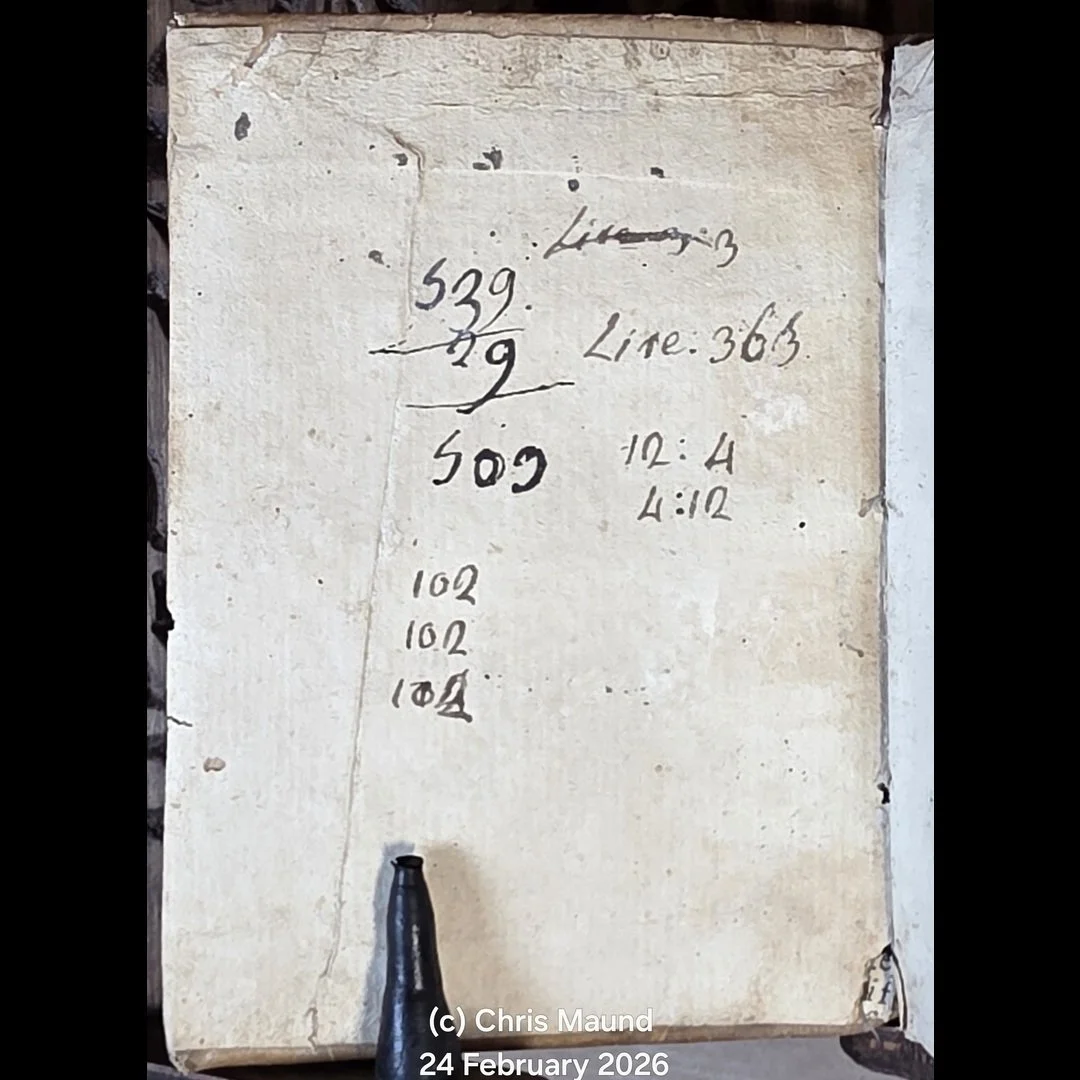
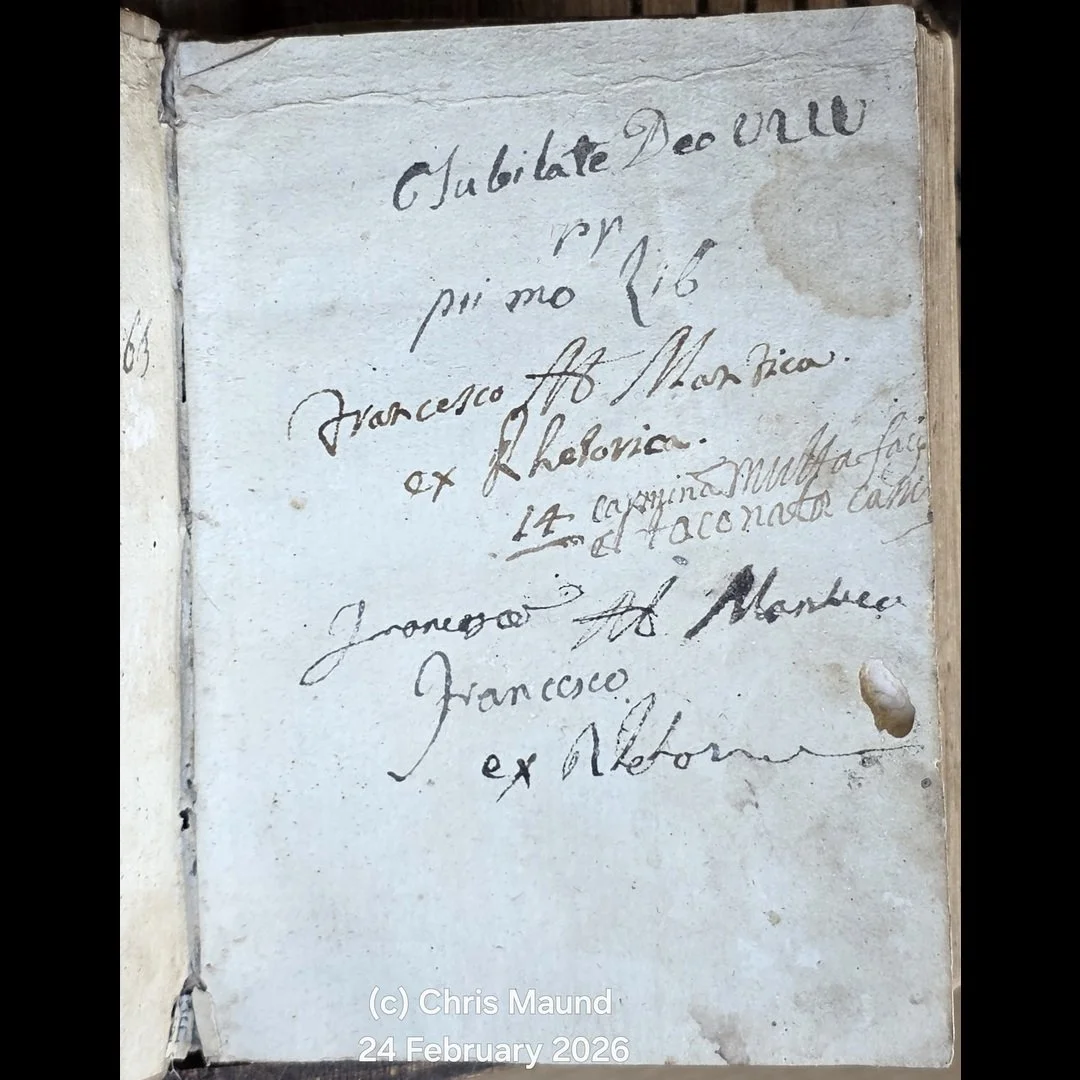
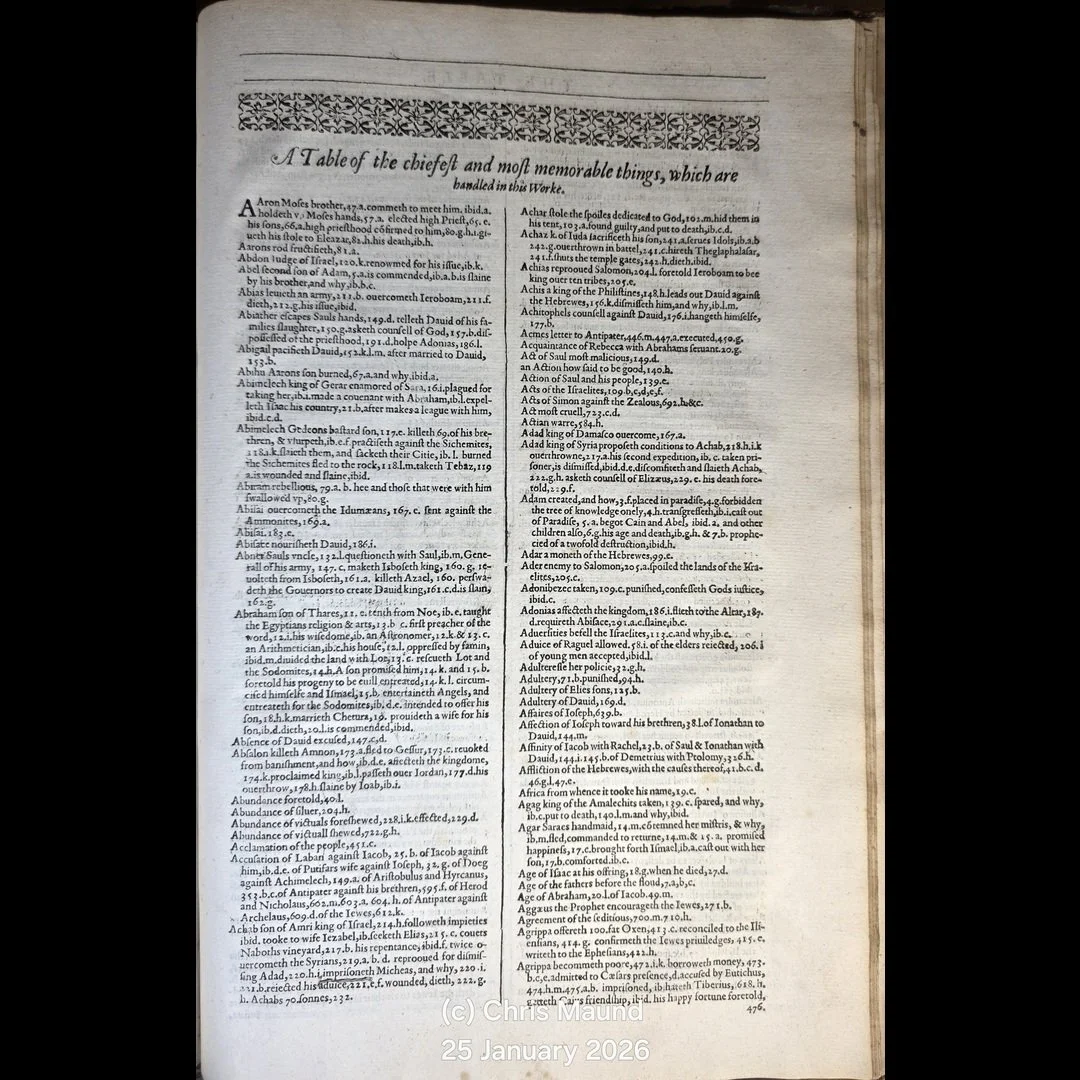
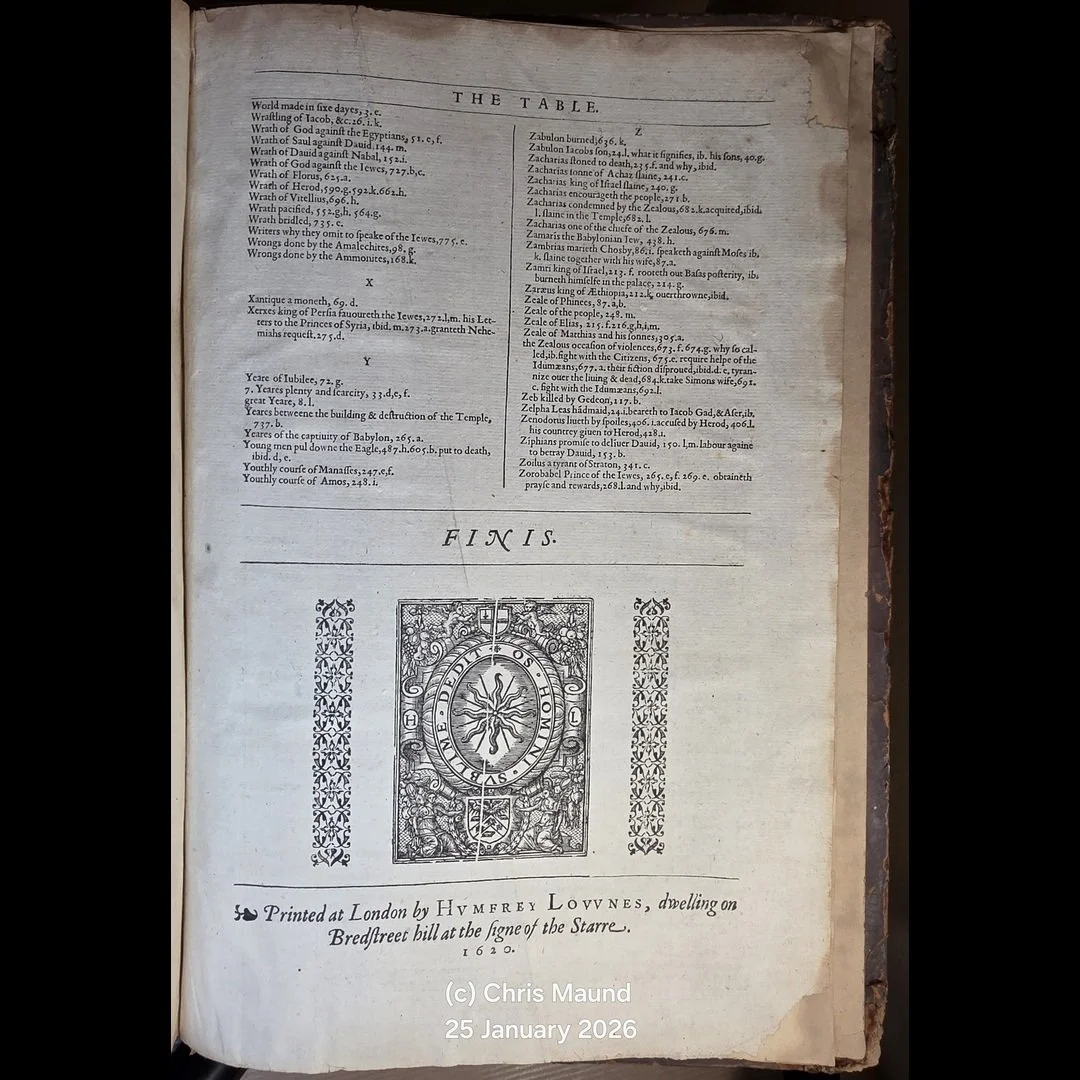
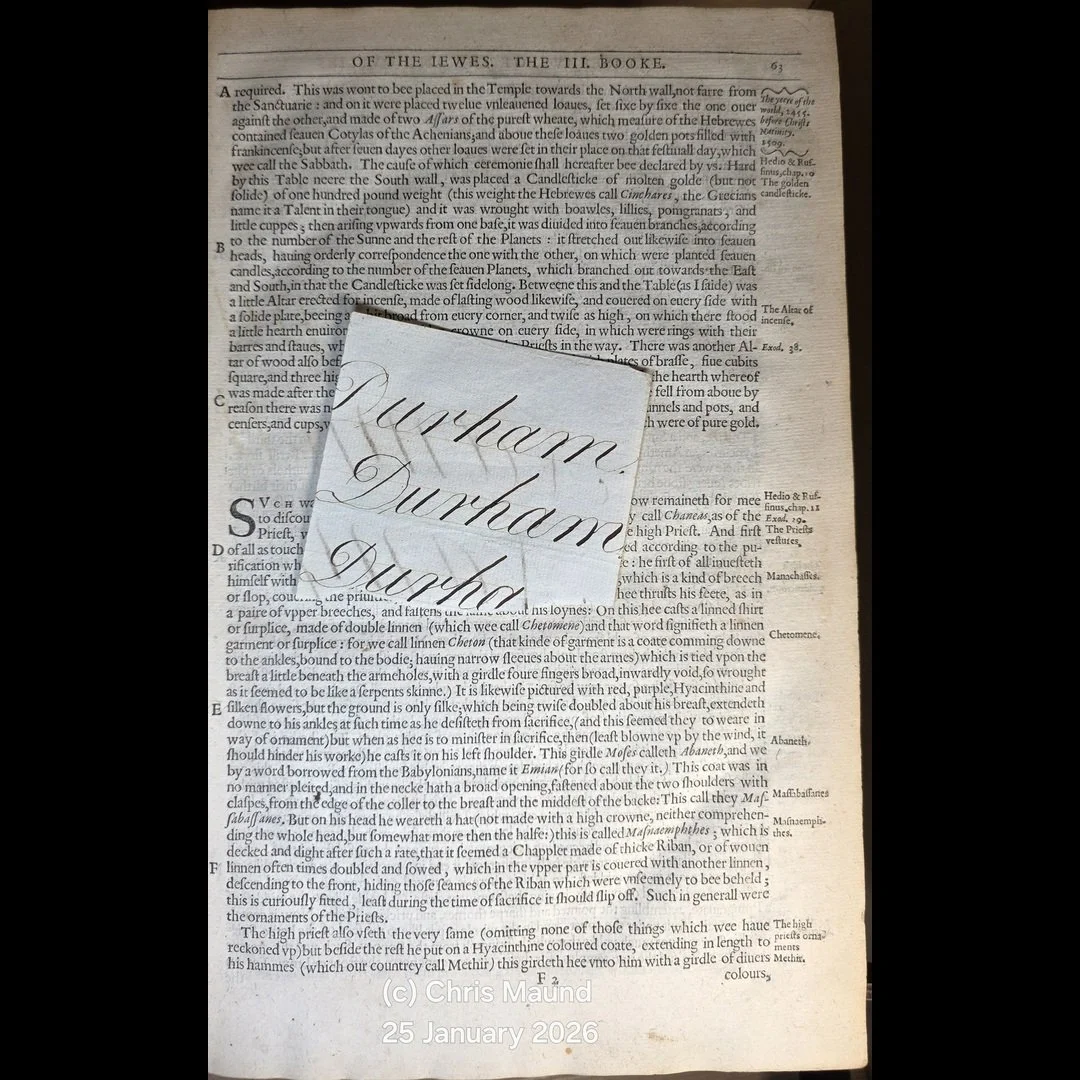
Please see Photos as part of condition report.
REFERENCES
Sabin 5222.
Christopher Saunders, Cricket in Print 1672 to 1800.
Chorley’s, The September Auctions 2025, 23 September 2025, lot 576 — this copy, from the Christopher Saunders Collection.
Christie’s, The British Monarchy, London, G. Bickham, 1748 — comparative bibliographical record.
SYNOPSIS
George Bickham's The British Monarchy is an extraordinary engraved portrait of Britain and its dominions during a period of rapidly expanding commercial and imperial power.
Rather than setting conventional letterpress text within a separately illustrated book, Bickham engraved the work throughout. Geography, local history, commerce and heraldry are therefore integrated directly into elaborate specimens of calligraphy, decorative ornament and pictorial imagery.
Beginning with the British Isles, the work progresses through the counties, combining descriptive information with coats of arms and small scenes depicting occupations, landscapes, leisure and contemporary life. The result is as much a visual record of Georgian Britain as a geographical handbook.
Its scope then expands across the Atlantic. The separately titled account of the American colonies describes the principal British settlements in North America and their climates, resources, commerce and populations before the survey turns to Britain's interests in Africa and India.
The Shrewsbury decoration adds an entirely different collecting dimension. Derived from Hubert Gravelot's 1739 design, the tiny cricket scene records the game at a formative stage in its development: an underarm bowler, curved bat, two-stump wicket, crouching wicketkeeper and waiting batsman.
The subsequent ownership of this copy by Christopher Saunders, whose collection concentrated specifically on early printed references to cricket, provides a particularly appropriate and documented association.
The British Monarchy consequently occupies an unusual intersection between British topography, cartography, calligraphy, heraldry, Americana and colonial history, while this particular copy carries an additional and well-established significance for the bibliography and visual history of cricket.
AUTHOR BIO
George Bickham the Elder (1683/84–1758) was an English writing-master, engraver, draughtsman, illustrator and publisher and one of the principal figures in eighteenth-century British calligraphy.
He is best remembered for The Universal Penman, issued in parts between 1733 and 1748, an ambitious collection of engraved specimens by many of the leading writing-masters of the period. Produced with members of the Bickham family and other contributors, it became one of the defining publications in the development and dissemination of English Round Hand.
Bickham's work ranged well beyond writing manuals and incorporated portraiture, cartography, ornamental engraving and book illustration. The British Monarchy represents perhaps the most extensive fusion of those interests, combining engraved lettering, maps, heraldry and illustration with an ambitious survey of Britain and its overseas territories.
His son, George Bickham the Younger, was likewise an engraver and printseller, and the work of father and son can sometimes be difficult to distinguish.
ILLUSTRATOR
George Bickham the Elder; Hubert Gravelot (after)
The engraved and pictorial character of The British Monarchy reflects the work of George Bickham the Elder together with designs by the influential French artist Hubert François Gravelot.
George Bickham the Elder (1683/84–1758) was an English writing-master, engraver, draughtsman, illustrator and publisher, best known for The Universal Penman, one of the defining works of eighteenth-century English calligraphy. His publications combined engraved lettering, ornament, cartography and pictorial decoration, and The British Monarchy is among the most ambitious examples of this synthesis. Bickham was responsible for engraving substantial elements of the work, including the allegorical frontispiece after Gravelot, and the volume as a whole demonstrates the close relationship between calligraphy, engraving and illustration that characterised his output.
Hubert François Gravelot (1699–1773) was a French draughtsman, engraver and book illustrator whose years in London during the 1730s had a major influence on the development of British Rococo design. Associated with the St Martin’s Lane artistic circle, he helped introduce a more elegant French decorative style to British book illustration and counted leading artists of the period among his associates and pupils.
Gravelot supplied the design for the allegorical frontispiece used in The British Monarchy and was also responsible for the original design of the cricket scene incorporated into the decoration surrounding the Arms of Shrewsbury. That composition was first engraved by J. Cole and published in 1739, before being reused in reversed form in Bickham’s work.
The collaboration and adaptation of designs by Bickham and Gravelot gives The British Monarchy much of its distinctive visual character, combining accomplished English engraving and calligraphy with the refined Rococo influence that Gravelot brought to mid-eighteenth-century British illustration.
1748 Second Edition Engraved Chorography with Early Cricket Scene; With Provenance
THE BRITISH MONARCHY
By George Bickham the Elder
KEY DETAILS
Condition: Good
Format: Hardcover, Folio: Contemporary calf gilt; Approx 325mm x 200mm
Published By: George Bickham, operating from James Street, Bunhill-Fields, London, 1748
Language: English
Illustrated By: George Bickham the Elder; Hubert Gravelot (after)
Provenance: Henry Barnes — pictorial bookplate.
Collation: Allegorical frontispiece; engraved title; list of subscribers; engraved sequence numbered 1–190, comprising leaves numbered 1–161 and 164–190, with the intervening folding table intended to account for nos. 162–163; five engraved maps, one folding; numerous engraved vignettes. The second part, A Short Description of the American Colonies, is dated 1747.
Dust Jacket: None, as issued, No Jacket
SKU: BTETM0002677
Shipping Info: Approximate Package Dimensions H: 20, L: 45, W: 30 (Units: cm), W: 3Kg
Tracked Shipping, Insurance Coverage as per Customer Request
DESCRIPTION
The British Monarchy
THE BRITISH MONARCHY: OR, A NEW CHOROGRAPHICAL DESCRIPTION OF ALL THE DOMINIONS SUBJECT TO THE KING OF GREAT BRITAIN
Comprehending the British Isles, The American Colonies, the Electoral States, the African & Indian Settlements
1748 issue, commonly catalogued as the second edition.
The publication history of The British Monarchy is complex, with the work issued and augmented over a number of years and surviving copies sometimes incorporating leaves from different issues or states. This copy corresponds to ESTC T88514 and was catalogued by Chorley’s as the 1748 issue when sold from the Christopher Saunders Collection in September 2025.
A remarkable, entirely engraved eighteenth-century survey of Britain and its overseas dominions by George Bickham the Elder, combining geography, topography, heraldry, history, commerce, calligraphy and pictorial illustration in one of the more distinctive productions of Georgian engraving.
The British Monarchy takes the form of an elaborate chorographical survey of the territories subject to the British Crown. Engraved throughout rather than conventionally typeset, it displays Bickham's skills as writing-master, engraver and publisher on an unusually ambitious scale.
The volume opens with an allegorical frontispiece after Hubert Gravelot, followed by an engraved title and list of subscribers. Five engraved maps are included, one folding, together with a folding statistical table and a profusion of heraldic, ornamental and pictorial vignettes.
The principal British section proceeds geographically through the country, presenting descriptive accounts alongside coats of arms and decorative scenes relating to places, trades, customs, landscapes and contemporary life. The combination of textual information with highly decorative engraved calligraphy makes the work both a geographical survey and an extended specimen of eighteenth-century penmanship and engraving.
EARLY CRICKET SCENE
Of particular importance is the surrounding decoration of the Arms of Shrewsbury on leaf 129, which incorporates an important early representation of cricket.
The scene derives from a design by the French artist Hubert Gravelot, engraved by J. Cole and first published in May 1739 as a decorative border. The design was subsequently issued as a separate print as part of a series of decorations and was later adapted for use on ceramic jugs, bowls and plates.
For its appearance in The British Monarchy the composition has been reversed. As a consequence, the bowler delivers from the left and both bowler and batsman appear left-handed.
The scene depicts a boy bowling underarm towards a batsman holding a raised early curved bat. Behind him stands a very short two-stump wicket, resembling the stool-like wickets of the early game, with a wicketkeeper crouching immediately behind and another batsman waiting his turn.
Gravelot had arrived in London in 1732 and became an important influence in introducing the French Rococo style to British illustration. While in London he taught drawing at the artists' academy in St Martin's Lane and was closely associated with artists including Francis Hayman, whose own depictions of cricket during the 1740s became celebrated images of the developing game.
The presence of the cricket vignette gives this copy particular interest for collectors of the early history and iconography of the sport and explains its inclusion in the specialist Christopher Saunders Collection.
THE AMERICAN COLONIES AND OVERSEAS DOMINIONS
The later portion of the volume extends Bickham's survey beyond Britain to its expanding overseas possessions.
The separately titled A Short Description of the American Colonies, dated 1747, gives accounts of Britain's North American settlements, including New England, New York, Pennsylvania, Maryland, Virginia, Carolina and Georgia, treating their geography, climate, commerce, natural resources and populations.
The work subsequently addresses British interests in Africa and India.
These sections provide the volume with significant crossover interest for collectors of eighteenth-century Americana, colonial history and the development of the British Empire, in addition to its more obvious appeal as a work of British topography and engraving.
PROVENANCE
Henry Barnes — pictorial bookplate.
Christopher Saunders Collection.
Saunders assembled his specialist collection of early books on and mentioning cricket over approximately three decades, bringing together both major works and less obvious publications containing references to the development and culture of the game.
He is the author of Cricket in Print 1672 to 1800, an important specialist bibliography of early cricket literature compiled alongside the established bibliographical work of writers including Padwick and Maun.
The presence of the early cricket scene surrounding the Arms of Shrewsbury made The British Monarchy particularly relevant to Saunders' collecting interests.
Chorley’s, The September Auctions 2025, 23 September 2025, lot 576 — this copy, from the Christopher Saunders Collection.
CONDITION, COLLATION & COPY NOTES
Contemporary calf gilt, sympathetically rebacked, retaining the original boards.
The boards show considerable age-related rubbing, scuffing and surface abrasion, with wear to the extremities and corners. The rebacking provides a sound and serviceable structure while remaining sympathetic to the eighteenth-century binding.
Pictorial bookplate of Henry Barnes internally.
Engraved throughout.
Complete with allegorical frontispiece after Hubert Gravelot, engraved title, list of subscribers, five engraved maps including one folding map, folding statistical table and numerous engraved heraldic, topographical and pictorial vignettes.
The principal engraved sequence runs from 1–161 and then 164–190. The apparent omission of nos. 162–163 does not indicate missing engraved leaves: the intervening folding statistical table is intended to be reckoned as those two numbers. The sequence therefore represents the complete numbered series 1–190.
The second part, A Short Description of the American Colonies, bears the date 1747.
Internally with general age-toning, scattered spotting and occasional handling or marginal marks commensurate with age. Occasional minor marginal wear and short tears may be present. The engraved material remains attractive and the impressions retain considerable visual presence.
The copy was catalogued by Chorley’s in 2025 as containing the engraved allegorical frontispiece, engraved title, subscribers' list, five engraved maps, one folding, the complete numbered sequence, folding table and numerous engraved vignettes.
Please see Photos as part of condition report.
REFERENCES
Sabin 5222.
Christopher Saunders, Cricket in Print 1672 to 1800.
Chorley’s, The September Auctions 2025, 23 September 2025, lot 576 — this copy, from the Christopher Saunders Collection.
Christie’s, The British Monarchy, London, G. Bickham, 1748 — comparative bibliographical record.
SYNOPSIS
George Bickham's The British Monarchy is an extraordinary engraved portrait of Britain and its dominions during a period of rapidly expanding commercial and imperial power.
Rather than setting conventional letterpress text within a separately illustrated book, Bickham engraved the work throughout. Geography, local history, commerce and heraldry are therefore integrated directly into elaborate specimens of calligraphy, decorative ornament and pictorial imagery.
Beginning with the British Isles, the work progresses through the counties, combining descriptive information with coats of arms and small scenes depicting occupations, landscapes, leisure and contemporary life. The result is as much a visual record of Georgian Britain as a geographical handbook.
Its scope then expands across the Atlantic. The separately titled account of the American colonies describes the principal British settlements in North America and their climates, resources, commerce and populations before the survey turns to Britain's interests in Africa and India.
The Shrewsbury decoration adds an entirely different collecting dimension. Derived from Hubert Gravelot's 1739 design, the tiny cricket scene records the game at a formative stage in its development: an underarm bowler, curved bat, two-stump wicket, crouching wicketkeeper and waiting batsman.
The subsequent ownership of this copy by Christopher Saunders, whose collection concentrated specifically on early printed references to cricket, provides a particularly appropriate and documented association.
The British Monarchy consequently occupies an unusual intersection between British topography, cartography, calligraphy, heraldry, Americana and colonial history, while this particular copy carries an additional and well-established significance for the bibliography and visual history of cricket.
AUTHOR BIO
George Bickham the Elder (1683/84–1758) was an English writing-master, engraver, draughtsman, illustrator and publisher and one of the principal figures in eighteenth-century British calligraphy.
He is best remembered for The Universal Penman, issued in parts between 1733 and 1748, an ambitious collection of engraved specimens by many of the leading writing-masters of the period. Produced with members of the Bickham family and other contributors, it became one of the defining publications in the development and dissemination of English Round Hand.
Bickham's work ranged well beyond writing manuals and incorporated portraiture, cartography, ornamental engraving and book illustration. The British Monarchy represents perhaps the most extensive fusion of those interests, combining engraved lettering, maps, heraldry and illustration with an ambitious survey of Britain and its overseas territories.
His son, George Bickham the Younger, was likewise an engraver and printseller, and the work of father and son can sometimes be difficult to distinguish.
ILLUSTRATOR
George Bickham the Elder; Hubert Gravelot (after)
The engraved and pictorial character of The British Monarchy reflects the work of George Bickham the Elder together with designs by the influential French artist Hubert François Gravelot.
George Bickham the Elder (1683/84–1758) was an English writing-master, engraver, draughtsman, illustrator and publisher, best known for The Universal Penman, one of the defining works of eighteenth-century English calligraphy. His publications combined engraved lettering, ornament, cartography and pictorial decoration, and The British Monarchy is among the most ambitious examples of this synthesis. Bickham was responsible for engraving substantial elements of the work, including the allegorical frontispiece after Gravelot, and the volume as a whole demonstrates the close relationship between calligraphy, engraving and illustration that characterised his output.
Hubert François Gravelot (1699–1773) was a French draughtsman, engraver and book illustrator whose years in London during the 1730s had a major influence on the development of British Rococo design. Associated with the St Martin’s Lane artistic circle, he helped introduce a more elegant French decorative style to British book illustration and counted leading artists of the period among his associates and pupils.
Gravelot supplied the design for the allegorical frontispiece used in The British Monarchy and was also responsible for the original design of the cricket scene incorporated into the decoration surrounding the Arms of Shrewsbury. That composition was first engraved by J. Cole and published in 1739, before being reused in reversed form in Bickham’s work.
The collaboration and adaptation of designs by Bickham and Gravelot gives The British Monarchy much of its distinctive visual character, combining accomplished English engraving and calligraphy with the refined Rococo influence that Gravelot brought to mid-eighteenth-century British illustration.

 Image 1 of 43
 Image 2 of 43
 Image 3 of 43
 Image 4 of 43
 Image 5 of 43
 Image 6 of 43
 Image 7 of 43
 Image 8 of 43
 Image 9 of 43
 Image 10 of 43
 Image 11 of 43
 Image 12 of 43
 Image 13 of 43
 Image 14 of 43
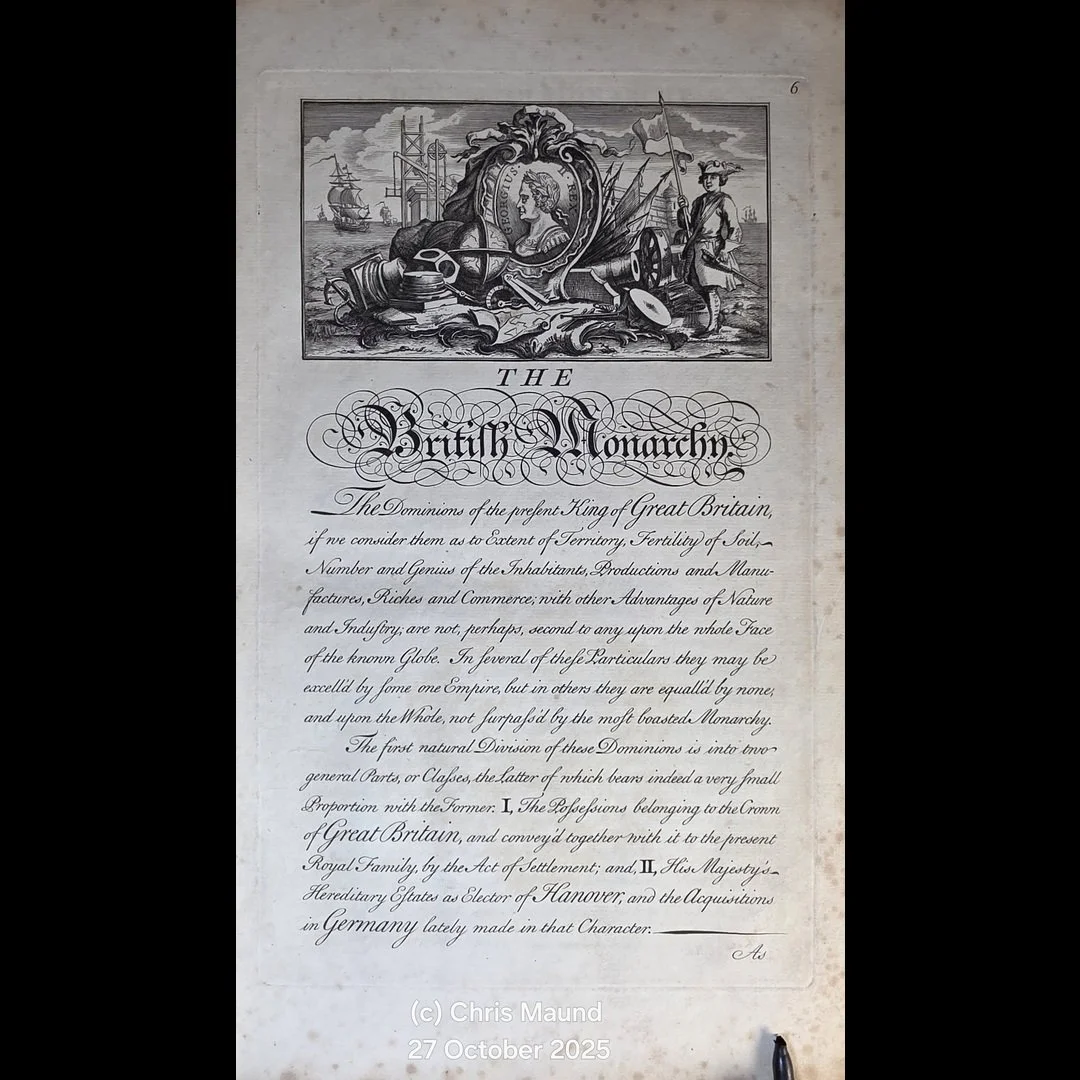 Image 15 of 43
 Image 16 of 43
 Image 17 of 43
 Image 18 of 43
 Image 19 of 43
 Image 20 of 43
 Image 21 of 43
 Image 22 of 43
 Image 23 of 43
 Image 24 of 43
 Image 25 of 43
 Image 26 of 43
 Image 27 of 43
 Image 28 of 43
 Image 29 of 43
 Image 30 of 43
 Image 31 of 43
 Image 32 of 43
 Image 33 of 43
 Image 34 of 43
 Image 35 of 43
 Image 36 of 43
 Image 37 of 43
 Image 38 of 43
 Image 39 of 43
 Image 40 of 43
 Image 41 of 43
 Image 42 of 43
 Image 43 of 43