1568 Frankfurt am Main
CHRONOLOGIA & SIGONII SCHOLIA (TOMUS II)
By Titus Livius
KEY DETAILS
Condition: Good
Format: Vellum, quarto (4to 9 1⁄2 × 12 in 241 × 305 mm )
Note: Binding/size selection follows standard bibliographic conventions and is approximate; exact measurements may vary.
Published By: Impressum Francofurti ad Moenum (Frankfurt am Main), 1568 — issued by the Frankfurt publishing consortium including Georg Corvinus, Sigismund Feyerabend, and the heirs of Weigand Han (as stated in the imprint)., Frankfurt, 1568
Language: Latin
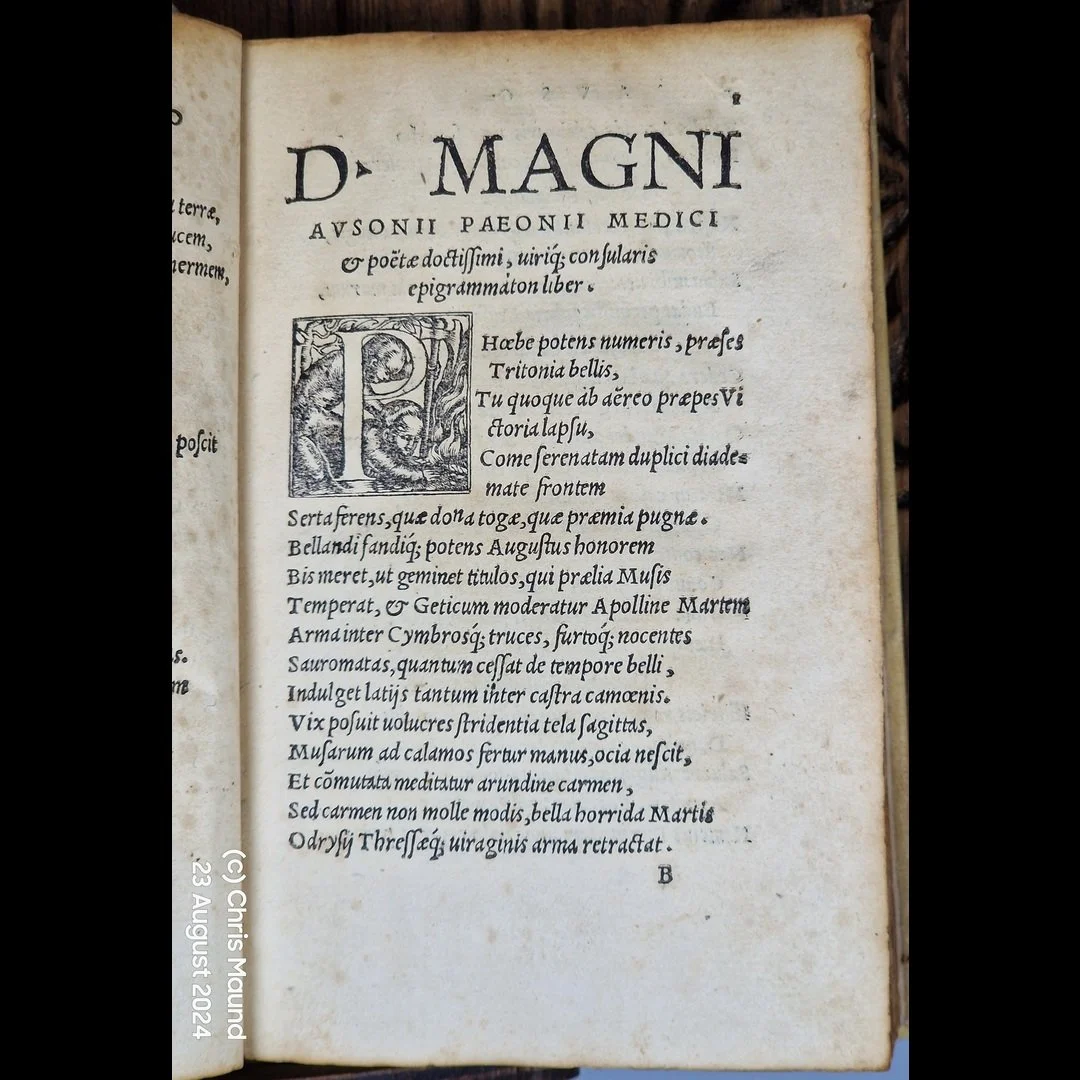
Collation: Multiple works, variously paginated; c. 468 pp. total (as bound; component parts with separate pagination). Numerous ornate woodcut initials and devices; includes the Frankfurt publishers’ woodcut device/imprint leaf dated 1568.
Dust Jacket: None, as issued
SKU: BTETM0002688
Shipping Info: Approximate Package Dimensions H: 12.5, L: 30, W: 25 (Units: cm), W: 2Kg
Tracked Shipping, Insurance Coverage as per Customer Request
DESCRIPTION
CHRONOLOGIA & SIGONII SCHOLIA (Tomus II)
A substantial Renaissance Livy companion volume: a learned “toolkit” built around Livy’s Roman history, gathering chronology, scholia, epitomes, and antiquarian guides to ancient Rome into a single folio sammelband. Rather than the large narrative woodcut “picture-book” Livy, this is the scholar’s tome — dense, practical, and wonderfully representative of how sixteenth-century humanists read (and argued over) Rome.
Bound contents include Joachim Grellius’s Chronologia (keying Livy to Roman consular fasti and the Tabulae Capitolinae tradition), Carlo Sigonio’s Scholia (critical notes and emendations on Livy and the epitomes), Henricus Glareanus’s annotations, plus associated humanist/antiquarian texts such as Pomponius Laetus (De antiquitatibus urbis Romae), Marcus Antonius Sabellicus (oration in praise of history/Livy), and a brief compendium of Roman history. A superb period witness to the Renaissance “re-construction” of Rome from conflicting ancient authorities.
(with texts/notes by Joachim Grellius, Carlo Sigonio, Henricus Glareanus, Lorenzo Valla, Beatus Rhenanus, Marcus Antonius Sabellicus, and others, as printed).
CONDITION, COLLATION & COPY NOTES
COLLATION
Multiple works, variously paginated; c. 468 pp. total (as bound; component parts with separate pagination). Numerous ornate woodcut initials and devices; includes the Frankfurt publishers’ woodcut device/imprint leaf dated 1568.
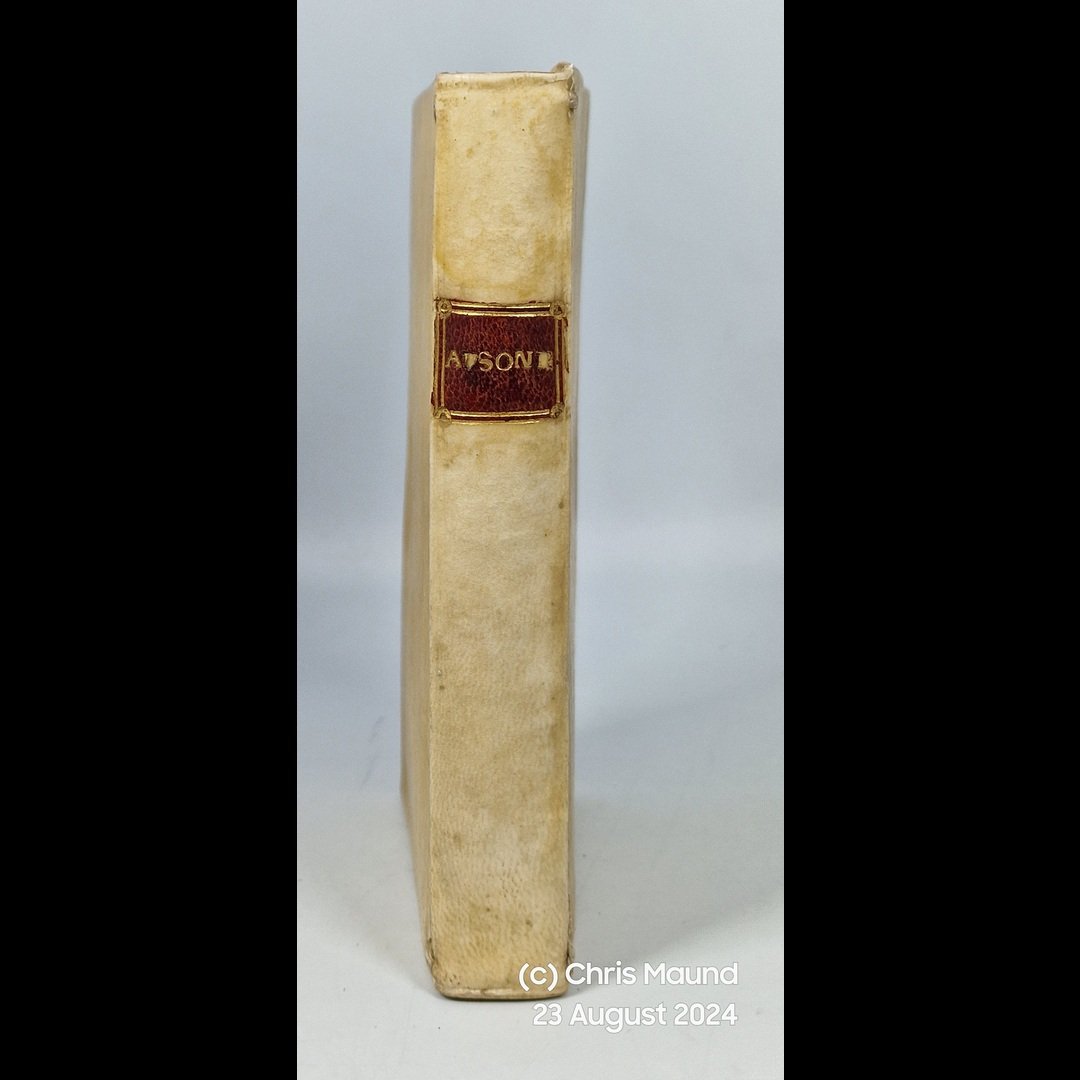
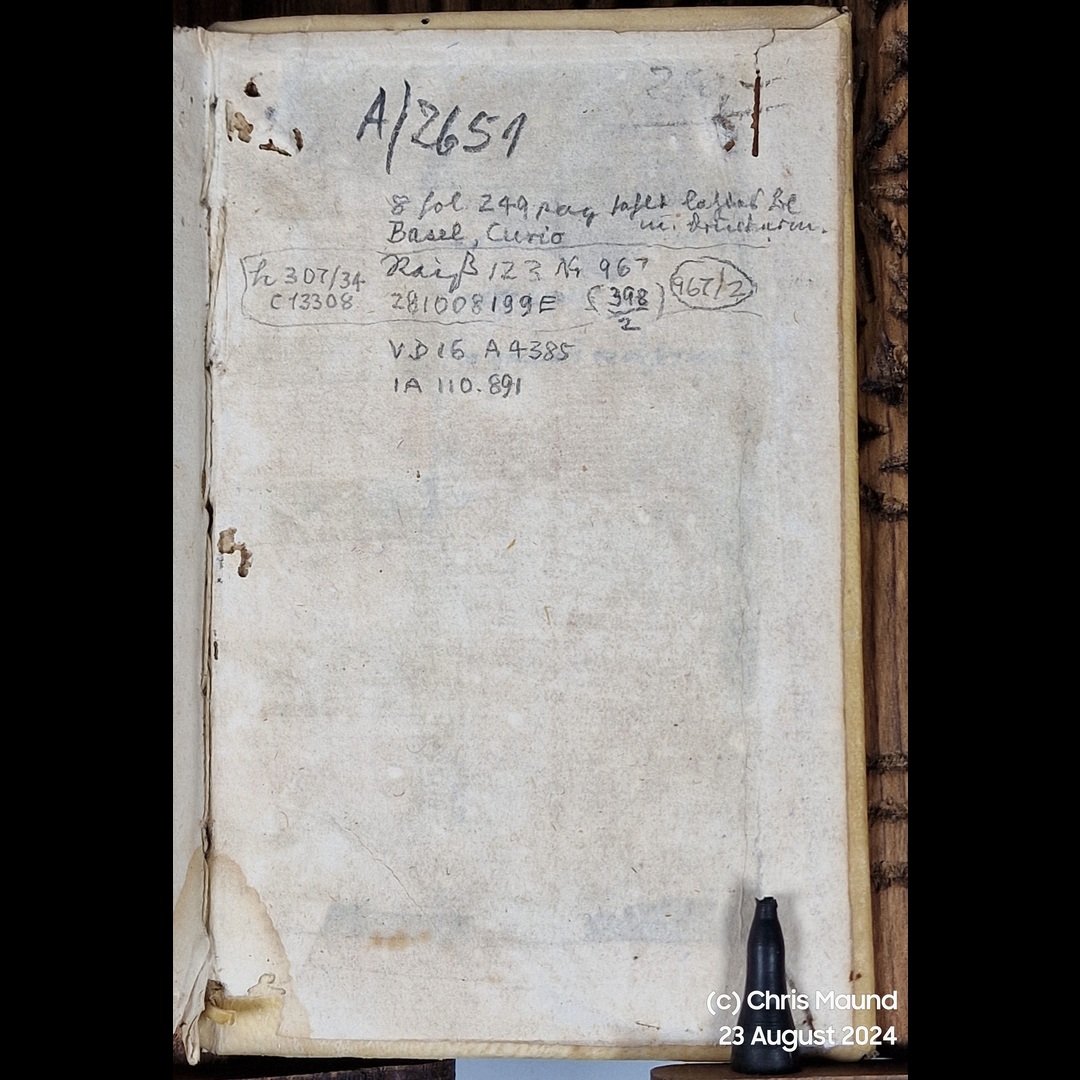
Vellum binding rubbed/soiled with edge wear; spine label partially perished; old shelfmark inked at foot of spine. Internally generally sound and legible with visible tide-marks / damp-staining (notably to upper margins in places) and expected age-toning; no obvious loss of text noted on the sampled leaves. A solid, scholarly, working copy with strong visual presence on the shelf.
Binding:
Hardcover, folio; contemporary/early vellum with a worn gilt-lettered spine label reading “Tit. Patavani Tom. II”.
Please see Photos as part of condition report.
REFERENCES
VD16: L 2099 and ZV 9796
USTC: 698334 and 698614
SYNOPSIS
This volume embodies the sixteenth-century impulse to treat Roman history as something to be repaired: dates aligned, magistracies reconciled, variant readings compared, and topography anchored to surviving monuments and texts. It’s a compact library of Livian “infrastructure” — exactly the sort of apparatus that powered early modern scholarship.
AUTHOR BIO
Titus Livius (Livy) (59/64 BC–AD 17) was Rome’s great narrative historian, author of Ab urbe condita (“From the founding of the City”). His work became a cornerstone of European historical imagination — and, by the Renaissance, a proving-ground for philology, chronology, and historical method.
1568 Frankfurt am Main
CHRONOLOGIA & SIGONII SCHOLIA (TOMUS II)
By Titus Livius
KEY DETAILS
Condition: Good
Format: Vellum, quarto (4to 9 1⁄2 × 12 in 241 × 305 mm )
Note: Binding/size selection follows standard bibliographic conventions and is approximate; exact measurements may vary.
Published By: Impressum Francofurti ad Moenum (Frankfurt am Main), 1568 — issued by the Frankfurt publishing consortium including Georg Corvinus, Sigismund Feyerabend, and the heirs of Weigand Han (as stated in the imprint)., Frankfurt, 1568
Language: Latin
Collation: Multiple works, variously paginated; c. 468 pp. total (as bound; component parts with separate pagination). Numerous ornate woodcut initials and devices; includes the Frankfurt publishers’ woodcut device/imprint leaf dated 1568.
Dust Jacket: None, as issued
SKU: BTETM0002688
Shipping Info: Approximate Package Dimensions H: 12.5, L: 30, W: 25 (Units: cm), W: 2Kg
Tracked Shipping, Insurance Coverage as per Customer Request
DESCRIPTION
CHRONOLOGIA & SIGONII SCHOLIA (Tomus II)
A substantial Renaissance Livy companion volume: a learned “toolkit” built around Livy’s Roman history, gathering chronology, scholia, epitomes, and antiquarian guides to ancient Rome into a single folio sammelband. Rather than the large narrative woodcut “picture-book” Livy, this is the scholar’s tome — dense, practical, and wonderfully representative of how sixteenth-century humanists read (and argued over) Rome.
Bound contents include Joachim Grellius’s Chronologia (keying Livy to Roman consular fasti and the Tabulae Capitolinae tradition), Carlo Sigonio’s Scholia (critical notes and emendations on Livy and the epitomes), Henricus Glareanus’s annotations, plus associated humanist/antiquarian texts such as Pomponius Laetus (De antiquitatibus urbis Romae), Marcus Antonius Sabellicus (oration in praise of history/Livy), and a brief compendium of Roman history. A superb period witness to the Renaissance “re-construction” of Rome from conflicting ancient authorities.
(with texts/notes by Joachim Grellius, Carlo Sigonio, Henricus Glareanus, Lorenzo Valla, Beatus Rhenanus, Marcus Antonius Sabellicus, and others, as printed).
CONDITION, COLLATION & COPY NOTES
COLLATION
Multiple works, variously paginated; c. 468 pp. total (as bound; component parts with separate pagination). Numerous ornate woodcut initials and devices; includes the Frankfurt publishers’ woodcut device/imprint leaf dated 1568.
Vellum binding rubbed/soiled with edge wear; spine label partially perished; old shelfmark inked at foot of spine. Internally generally sound and legible with visible tide-marks / damp-staining (notably to upper margins in places) and expected age-toning; no obvious loss of text noted on the sampled leaves. A solid, scholarly, working copy with strong visual presence on the shelf.
Binding:
Hardcover, folio; contemporary/early vellum with a worn gilt-lettered spine label reading “Tit. Patavani Tom. II”.
Please see Photos as part of condition report.
REFERENCES
VD16: L 2099 and ZV 9796
USTC: 698334 and 698614
SYNOPSIS
This volume embodies the sixteenth-century impulse to treat Roman history as something to be repaired: dates aligned, magistracies reconciled, variant readings compared, and topography anchored to surviving monuments and texts. It’s a compact library of Livian “infrastructure” — exactly the sort of apparatus that powered early modern scholarship.
AUTHOR BIO
Titus Livius (Livy) (59/64 BC–AD 17) was Rome’s great narrative historian, author of Ab urbe condita (“From the founding of the City”). His work became a cornerstone of European historical imagination — and, by the Renaissance, a proving-ground for philology, chronology, and historical method.

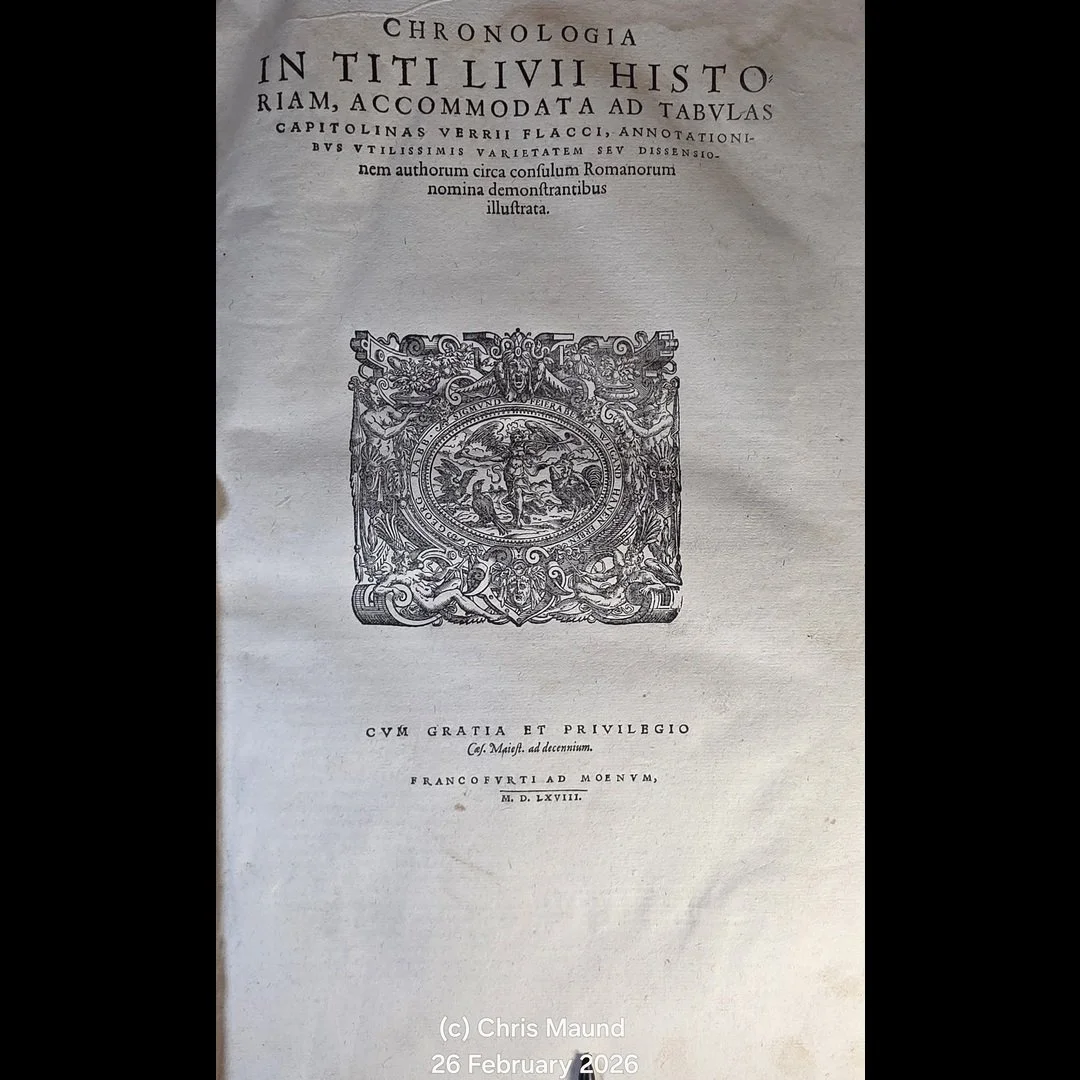 Image 1 of 32
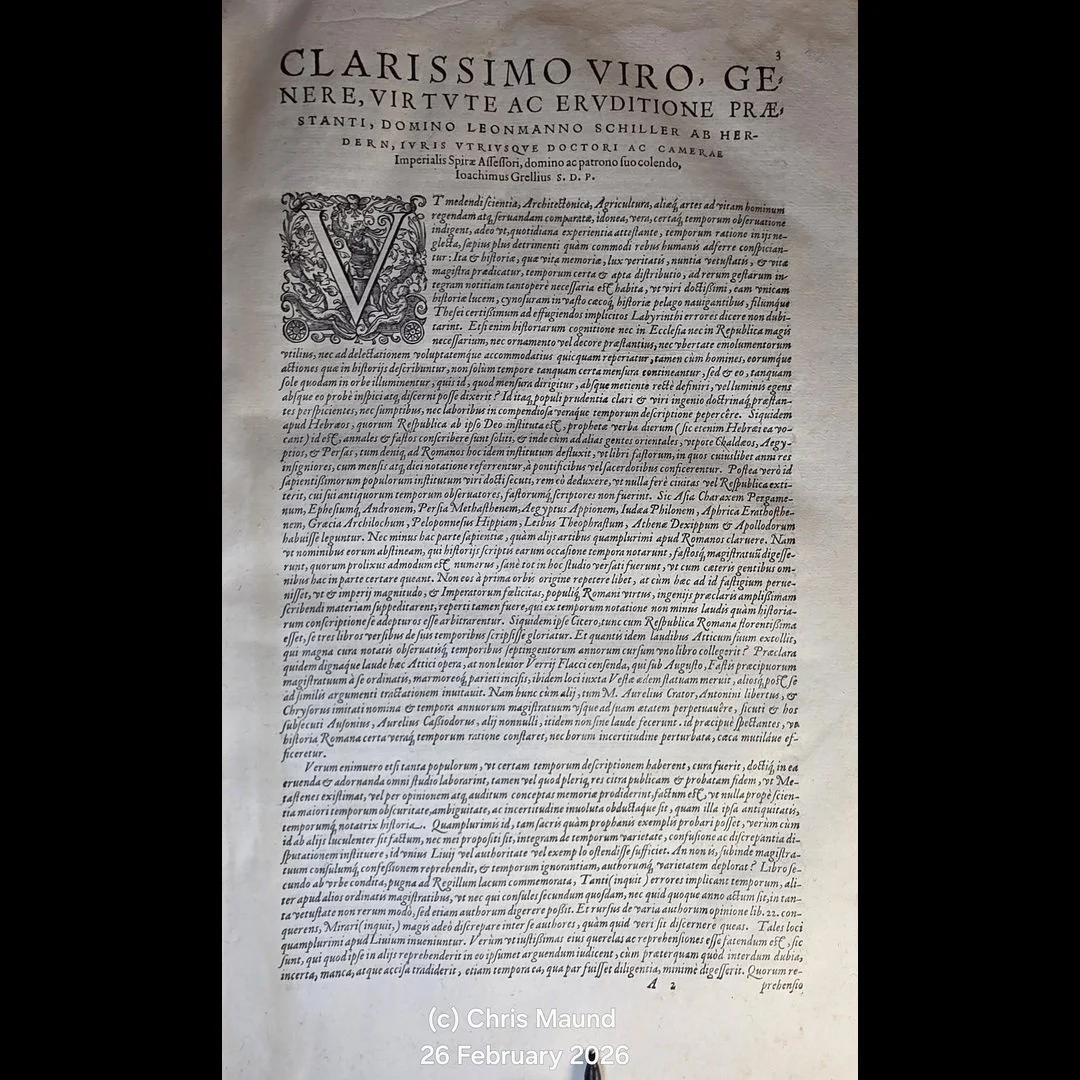 Image 2 of 32
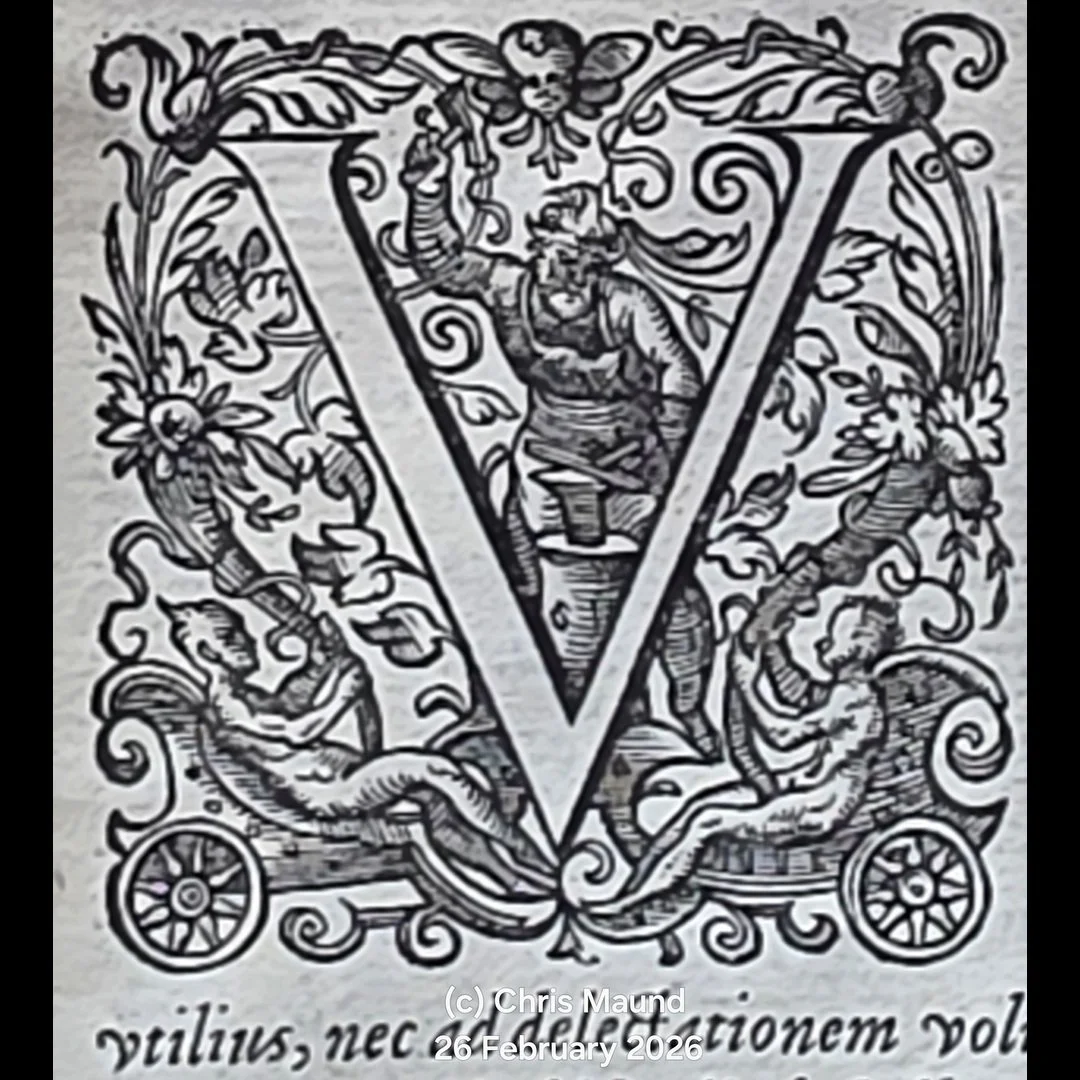 Image 3 of 32
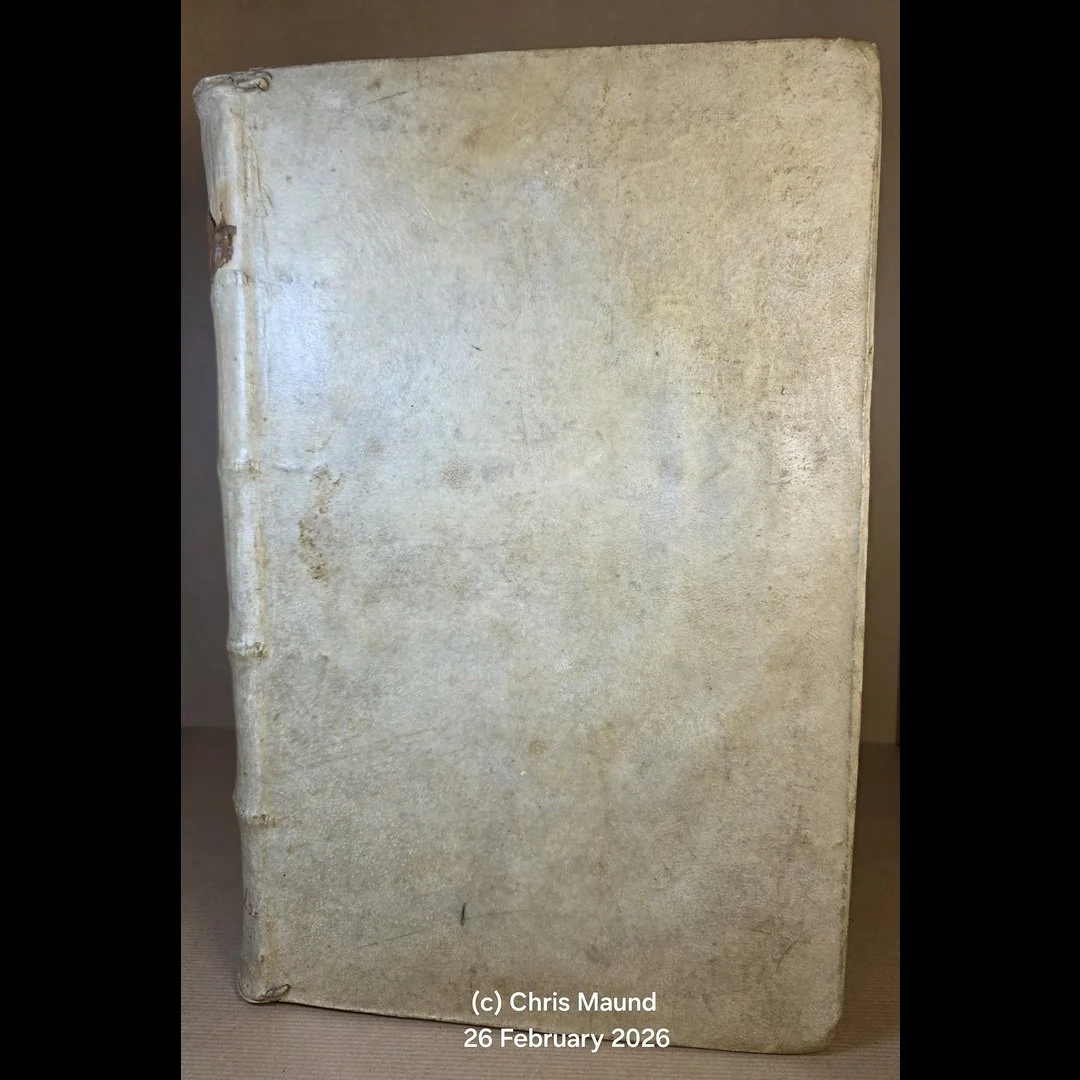 Image 4 of 32
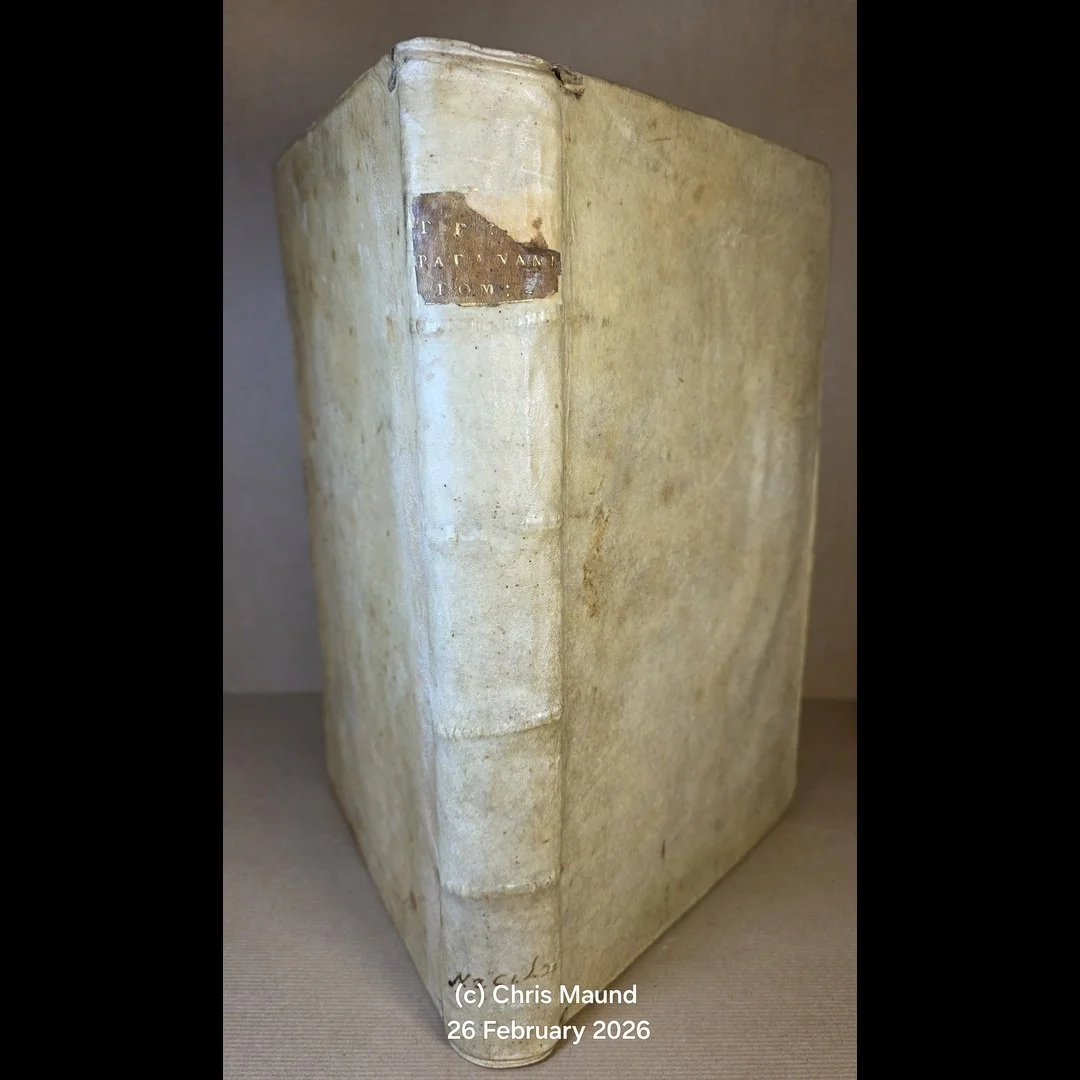 Image 5 of 32
 Image 6 of 32
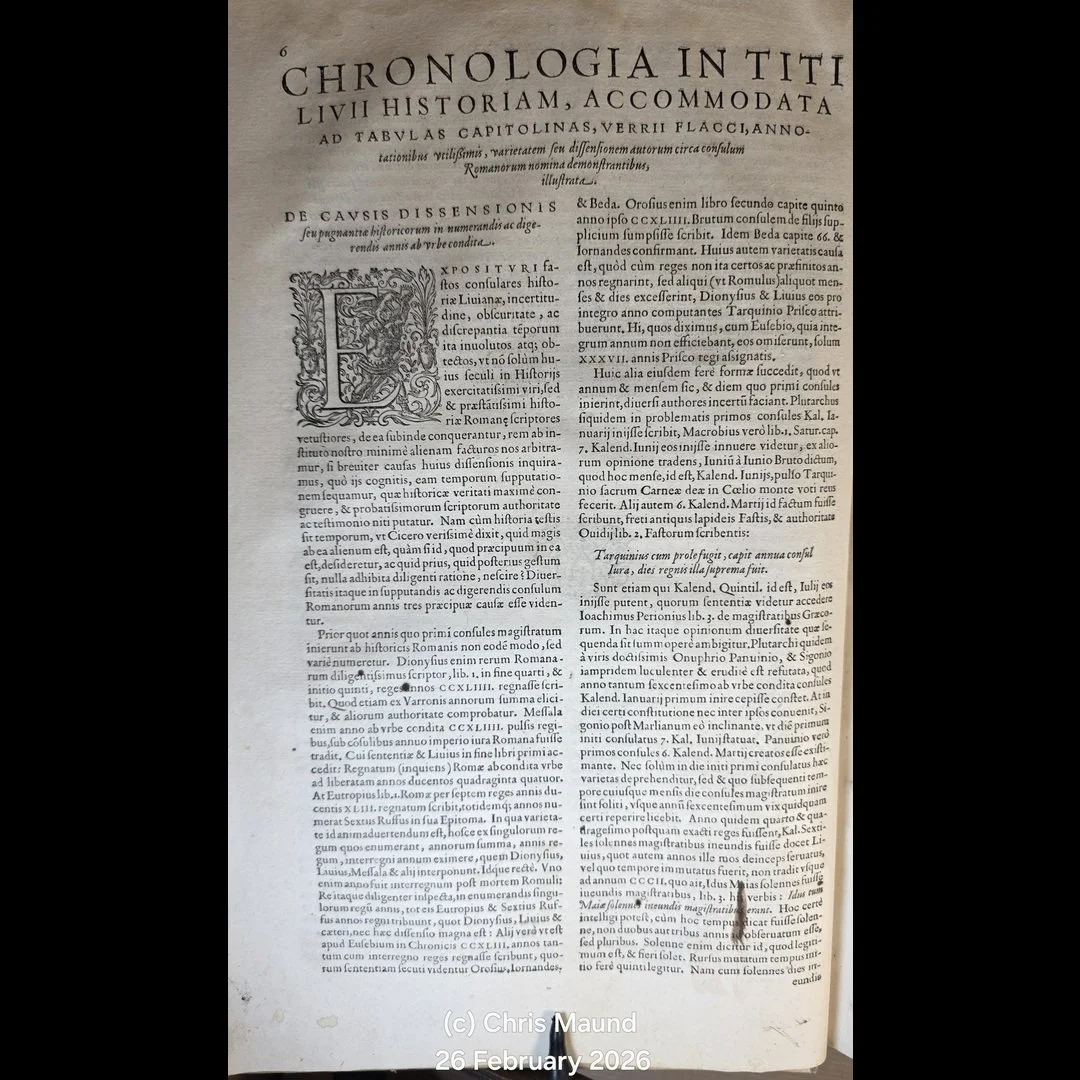 Image 7 of 32
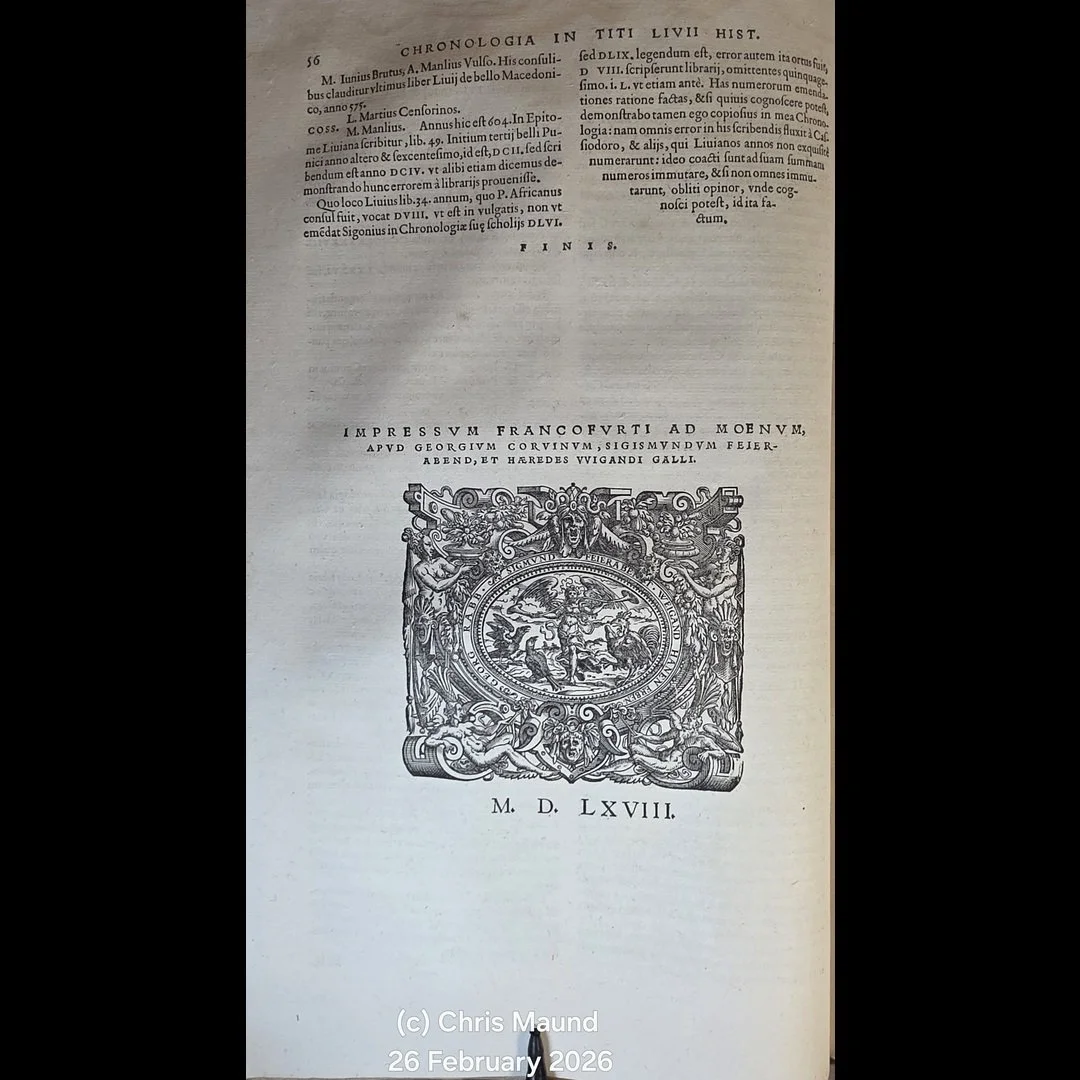 Image 8 of 32
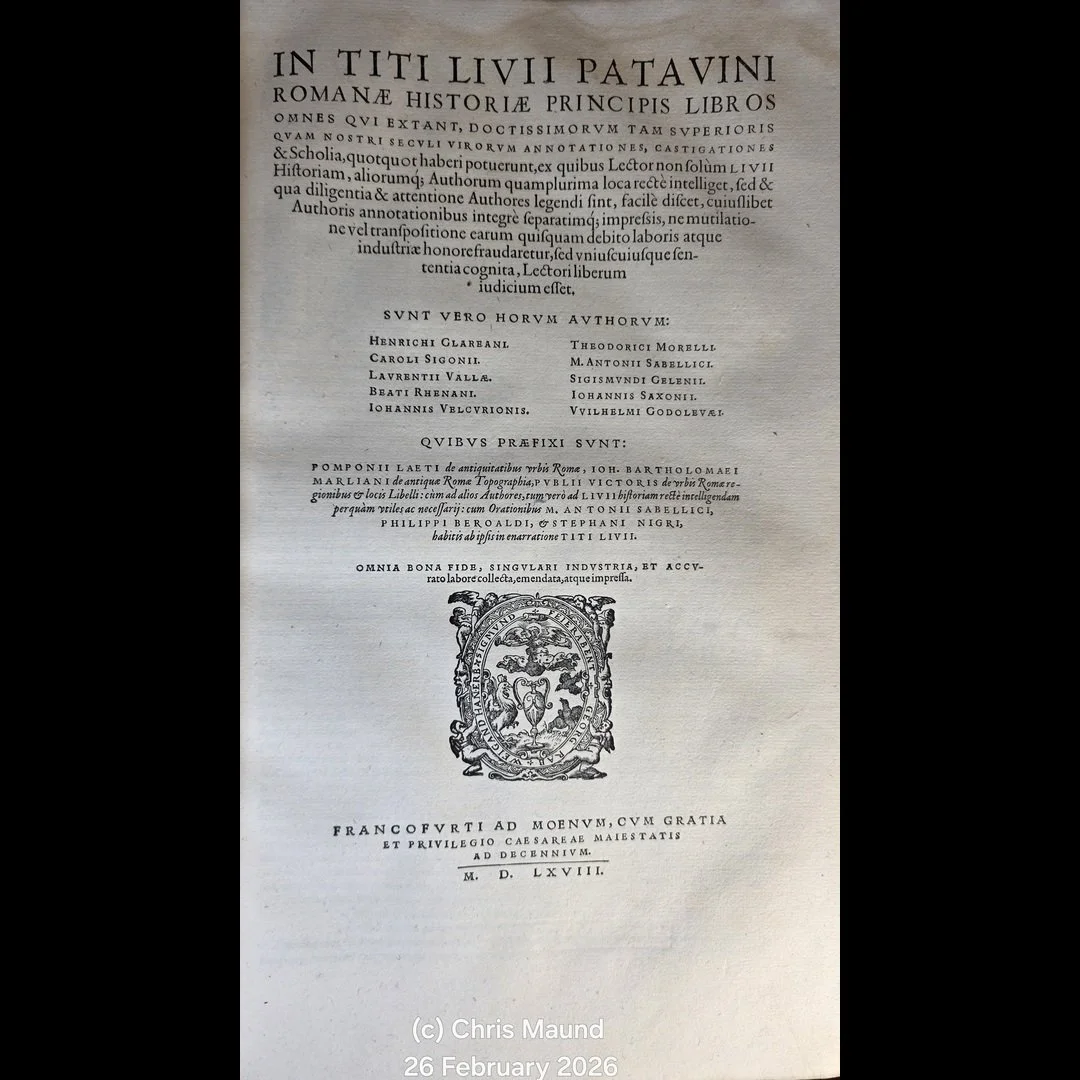 Image 9 of 32
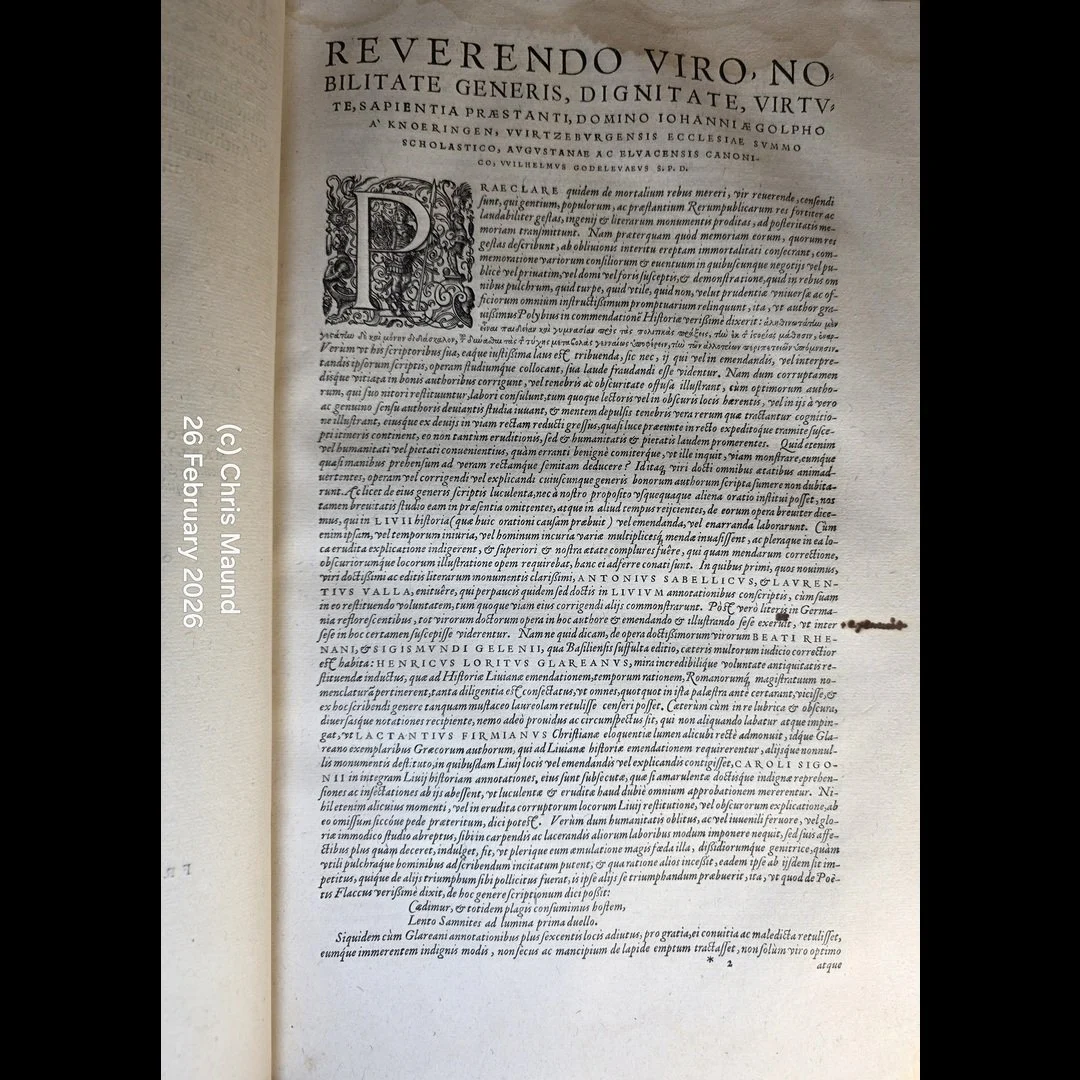 Image 10 of 32
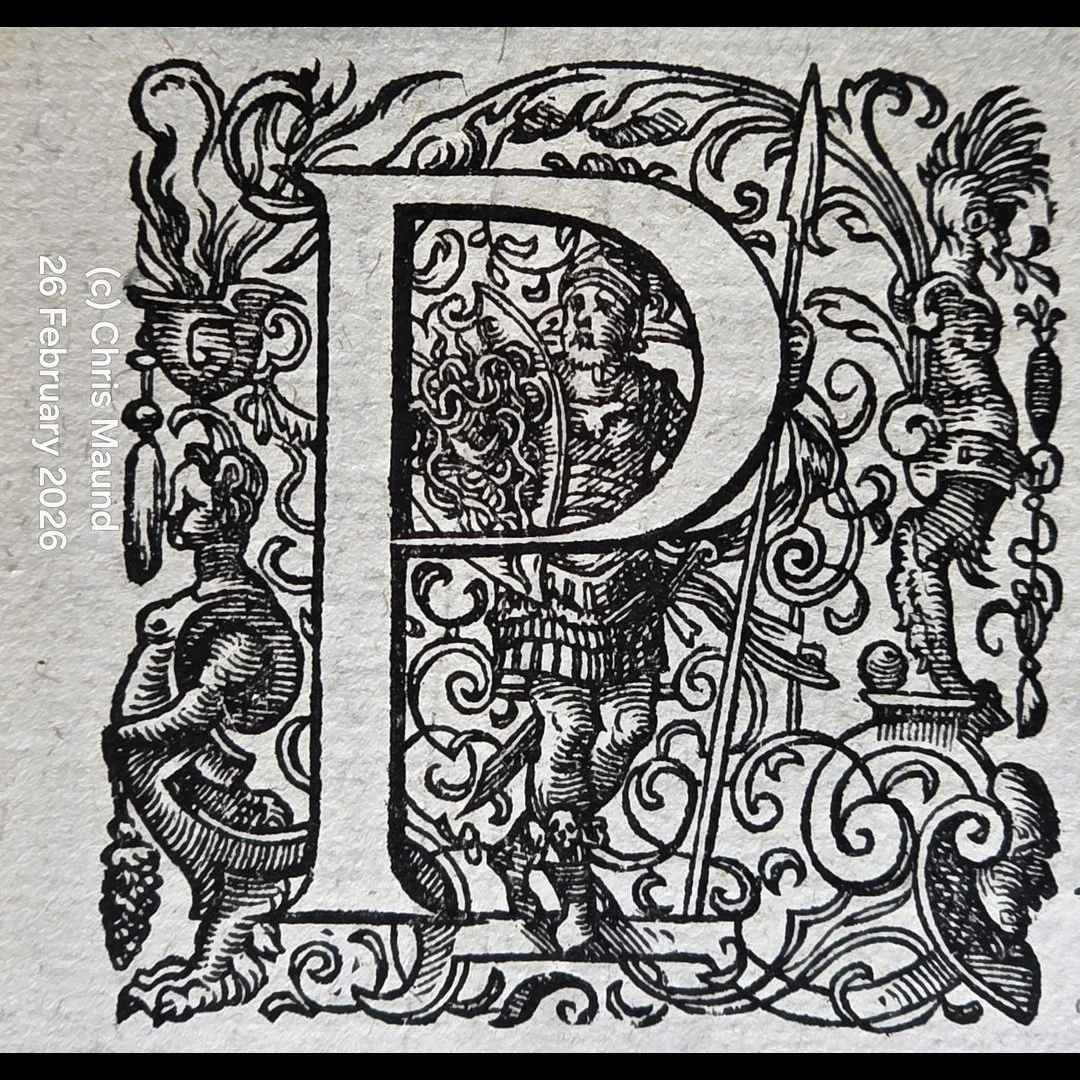 Image 11 of 32
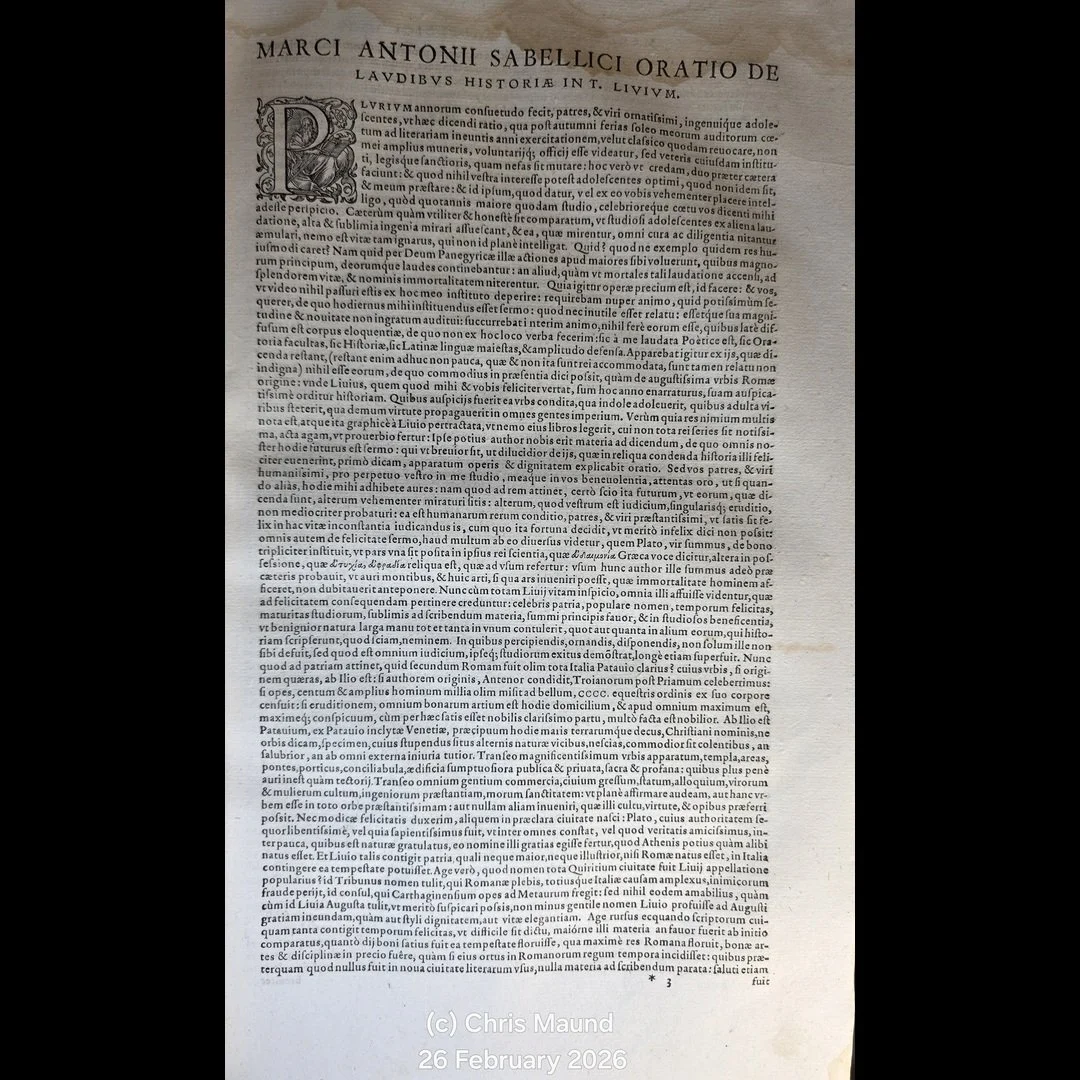 Image 12 of 32
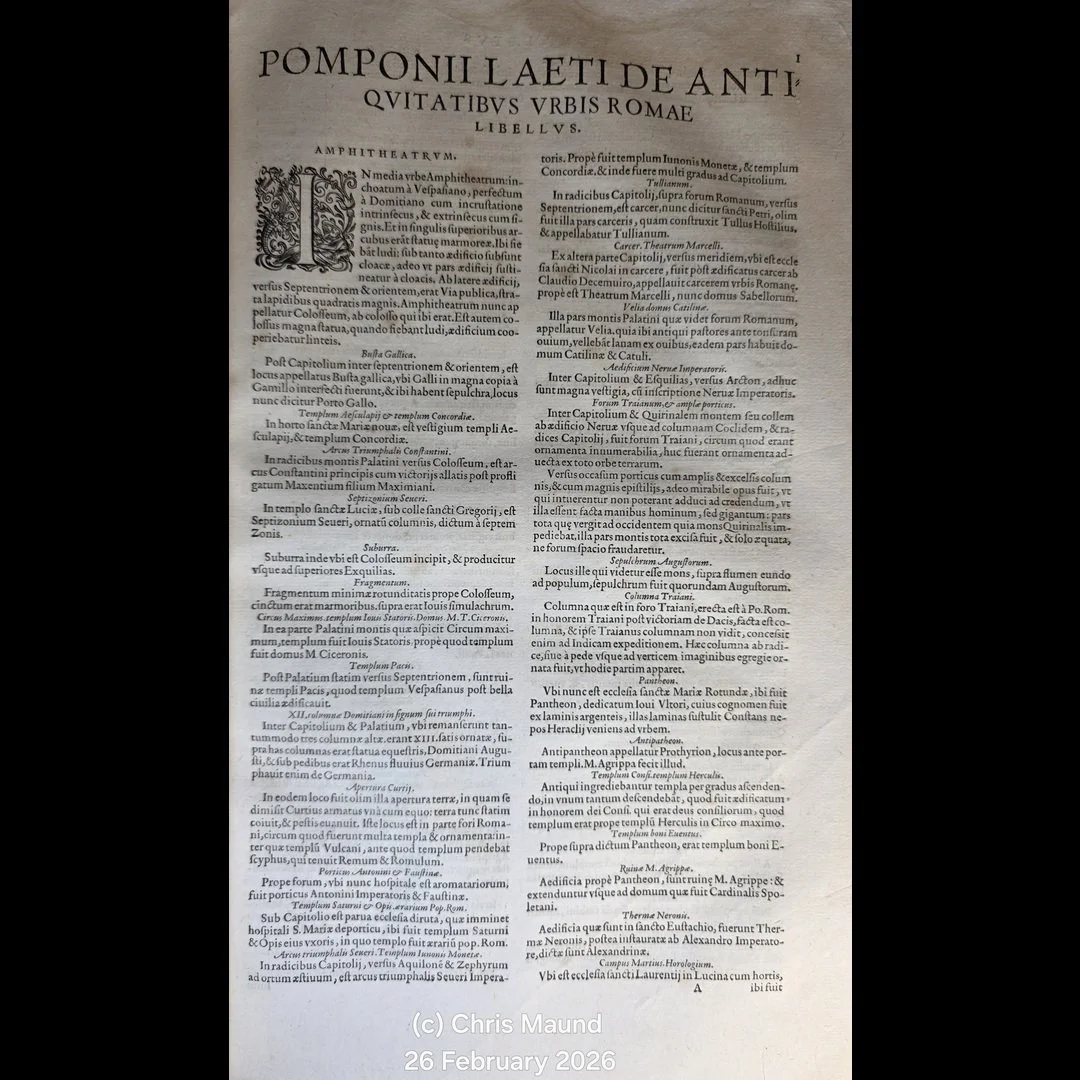 Image 13 of 32
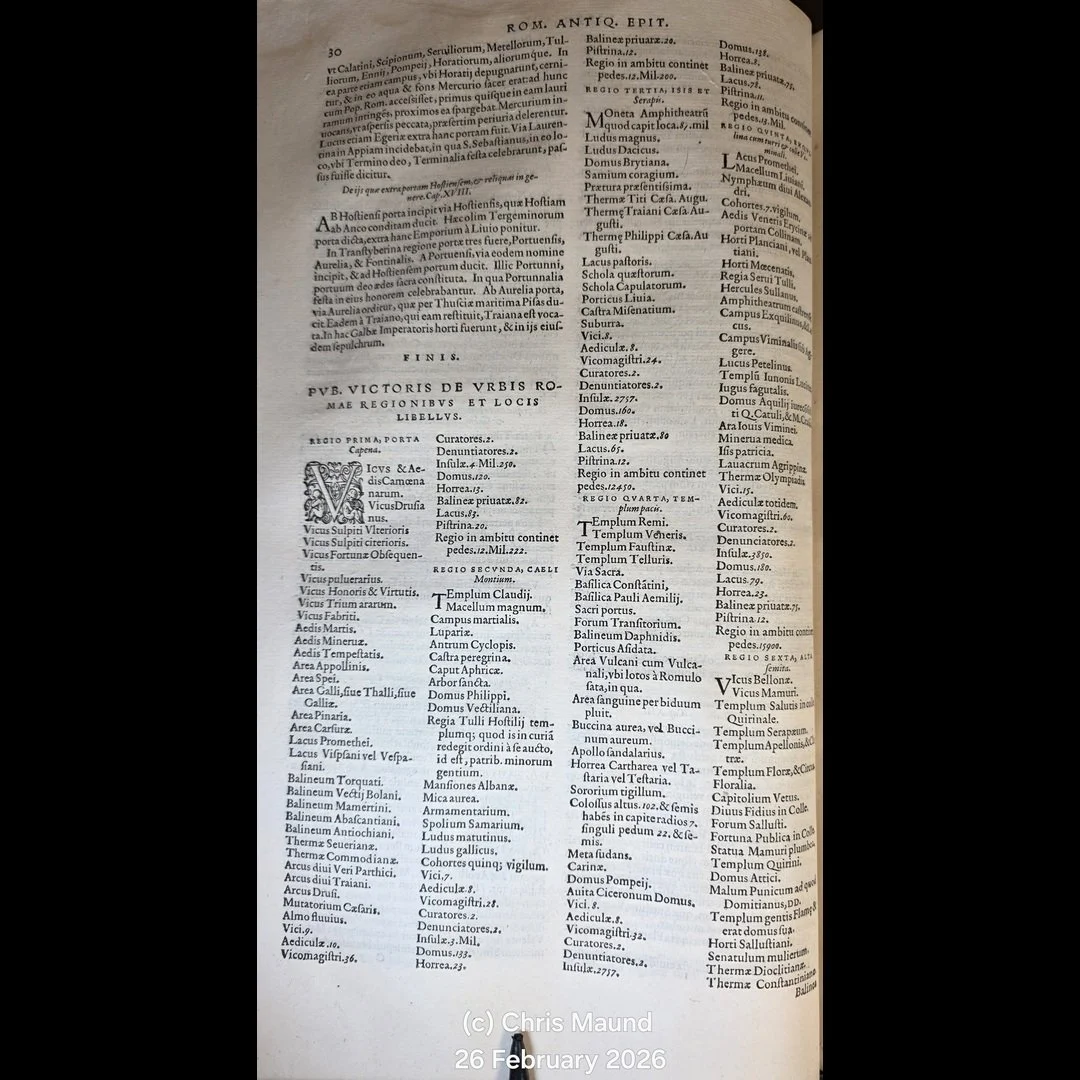 Image 14 of 32
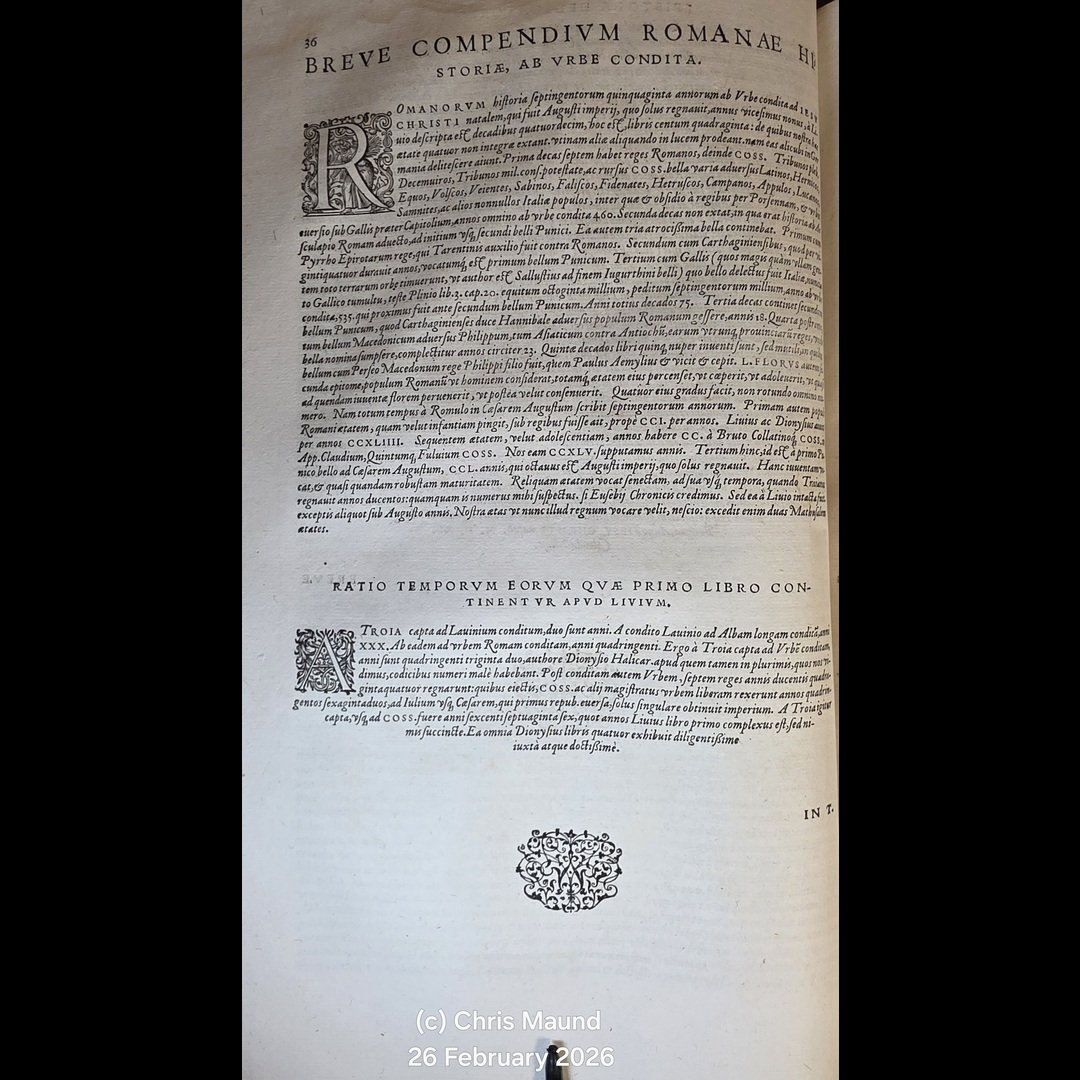 Image 15 of 32
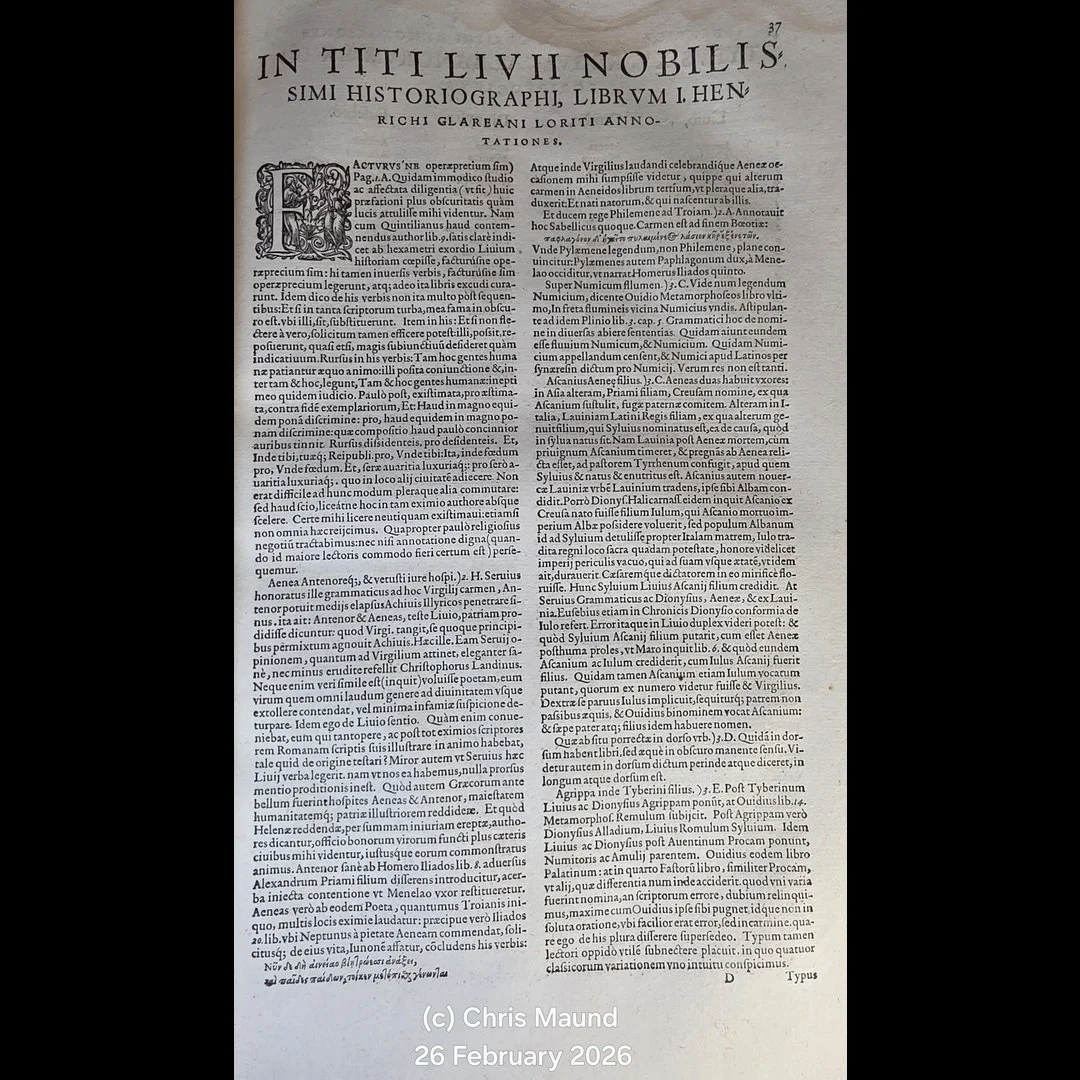 Image 16 of 32
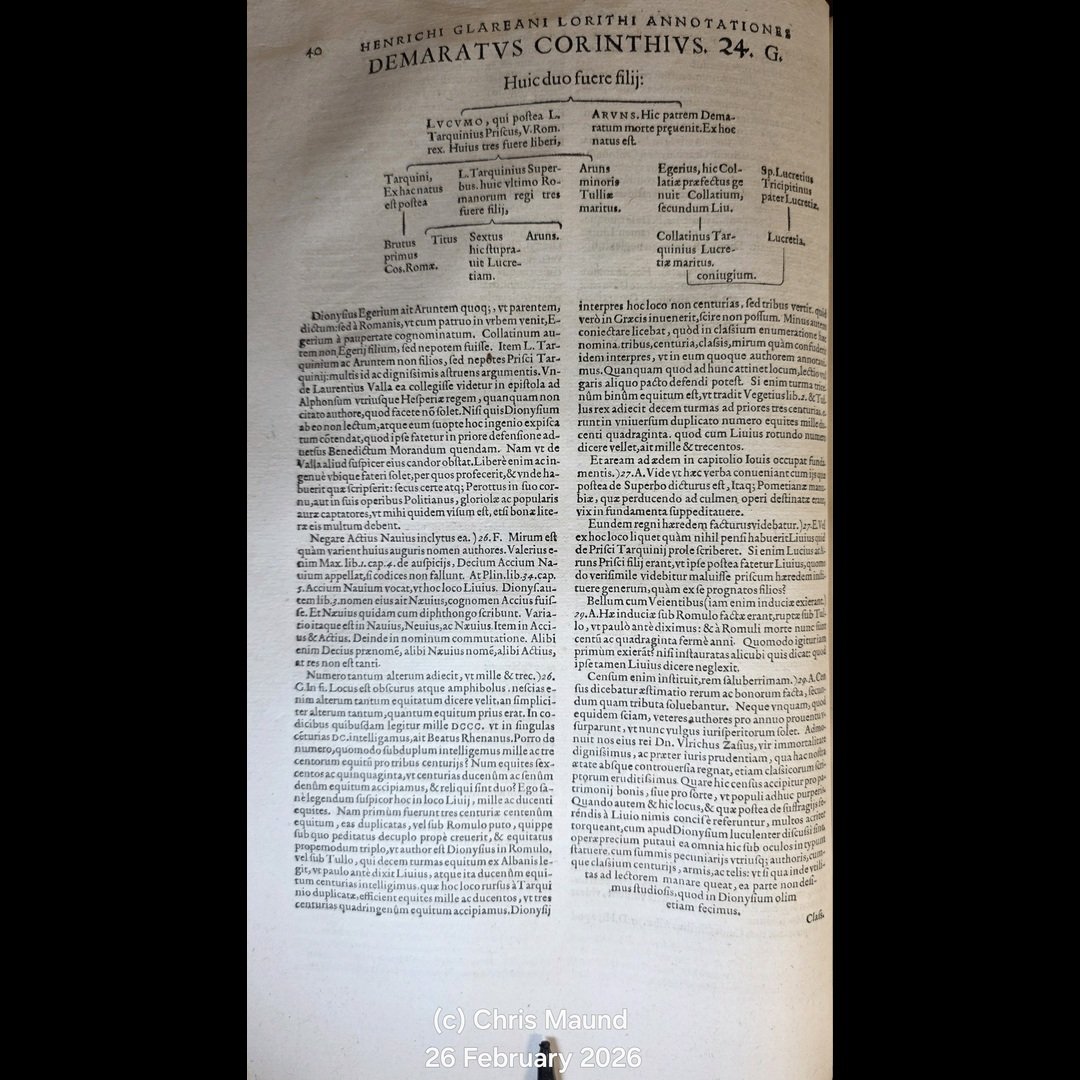 Image 17 of 32
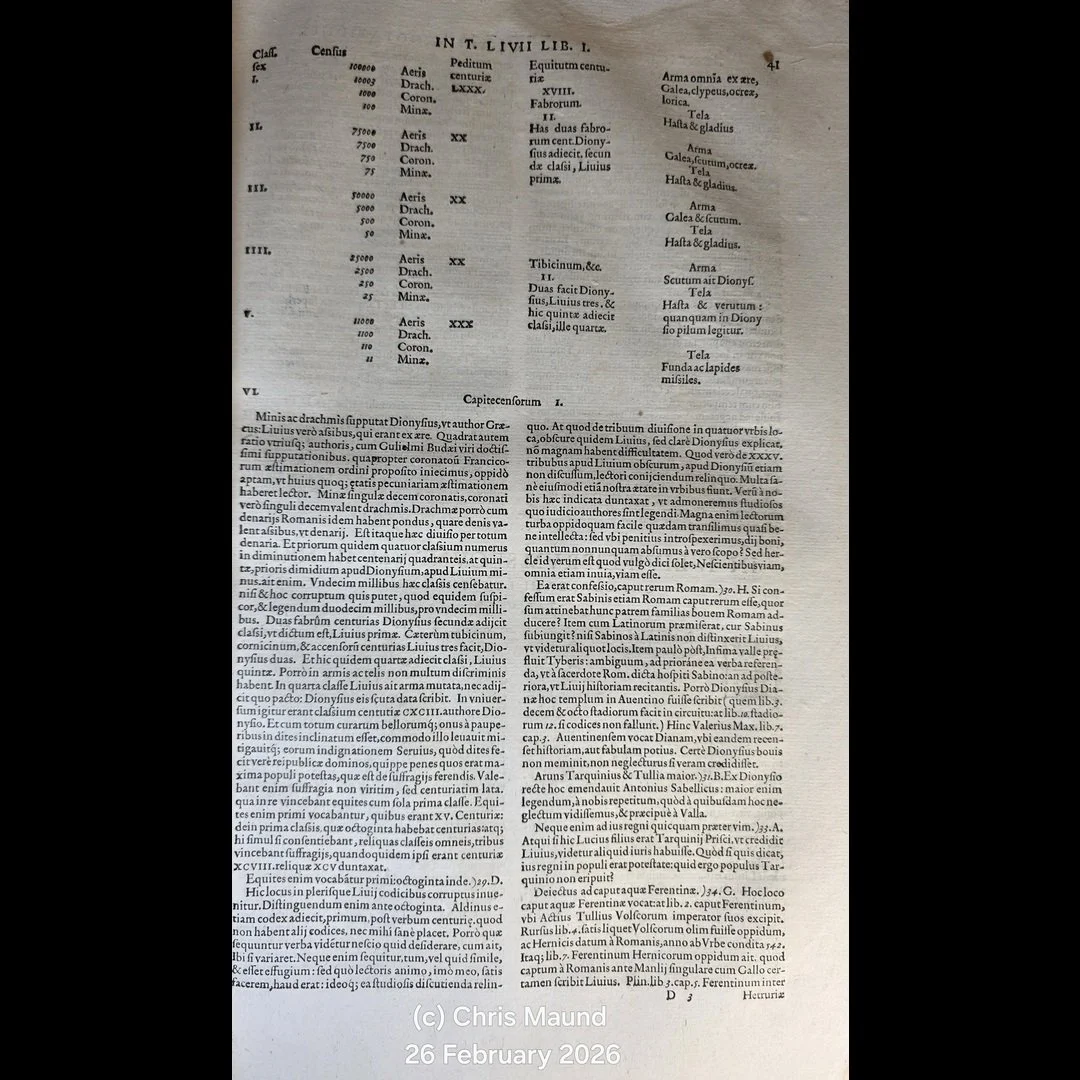 Image 18 of 32
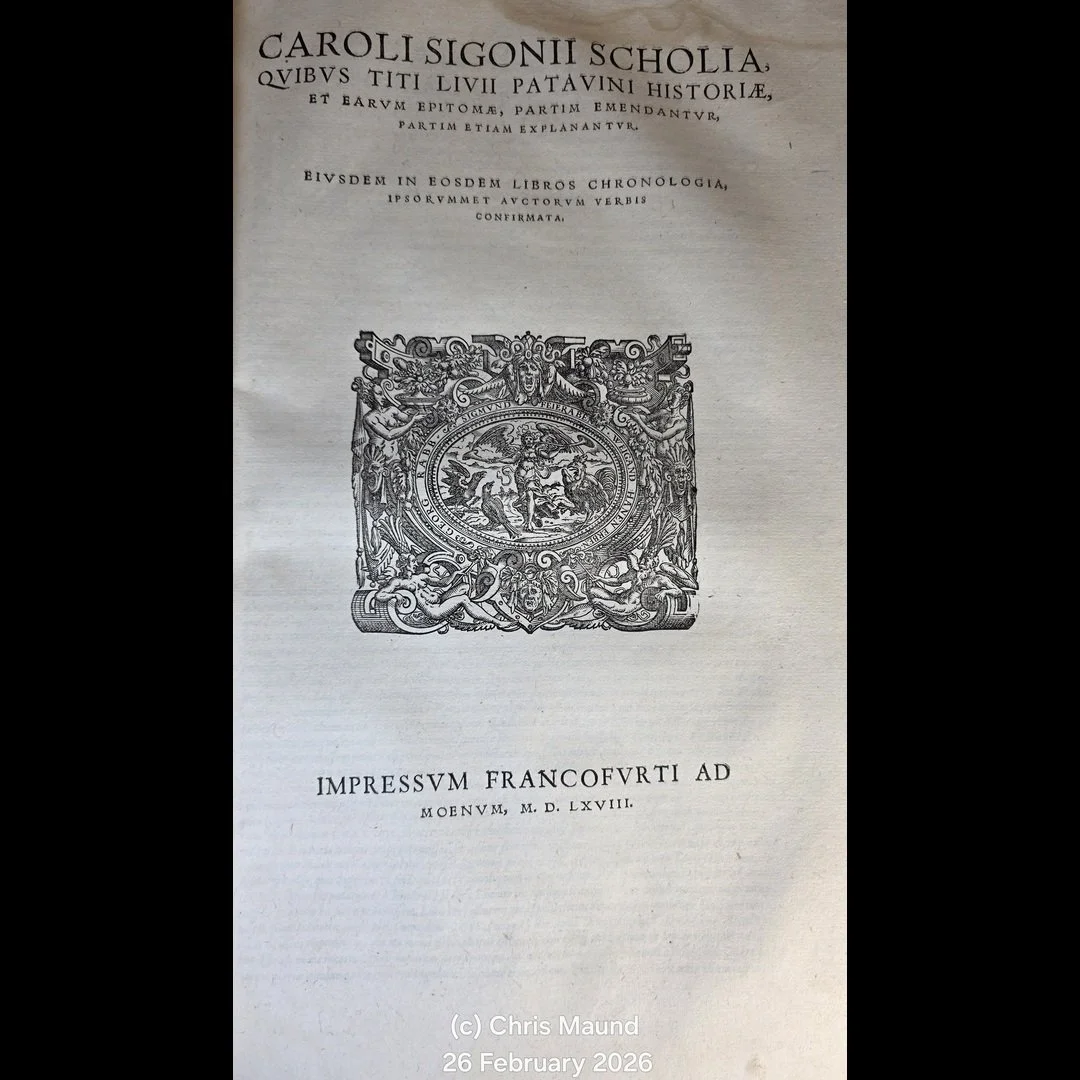 Image 19 of 32
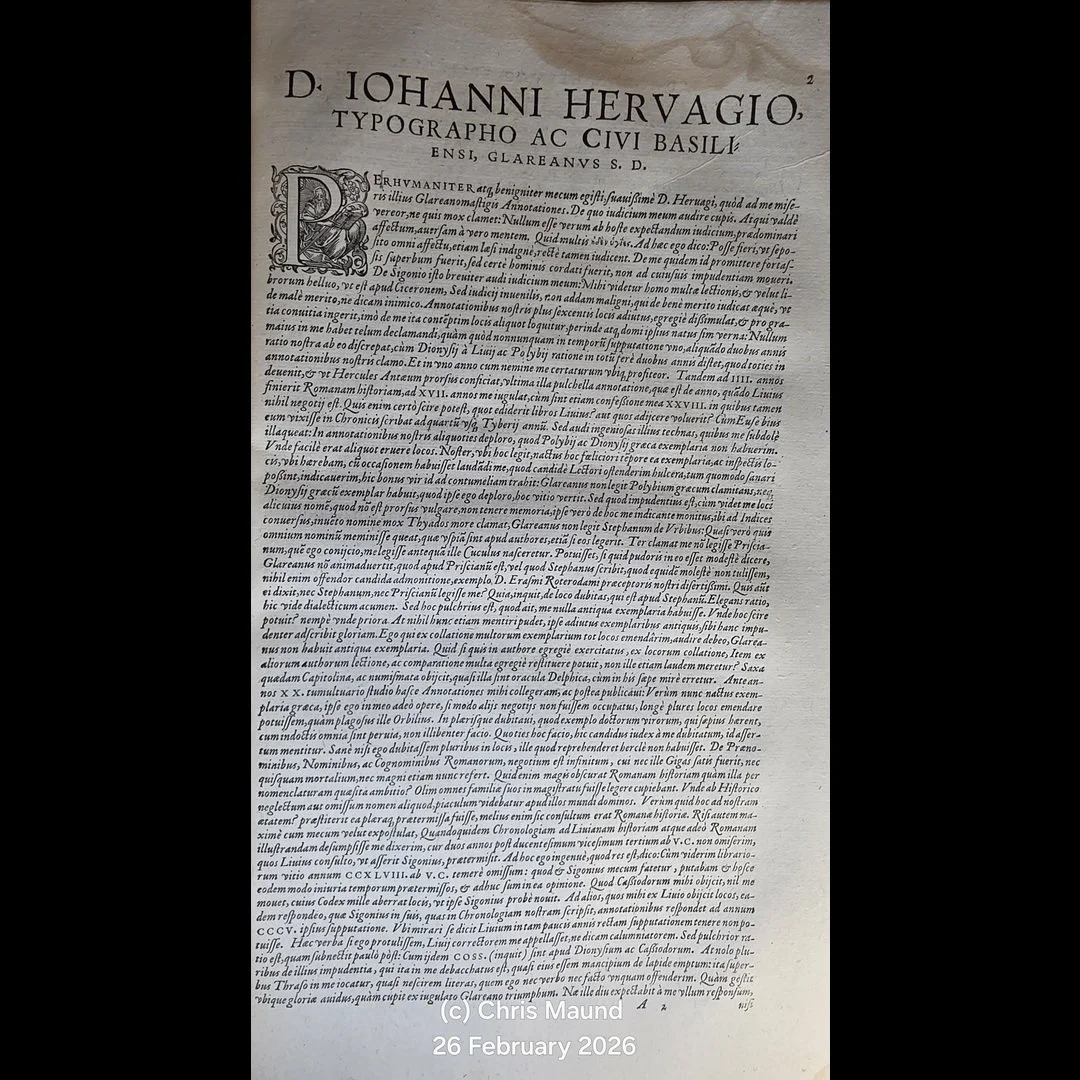 Image 20 of 32
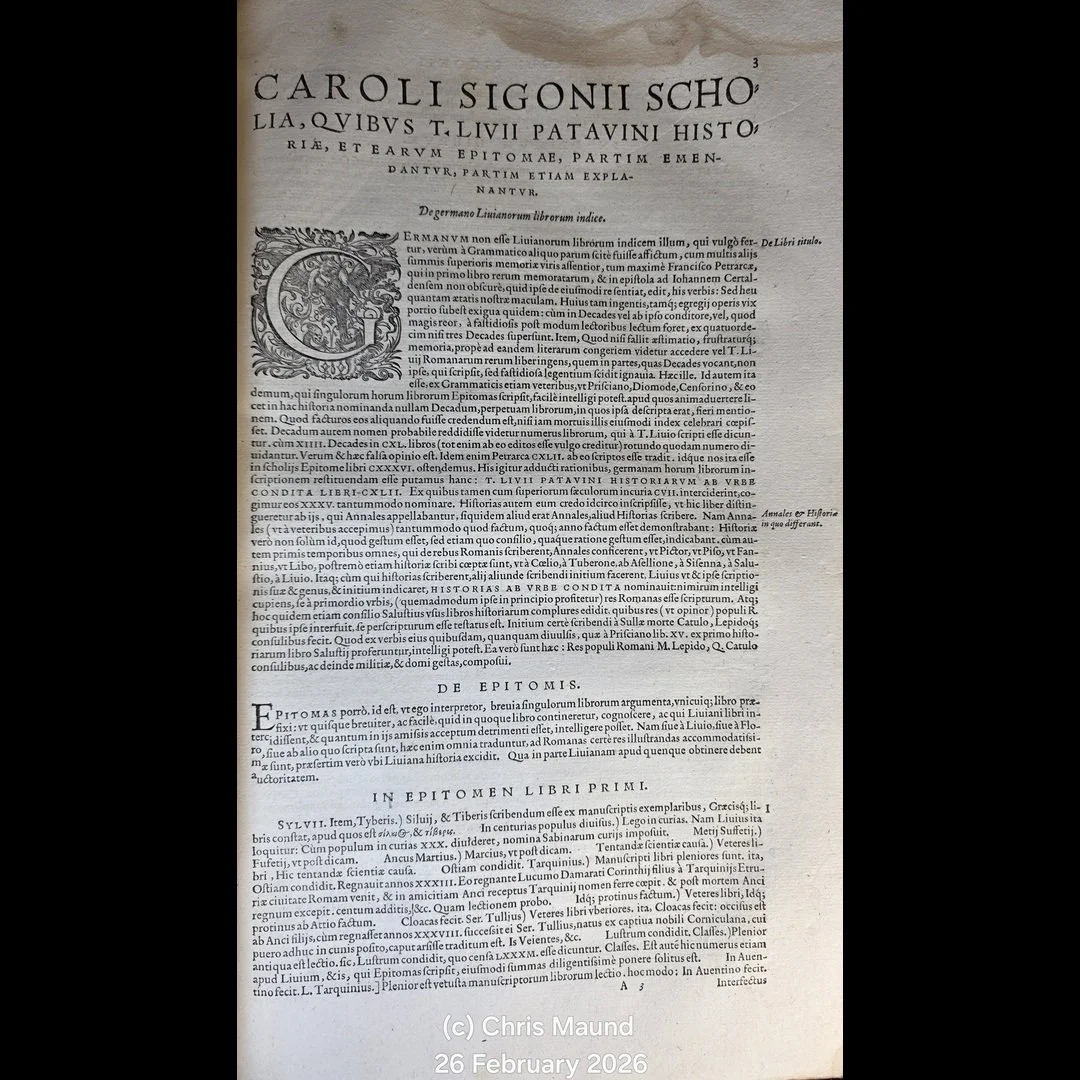 Image 21 of 32
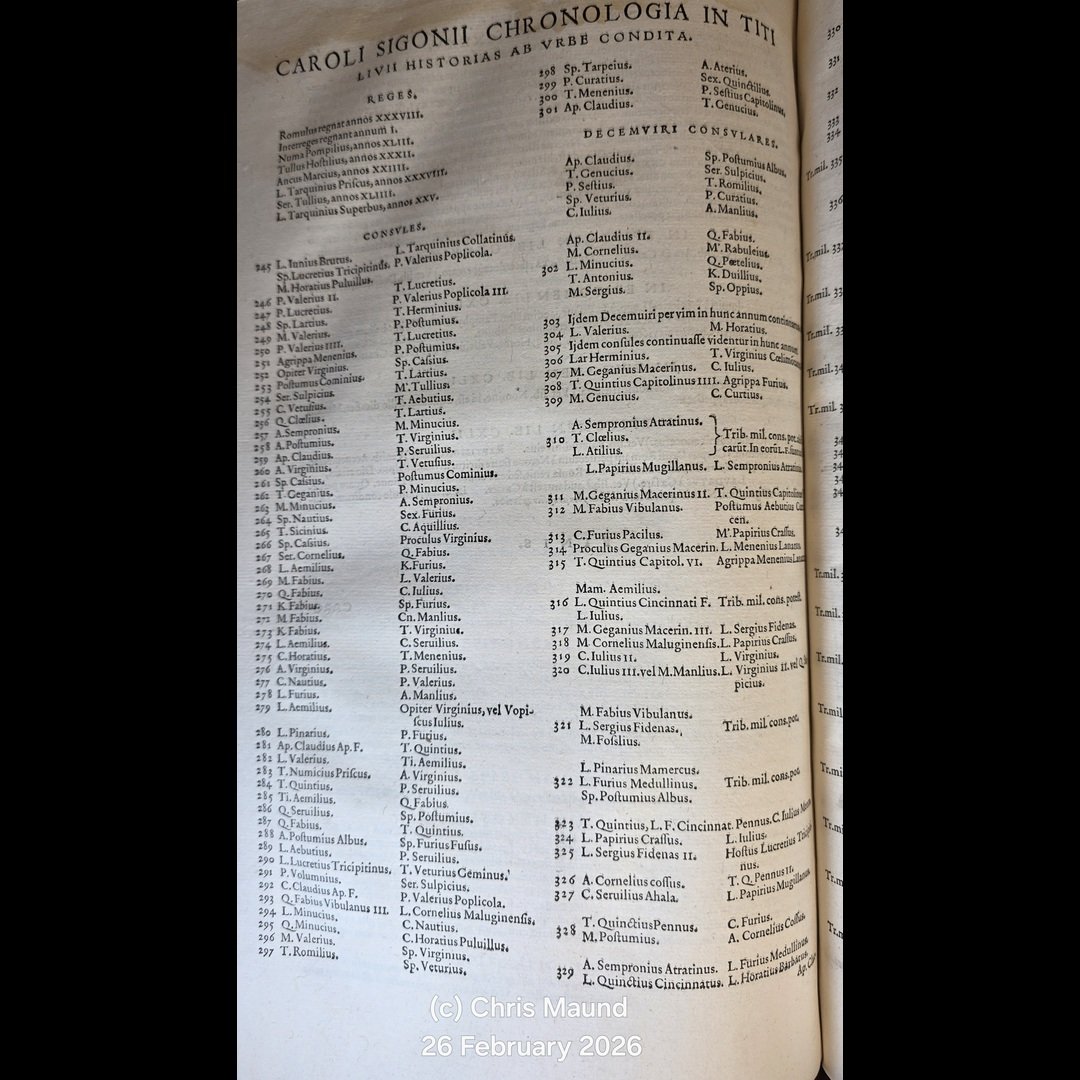 Image 22 of 32
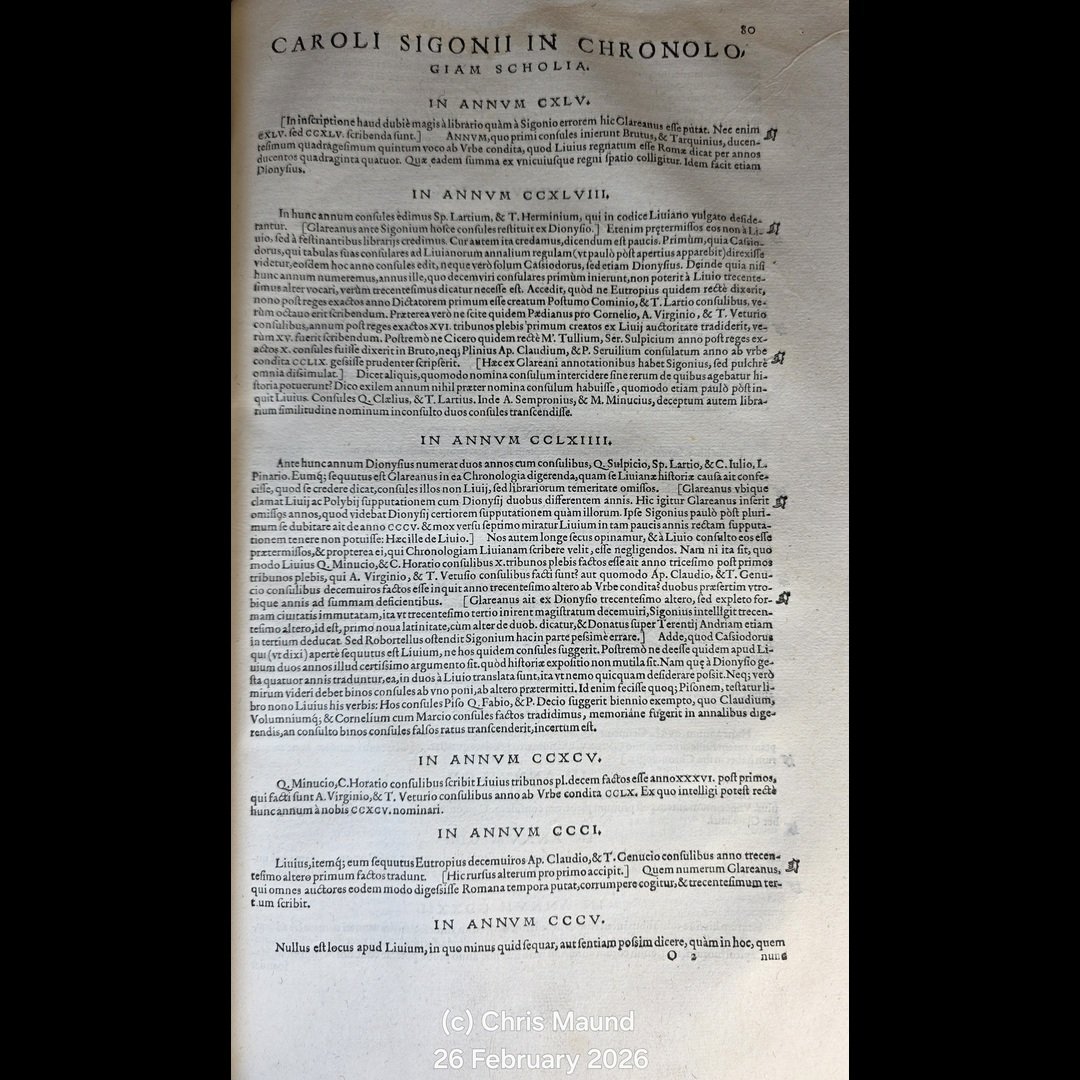 Image 23 of 32
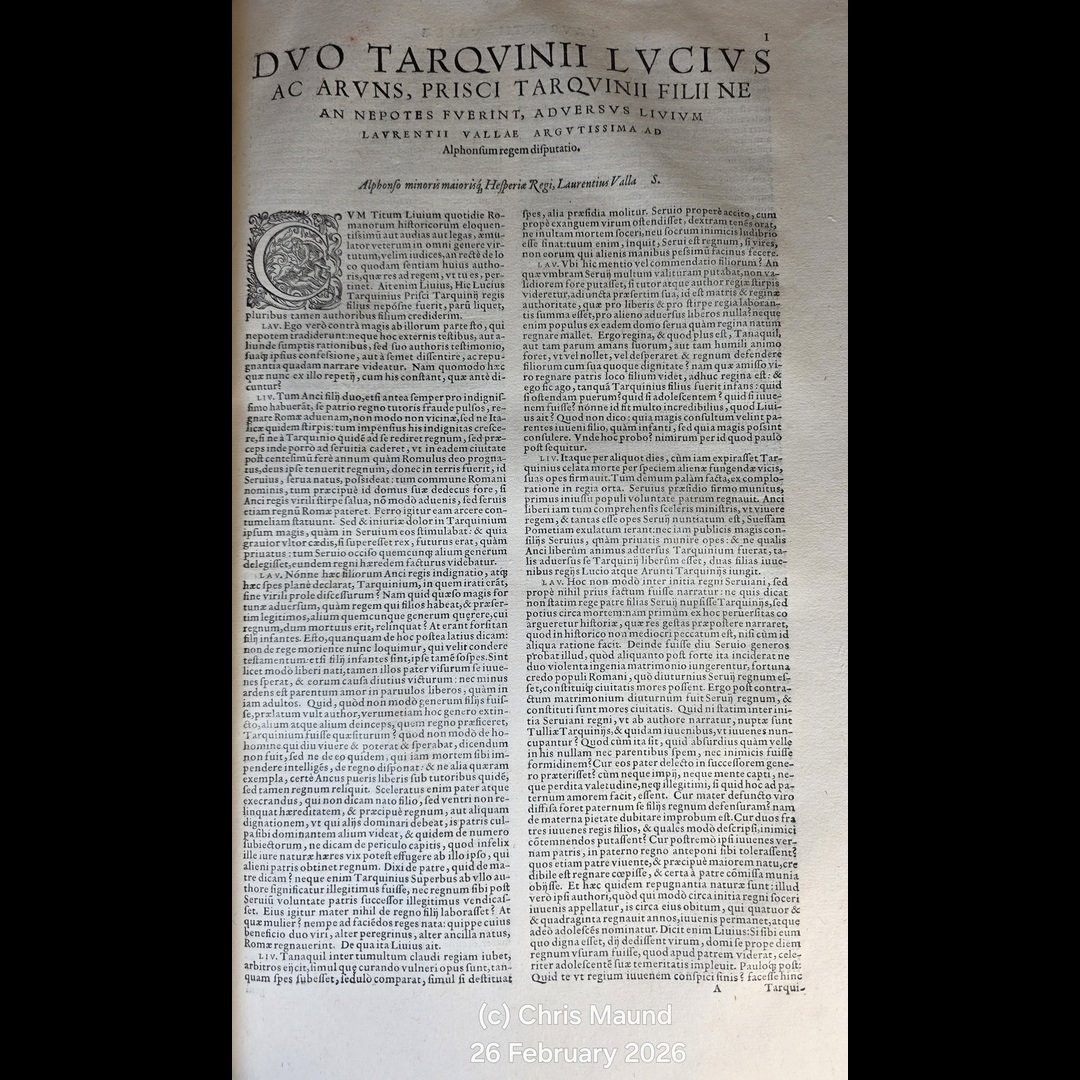 Image 24 of 32
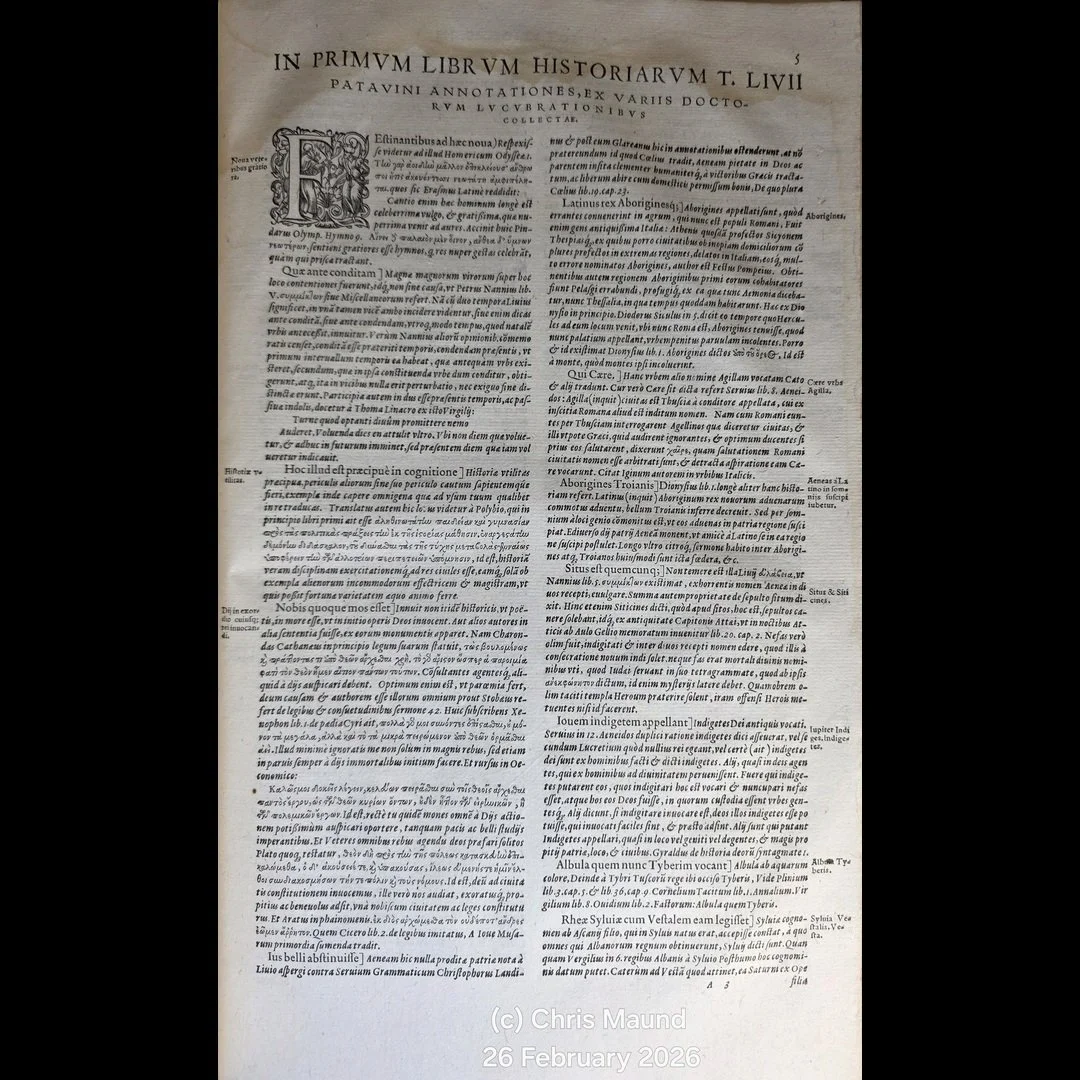 Image 25 of 32
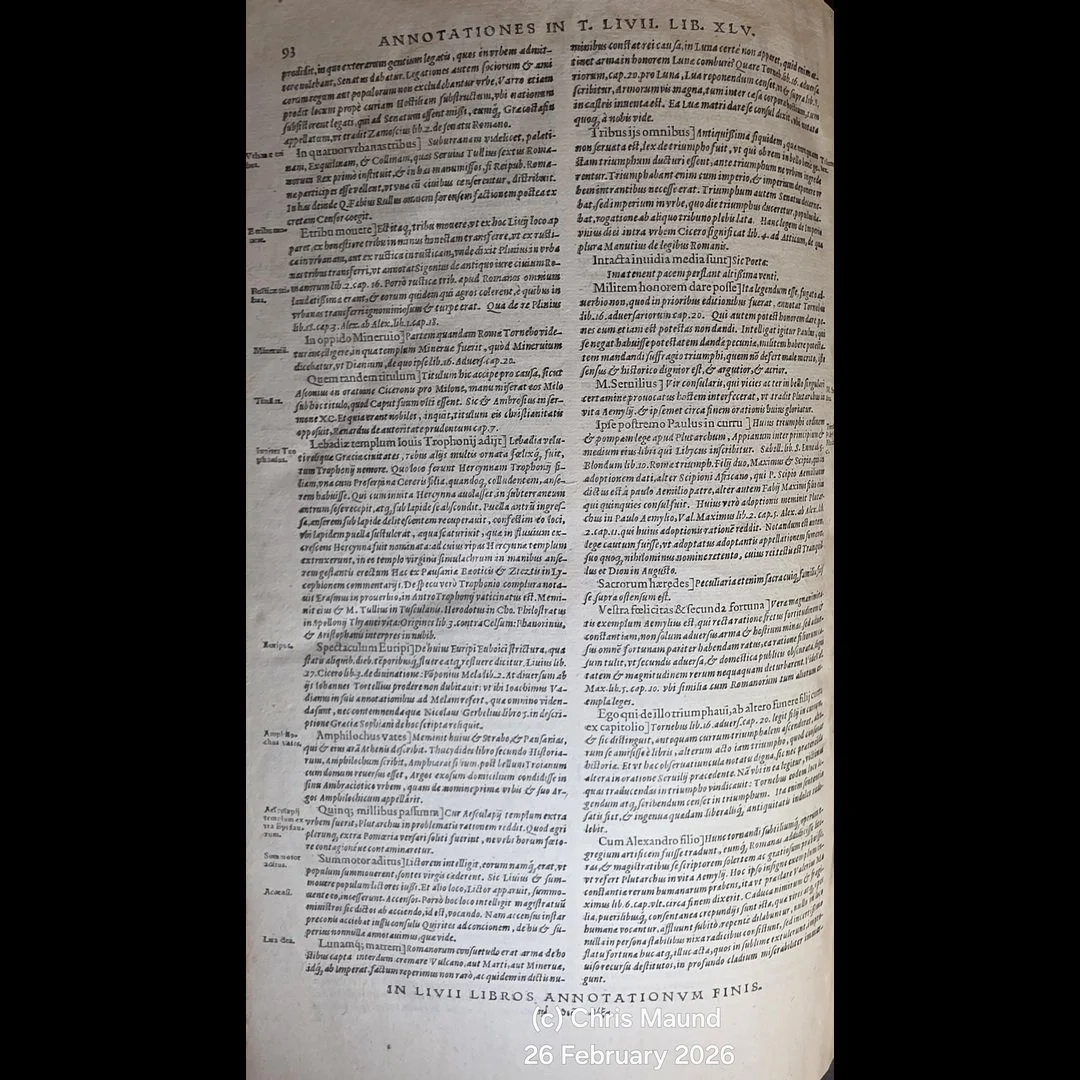 Image 26 of 32
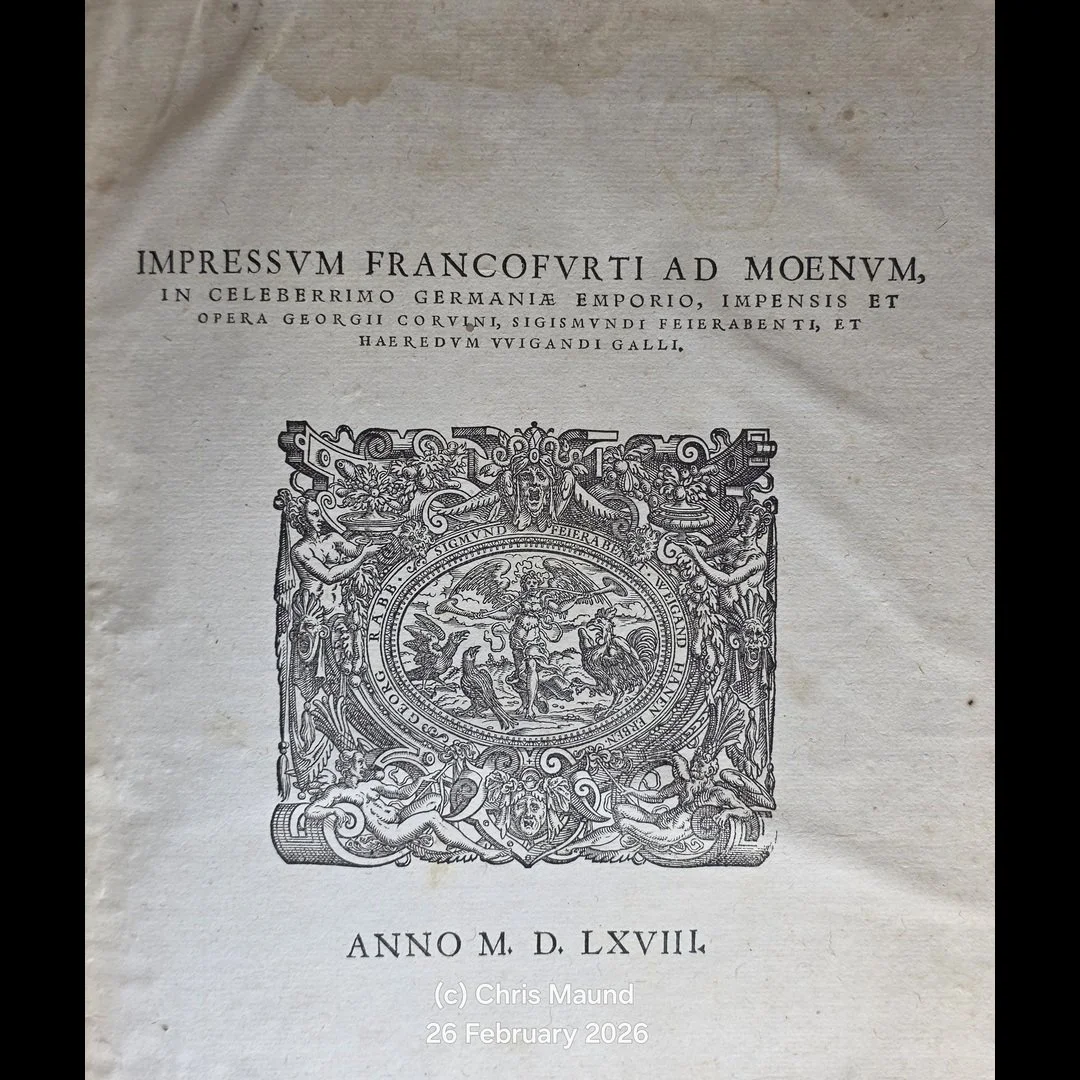 Image 27 of 32
 Image 28 of 32
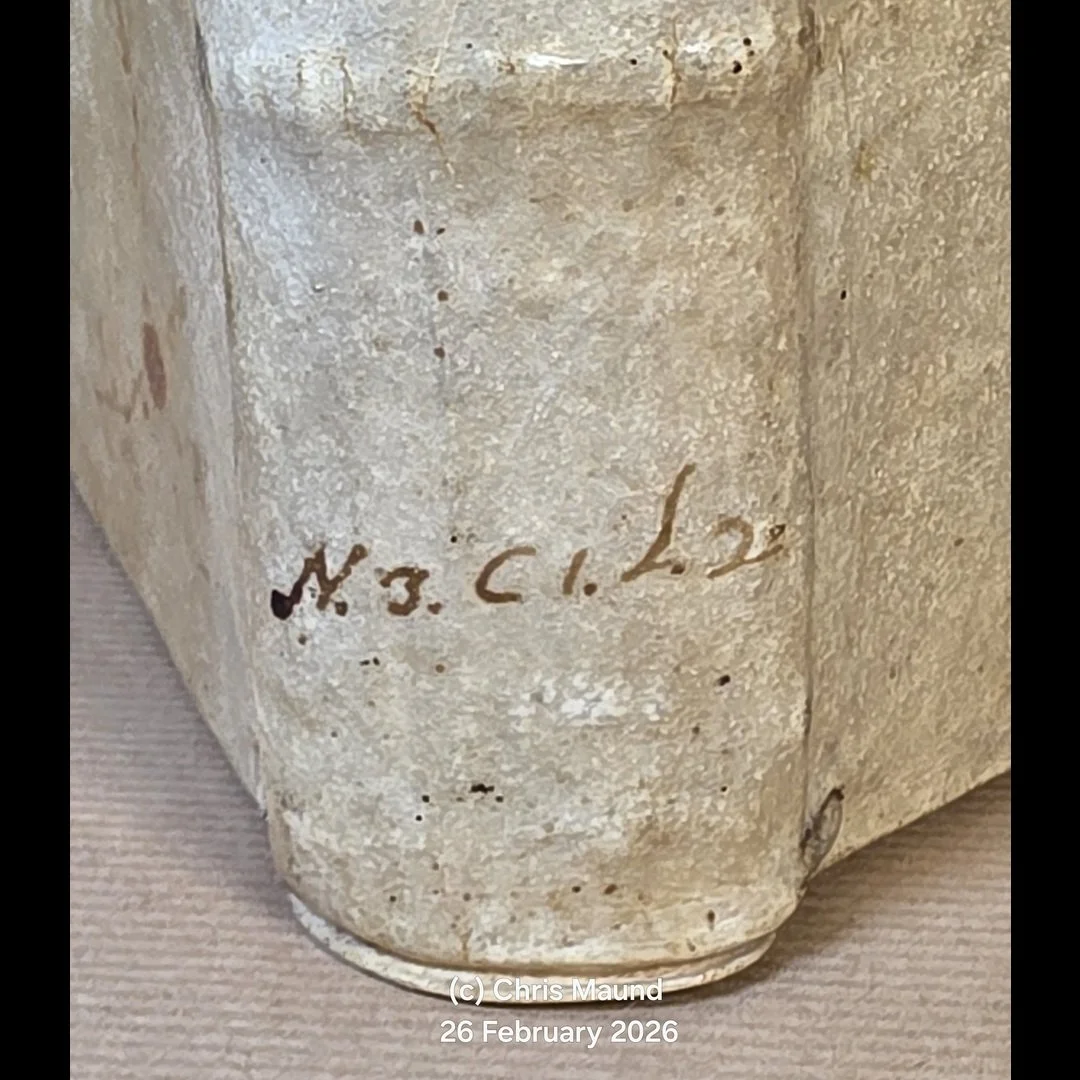 Image 29 of 32
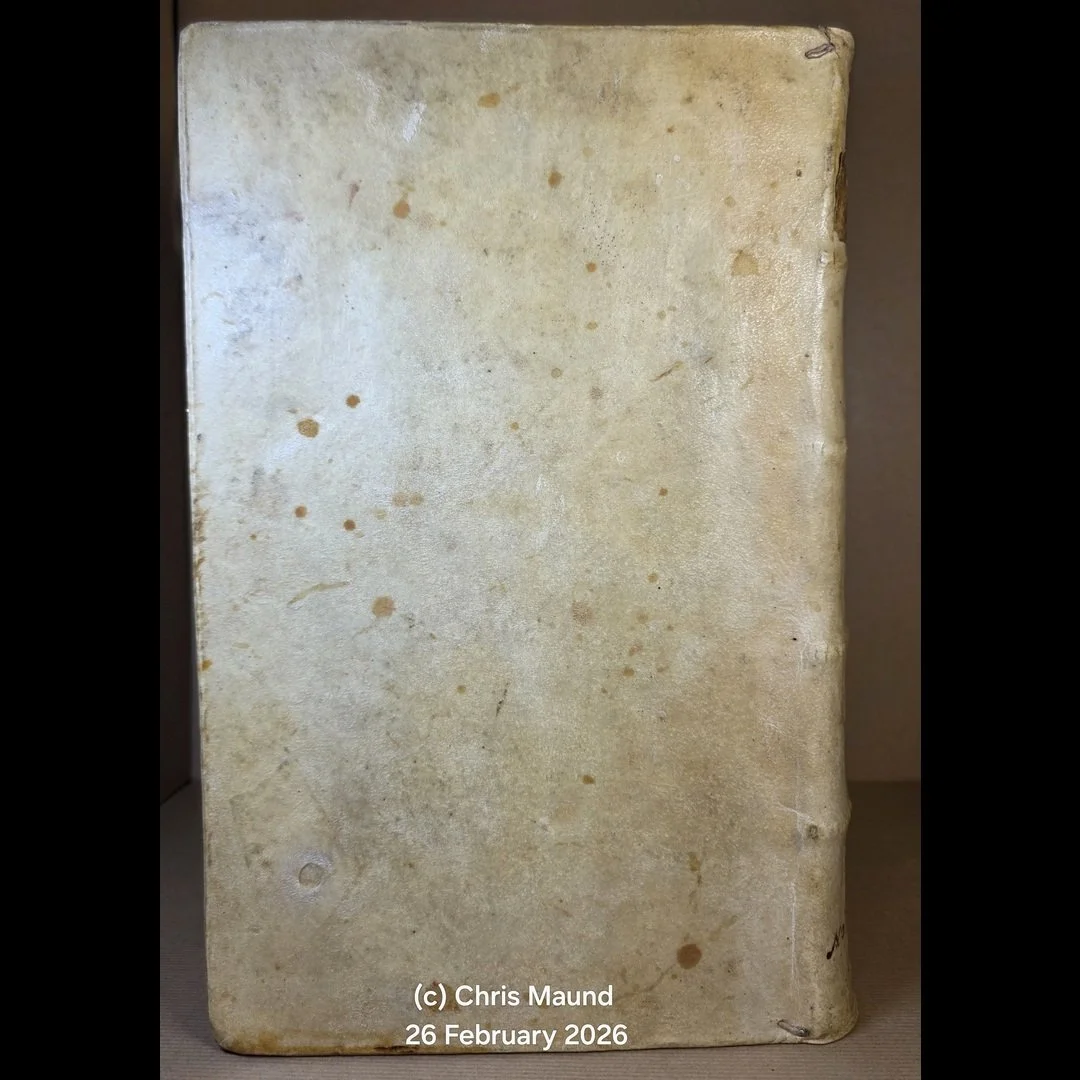 Image 30 of 32
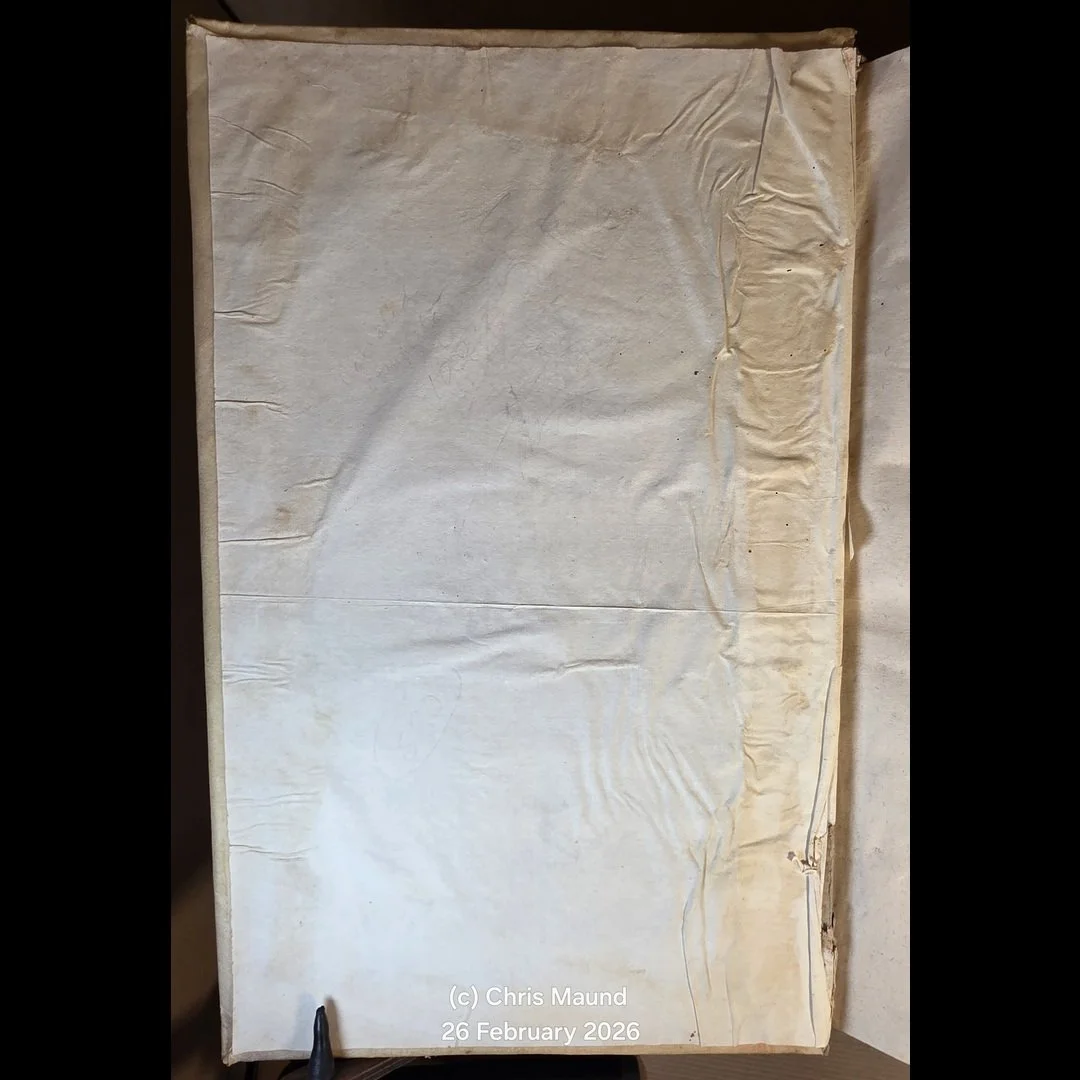 Image 31 of 32
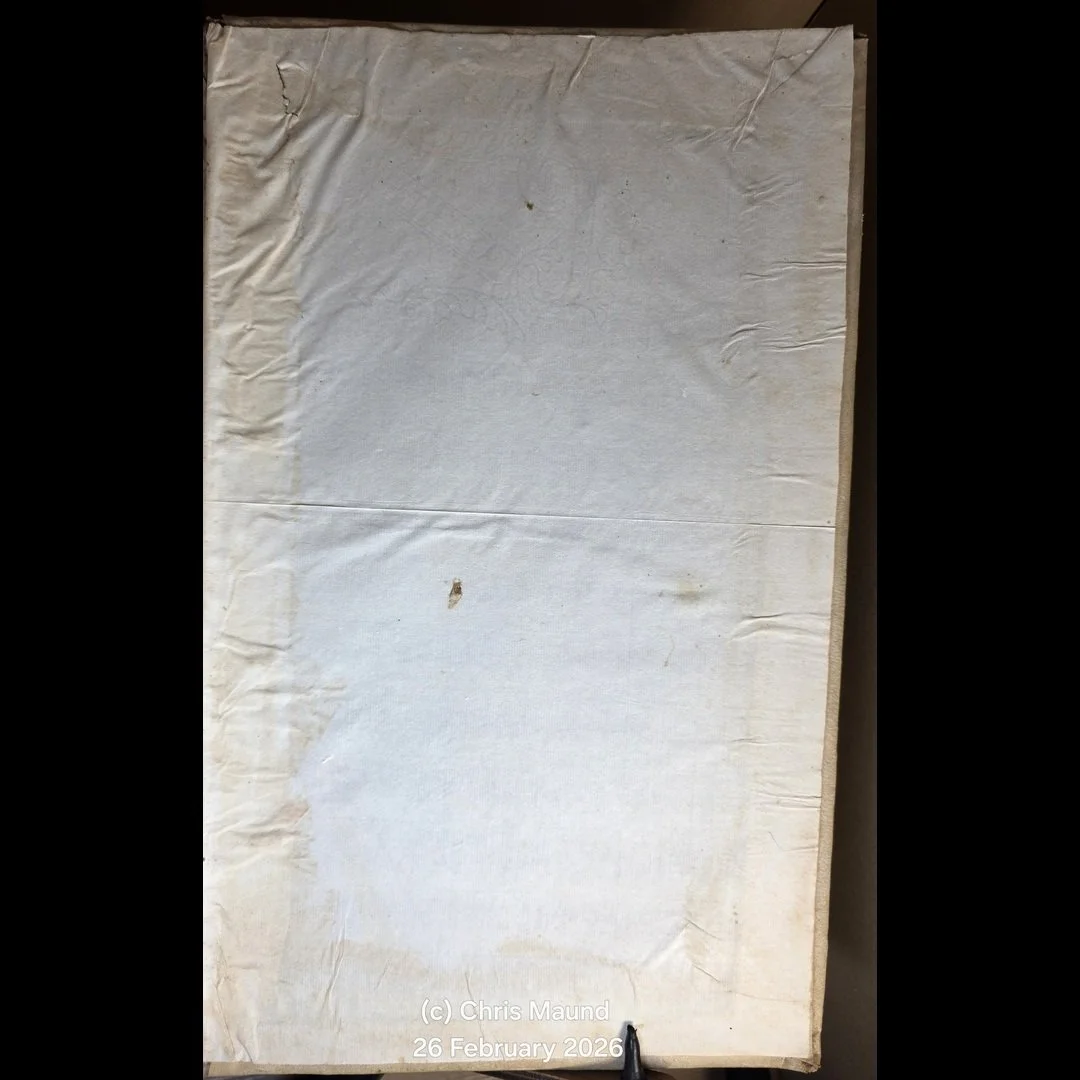 Image 32 of 32