1686 Turin
DE ARTE RHETORICA LIBRI TRES
By Cyprianus Soarius [Cipriano Soarez], S.J.
KEY DETAILS
Condition: Good
Format: Vellum, duodecimo or twelvemo (12mo 5 × 7 3⁄8 in 127 × 187 mm )
Note: Binding/size selection follows standard bibliographic conventions and is approximate; exact measurements may vary.
Published By: Taurini, Typis Haeredis Georgij Columnae, Italy, 1686
Language: Latin
Collation: [4], 210; [38]; 104; [2] pp.
Dust Jacket: None, as issued
SKU: BTETM0002694
Shipping Info: Approximate Package Dimensions H: 12.5, L: 30, W: 25 (Units: cm), W: 2Kg
Tracked Shipping, Insurance Coverage as per Customer Request
DESCRIPTION
DE ARTE RHETORICA LIBRI TRES
WITH TABULAE RHETORICAE CYPRIANI SOARII
By Cyprianus Soarius [Cipriano Soarez], S.J.
A small-format 1686 Turin edition of Cipriano Soarez's influential Jesuit textbook De Arte Rhetorica Libri Tres, bound with the accompanying Tabulae Rhetoricae, a condensed tabular presentation of the rhetorical system.
Soarez states in the title that his three books are drawn principally from Aristotle, Cicero and Quintilian. The work reorganises classical rhetorical teaching for practical instruction, covering the nature and purpose of rhetoric, invention and argument, arrangement, style, memory and delivery. It became a widely circulated textbook within Jesuit education and remained in use through numerous editions long after its first appearance in the sixteenth century. Silva Rhetoricae
The accompanying Tabulae Rhetoricae reduce the larger system to a compact series of tables and schemata intended for consultation, revision and memorisation. Bibliographical records identify Ludovico Carbone as responsible for arranging Soarez's rhetoric in this tabular form; editions pairing Soarez's De Arte Rhetorica with Carbone's Tabulae are recorded from the late sixteenth century onwards. Biblioteca Digitale Trentina
The physical form of the present copy is well suited to such use: a compact volume in contemporary limp vellum, with manuscript notes to the endpapers and evident signs of handling and study. It survives as a practical example of the type of rhetorical handbook used in the teaching of Latin eloquence rather than as a purely theoretical treatise.
CONDITION, COLLATION & COPY NOTES
COLLATION
[4], 210; [38]; 104; [2] pp.
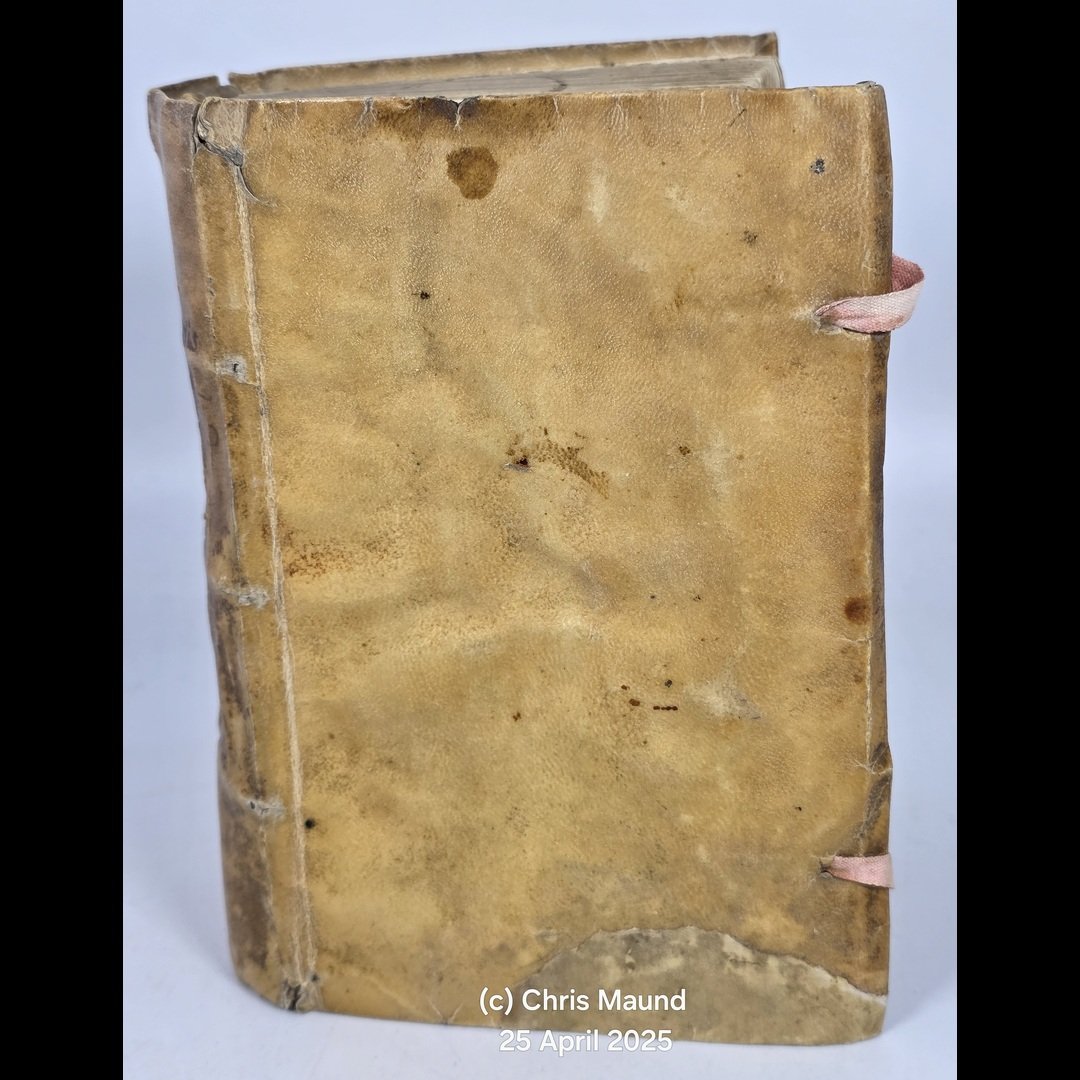
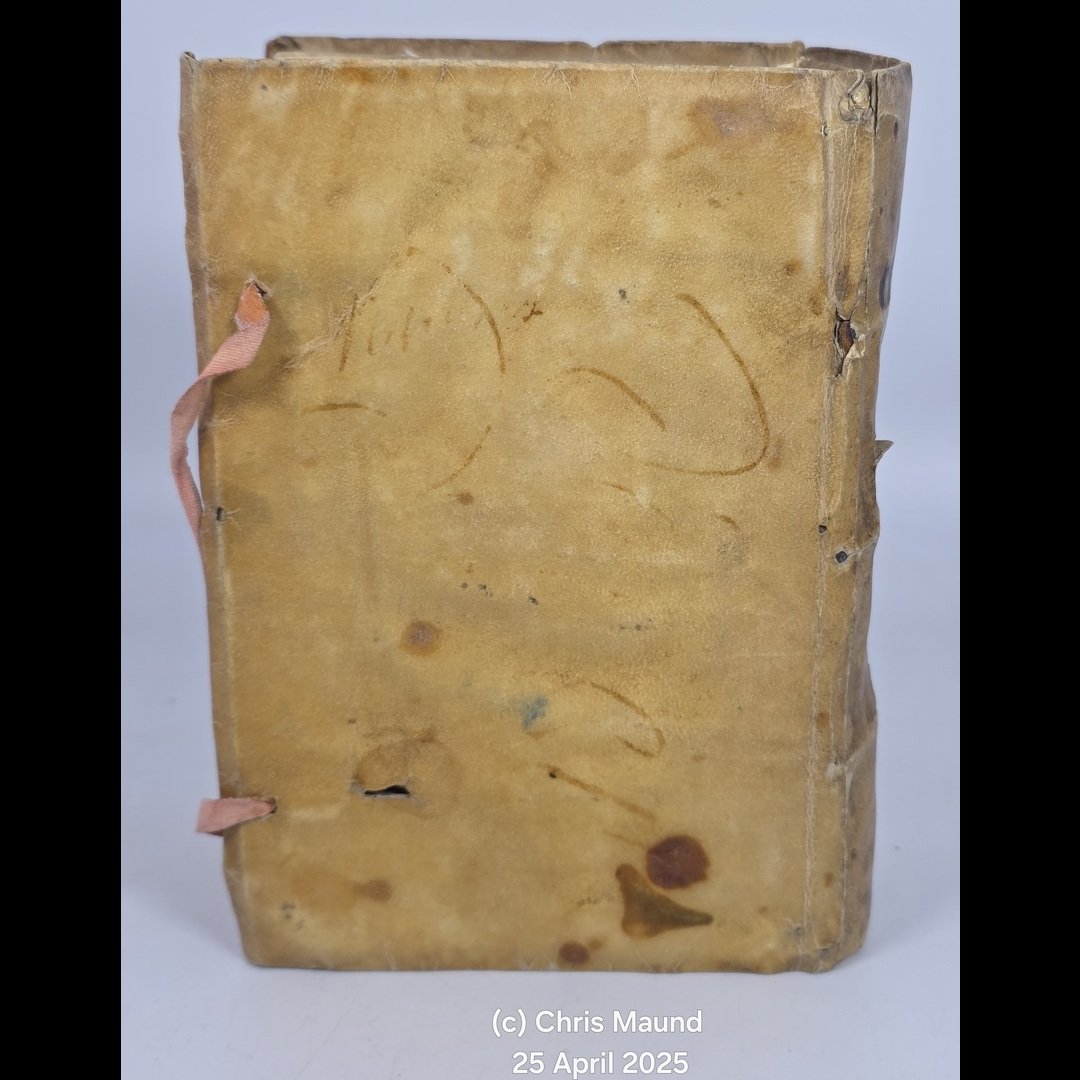
Contemporary limp vellum, rubbed and soiled with age, with faded manuscript titling to the spine.
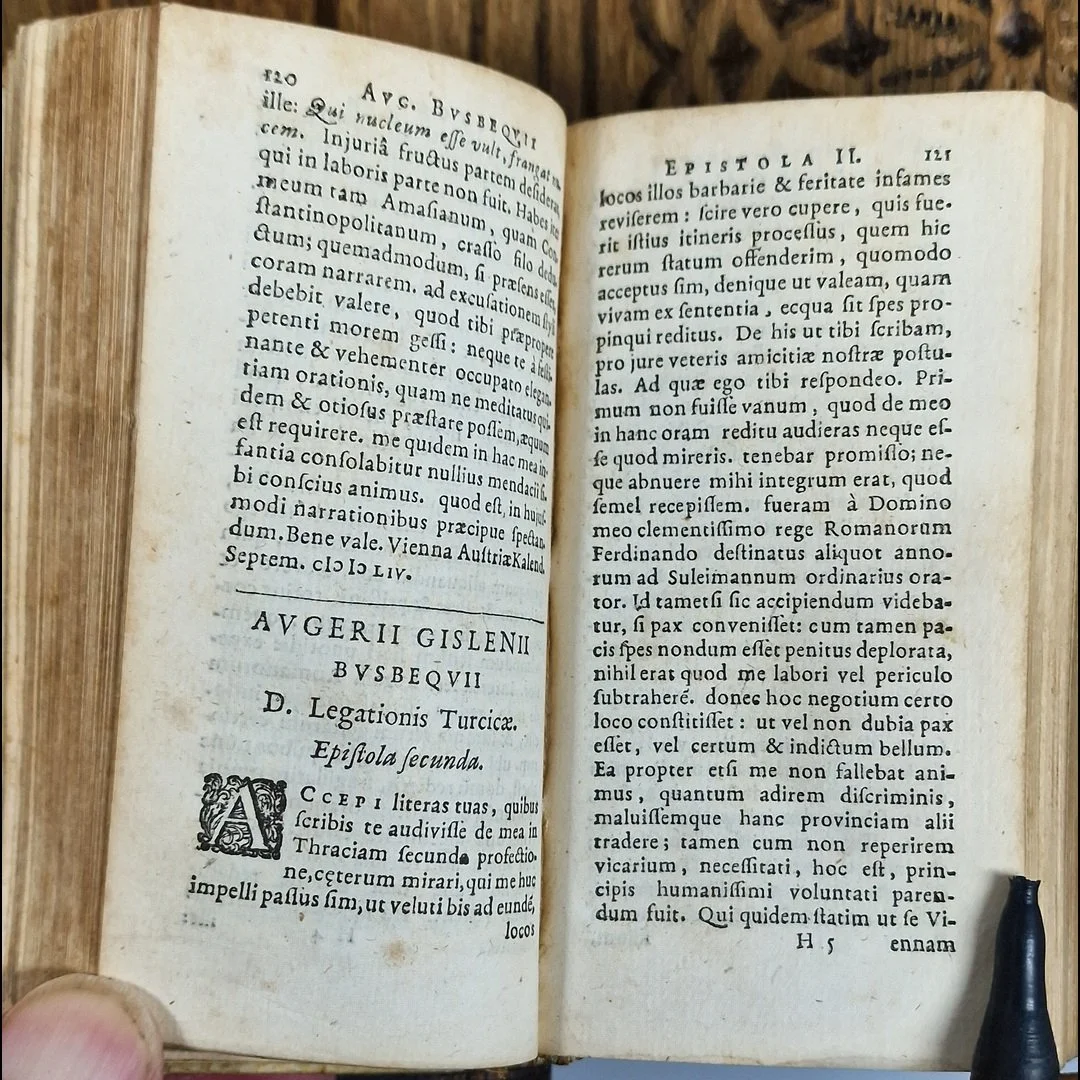
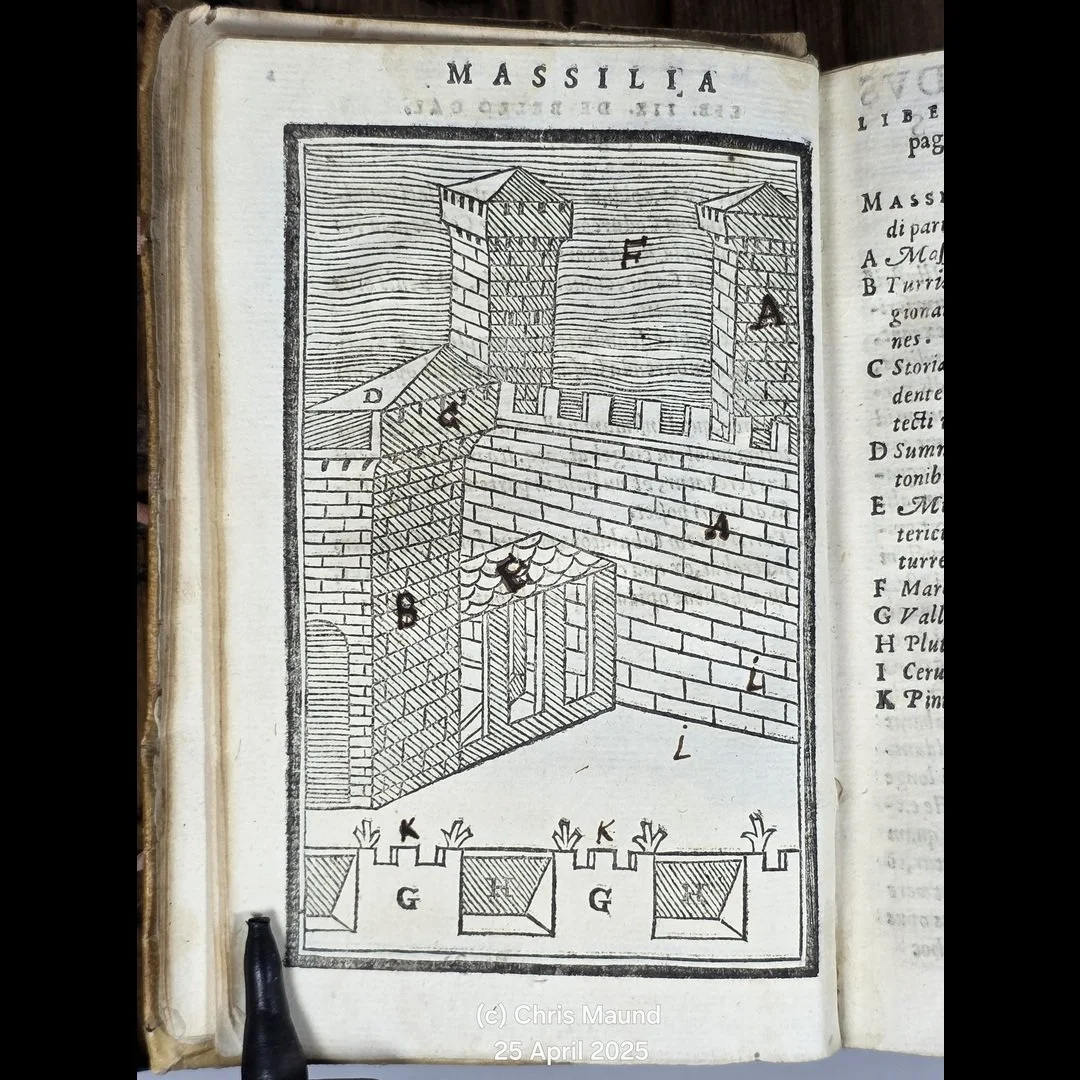
Internally toned, with scattered staining and foxing. Occasional small wormholes are present. Some irregularities occur in the printed pagination/numbering.
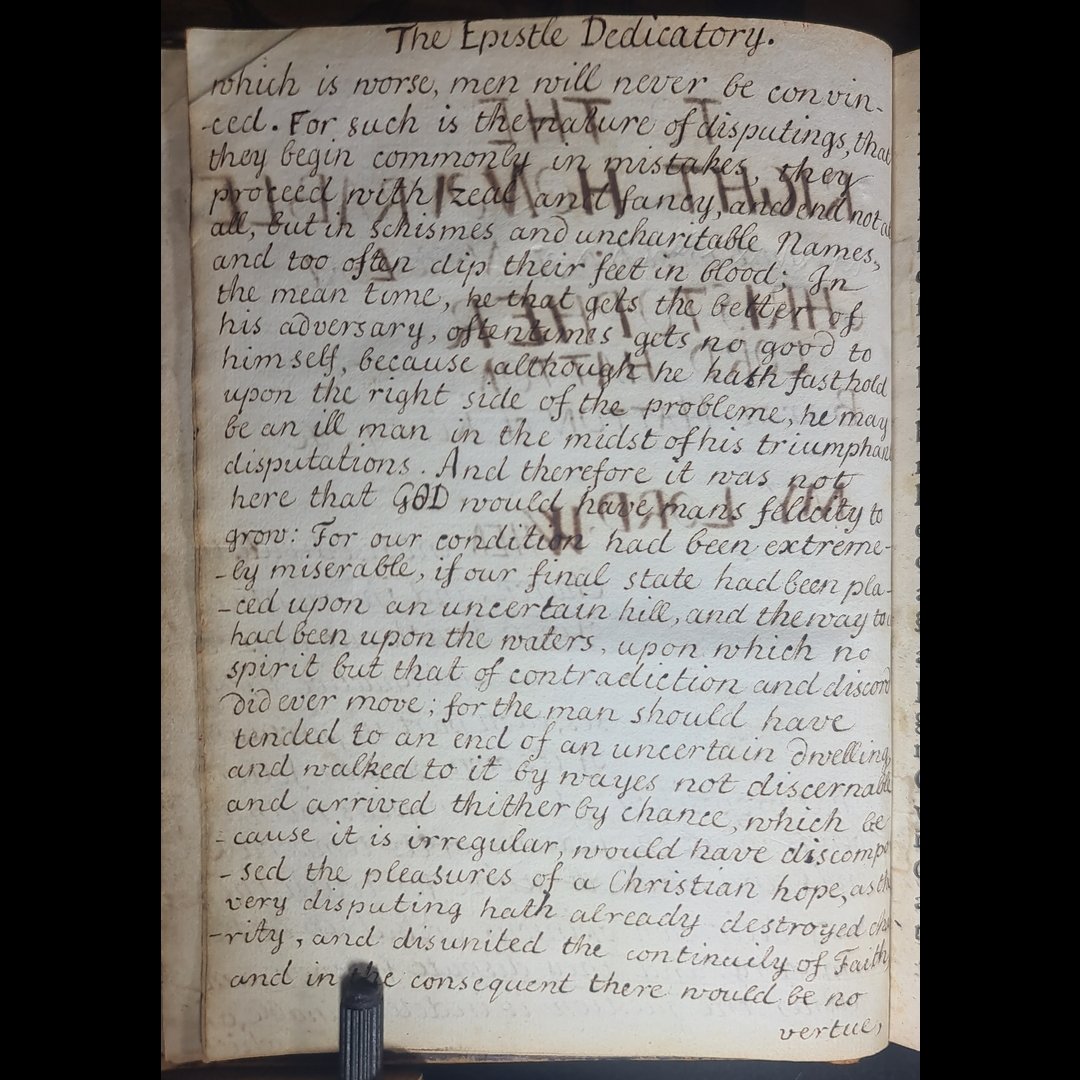
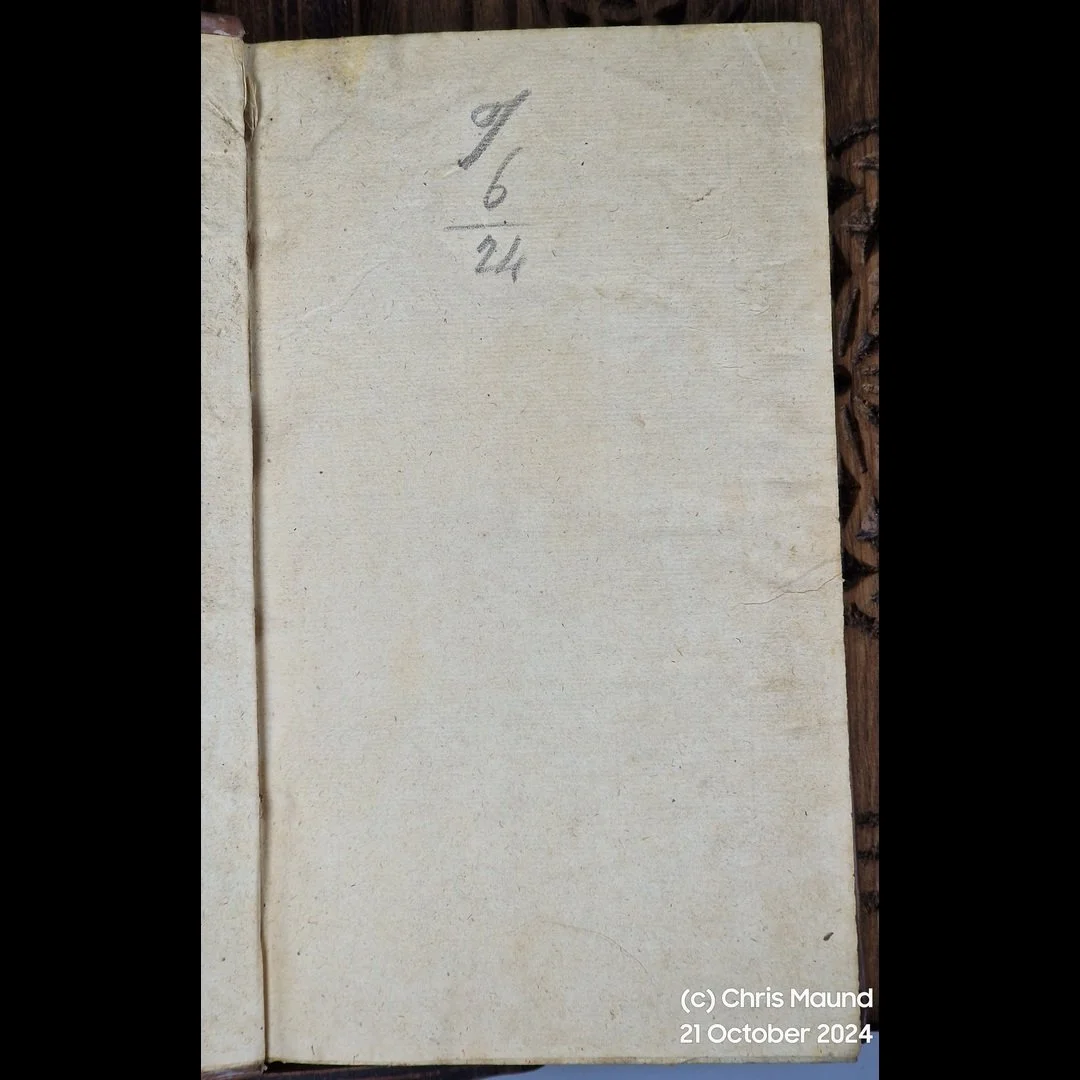
Manuscript notes are present on the endpapers.
A sound, use-worn copy retaining its contemporary binding.
Please see Photos as part of condition report.
REFERENCES
Cipriano Soarez, De Arte Rhetorica Libri Tres ex Aristotele, Cicerone et Quintiliano praecipue deprompti.
Ludovico Carbone, Tabulae Rhetoricae Cypriani Soarii; editions are recorded from the late sixteenth century, with Carbone's tables designed as a summary and ordering of Soarez's rhetorical system. Google Play
Biblioteca Digitale Trentina records editions of Soarez's De Arte Rhetorica issued together with the Tabulae of Ludovico Carbone. Biblioteca Digitale Trentina
Agata Konrad, “Ars memorativa and the Teaching of Rhetoric in Jesuit Colleges,” Collectanea Philologica, XXV (2022), discussing Soarez's manual in the context of Jesuit rhetorical teaching and its classical sources.
SYNOPSIS
Soarez's De Arte Rhetorica presents classical rhetoric as a teachable system. Drawing principally on Aristotle, Cicero and Quintilian, it explains how an orator identifies arguments, organises material, chooses appropriate language and figures, commits a speech to memory and delivers it effectively. Silva Rhetoricae
The Tabulae Rhetoricae provide a condensed counterpart to the main text, arranging its principles schematically for rapid reference and memorisation. Together, the two works illustrate the practical character of Jesuit rhetorical education: classical theory reorganised into a form suitable for repeated classroom study.
AUTHOR BIO
Cipriano Soarez (1524–1593), commonly Latinised as Cyprianus Soarius, was a Jesuit teacher best known for De Arte Rhetorica Libri Tres. His textbook drew extensively upon the classical rhetorical tradition, particularly Aristotle, Cicero and Quintilian, and became one of the most widely disseminated rhetorical manuals associated with Jesuit education. Modern scholarship has traced its continuing publication and use from the sixteenth into the nineteenth century.
1686 Turin
DE ARTE RHETORICA LIBRI TRES
By Cyprianus Soarius [Cipriano Soarez], S.J.
KEY DETAILS
Condition: Good
Format: Vellum, duodecimo or twelvemo (12mo 5 × 7 3⁄8 in 127 × 187 mm )
Note: Binding/size selection follows standard bibliographic conventions and is approximate; exact measurements may vary.
Published By: Taurini, Typis Haeredis Georgij Columnae, Italy, 1686
Language: Latin
Collation: [4], 210; [38]; 104; [2] pp.
Dust Jacket: None, as issued
SKU: BTETM0002694
Shipping Info: Approximate Package Dimensions H: 12.5, L: 30, W: 25 (Units: cm), W: 2Kg
Tracked Shipping, Insurance Coverage as per Customer Request
DESCRIPTION
DE ARTE RHETORICA LIBRI TRES
WITH TABULAE RHETORICAE CYPRIANI SOARII
By Cyprianus Soarius [Cipriano Soarez], S.J.
A small-format 1686 Turin edition of Cipriano Soarez's influential Jesuit textbook De Arte Rhetorica Libri Tres, bound with the accompanying Tabulae Rhetoricae, a condensed tabular presentation of the rhetorical system.
Soarez states in the title that his three books are drawn principally from Aristotle, Cicero and Quintilian. The work reorganises classical rhetorical teaching for practical instruction, covering the nature and purpose of rhetoric, invention and argument, arrangement, style, memory and delivery. It became a widely circulated textbook within Jesuit education and remained in use through numerous editions long after its first appearance in the sixteenth century. Silva Rhetoricae
The accompanying Tabulae Rhetoricae reduce the larger system to a compact series of tables and schemata intended for consultation, revision and memorisation. Bibliographical records identify Ludovico Carbone as responsible for arranging Soarez's rhetoric in this tabular form; editions pairing Soarez's De Arte Rhetorica with Carbone's Tabulae are recorded from the late sixteenth century onwards. Biblioteca Digitale Trentina
The physical form of the present copy is well suited to such use: a compact volume in contemporary limp vellum, with manuscript notes to the endpapers and evident signs of handling and study. It survives as a practical example of the type of rhetorical handbook used in the teaching of Latin eloquence rather than as a purely theoretical treatise.
CONDITION, COLLATION & COPY NOTES
COLLATION
[4], 210; [38]; 104; [2] pp.
Contemporary limp vellum, rubbed and soiled with age, with faded manuscript titling to the spine.
Internally toned, with scattered staining and foxing. Occasional small wormholes are present. Some irregularities occur in the printed pagination/numbering.
Manuscript notes are present on the endpapers.
A sound, use-worn copy retaining its contemporary binding.
Please see Photos as part of condition report.
REFERENCES
Cipriano Soarez, De Arte Rhetorica Libri Tres ex Aristotele, Cicerone et Quintiliano praecipue deprompti.
Ludovico Carbone, Tabulae Rhetoricae Cypriani Soarii; editions are recorded from the late sixteenth century, with Carbone's tables designed as a summary and ordering of Soarez's rhetorical system. Google Play
Biblioteca Digitale Trentina records editions of Soarez's De Arte Rhetorica issued together with the Tabulae of Ludovico Carbone. Biblioteca Digitale Trentina
Agata Konrad, “Ars memorativa and the Teaching of Rhetoric in Jesuit Colleges,” Collectanea Philologica, XXV (2022), discussing Soarez's manual in the context of Jesuit rhetorical teaching and its classical sources.
SYNOPSIS
Soarez's De Arte Rhetorica presents classical rhetoric as a teachable system. Drawing principally on Aristotle, Cicero and Quintilian, it explains how an orator identifies arguments, organises material, chooses appropriate language and figures, commits a speech to memory and delivers it effectively. Silva Rhetoricae
The Tabulae Rhetoricae provide a condensed counterpart to the main text, arranging its principles schematically for rapid reference and memorisation. Together, the two works illustrate the practical character of Jesuit rhetorical education: classical theory reorganised into a form suitable for repeated classroom study.
AUTHOR BIO
Cipriano Soarez (1524–1593), commonly Latinised as Cyprianus Soarius, was a Jesuit teacher best known for De Arte Rhetorica Libri Tres. His textbook drew extensively upon the classical rhetorical tradition, particularly Aristotle, Cicero and Quintilian, and became one of the most widely disseminated rhetorical manuals associated with Jesuit education. Modern scholarship has traced its continuing publication and use from the sixteenth into the nineteenth century.

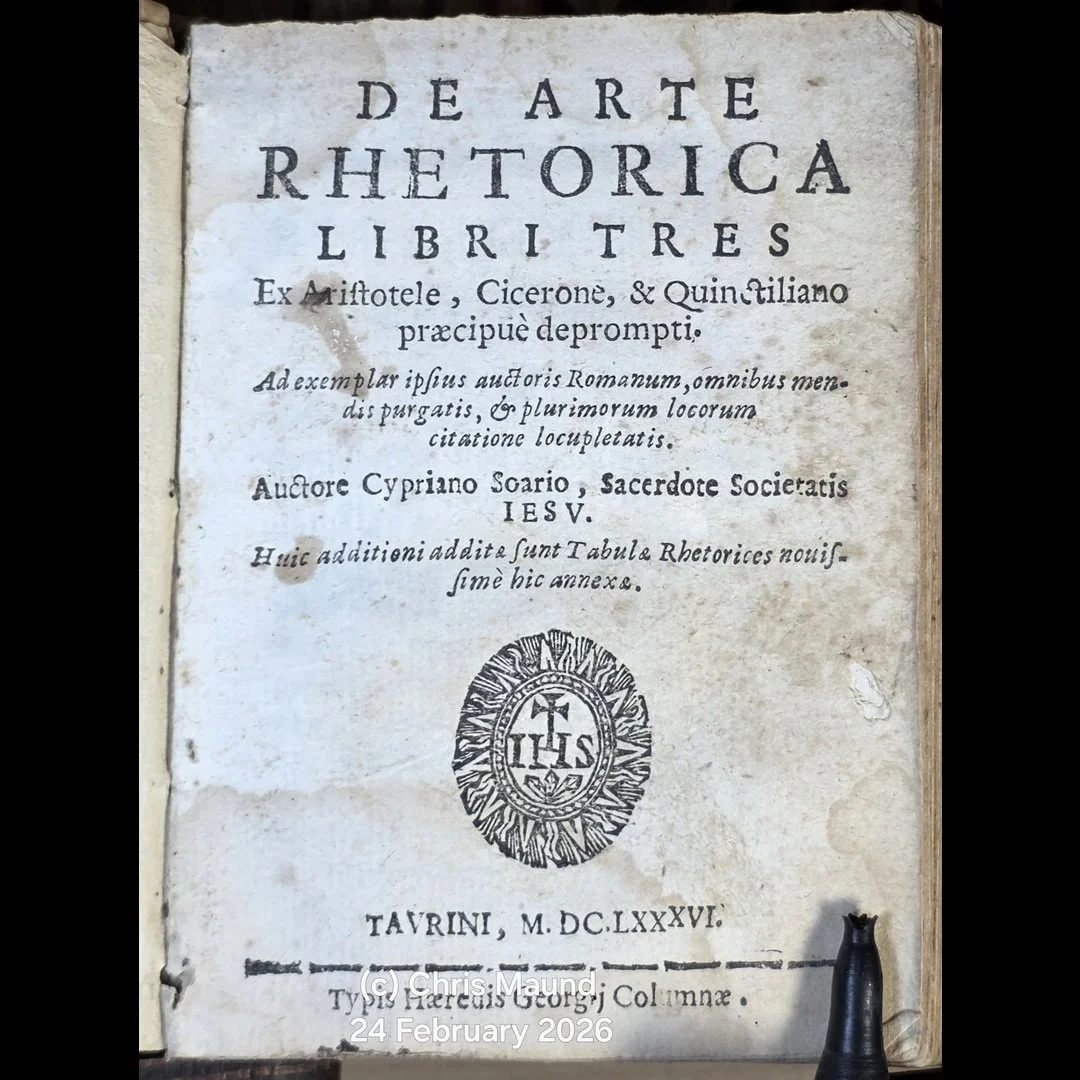 Image 1 of 22
 Image 2 of 22
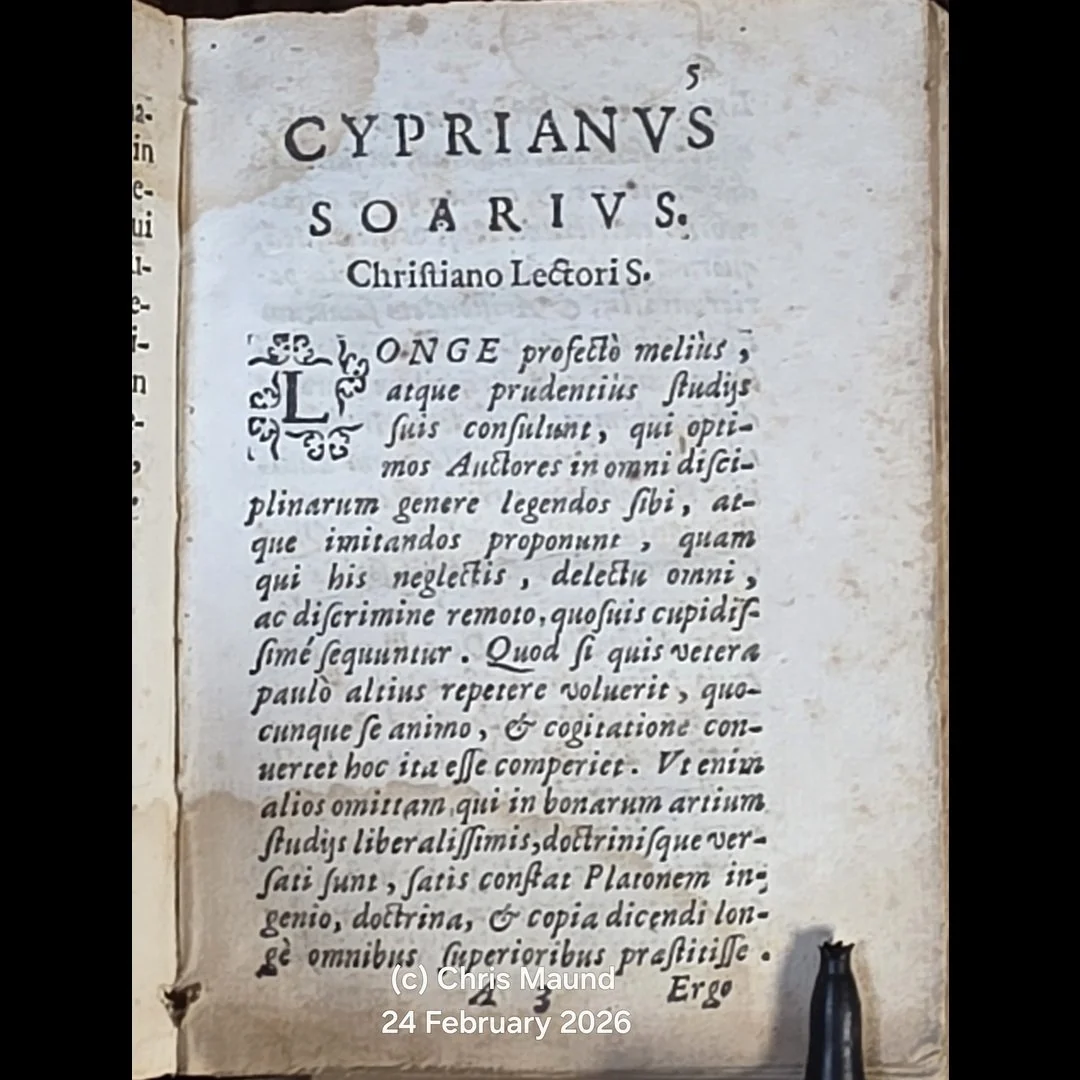 Image 3 of 22
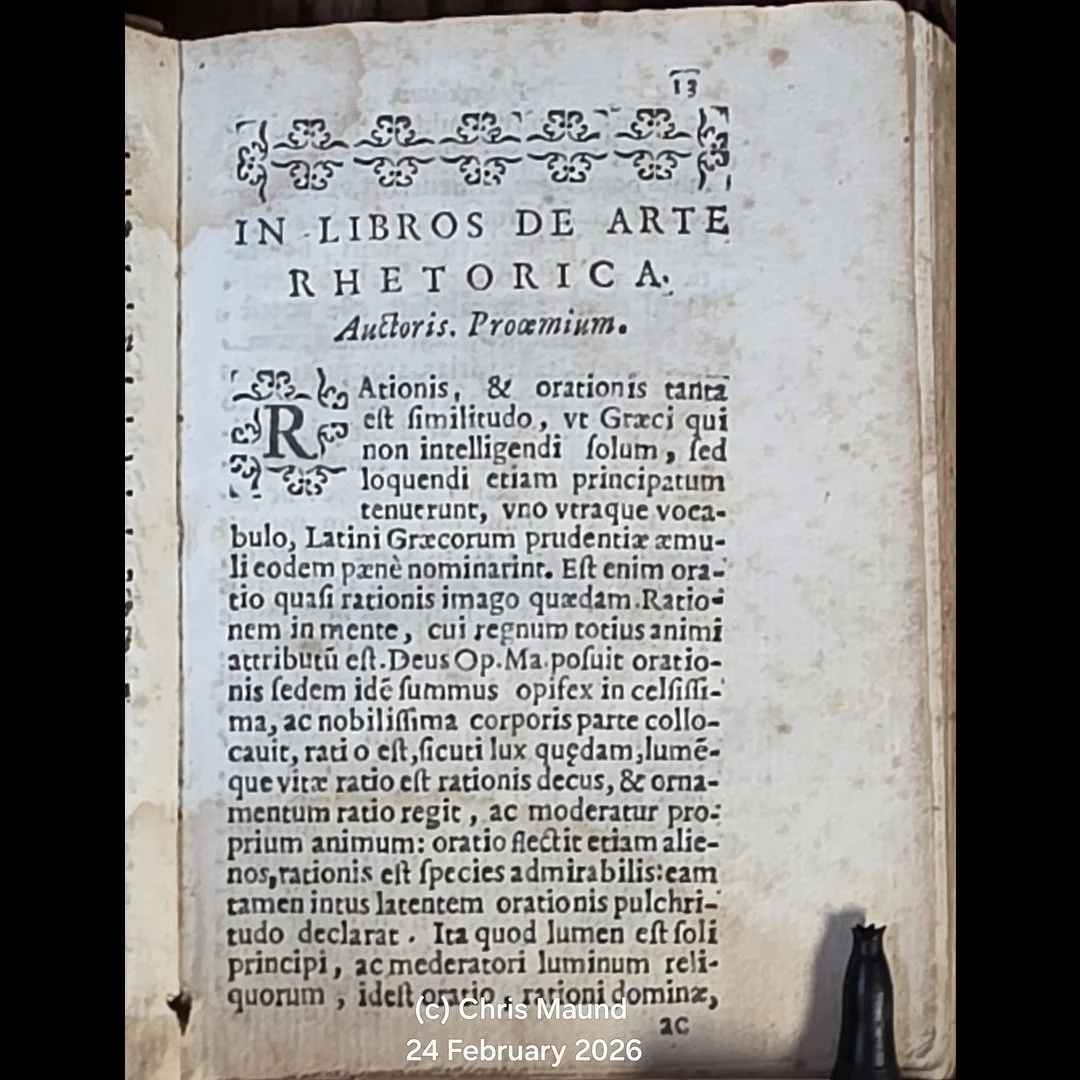 Image 4 of 22
 Image 5 of 22
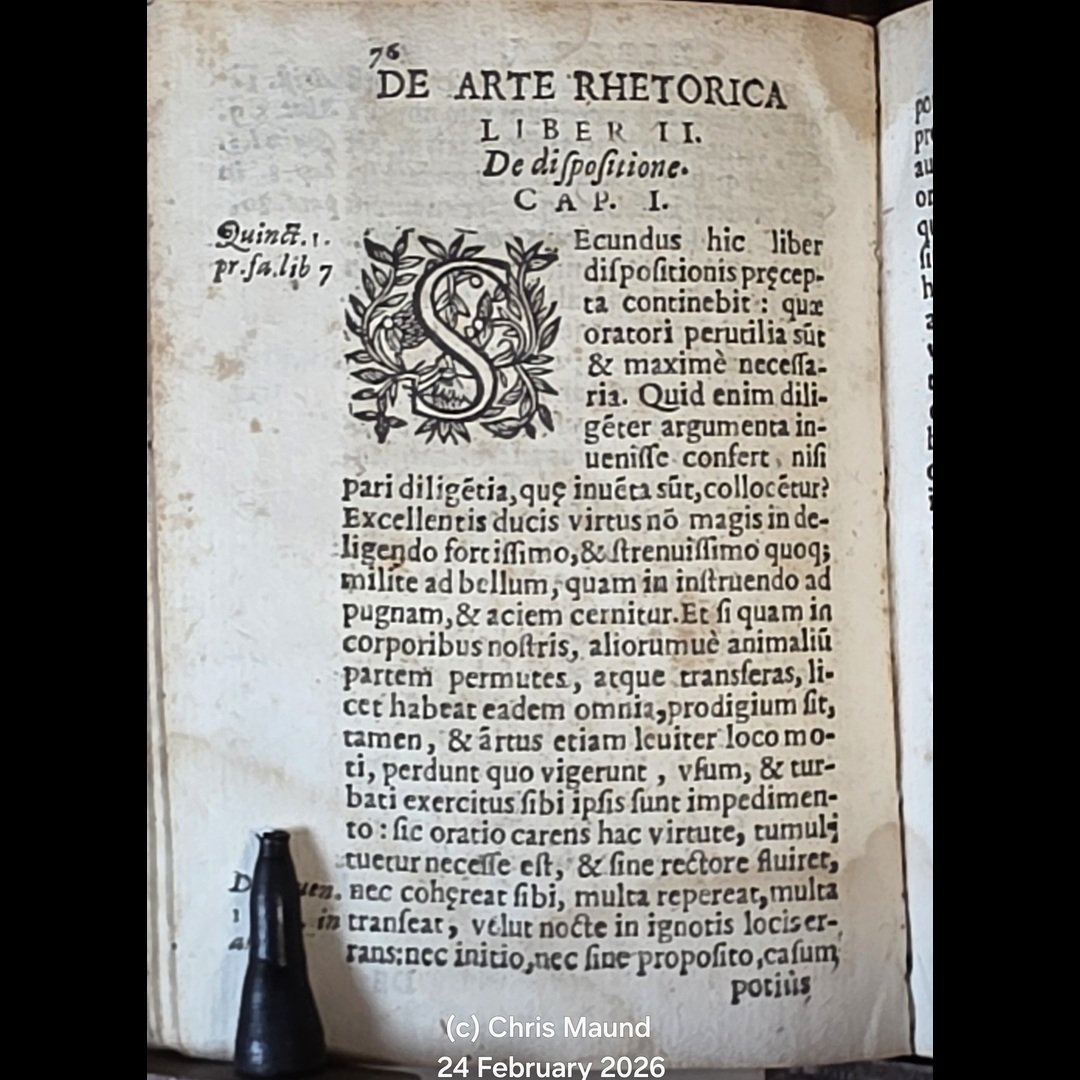 Image 6 of 22
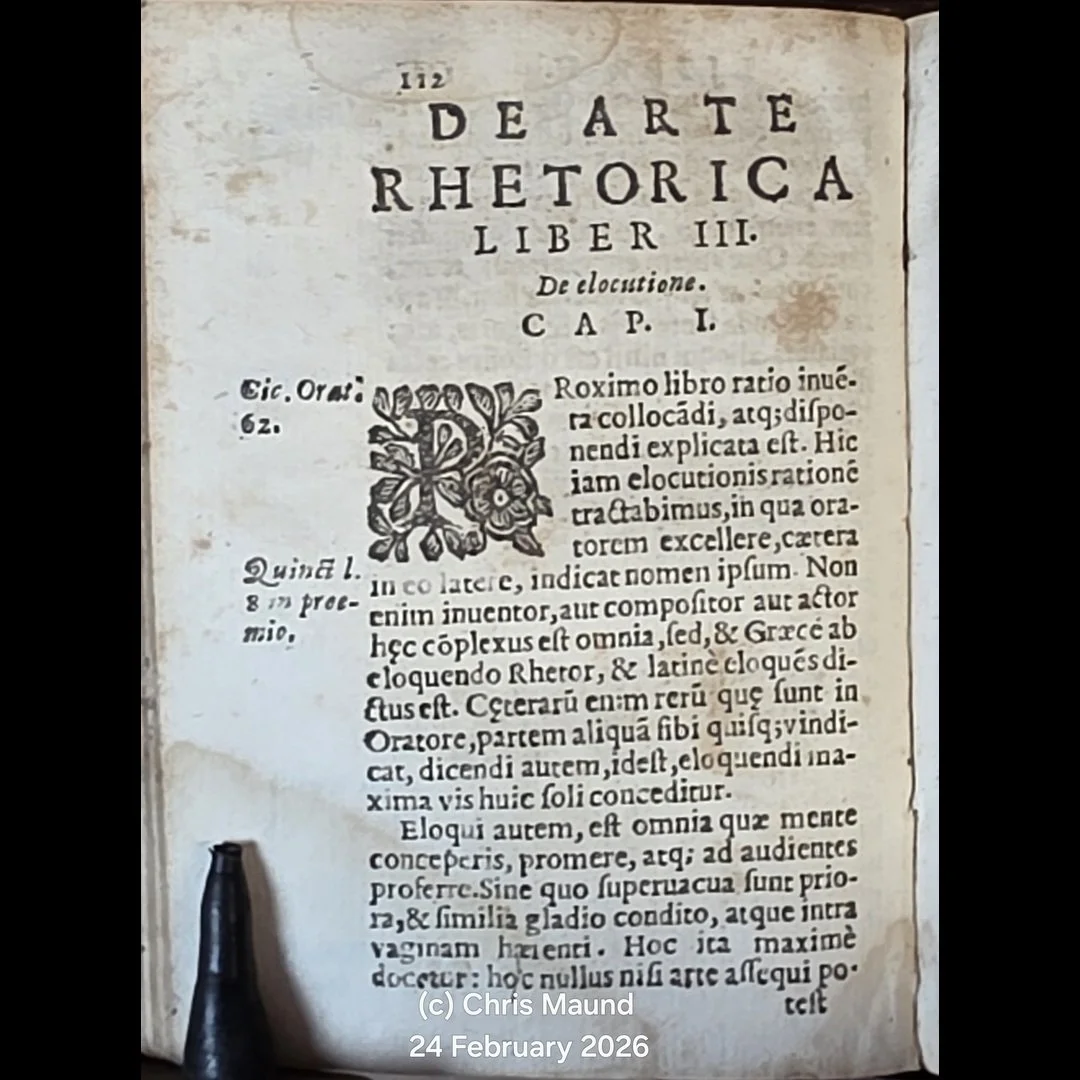 Image 7 of 22
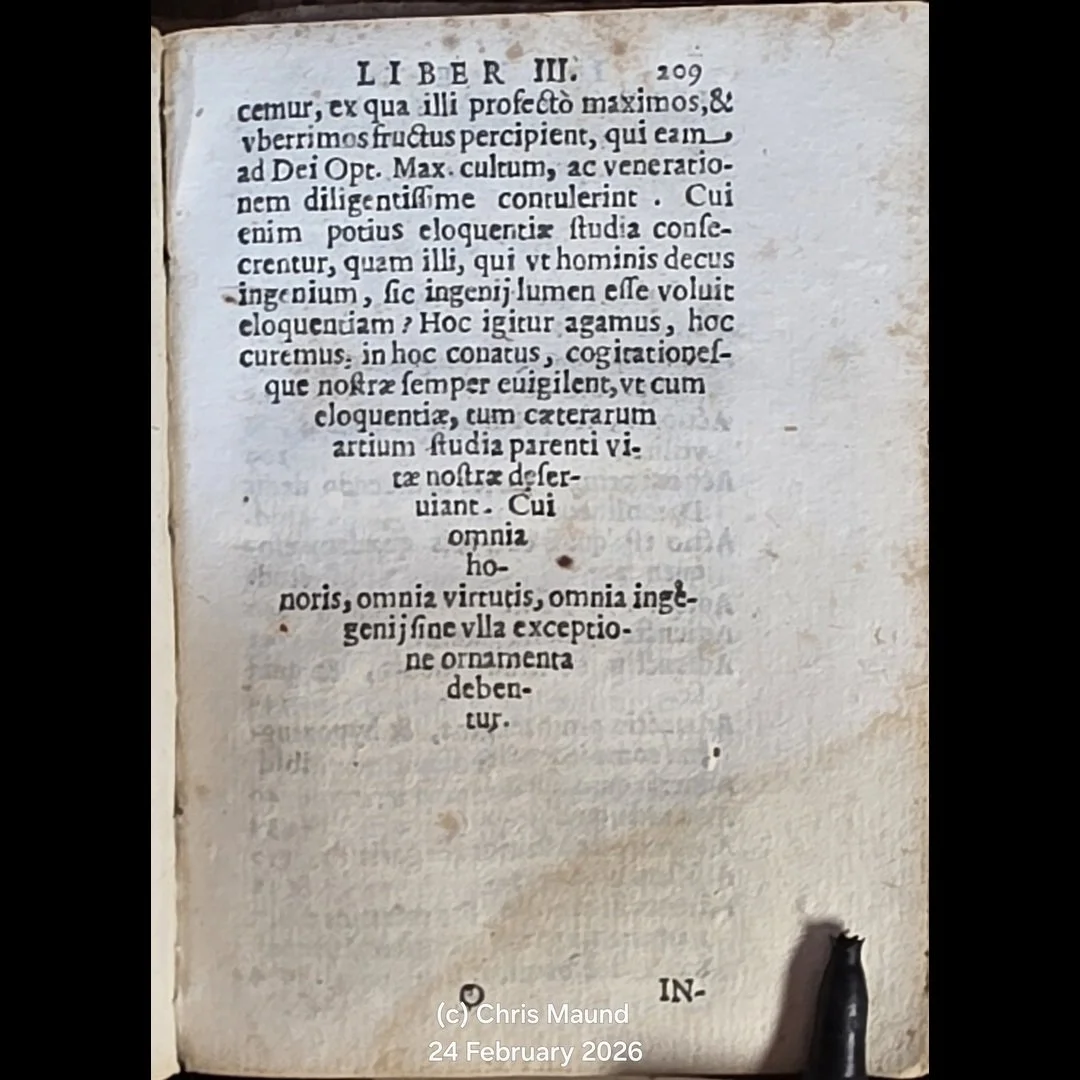 Image 8 of 22
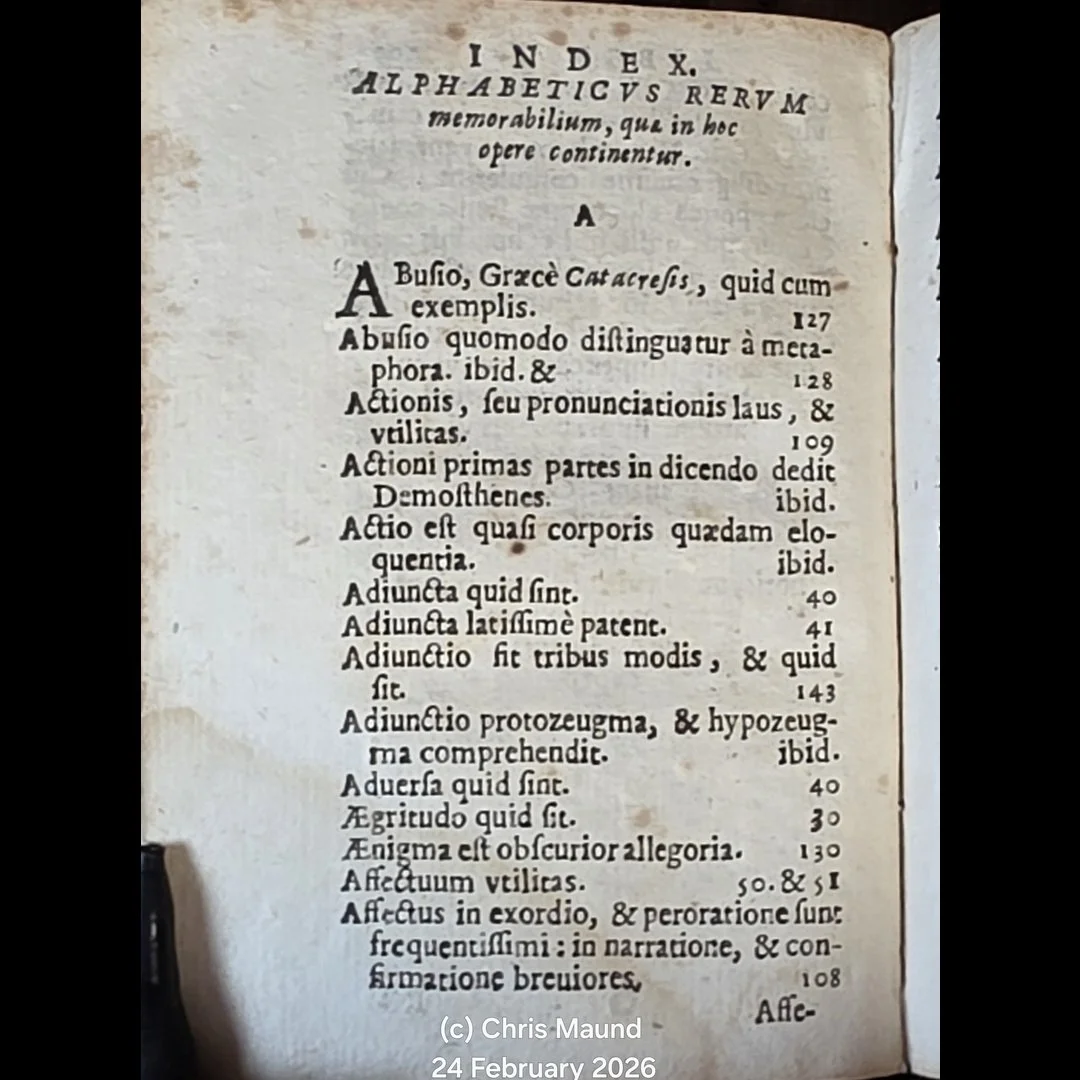 Image 9 of 22
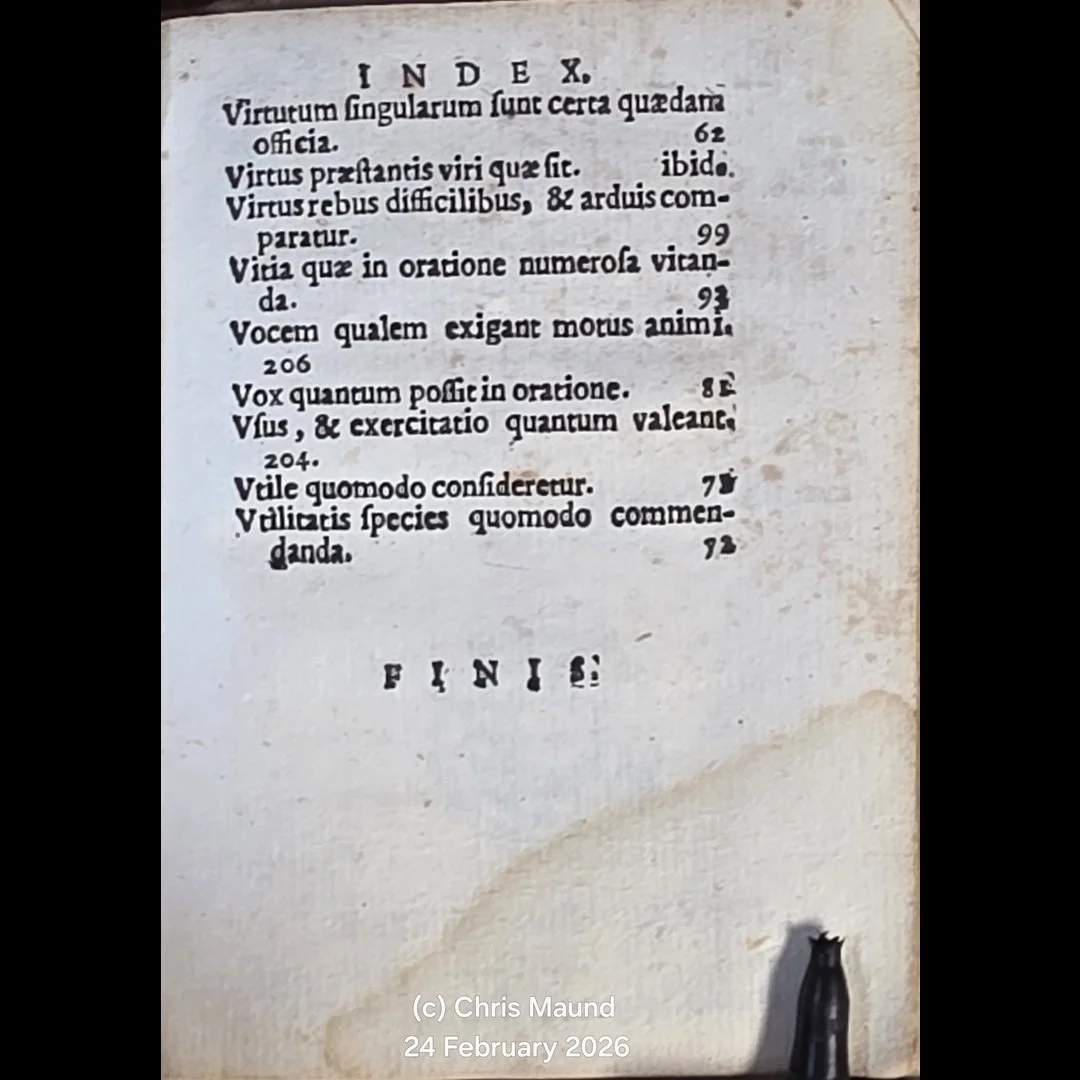 Image 10 of 22
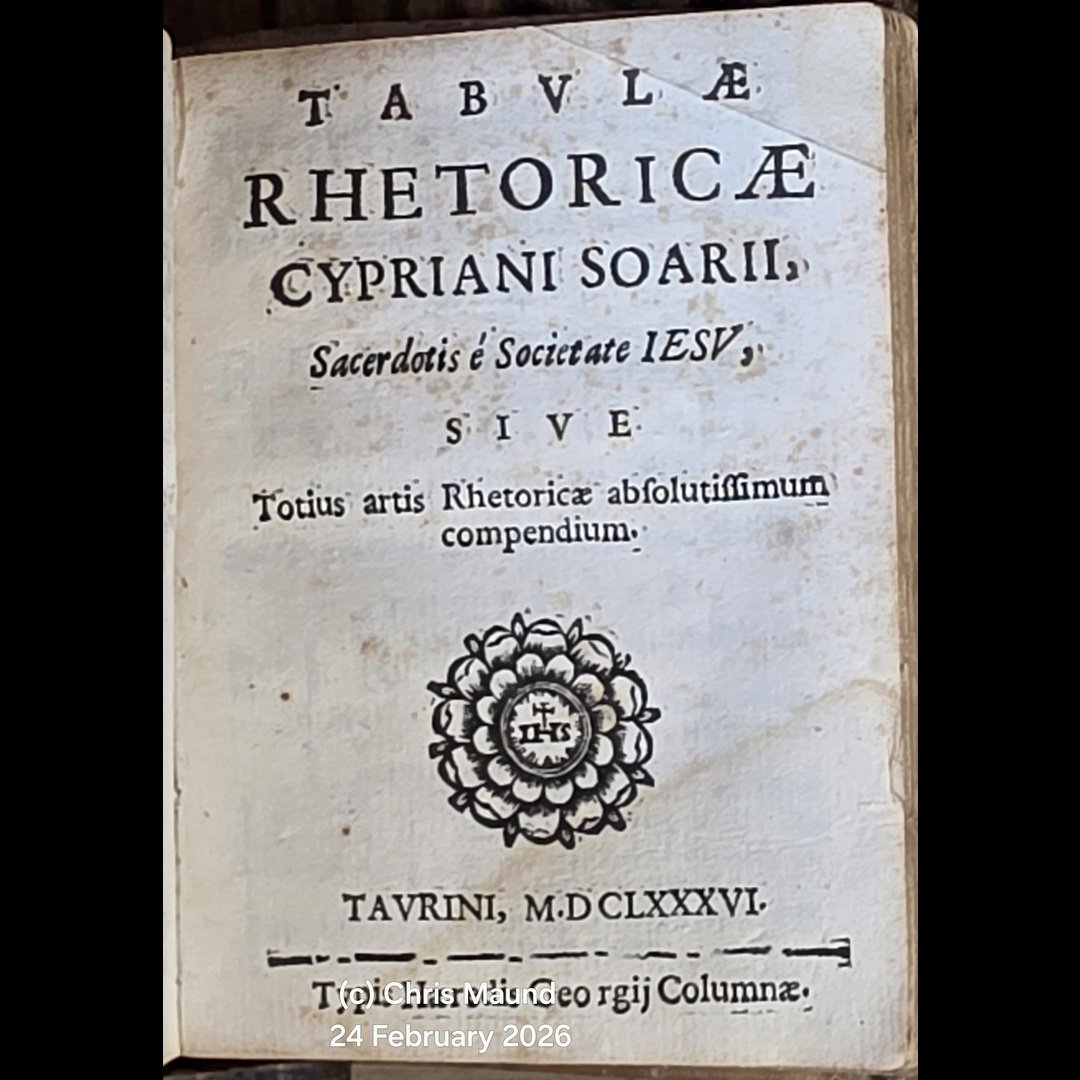 Image 11 of 22
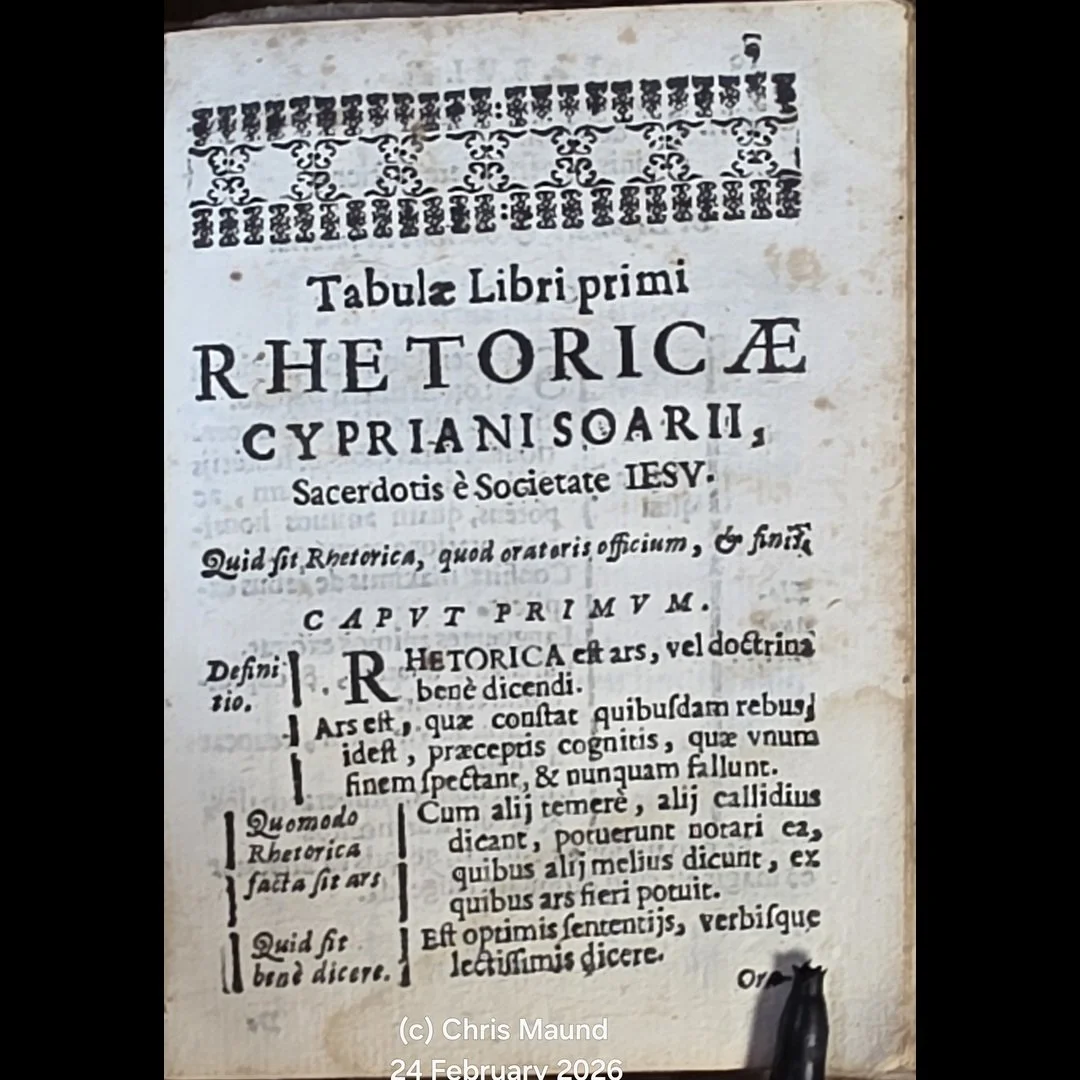 Image 12 of 22
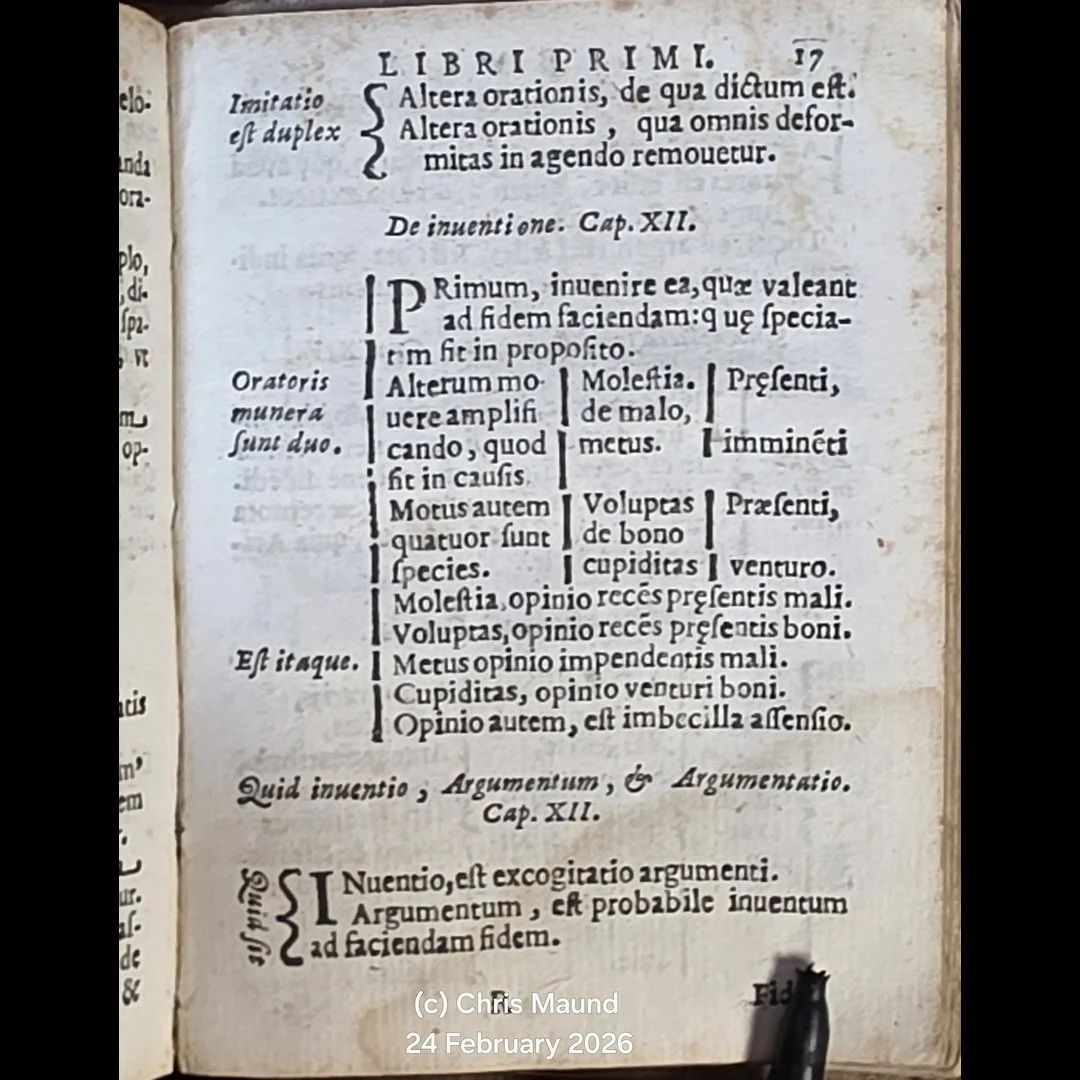 Image 13 of 22
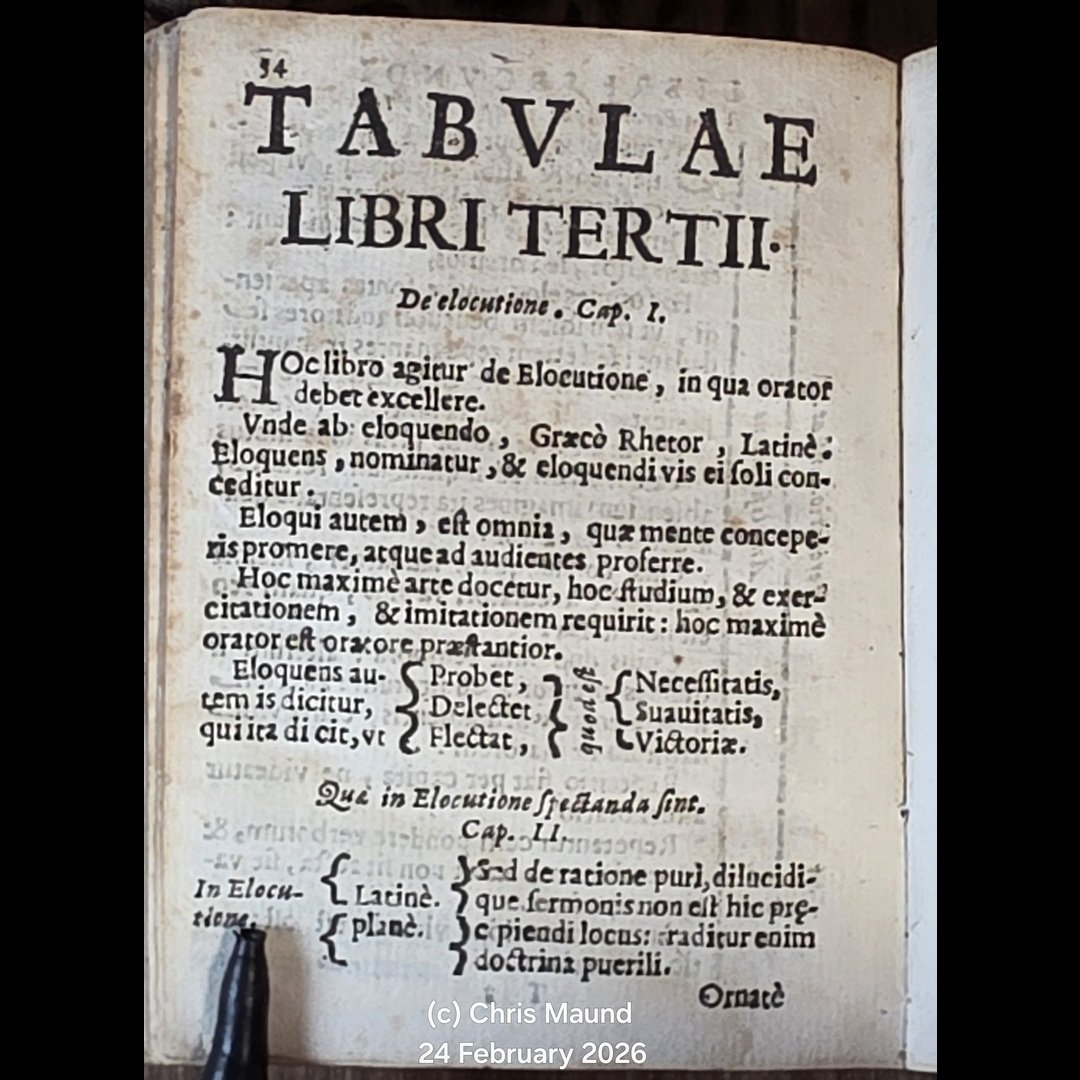 Image 14 of 22
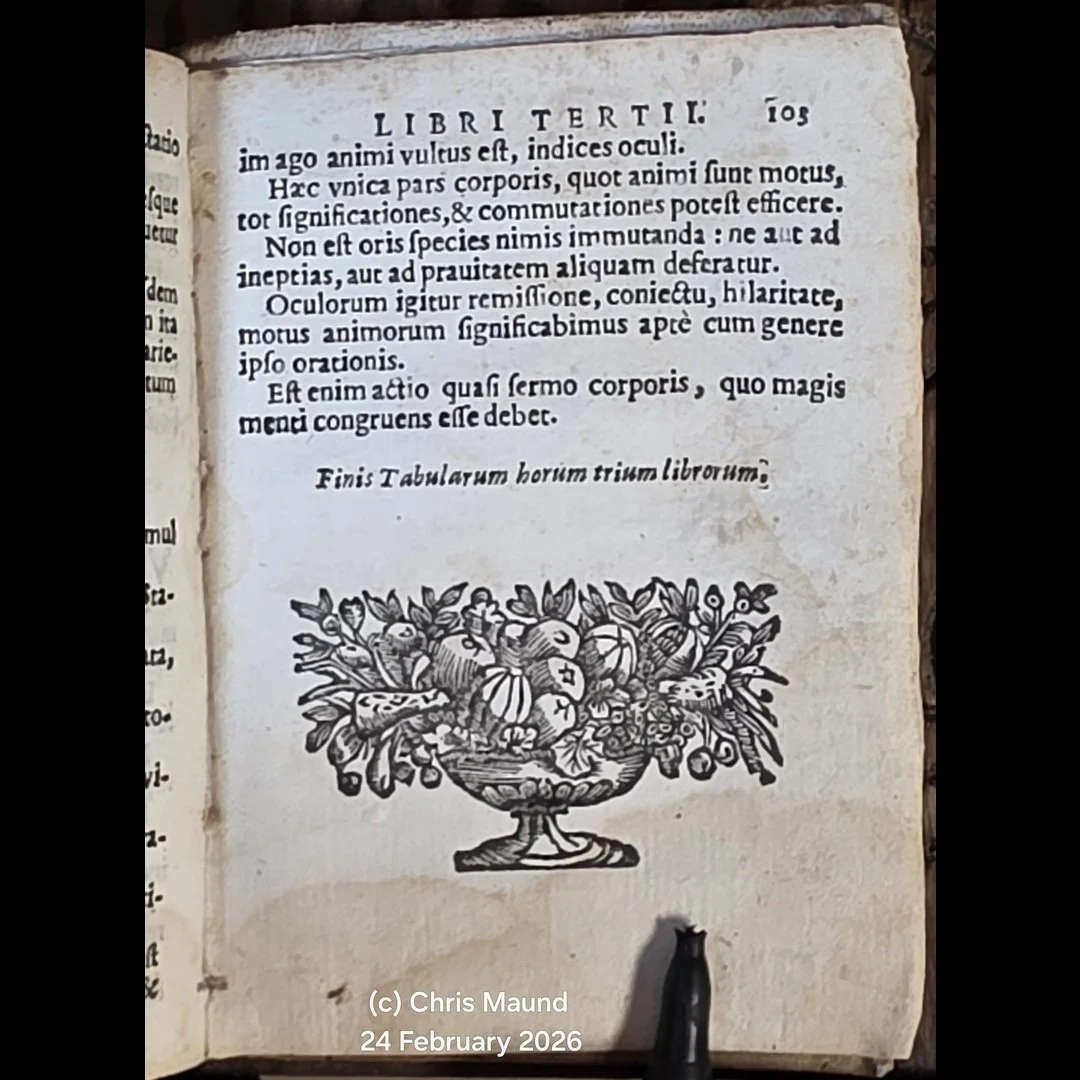 Image 15 of 22
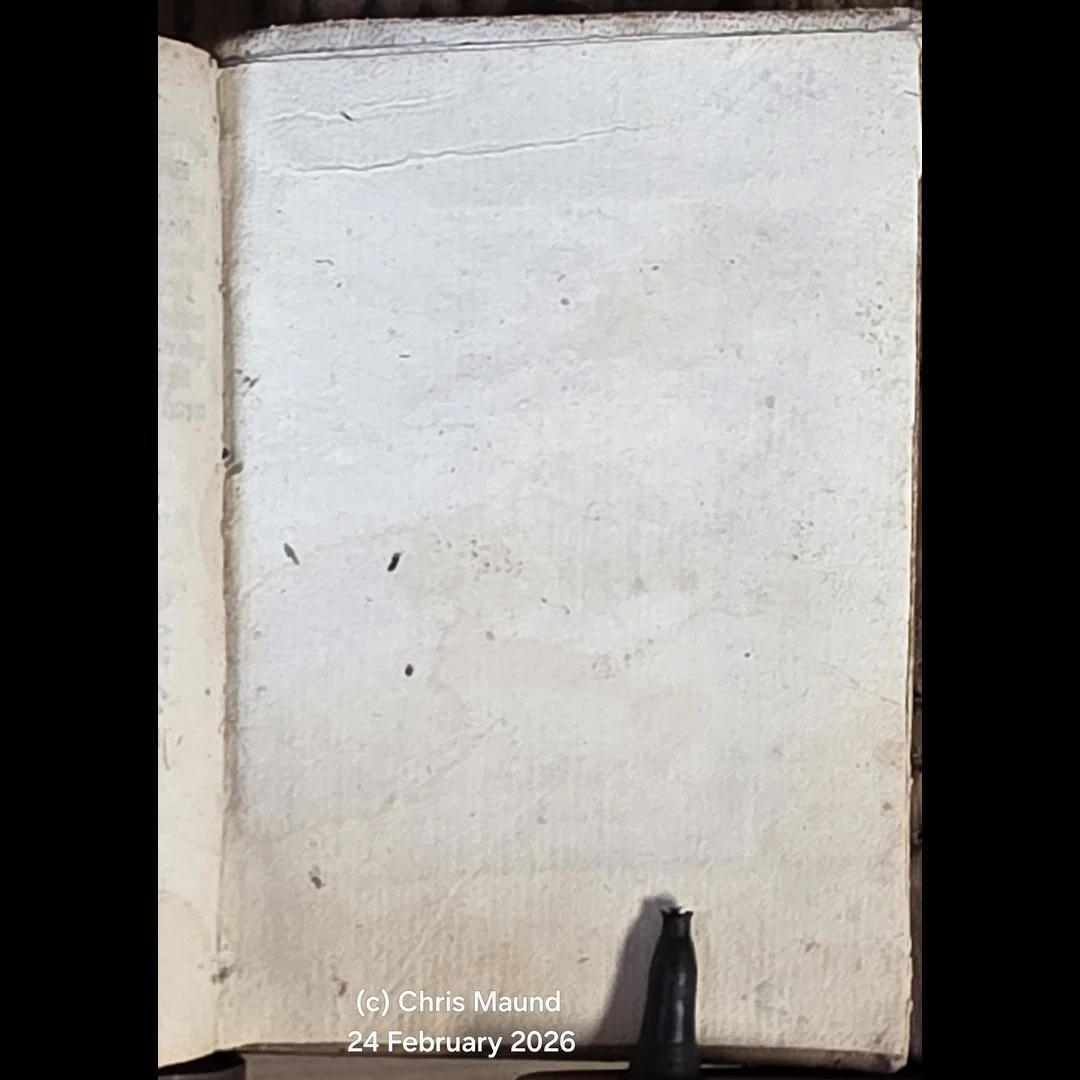 Image 16 of 22
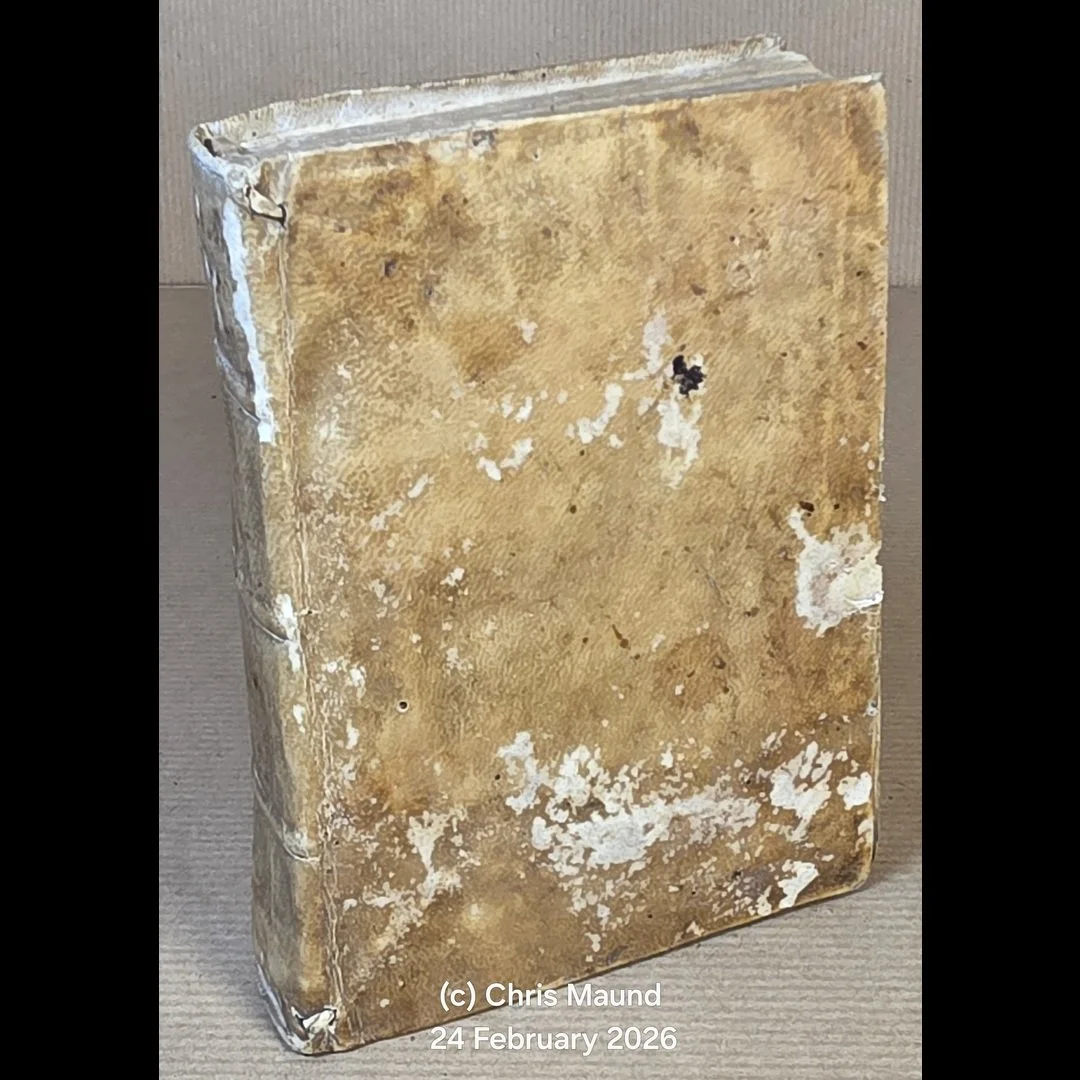 Image 17 of 22
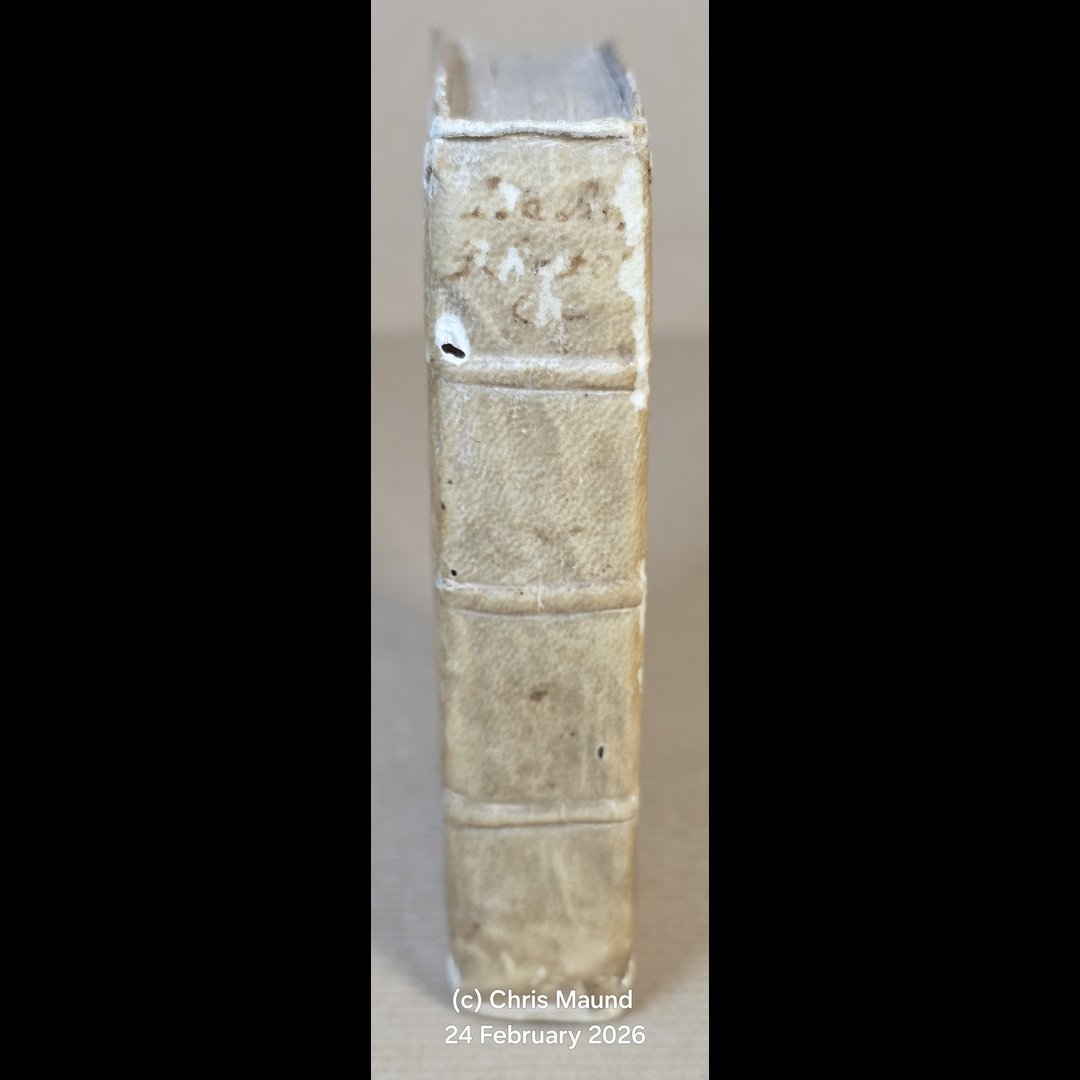 Image 18 of 22
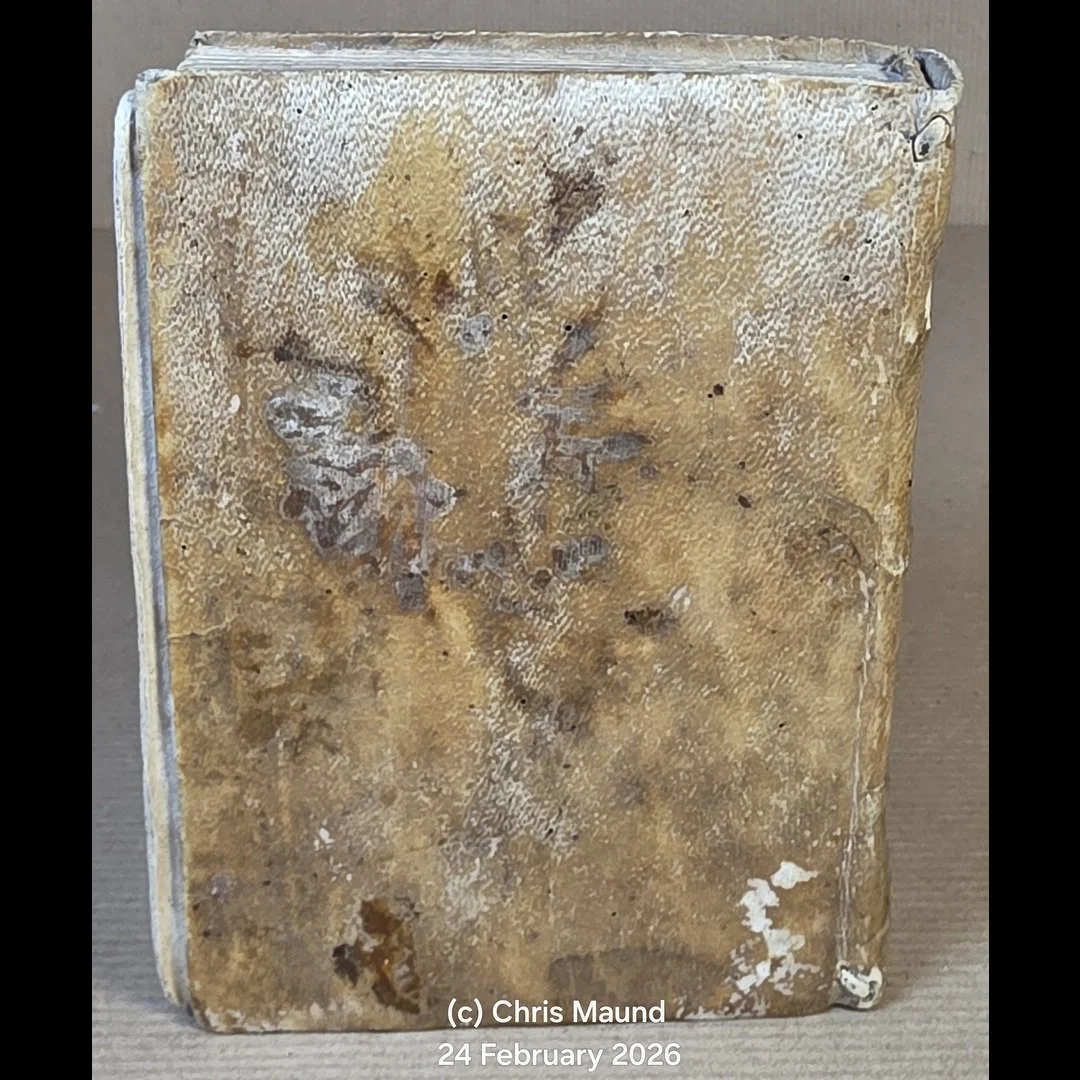 Image 19 of 22
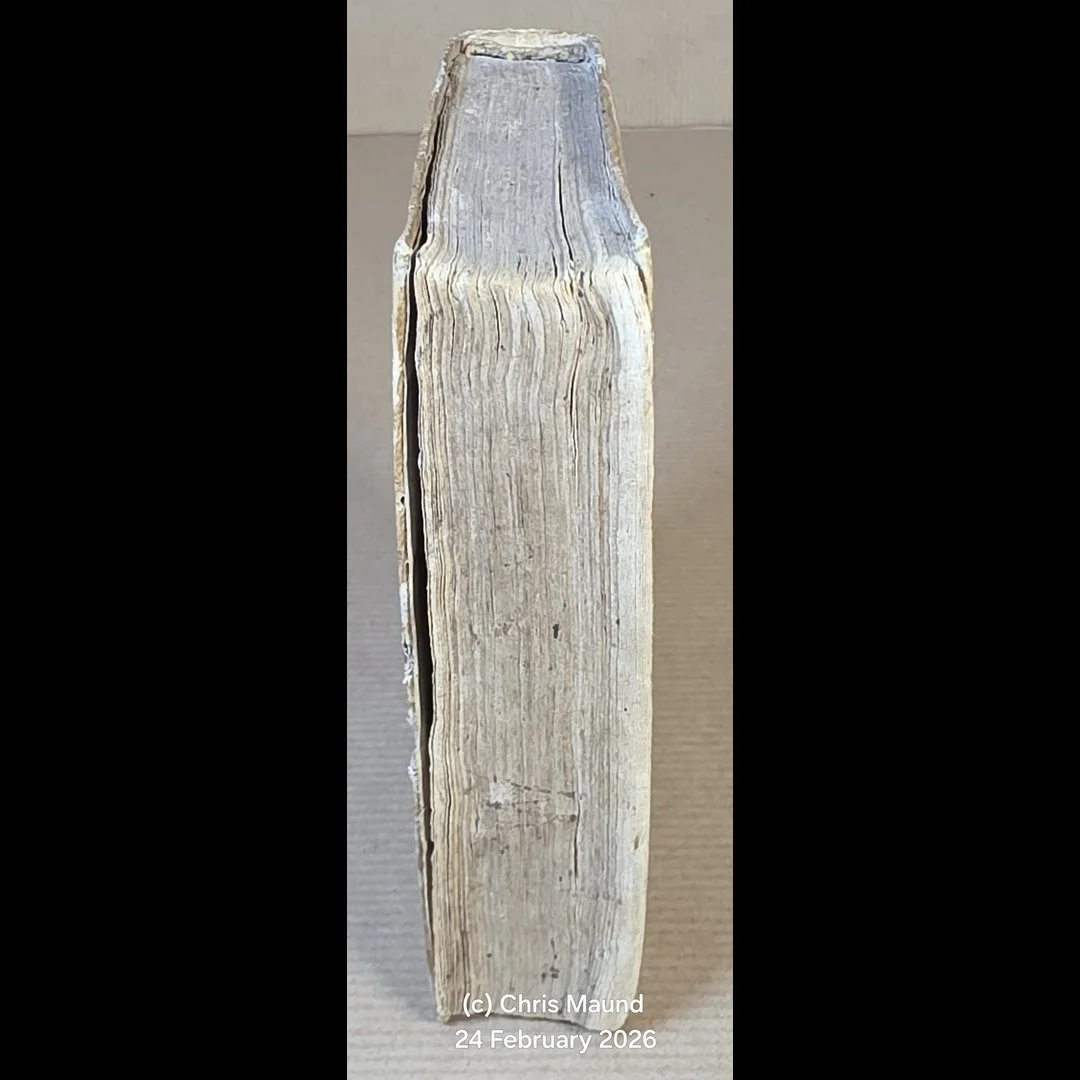 Image 20 of 22
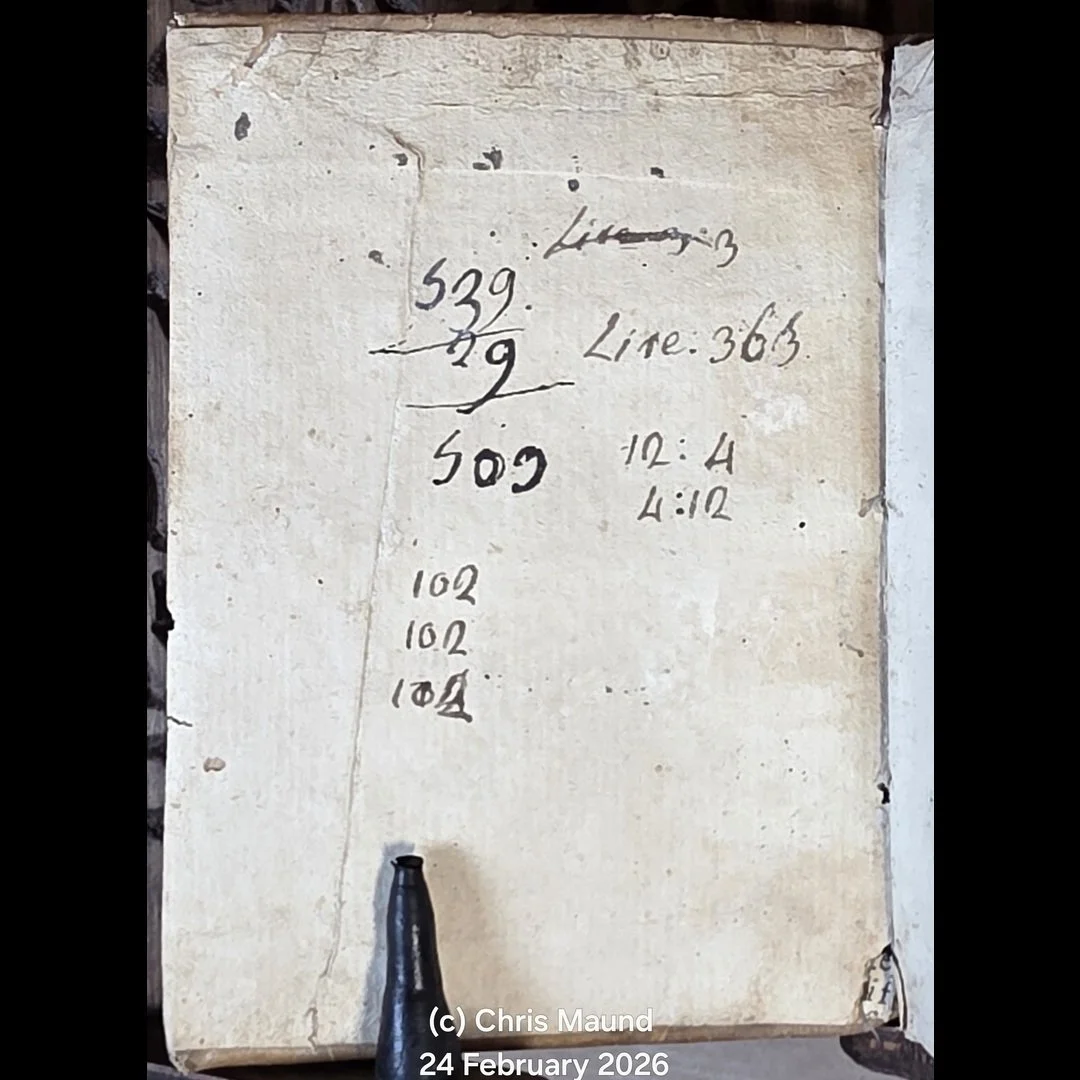 Image 21 of 22
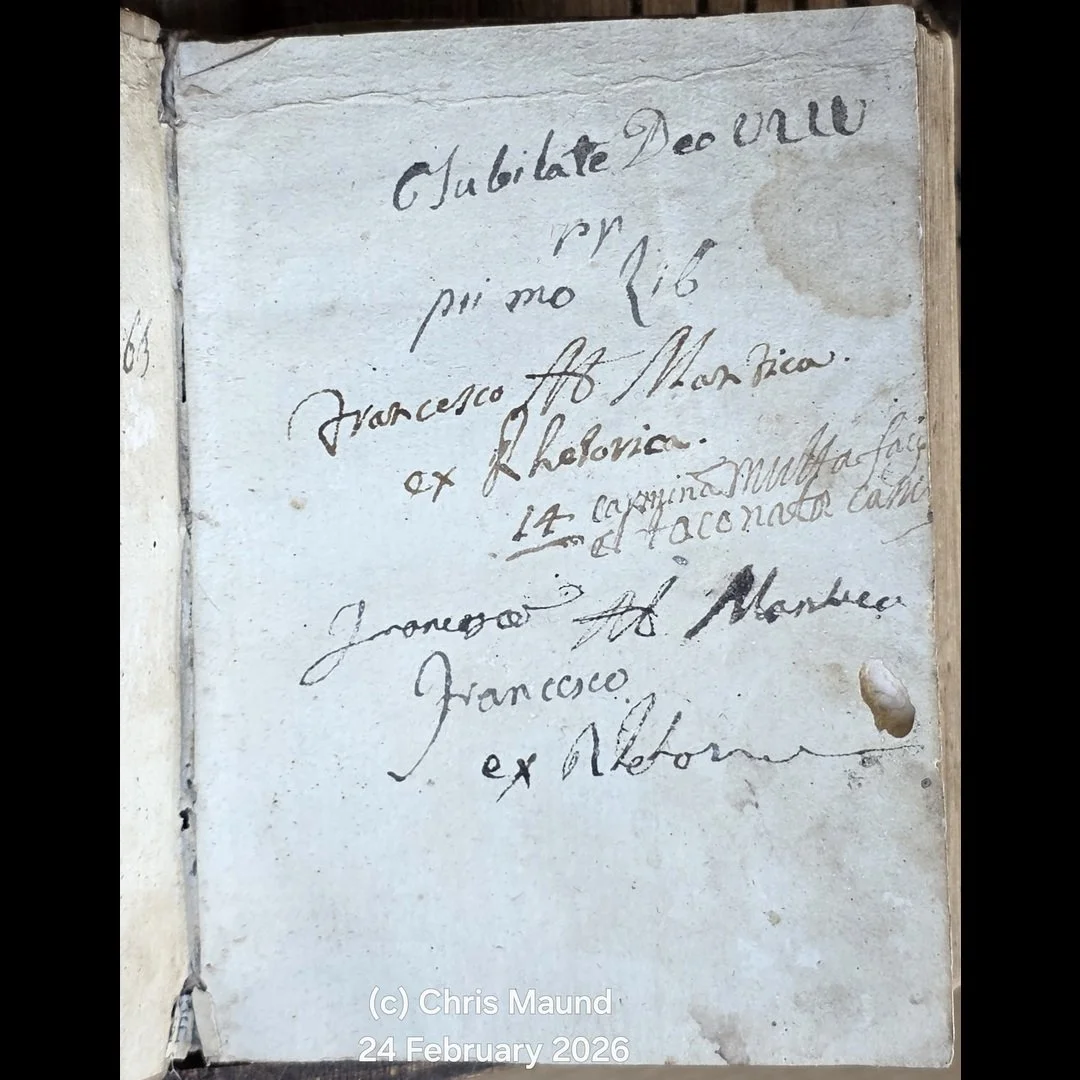 Image 22 of 22