1552 First Edition With Provenance
TRACTATUS DE BALNEO VILLENSI IN AGRO LUCENSI POSITO THERMAL MEDICINE (BALNEOLOGY)
By D. Georgius (Giorgio) Franciottus, Franciotti
KEY DETAILS
Condition: Very Good
Format: Hardcover, Quarto (4to); Later full vellum over boards
Published By: Lucae [Lucca]: apud Busdracum [Vincenzo Busdraghi], Itlay, 1552
Language: Latin
Illustrated By: Vincenzo Busdraghi (Printer)
Provenance: The upper board bears a circular blind-stamped ownership device reading: BUR / LAMAC / CHI
Collation: 150, [2] pp.
Dust Jacket: None, as issued
SKU: BTETM0002696
Shipping Info: Approximate Package Dimensions H: 12.5, L: 30, W: 25 (Units: cm), W: 2Kg
Tracked Shipping, Insurance Coverage as per Customer Request
DESCRIPTION
TRACTATUS DE BALNEO VILLENSI IN AGRO LUCENSI POSITO thermal medicine (balneology)
Renaissance Medicine, Balneology & the Thermal Waters of Bagni di Lucca
A scarce first edition, published at Lucca in 1552, of Giorgio Franciotti’s Renaissance medical treatise devoted to the therapeutic use of the mineral and thermal waters of Bagni di Lucca, one of Italy’s historic spa centres.
Tractatus de balneo Villensi, in agro Lucensi posito belongs to the important sixteenth-century literature of balneology and medical hydrology, in which physicians attempted to explain the physical properties of mineral springs and establish systematic therapeutic regimes for their use.
Franciotti considers the nature and medicinal qualities of thermal waters, their appropriate modes of use, and the illnesses and bodily disorders for which particular waters were believed beneficial. The work consequently stands at the intersection of Renaissance medicine, natural philosophy, hydrology and the early history of spa therapy.
The volume was printed by the distinguished Luccan printer Vincenzo Busdraghi, whose press played an important role in establishing sustained printing in Lucca during the sixteenth century. The title page bears a substantial woodcut device and the volume concludes with Busdraghi’s characteristic printer’s device.
An appealing and complete copy, made considerably more interesting by its distinctive BURLAMACCHI provenance, particularly given Maurizio Burlamacchi’s later historical work on the very location treated by Franciotti.
PROVENANCE
The upper board bears a circular blind-stamped ownership device reading: BUR / LAMAC / CHI
The distinctive mark is strongly associated with the library of Maurizio Burlamacchi (1930–2016), an Italian bibliophile, author and Knight of Malta whose collection included important early printed books. Other books documented from Burlamacchi’s library have been recorded in polished tan calf bindings bearing the same circular BURLAMACCHI blind stamp.
The association is particularly appropriate to the present work.
In 1969 Maurizio Burlamacchi published: Le antiche case del Bagno alla Villa in terra di Lucca
a substantial historical study devoted specifically to Bagno alla Villa, part of the Bagni di Lucca complex whose thermal waters are the subject of Franciotti’s 1552 treatise.
The combination creates a particularly pleasing chain of intellectual provenance: a sixteenth-century medical work devoted to the waters of Bagno alla Villa, subsequently belonging, apparently, to a twentieth-century Luccan bibliophile who himself published a historical study of the same place.
While the distinctive binding stamp provides strong evidence for the attribution, no documentary record identifying this individual volume within the Burlamacchi library has presently been located; the provenance is therefore described cautiously rather than as definitively documented.
CONDITION, COLLATION & COPY NOTES
COLLATION
150, [2] pp.
Signatures A–T⁴.
Complete.
Title page with large woodcut device; text predominantly printed in italic type with woodcut initials.
The terminal material is present, including the concluding text concerning the virtues of the waters, errata/registrum, and the final Busdraghi printer’s device.
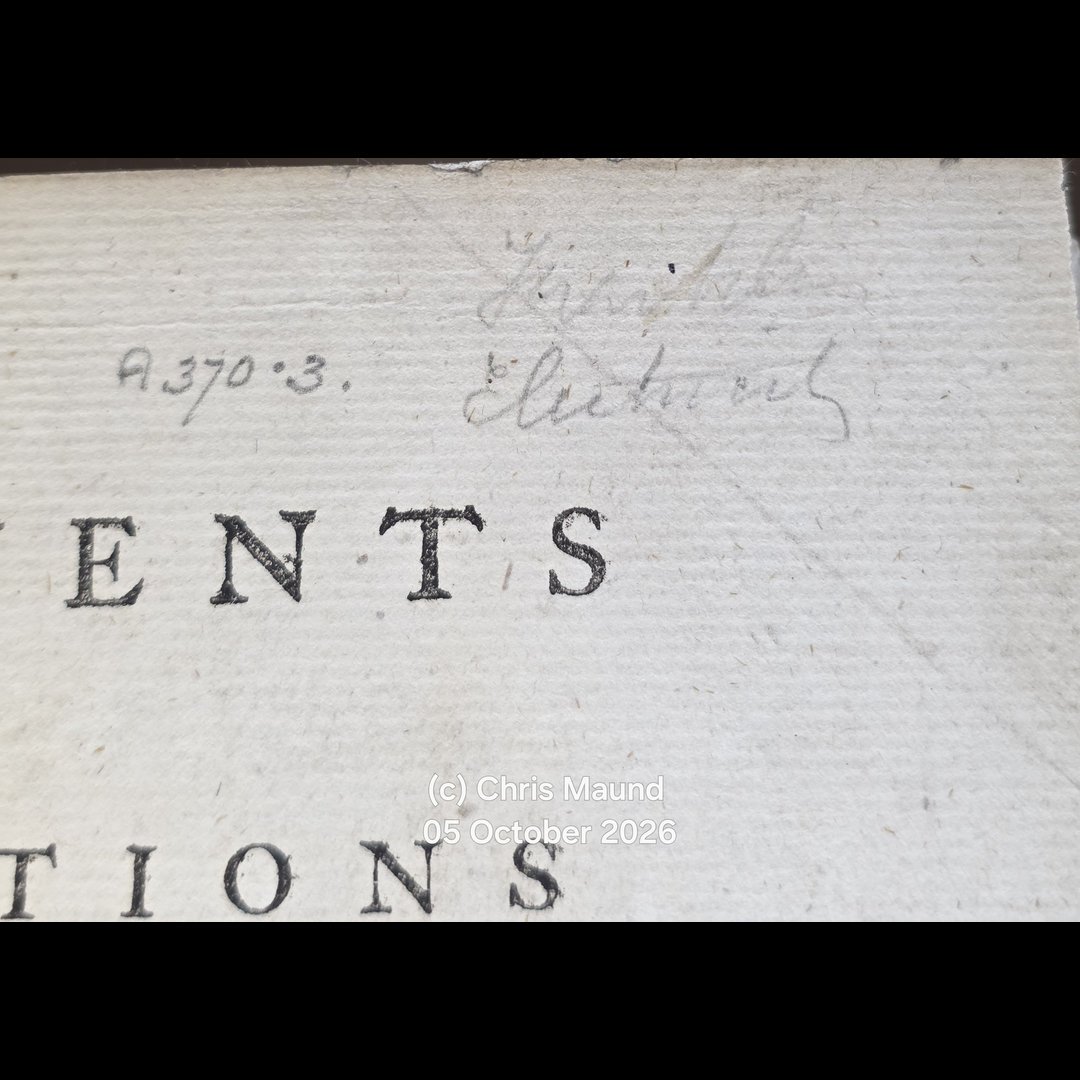
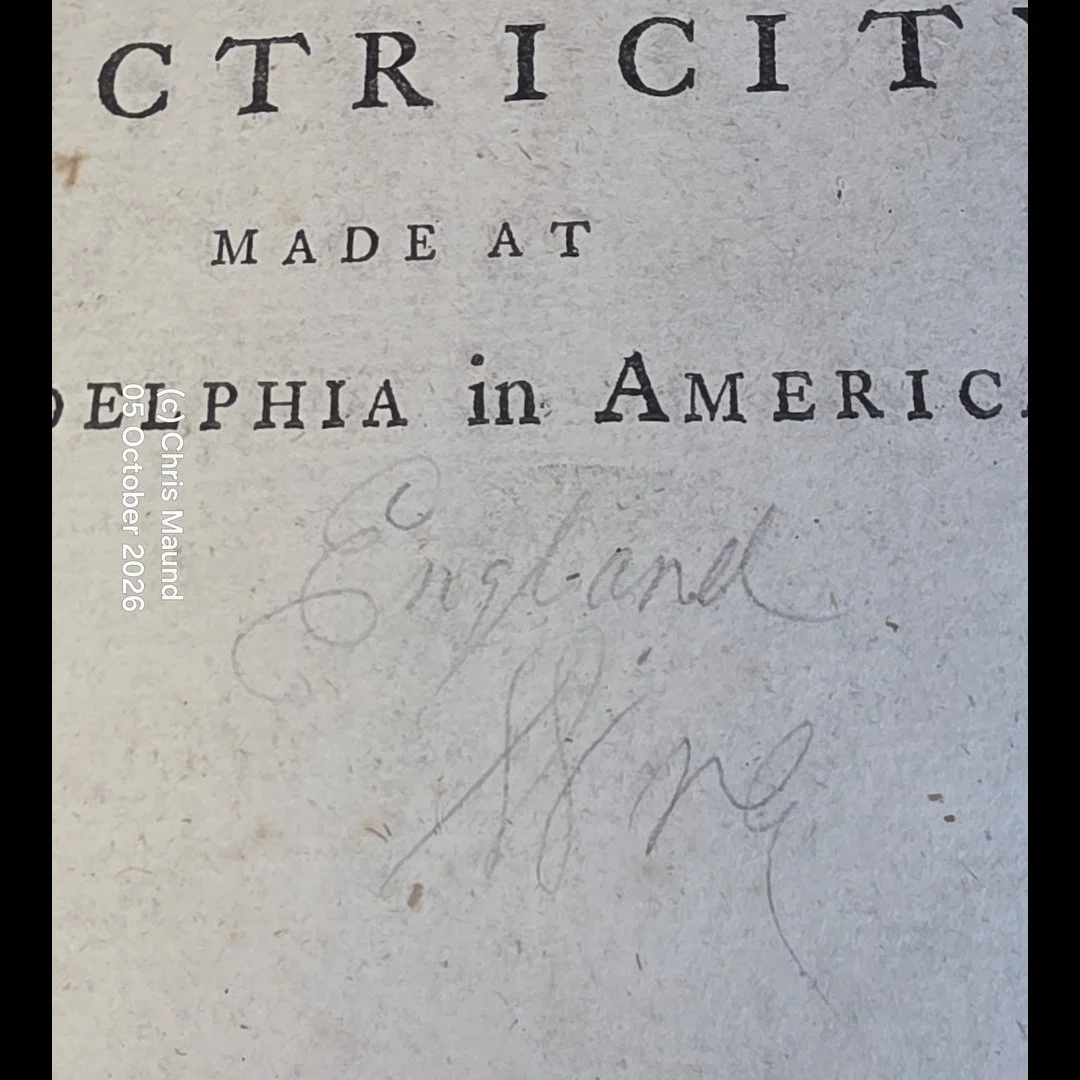
Later pencil numbers and bibliographical/ownership notations are present to the rear endpaper.
No dust jacket, as issued.
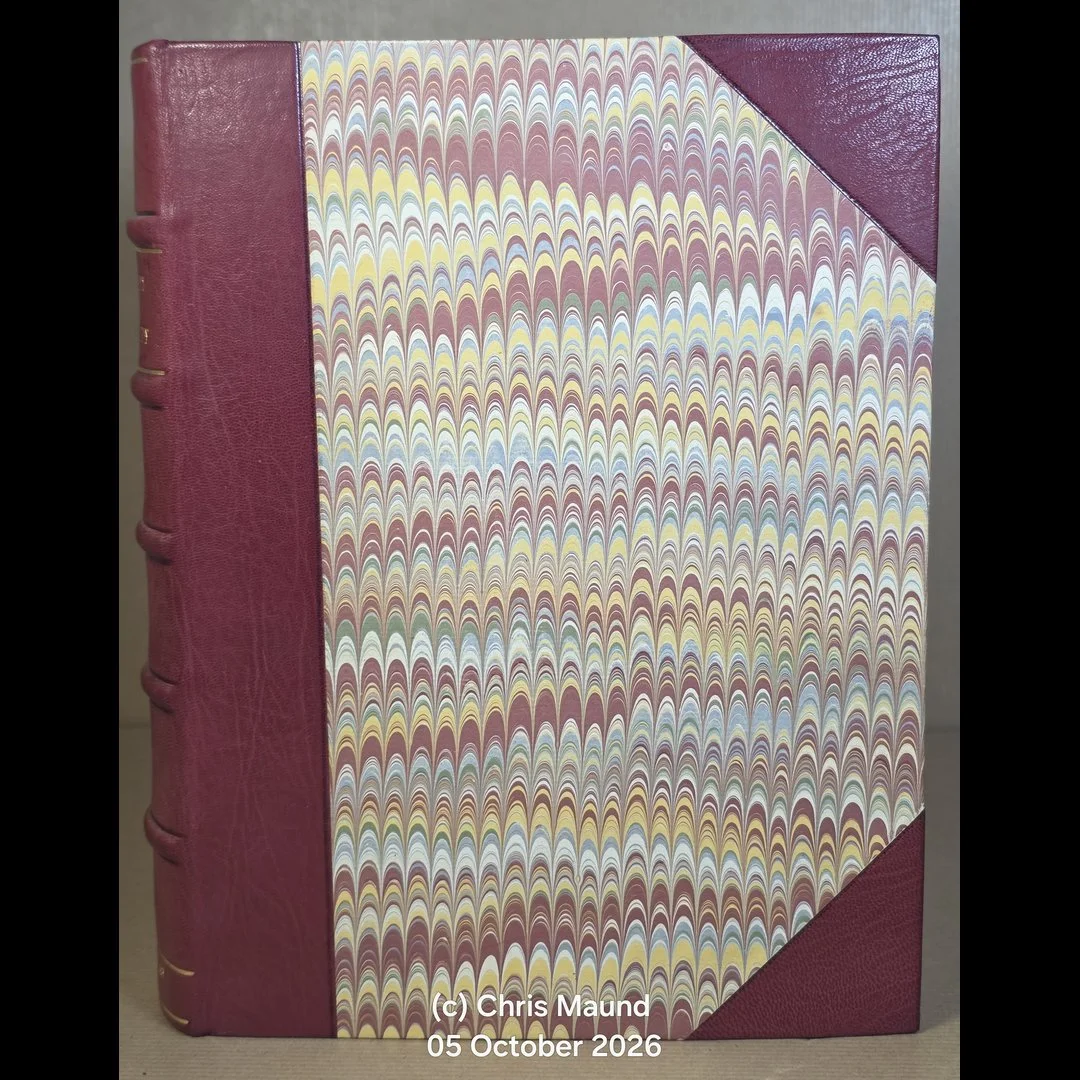
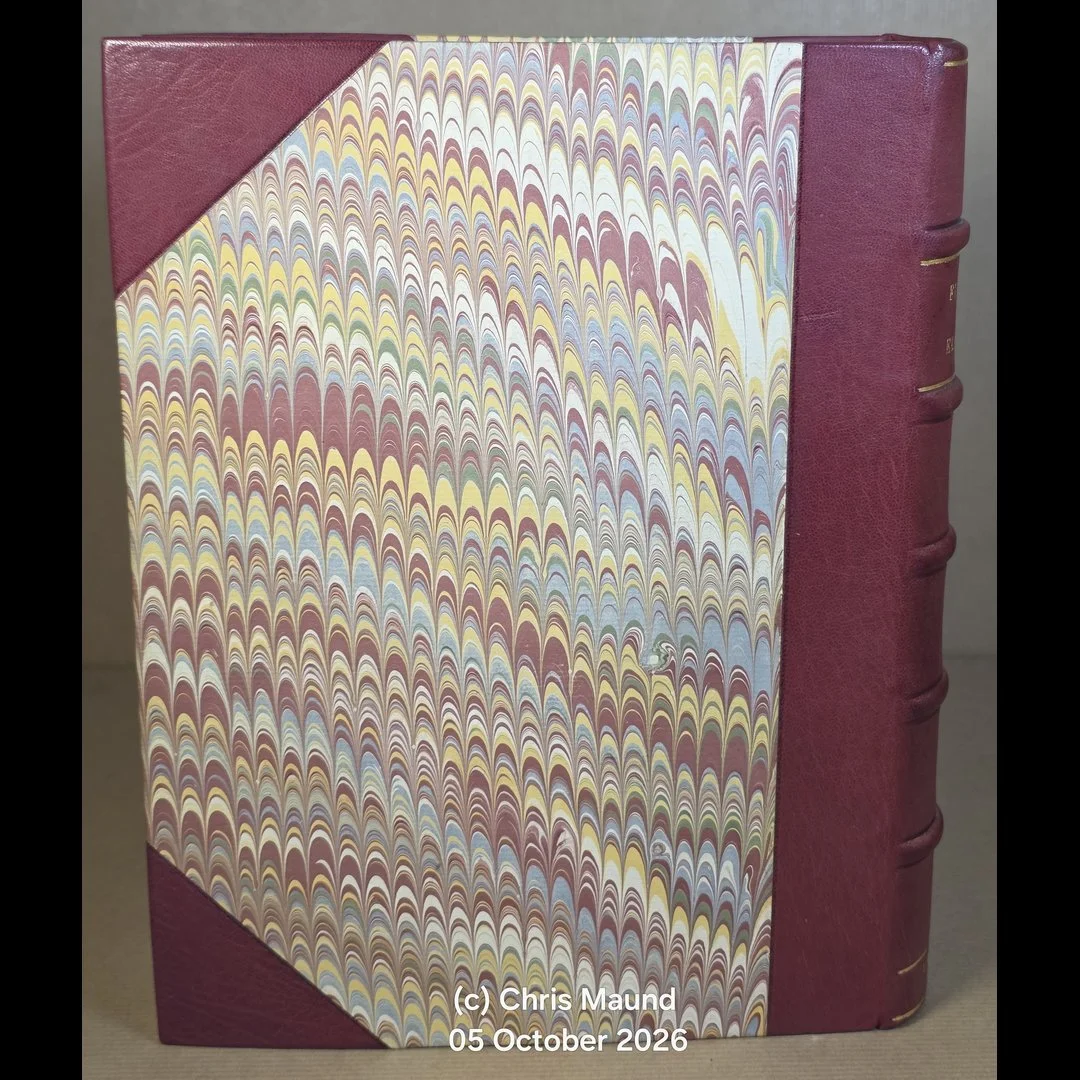
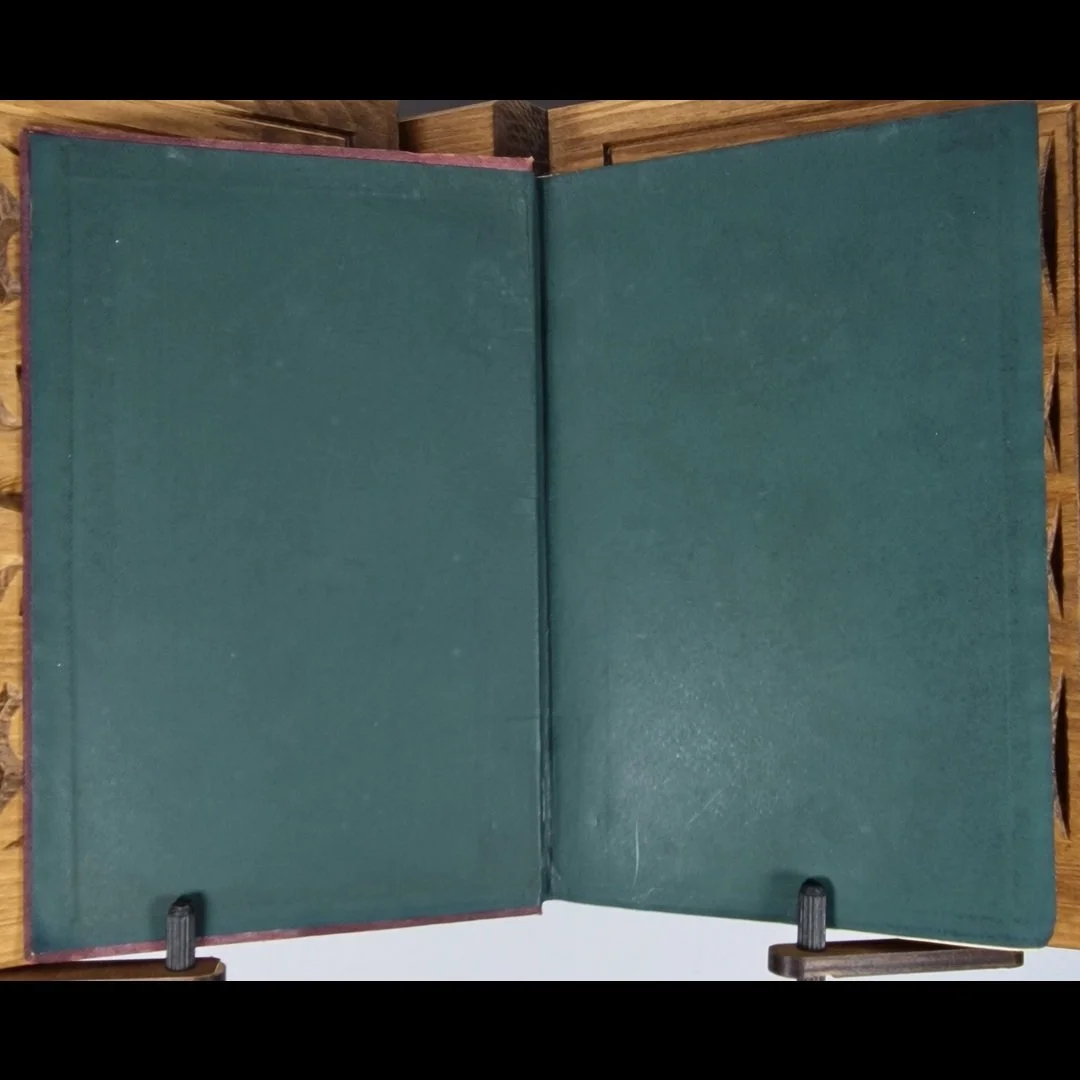
Later, probably twentieth-century, full tan calf over boards, ruled and decorated in blind, with raised bands to the spine. Circular BURLAMACCHI blind-stamped ownership device to the upper board.
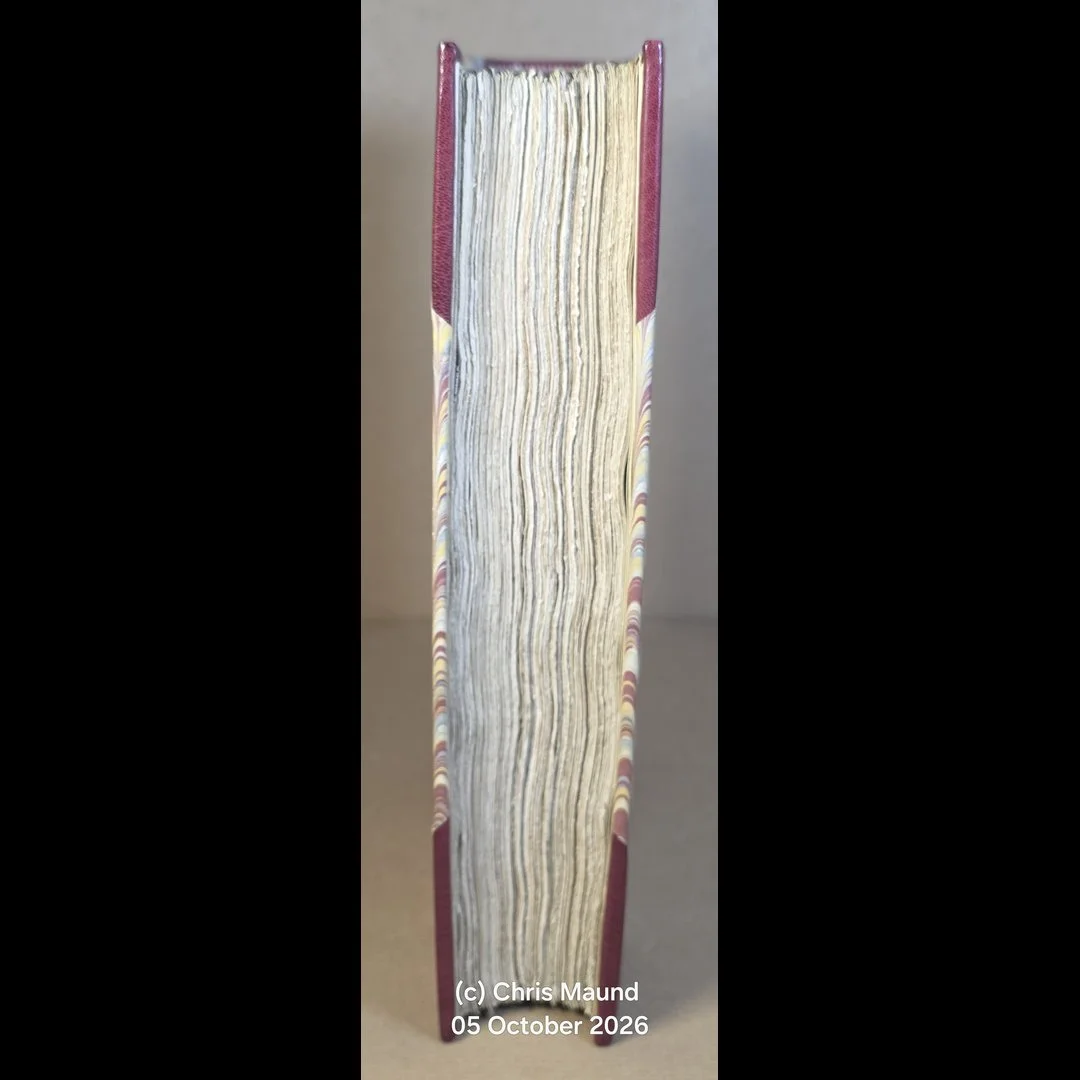
The binding shows expected rubbing, surface wear and darkening, particularly to the spine, with some age-related surface marking. The binding remains firm and attractive.
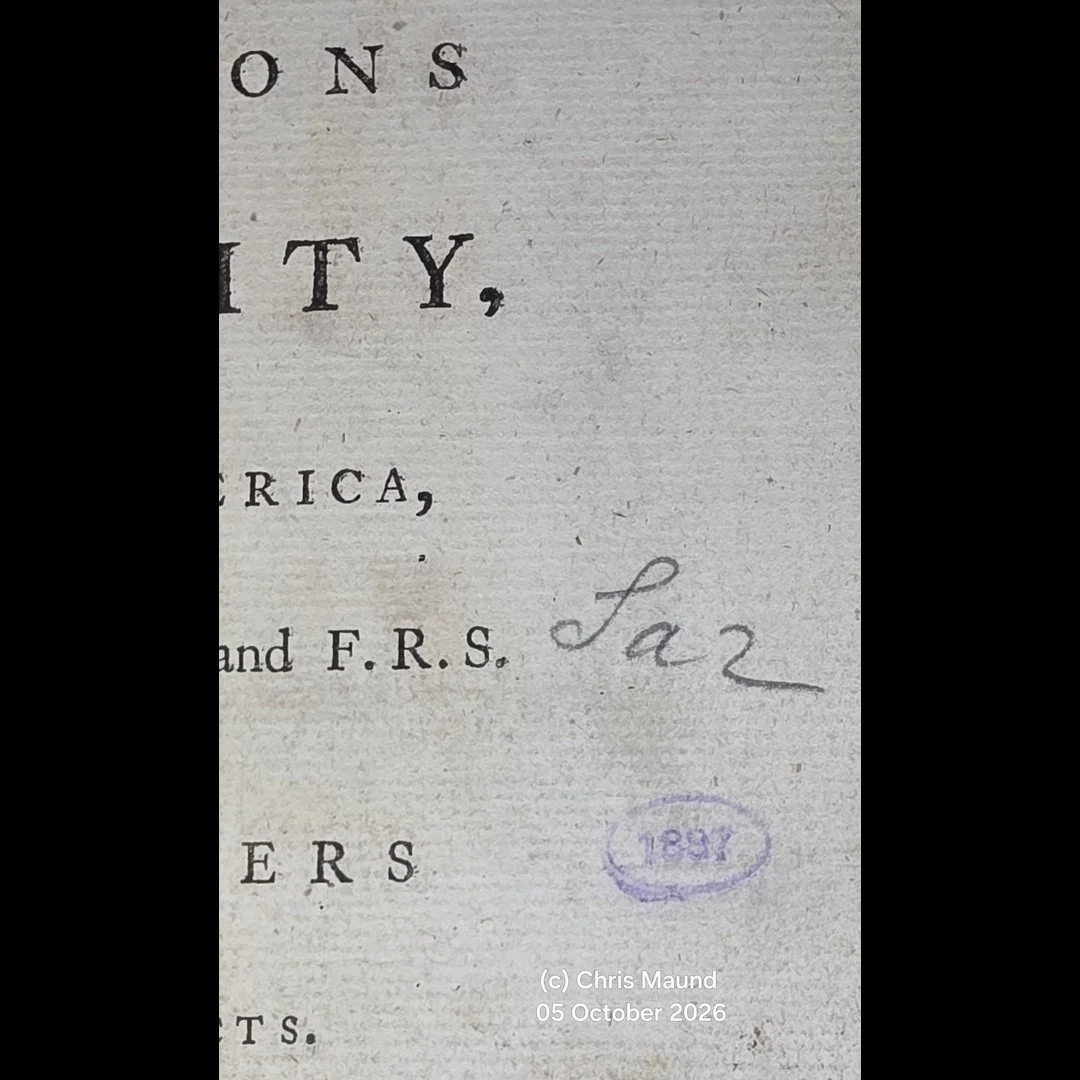
Internally generally clean and well preserved for a mid-sixteenth-century medical work. Some toning, occasional spotting and scattered marginal damp staining are present, including staining around portions of the title page and preliminaries, but the text remains clear and strongly printed.
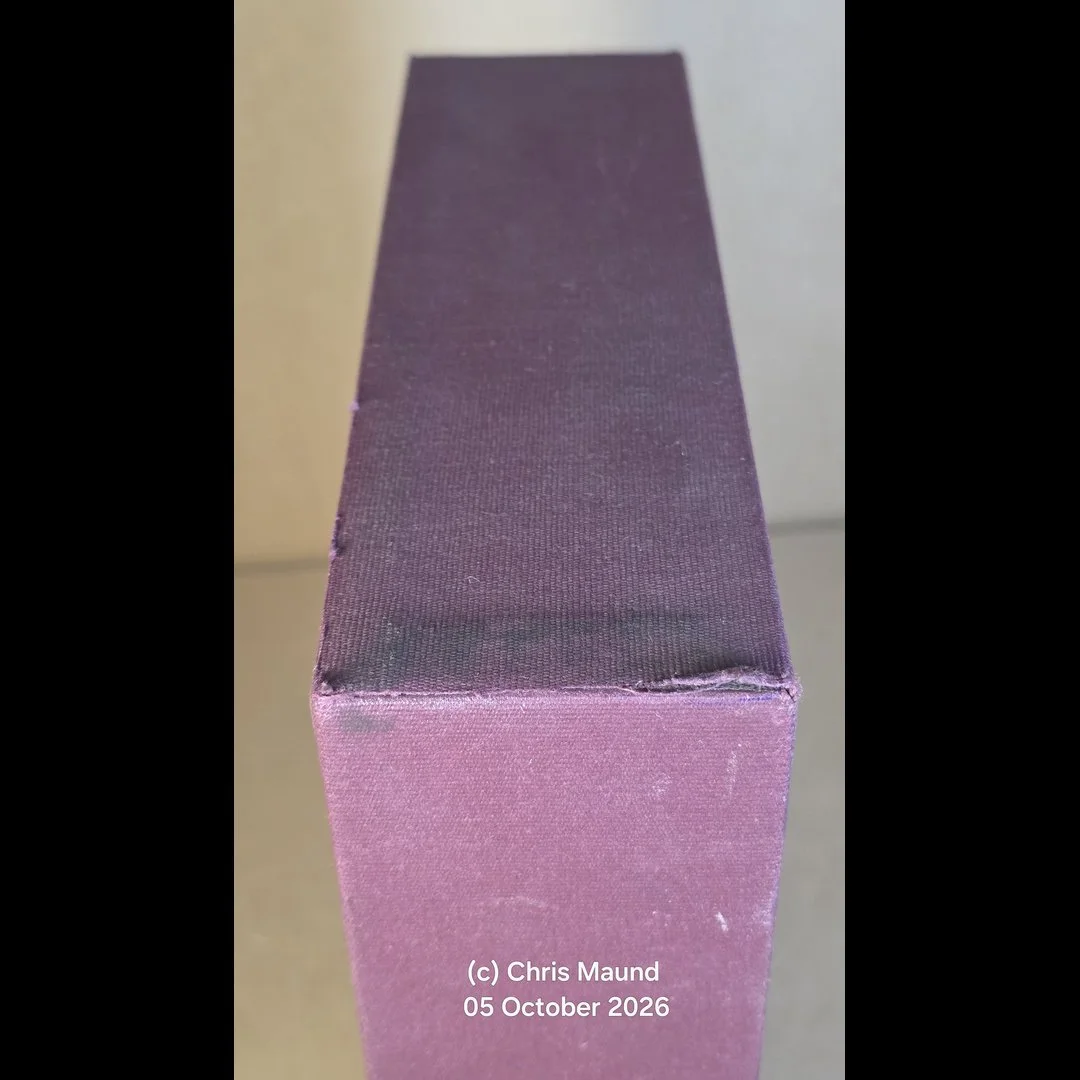
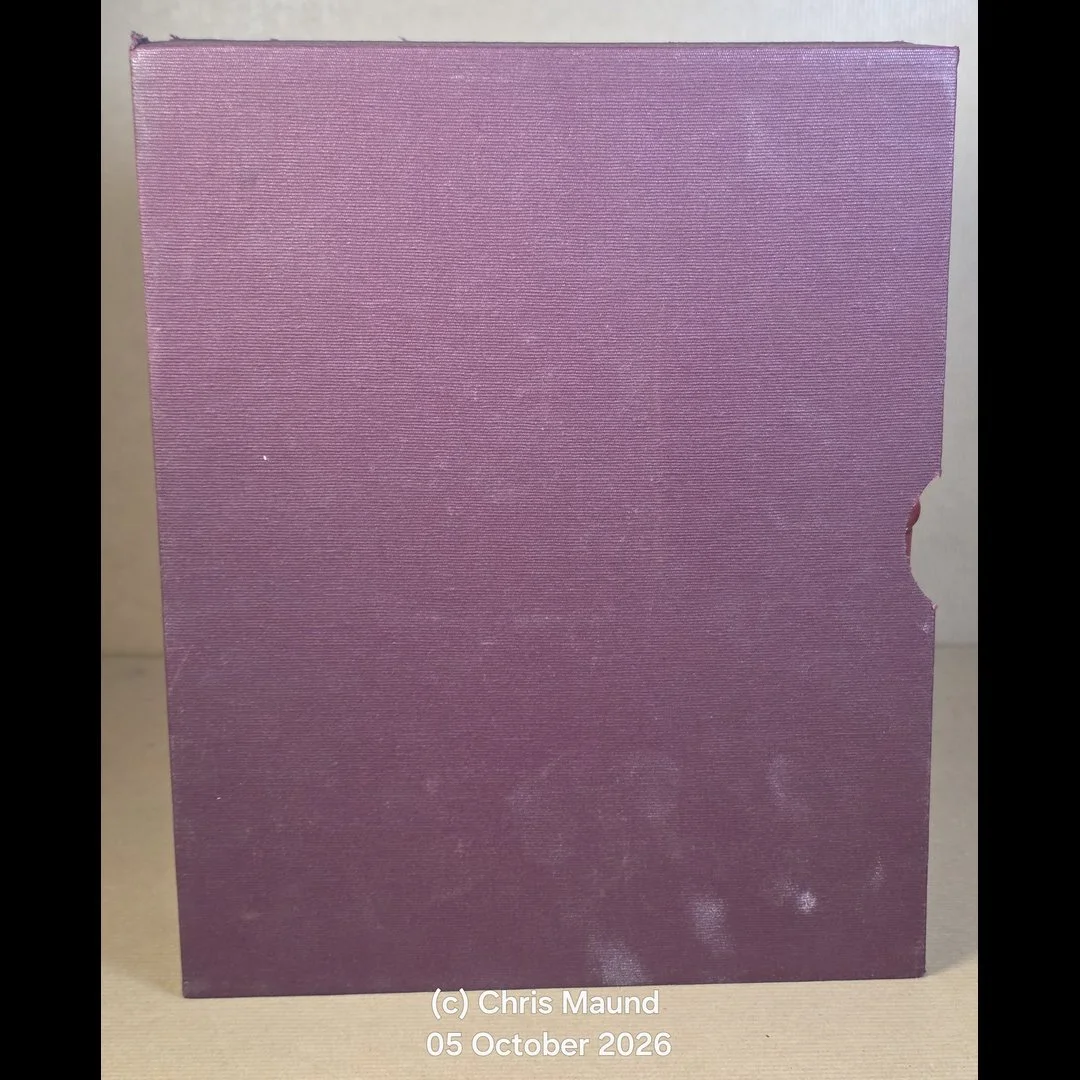
Please see Photos as part of condition report.
REFERENCES
EDIT16: CNCE 019790
USTC: 830841
ICCU / OPAC SBN: BVEE002508
WorldCat / OCLC: 797451880
Wellcome Collection: Tractatus de balneo Villensi, in agro Lucensi posito, Lucca, Vincenzo Busdraghi, 1552 — 150, [2] pp.; 4to.
Recent specialist auction cataloguing likewise records the work as 150, [2] pp., quarto, with title-page woodcut, italic text and Busdraghi’s printer’s device at the end.
SYNOPSIS
During the Renaissance, mineral springs occupied an unusual position between medicine and the natural sciences. Their waters were believed to acquire therapeutic properties through the minerals, earth and subterranean materials through which they passed, and physicians increasingly attempted to describe those properties systematically rather than relying solely upon inherited tradition.
Franciotti’s Tractatus de balneo Villensi is an early example of this developing medical literature of thermal waters.
Centred upon the celebrated baths in the territory of Lucca, the work discusses the character of the waters and their application in the treatment of disease. Franciotti considers when and how the waters should be taken and the types of ailments for which thermal treatment might appropriately be prescribed.
The result provides a fascinating window onto sixteenth-century medical practice: an era in which diet, environment, mineral composition, bathing and the regulated consumption of natural waters all formed part of a physician’s therapeutic armoury.
The work is therefore of interest not only as a study of Bagni di Lucca, but also within the wider history of medicine, hydrotherapy, balneology, natural philosophy and the development of European spa culture.
AUTHOR BIO
Giorgio Franciotti (d. 1570) was a physician of Lucca, identified on the title page of the present work as medici Lucensis.
Although comparatively little biographical information concerning Franciotti survives, his Tractatus de balneo Villensi places him within a substantial Renaissance medical tradition concerned with the investigation of mineral springs and their therapeutic application.
Published in 1552, the work remains his principal bibliographical association and reflects the considerable medical reputation enjoyed by the thermal springs around Lucca during the sixteenth century.
ILLUSTRATOR
Vincenzo Busdraghi (Printer)
Vincenzo Busdraghi (1524–1601) was one of the most important printers active in sixteenth-century Lucca.
Beginning his printing career in 1549, Busdraghi helped transform printing in Lucca from an intermittent activity into an established local industry. His press became known for its italic types, woodcut initials and distinctive printer’s devices incorporating the dragon derived from the Busdraghi family arms.
The present volume was therefore produced during the very early years of Busdraghi’s press, only a few years after he began printing in Lucca.
His substantial woodcut device at the end of this volume provides a particularly attractive example of his typographical identity.
1552 First Edition With Provenance
TRACTATUS DE BALNEO VILLENSI IN AGRO LUCENSI POSITO THERMAL MEDICINE (BALNEOLOGY)
By D. Georgius (Giorgio) Franciottus, Franciotti
KEY DETAILS
Condition: Very Good
Format: Hardcover, Quarto (4to); Later full vellum over boards
Published By: Lucae [Lucca]: apud Busdracum [Vincenzo Busdraghi], Itlay, 1552
Language: Latin
Illustrated By: Vincenzo Busdraghi (Printer)
Provenance: The upper board bears a circular blind-stamped ownership device reading: BUR / LAMAC / CHI
Collation: 150, [2] pp.
Dust Jacket: None, as issued
SKU: BTETM0002696
Shipping Info: Approximate Package Dimensions H: 12.5, L: 30, W: 25 (Units: cm), W: 2Kg
Tracked Shipping, Insurance Coverage as per Customer Request
DESCRIPTION
TRACTATUS DE BALNEO VILLENSI IN AGRO LUCENSI POSITO thermal medicine (balneology)
Renaissance Medicine, Balneology & the Thermal Waters of Bagni di Lucca
A scarce first edition, published at Lucca in 1552, of Giorgio Franciotti’s Renaissance medical treatise devoted to the therapeutic use of the mineral and thermal waters of Bagni di Lucca, one of Italy’s historic spa centres.
Tractatus de balneo Villensi, in agro Lucensi posito belongs to the important sixteenth-century literature of balneology and medical hydrology, in which physicians attempted to explain the physical properties of mineral springs and establish systematic therapeutic regimes for their use.
Franciotti considers the nature and medicinal qualities of thermal waters, their appropriate modes of use, and the illnesses and bodily disorders for which particular waters were believed beneficial. The work consequently stands at the intersection of Renaissance medicine, natural philosophy, hydrology and the early history of spa therapy.
The volume was printed by the distinguished Luccan printer Vincenzo Busdraghi, whose press played an important role in establishing sustained printing in Lucca during the sixteenth century. The title page bears a substantial woodcut device and the volume concludes with Busdraghi’s characteristic printer’s device.
An appealing and complete copy, made considerably more interesting by its distinctive BURLAMACCHI provenance, particularly given Maurizio Burlamacchi’s later historical work on the very location treated by Franciotti.
PROVENANCE
The upper board bears a circular blind-stamped ownership device reading: BUR / LAMAC / CHI
The distinctive mark is strongly associated with the library of Maurizio Burlamacchi (1930–2016), an Italian bibliophile, author and Knight of Malta whose collection included important early printed books. Other books documented from Burlamacchi’s library have been recorded in polished tan calf bindings bearing the same circular BURLAMACCHI blind stamp.
The association is particularly appropriate to the present work.
In 1969 Maurizio Burlamacchi published: Le antiche case del Bagno alla Villa in terra di Lucca
a substantial historical study devoted specifically to Bagno alla Villa, part of the Bagni di Lucca complex whose thermal waters are the subject of Franciotti’s 1552 treatise.
The combination creates a particularly pleasing chain of intellectual provenance: a sixteenth-century medical work devoted to the waters of Bagno alla Villa, subsequently belonging, apparently, to a twentieth-century Luccan bibliophile who himself published a historical study of the same place.
While the distinctive binding stamp provides strong evidence for the attribution, no documentary record identifying this individual volume within the Burlamacchi library has presently been located; the provenance is therefore described cautiously rather than as definitively documented.
CONDITION, COLLATION & COPY NOTES
COLLATION
150, [2] pp.
Signatures A–T⁴.
Complete.
Title page with large woodcut device; text predominantly printed in italic type with woodcut initials.
The terminal material is present, including the concluding text concerning the virtues of the waters, errata/registrum, and the final Busdraghi printer’s device.
Later pencil numbers and bibliographical/ownership notations are present to the rear endpaper.
No dust jacket, as issued.
Later, probably twentieth-century, full tan calf over boards, ruled and decorated in blind, with raised bands to the spine. Circular BURLAMACCHI blind-stamped ownership device to the upper board.
The binding shows expected rubbing, surface wear and darkening, particularly to the spine, with some age-related surface marking. The binding remains firm and attractive.
Internally generally clean and well preserved for a mid-sixteenth-century medical work. Some toning, occasional spotting and scattered marginal damp staining are present, including staining around portions of the title page and preliminaries, but the text remains clear and strongly printed.
Please see Photos as part of condition report.
REFERENCES
EDIT16: CNCE 019790
USTC: 830841
ICCU / OPAC SBN: BVEE002508
WorldCat / OCLC: 797451880
Wellcome Collection: Tractatus de balneo Villensi, in agro Lucensi posito, Lucca, Vincenzo Busdraghi, 1552 — 150, [2] pp.; 4to.
Recent specialist auction cataloguing likewise records the work as 150, [2] pp., quarto, with title-page woodcut, italic text and Busdraghi’s printer’s device at the end.
SYNOPSIS
During the Renaissance, mineral springs occupied an unusual position between medicine and the natural sciences. Their waters were believed to acquire therapeutic properties through the minerals, earth and subterranean materials through which they passed, and physicians increasingly attempted to describe those properties systematically rather than relying solely upon inherited tradition.
Franciotti’s Tractatus de balneo Villensi is an early example of this developing medical literature of thermal waters.
Centred upon the celebrated baths in the territory of Lucca, the work discusses the character of the waters and their application in the treatment of disease. Franciotti considers when and how the waters should be taken and the types of ailments for which thermal treatment might appropriately be prescribed.
The result provides a fascinating window onto sixteenth-century medical practice: an era in which diet, environment, mineral composition, bathing and the regulated consumption of natural waters all formed part of a physician’s therapeutic armoury.
The work is therefore of interest not only as a study of Bagni di Lucca, but also within the wider history of medicine, hydrotherapy, balneology, natural philosophy and the development of European spa culture.
AUTHOR BIO
Giorgio Franciotti (d. 1570) was a physician of Lucca, identified on the title page of the present work as medici Lucensis.
Although comparatively little biographical information concerning Franciotti survives, his Tractatus de balneo Villensi places him within a substantial Renaissance medical tradition concerned with the investigation of mineral springs and their therapeutic application.
Published in 1552, the work remains his principal bibliographical association and reflects the considerable medical reputation enjoyed by the thermal springs around Lucca during the sixteenth century.
ILLUSTRATOR
Vincenzo Busdraghi (Printer)
Vincenzo Busdraghi (1524–1601) was one of the most important printers active in sixteenth-century Lucca.
Beginning his printing career in 1549, Busdraghi helped transform printing in Lucca from an intermittent activity into an established local industry. His press became known for its italic types, woodcut initials and distinctive printer’s devices incorporating the dragon derived from the Busdraghi family arms.
The present volume was therefore produced during the very early years of Busdraghi’s press, only a few years after he began printing in Lucca.
His substantial woodcut device at the end of this volume provides a particularly attractive example of his typographical identity.

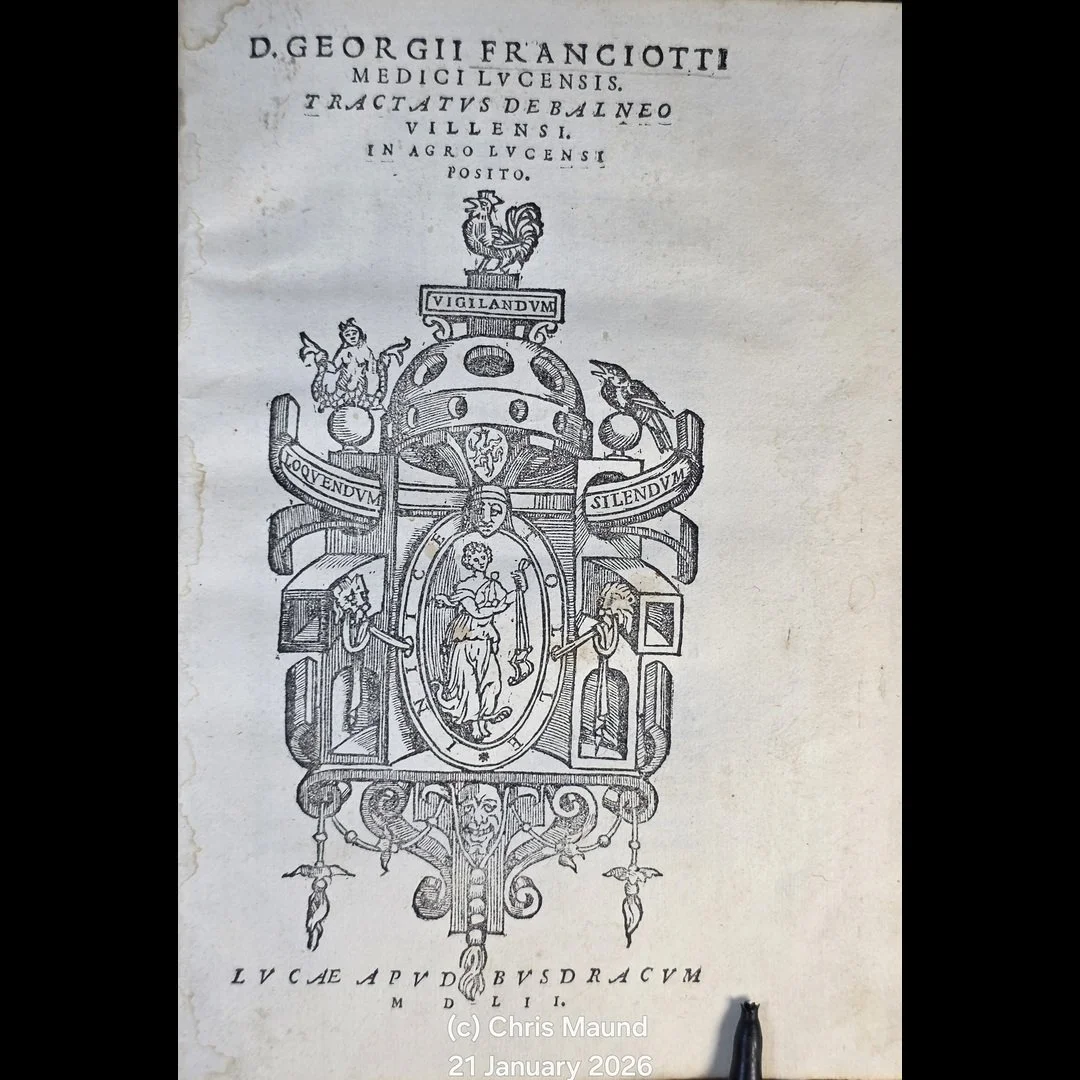 Image 1 of 21
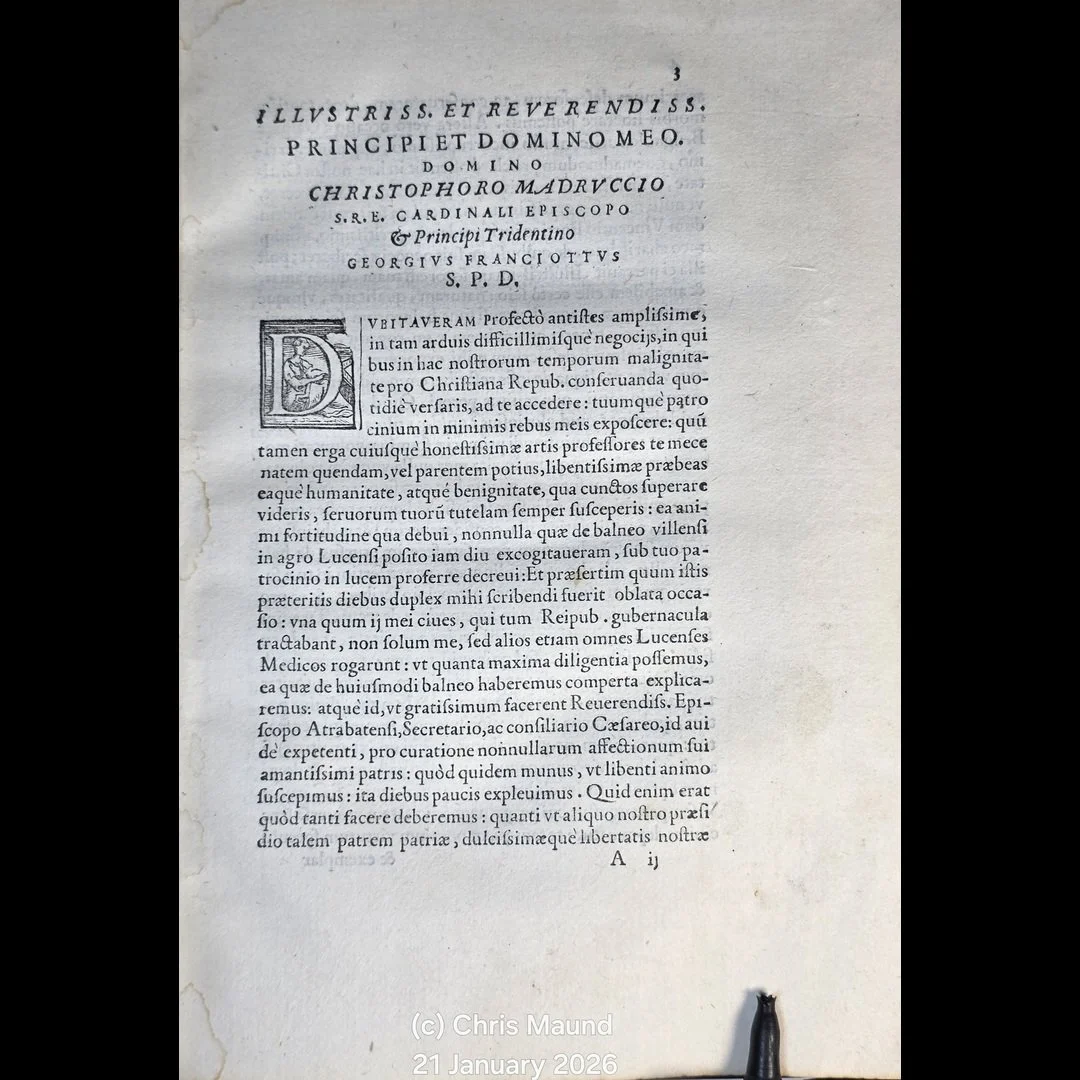 Image 2 of 21
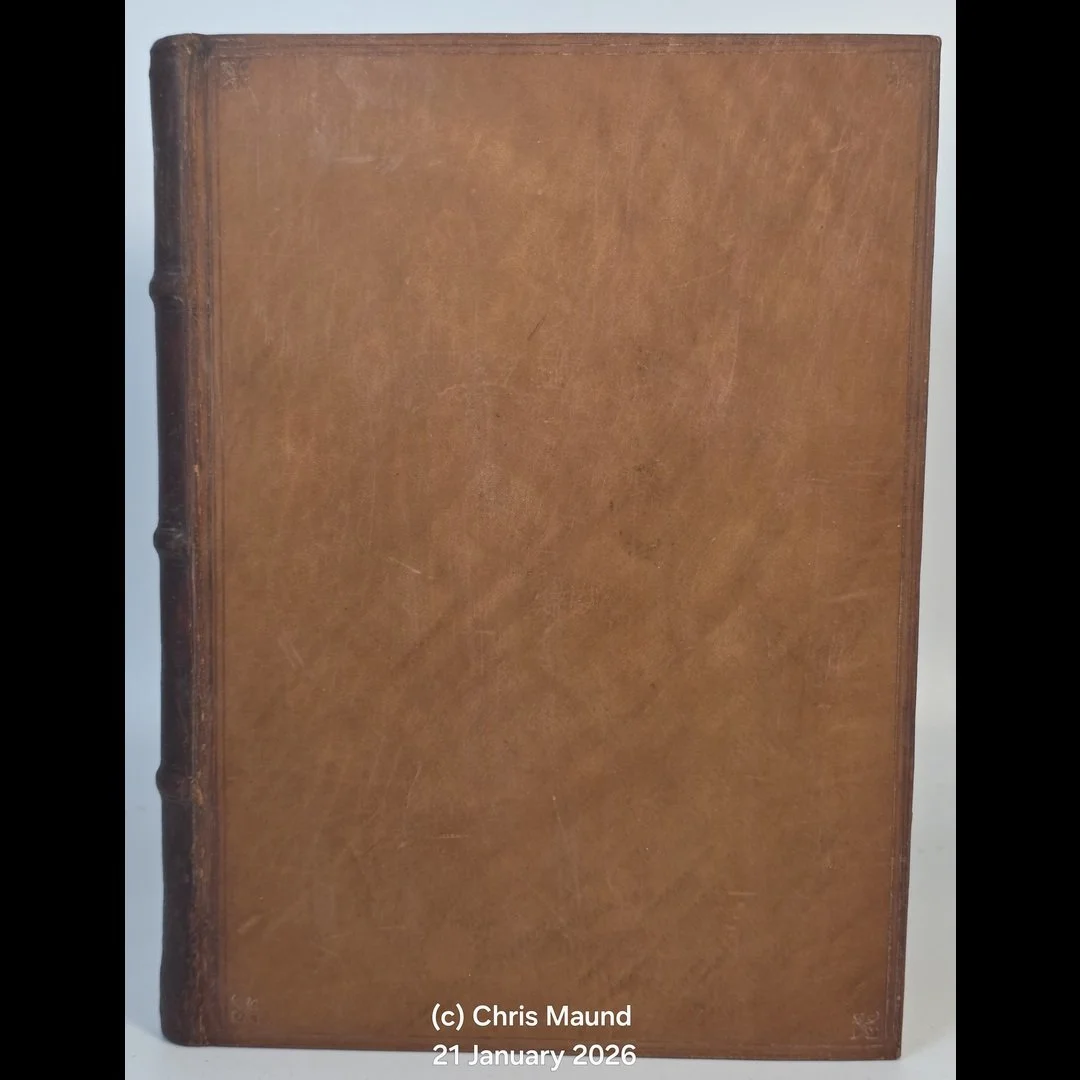 Image 3 of 21
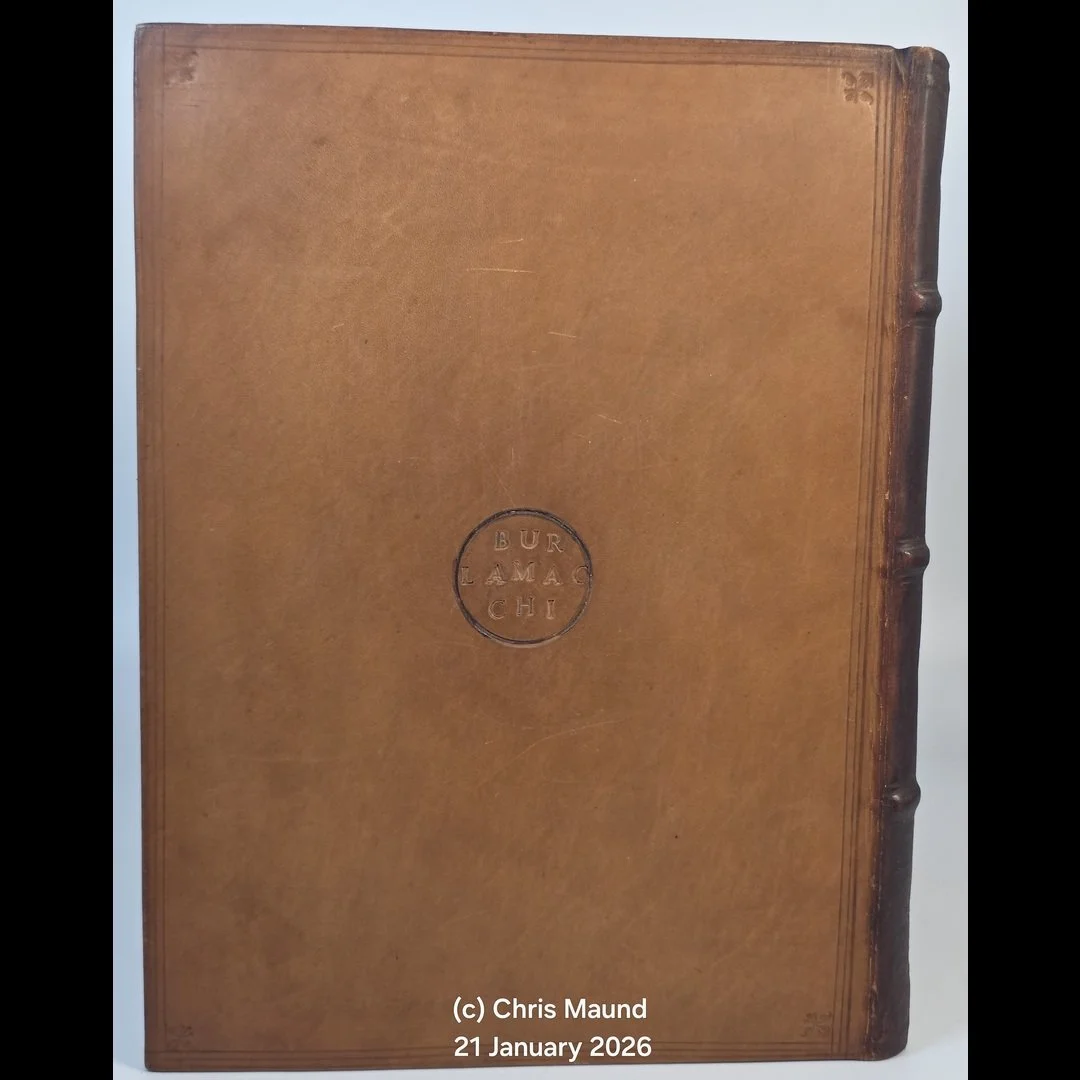 Image 4 of 21
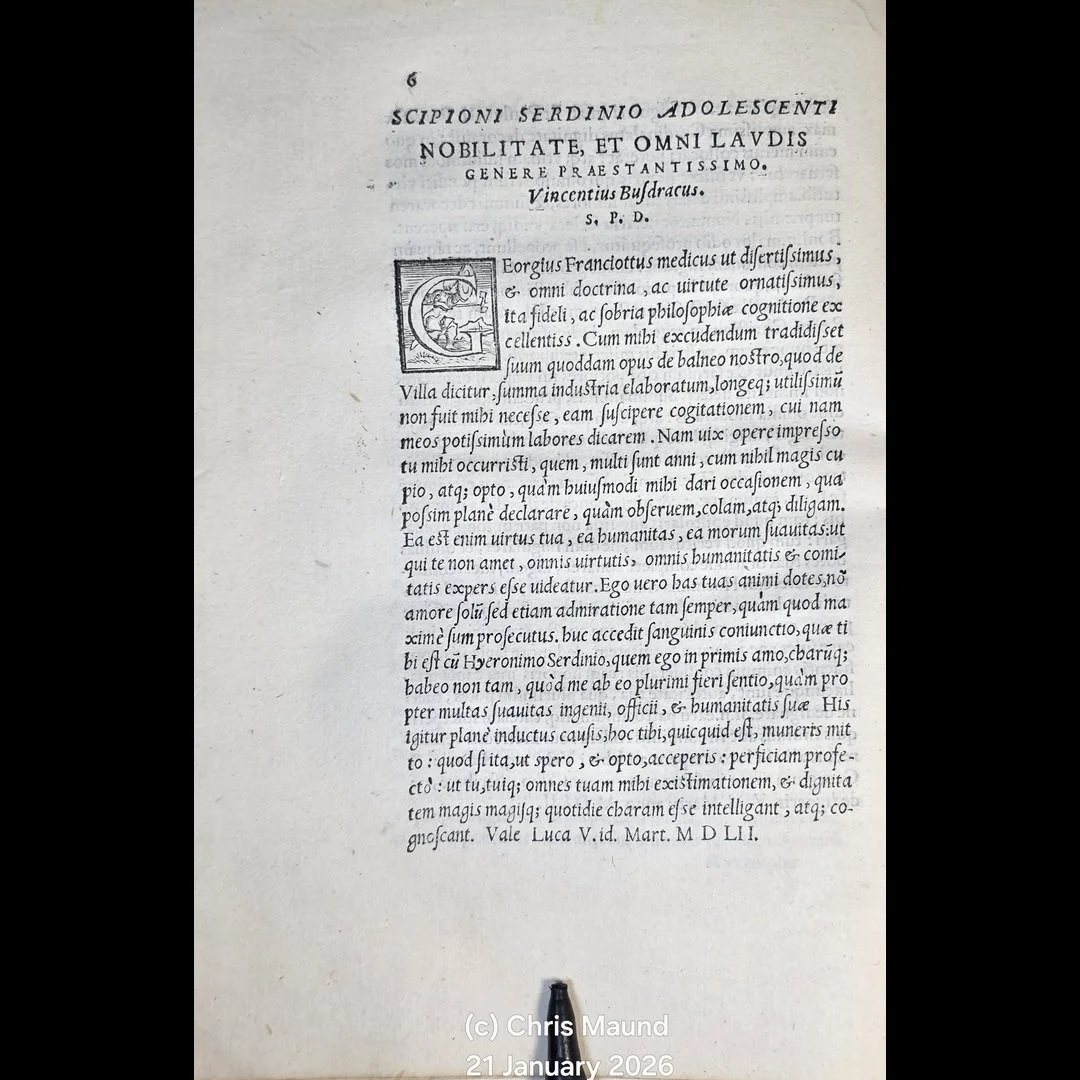 Image 5 of 21
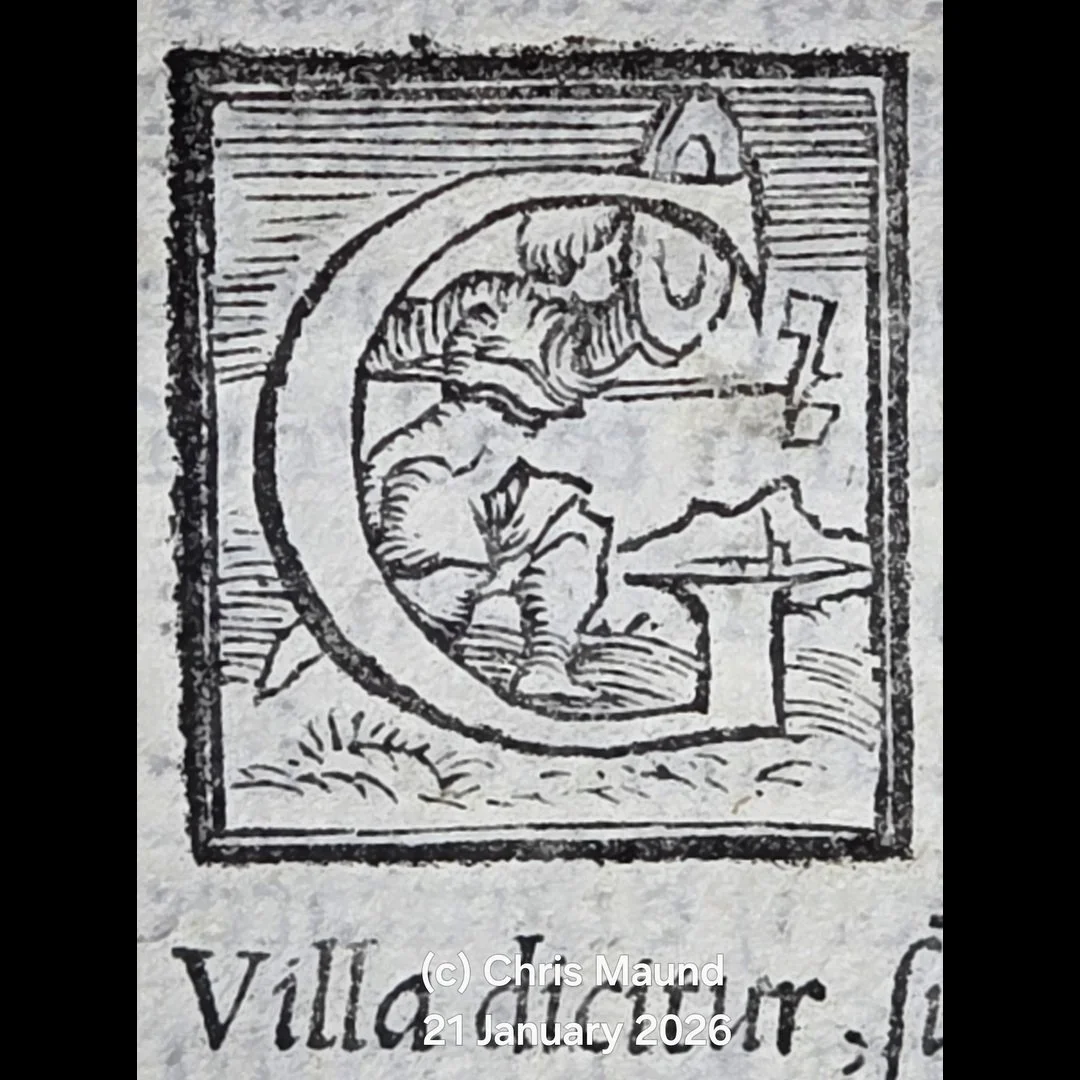 Image 6 of 21
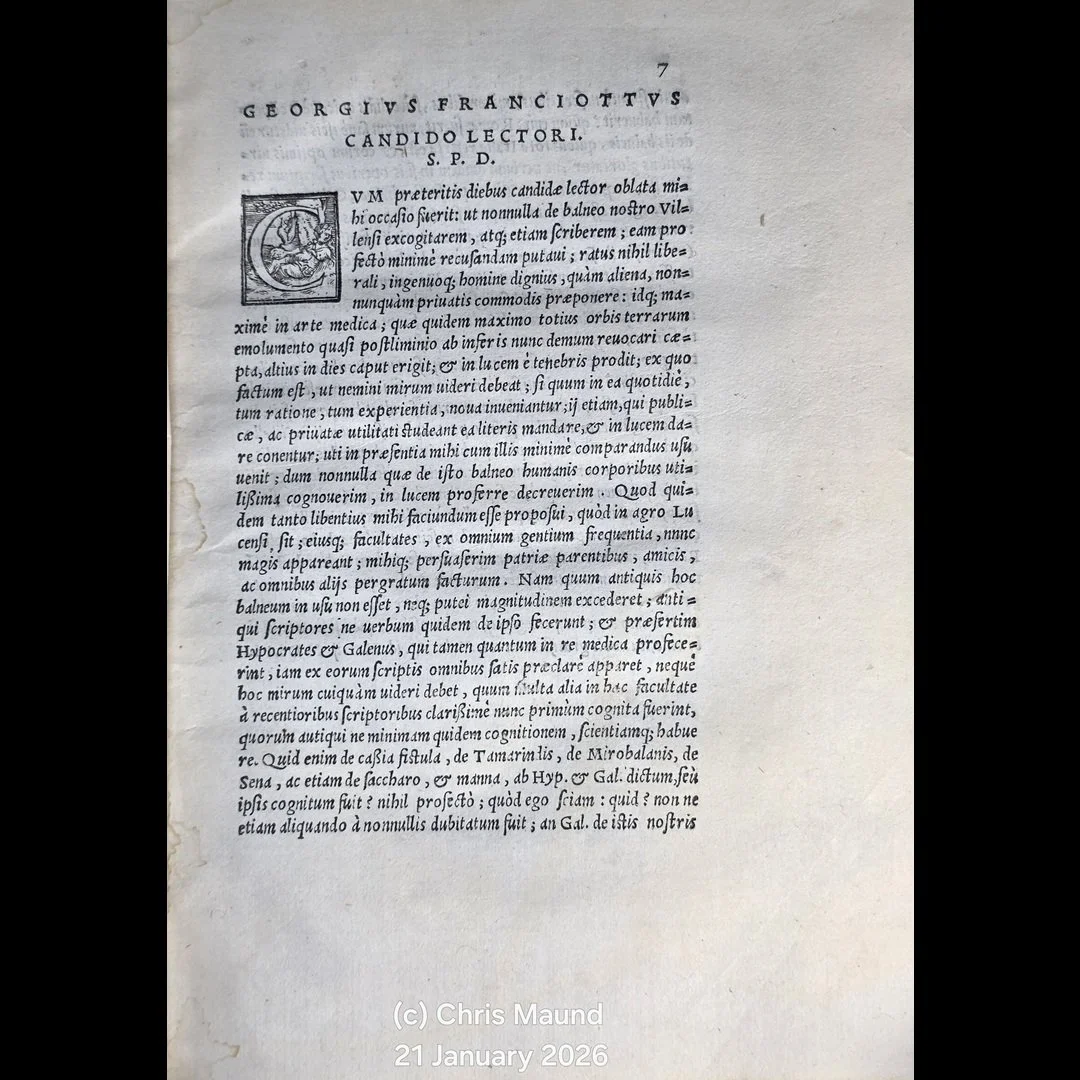 Image 7 of 21
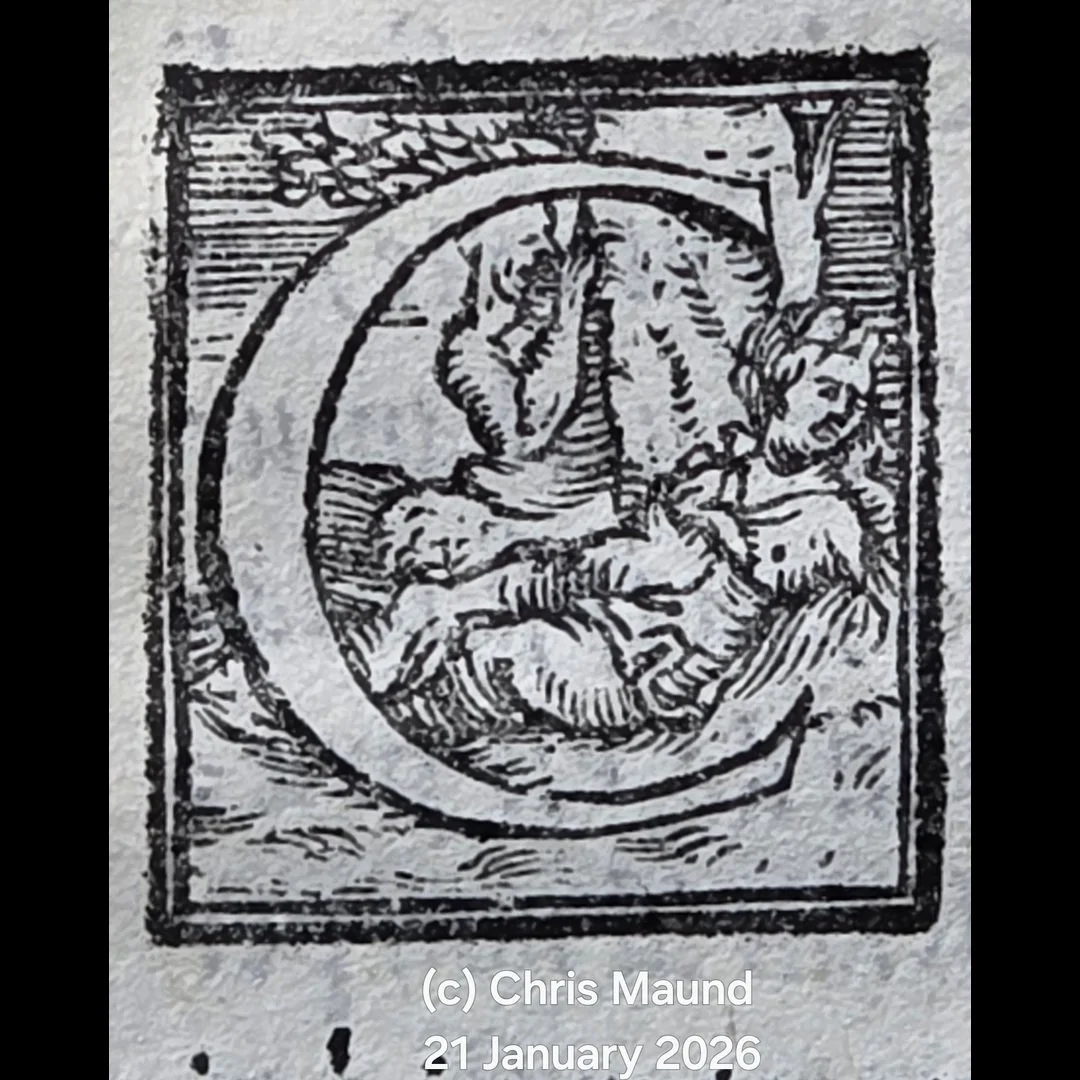 Image 8 of 21
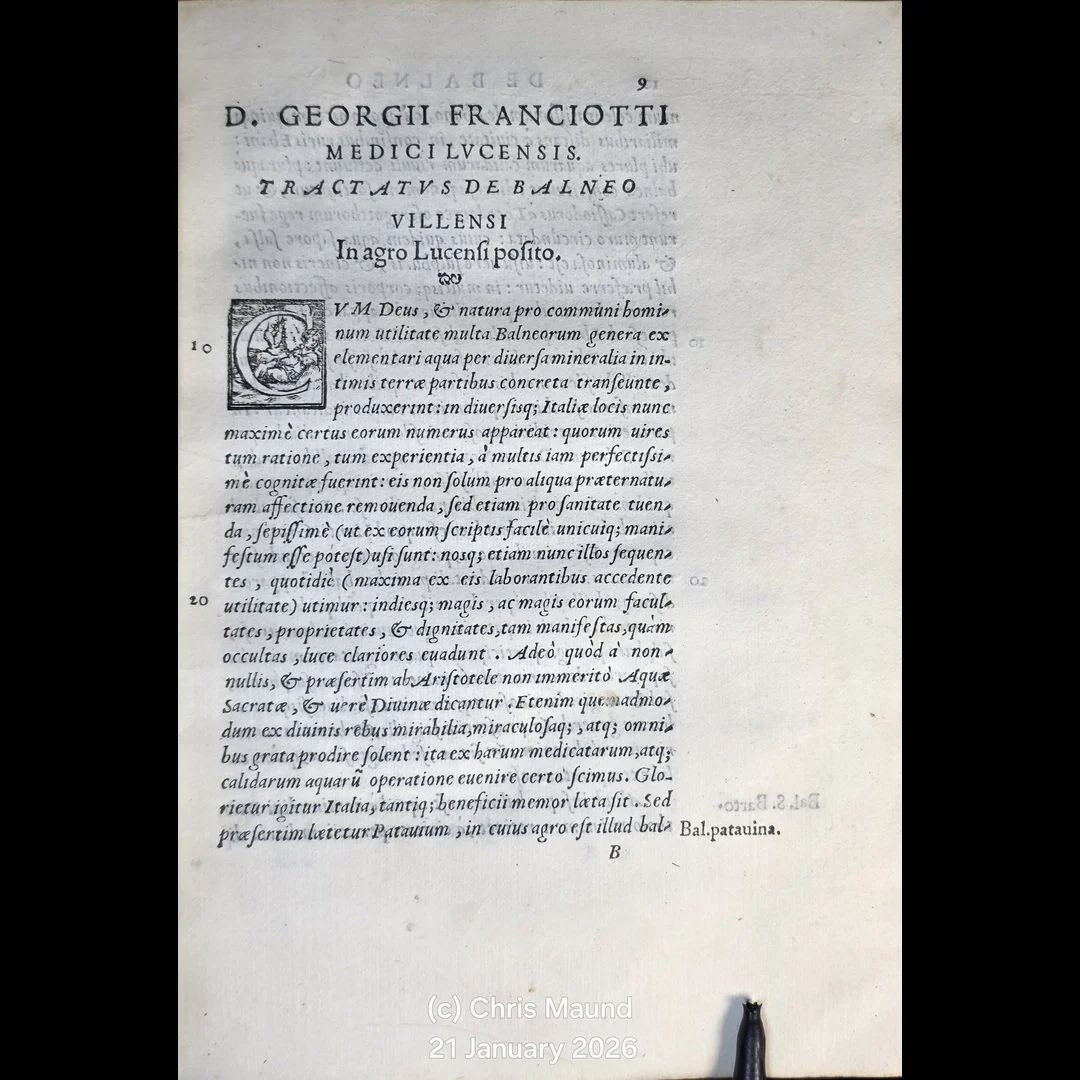 Image 9 of 21
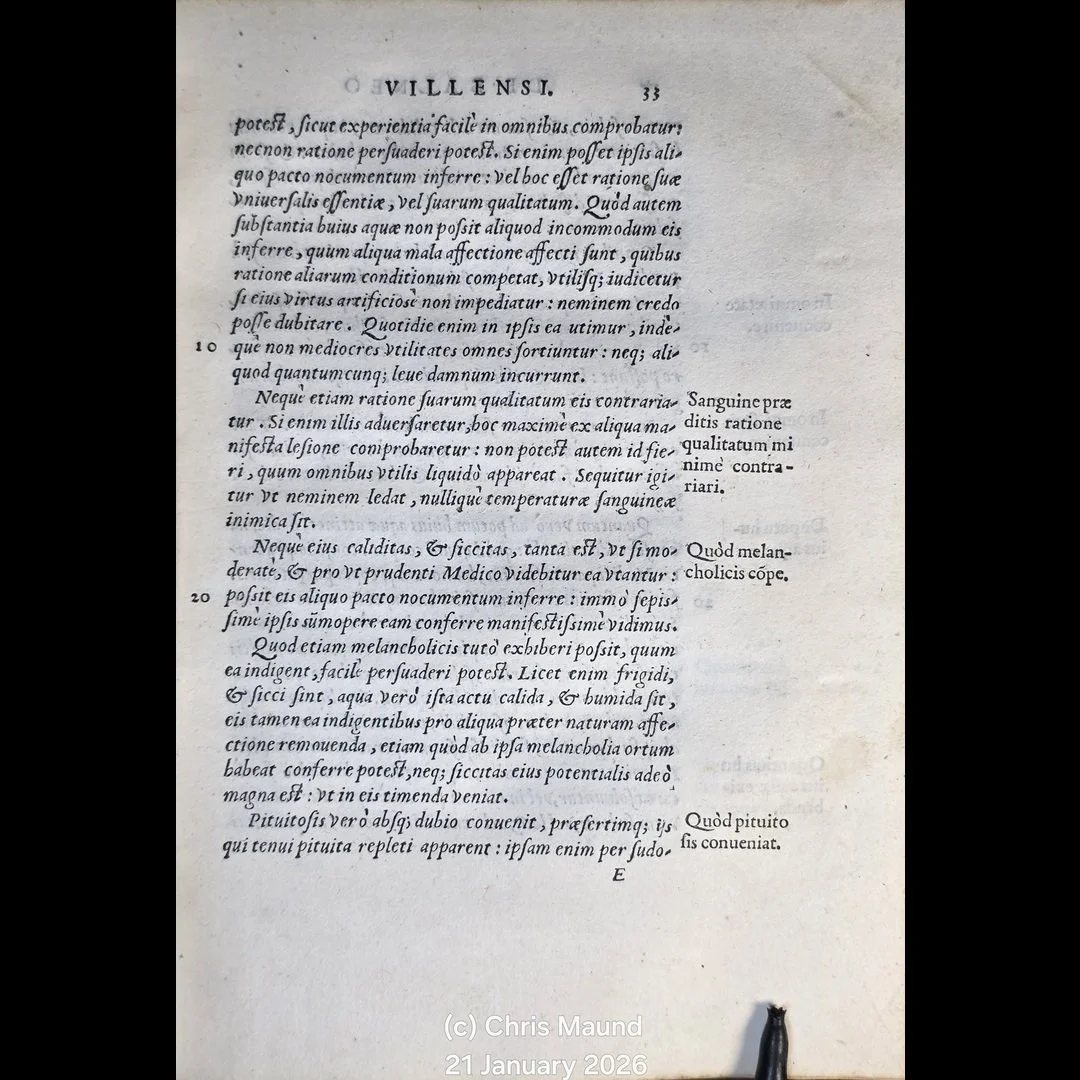 Image 10 of 21
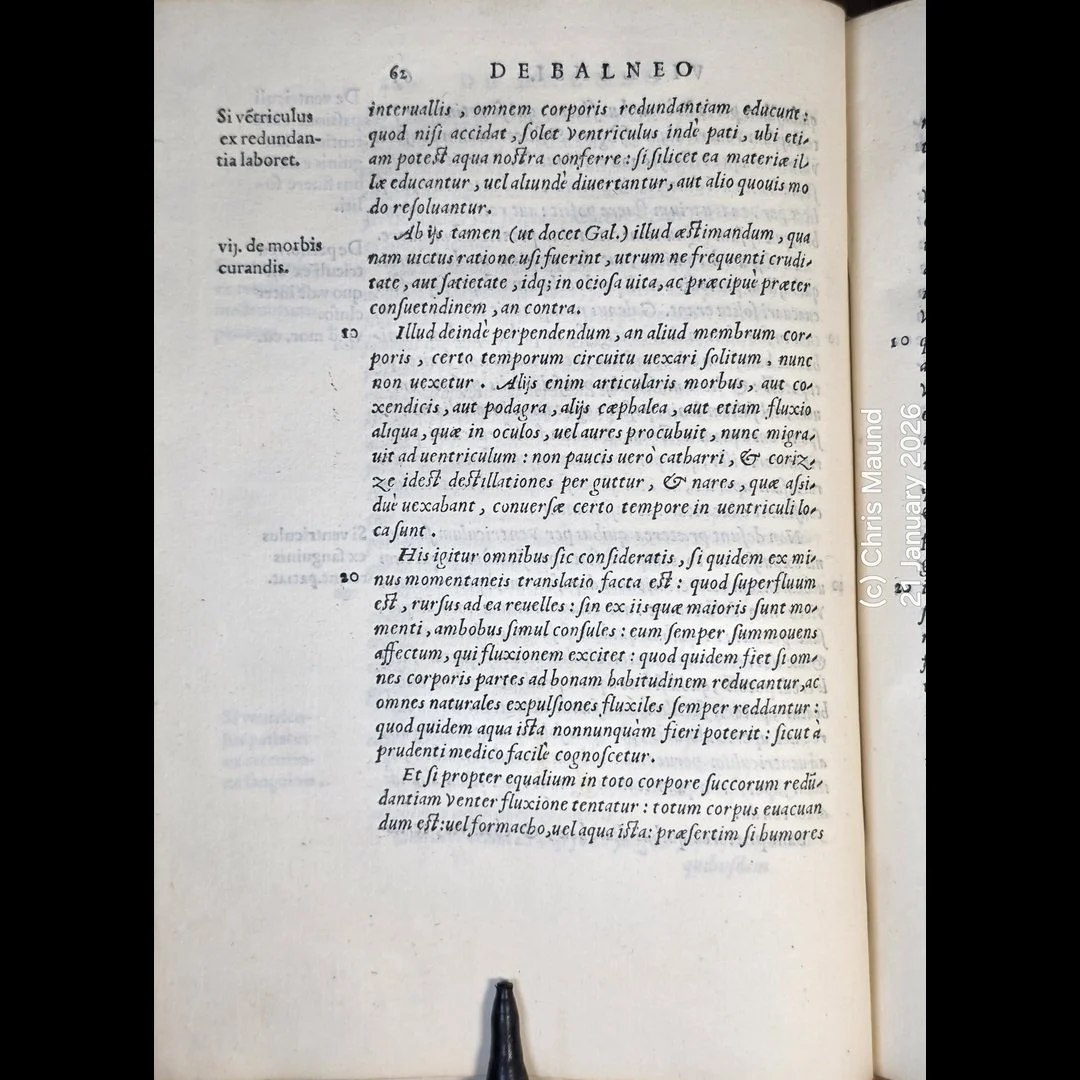 Image 11 of 21
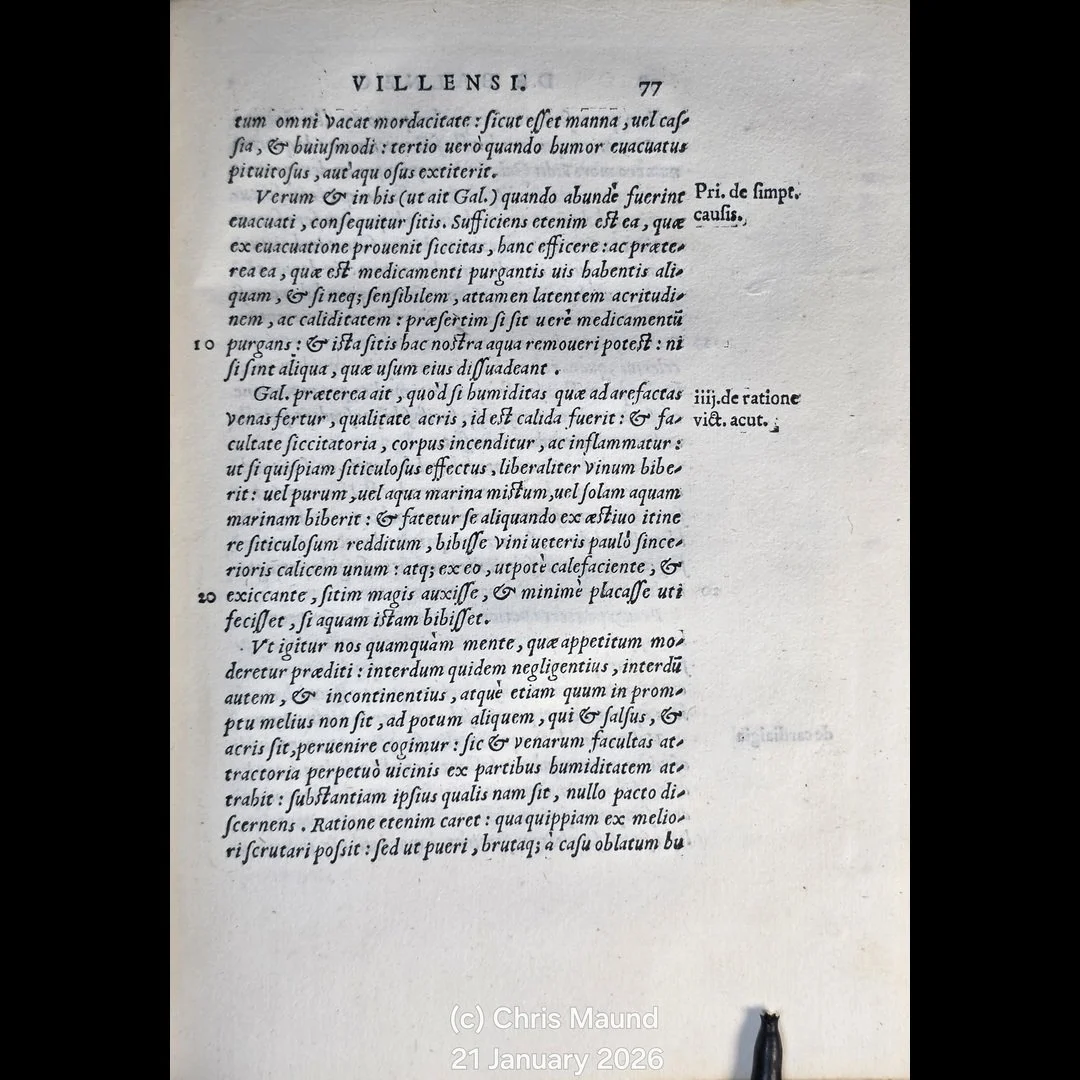 Image 12 of 21
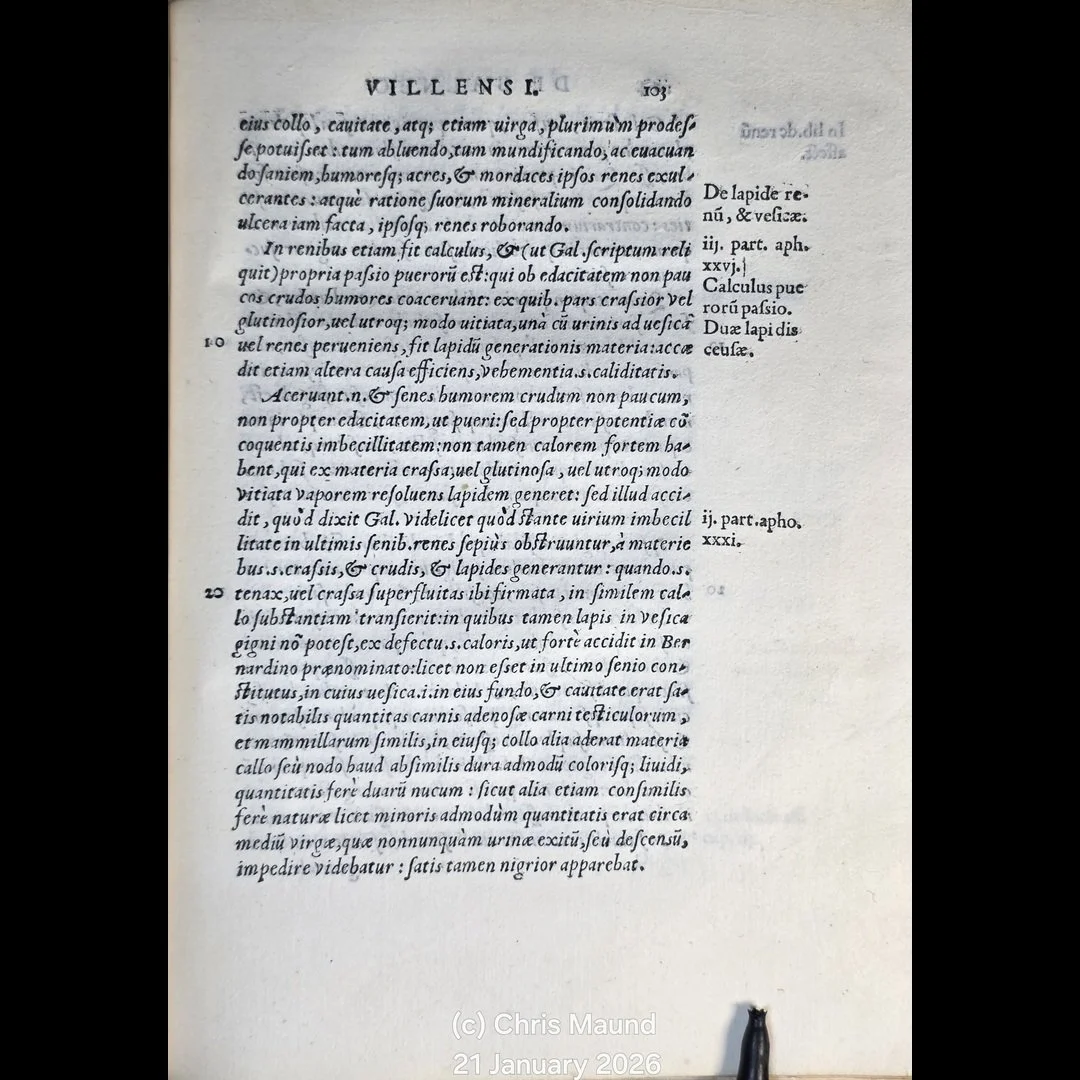 Image 13 of 21
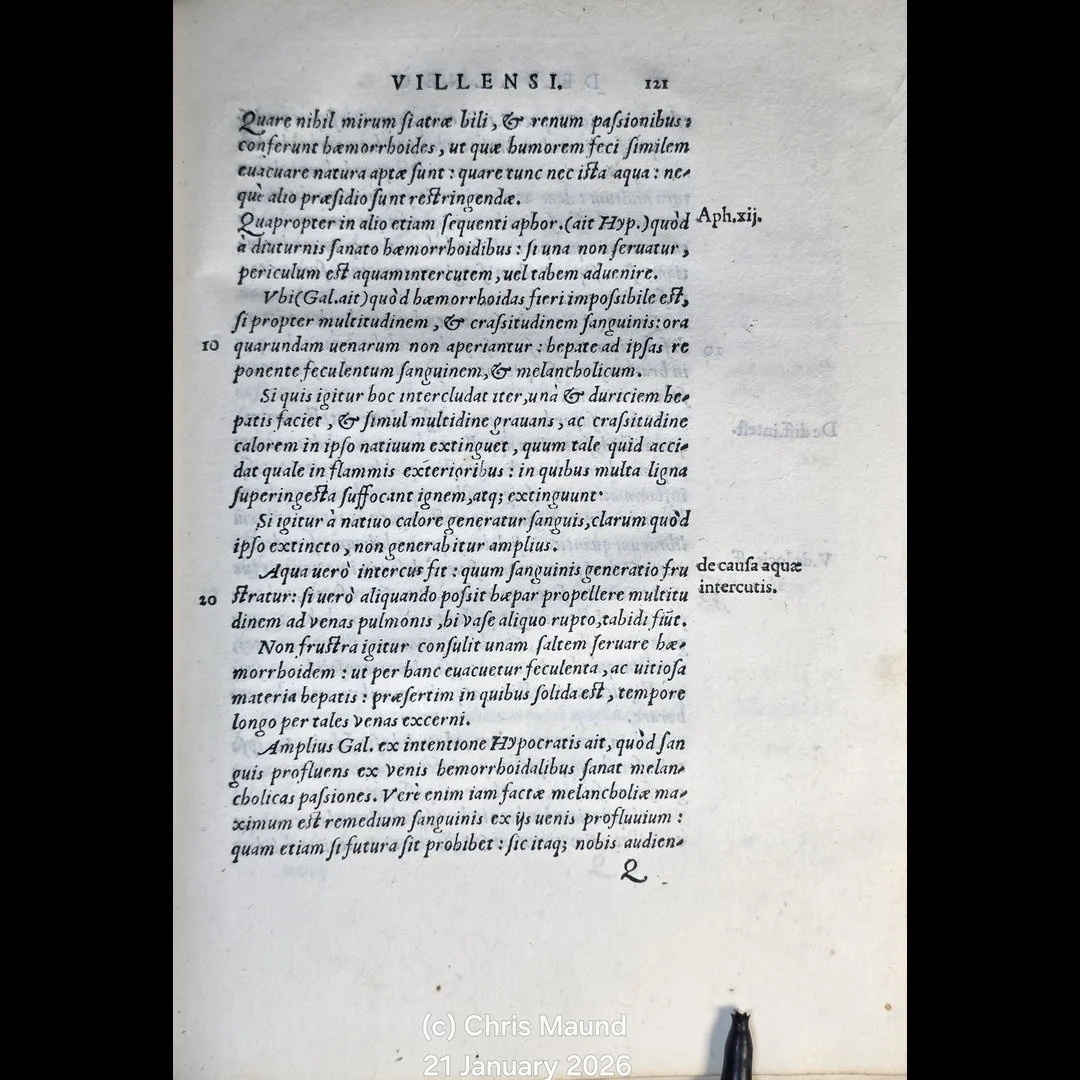 Image 14 of 21
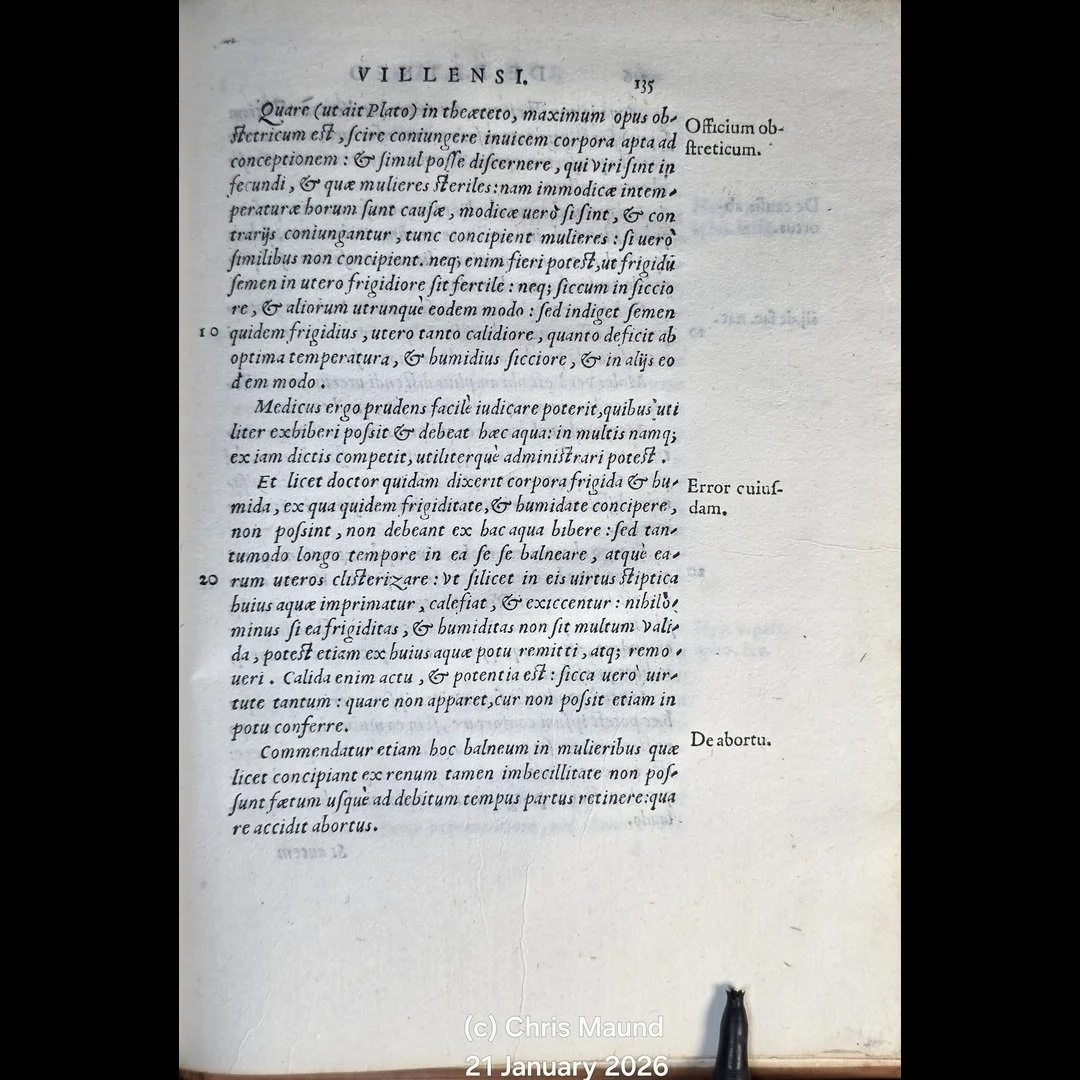 Image 15 of 21
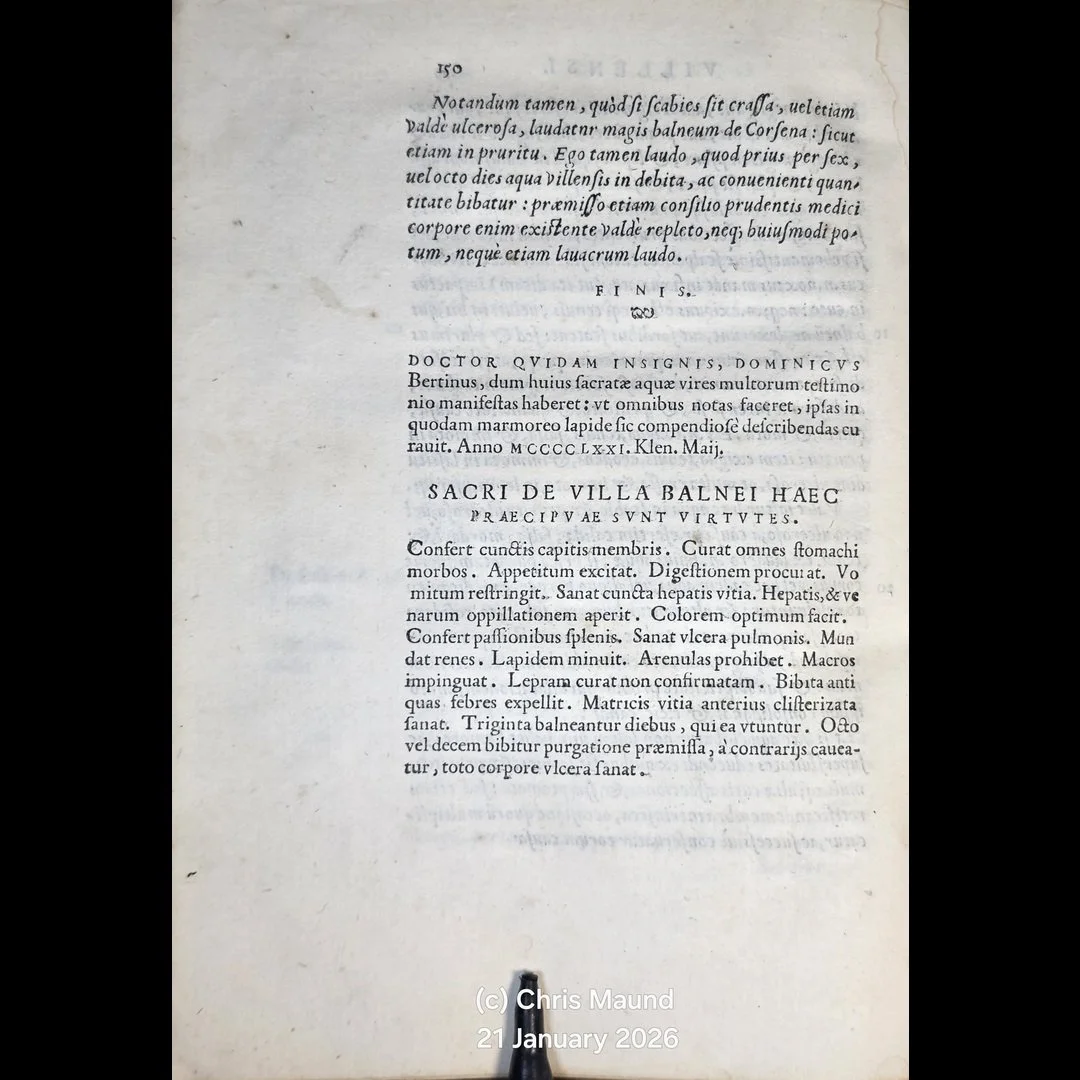 Image 16 of 21
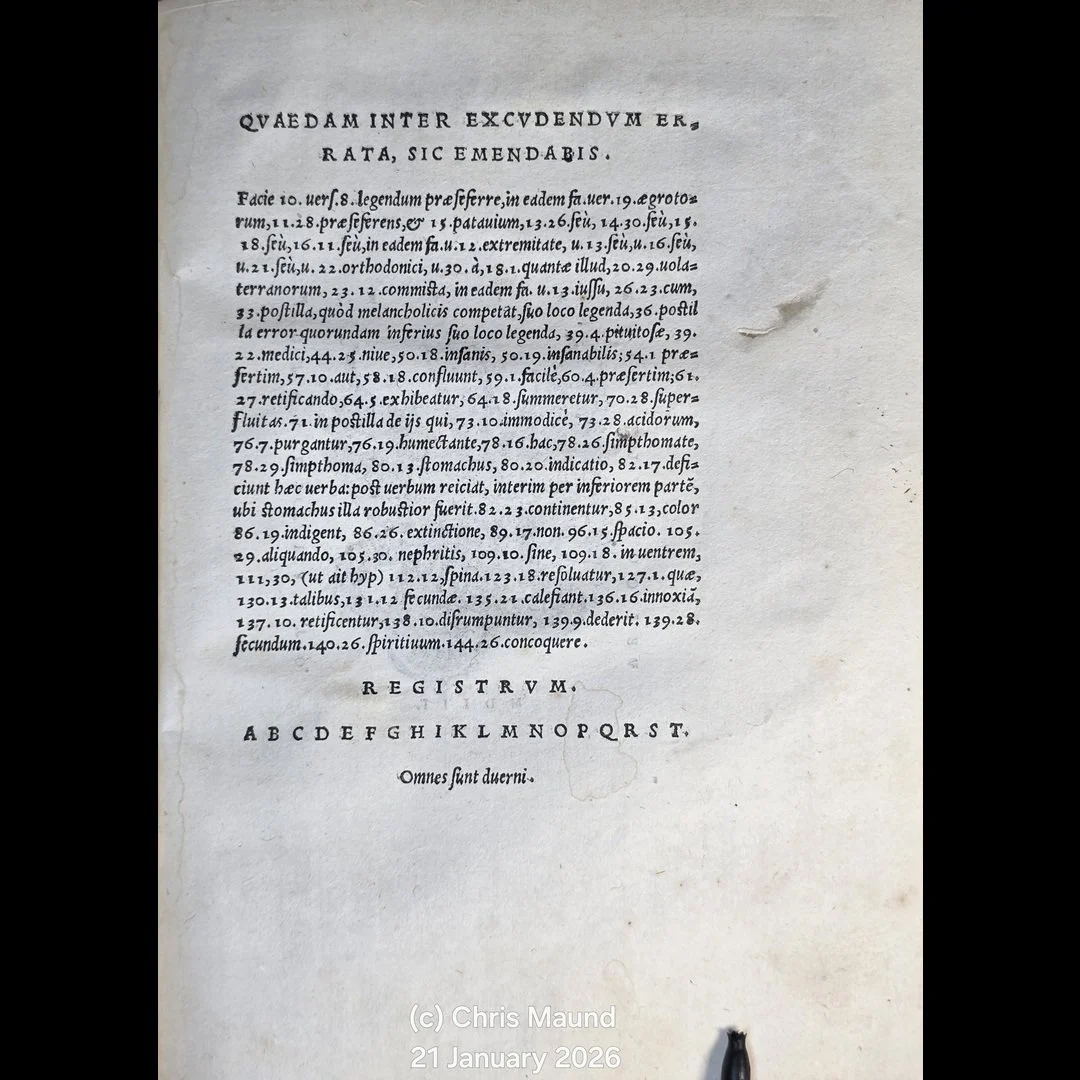 Image 17 of 21
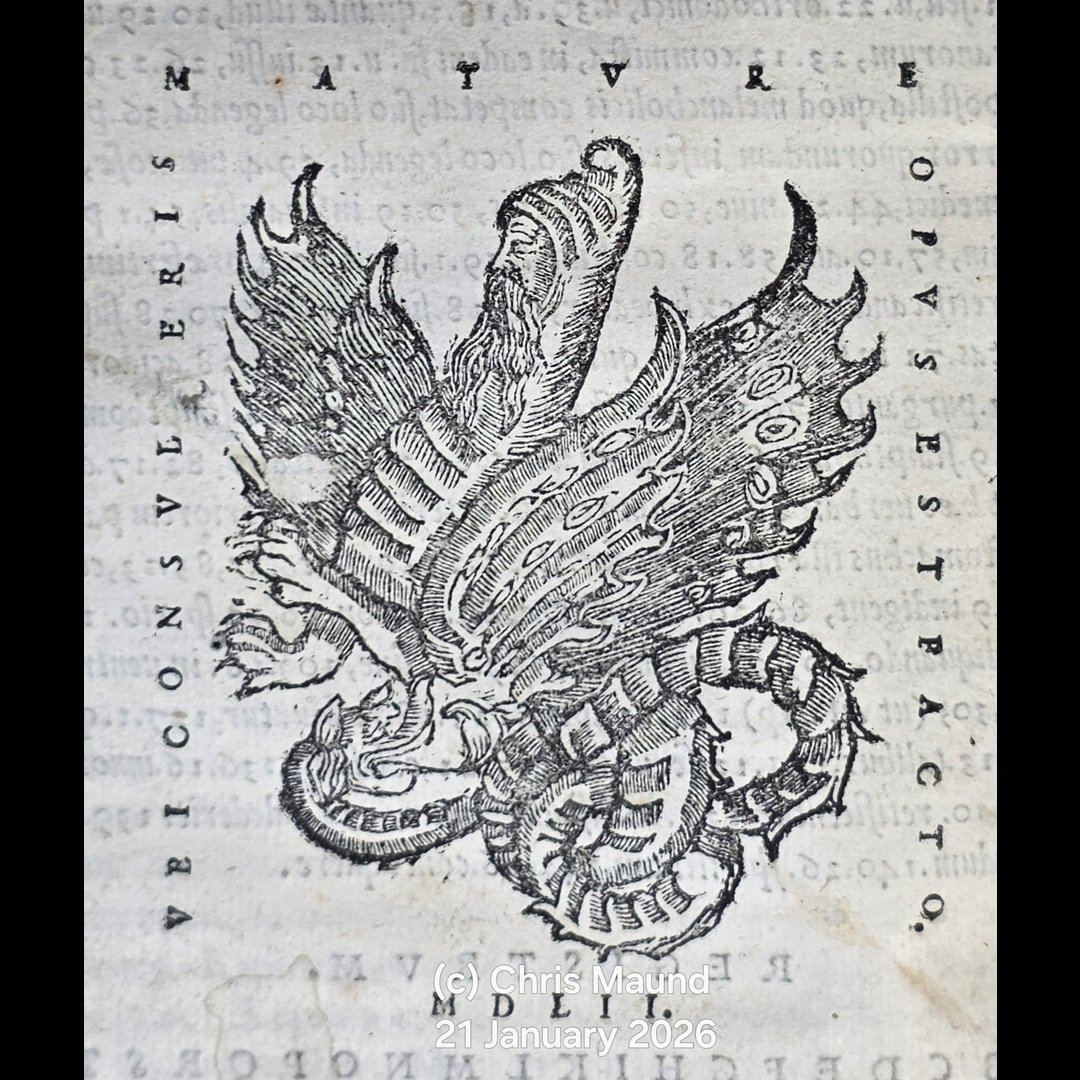 Image 18 of 21
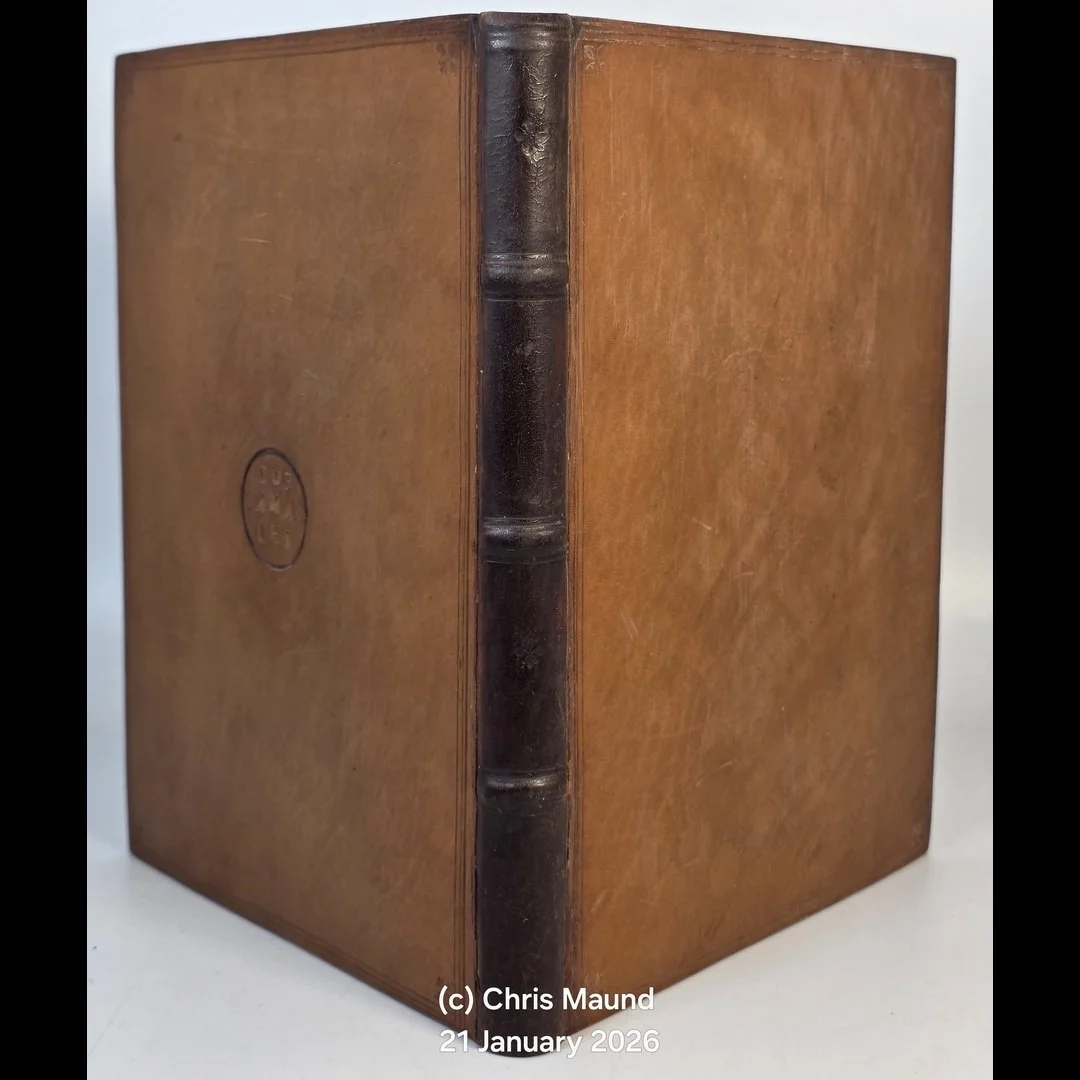 Image 19 of 21
 Image 20 of 21
 Image 21 of 21