1592 Montbéliard Edition C² No-Errata State
DE OCCULTIS LITERARUM NOTIS
By Giambattista della Porta
KEY DETAILS
Condition: Very Good
Format: Vellum, 8vo; approx. 17 × 11 cm
Published By: Montisbeligardi [Montbéliard], apud Iacobum Foillet, expensis Lazari Zetzneri, France, 1592
Language: Latin
Illustrated By: Anonymous
Provenance: Reiss & Sohn, Königstein im Taunus, Auction 226, 28 October 2025, Lot 39, where catalogued as the no-errata printing variant, ending on C2 with the terminal vignette and blank verso.
Collation: ()⁸ a–r⁸ A–B⁸ C²; Pagination:
Dust Jacket: None, as issued
SKU: BTETM0002699
Shipping Info: Approximate Package Dimensions H: 12.5, L: 30, W: 25 (Units: cm), W: 2Kg
Tracked Shipping, Insurance Coverage as per Customer Request
DESCRIPTION
De Occultis Literarum Notis
Seu Artis animi sensa occulte aliis significandi, aut ab aliis significata expiscandi enodandique libri IIII
By Giambattista della Porta
A particularly attractive and complete example of Giambattista della Porta’s celebrated Renaissance treatise on cryptography, secret writing, cipher systems and the decipherment of concealed communications, printed at Montbéliard by Jacques Foillet for the Strasbourg publisher Lazarus Zetzner in 1593.
First published at Naples in 1563 as De furtivis literarum notis, vulgo de ziferis, Porta’s work became one of the foundational texts in the history of cryptography. The London edition of 1591 preceded this substantially re-presented Montbéliard printing, generally regarded as the third edition. The work describes systems of substitution, invented alphabets, symbolic and hieroglyphic signs, methods of concealing written information and techniques for recovering or interpreting encrypted messages. Porta’s original work is also celebrated for describing the earliest known digraphic substitution cipher.
This copy is especially desirable for retaining all three original movable cipher-wheel components intact, uncut and unmounted on the integral preliminary NOTA leaf. The sheet identifies the three discs as belonging respectively to pp.92, 98 and 103; their corresponding printed dial-bases are all present in the text at f6v, g1v and g4r. Examination of all three bases reveals no obvious central pinholes, adhesive traces or circular wear from previous mounting.
The present copy is furthermore in the C² no-errata state of the 1593 printing. The final index concludes on C2 recto with the large woodcut terminal ornament and C2 verso is blank. A second, reset state is known in which gathering C was expanded to C⁴ and an Ad lectorem errata section added at C2r. Reiss & Sohn described the present C² form as the printing variant without errata and suggested that it probably represents material from the beginning of the print run. The distinction is independently recorded in institutional bibliography.
The title page bears the striking woodcut printer’s device of Minerva with the motto SCIENTIA IMMUTABILIS, while the text is extensively illustrated with woodcut cipher wheels, alphabets, cryptographic tables, symbolic signs, emblematic figures, ornamental initials and devices. Among the most important visual material are Porta’s systematic cipher tables; this Montbéliard edition has been noted in the bibliographical literature for containing what David Kahn identified as the earliest synoptic tables in the history of cryptology.
PROVENANCE
Reiss & Sohn, Königstein im Taunus, Auction 226, 28 October 2025, Lot 39, where catalogued as the no-errata printing variant, ending on C2 with the terminal vignette and blank verso.
Subsequently Catawiki, Lot 99921063, where catalogued as collated and complete and specifically noting the three intact movable components on leaf ()8.
Thereafter the present collection.
The Catawiki catalogue independently records the three intact components intended for f6v, g1v and g4r, matching the present copy exactly.
CONDITION, COLLATION & COPY NOTES
COLLATION
()⁸ a–r⁸ A–B⁸ C²
Pagination:
[16], 275 [i.e. 271], [1], 24, [12] pp.
Complete.
Volvelles / Movable Parts:
Three original printed movable discs preserved intact and uncut on preliminary leaf ()8, numbered 1–3 and intended for the corresponding bases at:
p.92 / f6v – Volvelle I
p.98 / g1v – Volvelle II
p.103 / g4r – Volvelle III
A handsome and well-preserved copy in later half vellum. Vellum with light natural marking and handling wear; speckled paper-covered boards with minor age wear; red morocco gilt spine label remains attractive and legible. Binding firm and sound.
Internally particularly pleasing for a late sixteenth-century technical work. Paper with generally light, even age-toning and occasional minor spotting or handling marks. A few leaves are somewhat closely trimmed at the outer margin, as noted in the previous Reiss & Sohn catalogue, but the text, diagrams and illustrations remain substantially unaffected. Printing is generally dark and crisp, with the numerous cipher alphabets, tables, symbolic characters and woodcuts particularly well preserved.
Title page present and complete, correctly dated M.D.XCIII — 1593; the middle numeral is lightly impressed but visible.
The recognised pagination error at the conclusion of Book IV is present: page 271 is misnumbered 275, with “271” added beneath in manuscript. This is a printing error characteristic of the edition and not an indication of missing text.
The Animadversiones viri cuiusdam bonarum literarum artiumque amantissimi is present, together with the complete index.
Of particular importance, the integral preliminary NOTA leaf retains the complete set of three original circular movable components uncut and unmounted. Their corresponding printed cipher-wheel bases are present at pp.92, 98 and 103. All three have been examined and show no obvious evidence of previous pinning or attachment.
The final gathering is C²: index concluding on C2r beneath FINIS with large woodcut ornament; C2v blank. The later/reset C⁴ Ad lectorem errata gathering is therefore intentionally absent from this printing state rather than missing.
A particularly appealing, complete and bibliographically interesting copy of one of the principal Renaissance books on secret communication.
Edition: Third Edition; 1593 Montbéliard edition, C² no-errata state
Please see Photos as part of condition report.
REFERENCES
VD16 P 4325
Adams P1928
Caillet 8856
Riccardi I/2, 309
SBN / Biblioteca dell’Accademia dei Concordi, BVEE002332
Folger Shakespeare Library, Z103 .P8 1593 / 1593a
Reiss & Sohn, Auction 226, 28 October 2025, Lot 39
The VD16 record independently confirms the Montbéliard/Zetzner 1593 imprint and extent, while SBN records the standard C² collation and explicitly distinguishes the reset C⁴ variant containing the Ad lectorem errata.
SYNOPSIS
De occultis literarum notis is a substantial four-book investigation of the ways in which meaning may be concealed, transmitted and recovered.
Porta begins with the historical and conceptual foundations of secret writing, gathering examples of concealed signs and systems from ancient authors and earlier traditions. He then turns increasingly to practical methods: alternative alphabets, substitutions, transpositions, symbolic characters and techniques by which ordinary language may be transformed into writing unintelligible to an unauthorised reader.
Central to the work are Porta’s rotating cipher systems and structured tables. The three printed wheels represented in this edition allow characters to be aligned according to changing correspondences, making the book not merely a theoretical treatise but in part a working cryptographic instrument.
Later sections address the reverse problem: how an intercepted secret text may be approached, interpreted and ultimately deciphered. Porta considers the importance of language, orthography, recurring characters, structural patterns and the deliberate multiplication of possible signs. In doing so, the work moves beyond the making of ciphers into the early systematic practice of cryptanalysis.
The appended Animadversiones extends the subject into the interpretation of signs, emblems and symbolic imagery, illustrated with striking circular devices whose meanings are unpacked in the accompanying text.
Taken as a whole, the book is a remarkable Renaissance synthesis of cryptography, cryptanalysis, shorthand, symbolic communication, linguistics and the art of secrecy — and one of the most visually engaging early printed works devoted to the problem of transmitting information securely.
AUTHOR BIO
Giambattista della Porta (1535–1615) was a Neapolitan polymath, natural philosopher, experimentalist, playwright and author whose remarkable output ranged across optics, physiognomy, natural magic, agriculture and cryptography.
His intellectual world occupied the porous Renaissance boundary between experiment, practical technique and what contemporaries termed magia naturalis. His best-known work, Magia Naturalis, passed through numerous editions, but his writings on secret communication are of particular importance to the history of cryptography.
In De furtivis literarum notis and its later forms, Porta approached secret writing systematically: not merely as an assortment of tricks, but as a discipline involving substitution, alphabetic transformation, signs, linguistic structure, cipher construction and the analytical recovery of hidden meaning. His work therefore belongs as naturally to the early history of information security and cryptanalysis as it does to Renaissance occult and scientific literature.
ILLUSTRATOR
Anonymous
No individual cutter or engraver is identified for the edition. The extensive woodcut programme includes the Minerva printer’s device, cipher wheels, substitution tables, secret alphabets, symbolic and hieroglyphic figures, decorative initials and terminal ornaments.
Unlike purely decorative illustration, much of this material is functional: the diagrams and detachable components were intended to be used in understanding and practising Porta’s systems of encryption and decipherment.
1592 Montbéliard Edition C² No-Errata State
DE OCCULTIS LITERARUM NOTIS
By Giambattista della Porta
KEY DETAILS
Condition: Very Good
Format: Vellum, 8vo; approx. 17 × 11 cm
Published By: Montisbeligardi [Montbéliard], apud Iacobum Foillet, expensis Lazari Zetzneri, France, 1592
Language: Latin
Illustrated By: Anonymous
Provenance: Reiss & Sohn, Königstein im Taunus, Auction 226, 28 October 2025, Lot 39, where catalogued as the no-errata printing variant, ending on C2 with the terminal vignette and blank verso.
Collation: ()⁸ a–r⁸ A–B⁸ C²; Pagination:
Dust Jacket: None, as issued
SKU: BTETM0002699
Shipping Info: Approximate Package Dimensions H: 12.5, L: 30, W: 25 (Units: cm), W: 2Kg
Tracked Shipping, Insurance Coverage as per Customer Request
DESCRIPTION
De Occultis Literarum Notis
Seu Artis animi sensa occulte aliis significandi, aut ab aliis significata expiscandi enodandique libri IIII
By Giambattista della Porta
A particularly attractive and complete example of Giambattista della Porta’s celebrated Renaissance treatise on cryptography, secret writing, cipher systems and the decipherment of concealed communications, printed at Montbéliard by Jacques Foillet for the Strasbourg publisher Lazarus Zetzner in 1593.
First published at Naples in 1563 as De furtivis literarum notis, vulgo de ziferis, Porta’s work became one of the foundational texts in the history of cryptography. The London edition of 1591 preceded this substantially re-presented Montbéliard printing, generally regarded as the third edition. The work describes systems of substitution, invented alphabets, symbolic and hieroglyphic signs, methods of concealing written information and techniques for recovering or interpreting encrypted messages. Porta’s original work is also celebrated for describing the earliest known digraphic substitution cipher.
This copy is especially desirable for retaining all three original movable cipher-wheel components intact, uncut and unmounted on the integral preliminary NOTA leaf. The sheet identifies the three discs as belonging respectively to pp.92, 98 and 103; their corresponding printed dial-bases are all present in the text at f6v, g1v and g4r. Examination of all three bases reveals no obvious central pinholes, adhesive traces or circular wear from previous mounting.
The present copy is furthermore in the C² no-errata state of the 1593 printing. The final index concludes on C2 recto with the large woodcut terminal ornament and C2 verso is blank. A second, reset state is known in which gathering C was expanded to C⁴ and an Ad lectorem errata section added at C2r. Reiss & Sohn described the present C² form as the printing variant without errata and suggested that it probably represents material from the beginning of the print run. The distinction is independently recorded in institutional bibliography.
The title page bears the striking woodcut printer’s device of Minerva with the motto SCIENTIA IMMUTABILIS, while the text is extensively illustrated with woodcut cipher wheels, alphabets, cryptographic tables, symbolic signs, emblematic figures, ornamental initials and devices. Among the most important visual material are Porta’s systematic cipher tables; this Montbéliard edition has been noted in the bibliographical literature for containing what David Kahn identified as the earliest synoptic tables in the history of cryptology.
PROVENANCE
Reiss & Sohn, Königstein im Taunus, Auction 226, 28 October 2025, Lot 39, where catalogued as the no-errata printing variant, ending on C2 with the terminal vignette and blank verso.
Subsequently Catawiki, Lot 99921063, where catalogued as collated and complete and specifically noting the three intact movable components on leaf ()8.
Thereafter the present collection.
The Catawiki catalogue independently records the three intact components intended for f6v, g1v and g4r, matching the present copy exactly.
CONDITION, COLLATION & COPY NOTES
COLLATION
()⁸ a–r⁸ A–B⁸ C²
Pagination:
[16], 275 [i.e. 271], [1], 24, [12] pp.
Complete.
Volvelles / Movable Parts:
Three original printed movable discs preserved intact and uncut on preliminary leaf ()8, numbered 1–3 and intended for the corresponding bases at:
p.92 / f6v – Volvelle I
p.98 / g1v – Volvelle II
p.103 / g4r – Volvelle III
A handsome and well-preserved copy in later half vellum. Vellum with light natural marking and handling wear; speckled paper-covered boards with minor age wear; red morocco gilt spine label remains attractive and legible. Binding firm and sound.
Internally particularly pleasing for a late sixteenth-century technical work. Paper with generally light, even age-toning and occasional minor spotting or handling marks. A few leaves are somewhat closely trimmed at the outer margin, as noted in the previous Reiss & Sohn catalogue, but the text, diagrams and illustrations remain substantially unaffected. Printing is generally dark and crisp, with the numerous cipher alphabets, tables, symbolic characters and woodcuts particularly well preserved.
Title page present and complete, correctly dated M.D.XCIII — 1593; the middle numeral is lightly impressed but visible.
The recognised pagination error at the conclusion of Book IV is present: page 271 is misnumbered 275, with “271” added beneath in manuscript. This is a printing error characteristic of the edition and not an indication of missing text.
The Animadversiones viri cuiusdam bonarum literarum artiumque amantissimi is present, together with the complete index.
Of particular importance, the integral preliminary NOTA leaf retains the complete set of three original circular movable components uncut and unmounted. Their corresponding printed cipher-wheel bases are present at pp.92, 98 and 103. All three have been examined and show no obvious evidence of previous pinning or attachment.
The final gathering is C²: index concluding on C2r beneath FINIS with large woodcut ornament; C2v blank. The later/reset C⁴ Ad lectorem errata gathering is therefore intentionally absent from this printing state rather than missing.
A particularly appealing, complete and bibliographically interesting copy of one of the principal Renaissance books on secret communication.
Edition: Third Edition; 1593 Montbéliard edition, C² no-errata state
Please see Photos as part of condition report.
REFERENCES
VD16 P 4325
Adams P1928
Caillet 8856
Riccardi I/2, 309
SBN / Biblioteca dell’Accademia dei Concordi, BVEE002332
Folger Shakespeare Library, Z103 .P8 1593 / 1593a
Reiss & Sohn, Auction 226, 28 October 2025, Lot 39
The VD16 record independently confirms the Montbéliard/Zetzner 1593 imprint and extent, while SBN records the standard C² collation and explicitly distinguishes the reset C⁴ variant containing the Ad lectorem errata.
SYNOPSIS
De occultis literarum notis is a substantial four-book investigation of the ways in which meaning may be concealed, transmitted and recovered.
Porta begins with the historical and conceptual foundations of secret writing, gathering examples of concealed signs and systems from ancient authors and earlier traditions. He then turns increasingly to practical methods: alternative alphabets, substitutions, transpositions, symbolic characters and techniques by which ordinary language may be transformed into writing unintelligible to an unauthorised reader.
Central to the work are Porta’s rotating cipher systems and structured tables. The three printed wheels represented in this edition allow characters to be aligned according to changing correspondences, making the book not merely a theoretical treatise but in part a working cryptographic instrument.
Later sections address the reverse problem: how an intercepted secret text may be approached, interpreted and ultimately deciphered. Porta considers the importance of language, orthography, recurring characters, structural patterns and the deliberate multiplication of possible signs. In doing so, the work moves beyond the making of ciphers into the early systematic practice of cryptanalysis.
The appended Animadversiones extends the subject into the interpretation of signs, emblems and symbolic imagery, illustrated with striking circular devices whose meanings are unpacked in the accompanying text.
Taken as a whole, the book is a remarkable Renaissance synthesis of cryptography, cryptanalysis, shorthand, symbolic communication, linguistics and the art of secrecy — and one of the most visually engaging early printed works devoted to the problem of transmitting information securely.
AUTHOR BIO
Giambattista della Porta (1535–1615) was a Neapolitan polymath, natural philosopher, experimentalist, playwright and author whose remarkable output ranged across optics, physiognomy, natural magic, agriculture and cryptography.
His intellectual world occupied the porous Renaissance boundary between experiment, practical technique and what contemporaries termed magia naturalis. His best-known work, Magia Naturalis, passed through numerous editions, but his writings on secret communication are of particular importance to the history of cryptography.
In De furtivis literarum notis and its later forms, Porta approached secret writing systematically: not merely as an assortment of tricks, but as a discipline involving substitution, alphabetic transformation, signs, linguistic structure, cipher construction and the analytical recovery of hidden meaning. His work therefore belongs as naturally to the early history of information security and cryptanalysis as it does to Renaissance occult and scientific literature.
ILLUSTRATOR
Anonymous
No individual cutter or engraver is identified for the edition. The extensive woodcut programme includes the Minerva printer’s device, cipher wheels, substitution tables, secret alphabets, symbolic and hieroglyphic figures, decorative initials and terminal ornaments.
Unlike purely decorative illustration, much of this material is functional: the diagrams and detachable components were intended to be used in understanding and practising Porta’s systems of encryption and decipherment.

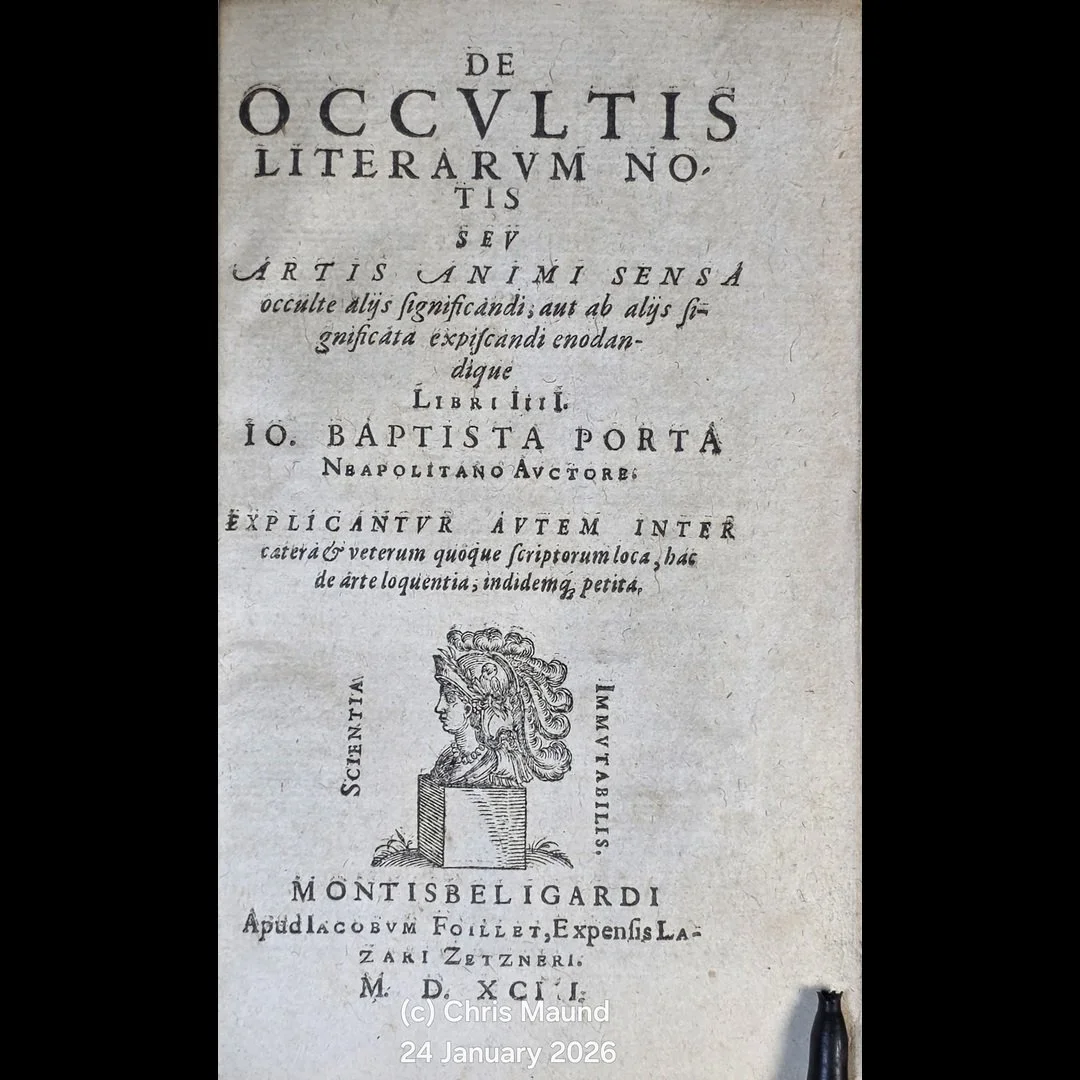 Image 1 of 39
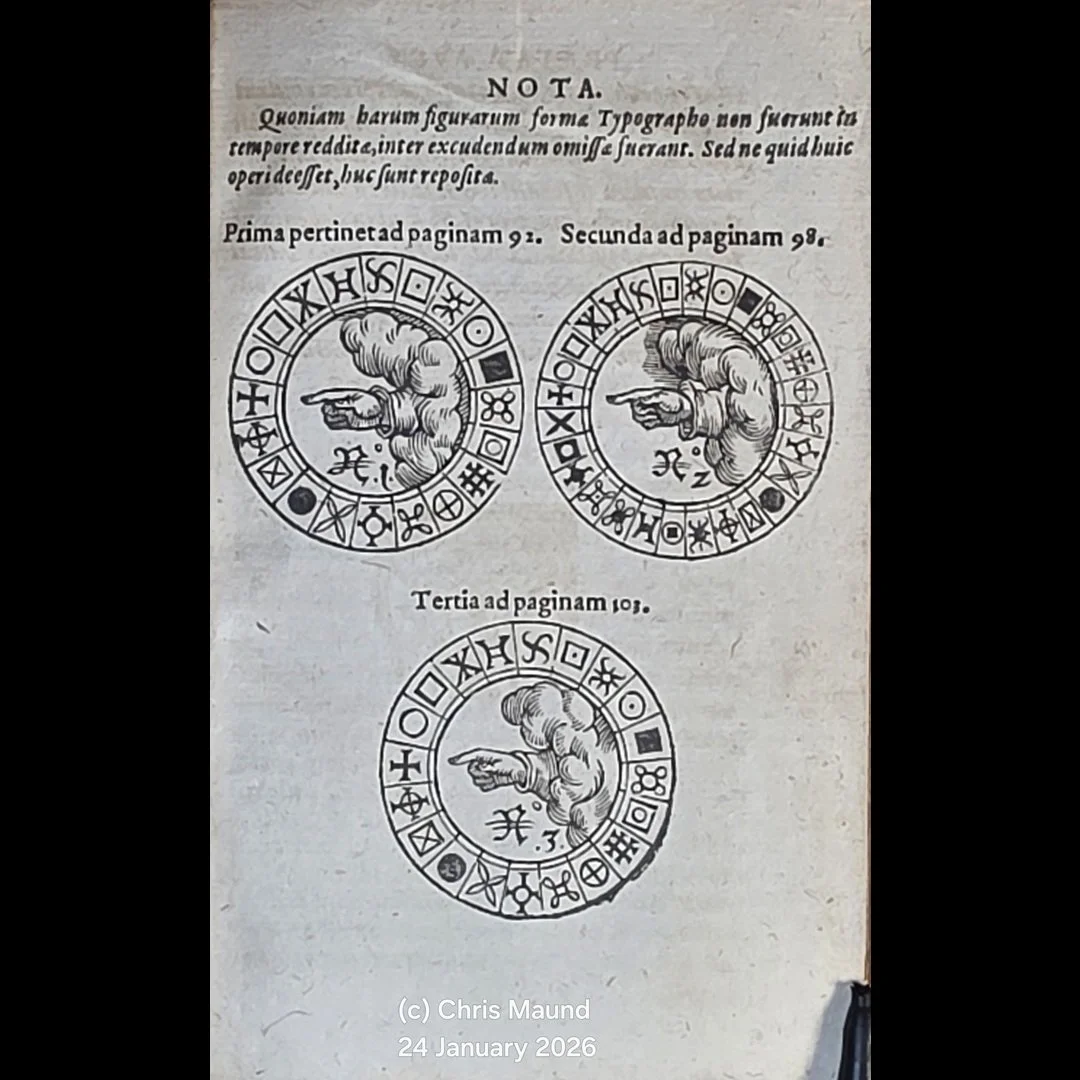 Image 2 of 39
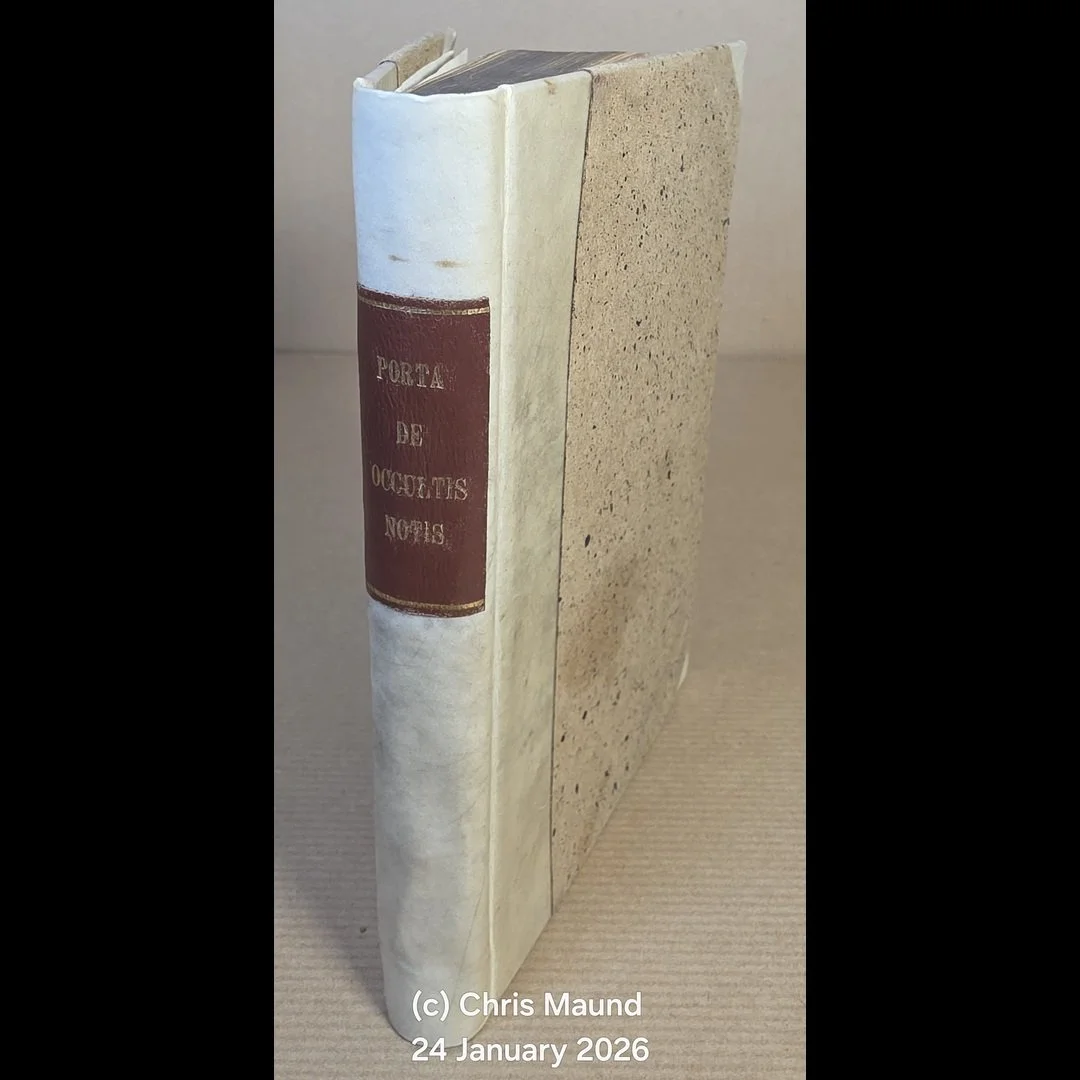 Image 3 of 39
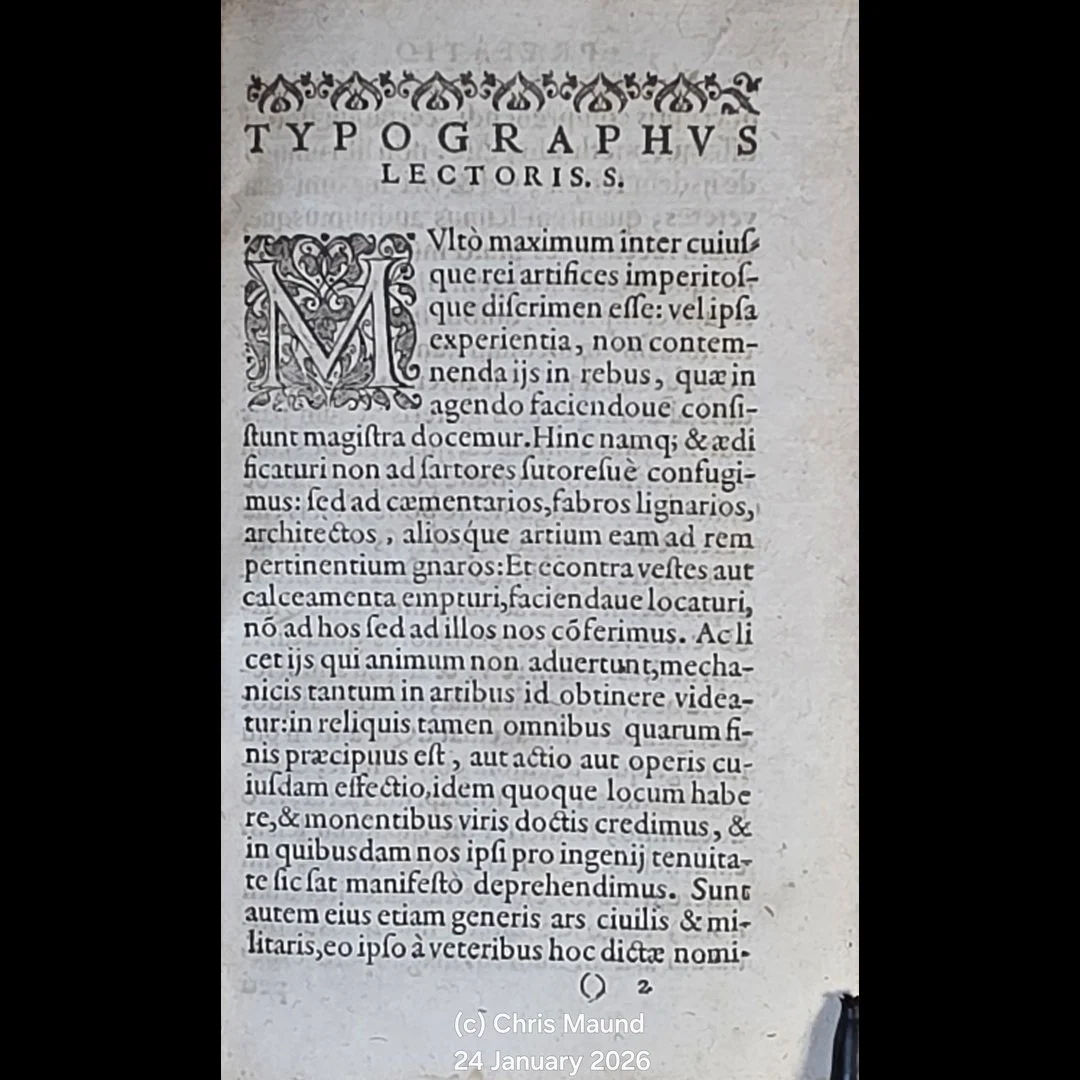 Image 4 of 39
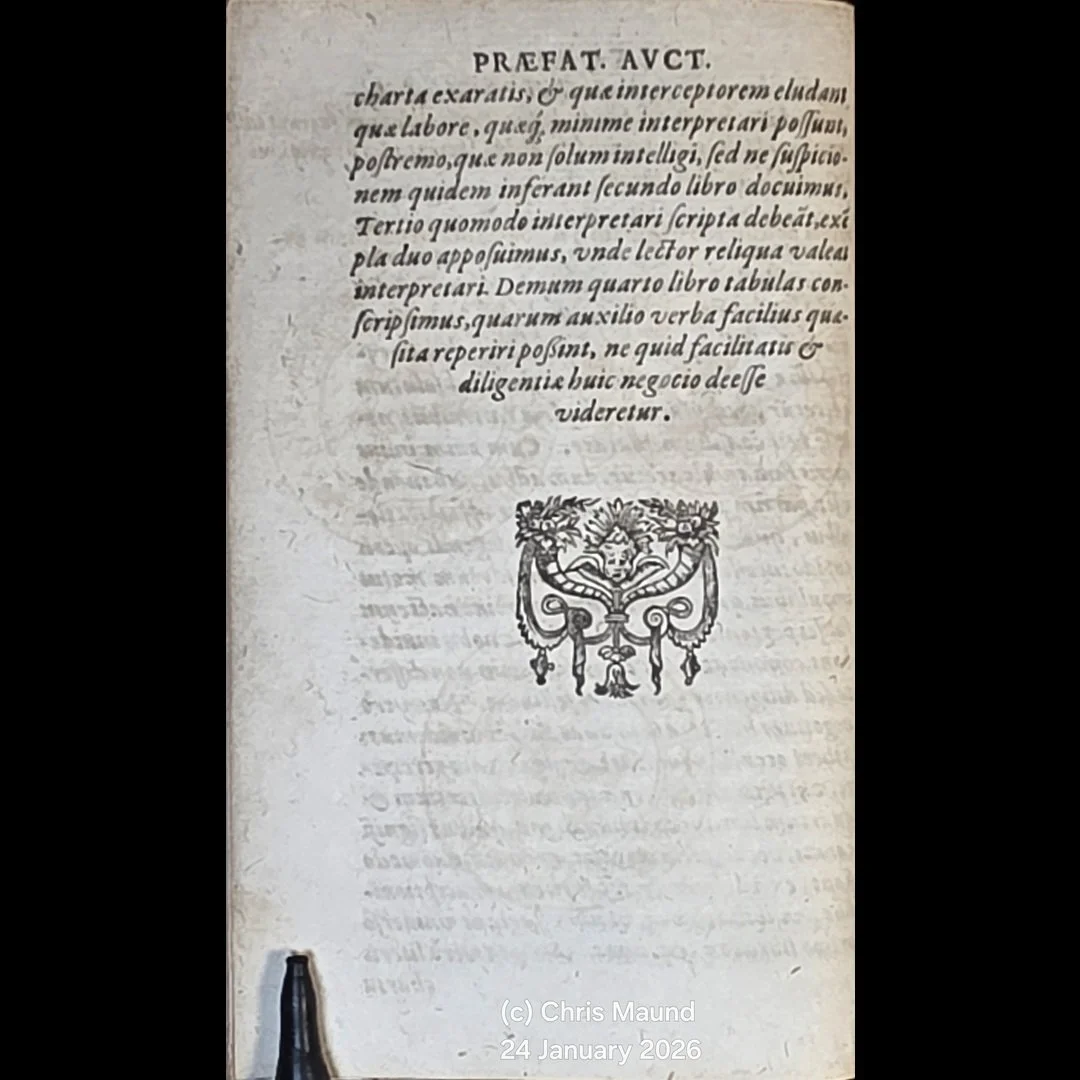 Image 5 of 39
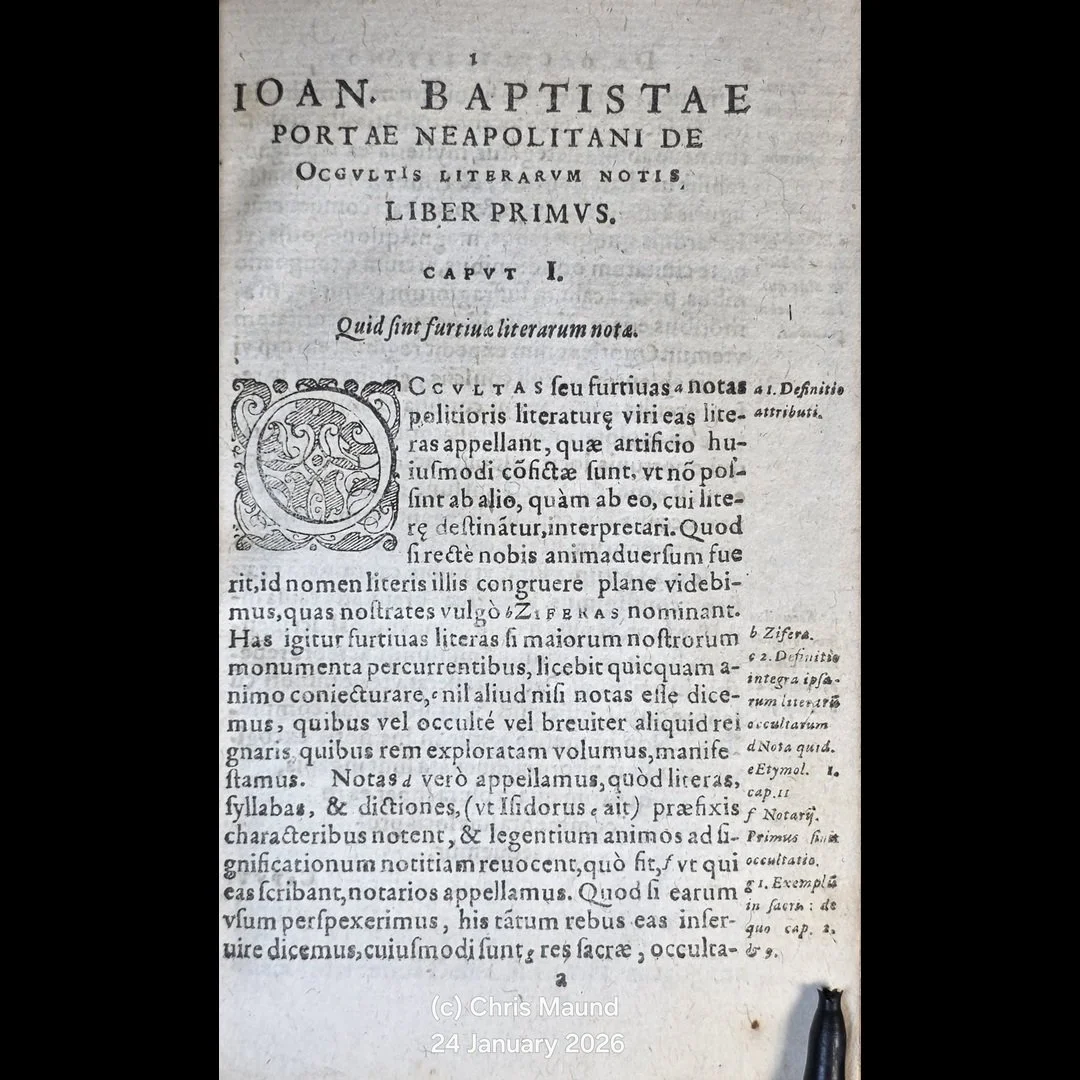 Image 6 of 39
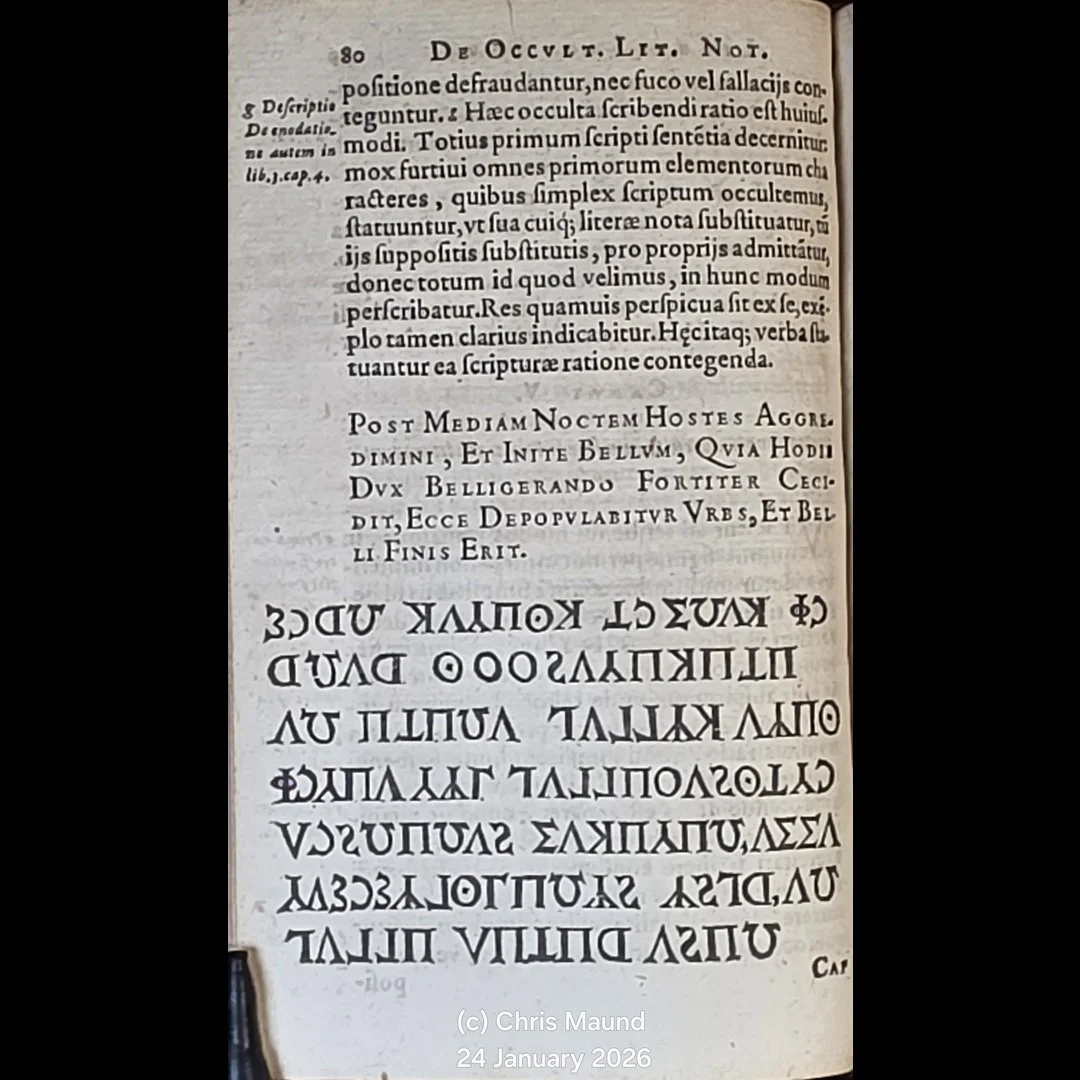 Image 7 of 39
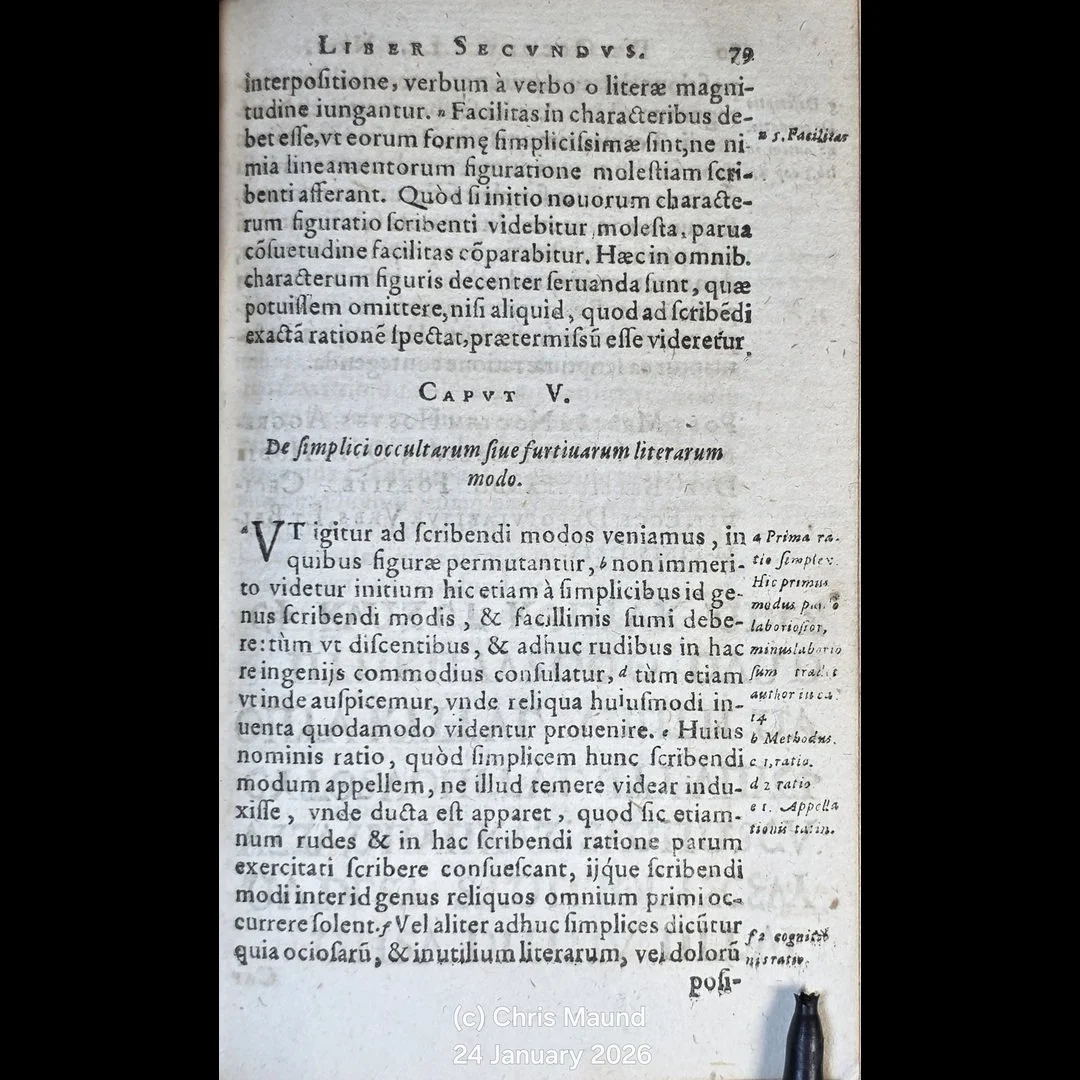 Image 8 of 39
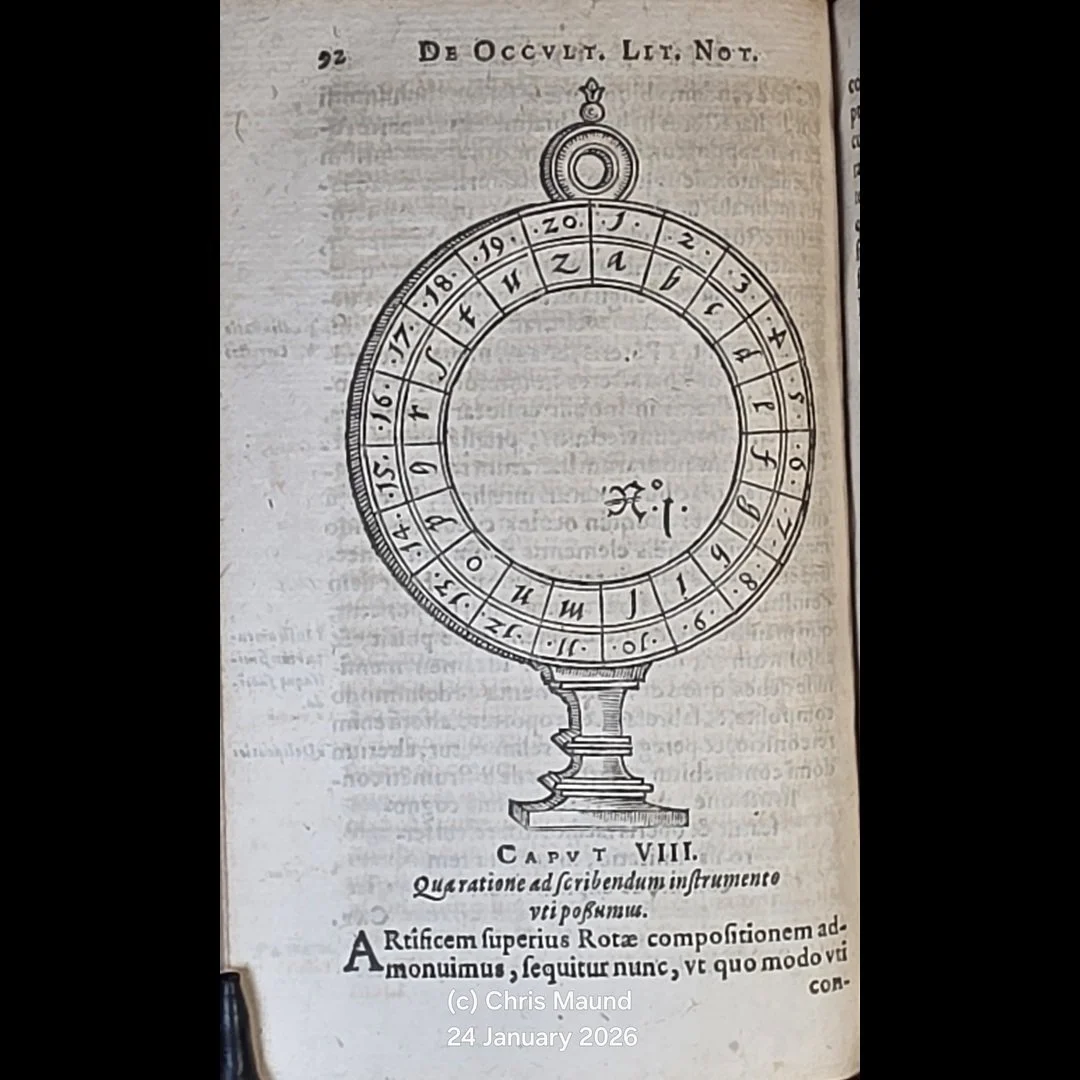 Image 9 of 39
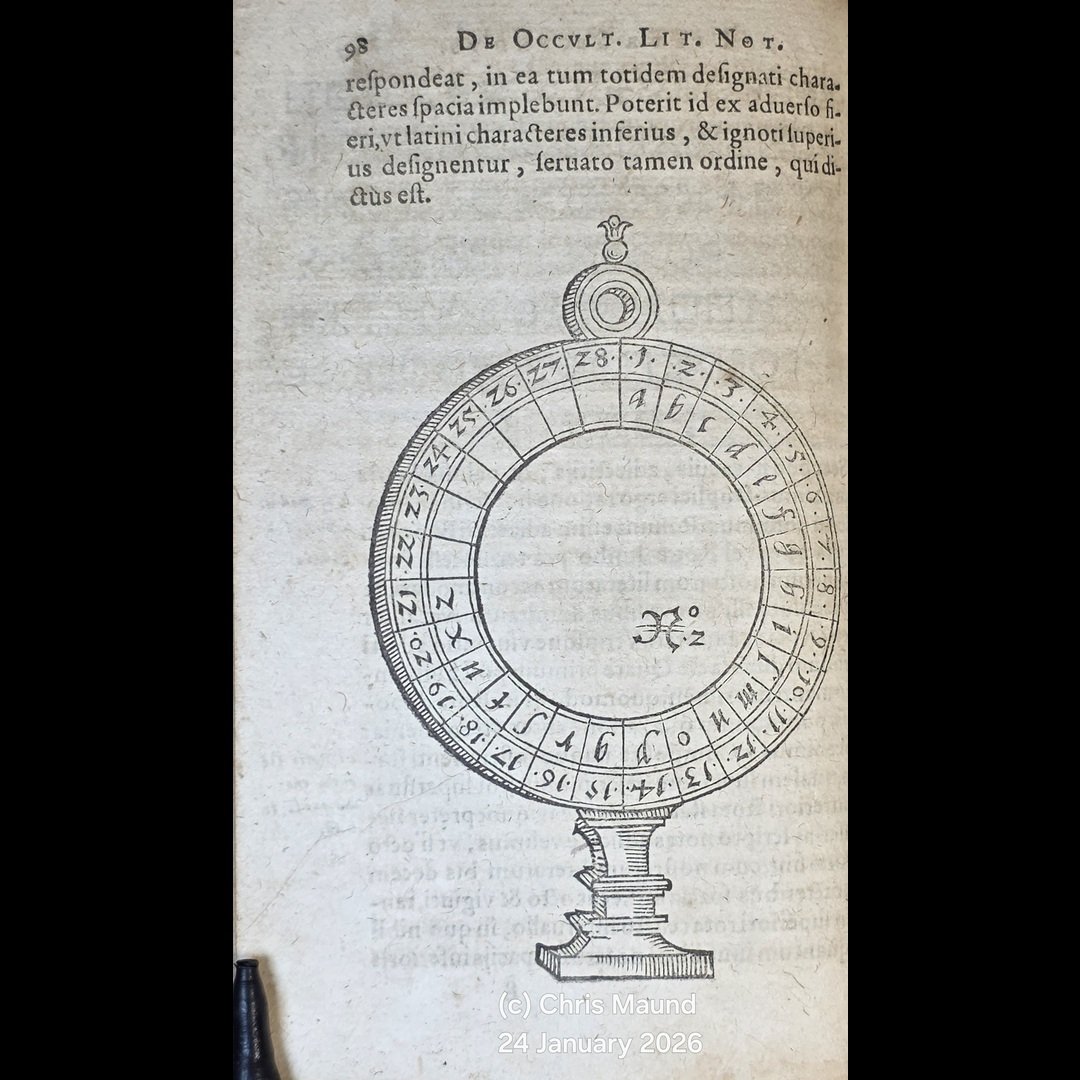 Image 10 of 39
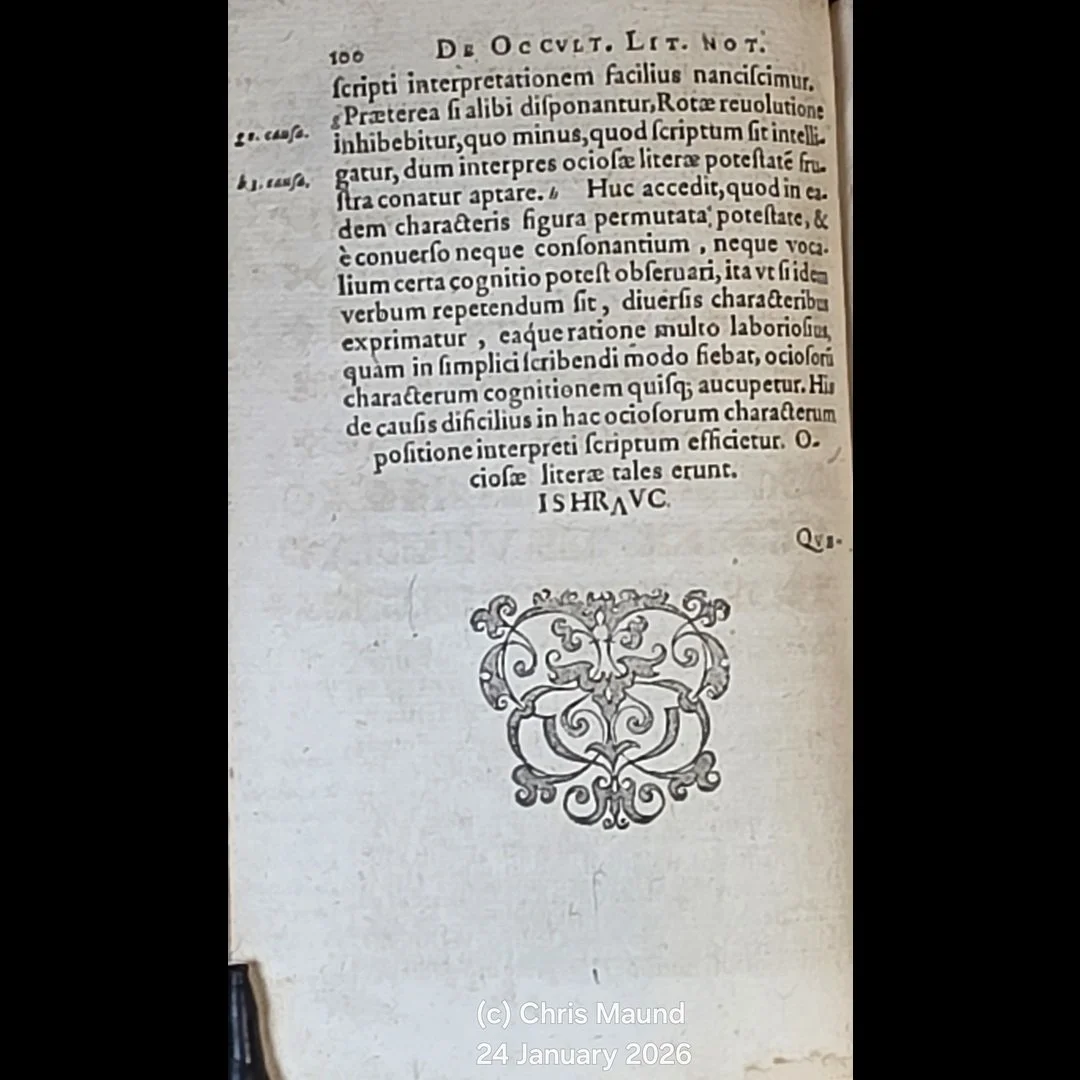 Image 11 of 39
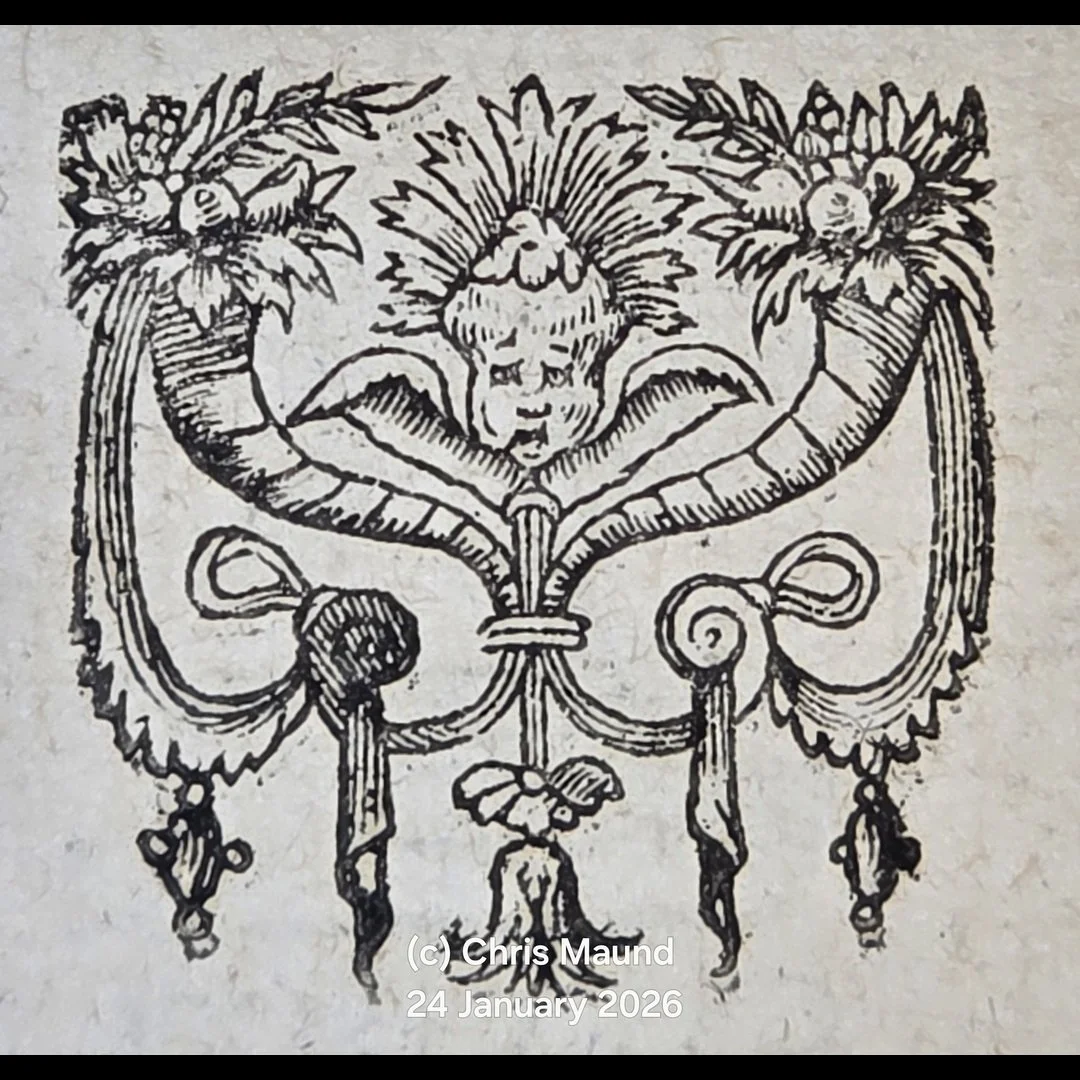 Image 12 of 39
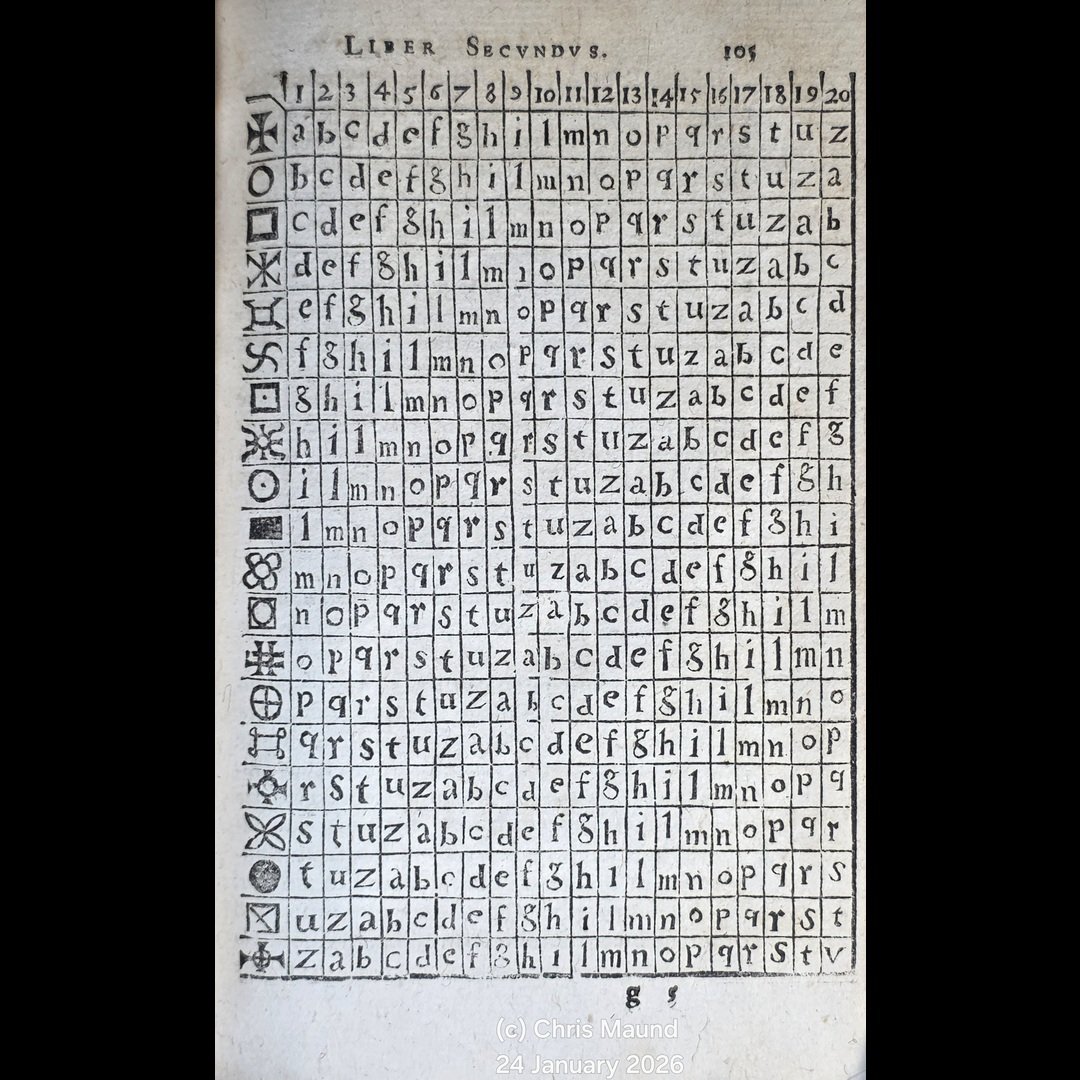 Image 13 of 39
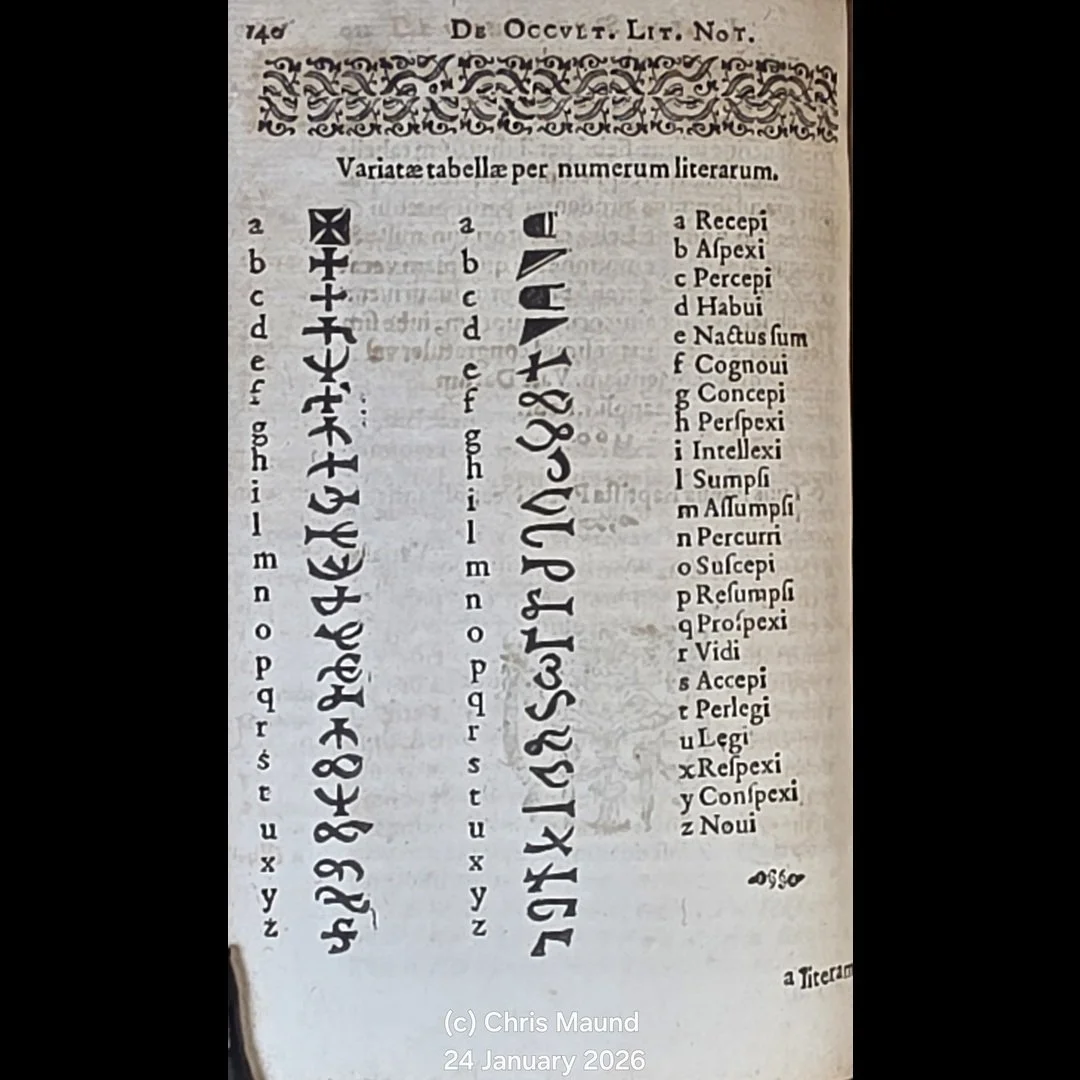 Image 14 of 39
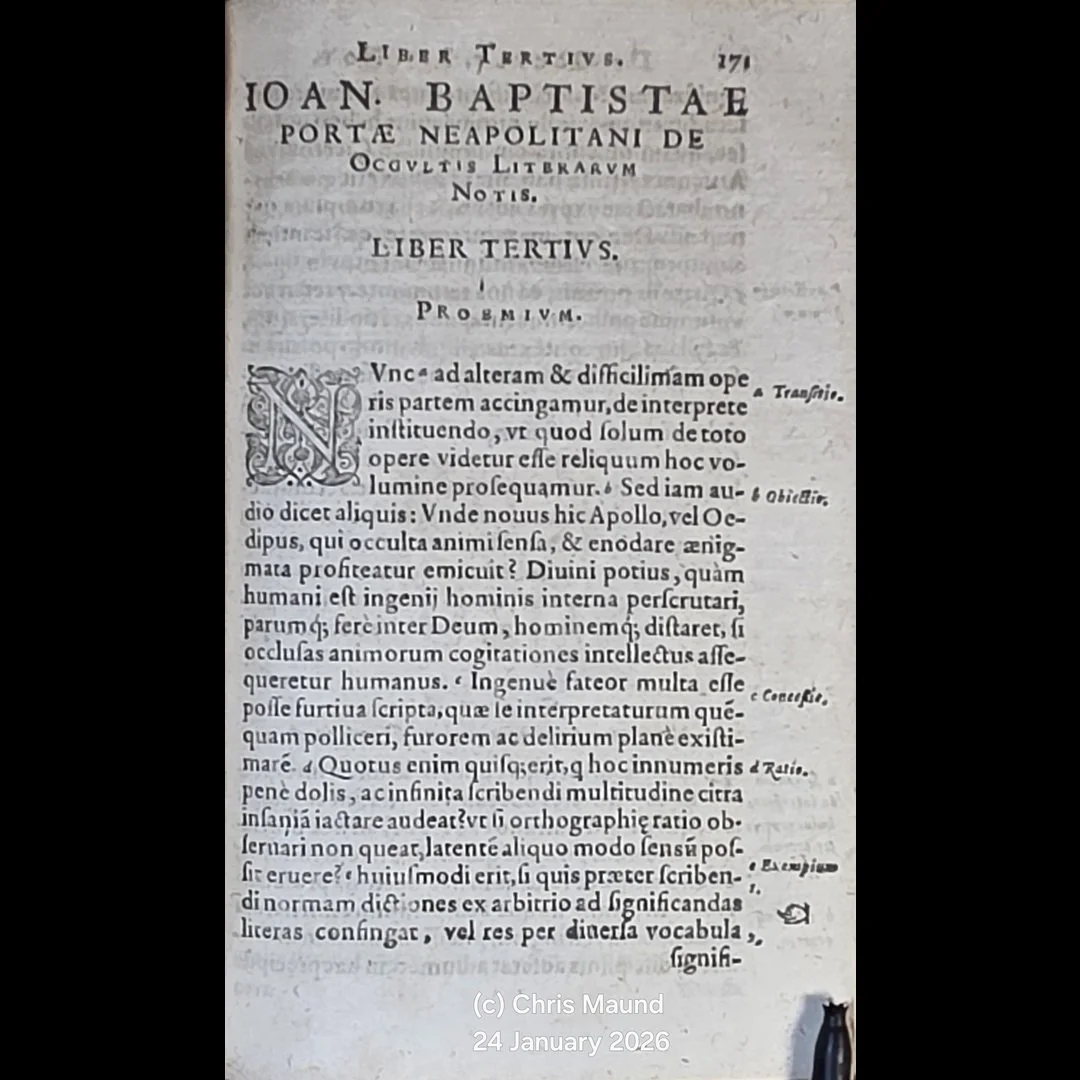 Image 15 of 39
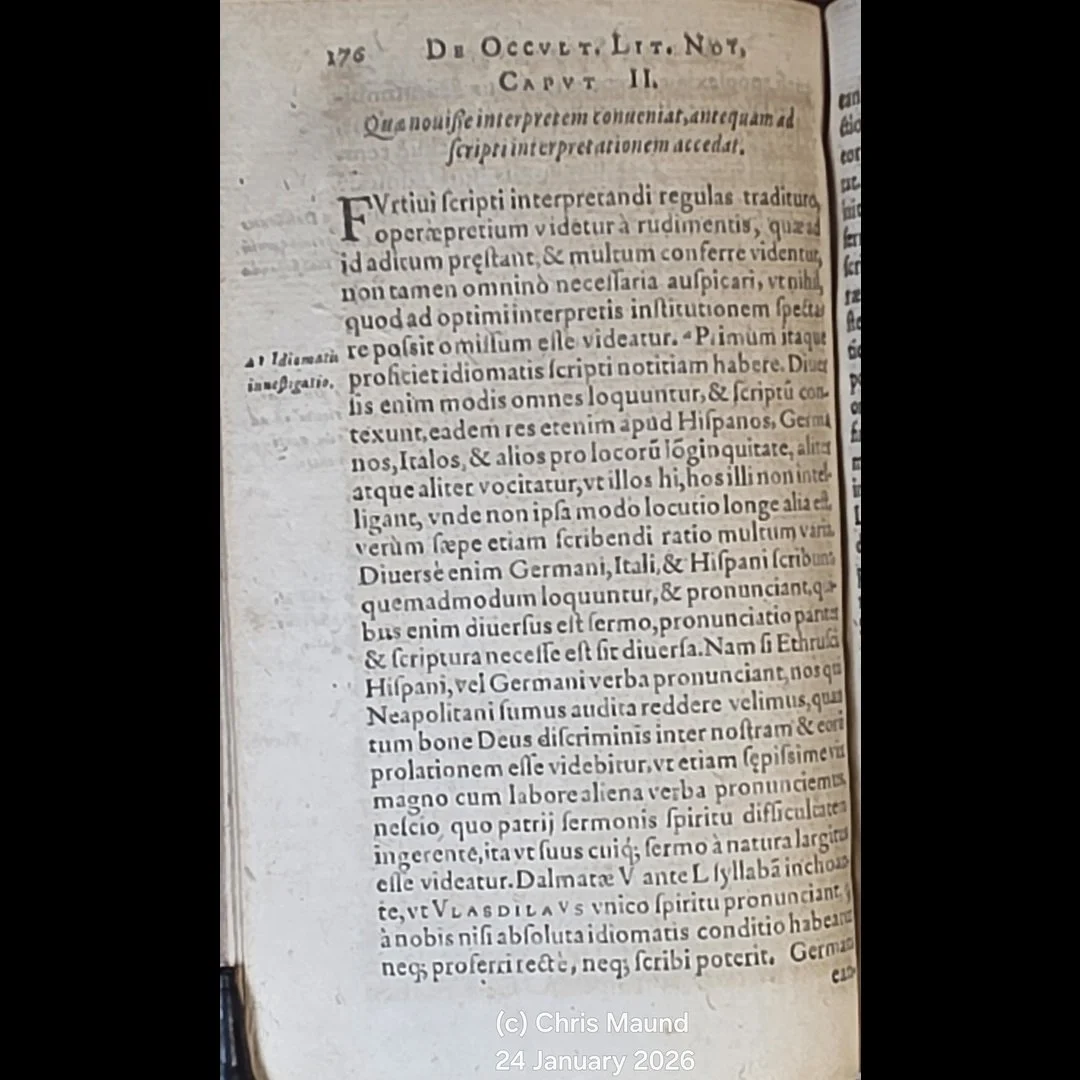 Image 16 of 39
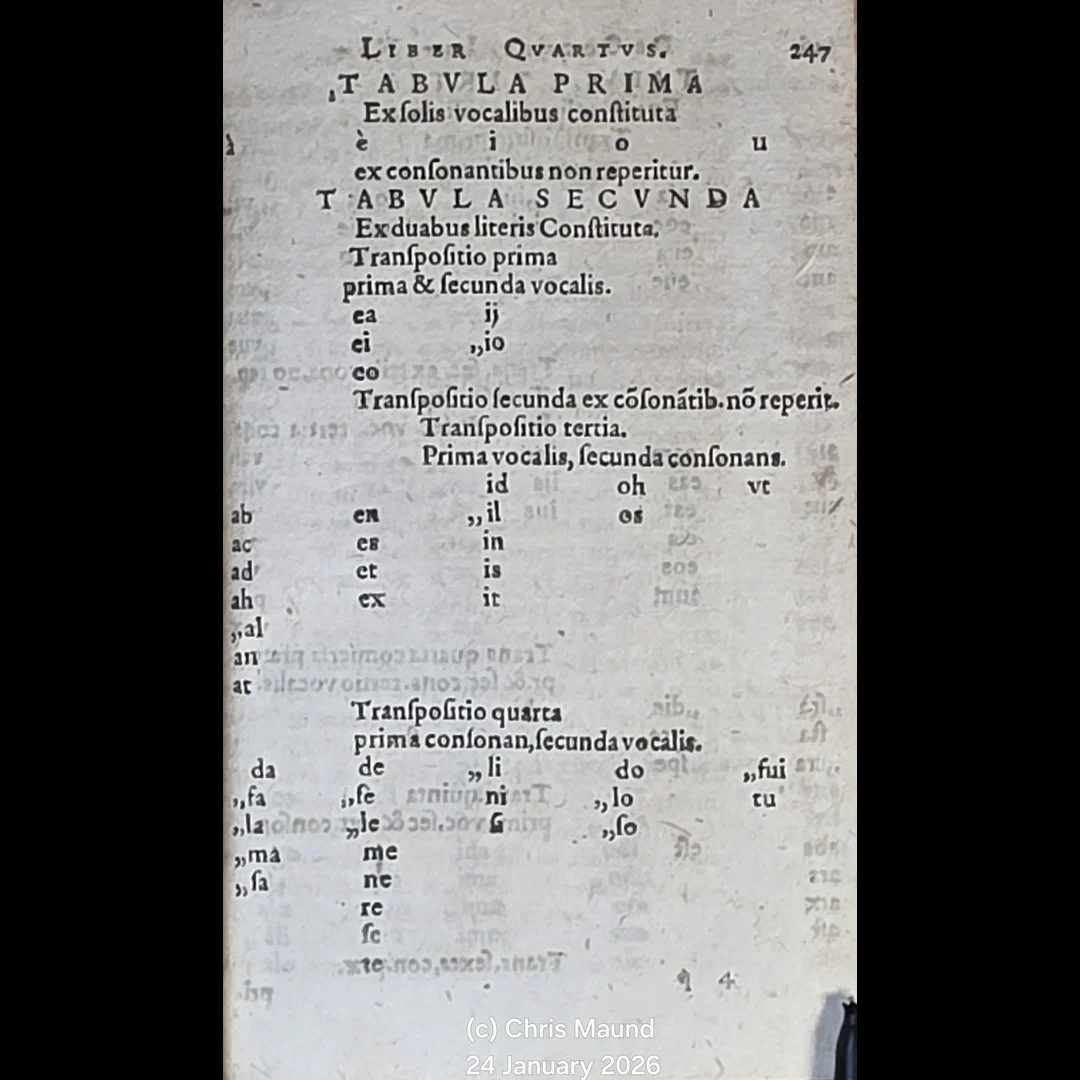 Image 17 of 39
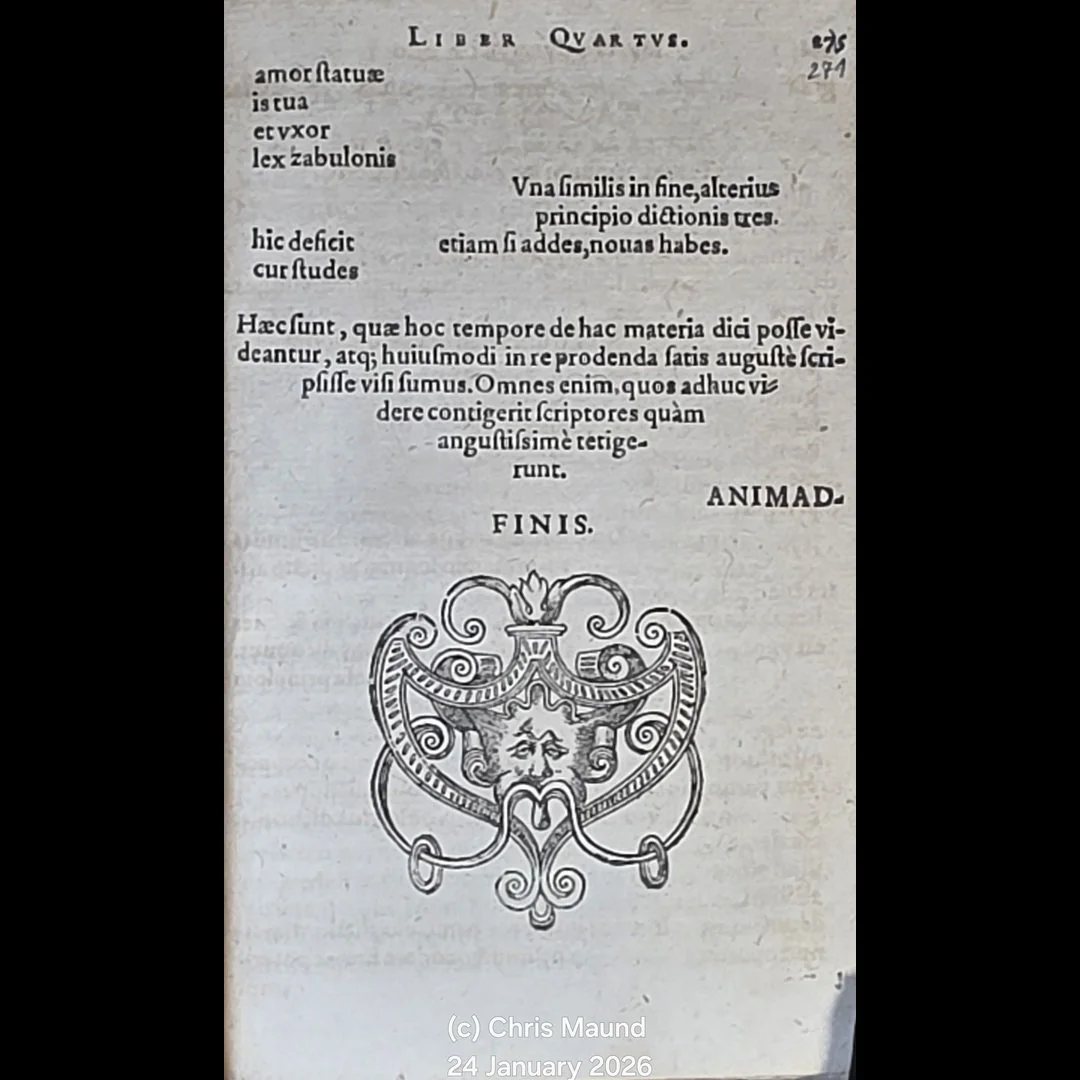 Image 18 of 39
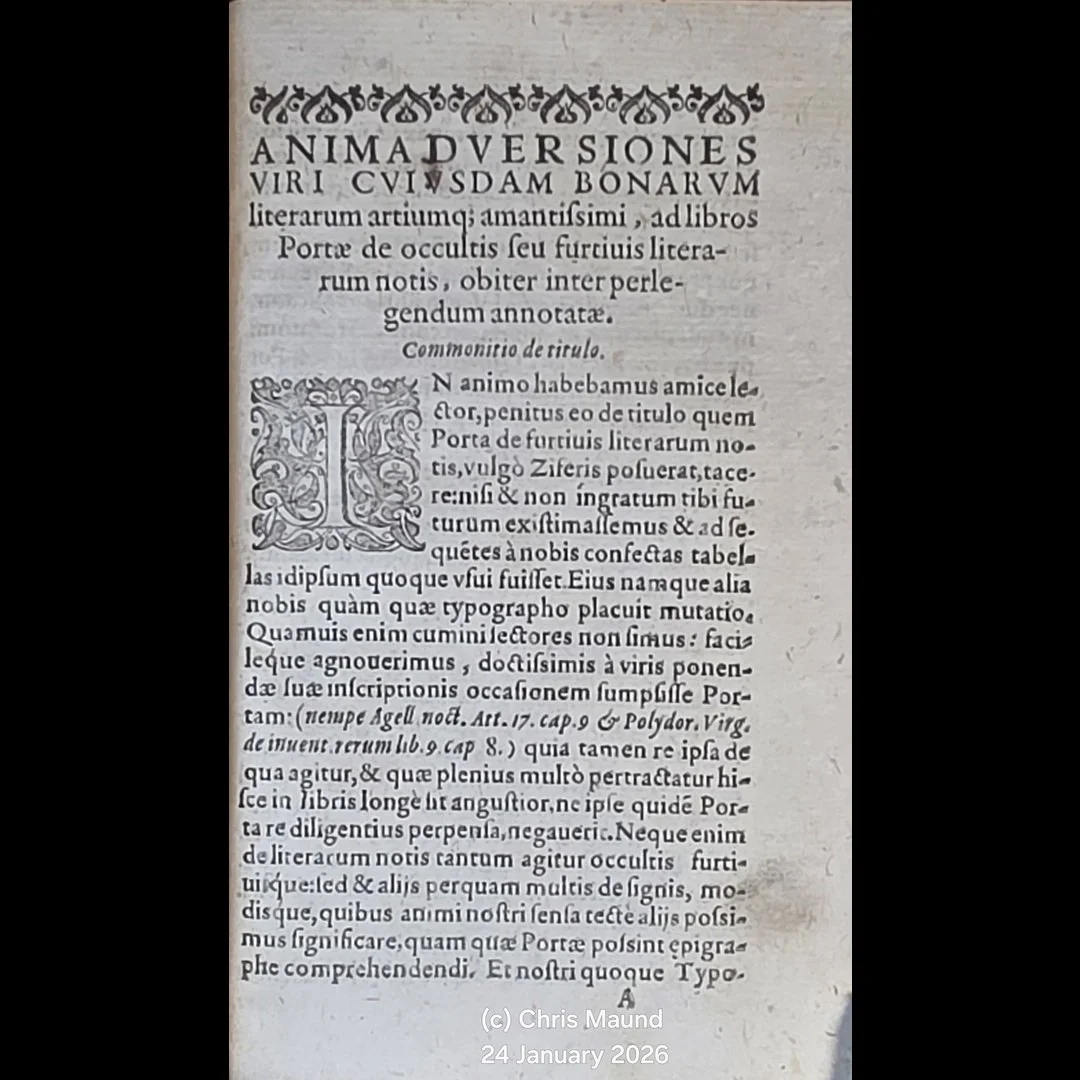 Image 19 of 39
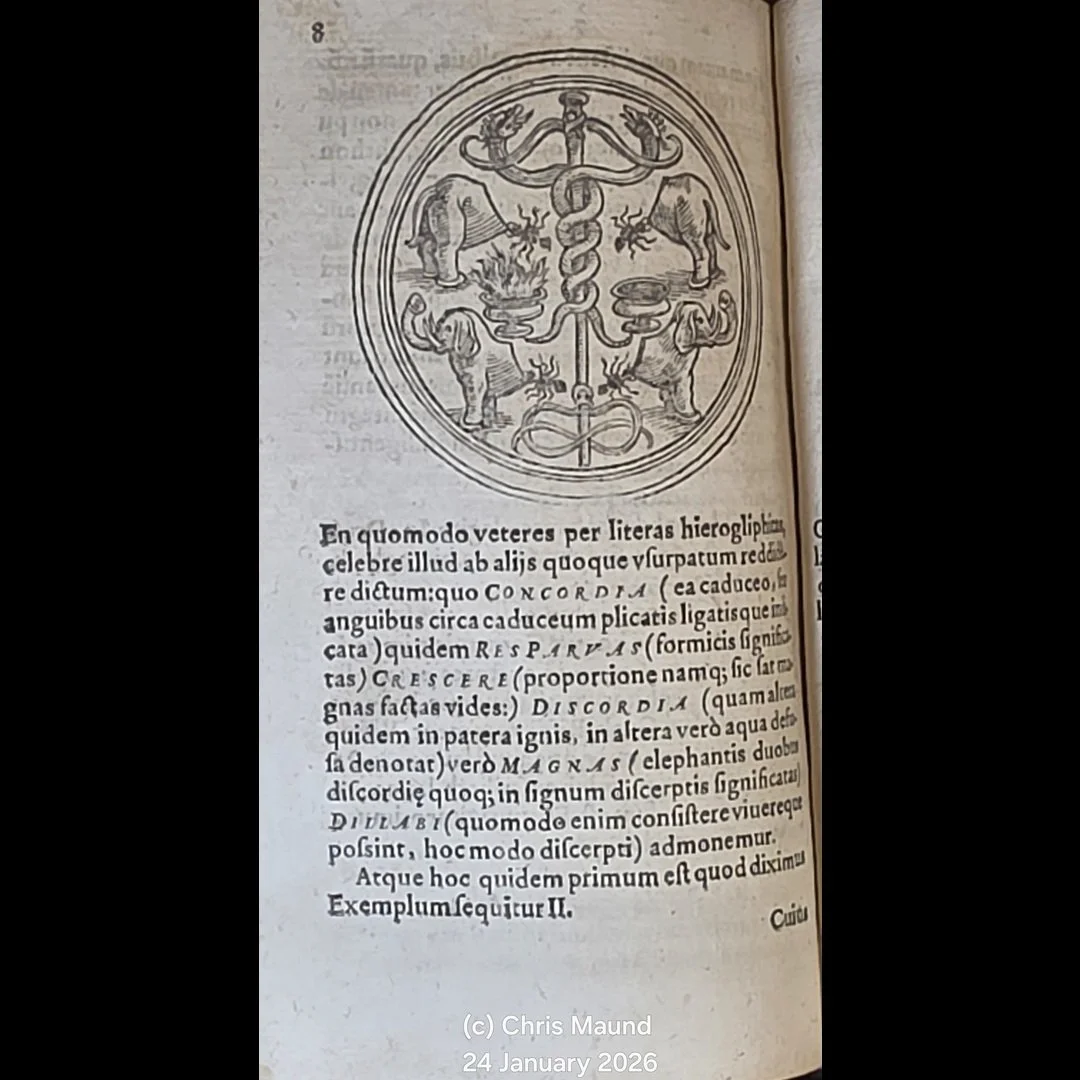 Image 20 of 39
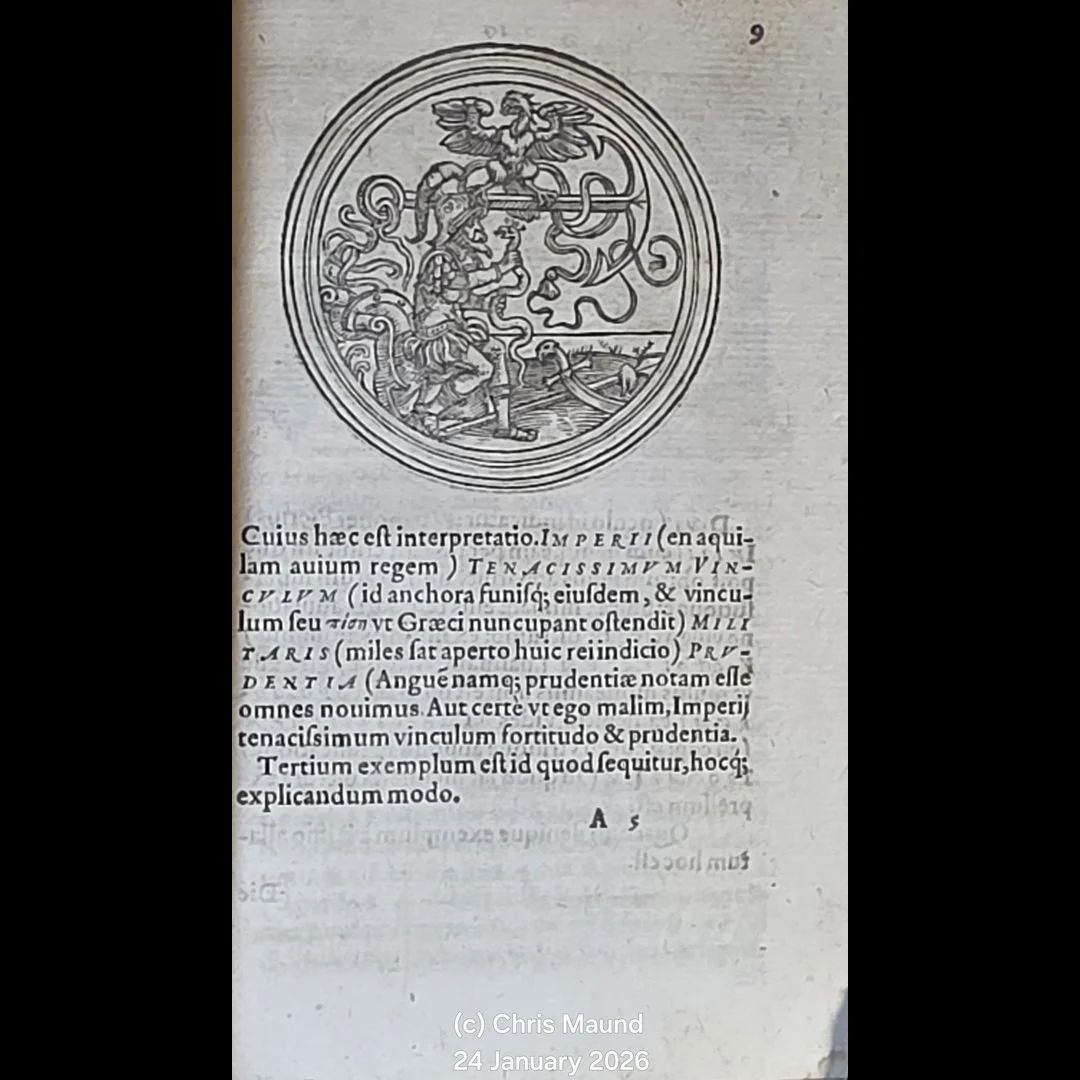 Image 21 of 39
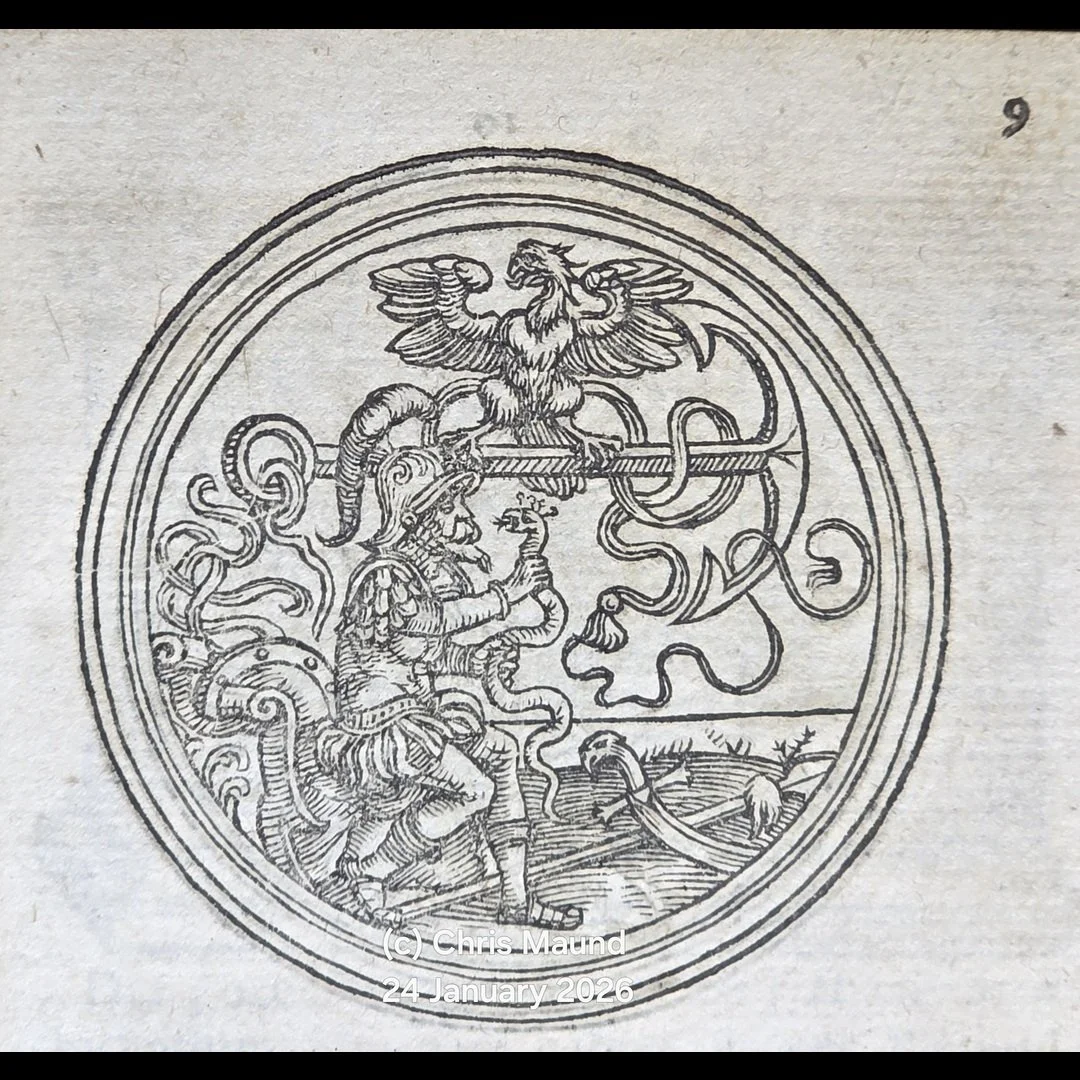 Image 22 of 39
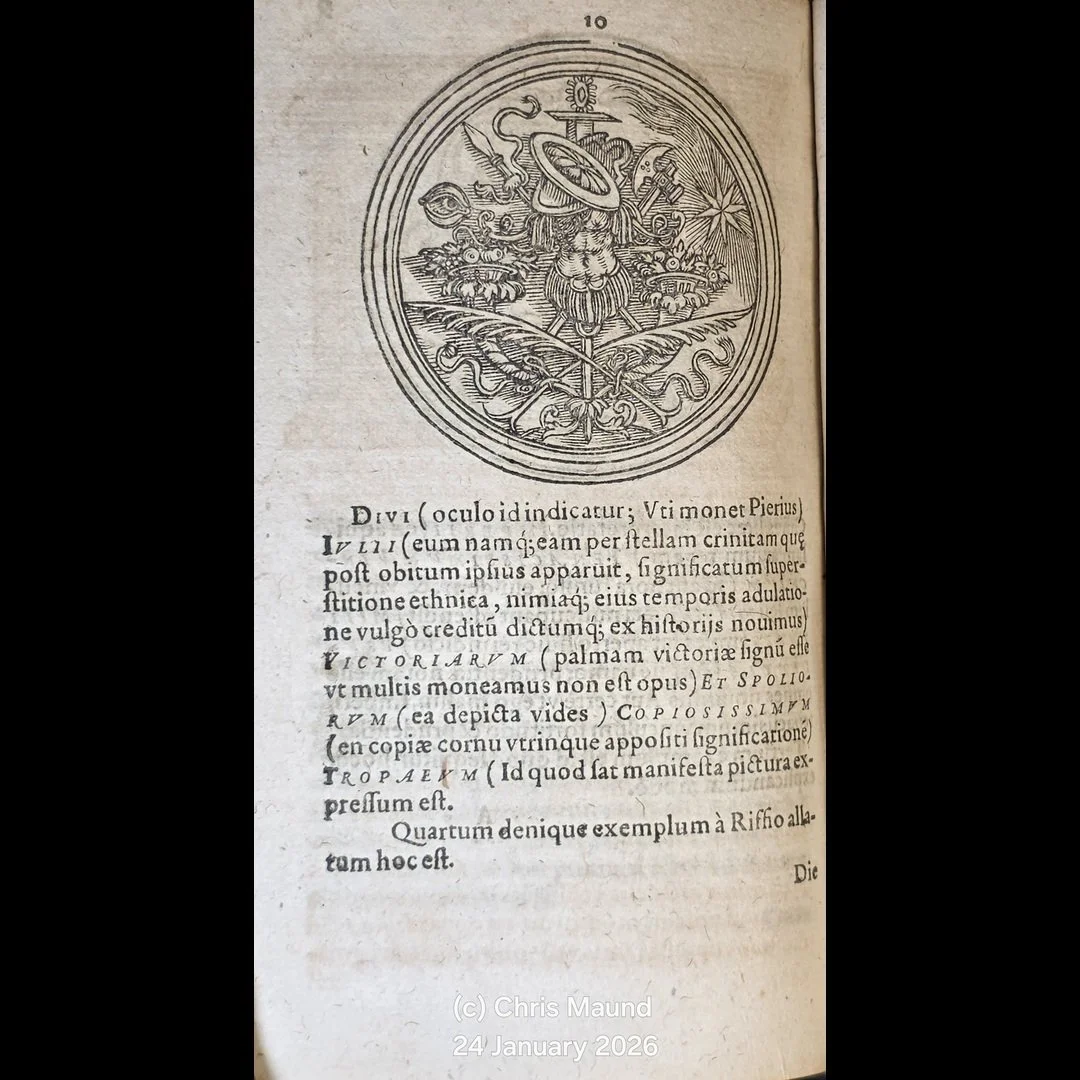 Image 23 of 39
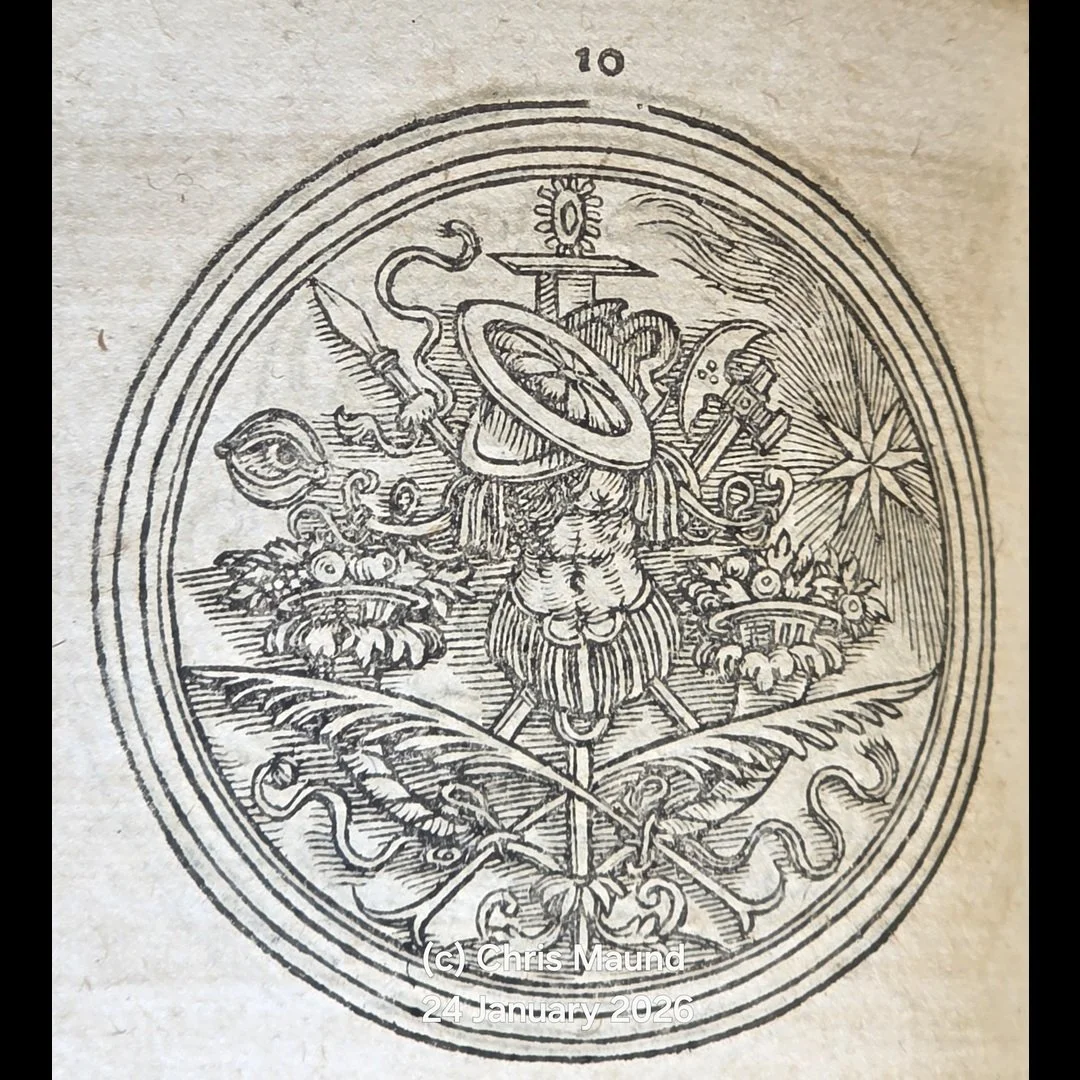 Image 24 of 39
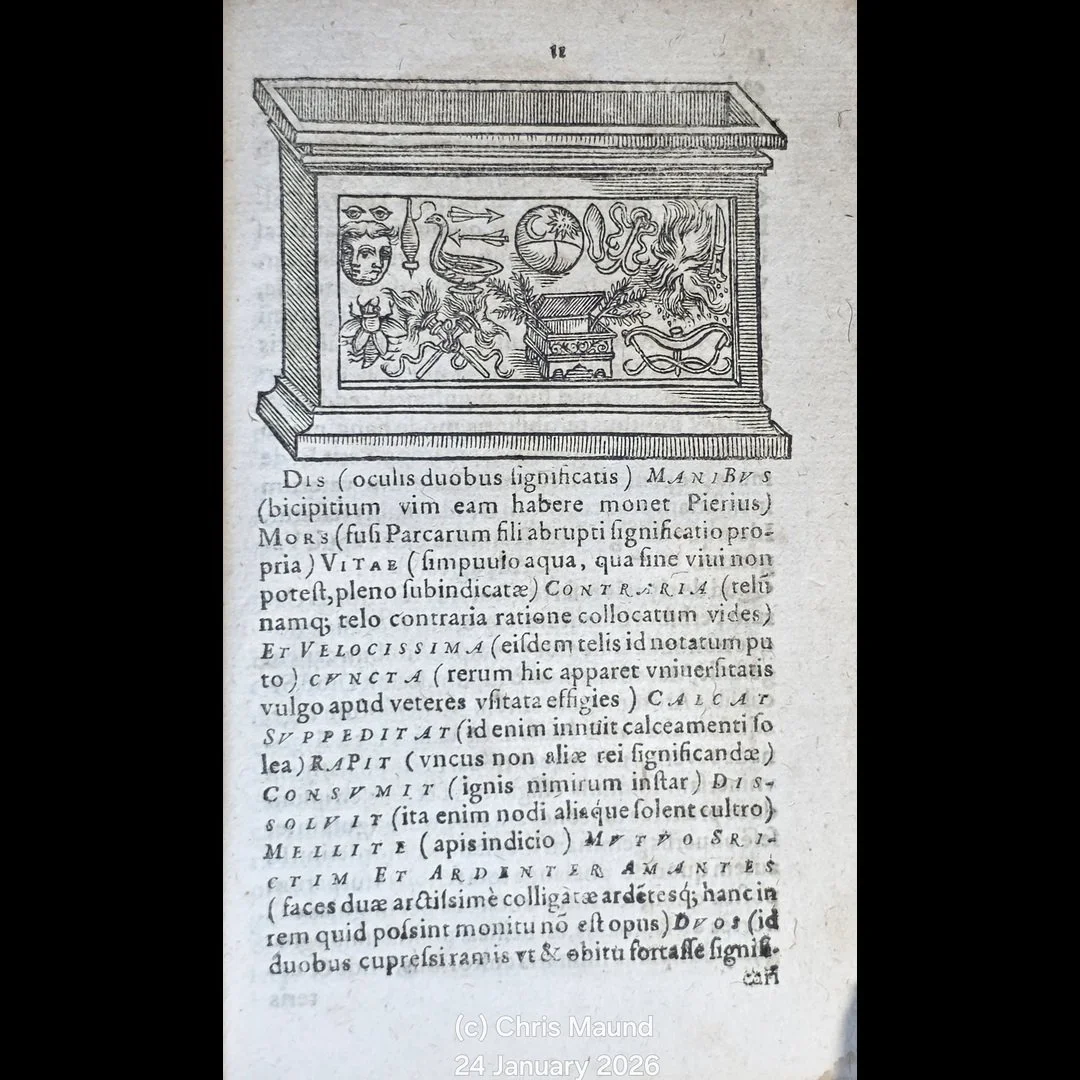 Image 25 of 39
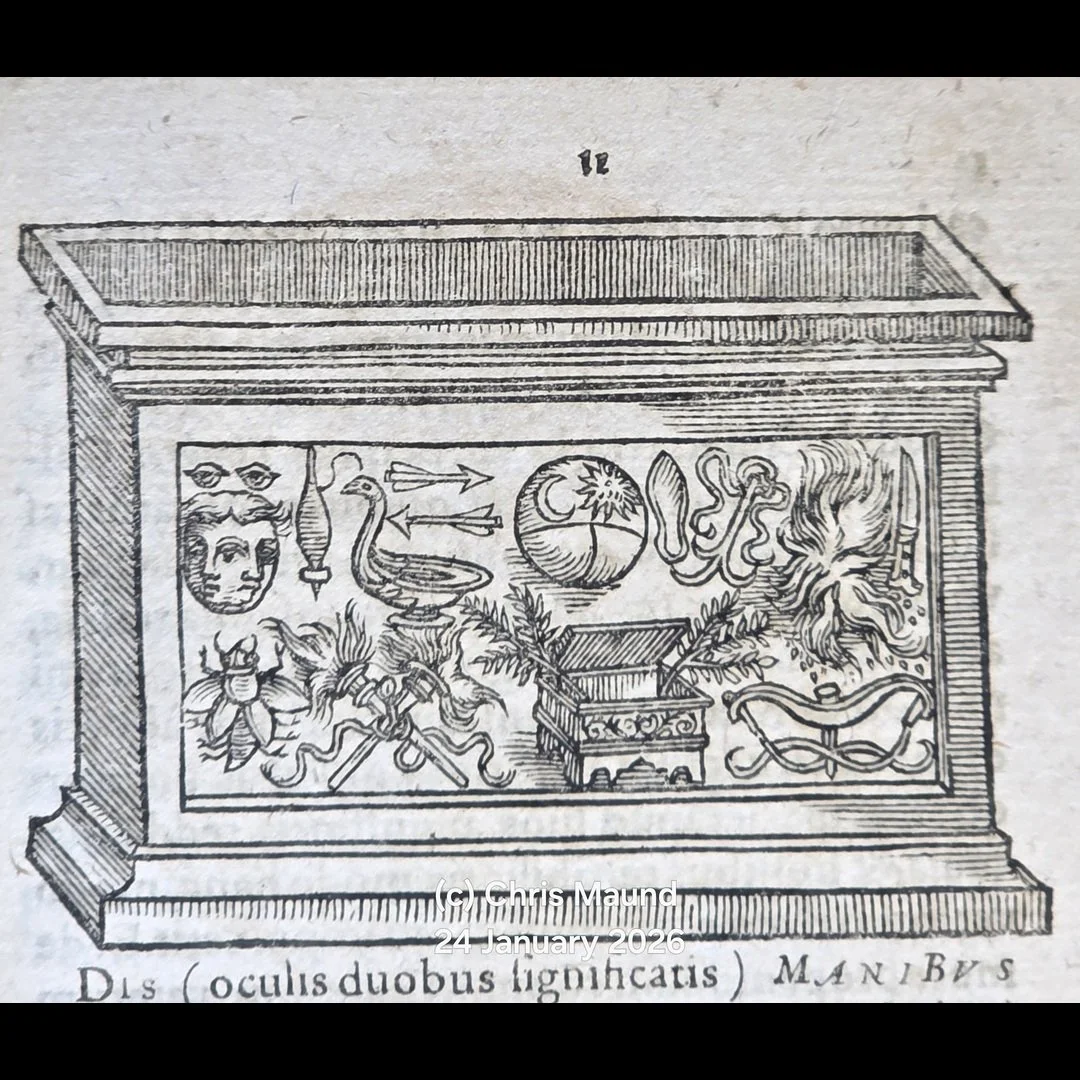 Image 26 of 39
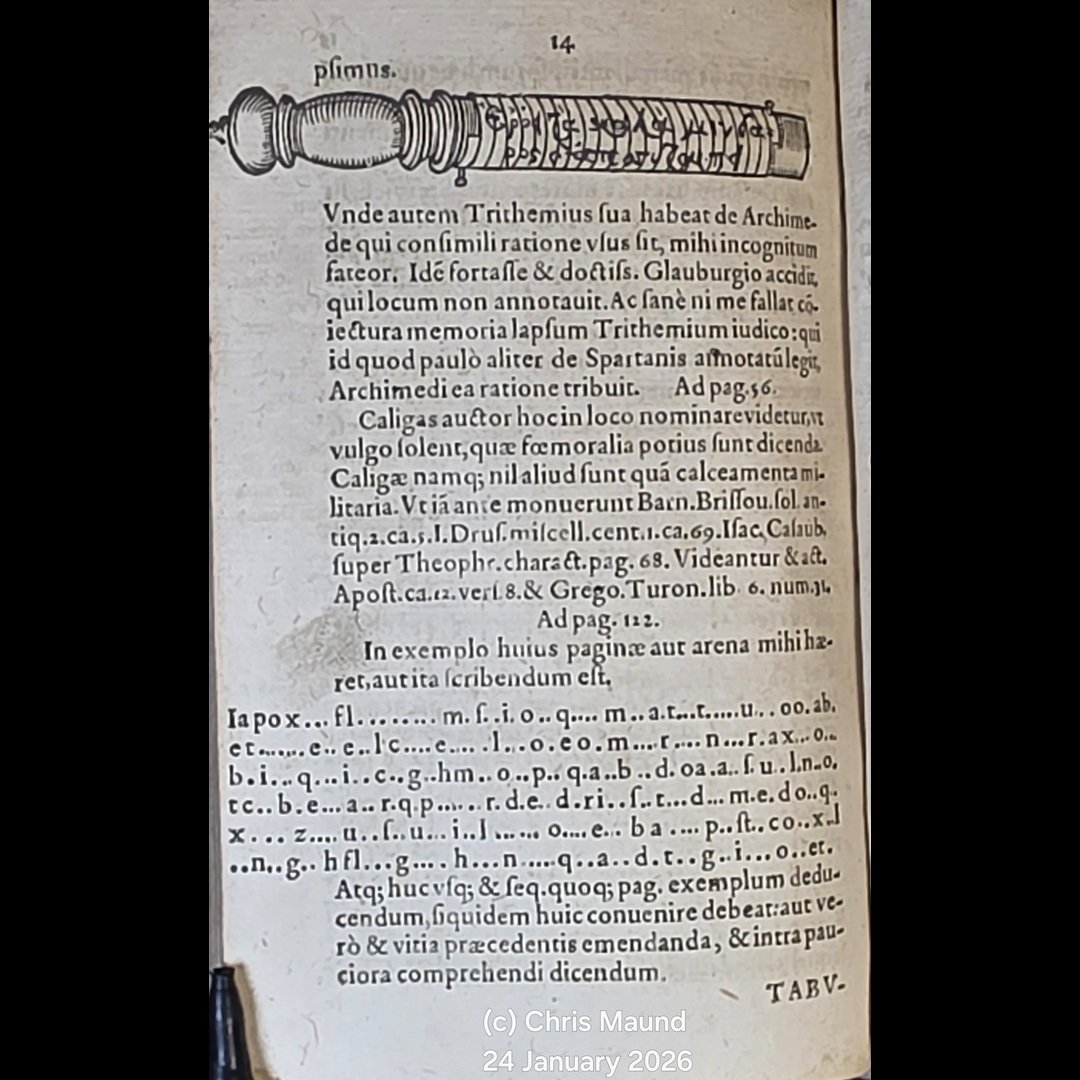 Image 27 of 39
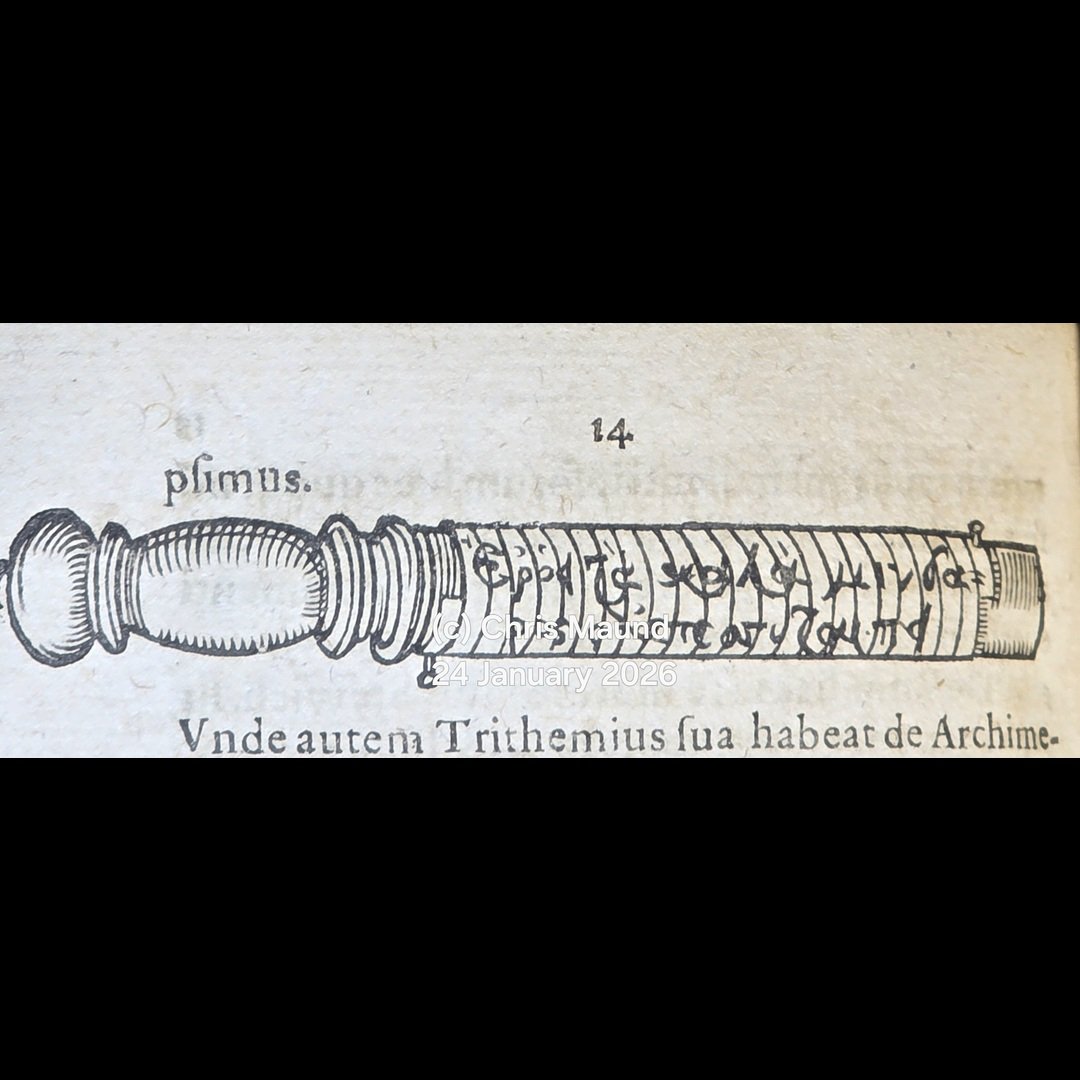 Image 28 of 39
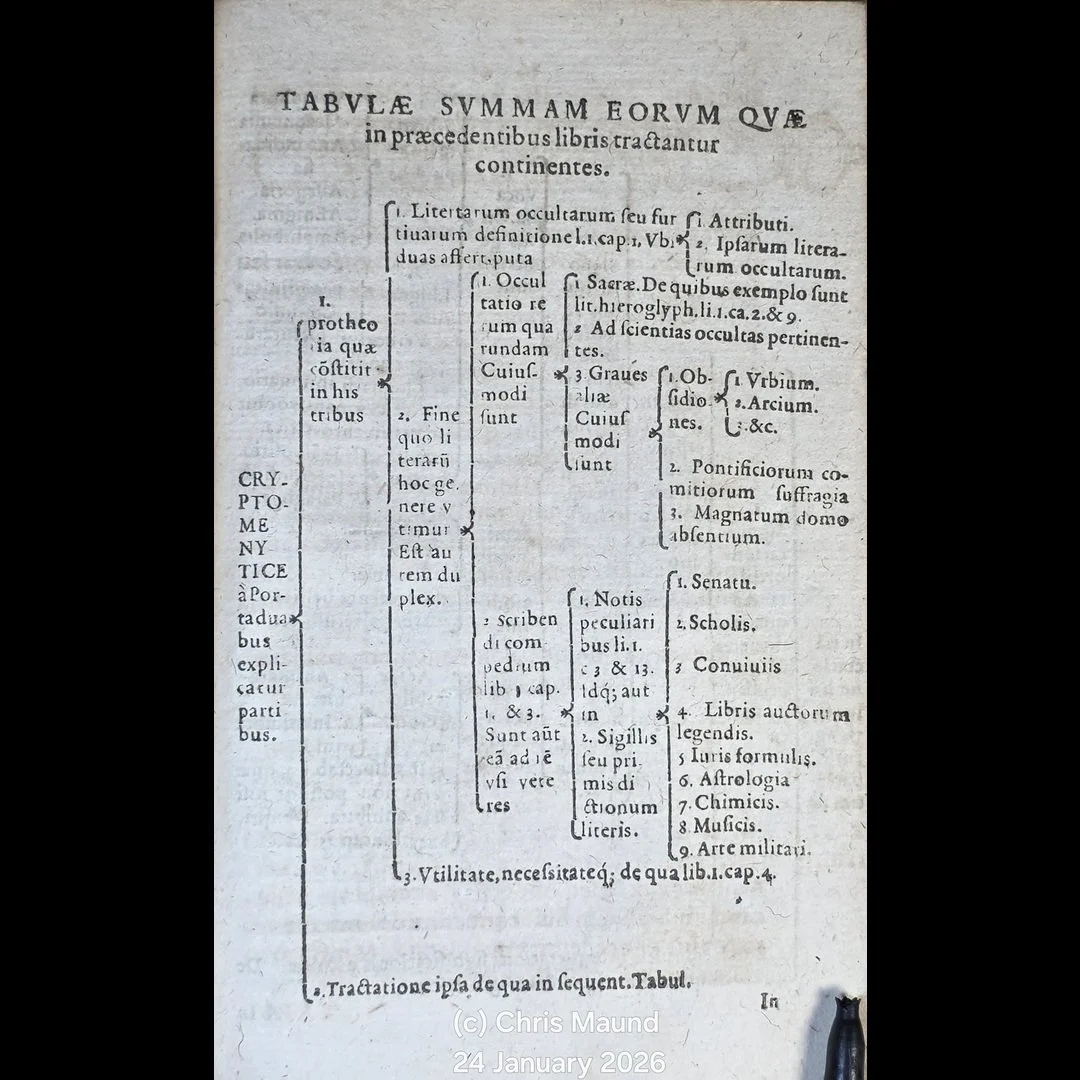 Image 29 of 39
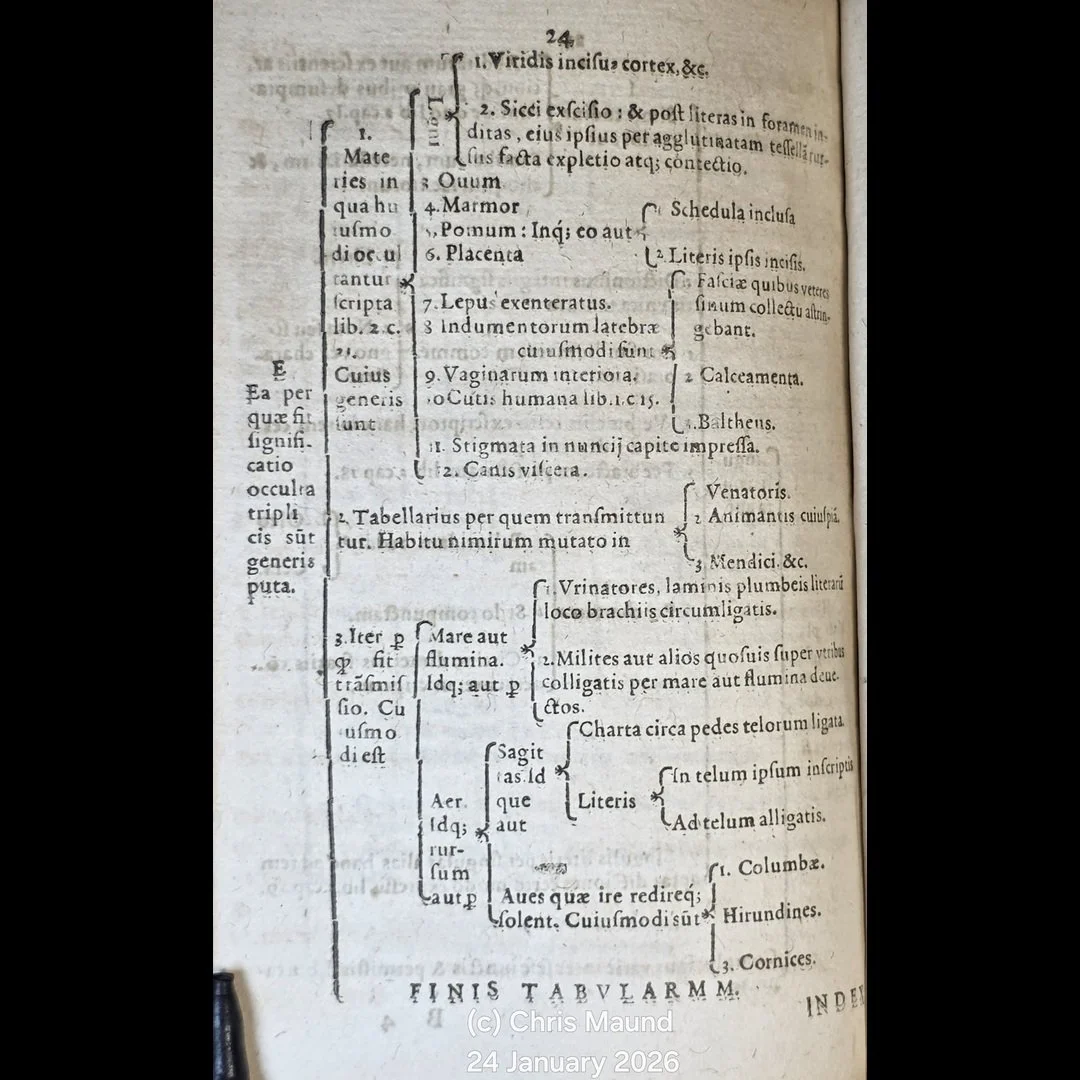 Image 30 of 39
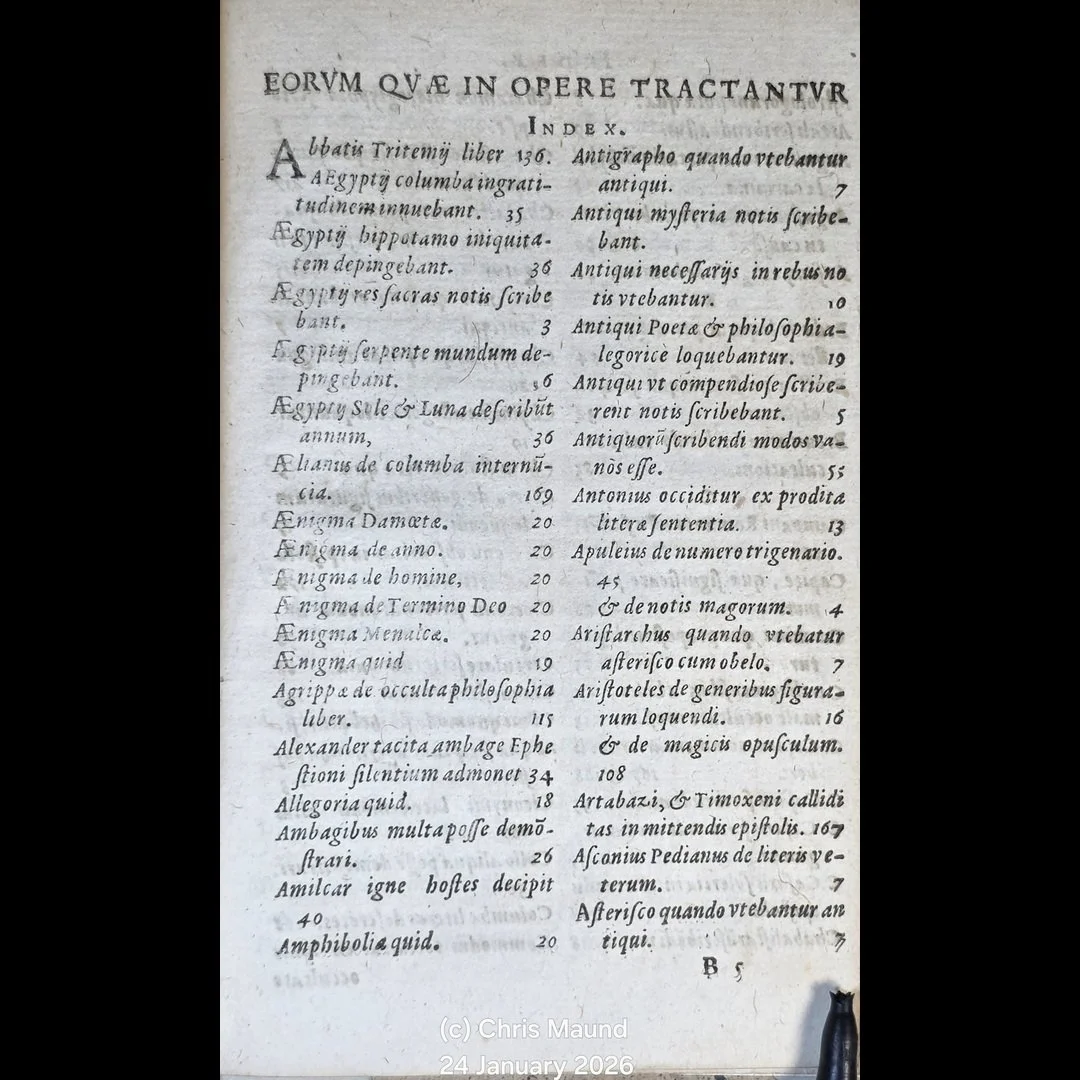 Image 31 of 39
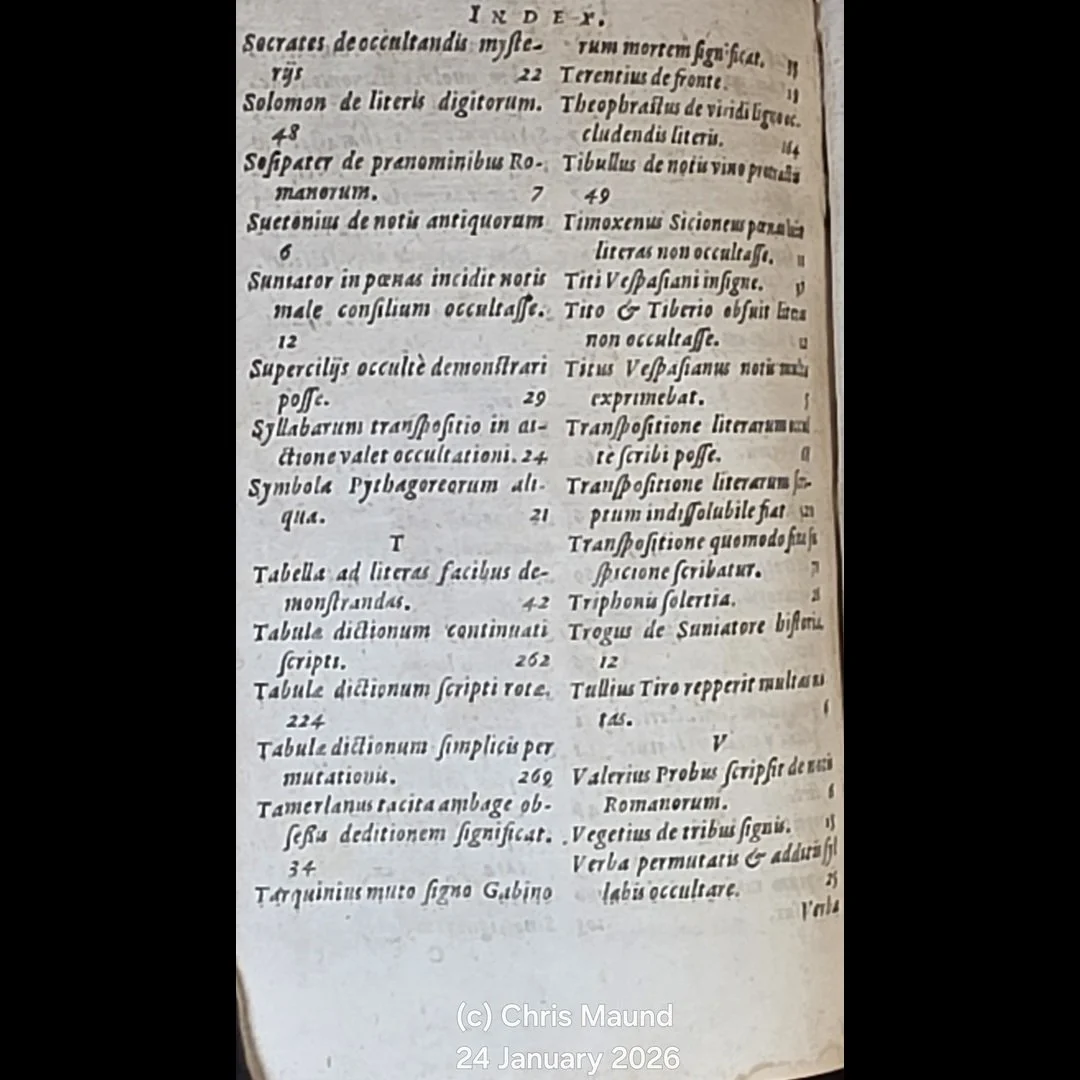 Image 32 of 39
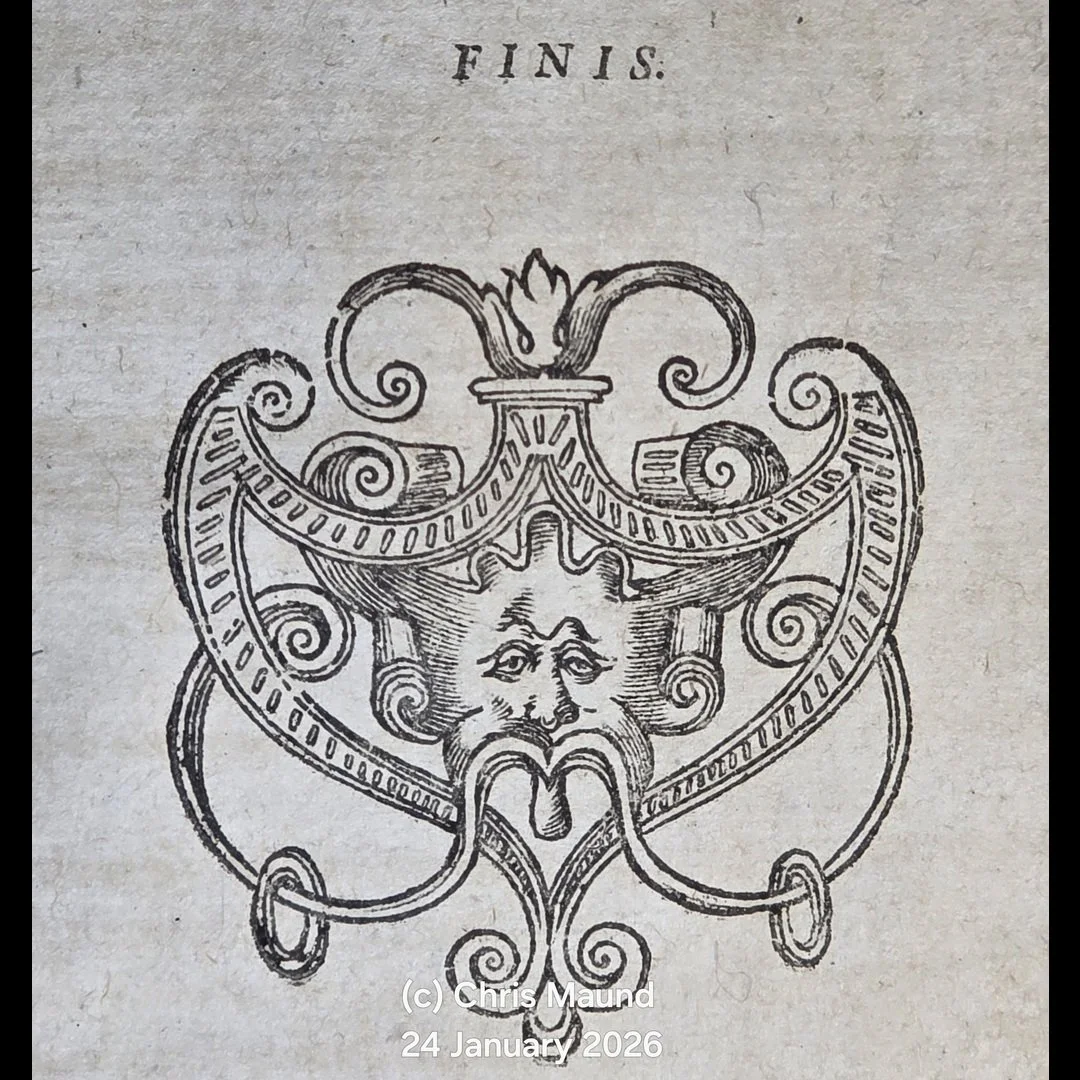 Image 33 of 39
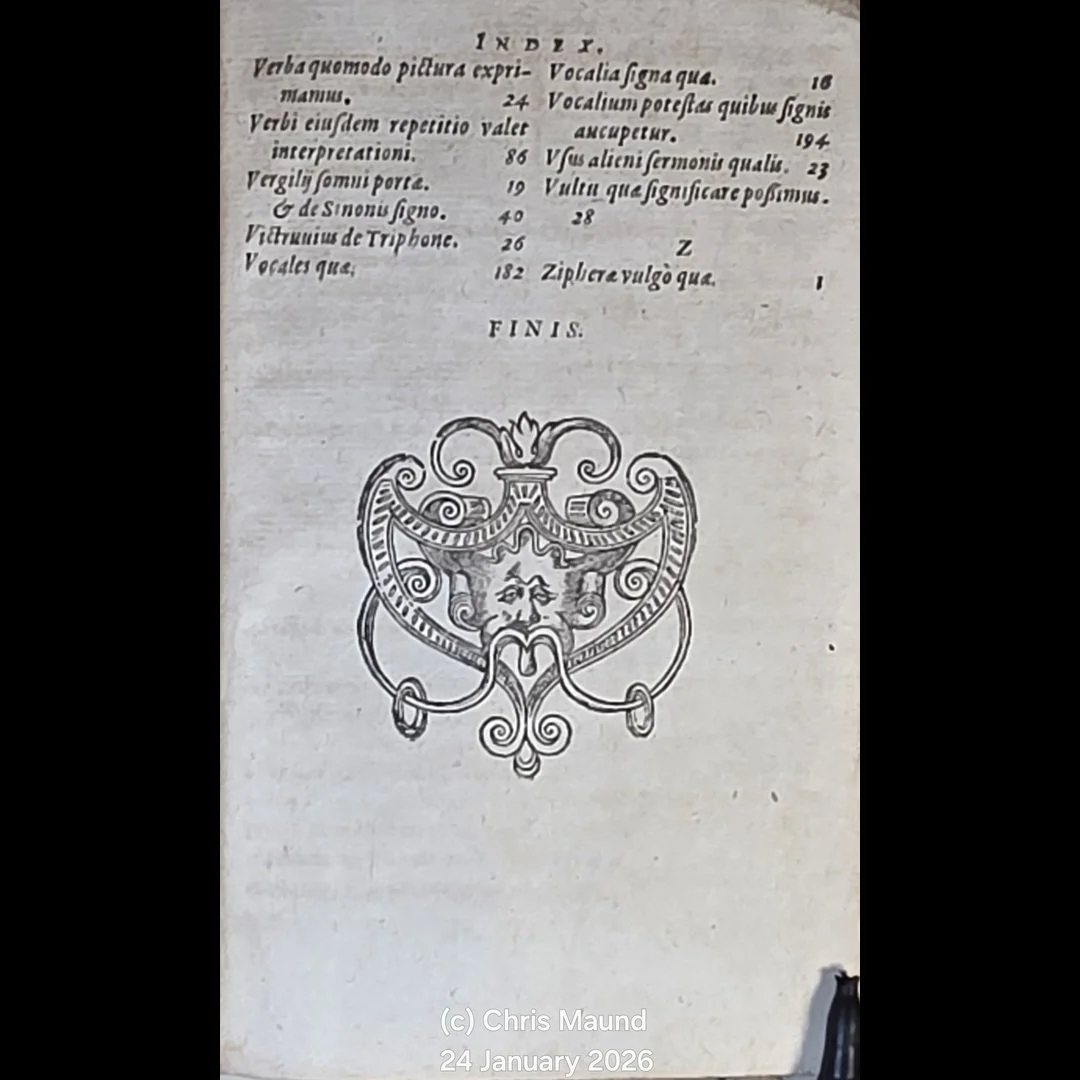 Image 34 of 39
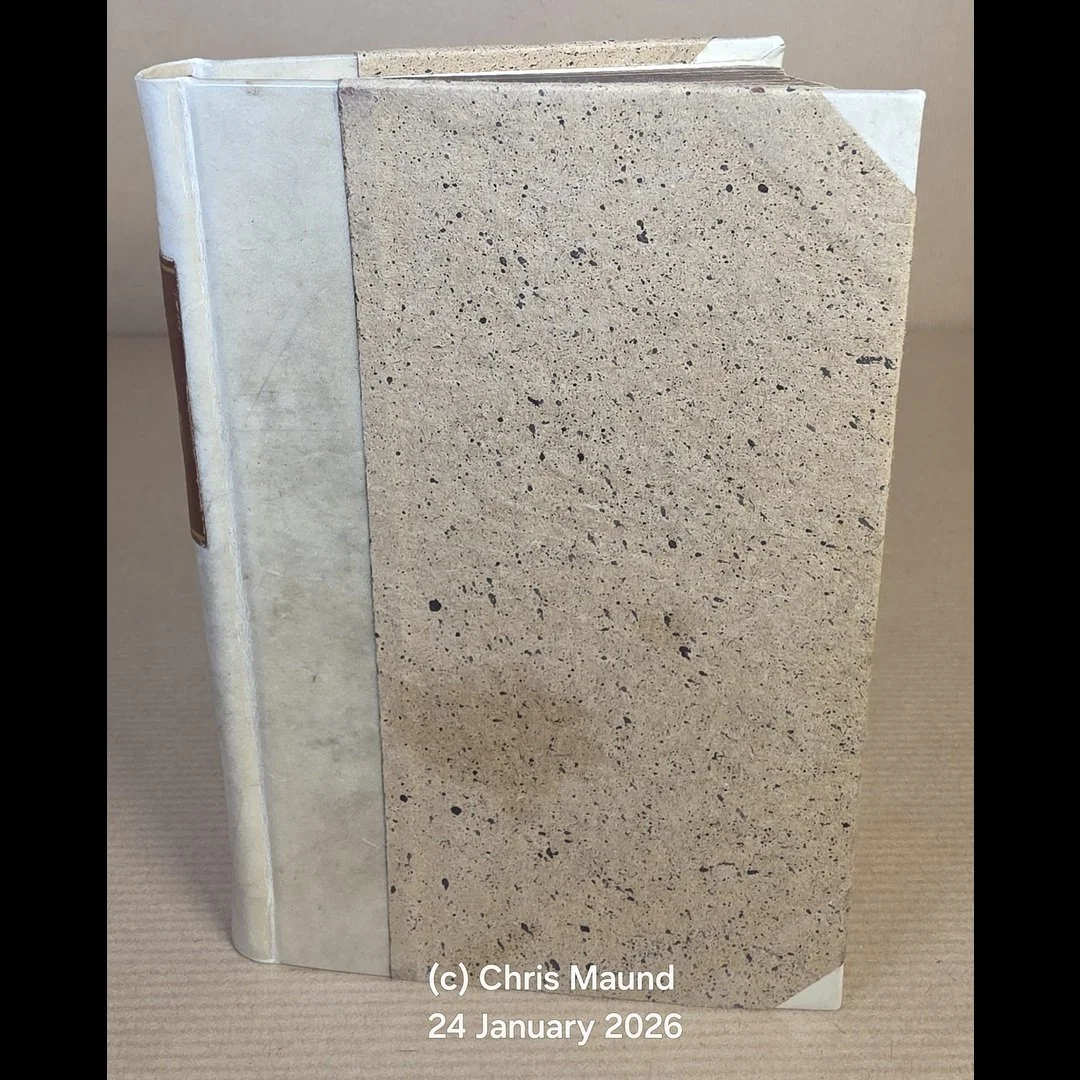 Image 35 of 39
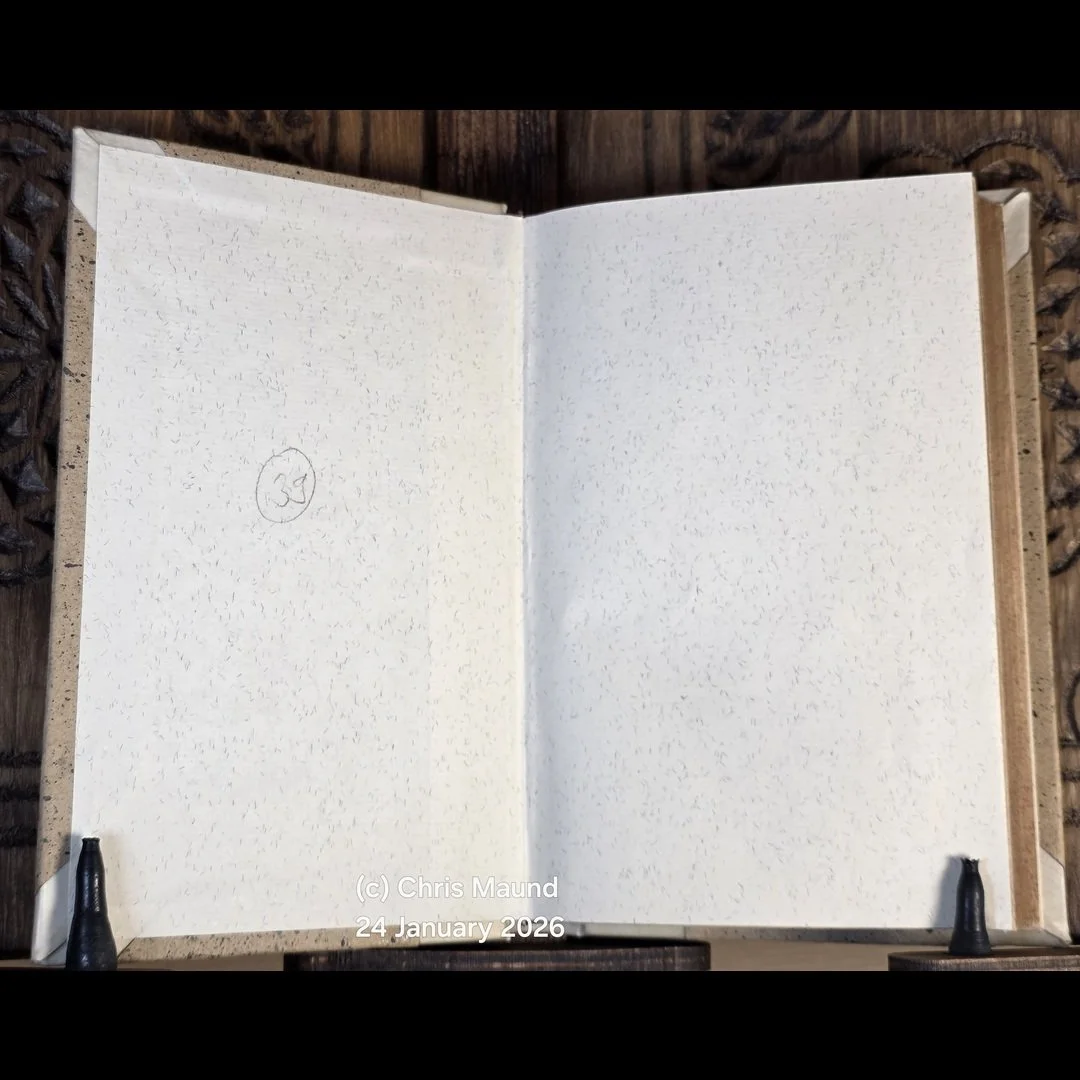 Image 36 of 39
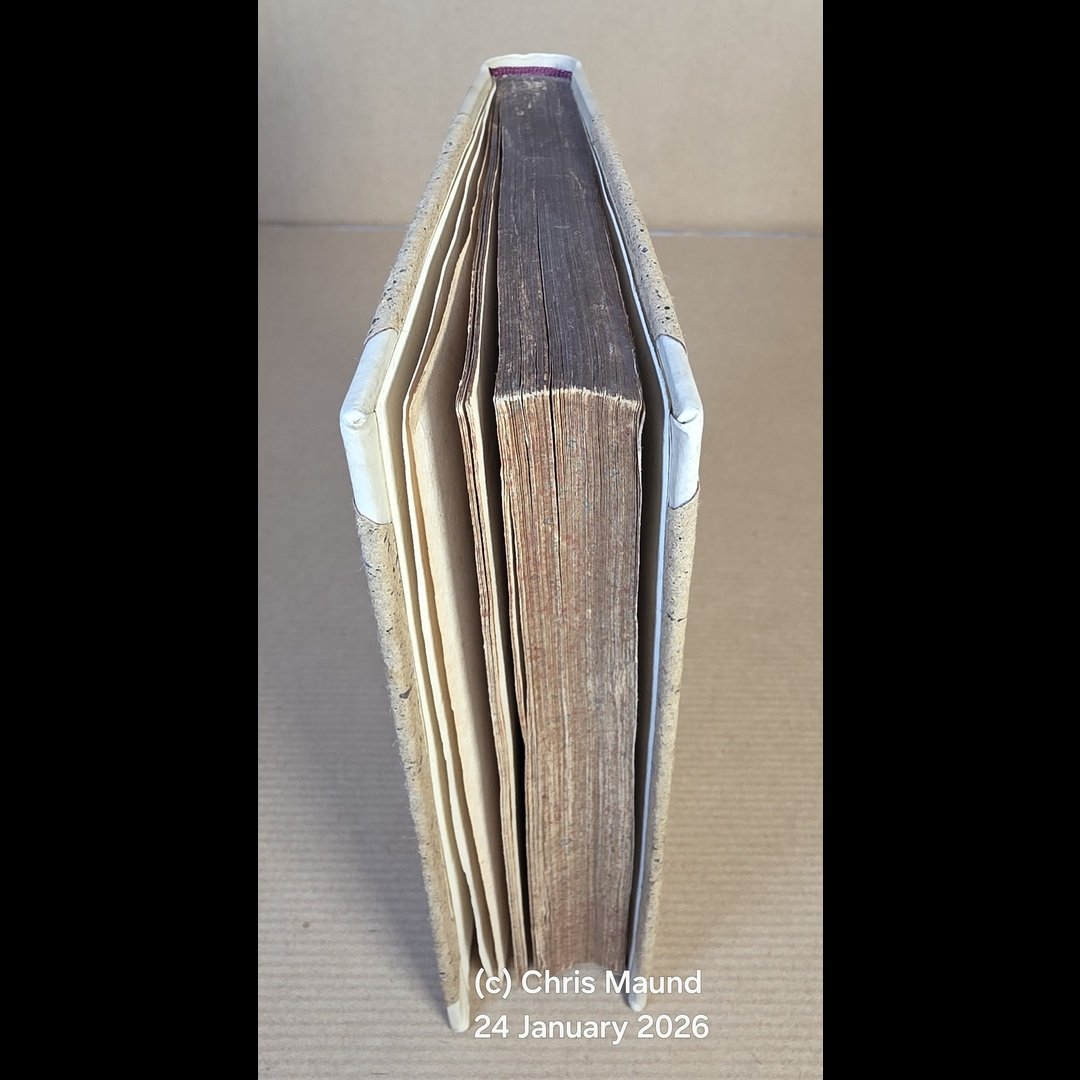 Image 37 of 39
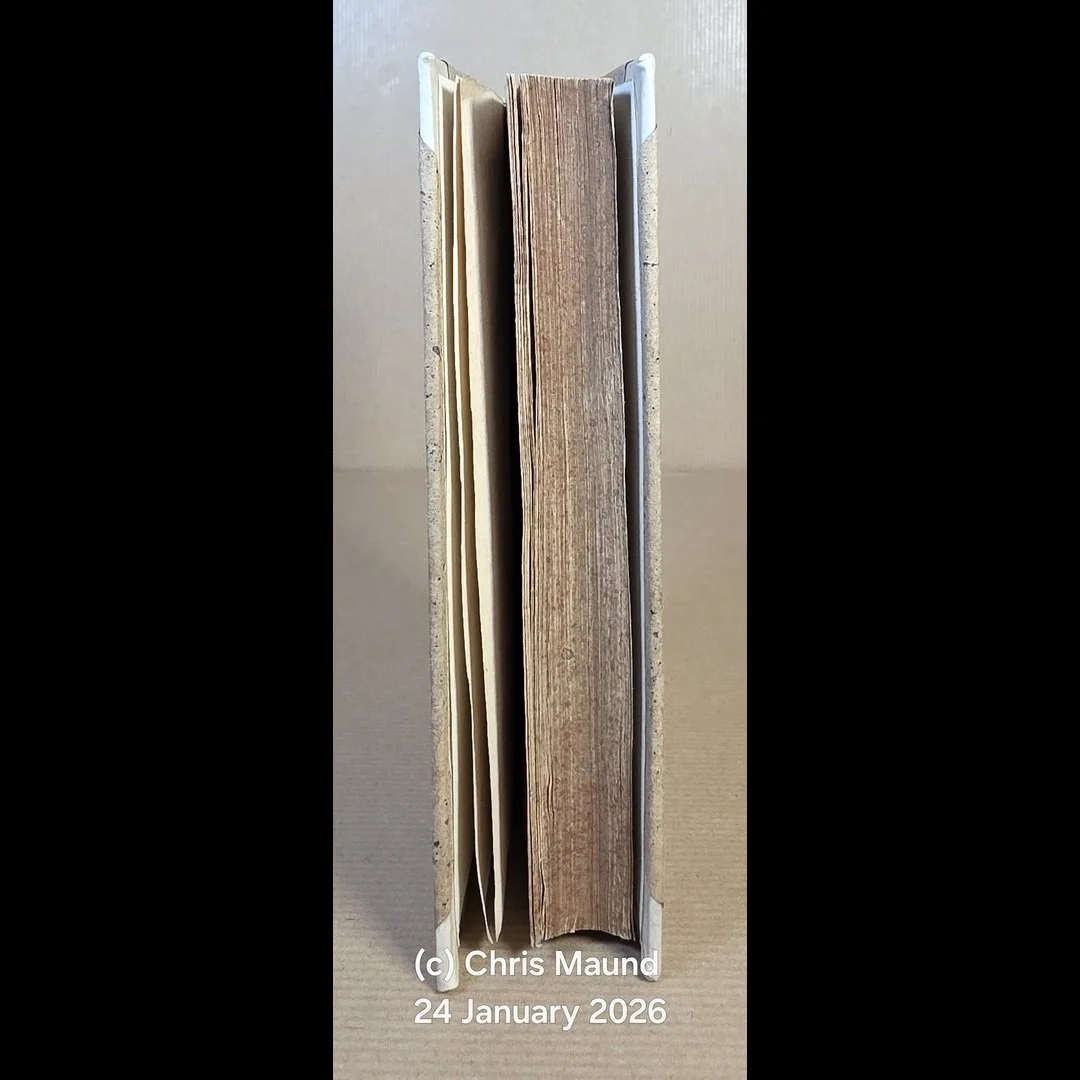 Image 38 of 39
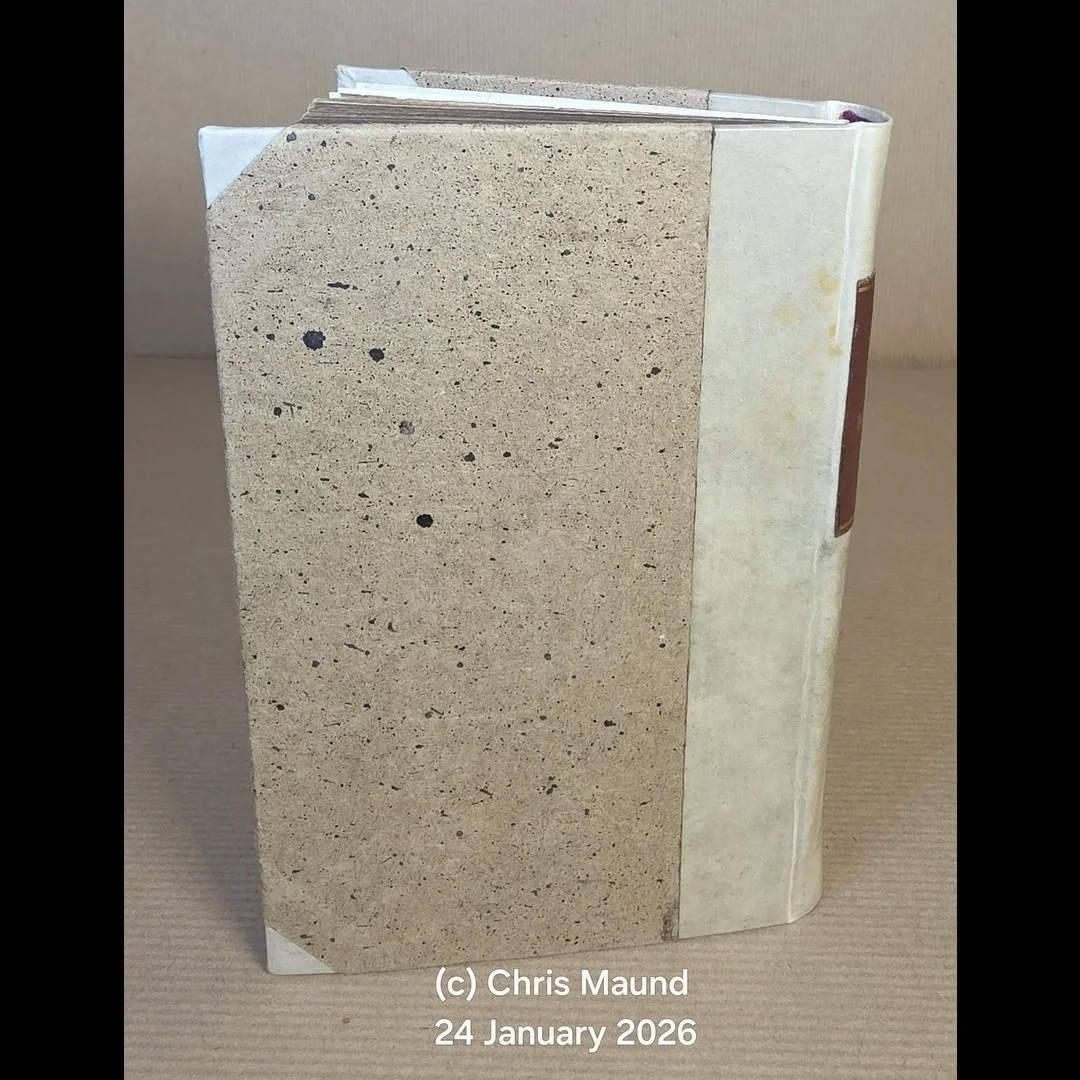 Image 39 of 39
















![1707 With Provenance THE HISTORY OF THE REBELLION AND CIVIL WARS IN ENGLAND [THREE VOLS] By Edward, Earl of Clarendon](https://images.squarespace-cdn.com/content/v1/634dab4938c13d5c1f88d382/c9f91097-854c-46d0-afcd-4601b9eff8aa/20241014_224316-10.jpg)