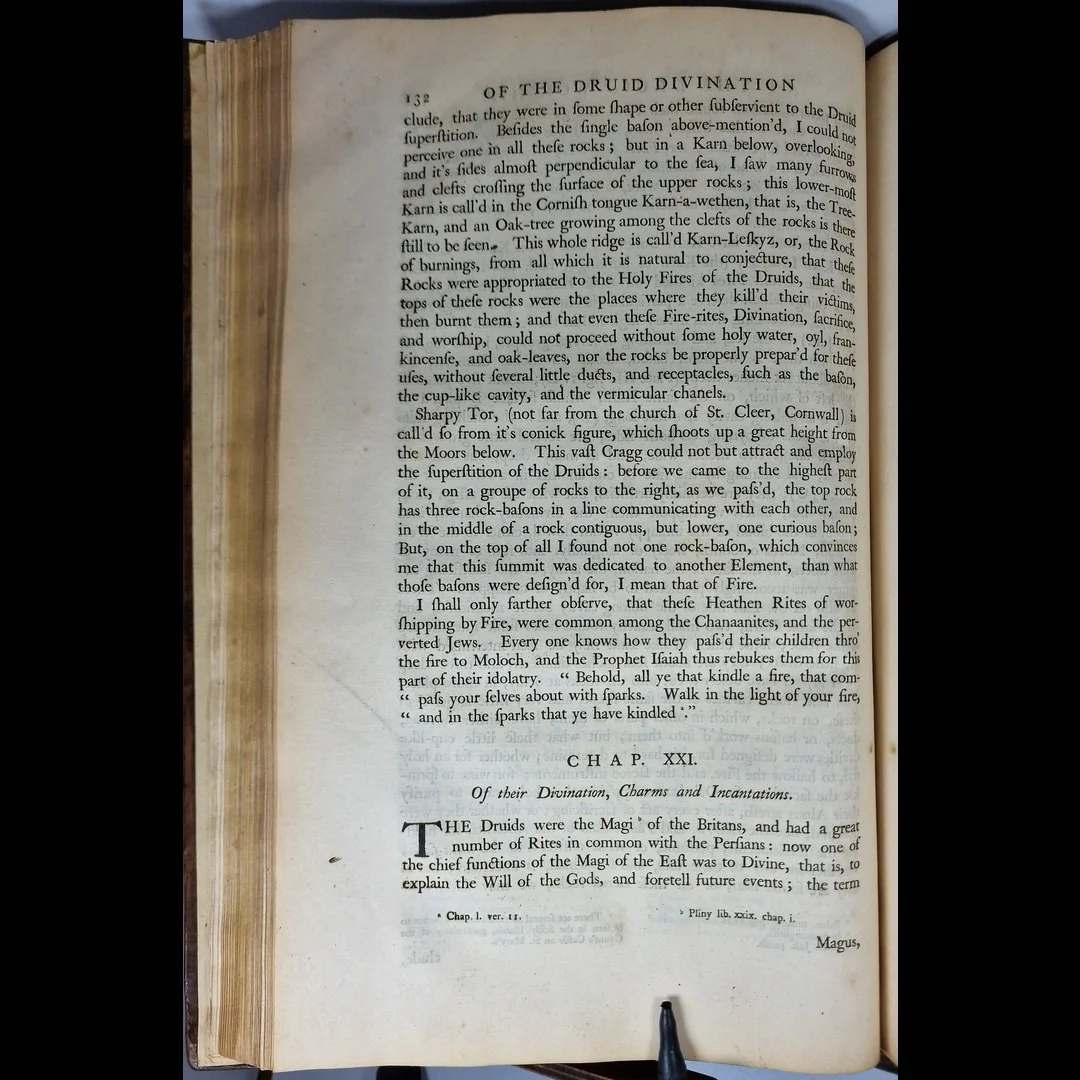
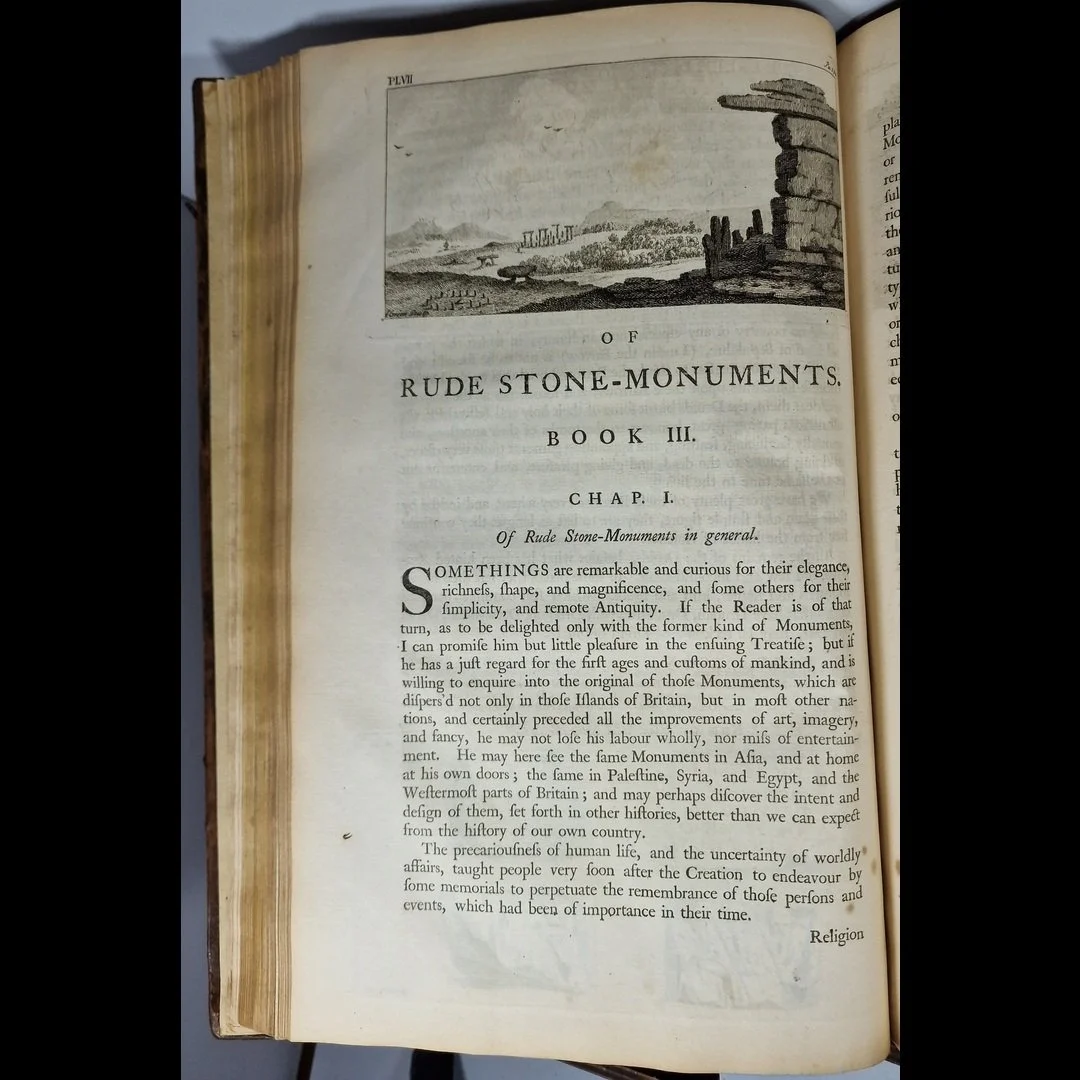
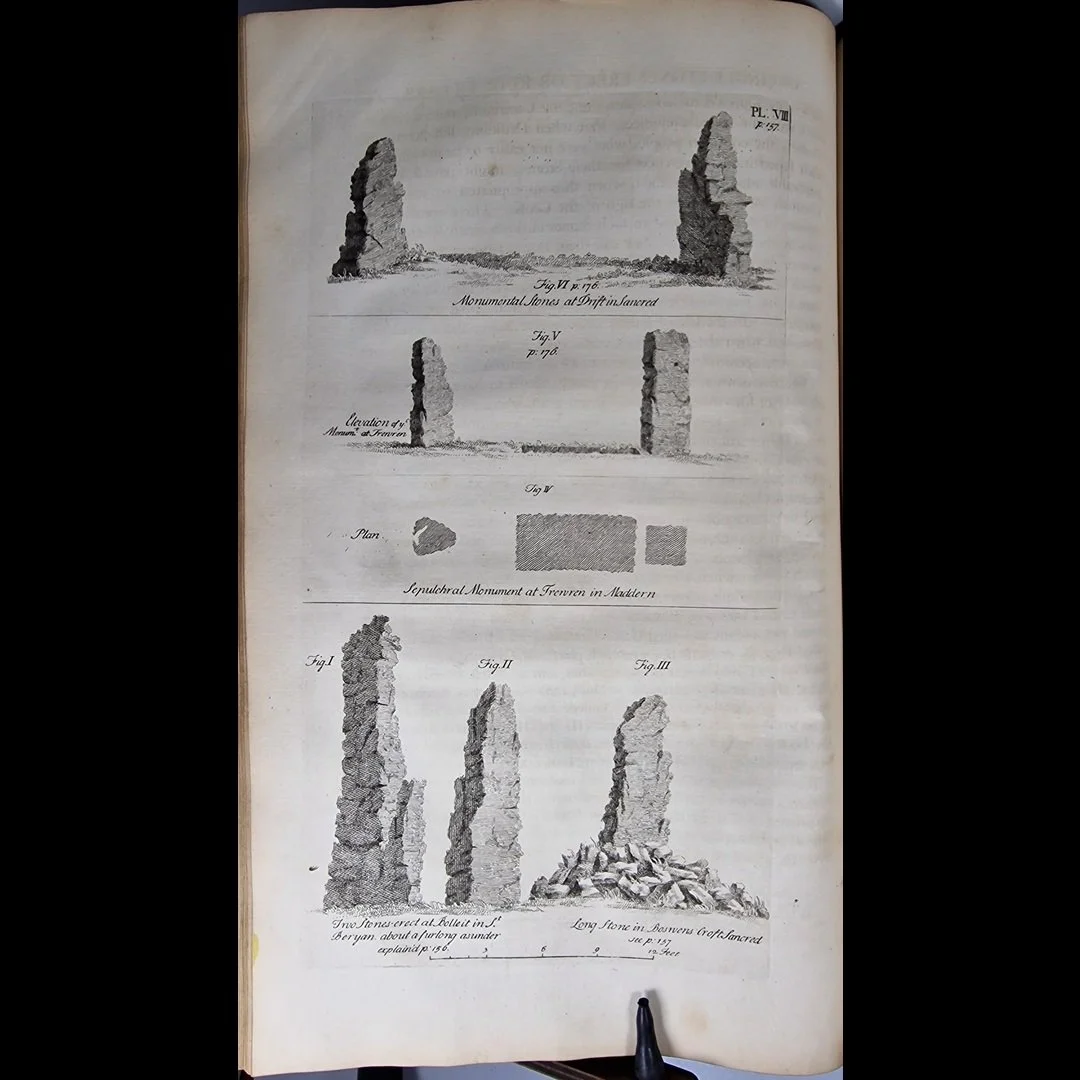
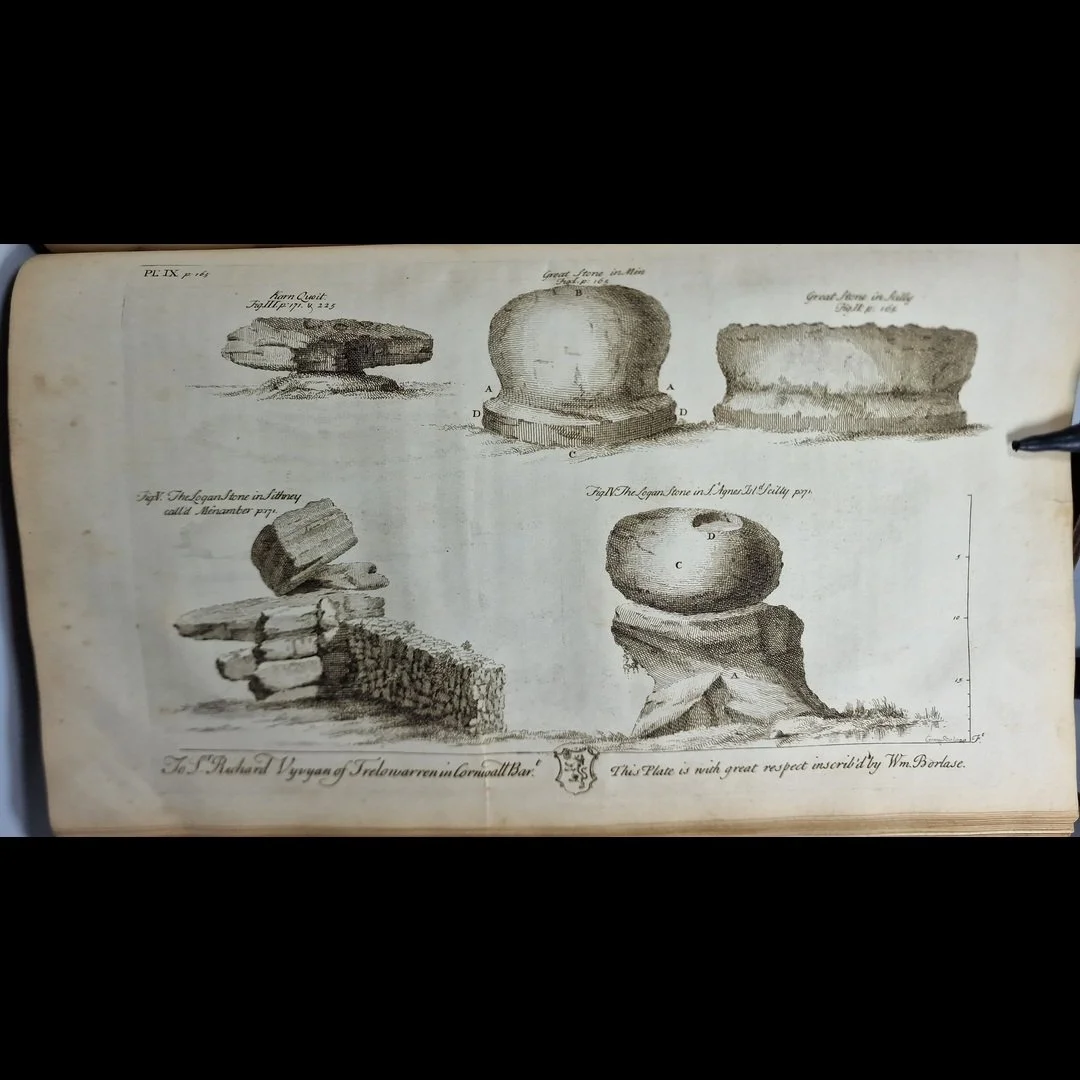
1528 Antwerp Edition
HOMERI ODYSSEAE LIBRI XXIIII
By Homer
KEY DETAILS
Condition: Good
Format: Vellum, Octavo (Standard) (8vo 6 × 9 in 152 × 229 mm )
Note: Binding/size selection follows standard bibliographic conventions and is approximate; exact measurements may vary.
Published By: Excusa per Ioannem Grapheum, Mense Aprilis, Anno M.D.XXVIII. Cum privilegio Caesareo, Antwerp, 1528
Language: Principally Latin, with Greek
Illustrated By: Anonymous
Collation: A–Y⁸ Z⁷ Aa–Ee⁸, 223 printed leaves in all. Original title leaf A1 wanting and supplied in reproduction; A2 = f.2. The first sequence concludes at Z7 (f.183); the second begins with unnumbered Aa1, with Aa2 foliated 184, continuing through f.214 and eight terminal unnumbered leaves; Ee4 begins the Index and Ee8 bears Grapheus's full-page Charitas printer's device.
Dust Jacket: None, as issued
SKU: BTETM0002731
Shipping Info: Approximate Package Dimensions H: 12.5, L: 30, W: 25 (Units: cm), W: 2Kg
Tracked Shipping, Insurance Coverage as per Customer Request
DESCRIPTION
HOMERI ODYSSEAE LIBRI XXIIII
Raphaele Volaterrano interprete
With the Batrachomyomachia, Epitaphium, thirty-two Homeric Hymns, Vita Homeri and Dio Chrysostom’s Oratio de Homero
A scarce and highly appealing 1528 Antwerp Latin Homer, comprising the complete twenty-four books of the Odyssey in the influential Renaissance Latin translation of Raffaele Maffei of Volterra (Raphael Volaterranus), followed by an unusually rich collection of supplementary Homerica: the Batrachomyomachia or Battle of the Frogs and Mice, an Epitaphium, the thirty-two Homeric Hymns, material on the life of Homer and Dio Chrysostom’s oration on Homer as prince of poets.
Printed at Antwerp by Joannes Grapheus in April 1528, this Odyssey formed one independently circulating part of Grapheus’s ambitious two-volume Latin Homer. The production belongs to the flourishing world of Northern Renaissance humanism, when Greek literature was being translated, edited and repackaged for the much larger European readership fluent in Latin. The present volume therefore represents not merely an early edition of the Odyssey, but an attempt to provide the Renaissance reader with a broader Homeric corpus in portable form.
The volume concludes with Grapheus’s striking full-page woodcut printer’s device of Charity (Charitas), a design traditionally associated with Pieter Coecke van Aelst. The woodcut depicts the personification of Charity surrounded by children and is one of the most visually impressive features of the book.
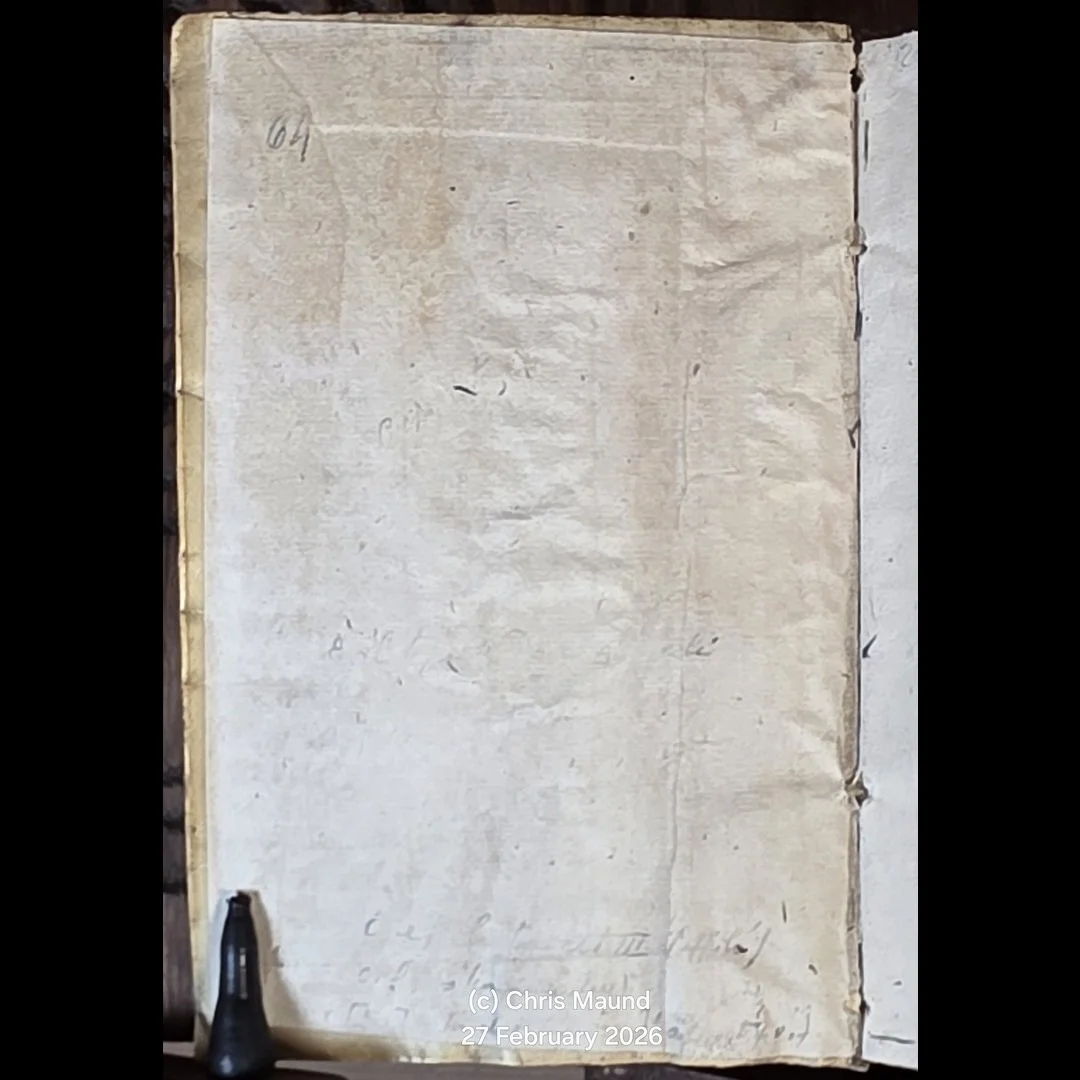
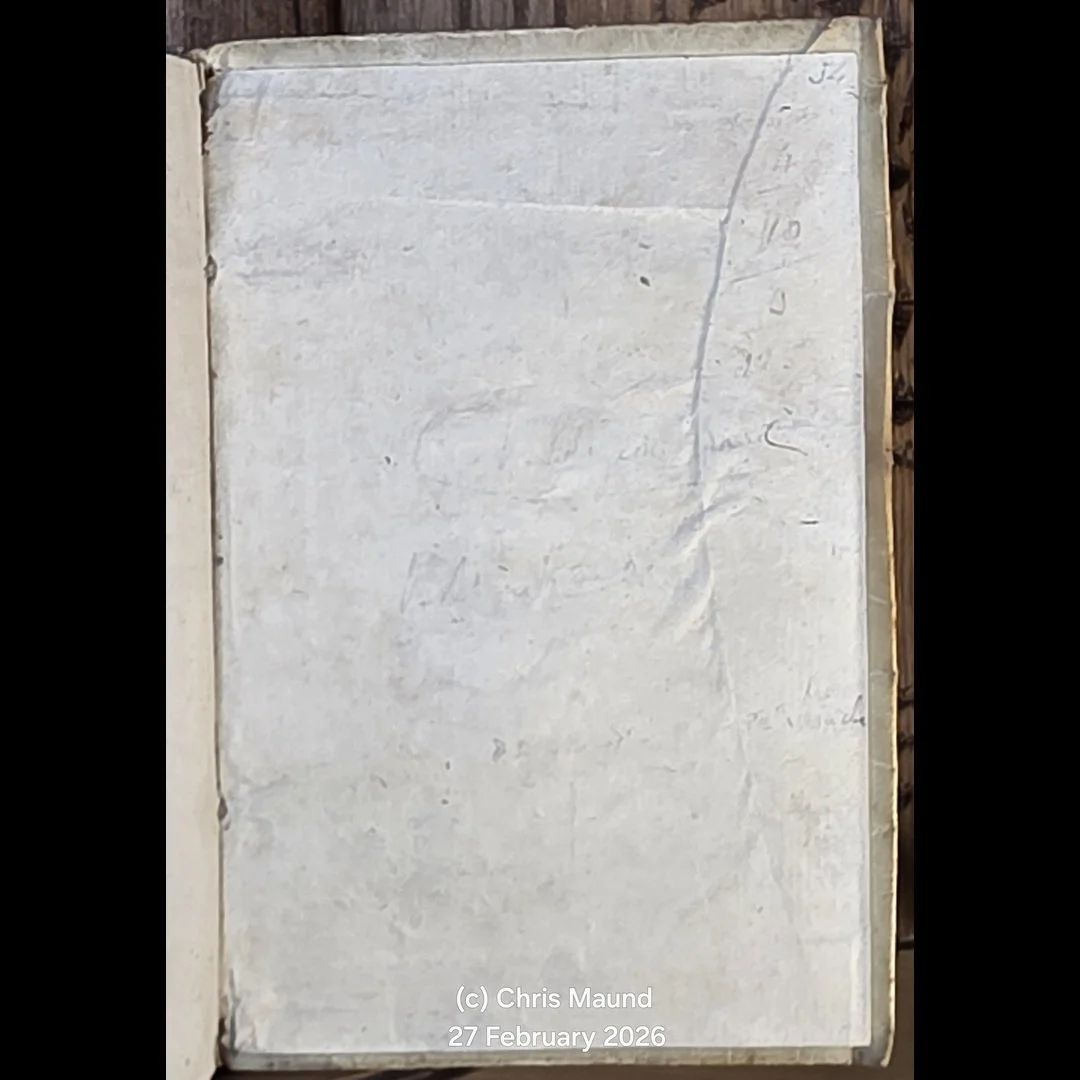
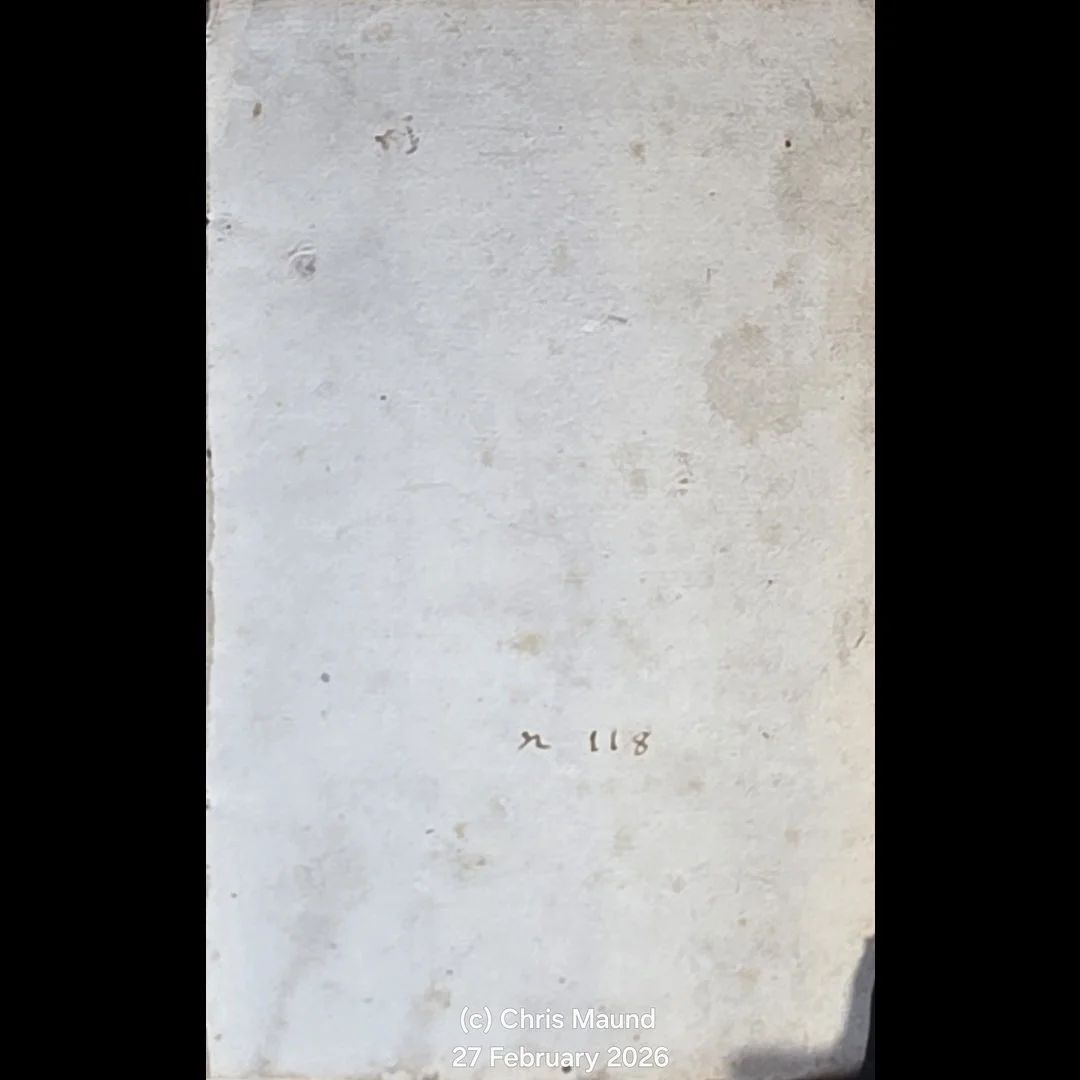
Of particular interest is an early Greek manuscript annotation on an original preliminary blank, concerning Periander of Corinth and explicitly attributed beneath to Herodotus (Ἡρόδοτος). Rather than a casual pen trial, the annotation appears to represent an early reader’s classical-historical note or commonplace, providing attractive evidence of scholarly engagement by a reader able to move between the Latin Homer and the wider Greek classical tradition.
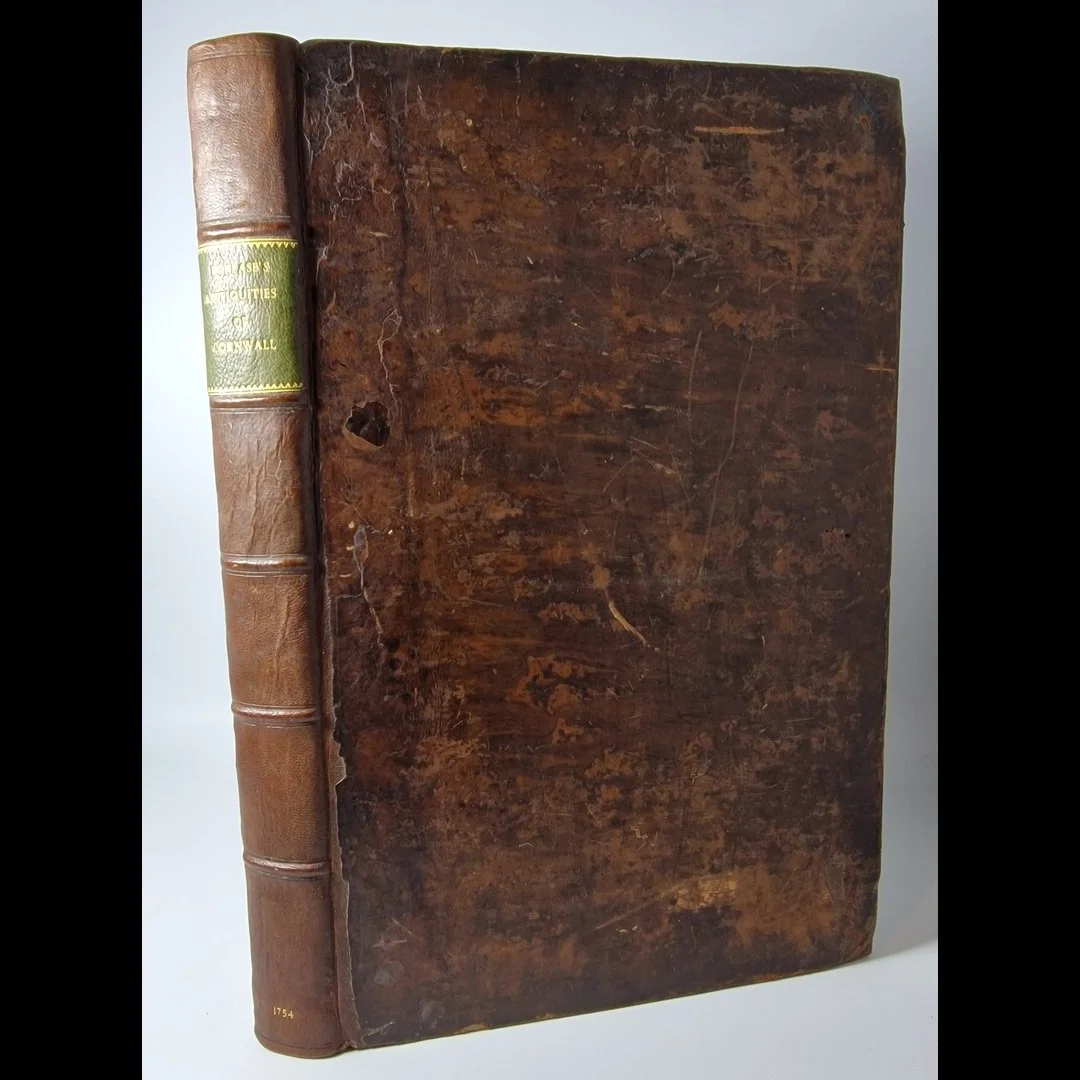
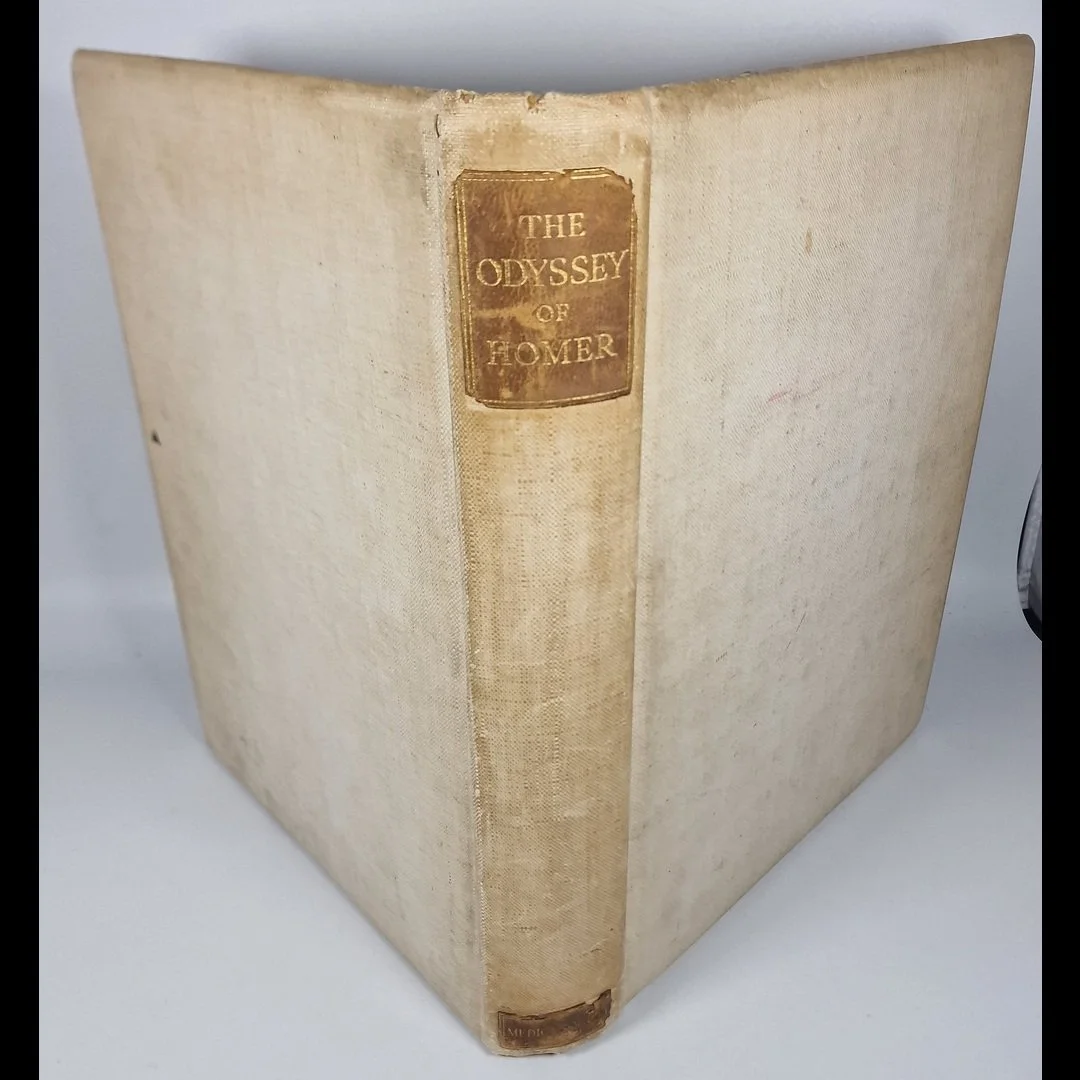
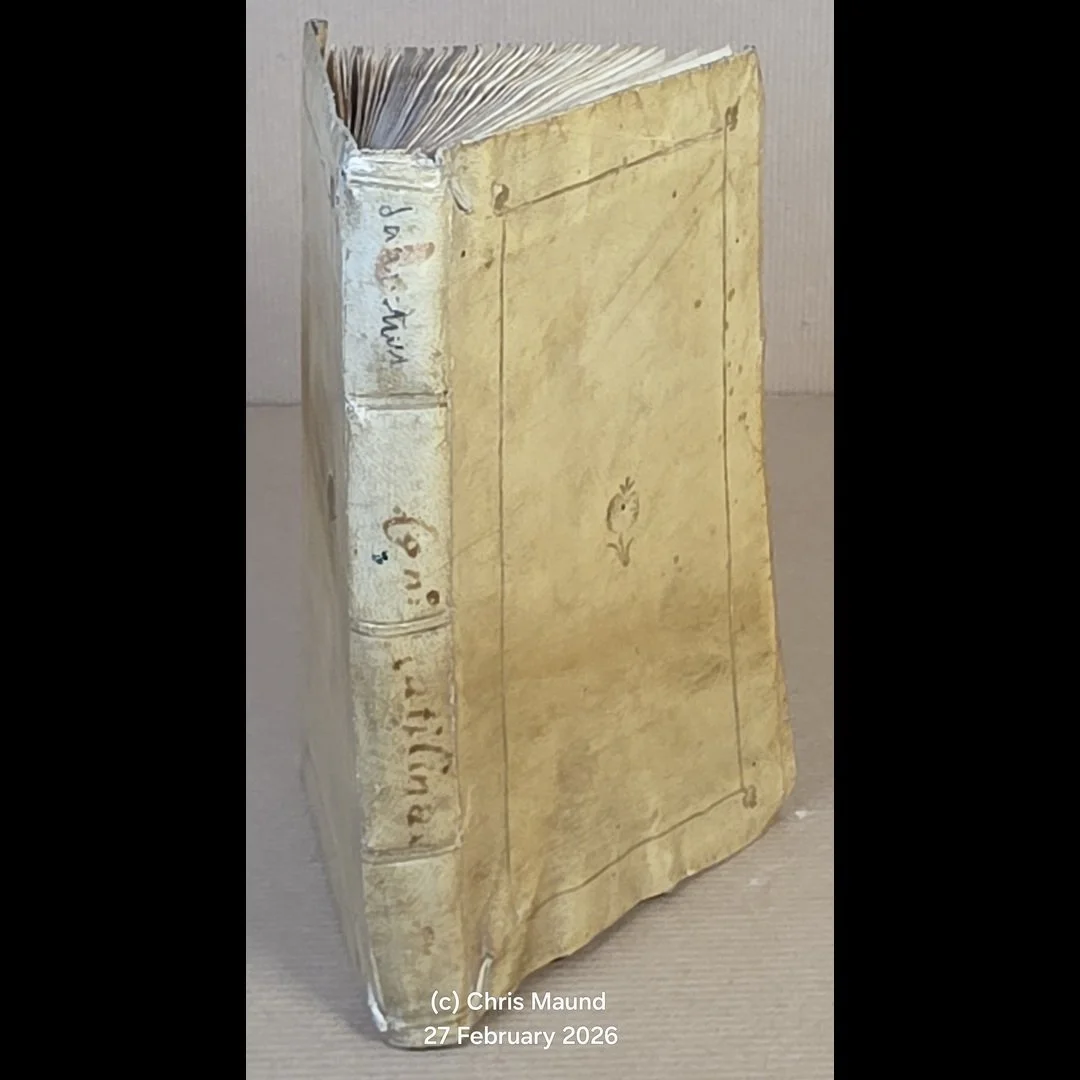
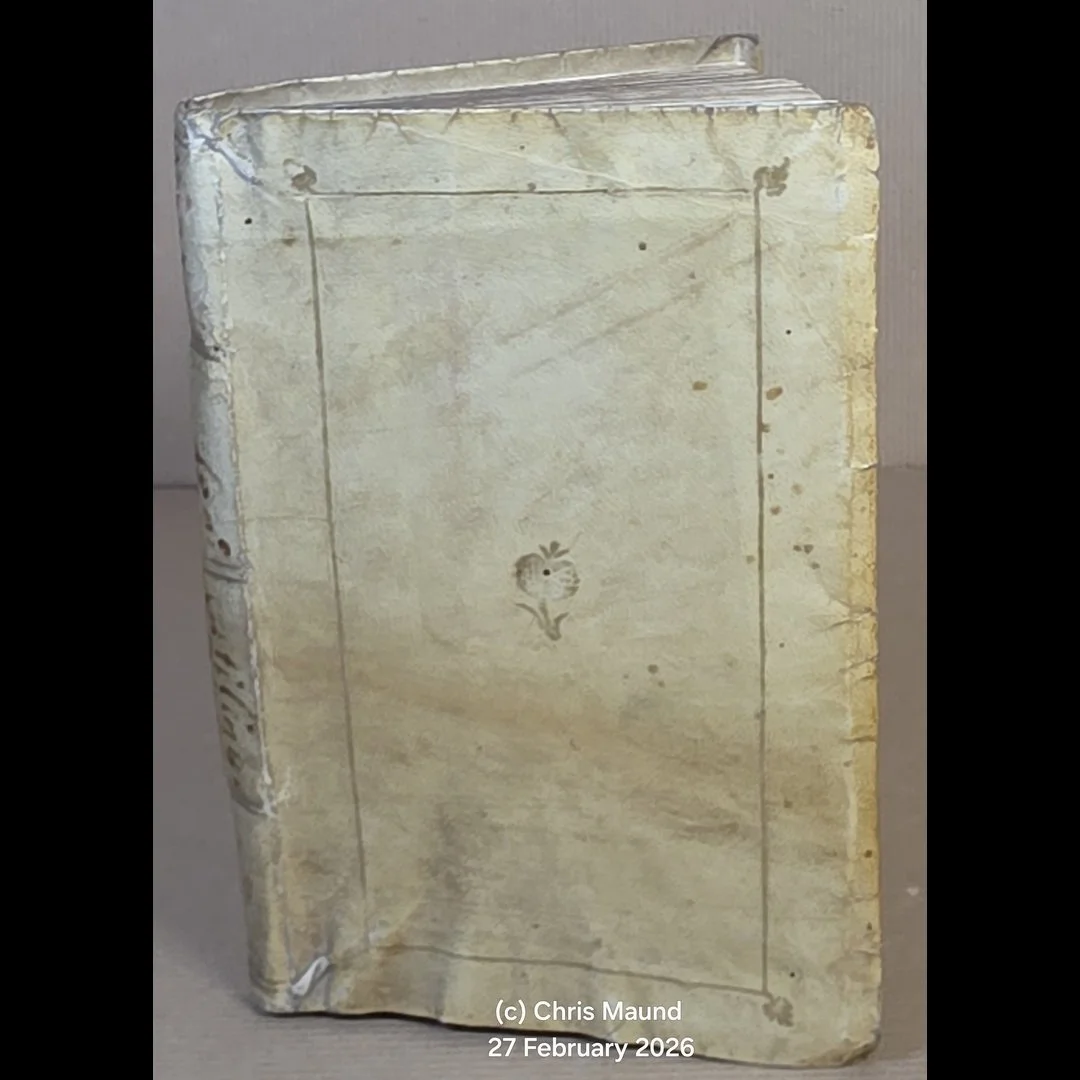
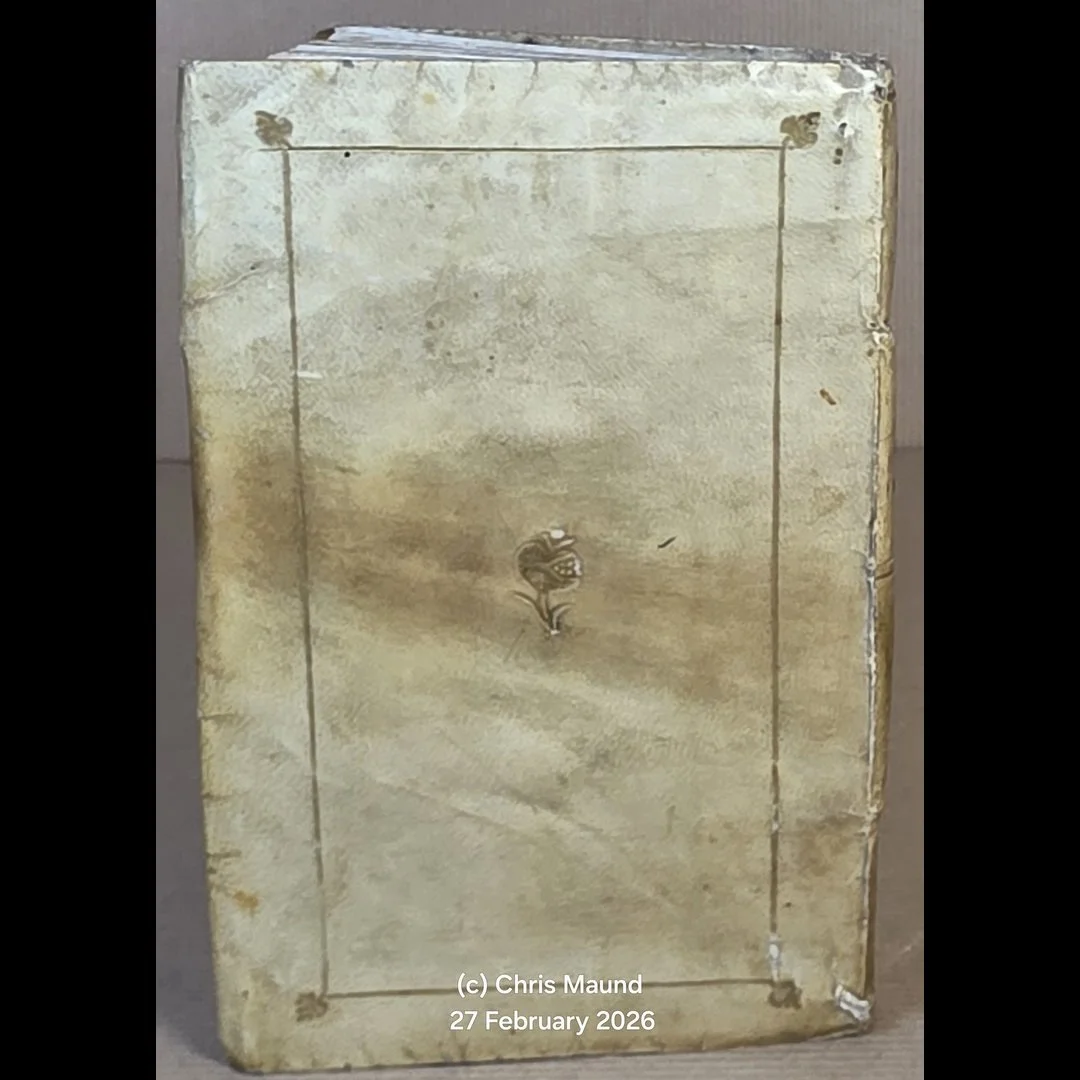
The volume survives in a heavily patinated early vellum binding over boards with raised bands, retaining considerable antiquarian character.
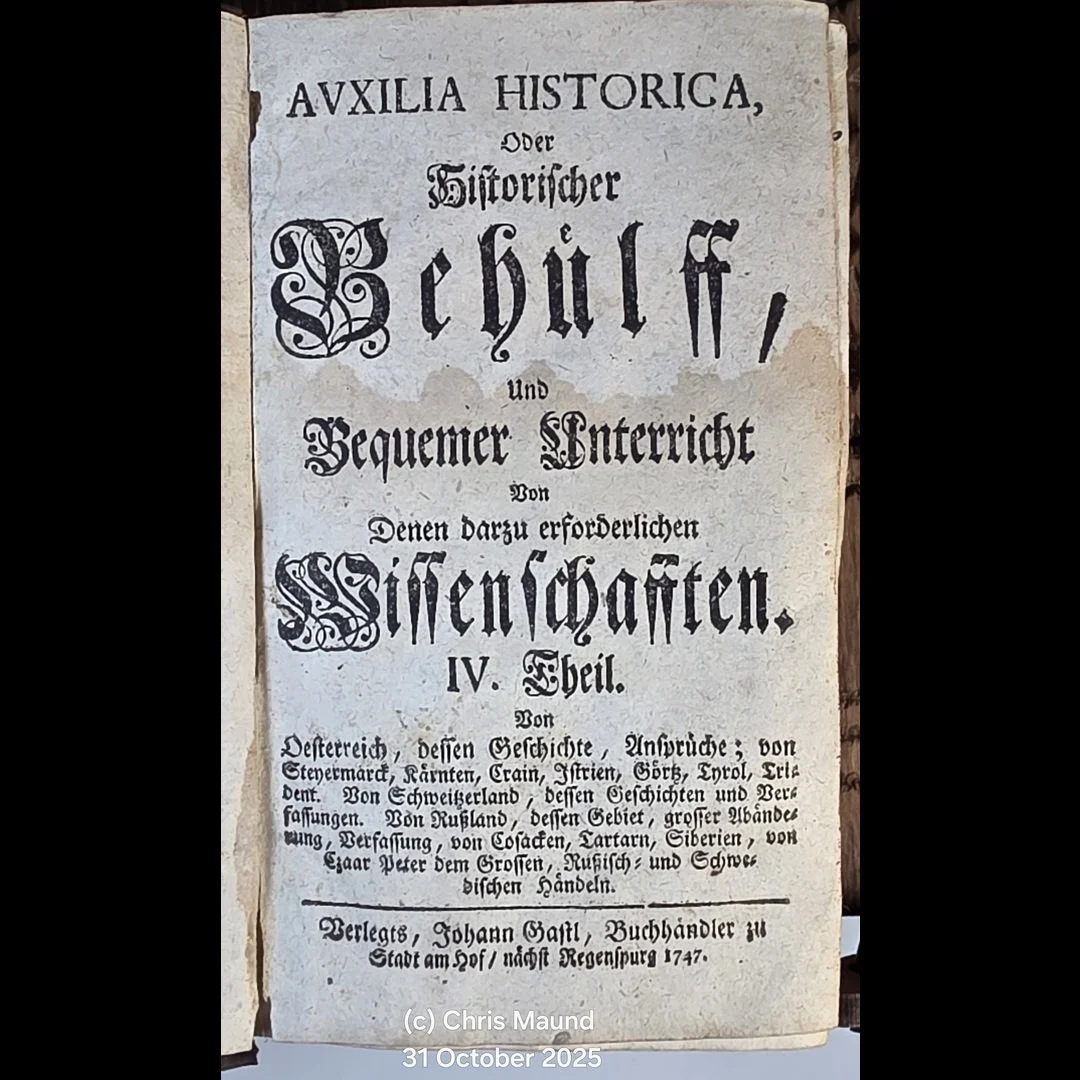
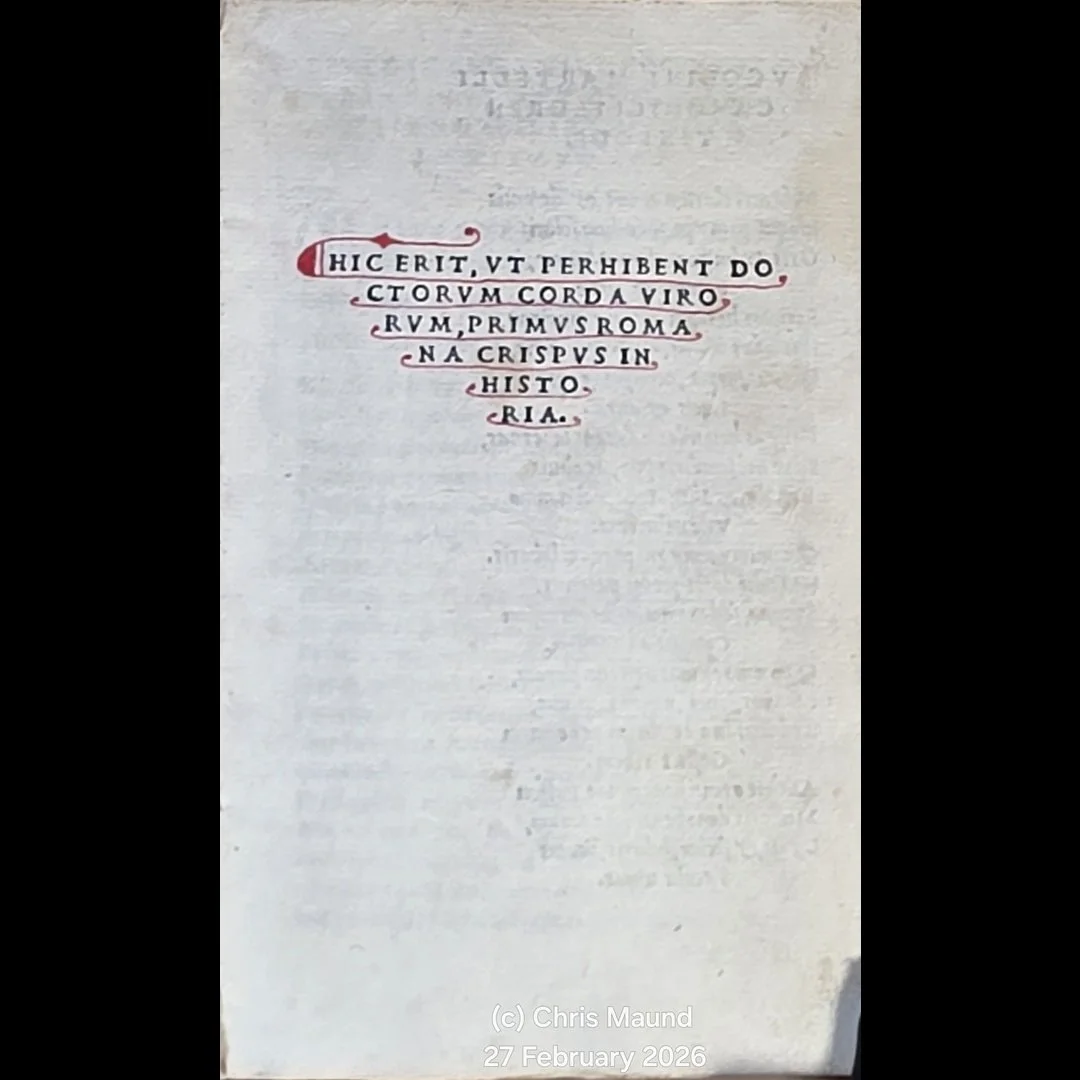
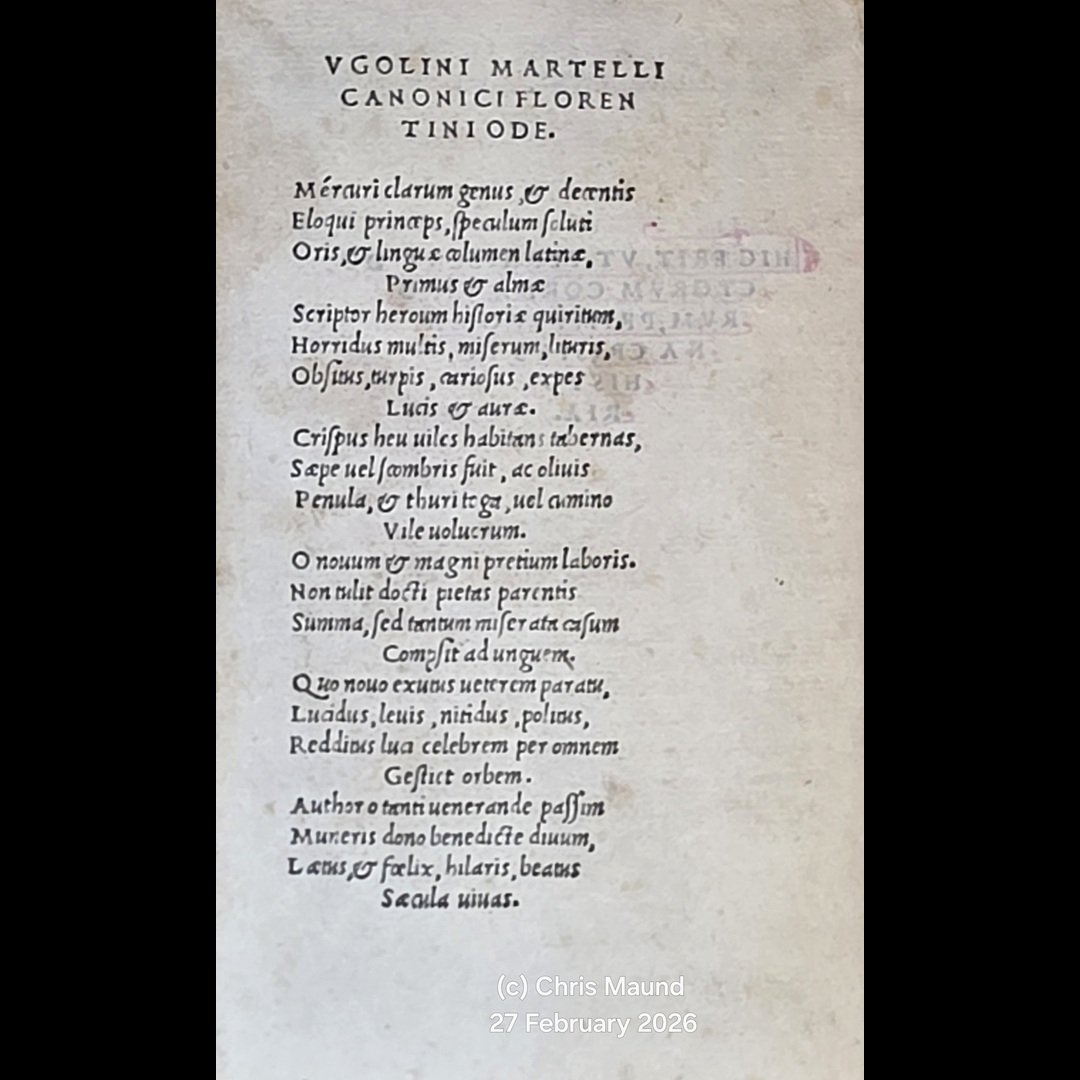
A significant but clearly disclosed defect is the absence of the original 1528 title leaf. It has been replaced, on old paper, by a reproduction of the architectural title page belonging to the 1510 Rome first edition of Maffei’s Latin Odyssey. The supplied leaf is therefore historically relevant to the textual tradition but is not the original title page of this 1528 Antwerp edition.
CONDITION, COLLATION & COPY NOTES
COLLATION
A–Y⁸ Z⁷ Aa–Ee⁸, 223 printed leaves in all. Original title leaf A1 wanting and supplied in reproduction; A2 = f.2. The first sequence concludes at Z7 (f.183); the second begins with unnumbered Aa1, with Aa2 foliated 184, continuing through f.214 and eight terminal unnumbered leaves; Ee4 begins the Index and Ee8 bears Grapheus's full-page Charitas printer's device.
Contents:
A1 supplied title; A2–Z7, Odysseae libri XXIIII, Batrachomyomachia and Epitaphium; Aa1–Ee8, Deorum Hymni XXXII, Vita Homeri/Dio material, Errata, Index and terminal printer's device.
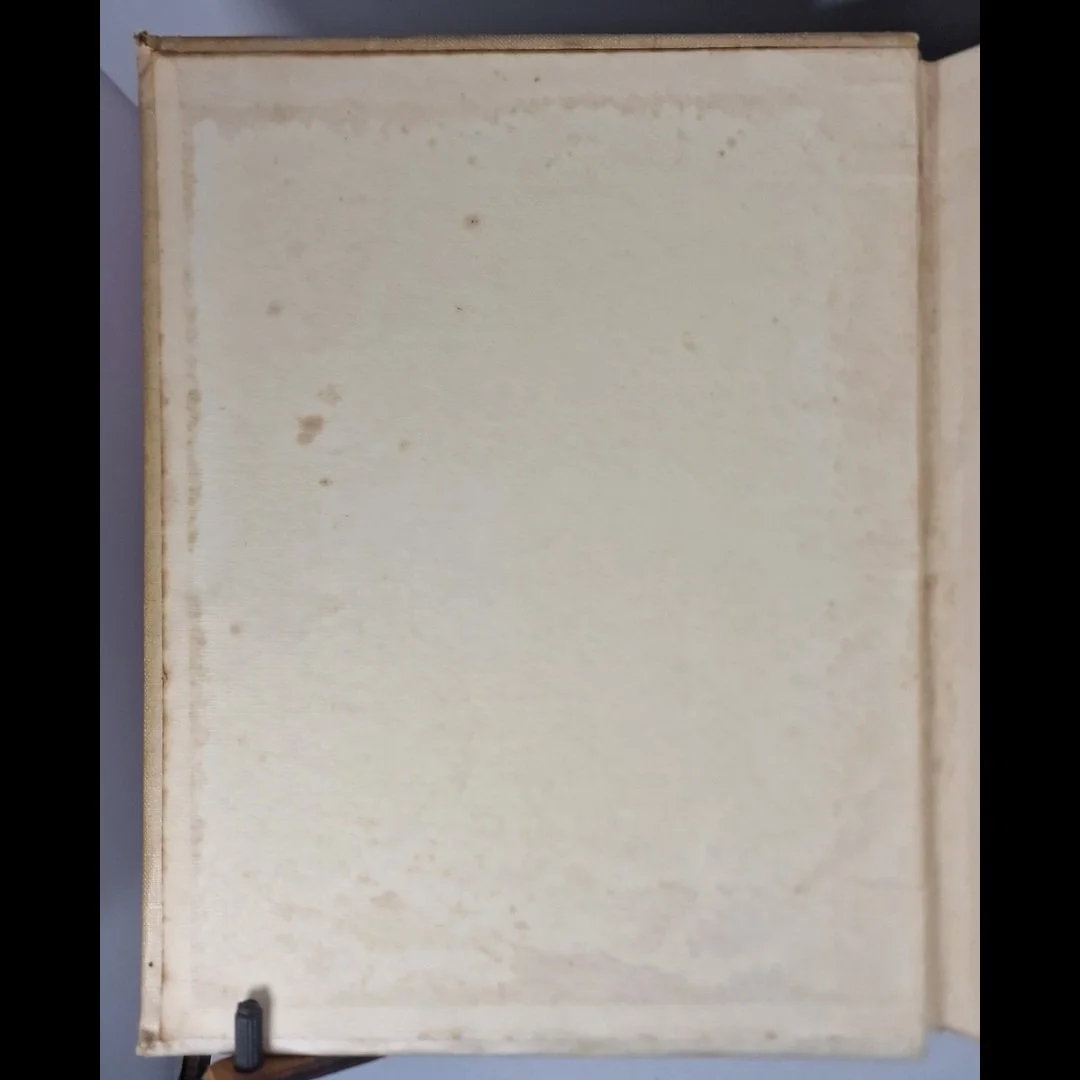
Early vellum binding with raised bands; heavily rubbed/soiled and age-darkened, with wear at extremities and small losses/tears to the vellum (notably at the spine ends) and evidence of earlier clasp/fastening fittings. Textblock generally sound.
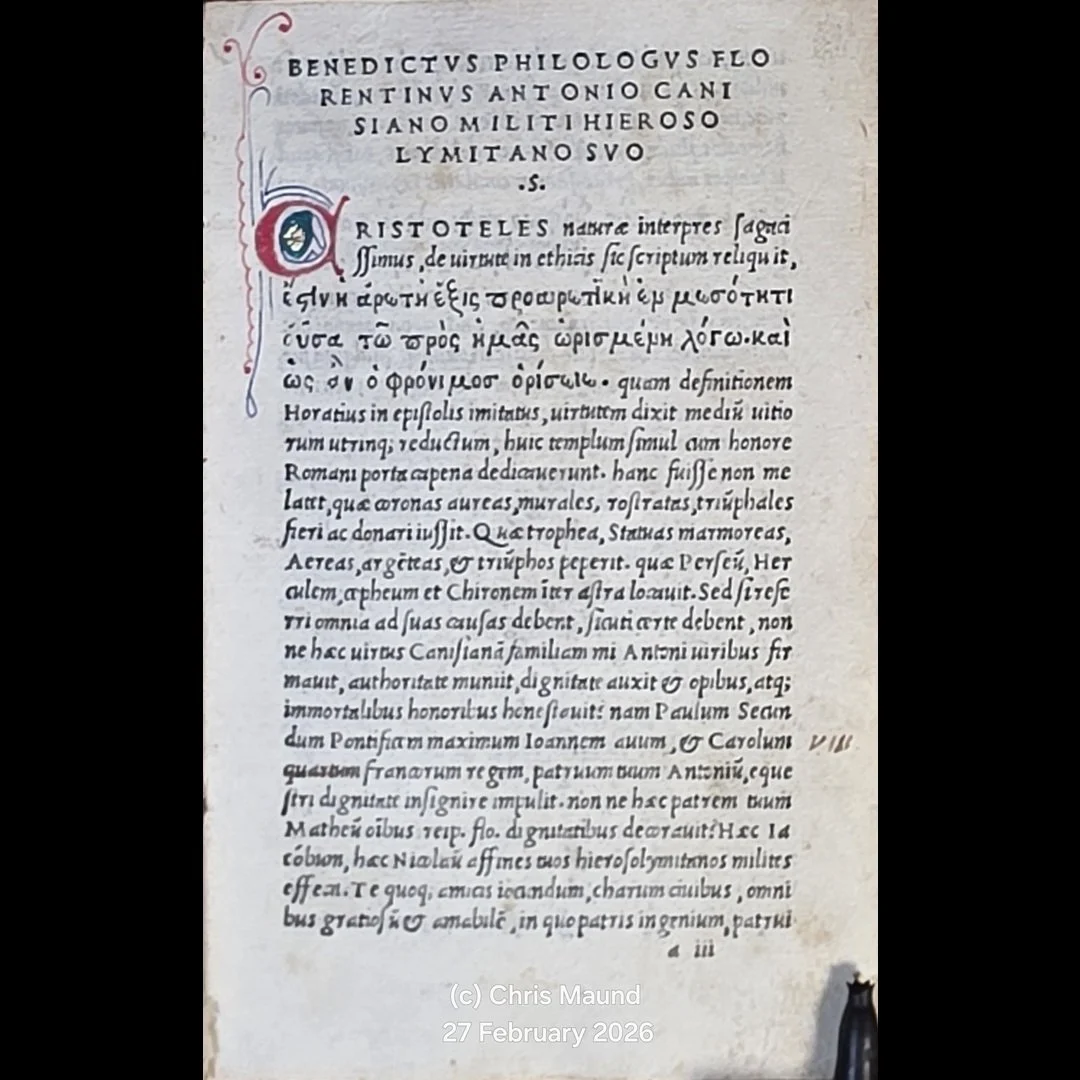
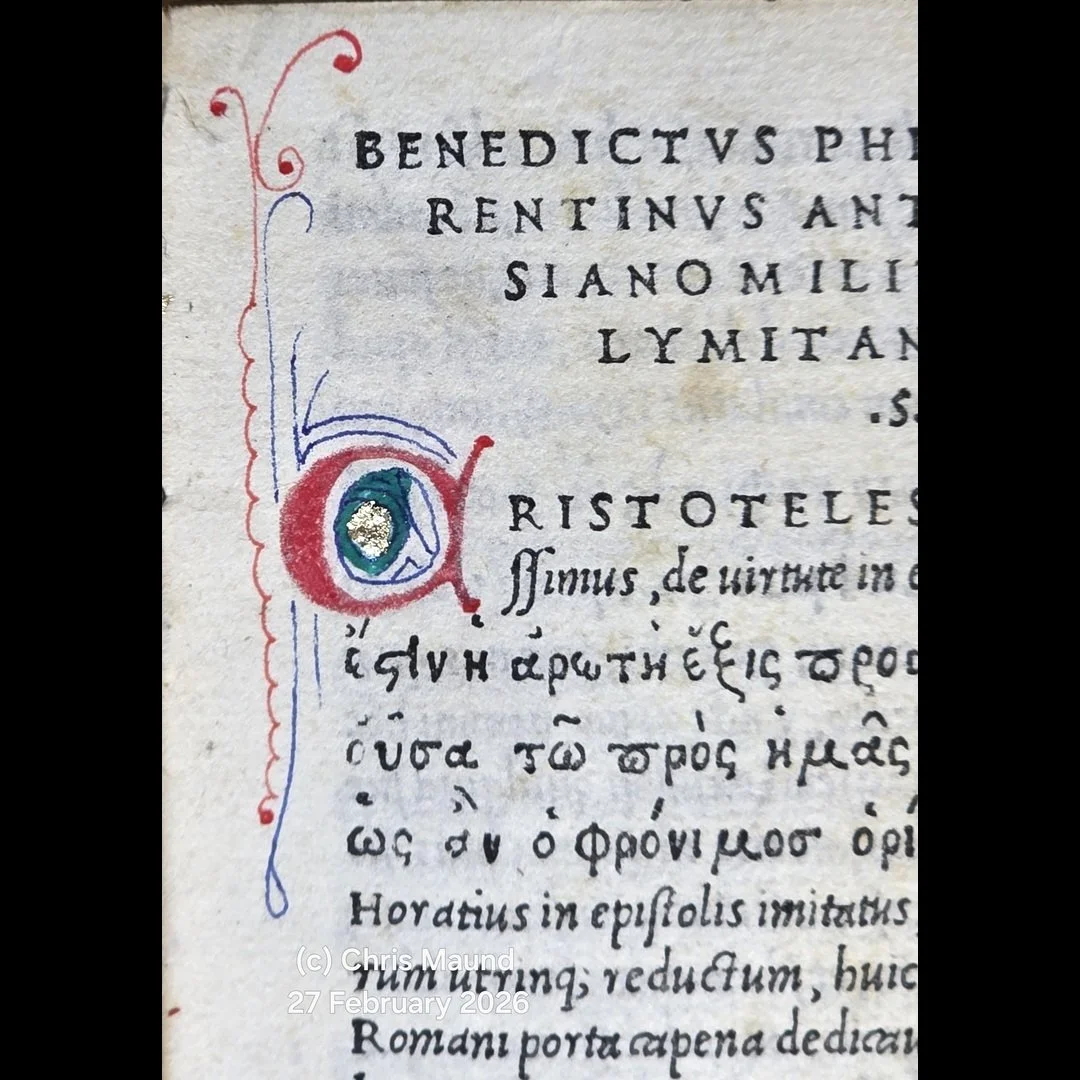
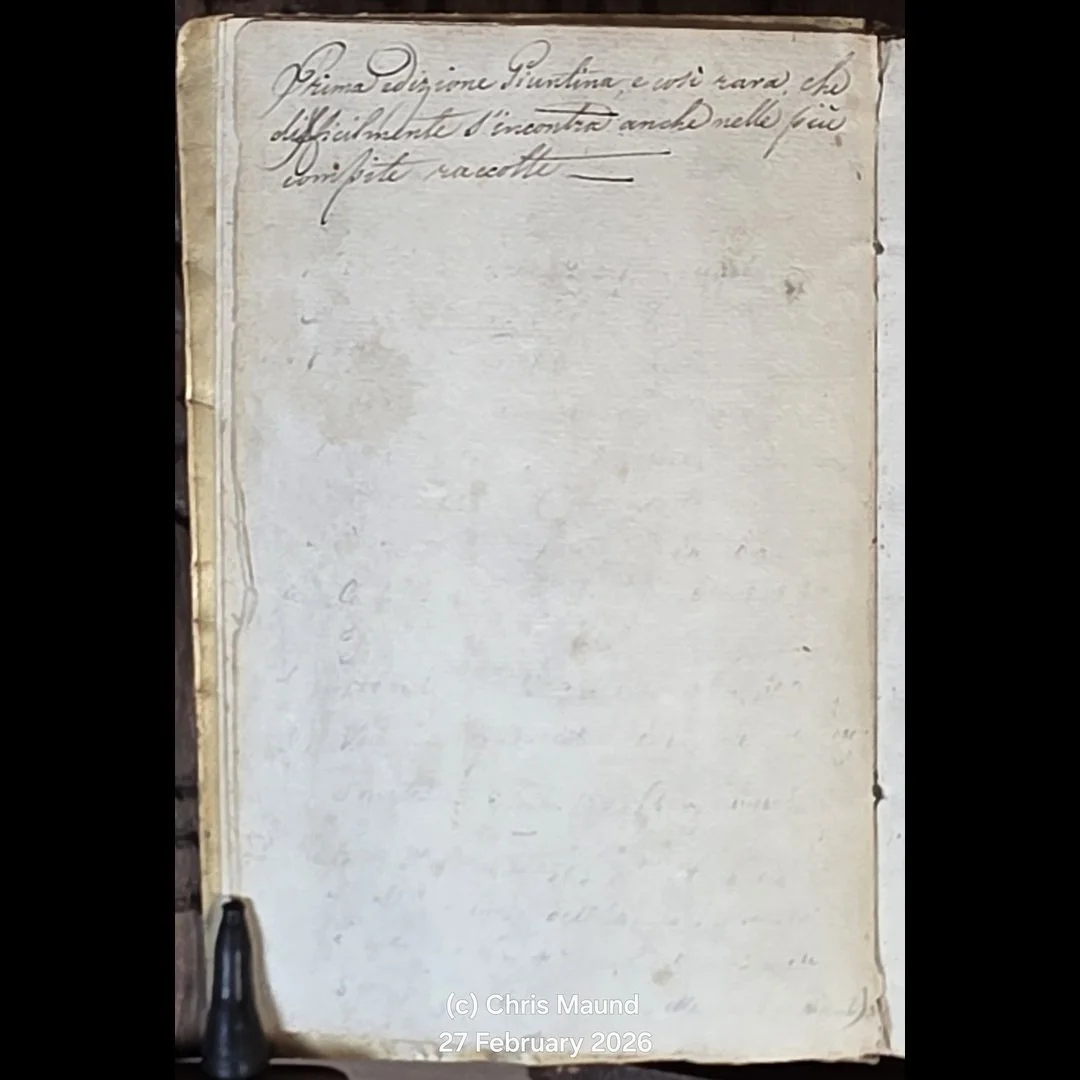
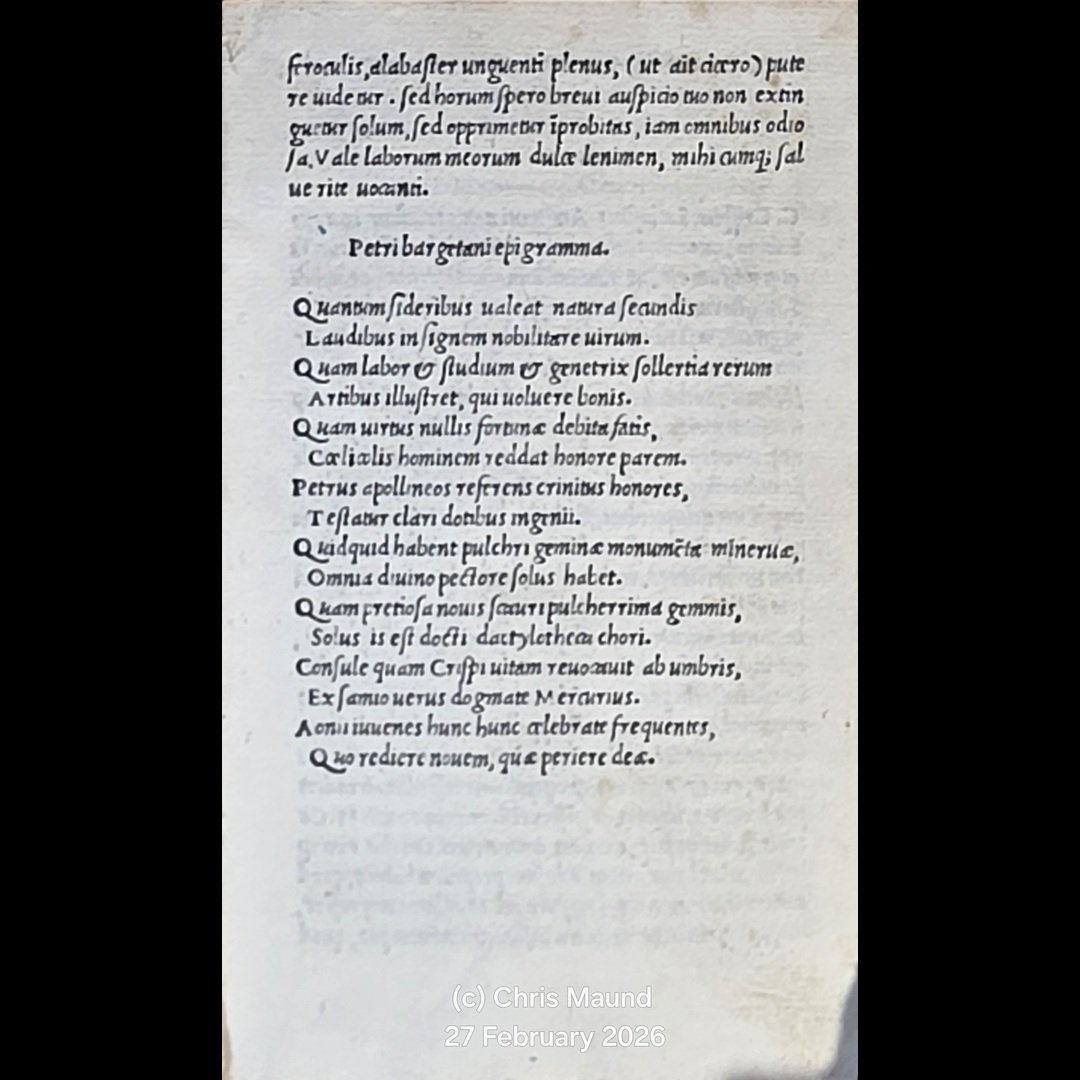
Internally: supplied facsimile title-leaf; early manuscript inscriptions to the front blank; scattered toning, spotting and dampstaining/tidelines (mostly marginal), with occasional handling wear; printing remains clear and fully legible throughout. A genuine, usable early-16th-century study copy with an honest defect to the title.
Please see Photos as part of condition report.
REFERENCES
KBR — Royal Library of Belgium: 1528 Grapheus Homer; Odyssey component recorded as 214, [8] leaves
Adams H769
NK 1110
The 1528 Grapheus Odyssey is recorded bibliographically as part of the Antwerp Homer production and as an octavo Latin edition.
SYNOPSIS
The Odyssey begins after the fall of Troy. Odysseus, king of Ithaca, has been absent from his home for twenty years: ten fighting in the Trojan War and ten attempting to return.
His journey brings him into conflict with some of the most enduring figures and episodes in Western literature: the Cyclops Polyphemus, the sorceress Circe, the Sirens, Scylla and Charybdis, the Lotus-Eaters and the nymph Calypso. Yet beneath its sequence of adventures lies a sustained meditation on identity, memory, loyalty, hospitality and the desire to return home.
Meanwhile in Ithaca, Odysseus’s wife Penelope resists the numerous suitors consuming his household and seeking to replace him, while their son Telemachus searches for news of his father.
Odysseus eventually reaches Ithaca in disguise. After testing the loyalty of those around him and revealing himself to Telemachus, he confronts the suitors and reclaims his household, finally being reunited with Penelope.
The present edition does considerably more than transmit the twenty-four books of the Odyssey. Its supplementary texts create a miniature Renaissance Homeric library.
The Batrachomyomachia — Battle of the Frogs and Mice — is a comic miniature epic traditionally attributed to Homer, parodying the elevated martial language of heroic poetry through a ridiculous war between animals.
The Homeric Hymns comprise ancient Greek poems addressed to individual gods and traditionally connected with Homeric authorship. They preserve some of the most important early literary accounts of Greek mythology, including narratives surrounding Apollo, Hermes, Aphrodite, Demeter and Dionysus.
The biographical and rhetorical material that follows places Homer himself within the classical intellectual tradition, presenting the poet not only as storyteller but as an almost foundational cultural authority — the “prince of poets.”
The result is an unusually rich Renaissance presentation of Homer: epic, parody, mythology, biography and classical criticism gathered into a single compact volume.
This particular copy adds another layer to that history of reception. An early reader has written Greek upon an original preliminary blank, making a learned note concerning Periander of Corinth and identifying Herodotus as the source. Nearly five centuries later, that annotation provides direct evidence of the sort of classically educated reader for whom editions such as Grapheus’s Latin Homer were produced.
AUTHOR BIO
Translated By: Raffaele Maffei (Raphael Volaterranus); with supplementary translations and texts by Aldus Manutius, Jodocus Velareus and others as issued
Homer stands at the beginning of the European literary tradition. Conventionally regarded in antiquity as the author of the Iliad and Odyssey, his historical identity remains uncertain, but the poems associated with his name became foundational texts of Greek education, literature and cultural identity.
The Odyssey, probably taking written form around the late eighth or early seventh century BC, recounts the long return of Odysseus from Troy to Ithaca. Its combination of adventure, divine intervention, disguise, temptation, storytelling and homecoming has made it one of the most influential works of world literature.
During the Renaissance, the recovery of Greek learning transformed the Western reception of Homer. Greek editions were initially accessible principally to specialist scholars, while Latin translations such as Maffei’s brought Homer to a much wider educated European readership.
Translator Bio
Raffaele Maffei (1451–1522), commonly known as Raphael Volaterranus, was an Italian humanist, scholar, translator and encyclopaedist from Volterra.
Working at the height of Italian Renaissance humanism, Maffei translated Greek authors into Latin and became especially known for his enormous encyclopaedic work, the Commentariorum urbanorum libri XXXVIII. His Latin Odyssey was one of the important early vehicles through which readers without fluent Greek could encounter Homer directly.
The continued printing of his translation outside Italy — including this Antwerp edition of 1528 — demonstrates the international circulation of Italian humanist scholarship across northern Europe.
Aldus Manutius (c.1450–1515), the celebrated Venetian humanist printer, is associated with the Latin version of the Batrachomyomachia incorporated into the supplementary Homeric material.
Jodocus Velareus was responsible for Latin translation of Homeric material including the Hymns and associated texts incorporated into the Renaissance Homeric corpus.
Printer Bio
Joannes Grapheus, or Jan van Grave, was an important Antwerp printer active during the first half of the sixteenth century. His press participated in the rapid expansion of humanist scholarship and classical printing in the Low Countries, producing Latin works for the educated international market centred upon Antwerp.
His books are distinguished by accomplished typography and by a series of attractive woodcut devices. The large Charity (Charitas) device appearing at the end of the present volume is traditionally associated with the artistic circle of Pieter Coecke van Aelst, one of the leading Antwerp artists and designers of the period.
The 1528 Homer represents an ambitious example of Grapheus’s classical publishing programme: a substantial Latin presentation of Homer intended for the Renaissance scholar and educated reader.
ILLUSTRATOR
Anonymous
Anonymous woodcut cutter; printer’s device traditionally associated with Pieter Coecke van Aelst
Illustrator Bio
No individual cutter responsible for the woodblocks in this edition has been securely identified.
The principal visual feature is Grapheus’s impressive full-page Charitas printer’s device, depicting Charity surrounded by children. The composition has traditionally been connected with Pieter Coecke van Aelst (1502–1550), Antwerp painter, designer, printmaker and later court artist to Charles V, although the attribution should be regarded as traditional rather than securely documented.
1528 Antwerp Edition
HOMERI ODYSSEAE LIBRI XXIIII
By Homer
KEY DETAILS
Condition: Good
Format: Vellum, Octavo (Standard) (8vo 6 × 9 in 152 × 229 mm )
Note: Binding/size selection follows standard bibliographic conventions and is approximate; exact measurements may vary.
Published By: Excusa per Ioannem Grapheum, Mense Aprilis, Anno M.D.XXVIII. Cum privilegio Caesareo, Antwerp, 1528
Language: Principally Latin, with Greek
Illustrated By: Anonymous
Collation: A–Y⁸ Z⁷ Aa–Ee⁸, 223 printed leaves in all. Original title leaf A1 wanting and supplied in reproduction; A2 = f.2. The first sequence concludes at Z7 (f.183); the second begins with unnumbered Aa1, with Aa2 foliated 184, continuing through f.214 and eight terminal unnumbered leaves; Ee4 begins the Index and Ee8 bears Grapheus's full-page Charitas printer's device.
Dust Jacket: None, as issued
SKU: BTETM0002731
Shipping Info: Approximate Package Dimensions H: 12.5, L: 30, W: 25 (Units: cm), W: 2Kg
Tracked Shipping, Insurance Coverage as per Customer Request
DESCRIPTION
HOMERI ODYSSEAE LIBRI XXIIII
Raphaele Volaterrano interprete
With the Batrachomyomachia, Epitaphium, thirty-two Homeric Hymns, Vita Homeri and Dio Chrysostom’s Oratio de Homero
A scarce and highly appealing 1528 Antwerp Latin Homer, comprising the complete twenty-four books of the Odyssey in the influential Renaissance Latin translation of Raffaele Maffei of Volterra (Raphael Volaterranus), followed by an unusually rich collection of supplementary Homerica: the Batrachomyomachia or Battle of the Frogs and Mice, an Epitaphium, the thirty-two Homeric Hymns, material on the life of Homer and Dio Chrysostom’s oration on Homer as prince of poets.
Printed at Antwerp by Joannes Grapheus in April 1528, this Odyssey formed one independently circulating part of Grapheus’s ambitious two-volume Latin Homer. The production belongs to the flourishing world of Northern Renaissance humanism, when Greek literature was being translated, edited and repackaged for the much larger European readership fluent in Latin. The present volume therefore represents not merely an early edition of the Odyssey, but an attempt to provide the Renaissance reader with a broader Homeric corpus in portable form.
The volume concludes with Grapheus’s striking full-page woodcut printer’s device of Charity (Charitas), a design traditionally associated with Pieter Coecke van Aelst. The woodcut depicts the personification of Charity surrounded by children and is one of the most visually impressive features of the book.
Of particular interest is an early Greek manuscript annotation on an original preliminary blank, concerning Periander of Corinth and explicitly attributed beneath to Herodotus (Ἡρόδοτος). Rather than a casual pen trial, the annotation appears to represent an early reader’s classical-historical note or commonplace, providing attractive evidence of scholarly engagement by a reader able to move between the Latin Homer and the wider Greek classical tradition.
The volume survives in a heavily patinated early vellum binding over boards with raised bands, retaining considerable antiquarian character.
A significant but clearly disclosed defect is the absence of the original 1528 title leaf. It has been replaced, on old paper, by a reproduction of the architectural title page belonging to the 1510 Rome first edition of Maffei’s Latin Odyssey. The supplied leaf is therefore historically relevant to the textual tradition but is not the original title page of this 1528 Antwerp edition.
CONDITION, COLLATION & COPY NOTES
COLLATION
A–Y⁸ Z⁷ Aa–Ee⁸, 223 printed leaves in all. Original title leaf A1 wanting and supplied in reproduction; A2 = f.2. The first sequence concludes at Z7 (f.183); the second begins with unnumbered Aa1, with Aa2 foliated 184, continuing through f.214 and eight terminal unnumbered leaves; Ee4 begins the Index and Ee8 bears Grapheus's full-page Charitas printer's device.
Contents:
A1 supplied title; A2–Z7, Odysseae libri XXIIII, Batrachomyomachia and Epitaphium; Aa1–Ee8, Deorum Hymni XXXII, Vita Homeri/Dio material, Errata, Index and terminal printer's device.
Early vellum binding with raised bands; heavily rubbed/soiled and age-darkened, with wear at extremities and small losses/tears to the vellum (notably at the spine ends) and evidence of earlier clasp/fastening fittings. Textblock generally sound.
Internally: supplied facsimile title-leaf; early manuscript inscriptions to the front blank; scattered toning, spotting and dampstaining/tidelines (mostly marginal), with occasional handling wear; printing remains clear and fully legible throughout. A genuine, usable early-16th-century study copy with an honest defect to the title.
Please see Photos as part of condition report.
REFERENCES
KBR — Royal Library of Belgium: 1528 Grapheus Homer; Odyssey component recorded as 214, [8] leaves
Adams H769
NK 1110
The 1528 Grapheus Odyssey is recorded bibliographically as part of the Antwerp Homer production and as an octavo Latin edition.
SYNOPSIS
The Odyssey begins after the fall of Troy. Odysseus, king of Ithaca, has been absent from his home for twenty years: ten fighting in the Trojan War and ten attempting to return.
His journey brings him into conflict with some of the most enduring figures and episodes in Western literature: the Cyclops Polyphemus, the sorceress Circe, the Sirens, Scylla and Charybdis, the Lotus-Eaters and the nymph Calypso. Yet beneath its sequence of adventures lies a sustained meditation on identity, memory, loyalty, hospitality and the desire to return home.
Meanwhile in Ithaca, Odysseus’s wife Penelope resists the numerous suitors consuming his household and seeking to replace him, while their son Telemachus searches for news of his father.
Odysseus eventually reaches Ithaca in disguise. After testing the loyalty of those around him and revealing himself to Telemachus, he confronts the suitors and reclaims his household, finally being reunited with Penelope.
The present edition does considerably more than transmit the twenty-four books of the Odyssey. Its supplementary texts create a miniature Renaissance Homeric library.
The Batrachomyomachia — Battle of the Frogs and Mice — is a comic miniature epic traditionally attributed to Homer, parodying the elevated martial language of heroic poetry through a ridiculous war between animals.
The Homeric Hymns comprise ancient Greek poems addressed to individual gods and traditionally connected with Homeric authorship. They preserve some of the most important early literary accounts of Greek mythology, including narratives surrounding Apollo, Hermes, Aphrodite, Demeter and Dionysus.
The biographical and rhetorical material that follows places Homer himself within the classical intellectual tradition, presenting the poet not only as storyteller but as an almost foundational cultural authority — the “prince of poets.”
The result is an unusually rich Renaissance presentation of Homer: epic, parody, mythology, biography and classical criticism gathered into a single compact volume.
This particular copy adds another layer to that history of reception. An early reader has written Greek upon an original preliminary blank, making a learned note concerning Periander of Corinth and identifying Herodotus as the source. Nearly five centuries later, that annotation provides direct evidence of the sort of classically educated reader for whom editions such as Grapheus’s Latin Homer were produced.
AUTHOR BIO
Translated By: Raffaele Maffei (Raphael Volaterranus); with supplementary translations and texts by Aldus Manutius, Jodocus Velareus and others as issued
Homer stands at the beginning of the European literary tradition. Conventionally regarded in antiquity as the author of the Iliad and Odyssey, his historical identity remains uncertain, but the poems associated with his name became foundational texts of Greek education, literature and cultural identity.
The Odyssey, probably taking written form around the late eighth or early seventh century BC, recounts the long return of Odysseus from Troy to Ithaca. Its combination of adventure, divine intervention, disguise, temptation, storytelling and homecoming has made it one of the most influential works of world literature.
During the Renaissance, the recovery of Greek learning transformed the Western reception of Homer. Greek editions were initially accessible principally to specialist scholars, while Latin translations such as Maffei’s brought Homer to a much wider educated European readership.
Translator Bio
Raffaele Maffei (1451–1522), commonly known as Raphael Volaterranus, was an Italian humanist, scholar, translator and encyclopaedist from Volterra.
Working at the height of Italian Renaissance humanism, Maffei translated Greek authors into Latin and became especially known for his enormous encyclopaedic work, the Commentariorum urbanorum libri XXXVIII. His Latin Odyssey was one of the important early vehicles through which readers without fluent Greek could encounter Homer directly.
The continued printing of his translation outside Italy — including this Antwerp edition of 1528 — demonstrates the international circulation of Italian humanist scholarship across northern Europe.
Aldus Manutius (c.1450–1515), the celebrated Venetian humanist printer, is associated with the Latin version of the Batrachomyomachia incorporated into the supplementary Homeric material.
Jodocus Velareus was responsible for Latin translation of Homeric material including the Hymns and associated texts incorporated into the Renaissance Homeric corpus.
Printer Bio
Joannes Grapheus, or Jan van Grave, was an important Antwerp printer active during the first half of the sixteenth century. His press participated in the rapid expansion of humanist scholarship and classical printing in the Low Countries, producing Latin works for the educated international market centred upon Antwerp.
His books are distinguished by accomplished typography and by a series of attractive woodcut devices. The large Charity (Charitas) device appearing at the end of the present volume is traditionally associated with the artistic circle of Pieter Coecke van Aelst, one of the leading Antwerp artists and designers of the period.
The 1528 Homer represents an ambitious example of Grapheus’s classical publishing programme: a substantial Latin presentation of Homer intended for the Renaissance scholar and educated reader.
ILLUSTRATOR
Anonymous
Anonymous woodcut cutter; printer’s device traditionally associated with Pieter Coecke van Aelst
Illustrator Bio
No individual cutter responsible for the woodblocks in this edition has been securely identified.
The principal visual feature is Grapheus’s impressive full-page Charitas printer’s device, depicting Charity surrounded by children. The composition has traditionally been connected with Pieter Coecke van Aelst (1502–1550), Antwerp painter, designer, printmaker and later court artist to Charles V, although the attribution should be regarded as traditional rather than securely documented.

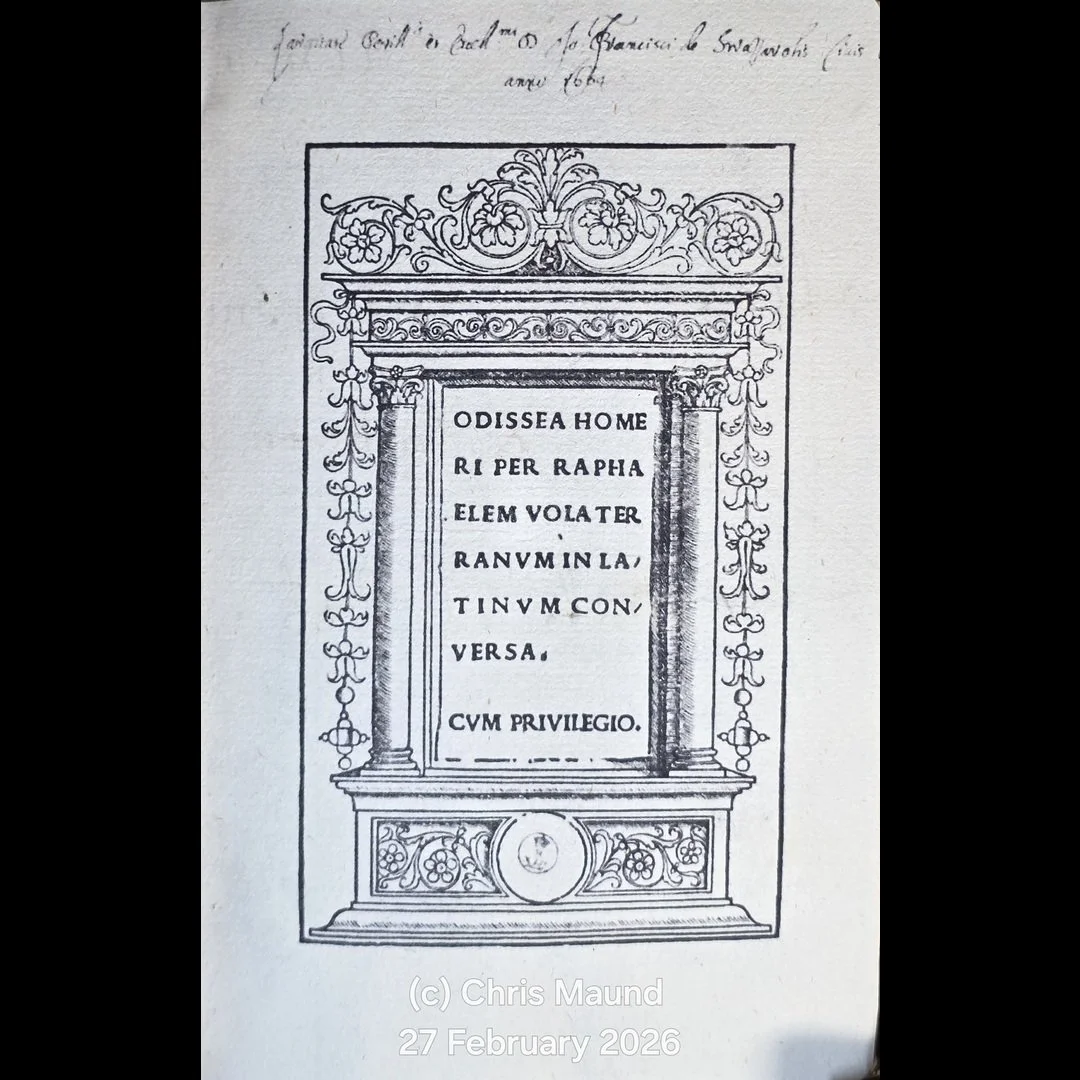 Image 1 of 31
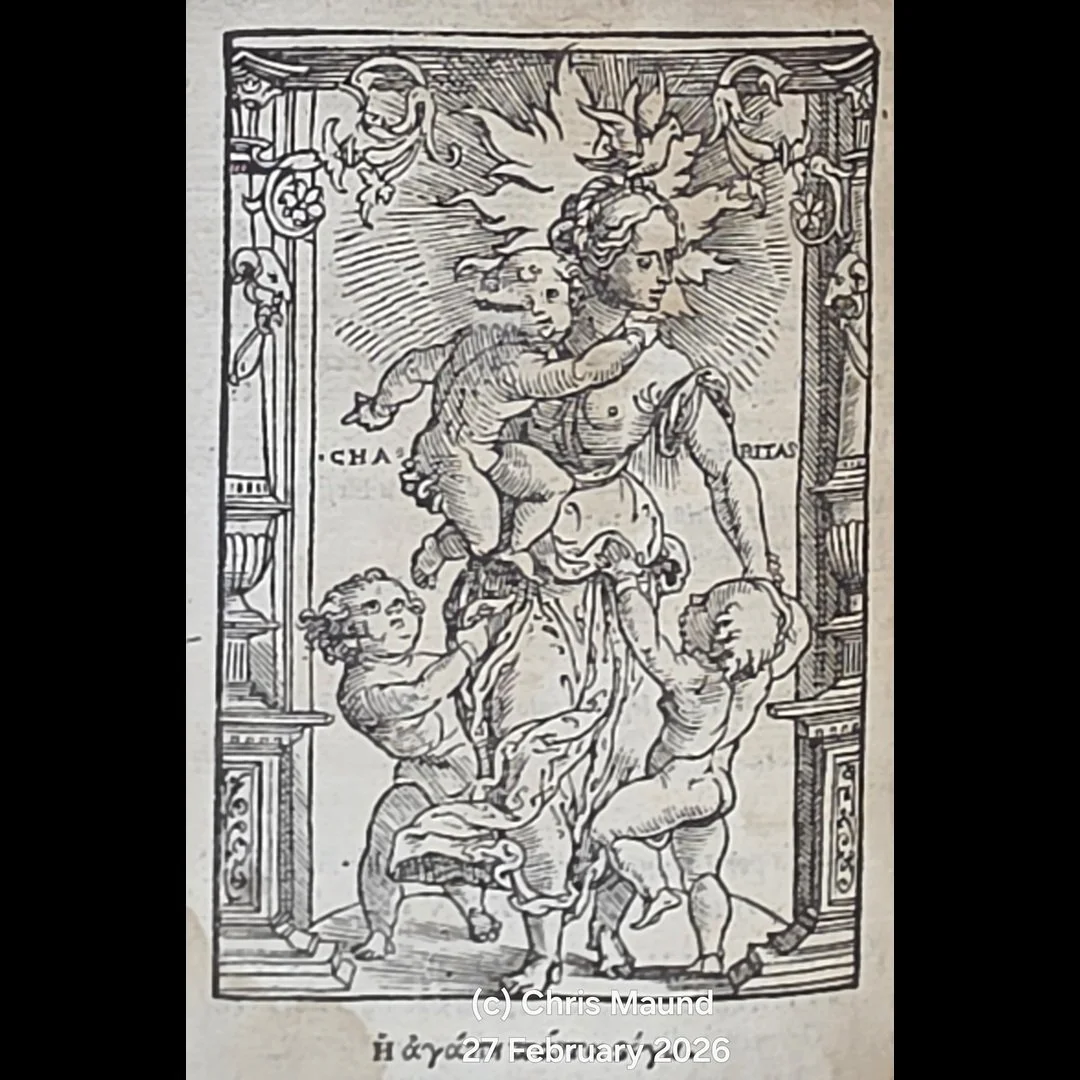 Image 2 of 31
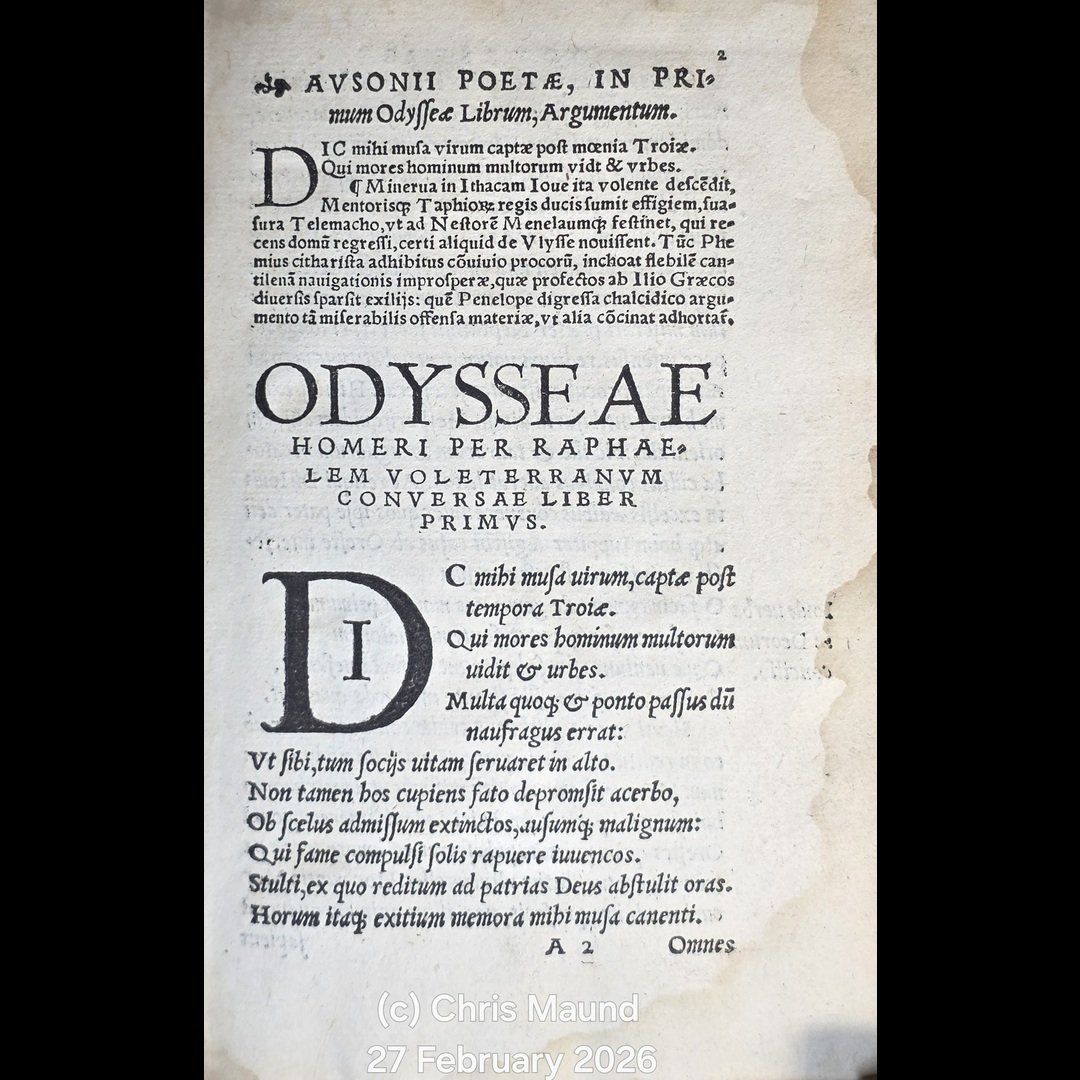 Image 3 of 31
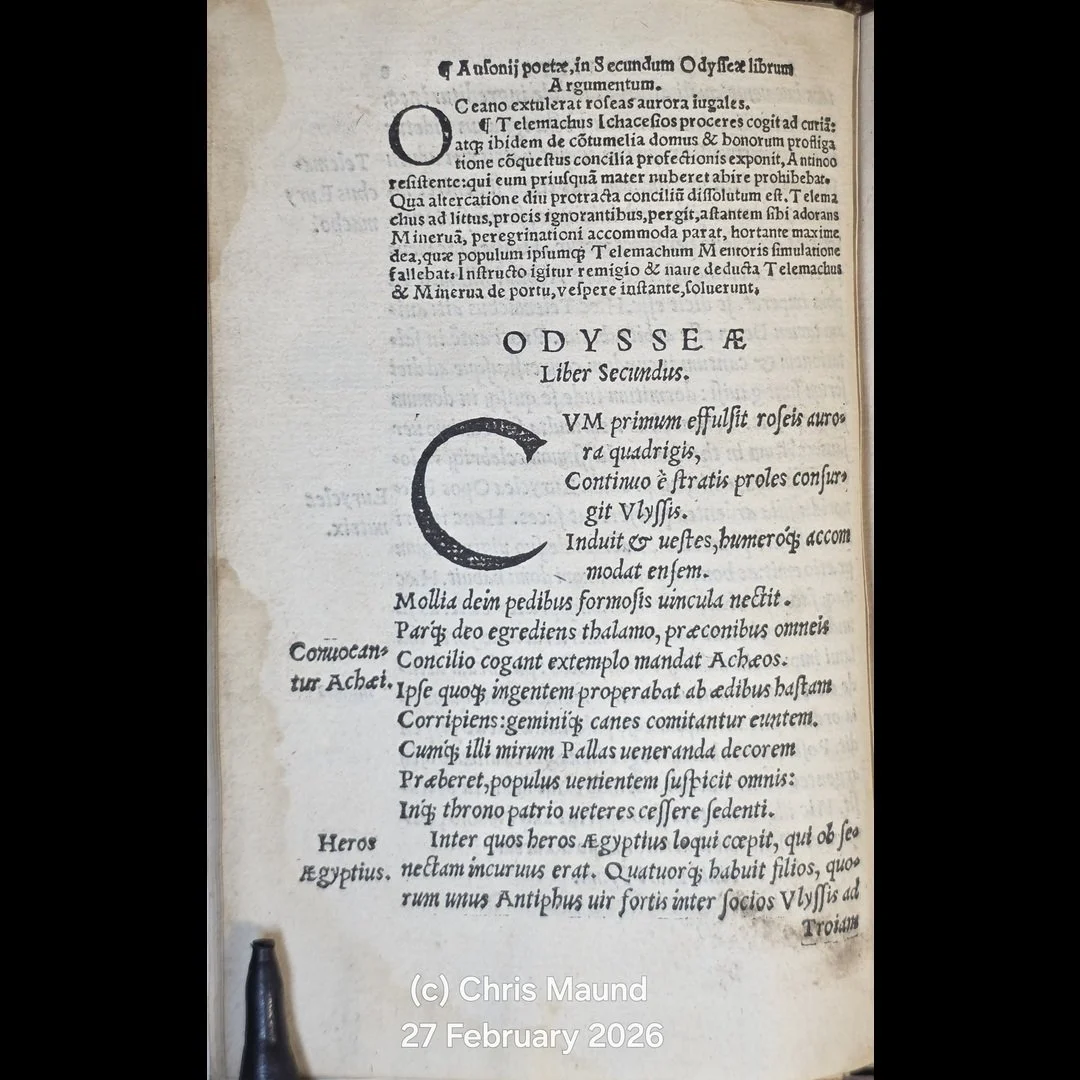 Image 4 of 31
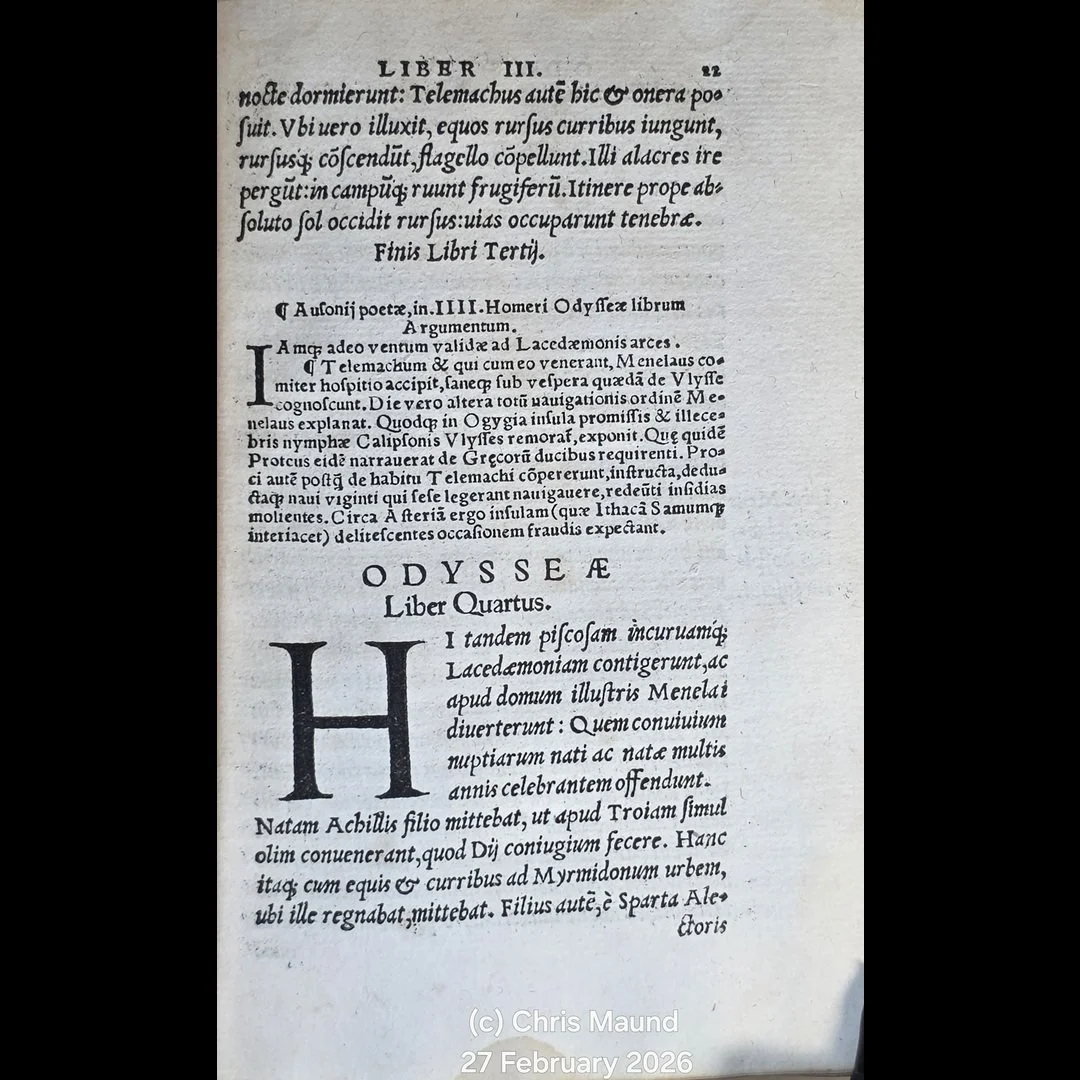 Image 5 of 31
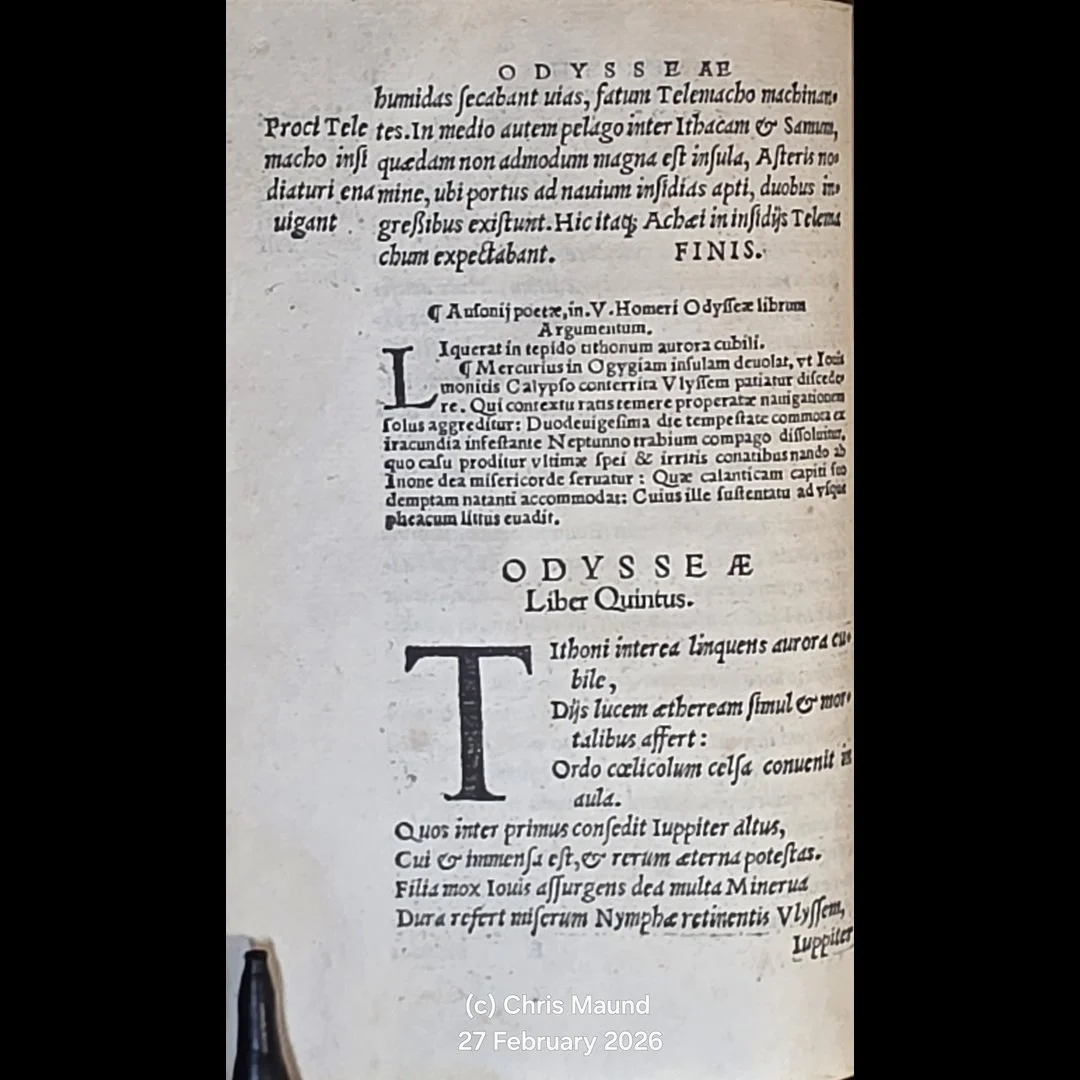 Image 6 of 31
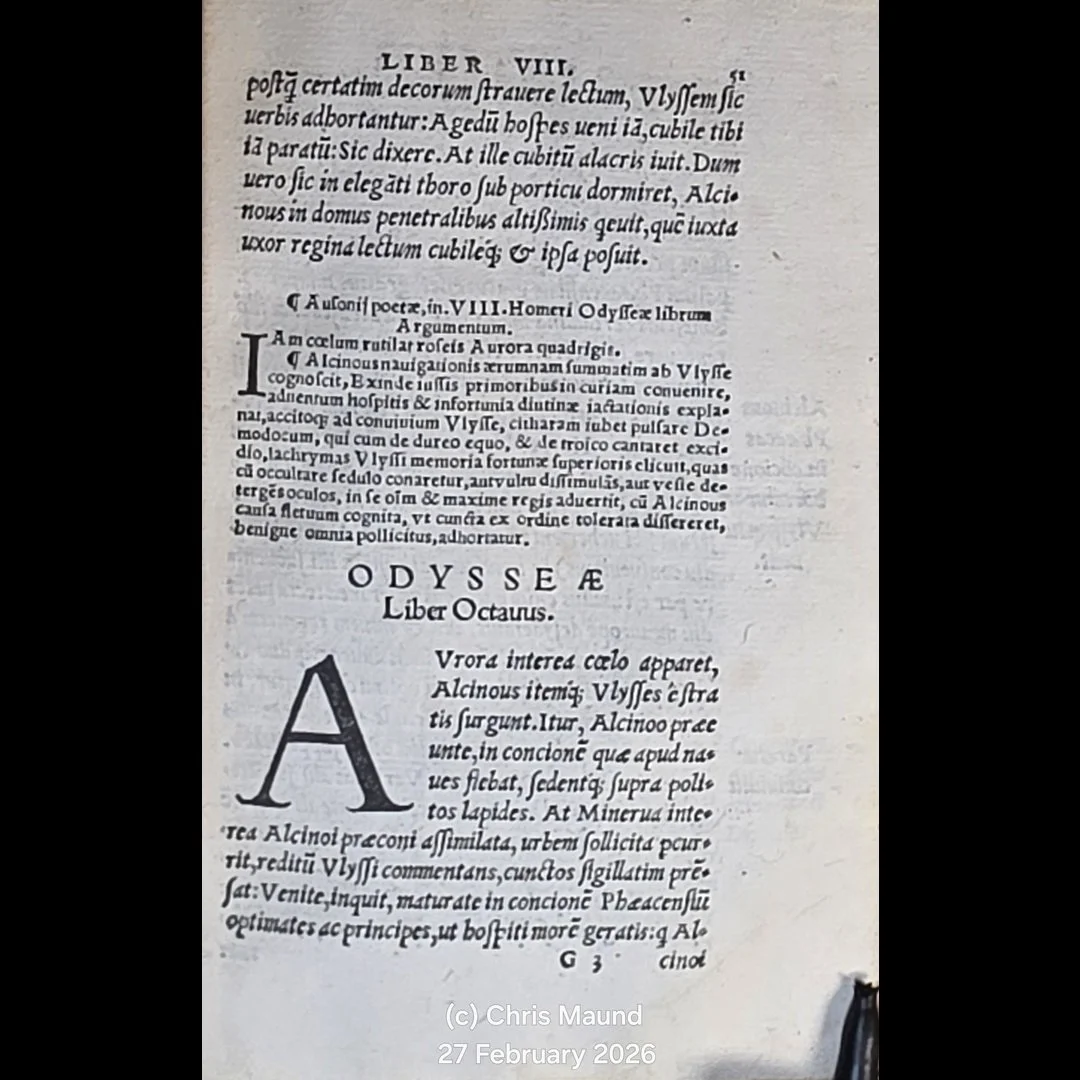 Image 7 of 31
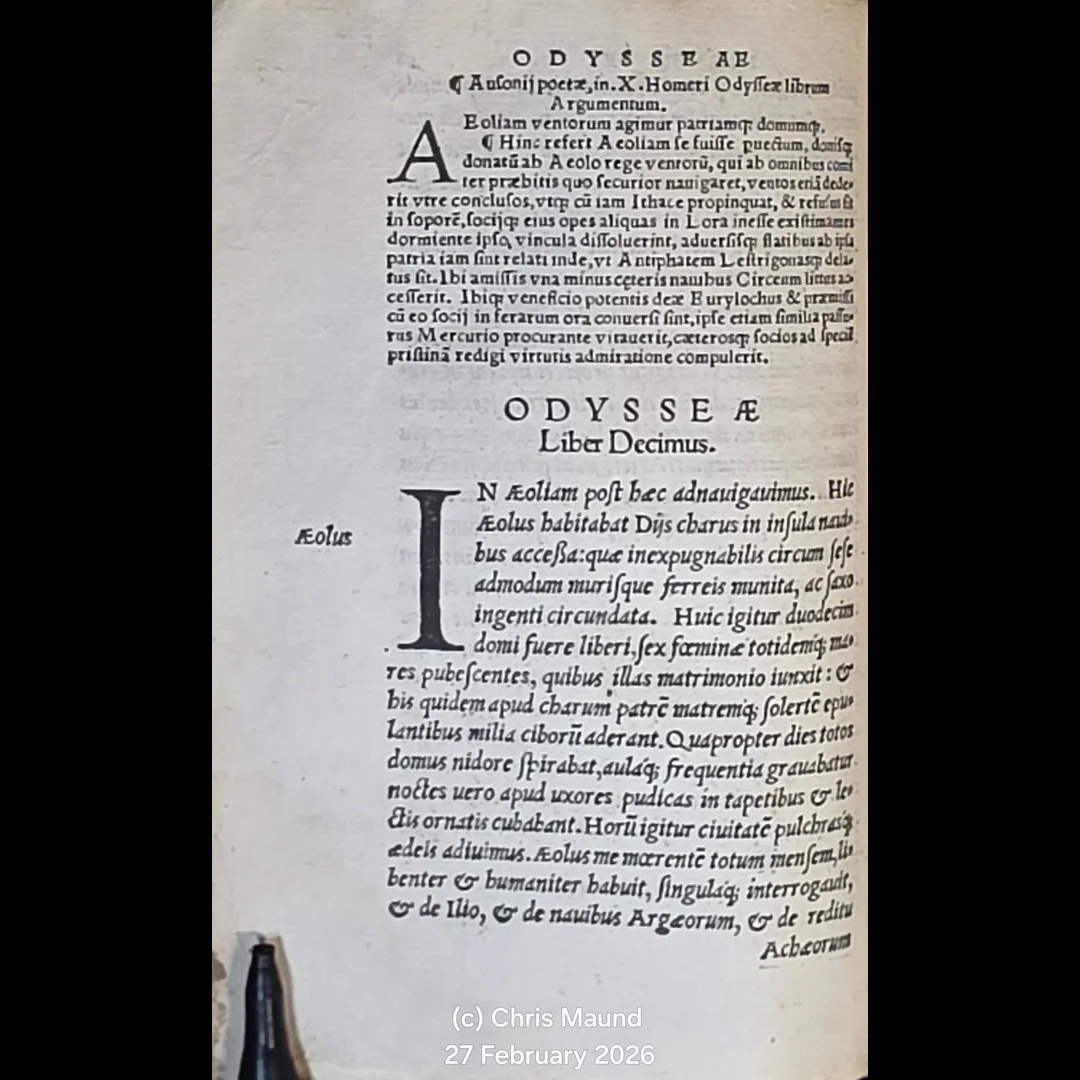 Image 8 of 31
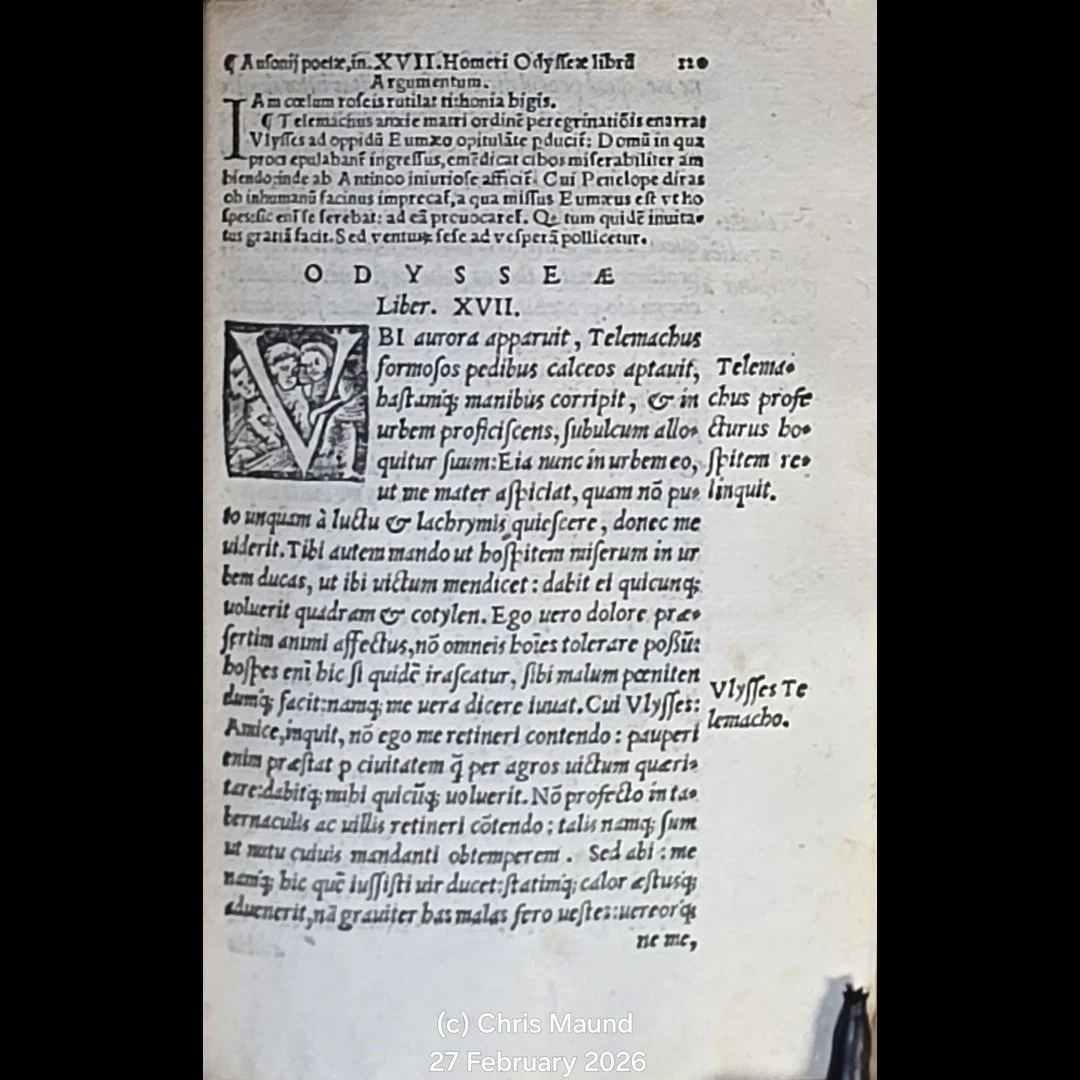 Image 9 of 31
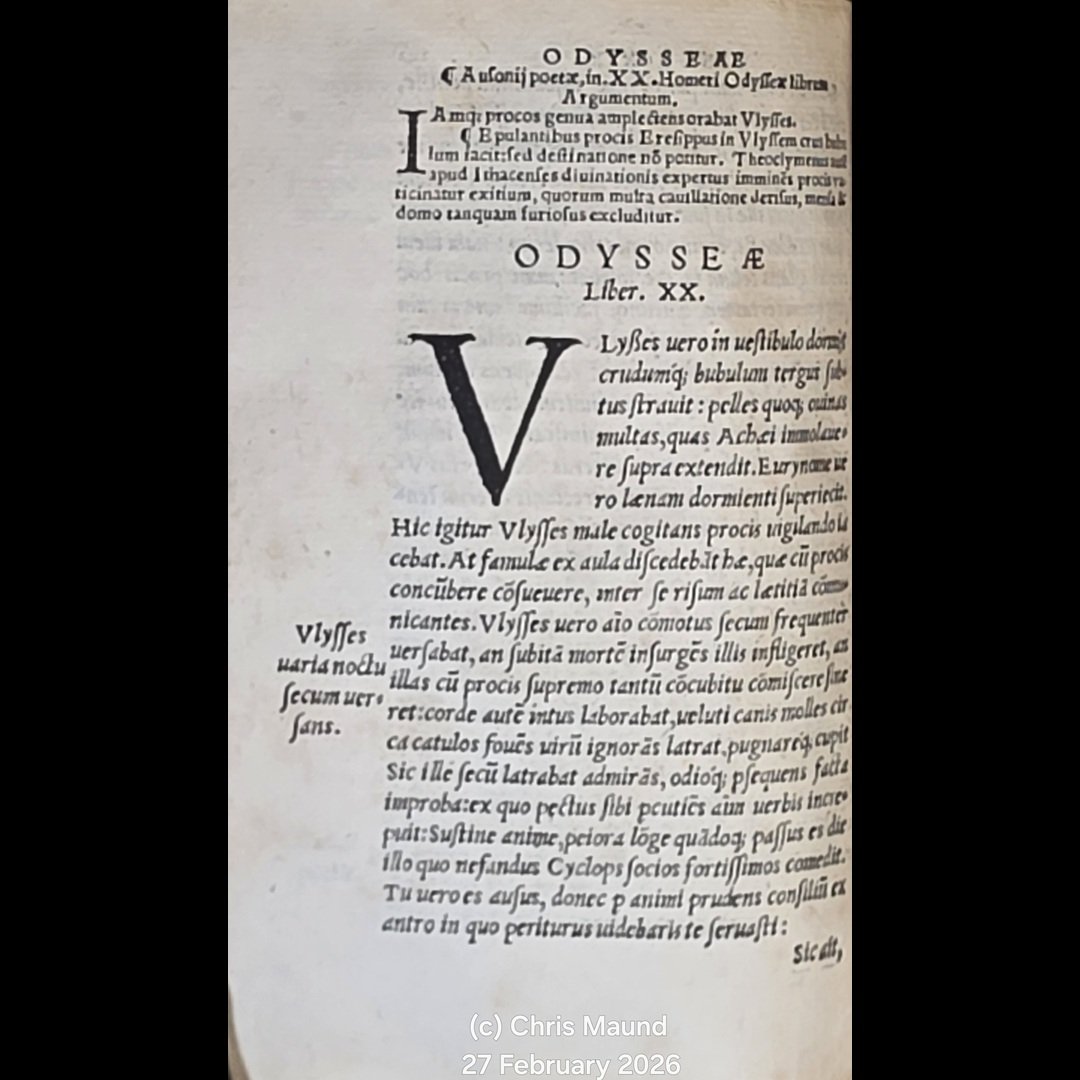 Image 10 of 31
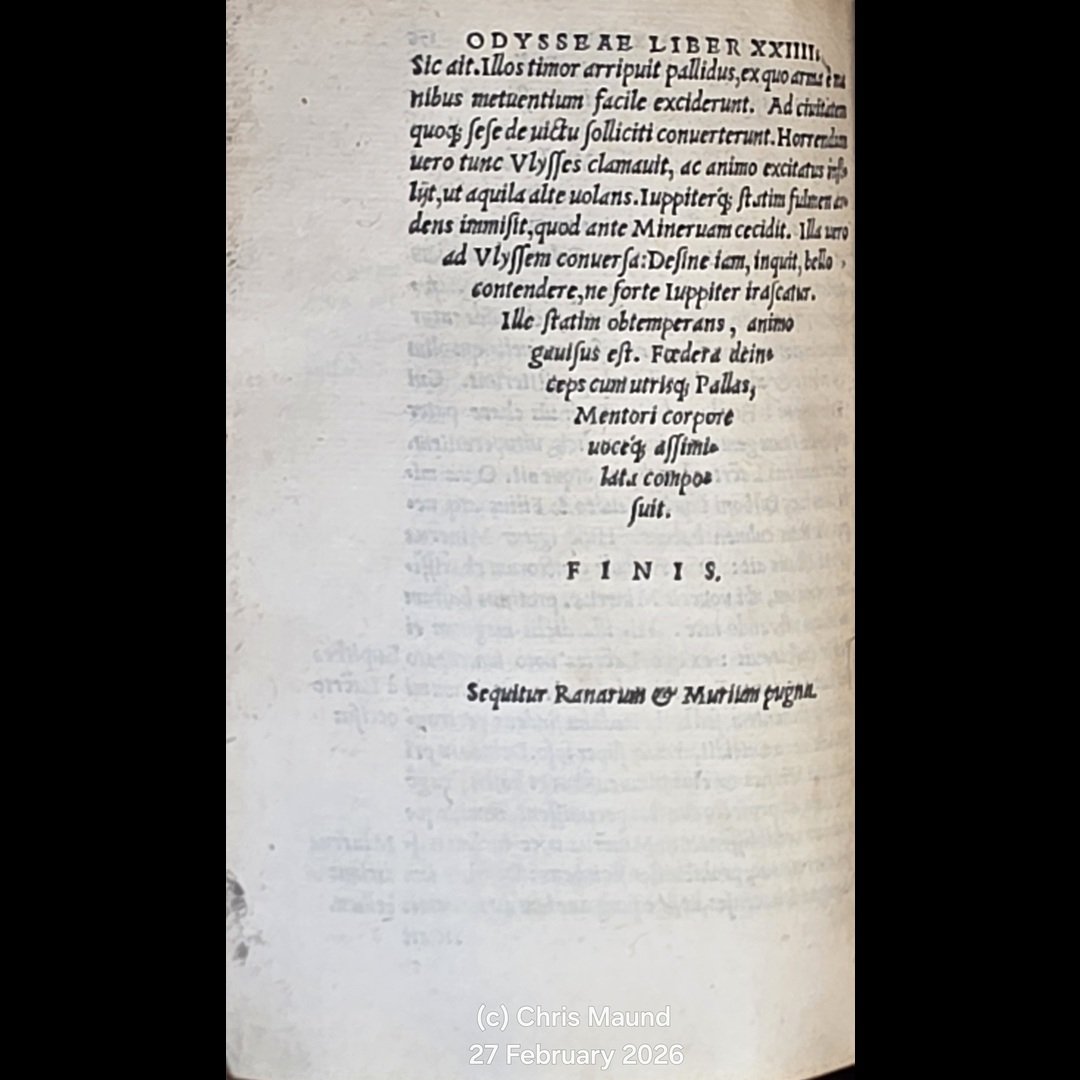 Image 11 of 31
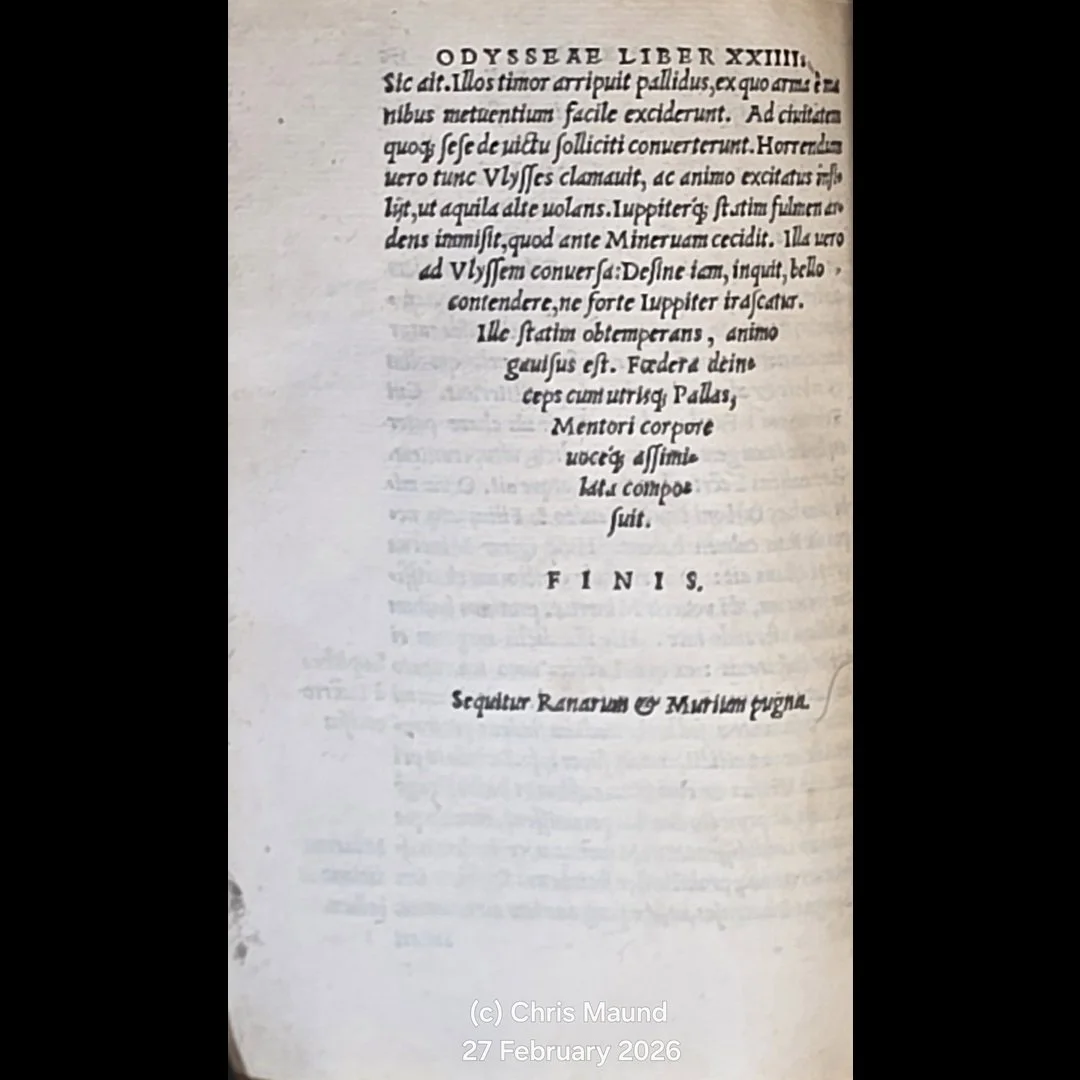 Image 12 of 31
 Image 13 of 31
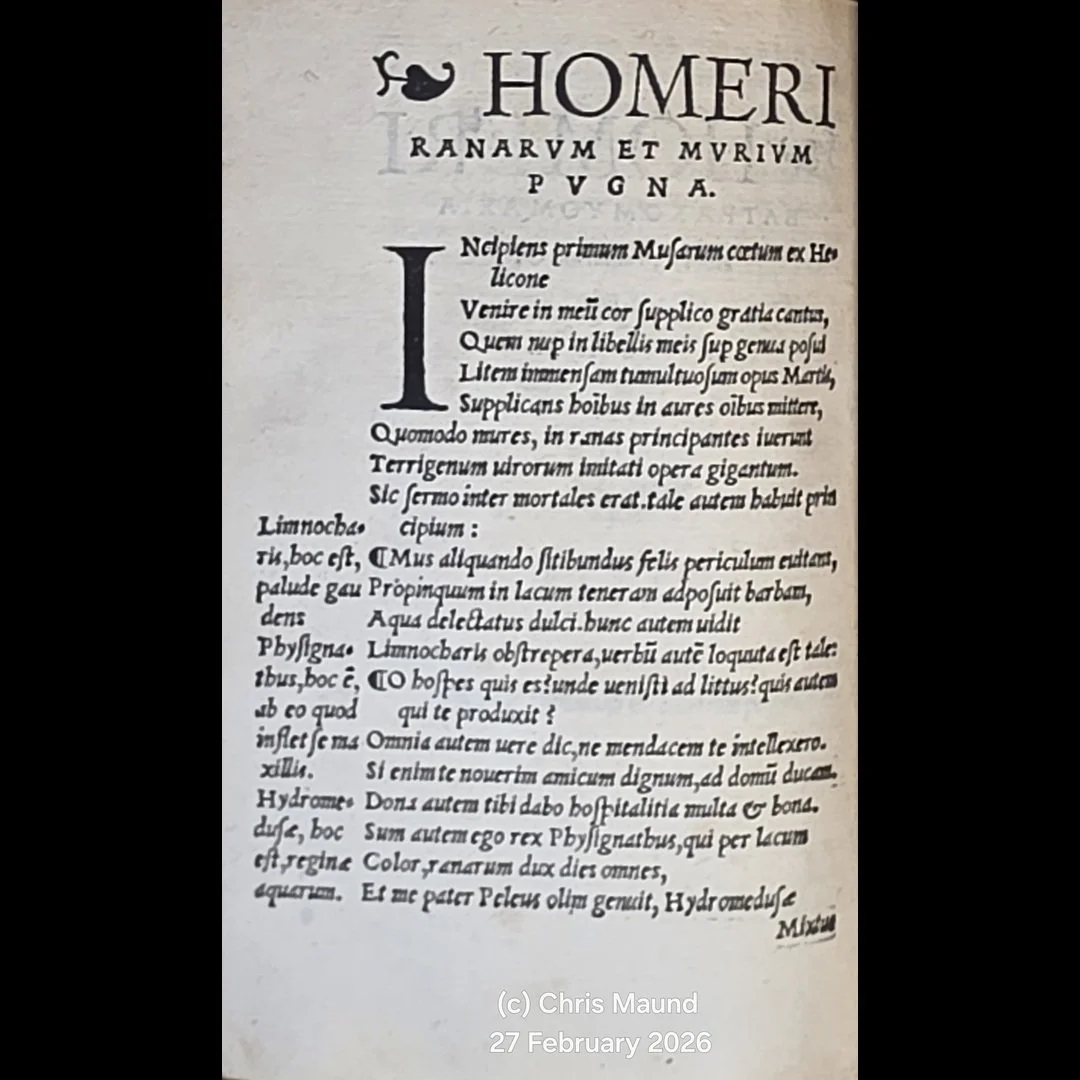 Image 14 of 31
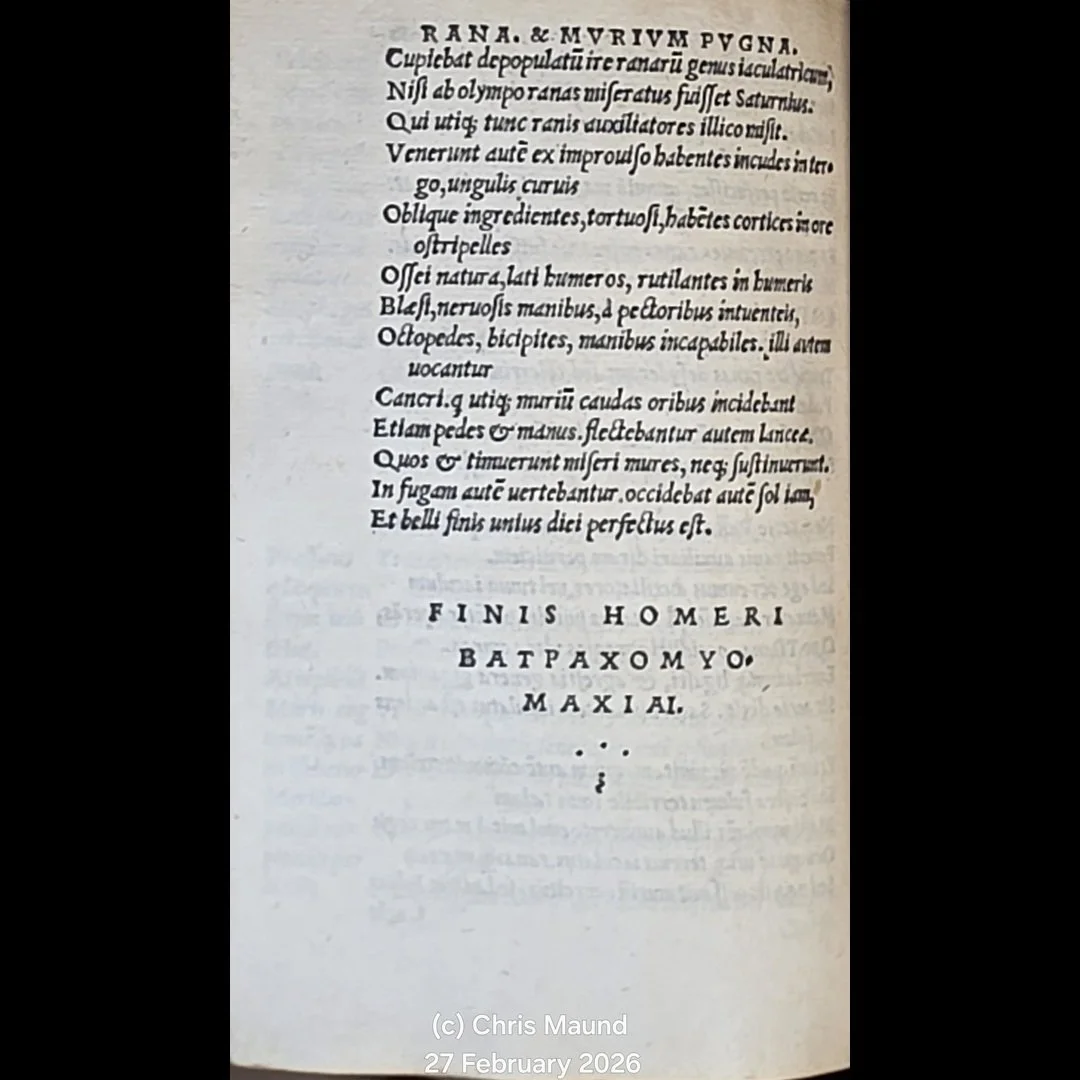 Image 15 of 31
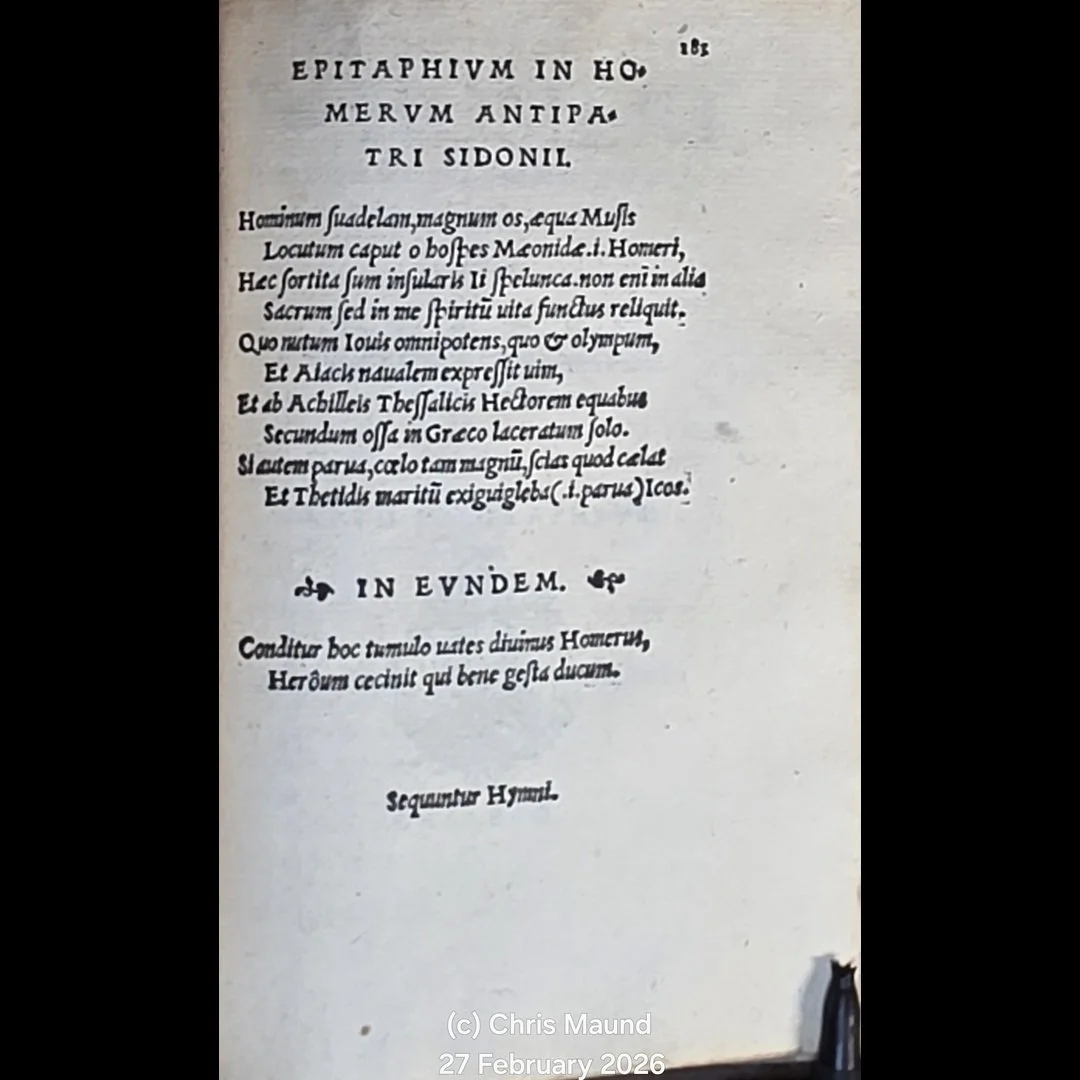 Image 16 of 31
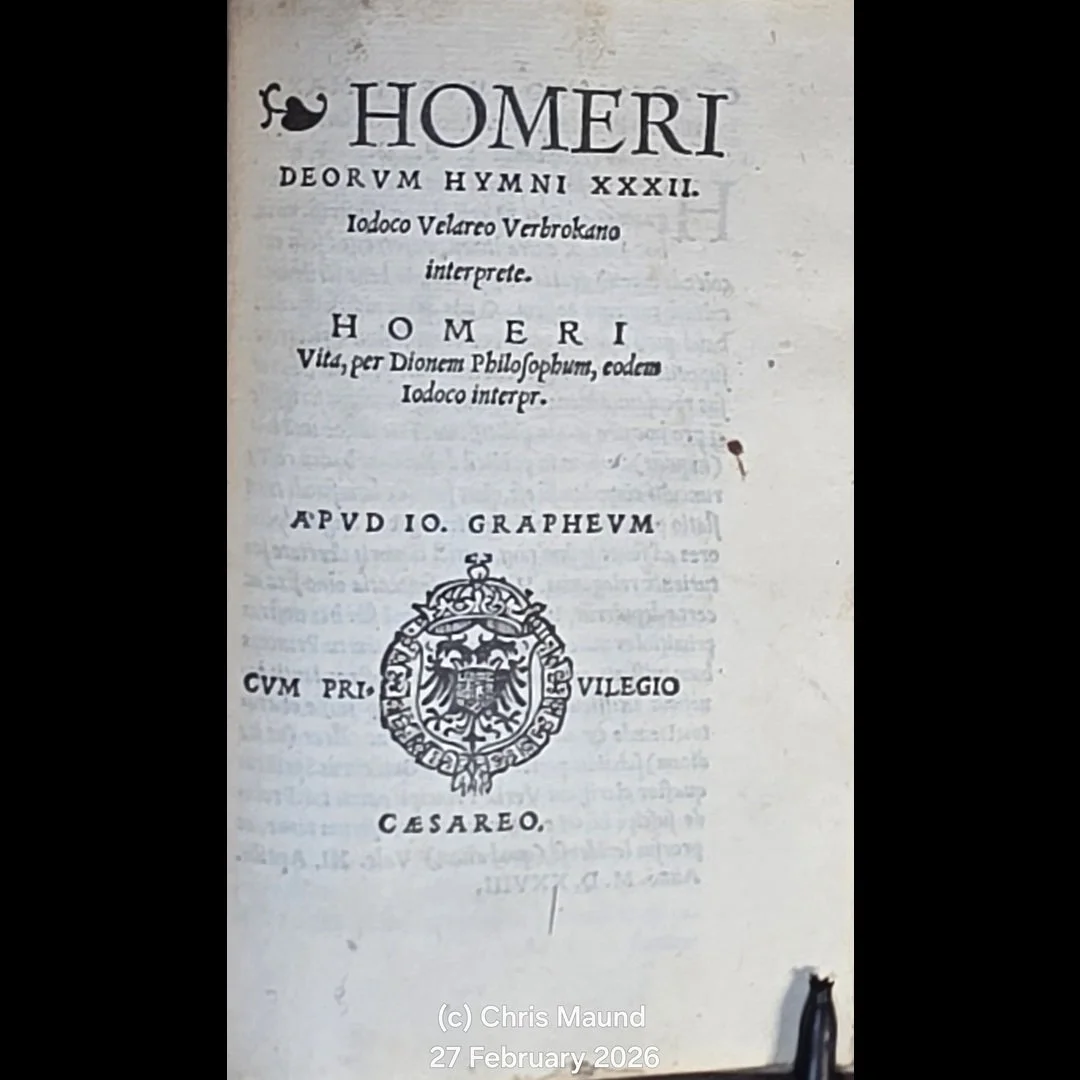 Image 17 of 31
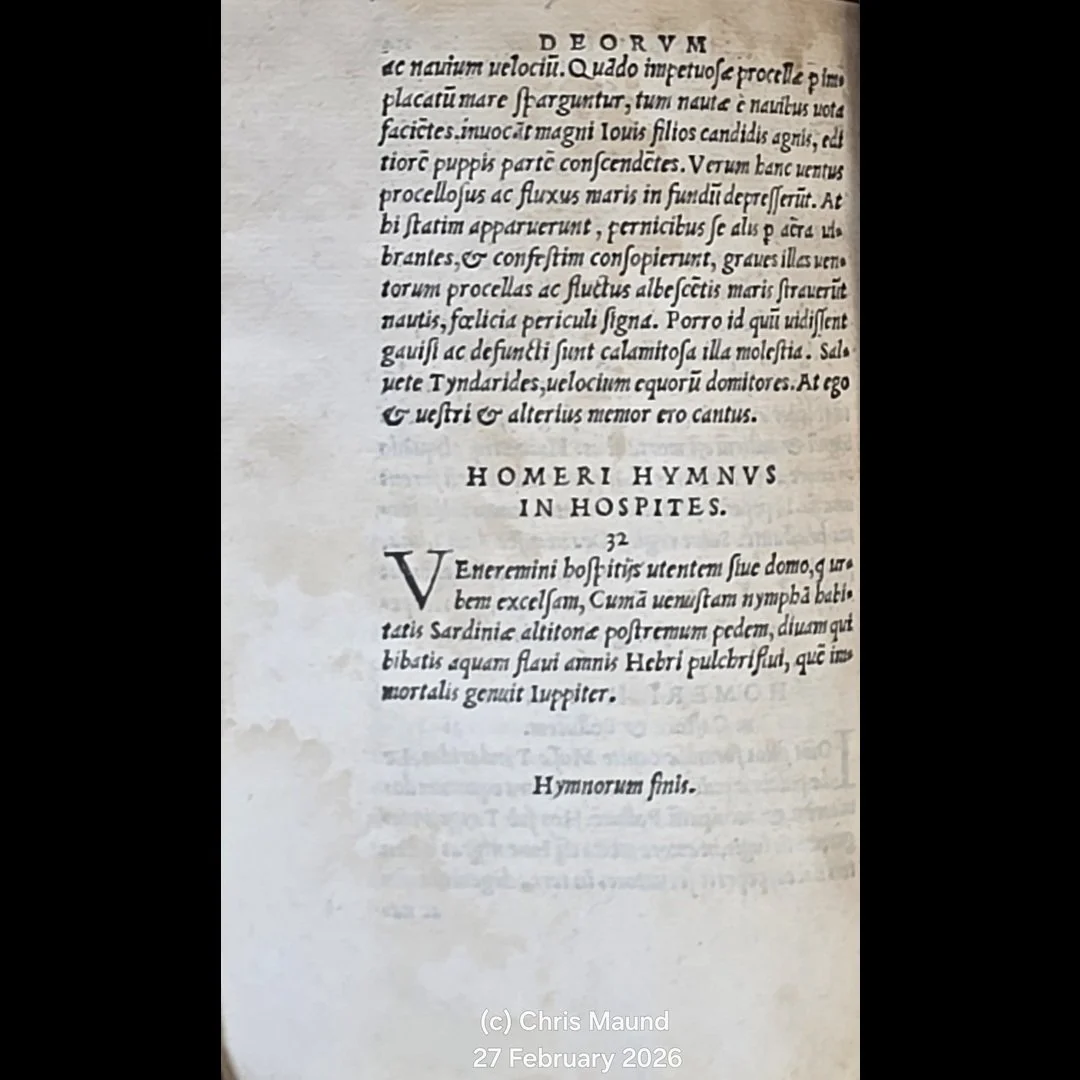 Image 18 of 31
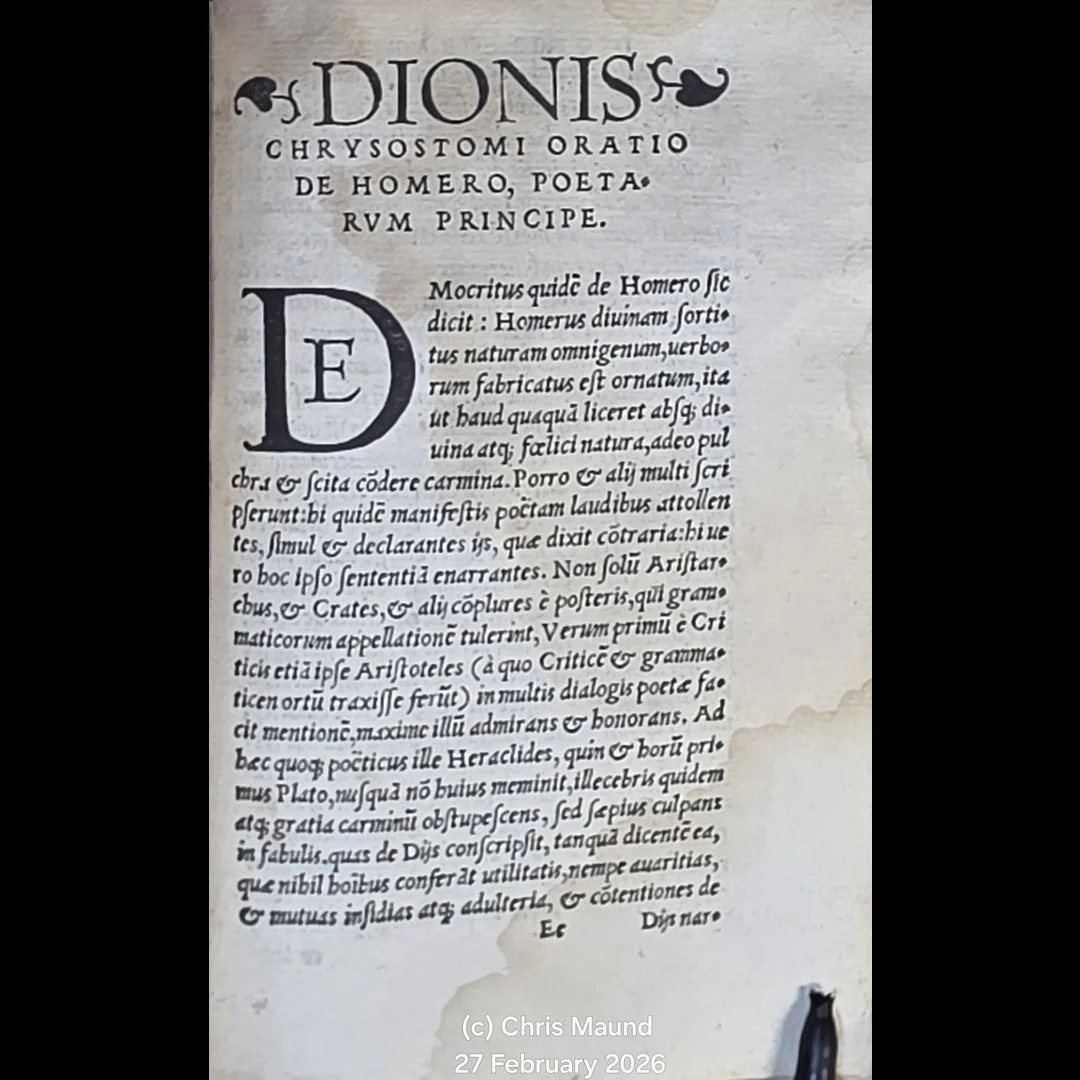 Image 19 of 31
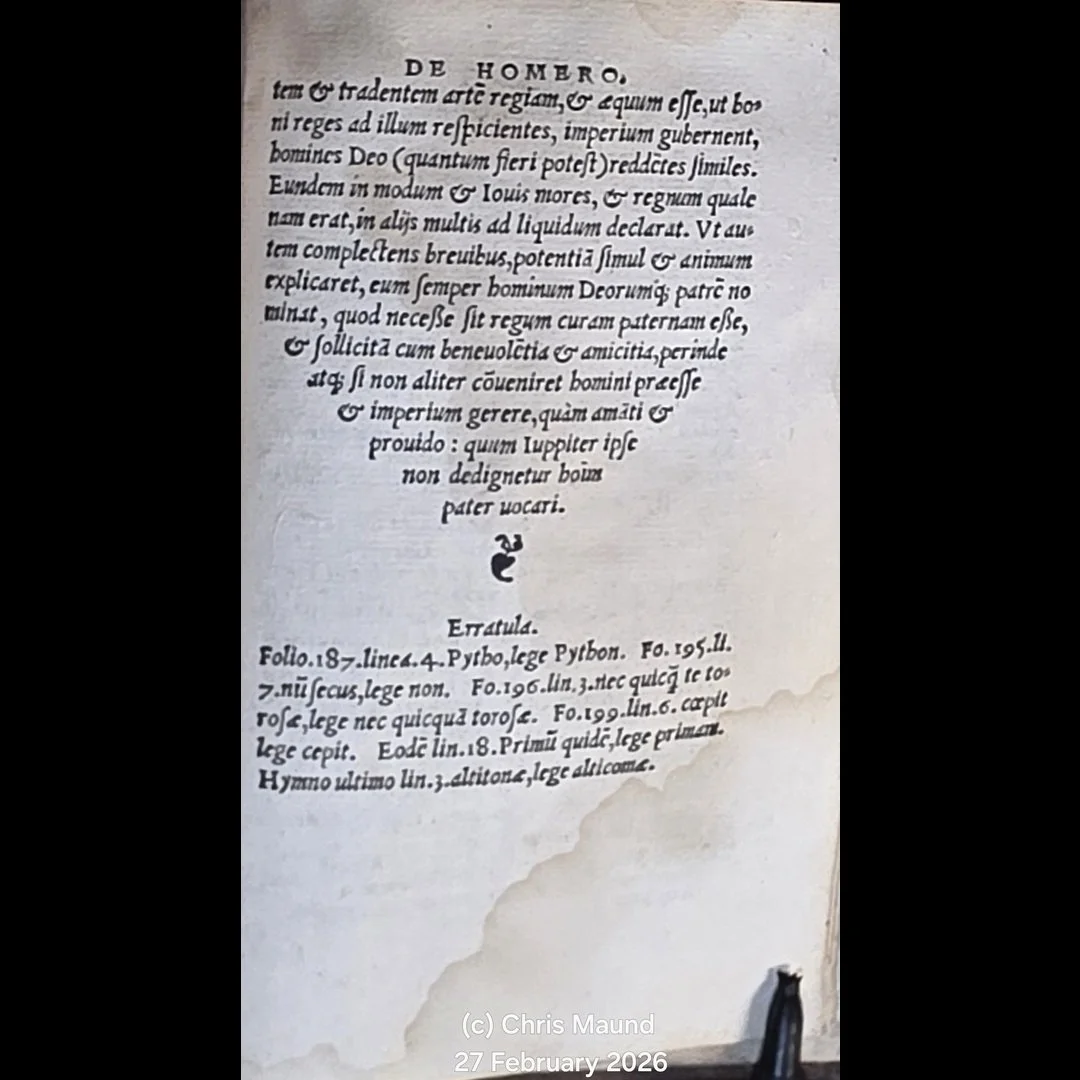 Image 20 of 31
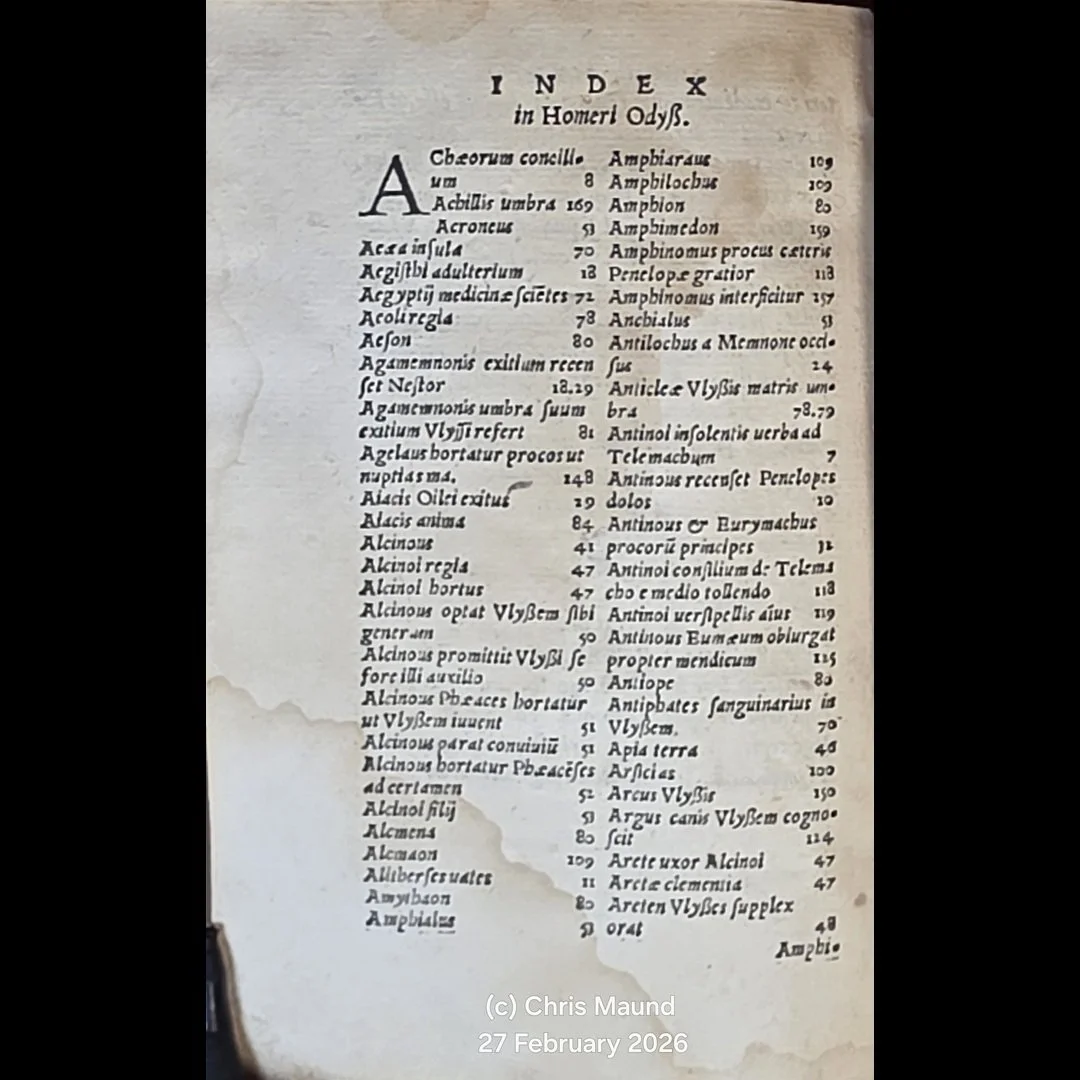 Image 21 of 31
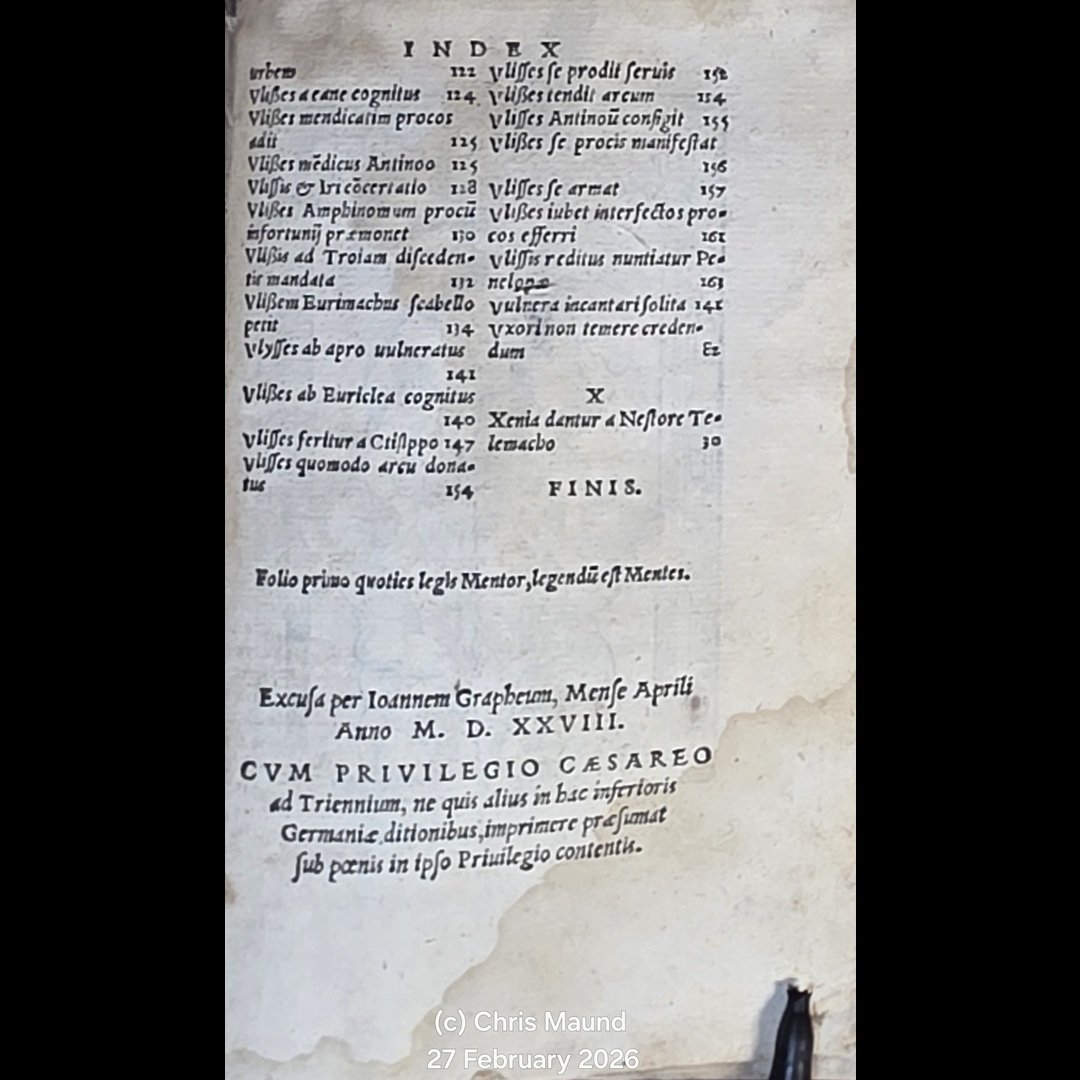 Image 22 of 31
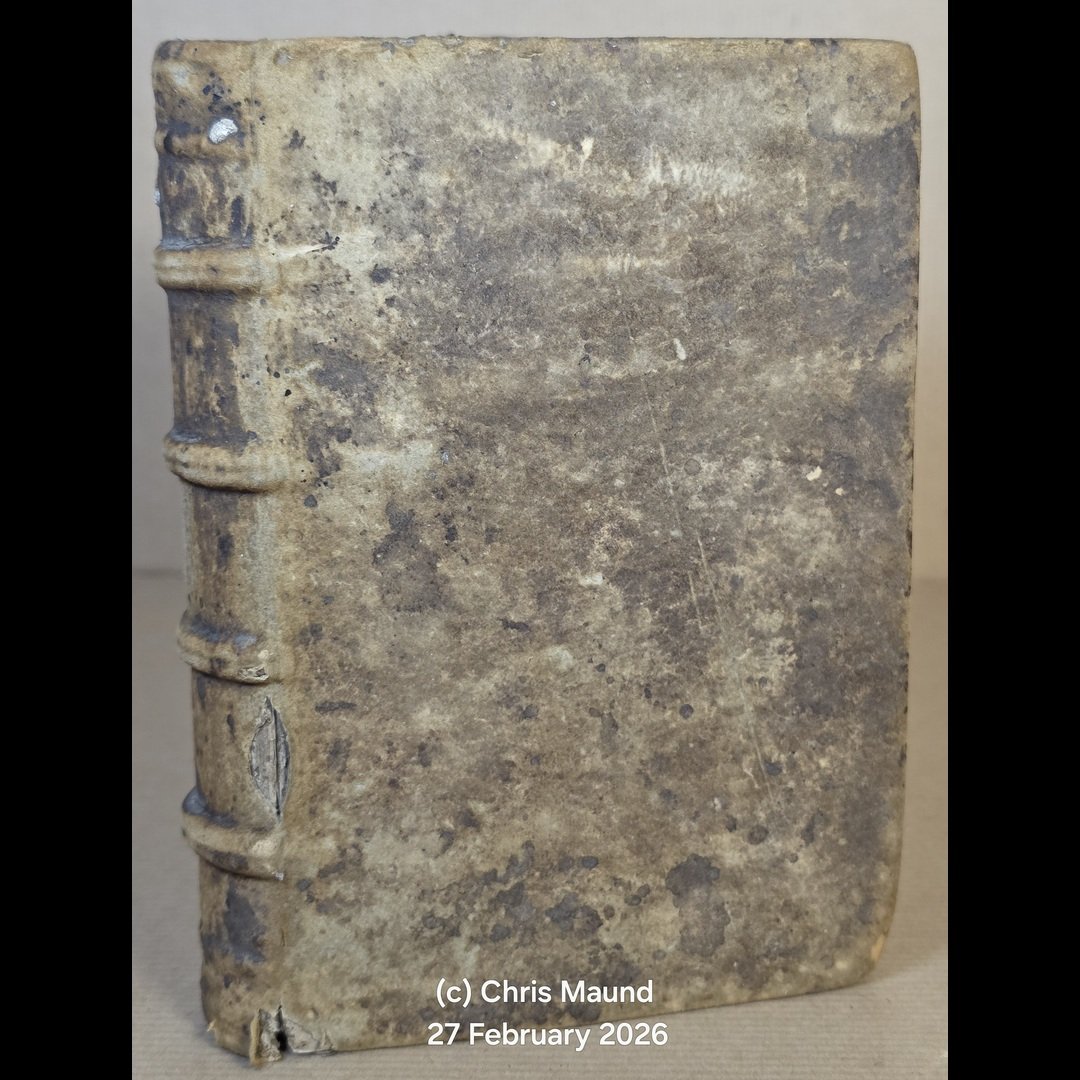 Image 23 of 31
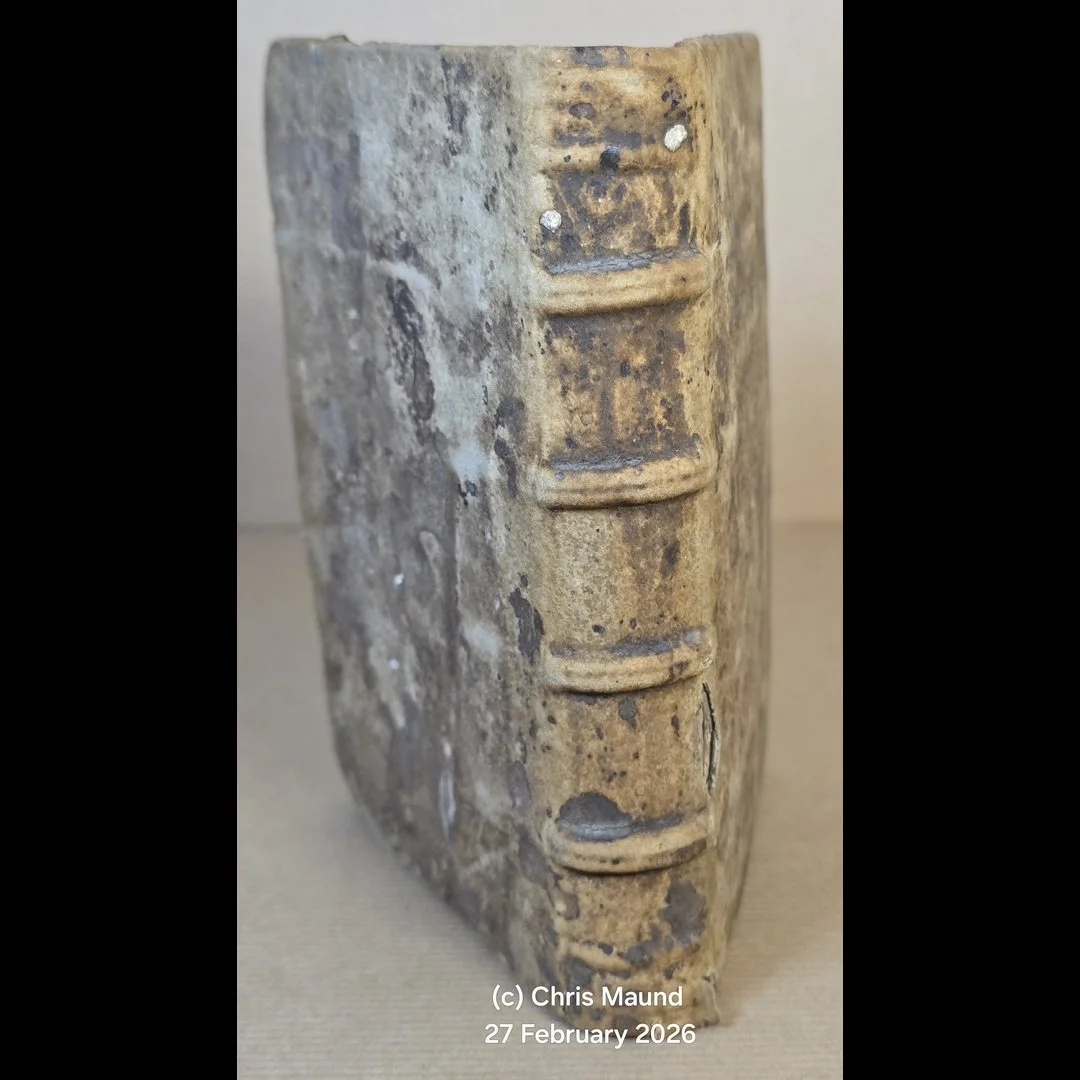 Image 24 of 31
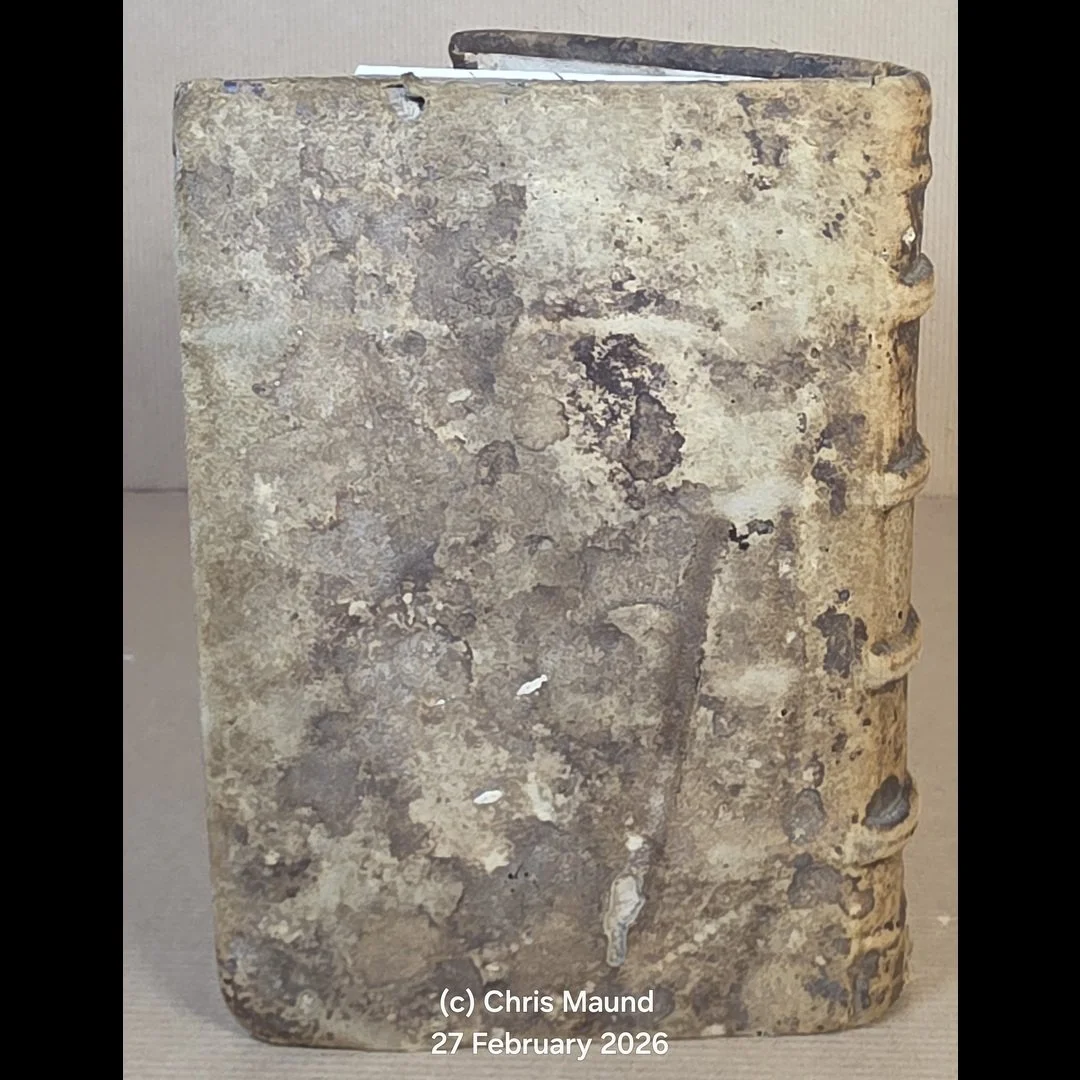 Image 25 of 31
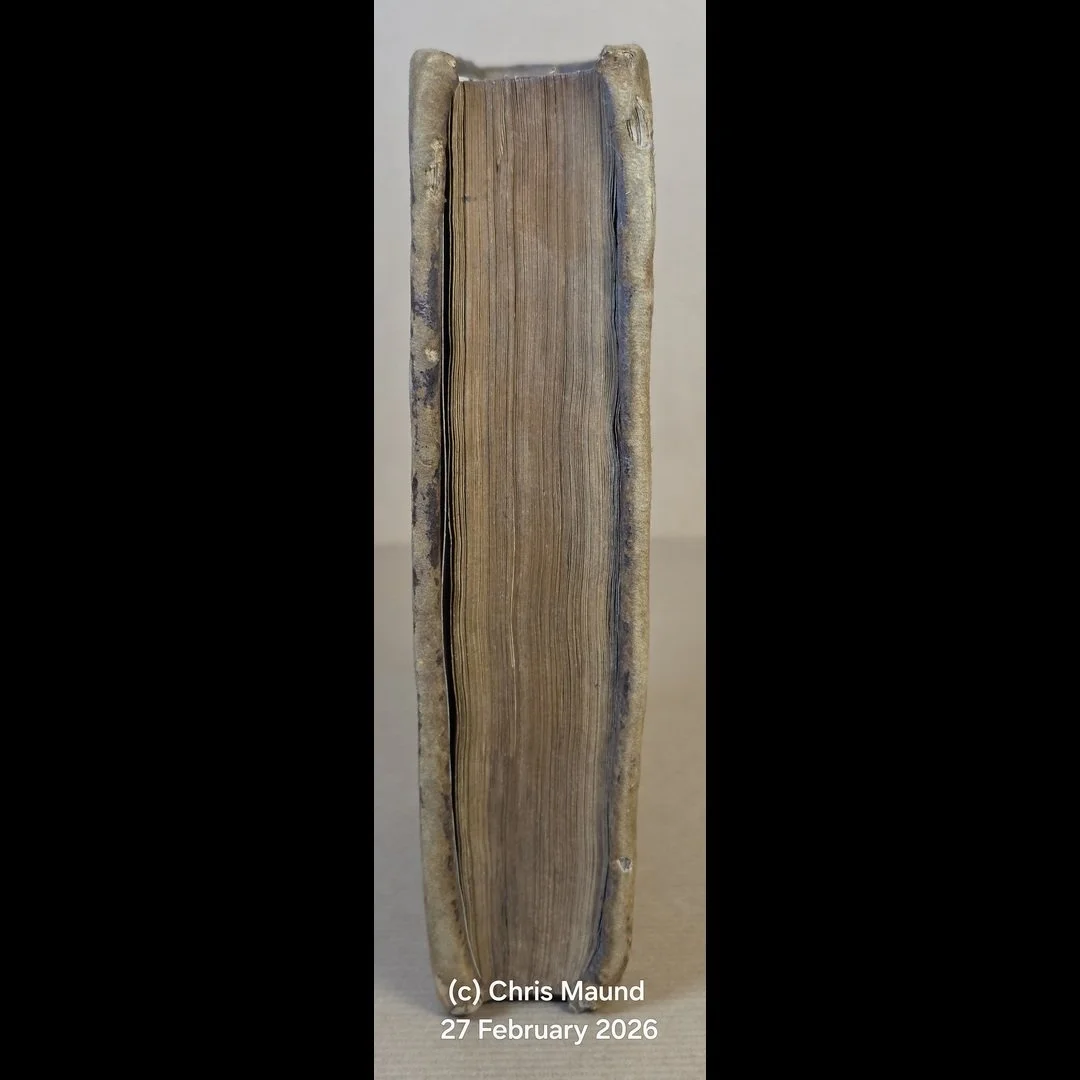 Image 26 of 31
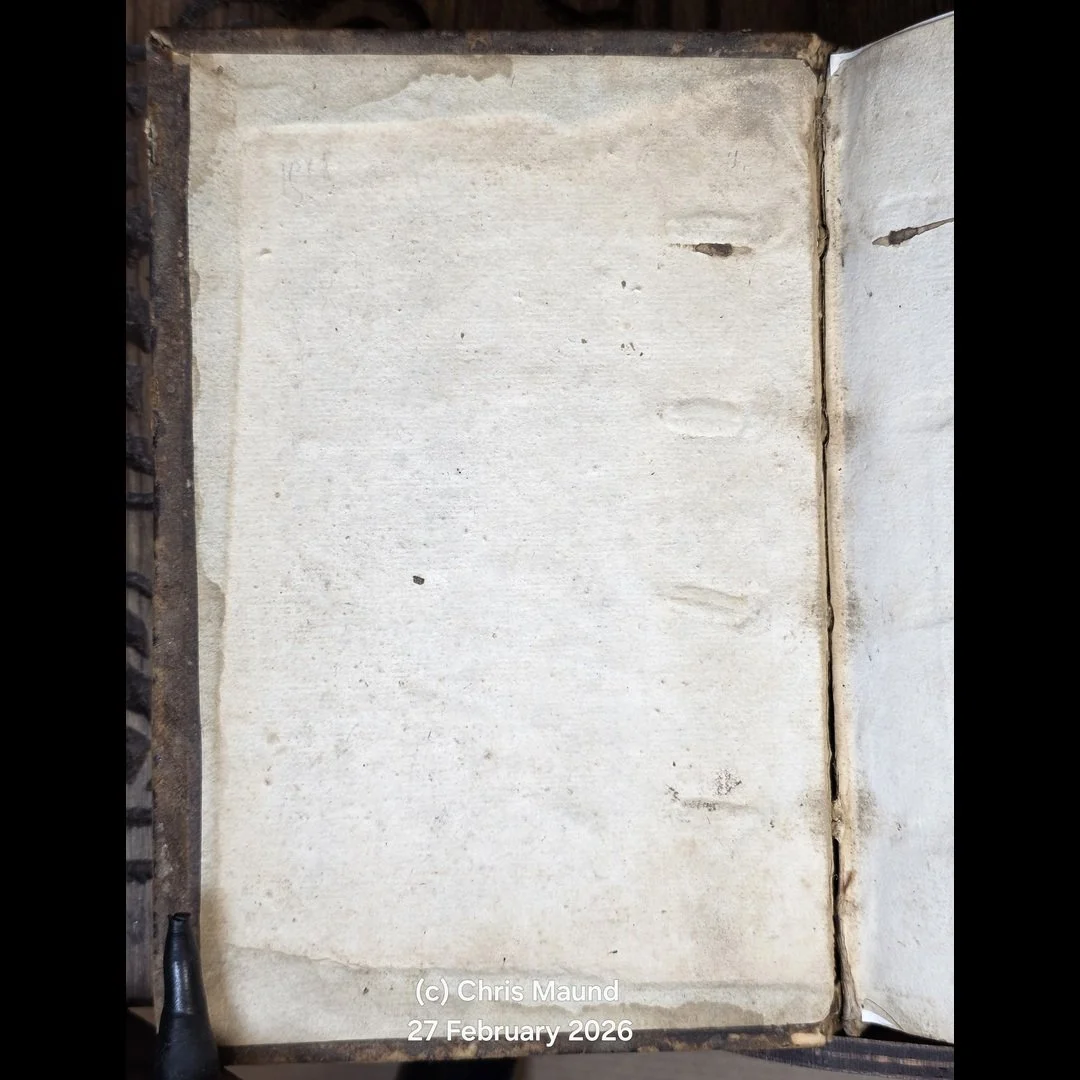 Image 27 of 31
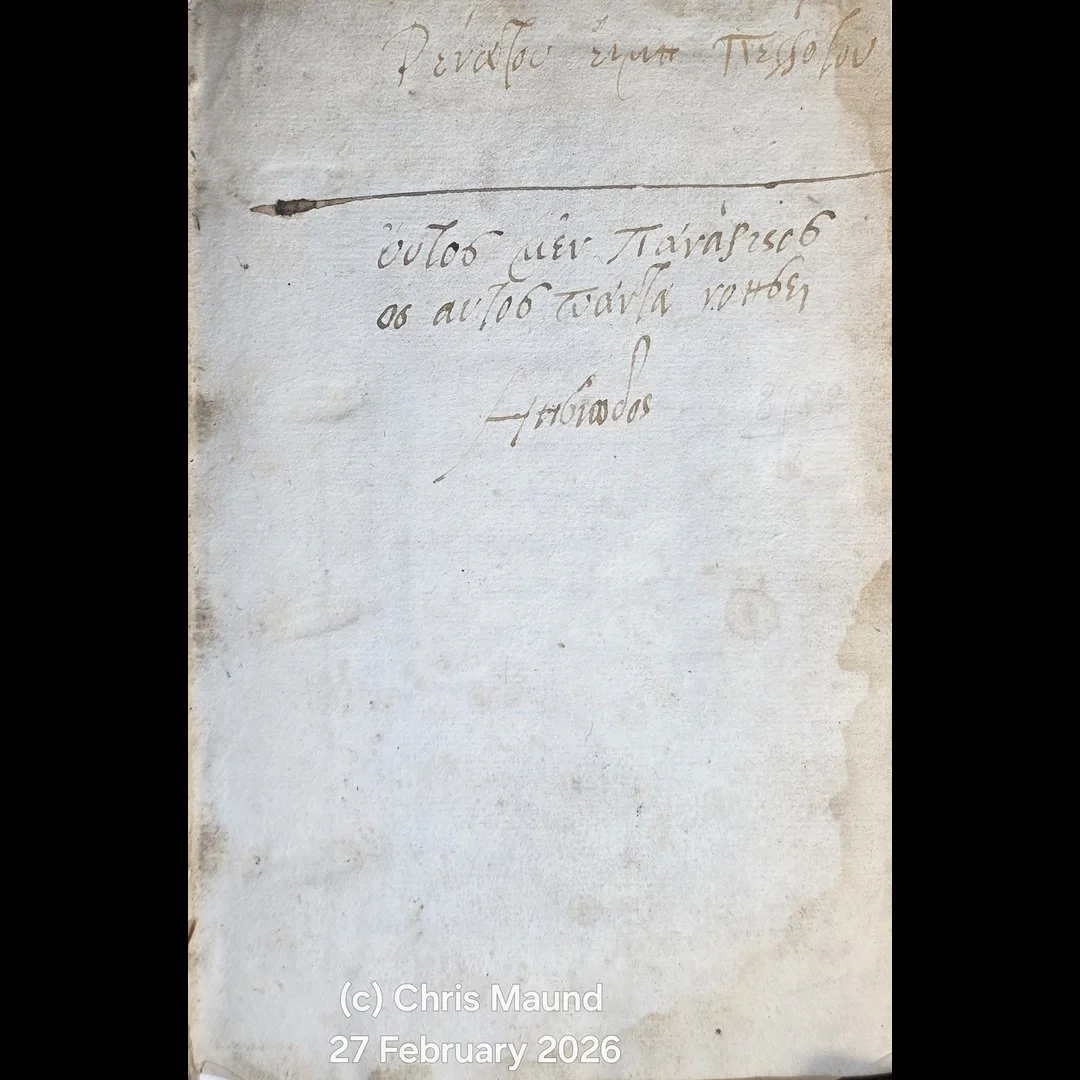 Image 28 of 31
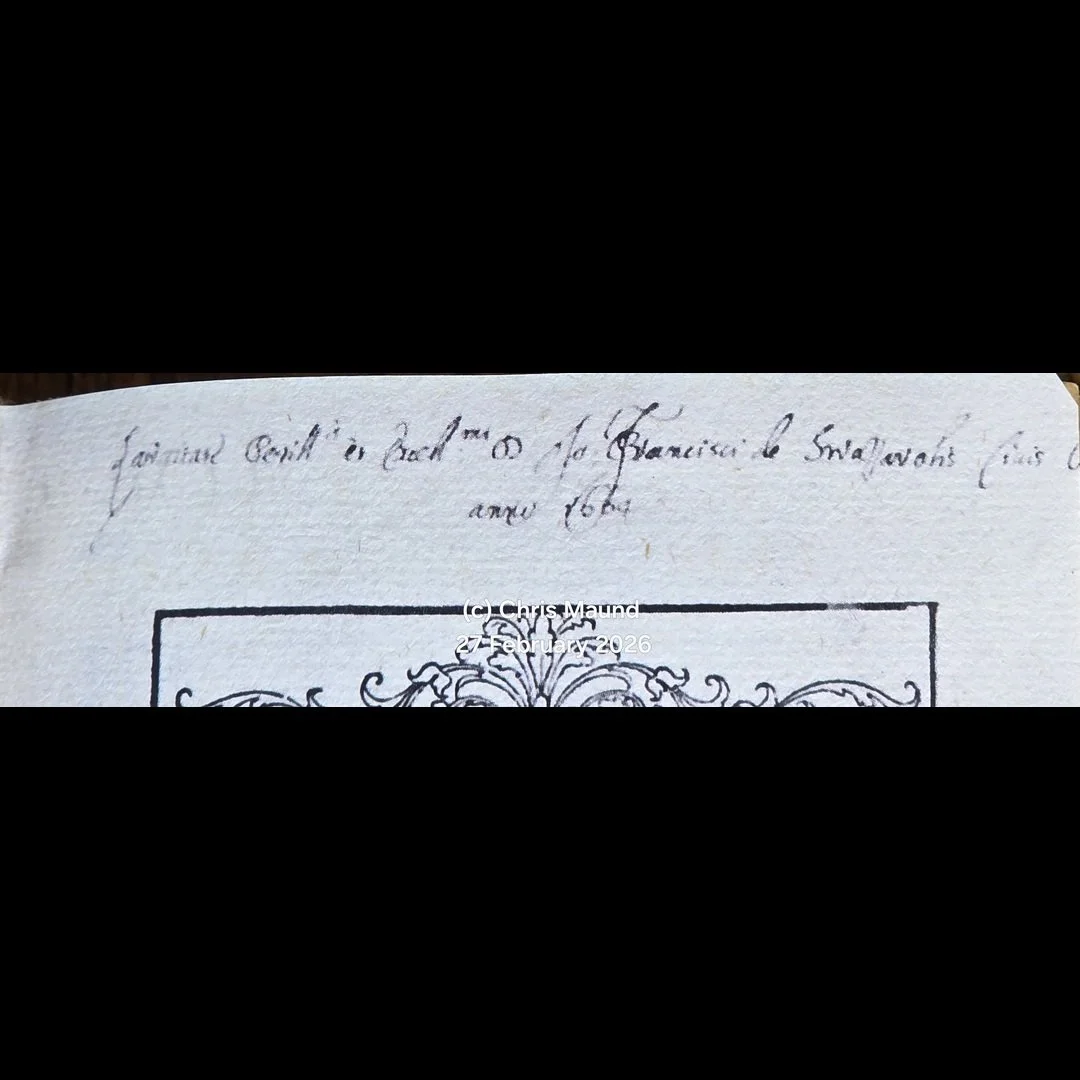 Image 29 of 31
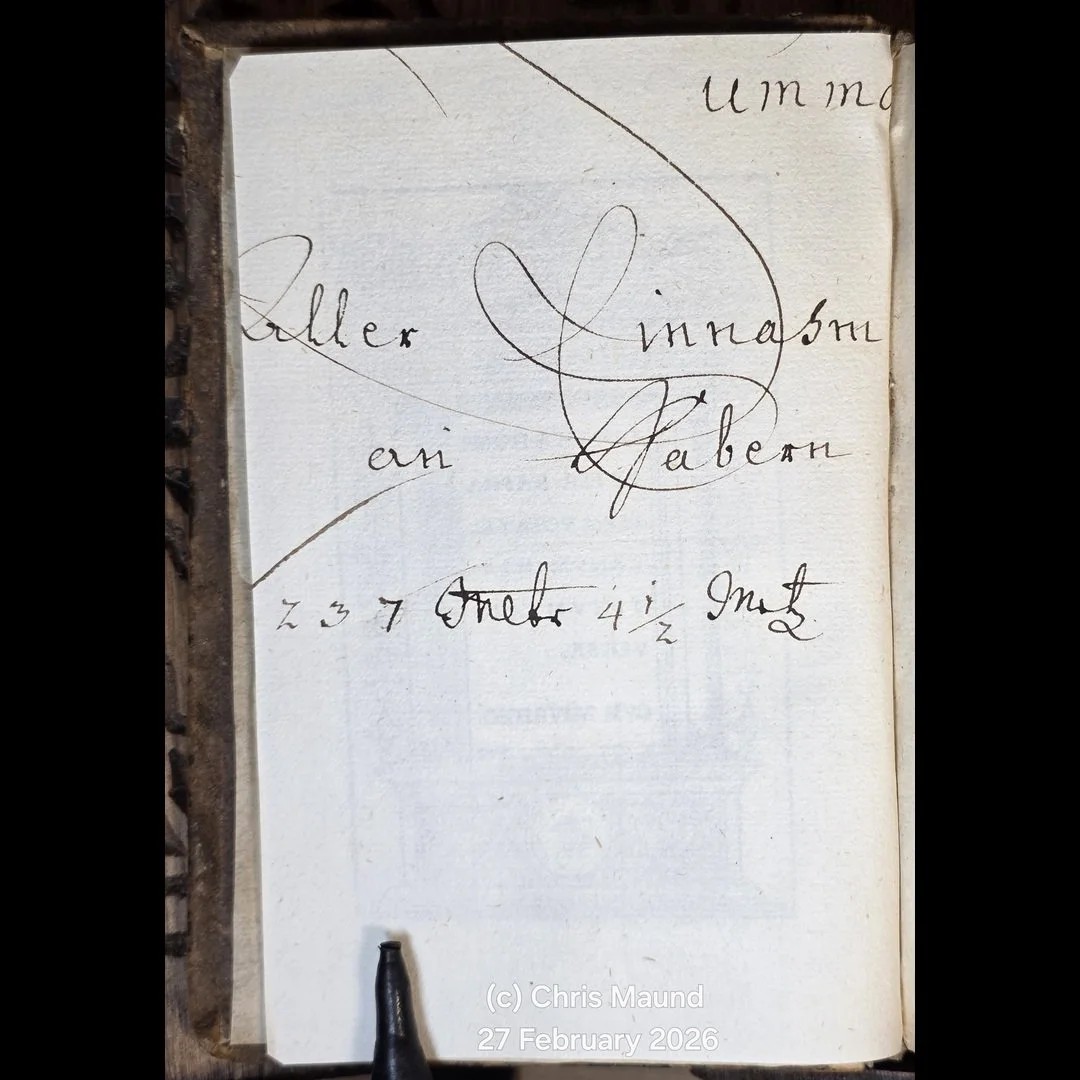 Image 30 of 31
 Image 31 of 31