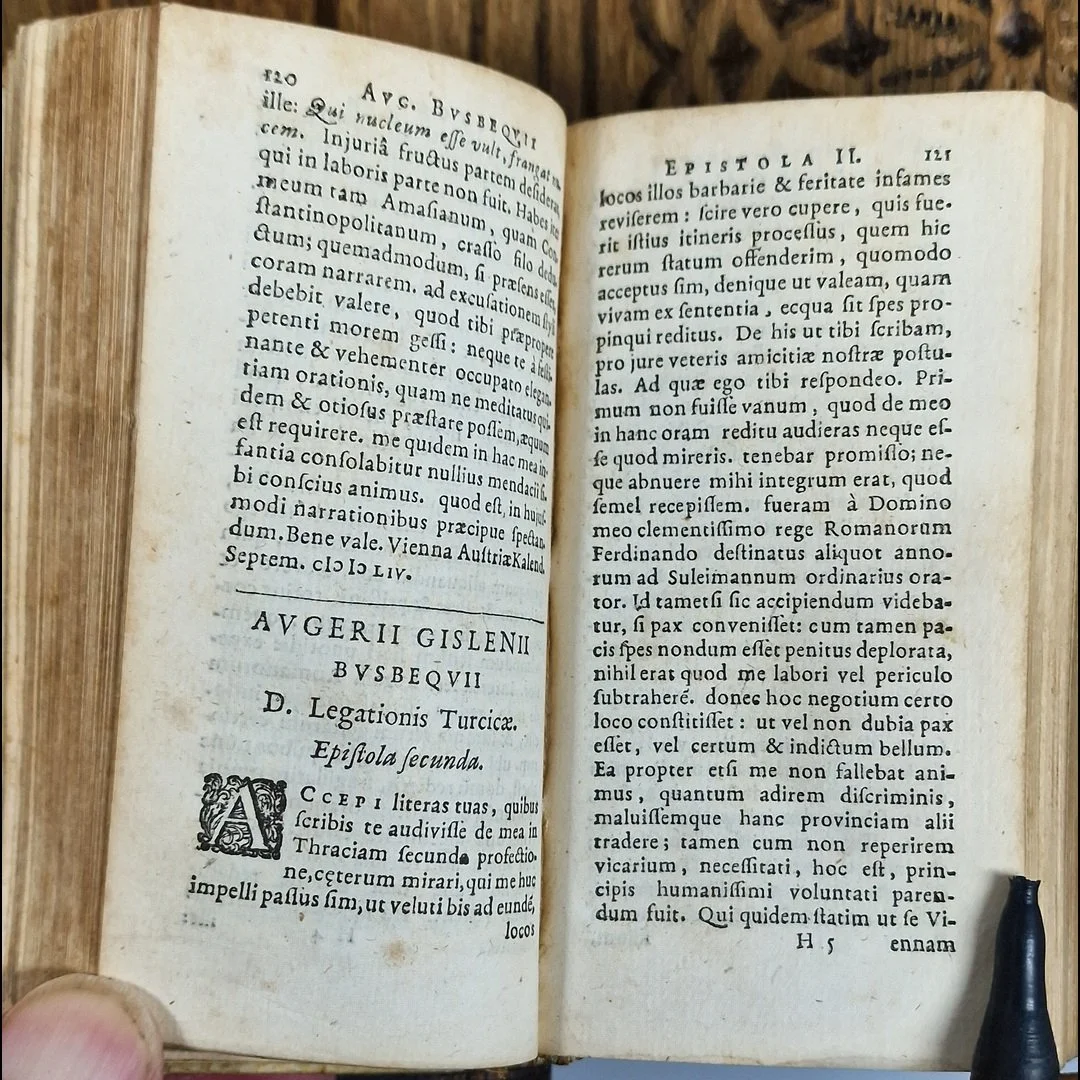
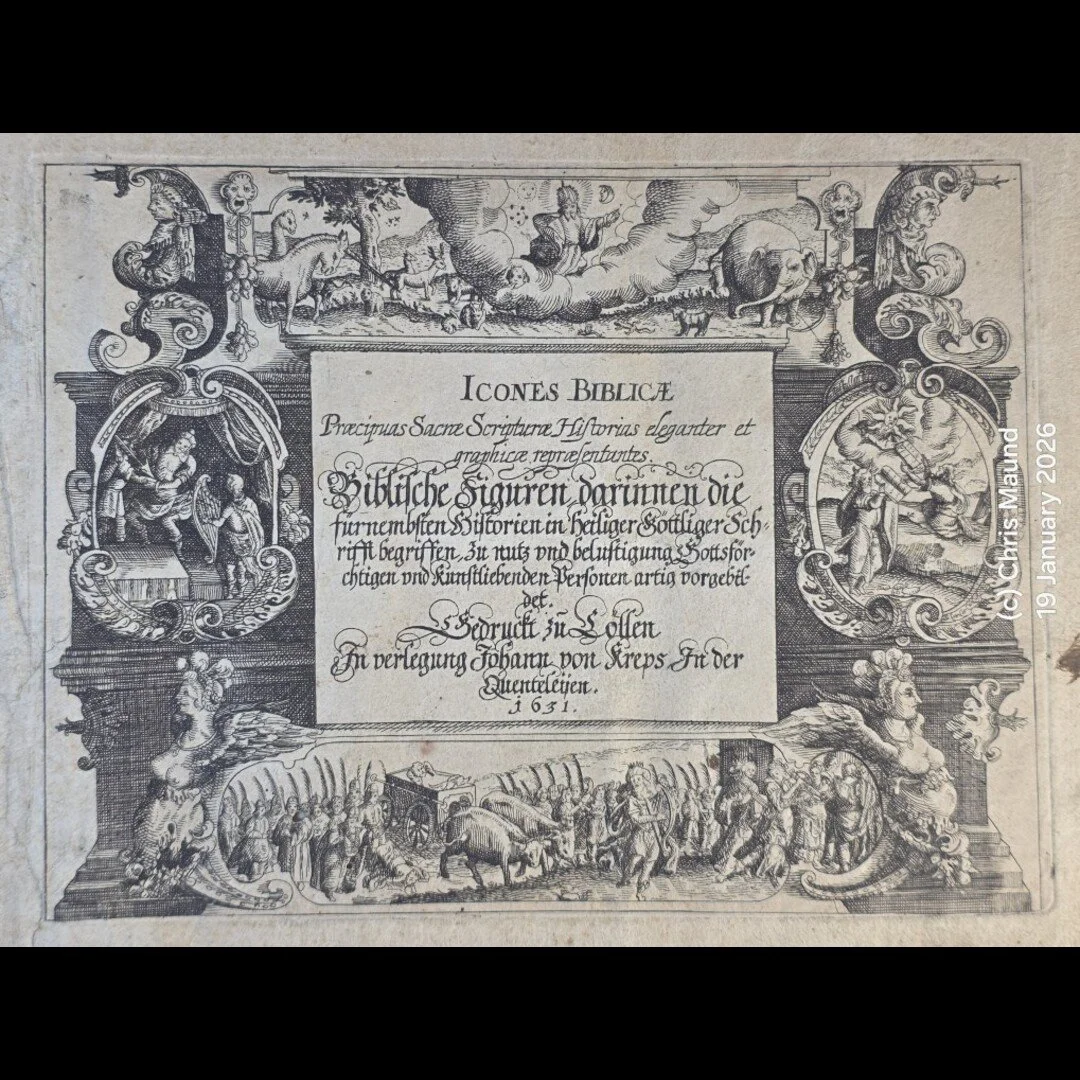
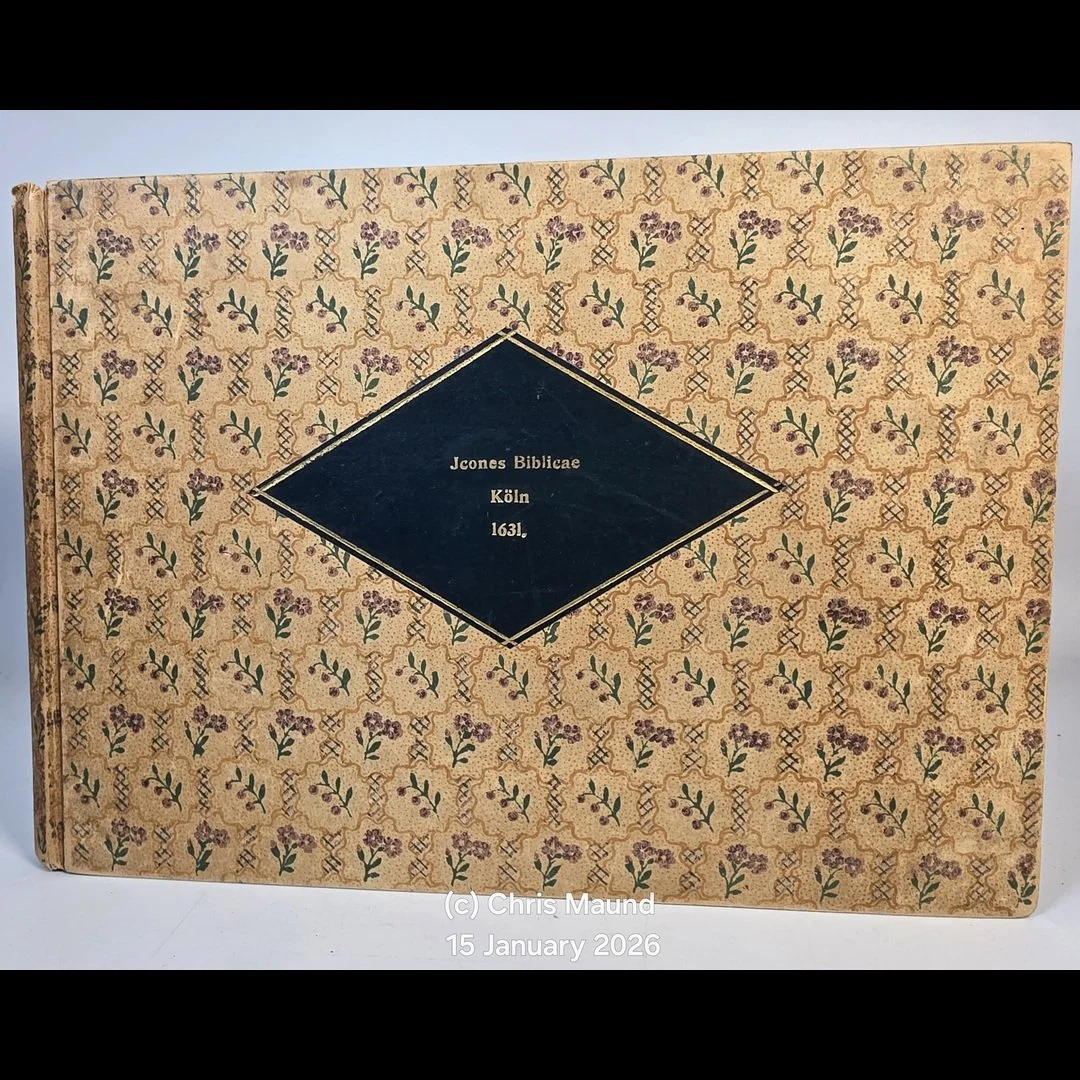
1654 Fourth Edition Leeds Library Provenance; Early Cartesian Manuscript Notes
OPERA PHILOSOPHICA
By Rene Descartes
KEY DETAILS
Condition: Very Good
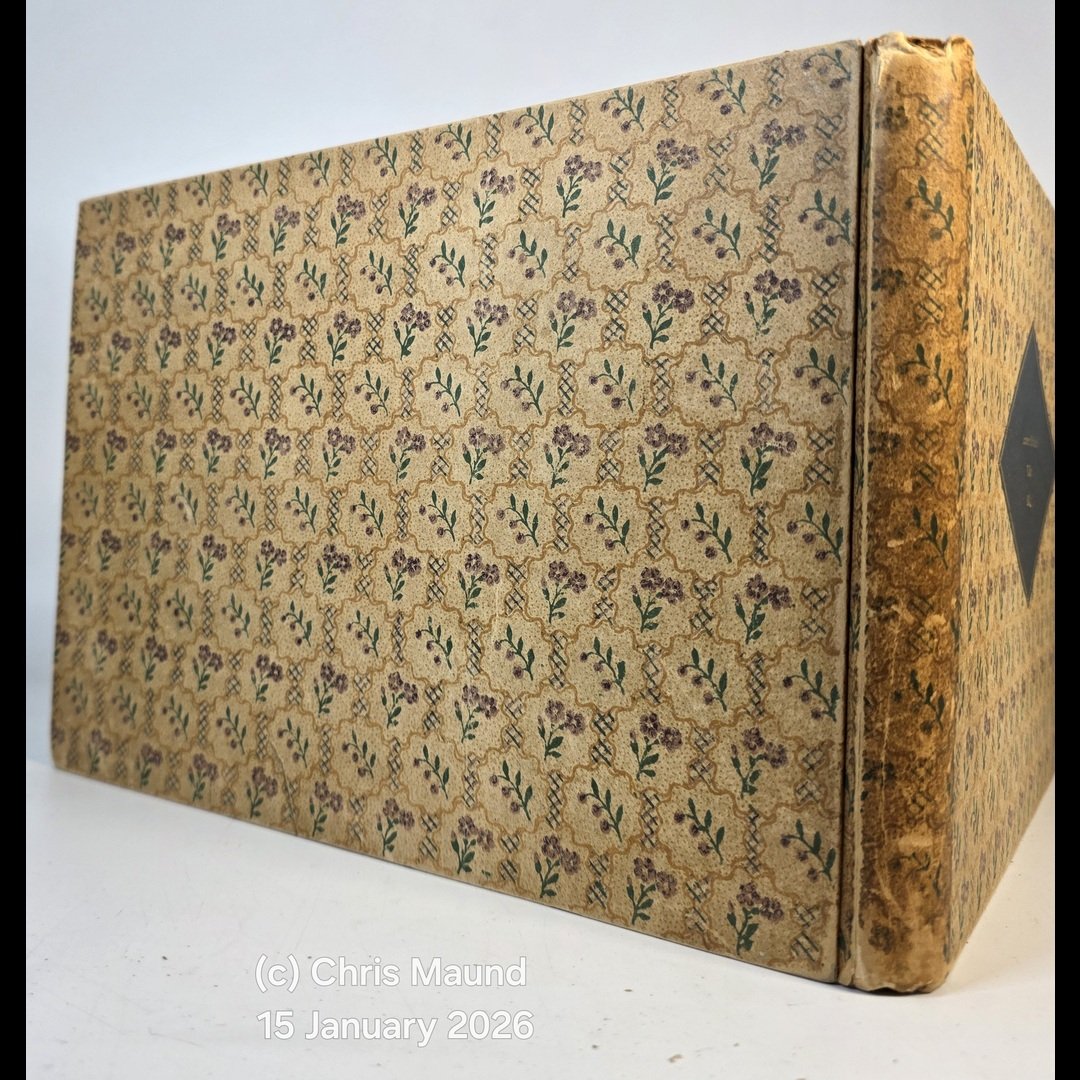
Format: Hardcover, 4to; approx 210 x 165 mm
Published By: Amstelodami [Amsterdam], [s.n.], 1664; Passiones Animae: Amsterodami, apud Elizeum Weyerstraeten, Amsterdam, 1654
Language: Latin
Provenance: THE LEEDS LIBRARY
Collation: Three principal works in one volume: Principia Philosophiae, [32], 196 pp.; Specimina Philosophiae, [14], 216 pp.; Passiones Animae, [20], 83, [5] pp. Engraved collective title and numerous woodcut scientific, mathematical, optical, meteorological, anatomical and cosmological diagrams throughout.
Dust Jacket: None, as issued
SKU: BTETM0002746
Shipping Info: Approximate Package Dimensions H: , L: 30, W: 25 (Units: cm), W: 2Kg
Tracked Shipping, Insurance Coverage as per Customer Request
DESCRIPTION
Opera Philosophica
Editio Quarta
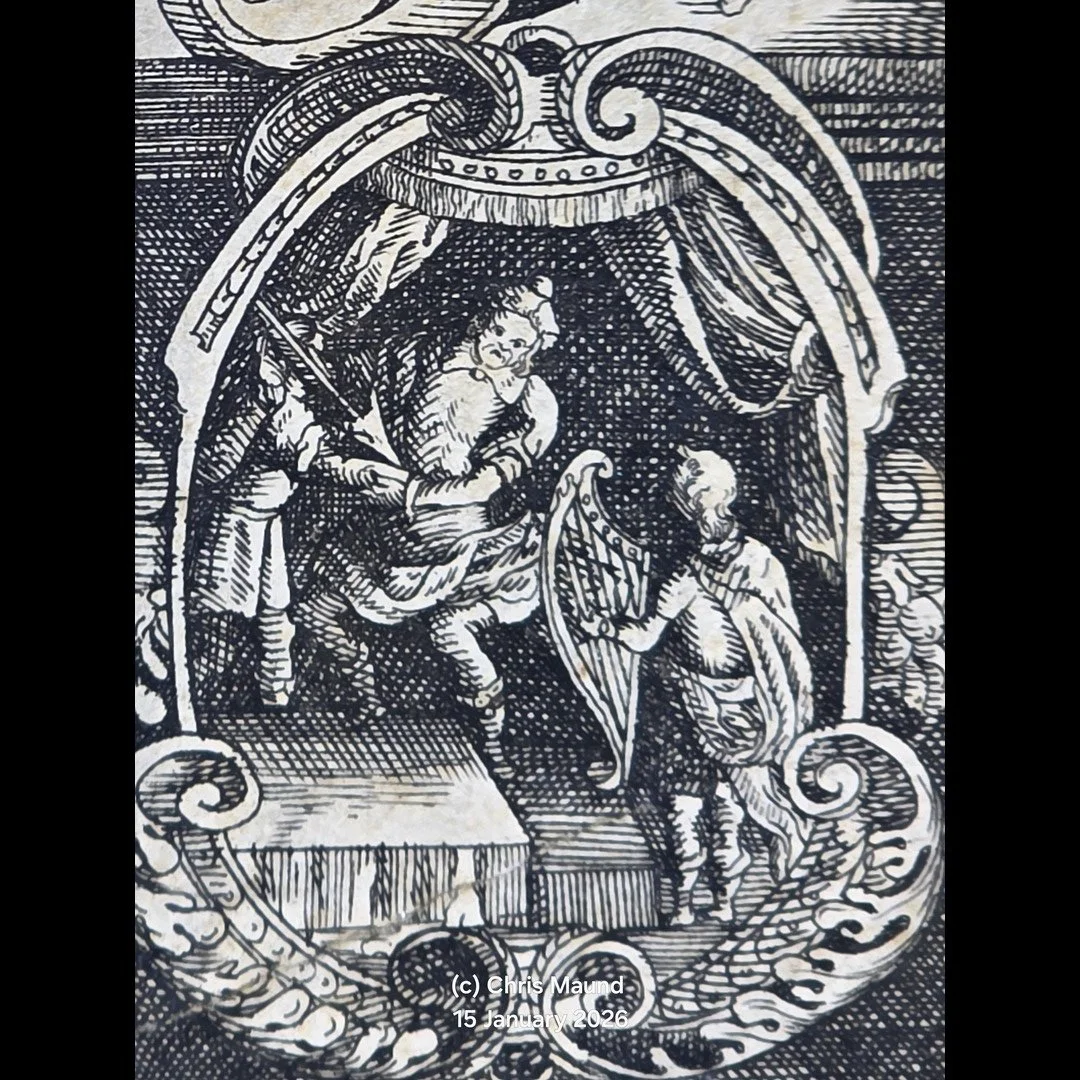
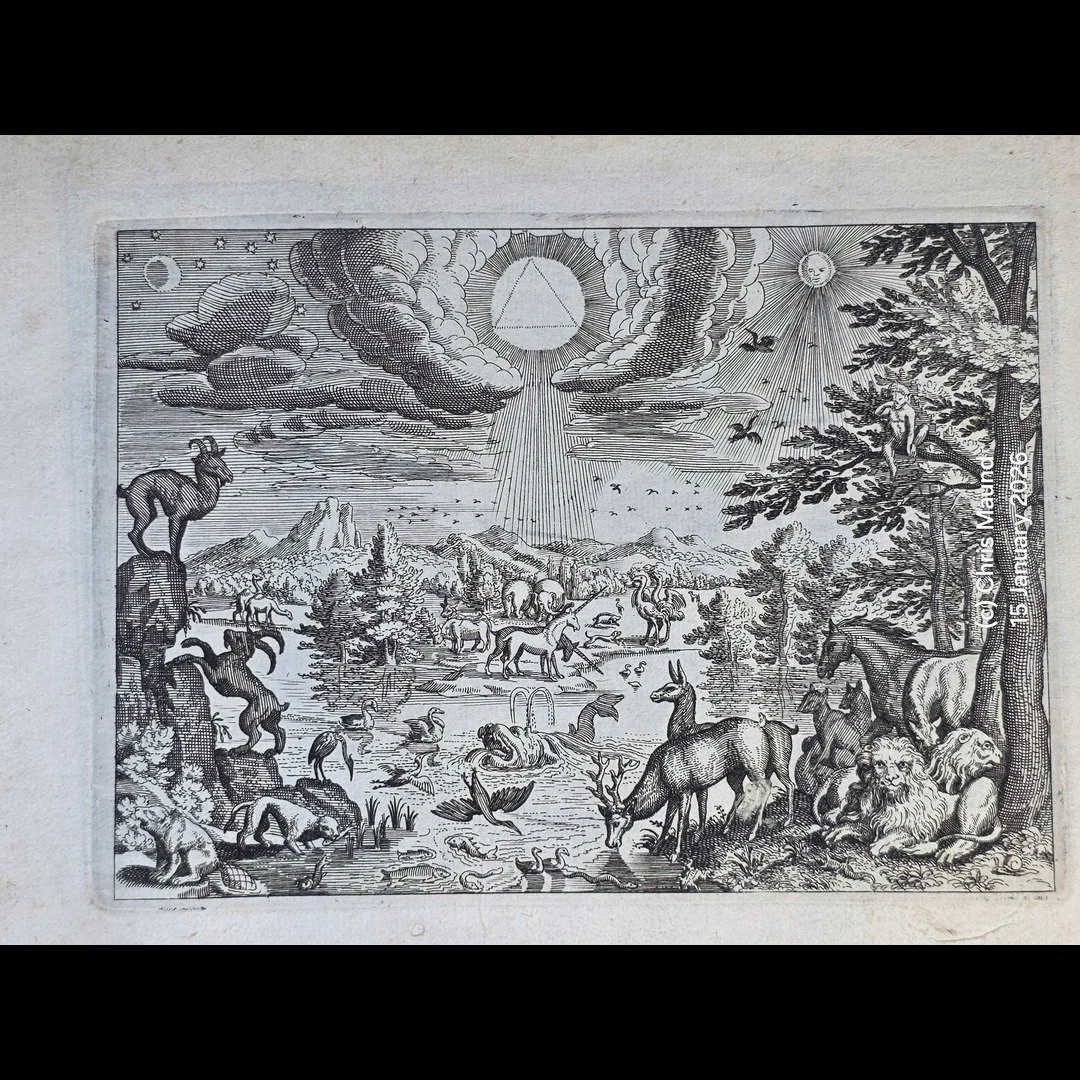
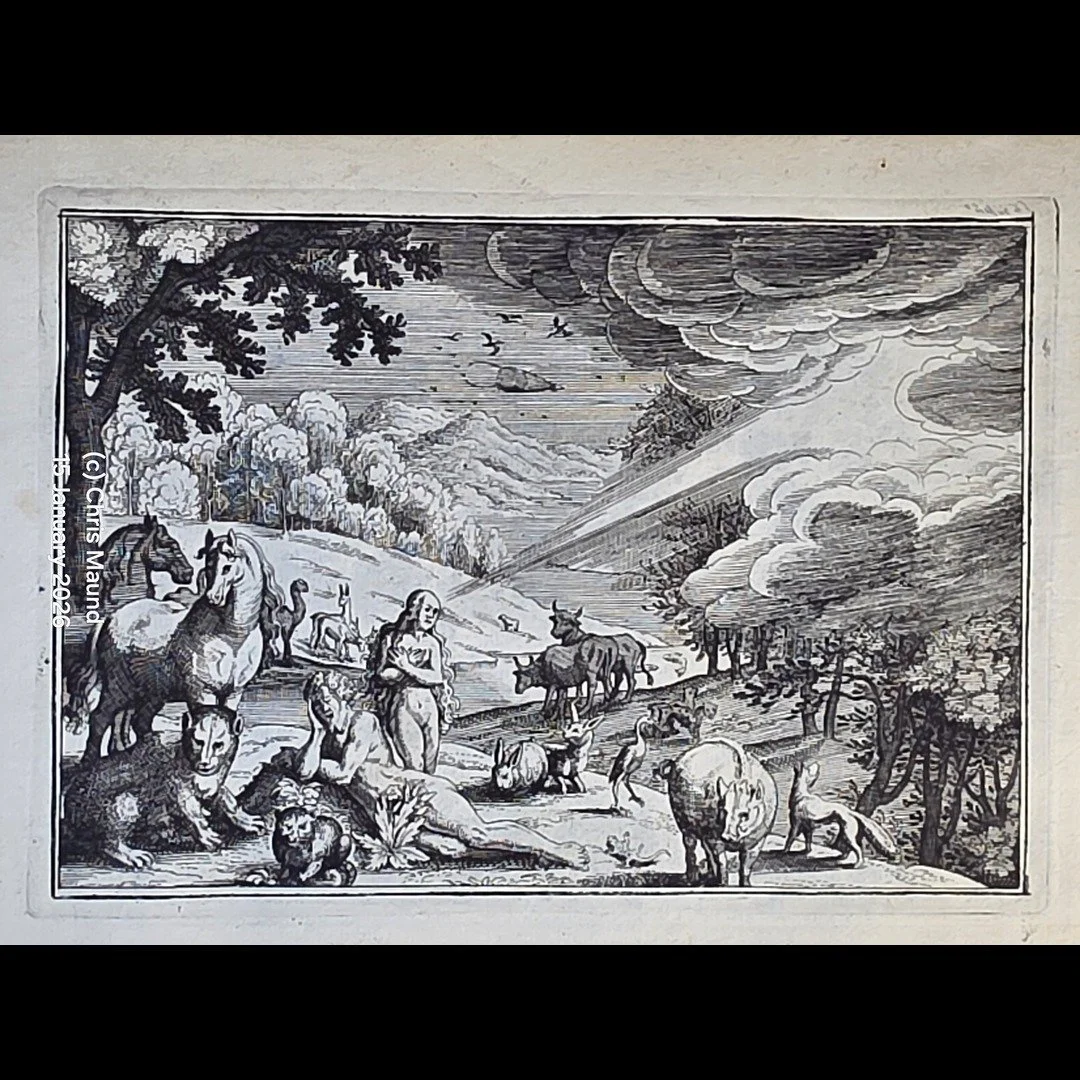
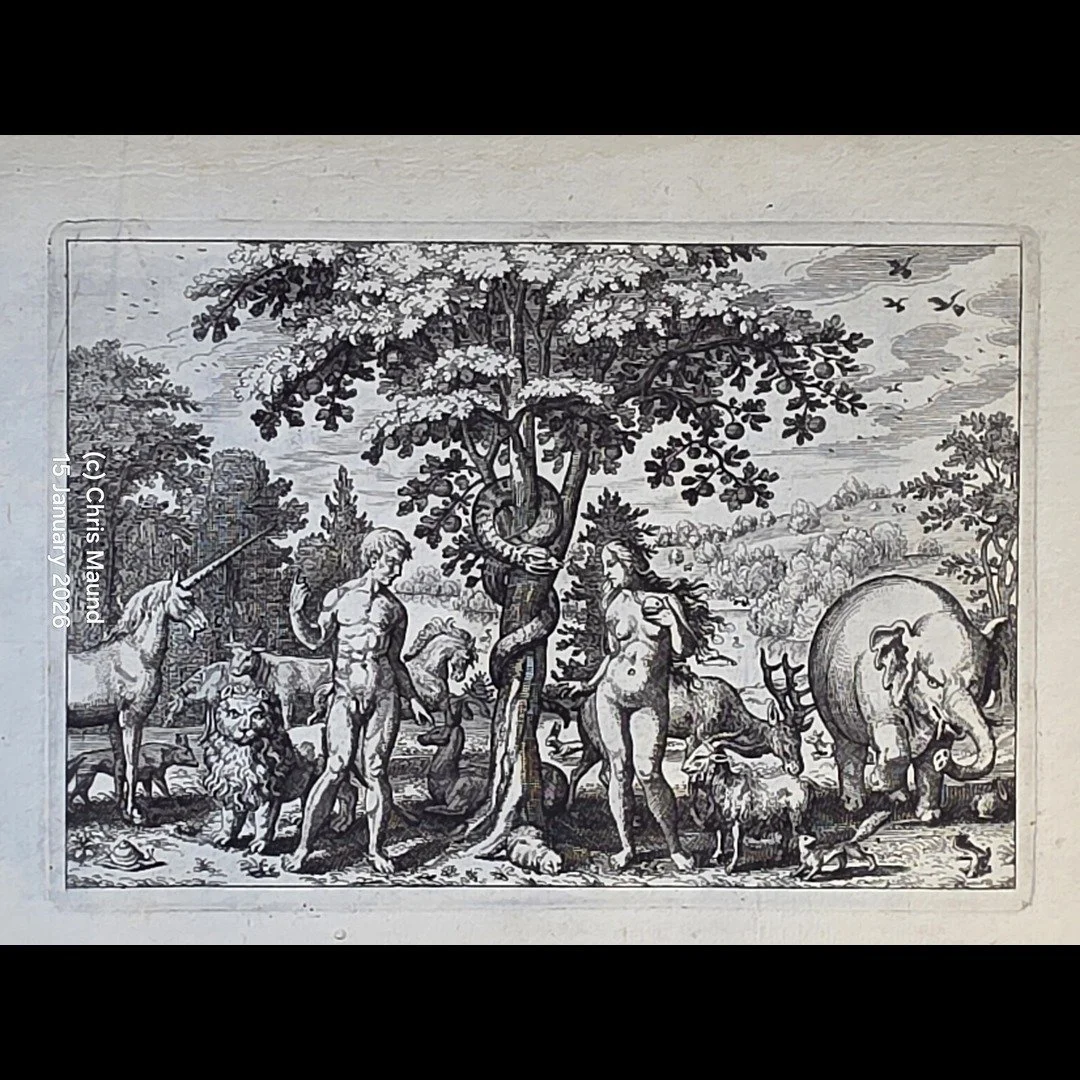
An uncommon and particularly interesting 1664 fourth edition of René Descartes's Opera Philosophica, containing three of his principal philosophical and scientific works and distinguished by both an unusual bibliographical setting and significant copy-specific provenance.
The volume comes from the historic collection of The Leeds Library, founded in 1768 and one of Britain's oldest surviving subscription libraries. It is independently recorded in the Library's nineteenth-century catalogue and retains institutional markings from its long period in the collection.
Of further interest, an early manuscript leaf bound at the rear contains a series of philosophical, physical and anatomical propositions, several engaging explicitly with Descartes and Cartesian natural philosophy. The manuscript provides unusual evidence of the active study and discussion of the scientific and philosophical ideas represented by the printed volume.
Issued under the engraved collective title: Renati Des-Cartes Opera Philosophica. Editio Quarta
the present volume contains:
I. PRINCIPIA PHILOSOPHIAE Amsterdam, 1664.
Descartes's Principia Philosophiae, first published in 1644, was his most systematic attempt to present a comprehensive philosophy of nature.
Beginning from the metaphysical foundations of certainty, matter and mind, Descartes develops a mechanical account of the physical universe founded upon extension, matter and motion. The work addresses cosmology, physics, terrestrial phenomena and the structure of the material world while rejecting much of the Aristotelian natural philosophy that had dominated European universities.
The present setting concludes correctly on p.196 with Article CCVII and FINIS.
This is bibliographically important because it differs substantially from the more commonly encountered 1664 fourth-edition setting of the Principia, which extends to approximately 222 pages.
II. SPECIMINA PHILOSOPHIAE
Seu Dissertatio de Methodo rectè regendae rationis, & veritatis in scientiis investigandae: Dioptrice, et Meteora. Amsterdam, 1664.
The Specimina Philosophiae contains the Latin versions of three works first published together in French in 1637:
Discours de la méthode
Dioptrique
Météores
The Discourse on Method became one of the foundational texts of modern philosophy. Descartes describes a method of enquiry based upon disciplined scepticism, reduction of complex problems into simpler components and the rebuilding of knowledge from propositions capable of resisting doubt.
It is within this intellectual project that Descartes formulated the principle most closely associated with him: Cogito, ergo sum — “I think, therefore I am.”
The Dioptrique investigates light, vision, lenses and refraction and is illustrated with numerous geometrical and optical figures.
The Météores applies mechanical explanations to atmospheric and terrestrial phenomena, including clouds, rain, snow, wind, halos and rainbows.
The present setting concludes on p.216 and includes additional optical material associated with the scientific and mathematical milieu surrounding Descartes, Frans van Schooten and Christiaan Huygens.
As with the Principia, this pagination differs from the more familiar 248-page setting encountered in many copies of the 1664 fourth edition.
III. PASSIONES ANIMAE Amsterdam: Elizeus Weyerstraeten, 1664.
Descartes's Passions of the Soul, originally published in 1649, was the final major philosophical work published during his lifetime.
The work examines emotion, sensation and the interaction between body and mind. Descartes attempts to explain the passions in physiological and mechanical terms, discussing the brain, nerves, bodily movement and the relationship between material processes and the immaterial soul.
It occupies an important position in the history of psychology, physiology and Cartesian dualism.
The present setting concludes on p.83, followed by the index.
AN UNCOMMON 1664 SETTING
The present copy belongs to a less commonly encountered setting of the 1664 fourth edition.
Its pagination is:
Principia Philosophiae: [32], 196 pp.
Specimina Philosophiae: [14], 216 pp.
Passiones Animae: [20], 83, [5] pp.
This differs from the more frequently catalogued configuration of approximately:
Principia Philosophiae: [36], 222 pp.
Specimina Philosophiae: [16], 248 pp.
Passiones Animae: [24], 92, [4] pp.
Recorded institutional and commercial examples confirm the existence of the 196 / 216 / 83-page configuration, demonstrating that the endings of the three works in the present copy are characteristic of this setting rather than evidence of missing text.
The title pages of the Principia and Specimina do not name a printer or publisher, while the Passiones Animae bears the imprint of Elizeus Weyerstraeten.
Although some bibliographical and institutional records attribute variants of the 1664 collective edition to Daniel Elzevir, the present volume is conservatively described according to the evidence printed within the book itself: Amsterdam: [s.n.], 1664; Passiones Animae: Elizeus Weyerstraeten, 1664.
The collective contents leaf also mentions the Meditationes and associated material which are not bound into the present volume.
However, comparable recorded copies survive with the same three principal works and the same 196 / 216 / 83-page pagination. The present volume is therefore more accurately described as a three-work configuration issued beneath the collective Opera Philosophica title, rather than simply as a defective copy of the larger assemblage.
PROVENANCE
THE LEEDS LIBRARY
The Leeds Library, with institutional markings and earlier shelf or ownership notation.
The volume is independently recorded in the Library's 1889 printed catalogue under Descartes and remained within its collections until deaccessioned, subsequently appearing at Forum Auctions, where the present copy was acquired in 2026.
Founded in 1768, The Leeds Library is one of the oldest surviving proprietary subscription libraries in Britain.
Institutions of this type played an important role in the intellectual culture of eighteenth- and nineteenth-century Britain, allowing subscribing members access to books in philosophy, science, history, politics and literature that would otherwise have been expensive or difficult to obtain privately.
The precise date on which this copy entered The Leeds Library has not yet been established.
Later nineteenth-century institutional markings associated with the volume should therefore not automatically be interpreted as accession dates: they may instead reflect cataloguing, classification or reorganisation of books already present within the Library.
Until earlier Leeds catalogues or accession records provide firmer evidence, no earlier institutional acquisition date is claimed.
EARLY MANUSCRIPT PHILOSOPHICAL & ANATOMICAL NOTES
Bound at the rear is an early manuscript leaf headed: “Quaestiones Philosophicae & Anatomicae quaedam” — “Certain philosophical and anatomical questions.”
Probably written in the late seventeenth or early eighteenth century, the leaf contains a series of concise propositions concerning philosophy, physics, anatomy and natural science.
Its form suggests an educational or scholarly context, possibly propositions intended for academic discussion, instruction or disputation.
Several statements engage directly with Cartesian natural philosophy.
Among the most striking is:
“Gravitas rectè solvitur à Cartesio.” — “Gravity is correctly explained by Descartes.”
Other propositions include:
“Omnis materia est eadem.” “All matter is the same.”
“Spatium & corpus sunt realiter idem.” “Space and body are really the same.”
“Sensatio fit in cerebro.” “Sensation occurs in the brain.”
“Motus est causa caloris.” “Motion is the cause of heat.”
“Gravitas cessat in centro.” “Gravity ceases at the centre.”
“Omnis sensatio fit motu corporeo.” “All sensation occurs through bodily motion.”
“Datur vis elastica aeris.” “There is an elastic force of air.”
“Non datur vacuum.” “There is no vacuum.”
“Dantur atomi.” “Atoms exist.”
“Impenetrabilitas essentialiter competit materiae.” “Impenetrability belongs essentially to matter.”
The manuscript is especially interesting because its propositions do not simply reproduce orthodox Cartesian doctrine.
Several statements are recognisably Cartesian, including the identity of body with extension, the denial of the vacuum and the explicit approval of Descartes's explanation of gravity.
Others — most notably “Dantur atomi”, asserting the existence of atoms — sit less comfortably with strict Cartesian matter theory.
The sheet therefore appears to document the active comparison and discussion of competing systems of seventeenth-century natural philosophy, rather than straightforward copying from Descartes's printed text.
Its consideration of gravity, matter, space, motion, heat, sensation, the brain, vacuum, atmospheric elasticity, sound, lungs and circulation places the manuscript firmly within the developing world of early modern natural philosophy and experimental science.
The manuscript may pre-date the volume's period at The Leeds Library, although no connection between the manuscript hand and the Library has yet been established.
Its presence nevertheless provides a particularly appealing piece of reception history, demonstrating that this copy was at some stage used not merely as a collected text of Descartes but as a working book in the study or discussion of philosophical and scientific ideas.
Additional early numerical and ownership-style annotations occur within the preliminaries and around the engraved collective title, together with later institutional markings.
No earlier individual owner has yet been conclusively identified.
CONDITION, COLLATION & COPY NOTES
COLLATION
Three principal works in one volume: Principia Philosophiae, [32], 196 pp.; Specimina Philosophiae, [14], 216 pp.; Passiones Animae, [20], 83, [5] pp. Engraved collective title and numerous woodcut scientific, mathematical, optical, meteorological, anatomical and cosmological diagrams throughout.
The Meditationes and associated material referred to on the collective contents leaf are not bound into the present volume, as is also the case with other recorded copies of this three-work configuration.
The three principal constituent works collate as:
I. PRINCIPIA PHILOSOPHIAE Amsterdam, 1664. [32], 196 pp. Concluding on p.196 with Article CCVII and FINIS.
II. SPECIMINA PHILOSOPHIAE Amsterdam, 1664. [14], 216 pp. Including the Dissertatio de Methodo, Dioptrice and Meteora. Concluding on p.216.
III. PASSIONES ANIMAE Amsterdam: Elizeus Weyerstraeten, 1664. [20], 83, [5] pp.
Numerous woodcut mathematical, optical, geometrical, meteorological, anatomical, mechanical and cosmological diagrams throughout.
The volume has been examined extensively and no missing text leaves have been identified within the three constituent works.
The terminal pages at 196, 216 and 83 correspond with independently recorded examples of this uncommon setting.
Later, probably nineteenth-century, half leather over purple cloth-covered boards, the spine lettered in gilt:
DES-CARTES / PRINCIPIA / PHILOSOPHIÆ
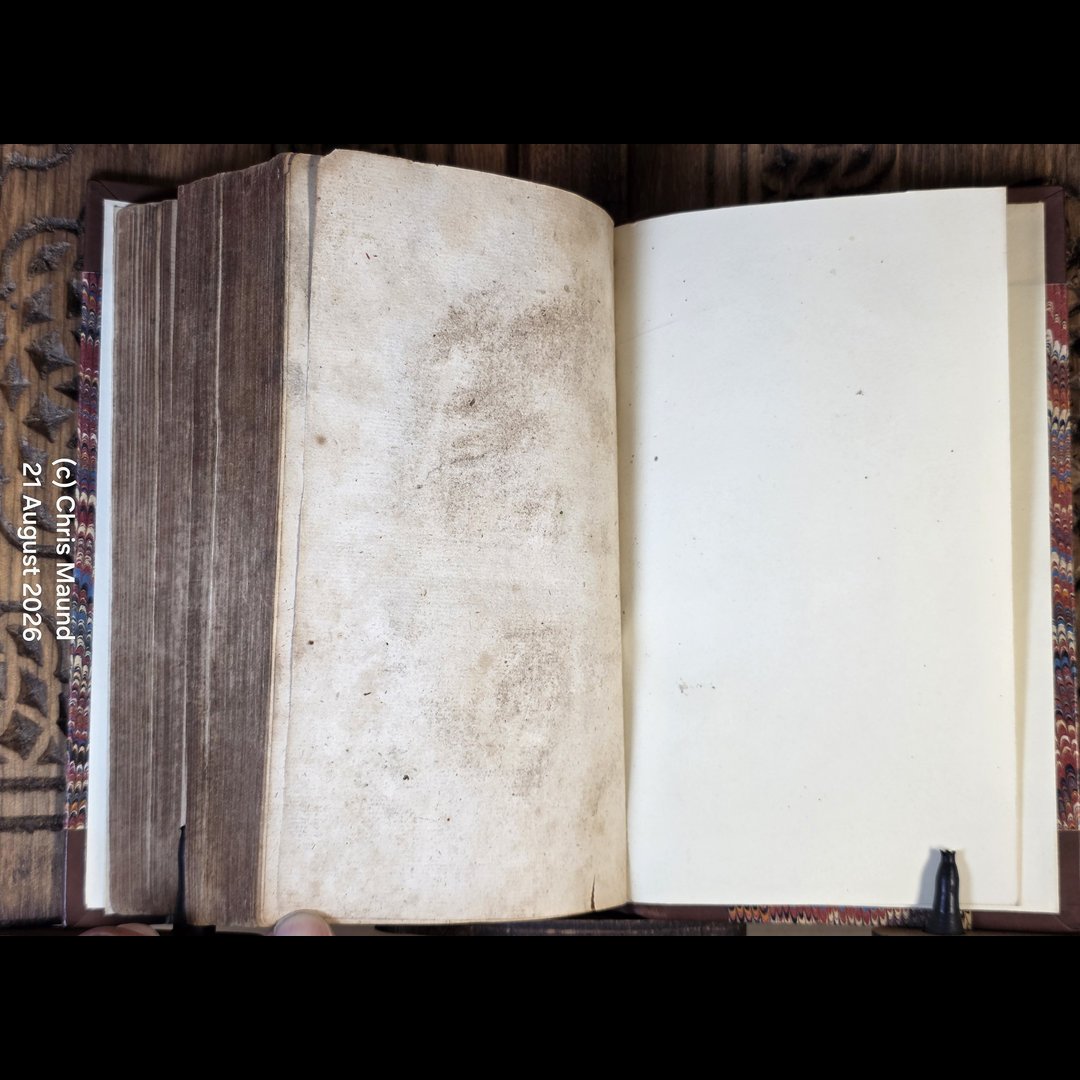
Binding considerably rubbed and worn, with surface abrasion to the leather and cloth, pronounced wear at the spine extremities and corners, and some loss at the head of the spine. Despite its worn appearance, the binding remains serviceable. The interior is considerably better preserved than the exterior suggests.
Occasional browning, foxing and spotting throughout, with some localised staining and signs of handling, particularly to the preliminary and terminal leaves.
Some general toning consistent with age.
Margins have been trimmed during rebinding but remain generally adequate, with printed text and diagrams substantially unaffected.
Early manuscript philosophical and anatomical proposition leaf bound at rear.
Leeds Library and other historical institutional or ownership markings as described above.
Overall a sound and bibliographically interesting copy, internally substantially better than its worn later binding might initially suggest.
Please see Photos as part of condition report.
REFERENCES
Guibert, Albert-Jean. Bibliographie des œuvres de René Descartes publiées au XVIIe siècle.
Van Otegem, Matthijs. A Bibliography of the Works of Descartes (1637–1704).
The Leeds Library, printed catalogue, 1889.
Compare institutional records for the uncommon 196 / 216 / 83-page setting of the 1664 Opera Philosophica.
Compare also copies of the more frequently encountered 222 / 248 / 92-page setting of the fourth edition.
SYNOPSIS
René Descartes stands at one of the decisive turning points in the intellectual history of Europe.
His writings challenged the inherited structures of medieval and Renaissance Aristotelianism and helped establish a new conception of knowledge founded upon reason, mathematical demonstration and mechanical explanation.
The works collected here demonstrate the extraordinary breadth of that project.
The Principia Philosophiae presents Descartes's mature system of metaphysics, physics and cosmology.
Matter is defined through extension; physical change is explained through motion; and the universe is treated as an intelligible mechanical system rather than one governed by hidden qualities or scholastic forms.
The Discourse on Method establishes a programme for rational investigation beginning with disciplined doubt.
Descartes proposed that accepted beliefs should be tested rather than inherited unquestioningly and that complex problems should be reduced to simpler elements before knowledge was reconstructed upon secure foundations.
From this process emerged one of the most famous statements in philosophy: Cogito, ergo sum — “I think, therefore I am.”
The Dioptrique extends this mathematical and mechanical method into the study of light, lenses, refraction and vision.
The Météores applies the same principles to weather and atmospheric phenomena.
The Passions of the Soul addresses perhaps the most difficult problem within Descartes's philosophy: the relationship between the immaterial thinking mind and the physical body.
Here he attempts to explain sensation, emotion and bodily responses through physiology and mechanical action while preserving the distinction between mind and matter that became fundamental to later discussions of consciousness.
Together these works represent a major stage in the transition from scholastic natural philosophy towards the mechanistic and mathematical conception of nature that shaped the Scientific Revolution.
The importance of the present copy extends beyond the printed texts themselves.
The early manuscript propositions preserved at the rear demonstrate that a historical reader was actively considering many of the very questions around which seventeenth-century natural philosophy revolved:
What is matter?
Can a vacuum exist?
How is gravity explained?
Is air elastic?
Do atoms exist?
How does bodily motion produce sensation?
And, explicitly:
Was Descartes right?
Combined with its subsequent provenance from The Leeds Library, the volume therefore preserves not only the publication history of Cartesian philosophy but evidence of its continued reading, discussion, collection and transmission.
AUTHOR BIO
René Descartes (1596–1650) was a French philosopher, mathematician and natural philosopher whose work profoundly influenced the development of modern philosophy and science.
Educated at the Jesuit Collège Royal Henry-Le-Grand at La Flèche, Descartes later travelled widely before spending much of his intellectual life in the Dutch Republic.
His achievements in mathematics included the development of analytic geometry, linking algebraic equations with geometrical forms and giving rise to the Cartesian coordinate system that still bears his name.
In philosophy he sought a foundation for knowledge capable of surviving radical scepticism.
By deliberately questioning everything that could conceivably be doubted, Descartes arrived at the apparently irreducible certainty of his own act of thinking: Cogito, ergo sum.
From this foundation he developed a philosophical system distinguishing thinking substance — mind — from extended substance — matter.
This Cartesian distinction became one of the defining problems of subsequent Western philosophy.
Descartes was equally ambitious as a scientist.
He attempted to explain the physical universe through matter and motion rather than through the substantial forms and occult qualities inherited from Aristotelian philosophy.
His writings encompass optics, mechanics, meteorology, cosmology, physiology, mathematics and theories of perception.
Many individual Cartesian scientific theories were eventually replaced, particularly following Newtonian physics, but the broader intellectual programme was transformative.
Later thinkers including Spinoza, Leibniz, Locke and Newton all worked within an intellectual landscape substantially reshaped by Descartes.
His insistence upon systematic reasoning, mathematical description and mechanical explanation helped define the emerging scientific and philosophical world of the seventeenth century.
1654 Fourth Edition Leeds Library Provenance; Early Cartesian Manuscript Notes
OPERA PHILOSOPHICA
By Rene Descartes
KEY DETAILS
Condition: Very Good
Format: Hardcover, 4to; approx 210 x 165 mm
Published By: Amstelodami [Amsterdam], [s.n.], 1664; Passiones Animae: Amsterodami, apud Elizeum Weyerstraeten, Amsterdam, 1654
Language: Latin
Provenance: THE LEEDS LIBRARY
Collation: Three principal works in one volume: Principia Philosophiae, [32], 196 pp.; Specimina Philosophiae, [14], 216 pp.; Passiones Animae, [20], 83, [5] pp. Engraved collective title and numerous woodcut scientific, mathematical, optical, meteorological, anatomical and cosmological diagrams throughout.
Dust Jacket: None, as issued
SKU: BTETM0002746
Shipping Info: Approximate Package Dimensions H: , L: 30, W: 25 (Units: cm), W: 2Kg
Tracked Shipping, Insurance Coverage as per Customer Request
DESCRIPTION
Opera Philosophica
Editio Quarta
An uncommon and particularly interesting 1664 fourth edition of René Descartes's Opera Philosophica, containing three of his principal philosophical and scientific works and distinguished by both an unusual bibliographical setting and significant copy-specific provenance.
The volume comes from the historic collection of The Leeds Library, founded in 1768 and one of Britain's oldest surviving subscription libraries. It is independently recorded in the Library's nineteenth-century catalogue and retains institutional markings from its long period in the collection.
Of further interest, an early manuscript leaf bound at the rear contains a series of philosophical, physical and anatomical propositions, several engaging explicitly with Descartes and Cartesian natural philosophy. The manuscript provides unusual evidence of the active study and discussion of the scientific and philosophical ideas represented by the printed volume.
Issued under the engraved collective title: Renati Des-Cartes Opera Philosophica. Editio Quarta
the present volume contains:
I. PRINCIPIA PHILOSOPHIAE Amsterdam, 1664.
Descartes's Principia Philosophiae, first published in 1644, was his most systematic attempt to present a comprehensive philosophy of nature.
Beginning from the metaphysical foundations of certainty, matter and mind, Descartes develops a mechanical account of the physical universe founded upon extension, matter and motion. The work addresses cosmology, physics, terrestrial phenomena and the structure of the material world while rejecting much of the Aristotelian natural philosophy that had dominated European universities.
The present setting concludes correctly on p.196 with Article CCVII and FINIS.
This is bibliographically important because it differs substantially from the more commonly encountered 1664 fourth-edition setting of the Principia, which extends to approximately 222 pages.
II. SPECIMINA PHILOSOPHIAE
Seu Dissertatio de Methodo rectè regendae rationis, & veritatis in scientiis investigandae: Dioptrice, et Meteora. Amsterdam, 1664.
The Specimina Philosophiae contains the Latin versions of three works first published together in French in 1637:
Discours de la méthode
Dioptrique
Météores
The Discourse on Method became one of the foundational texts of modern philosophy. Descartes describes a method of enquiry based upon disciplined scepticism, reduction of complex problems into simpler components and the rebuilding of knowledge from propositions capable of resisting doubt.
It is within this intellectual project that Descartes formulated the principle most closely associated with him: Cogito, ergo sum — “I think, therefore I am.”
The Dioptrique investigates light, vision, lenses and refraction and is illustrated with numerous geometrical and optical figures.
The Météores applies mechanical explanations to atmospheric and terrestrial phenomena, including clouds, rain, snow, wind, halos and rainbows.
The present setting concludes on p.216 and includes additional optical material associated with the scientific and mathematical milieu surrounding Descartes, Frans van Schooten and Christiaan Huygens.
As with the Principia, this pagination differs from the more familiar 248-page setting encountered in many copies of the 1664 fourth edition.
III. PASSIONES ANIMAE Amsterdam: Elizeus Weyerstraeten, 1664.
Descartes's Passions of the Soul, originally published in 1649, was the final major philosophical work published during his lifetime.
The work examines emotion, sensation and the interaction between body and mind. Descartes attempts to explain the passions in physiological and mechanical terms, discussing the brain, nerves, bodily movement and the relationship between material processes and the immaterial soul.
It occupies an important position in the history of psychology, physiology and Cartesian dualism.
The present setting concludes on p.83, followed by the index.
AN UNCOMMON 1664 SETTING
The present copy belongs to a less commonly encountered setting of the 1664 fourth edition.
Its pagination is:
Principia Philosophiae: [32], 196 pp.
Specimina Philosophiae: [14], 216 pp.
Passiones Animae: [20], 83, [5] pp.
This differs from the more frequently catalogued configuration of approximately:
Principia Philosophiae: [36], 222 pp.
Specimina Philosophiae: [16], 248 pp.
Passiones Animae: [24], 92, [4] pp.
Recorded institutional and commercial examples confirm the existence of the 196 / 216 / 83-page configuration, demonstrating that the endings of the three works in the present copy are characteristic of this setting rather than evidence of missing text.
The title pages of the Principia and Specimina do not name a printer or publisher, while the Passiones Animae bears the imprint of Elizeus Weyerstraeten.
Although some bibliographical and institutional records attribute variants of the 1664 collective edition to Daniel Elzevir, the present volume is conservatively described according to the evidence printed within the book itself: Amsterdam: [s.n.], 1664; Passiones Animae: Elizeus Weyerstraeten, 1664.
The collective contents leaf also mentions the Meditationes and associated material which are not bound into the present volume.
However, comparable recorded copies survive with the same three principal works and the same 196 / 216 / 83-page pagination. The present volume is therefore more accurately described as a three-work configuration issued beneath the collective Opera Philosophica title, rather than simply as a defective copy of the larger assemblage.
PROVENANCE
THE LEEDS LIBRARY
The Leeds Library, with institutional markings and earlier shelf or ownership notation.
The volume is independently recorded in the Library's 1889 printed catalogue under Descartes and remained within its collections until deaccessioned, subsequently appearing at Forum Auctions, where the present copy was acquired in 2026.
Founded in 1768, The Leeds Library is one of the oldest surviving proprietary subscription libraries in Britain.
Institutions of this type played an important role in the intellectual culture of eighteenth- and nineteenth-century Britain, allowing subscribing members access to books in philosophy, science, history, politics and literature that would otherwise have been expensive or difficult to obtain privately.
The precise date on which this copy entered The Leeds Library has not yet been established.
Later nineteenth-century institutional markings associated with the volume should therefore not automatically be interpreted as accession dates: they may instead reflect cataloguing, classification or reorganisation of books already present within the Library.
Until earlier Leeds catalogues or accession records provide firmer evidence, no earlier institutional acquisition date is claimed.
EARLY MANUSCRIPT PHILOSOPHICAL & ANATOMICAL NOTES
Bound at the rear is an early manuscript leaf headed: “Quaestiones Philosophicae & Anatomicae quaedam” — “Certain philosophical and anatomical questions.”
Probably written in the late seventeenth or early eighteenth century, the leaf contains a series of concise propositions concerning philosophy, physics, anatomy and natural science.
Its form suggests an educational or scholarly context, possibly propositions intended for academic discussion, instruction or disputation.
Several statements engage directly with Cartesian natural philosophy.
Among the most striking is:
“Gravitas rectè solvitur à Cartesio.” — “Gravity is correctly explained by Descartes.”
Other propositions include:
“Omnis materia est eadem.” “All matter is the same.”
“Spatium & corpus sunt realiter idem.” “Space and body are really the same.”
“Sensatio fit in cerebro.” “Sensation occurs in the brain.”
“Motus est causa caloris.” “Motion is the cause of heat.”
“Gravitas cessat in centro.” “Gravity ceases at the centre.”
“Omnis sensatio fit motu corporeo.” “All sensation occurs through bodily motion.”
“Datur vis elastica aeris.” “There is an elastic force of air.”
“Non datur vacuum.” “There is no vacuum.”
“Dantur atomi.” “Atoms exist.”
“Impenetrabilitas essentialiter competit materiae.” “Impenetrability belongs essentially to matter.”
The manuscript is especially interesting because its propositions do not simply reproduce orthodox Cartesian doctrine.
Several statements are recognisably Cartesian, including the identity of body with extension, the denial of the vacuum and the explicit approval of Descartes's explanation of gravity.
Others — most notably “Dantur atomi”, asserting the existence of atoms — sit less comfortably with strict Cartesian matter theory.
The sheet therefore appears to document the active comparison and discussion of competing systems of seventeenth-century natural philosophy, rather than straightforward copying from Descartes's printed text.
Its consideration of gravity, matter, space, motion, heat, sensation, the brain, vacuum, atmospheric elasticity, sound, lungs and circulation places the manuscript firmly within the developing world of early modern natural philosophy and experimental science.
The manuscript may pre-date the volume's period at The Leeds Library, although no connection between the manuscript hand and the Library has yet been established.
Its presence nevertheless provides a particularly appealing piece of reception history, demonstrating that this copy was at some stage used not merely as a collected text of Descartes but as a working book in the study or discussion of philosophical and scientific ideas.
Additional early numerical and ownership-style annotations occur within the preliminaries and around the engraved collective title, together with later institutional markings.
No earlier individual owner has yet been conclusively identified.
CONDITION, COLLATION & COPY NOTES
COLLATION
Three principal works in one volume: Principia Philosophiae, [32], 196 pp.; Specimina Philosophiae, [14], 216 pp.; Passiones Animae, [20], 83, [5] pp. Engraved collective title and numerous woodcut scientific, mathematical, optical, meteorological, anatomical and cosmological diagrams throughout.
The Meditationes and associated material referred to on the collective contents leaf are not bound into the present volume, as is also the case with other recorded copies of this three-work configuration.
The three principal constituent works collate as:
I. PRINCIPIA PHILOSOPHIAE Amsterdam, 1664. [32], 196 pp. Concluding on p.196 with Article CCVII and FINIS.
II. SPECIMINA PHILOSOPHIAE Amsterdam, 1664. [14], 216 pp. Including the Dissertatio de Methodo, Dioptrice and Meteora. Concluding on p.216.
III. PASSIONES ANIMAE Amsterdam: Elizeus Weyerstraeten, 1664. [20], 83, [5] pp.
Numerous woodcut mathematical, optical, geometrical, meteorological, anatomical, mechanical and cosmological diagrams throughout.
The volume has been examined extensively and no missing text leaves have been identified within the three constituent works.
The terminal pages at 196, 216 and 83 correspond with independently recorded examples of this uncommon setting.
Later, probably nineteenth-century, half leather over purple cloth-covered boards, the spine lettered in gilt:
DES-CARTES / PRINCIPIA / PHILOSOPHIÆ
Binding considerably rubbed and worn, with surface abrasion to the leather and cloth, pronounced wear at the spine extremities and corners, and some loss at the head of the spine. Despite its worn appearance, the binding remains serviceable. The interior is considerably better preserved than the exterior suggests.
Occasional browning, foxing and spotting throughout, with some localised staining and signs of handling, particularly to the preliminary and terminal leaves.
Some general toning consistent with age.
Margins have been trimmed during rebinding but remain generally adequate, with printed text and diagrams substantially unaffected.
Early manuscript philosophical and anatomical proposition leaf bound at rear.
Leeds Library and other historical institutional or ownership markings as described above.
Overall a sound and bibliographically interesting copy, internally substantially better than its worn later binding might initially suggest.
Please see Photos as part of condition report.
REFERENCES
Guibert, Albert-Jean. Bibliographie des œuvres de René Descartes publiées au XVIIe siècle.
Van Otegem, Matthijs. A Bibliography of the Works of Descartes (1637–1704).
The Leeds Library, printed catalogue, 1889.
Compare institutional records for the uncommon 196 / 216 / 83-page setting of the 1664 Opera Philosophica.
Compare also copies of the more frequently encountered 222 / 248 / 92-page setting of the fourth edition.
SYNOPSIS
René Descartes stands at one of the decisive turning points in the intellectual history of Europe.
His writings challenged the inherited structures of medieval and Renaissance Aristotelianism and helped establish a new conception of knowledge founded upon reason, mathematical demonstration and mechanical explanation.
The works collected here demonstrate the extraordinary breadth of that project.
The Principia Philosophiae presents Descartes's mature system of metaphysics, physics and cosmology.
Matter is defined through extension; physical change is explained through motion; and the universe is treated as an intelligible mechanical system rather than one governed by hidden qualities or scholastic forms.
The Discourse on Method establishes a programme for rational investigation beginning with disciplined doubt.
Descartes proposed that accepted beliefs should be tested rather than inherited unquestioningly and that complex problems should be reduced to simpler elements before knowledge was reconstructed upon secure foundations.
From this process emerged one of the most famous statements in philosophy: Cogito, ergo sum — “I think, therefore I am.”
The Dioptrique extends this mathematical and mechanical method into the study of light, lenses, refraction and vision.
The Météores applies the same principles to weather and atmospheric phenomena.
The Passions of the Soul addresses perhaps the most difficult problem within Descartes's philosophy: the relationship between the immaterial thinking mind and the physical body.
Here he attempts to explain sensation, emotion and bodily responses through physiology and mechanical action while preserving the distinction between mind and matter that became fundamental to later discussions of consciousness.
Together these works represent a major stage in the transition from scholastic natural philosophy towards the mechanistic and mathematical conception of nature that shaped the Scientific Revolution.
The importance of the present copy extends beyond the printed texts themselves.
The early manuscript propositions preserved at the rear demonstrate that a historical reader was actively considering many of the very questions around which seventeenth-century natural philosophy revolved:
What is matter?
Can a vacuum exist?
How is gravity explained?
Is air elastic?
Do atoms exist?
How does bodily motion produce sensation?
And, explicitly:
Was Descartes right?
Combined with its subsequent provenance from The Leeds Library, the volume therefore preserves not only the publication history of Cartesian philosophy but evidence of its continued reading, discussion, collection and transmission.
AUTHOR BIO
René Descartes (1596–1650) was a French philosopher, mathematician and natural philosopher whose work profoundly influenced the development of modern philosophy and science.
Educated at the Jesuit Collège Royal Henry-Le-Grand at La Flèche, Descartes later travelled widely before spending much of his intellectual life in the Dutch Republic.
His achievements in mathematics included the development of analytic geometry, linking algebraic equations with geometrical forms and giving rise to the Cartesian coordinate system that still bears his name.
In philosophy he sought a foundation for knowledge capable of surviving radical scepticism.
By deliberately questioning everything that could conceivably be doubted, Descartes arrived at the apparently irreducible certainty of his own act of thinking: Cogito, ergo sum.
From this foundation he developed a philosophical system distinguishing thinking substance — mind — from extended substance — matter.
This Cartesian distinction became one of the defining problems of subsequent Western philosophy.
Descartes was equally ambitious as a scientist.
He attempted to explain the physical universe through matter and motion rather than through the substantial forms and occult qualities inherited from Aristotelian philosophy.
His writings encompass optics, mechanics, meteorology, cosmology, physiology, mathematics and theories of perception.
Many individual Cartesian scientific theories were eventually replaced, particularly following Newtonian physics, but the broader intellectual programme was transformative.
Later thinkers including Spinoza, Leibniz, Locke and Newton all worked within an intellectual landscape substantially reshaped by Descartes.
His insistence upon systematic reasoning, mathematical description and mechanical explanation helped define the emerging scientific and philosophical world of the seventeenth century.

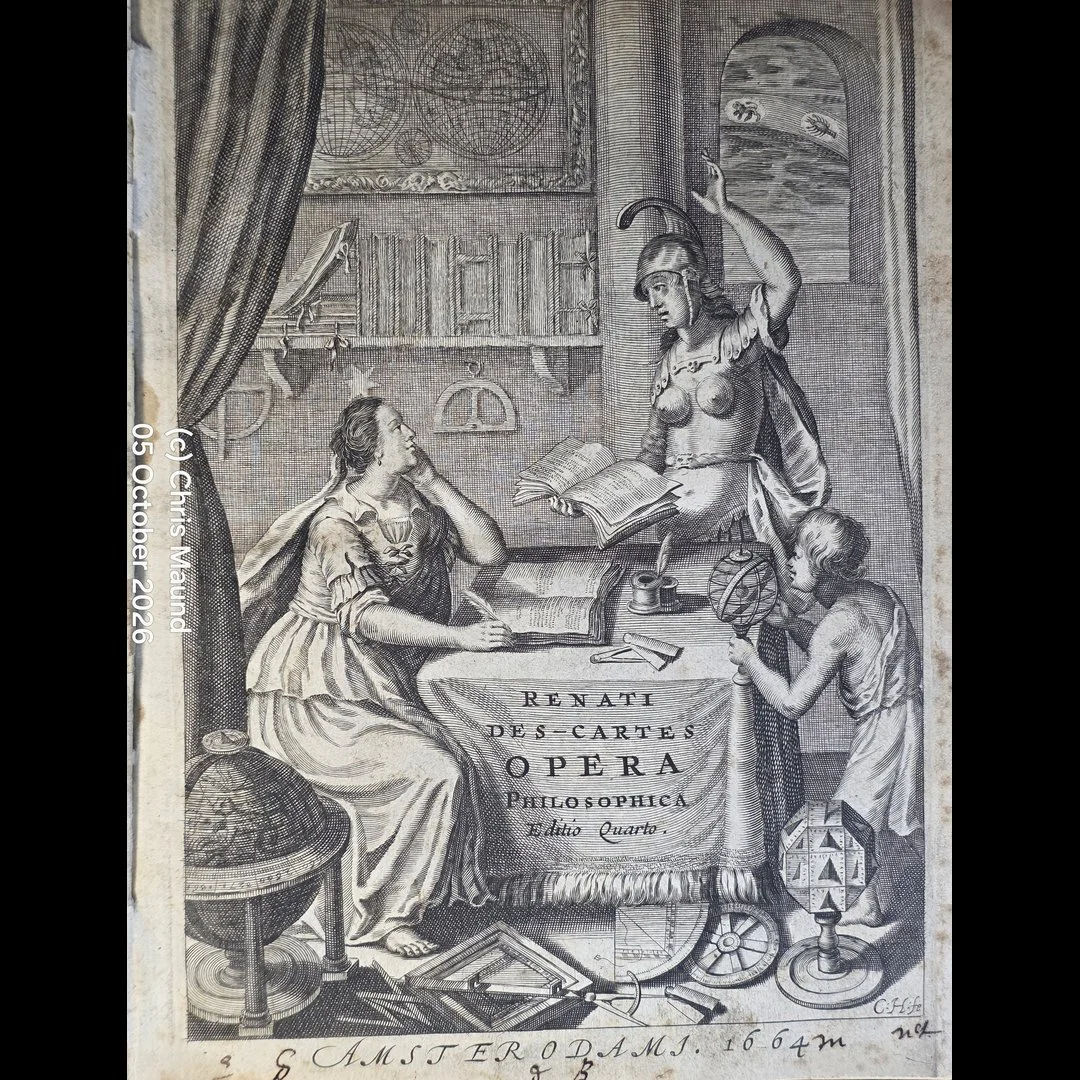 Image 1 of 88
 Image 2 of 88
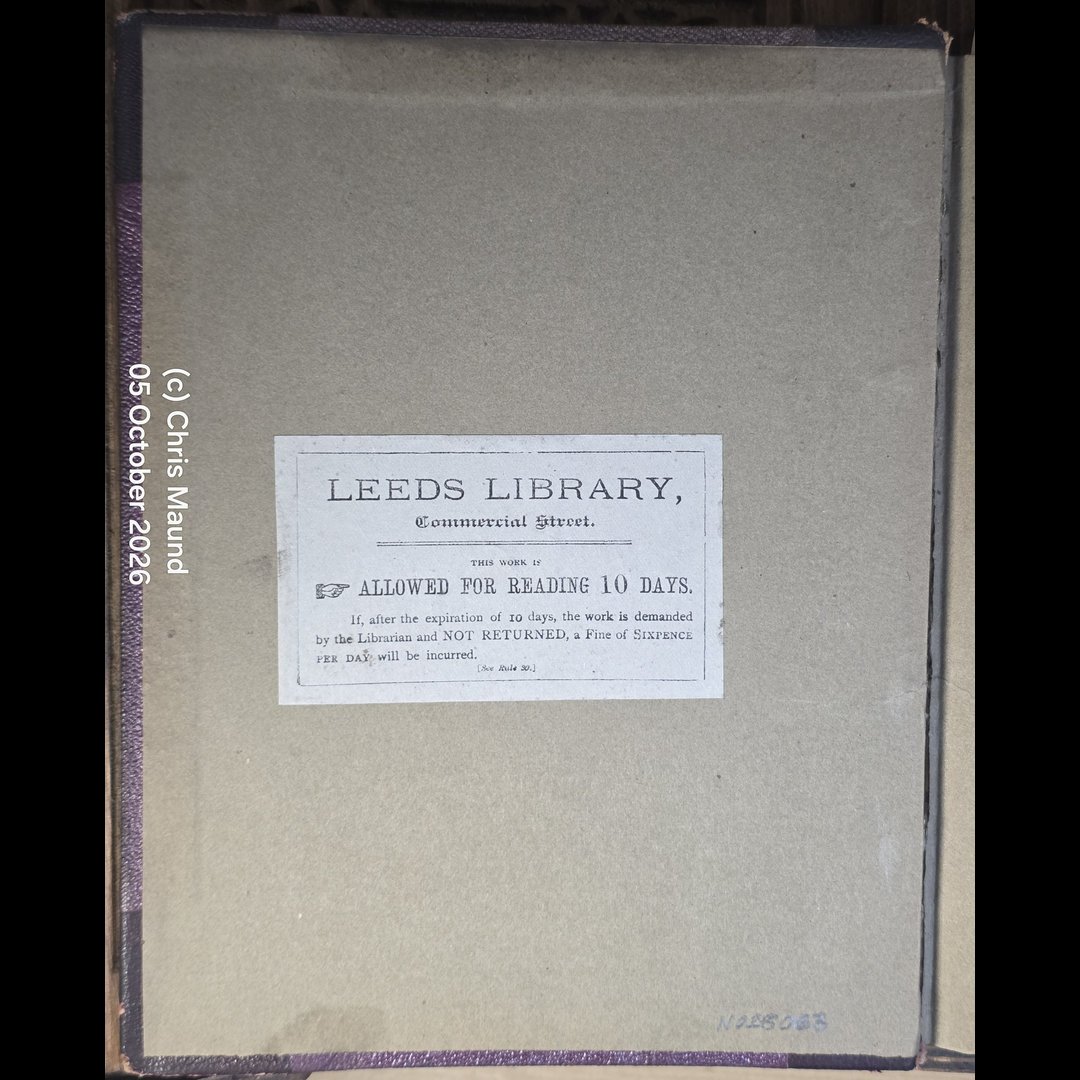 Image 3 of 88
 Image 4 of 88
 Image 5 of 88
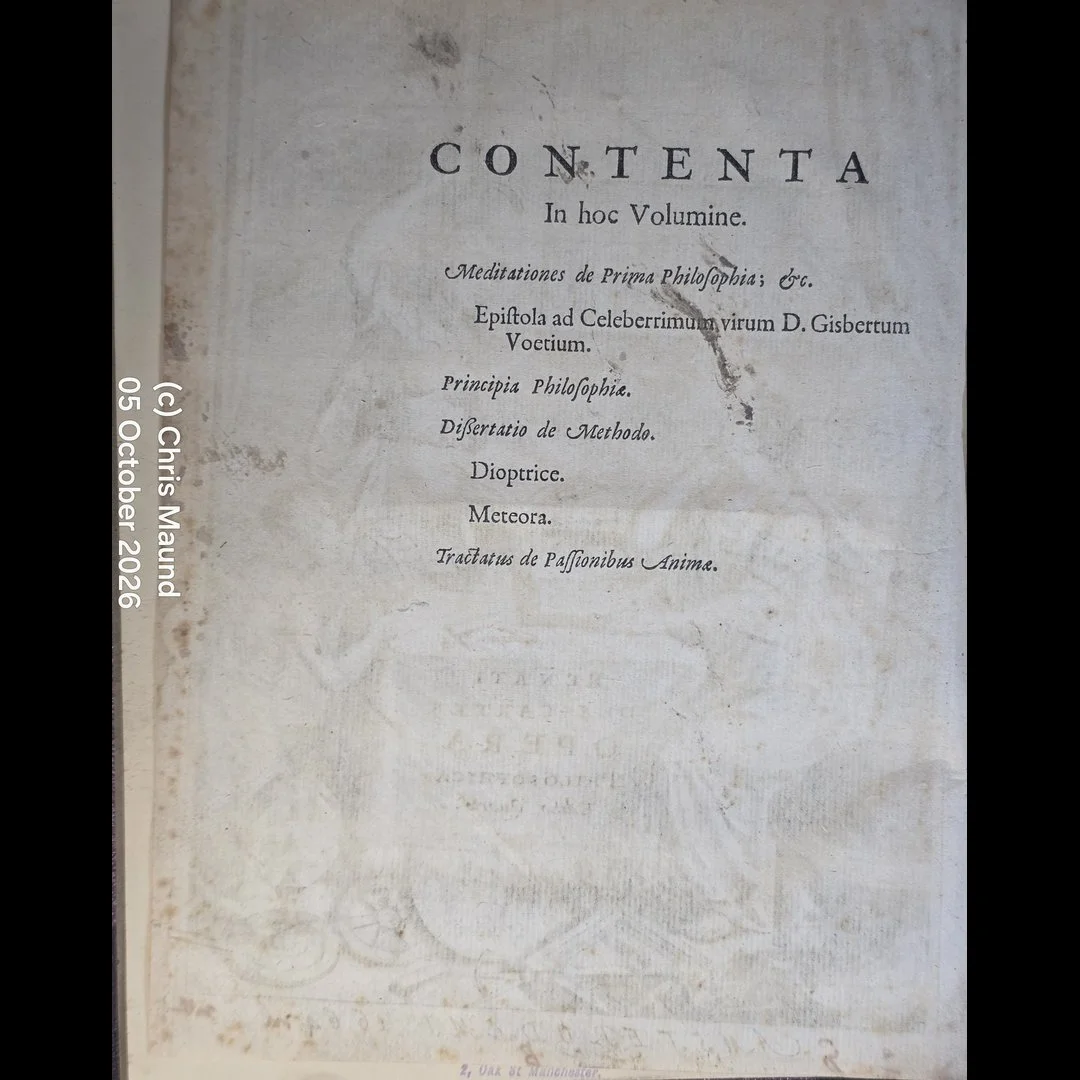 Image 6 of 88
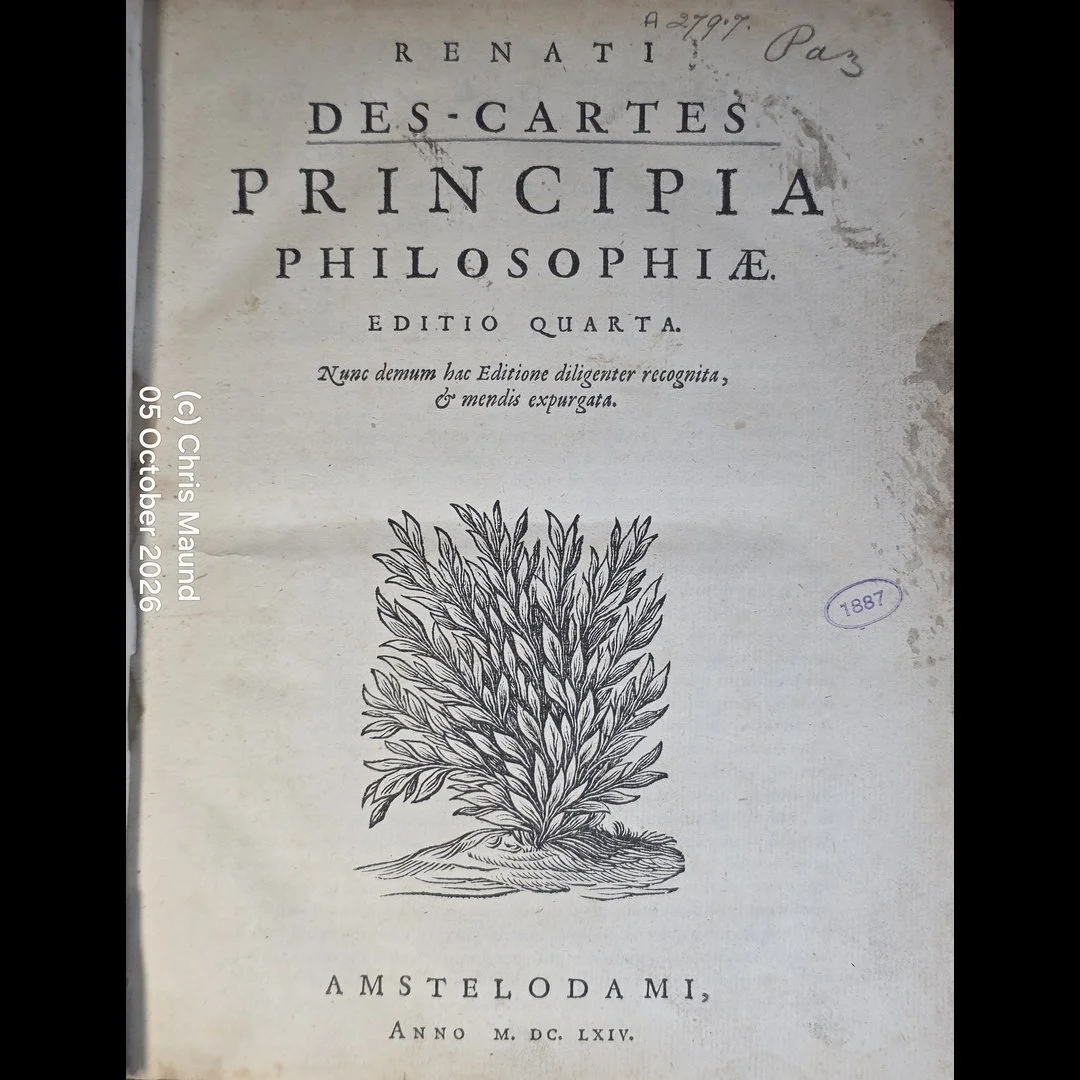 Image 7 of 88
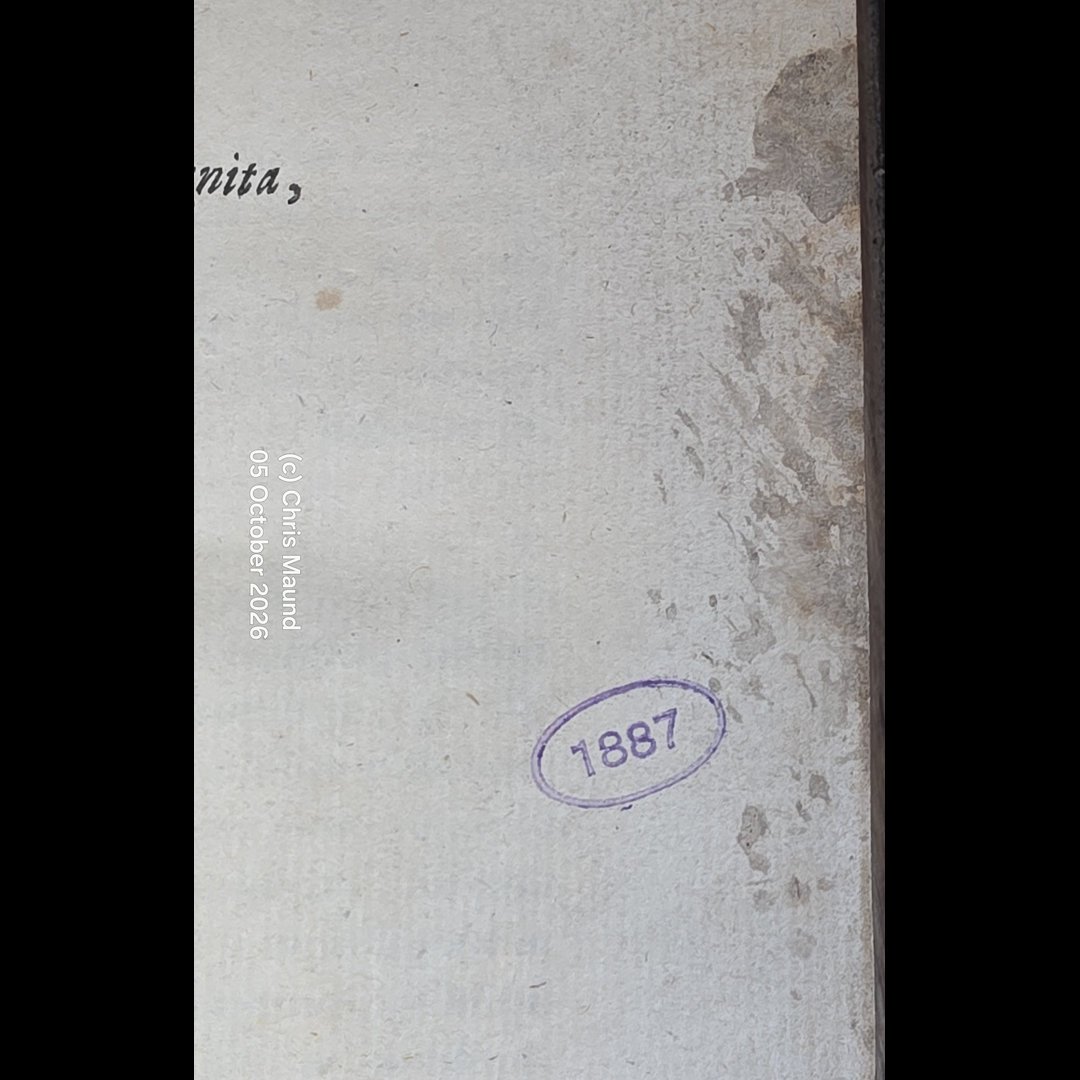 Image 8 of 88
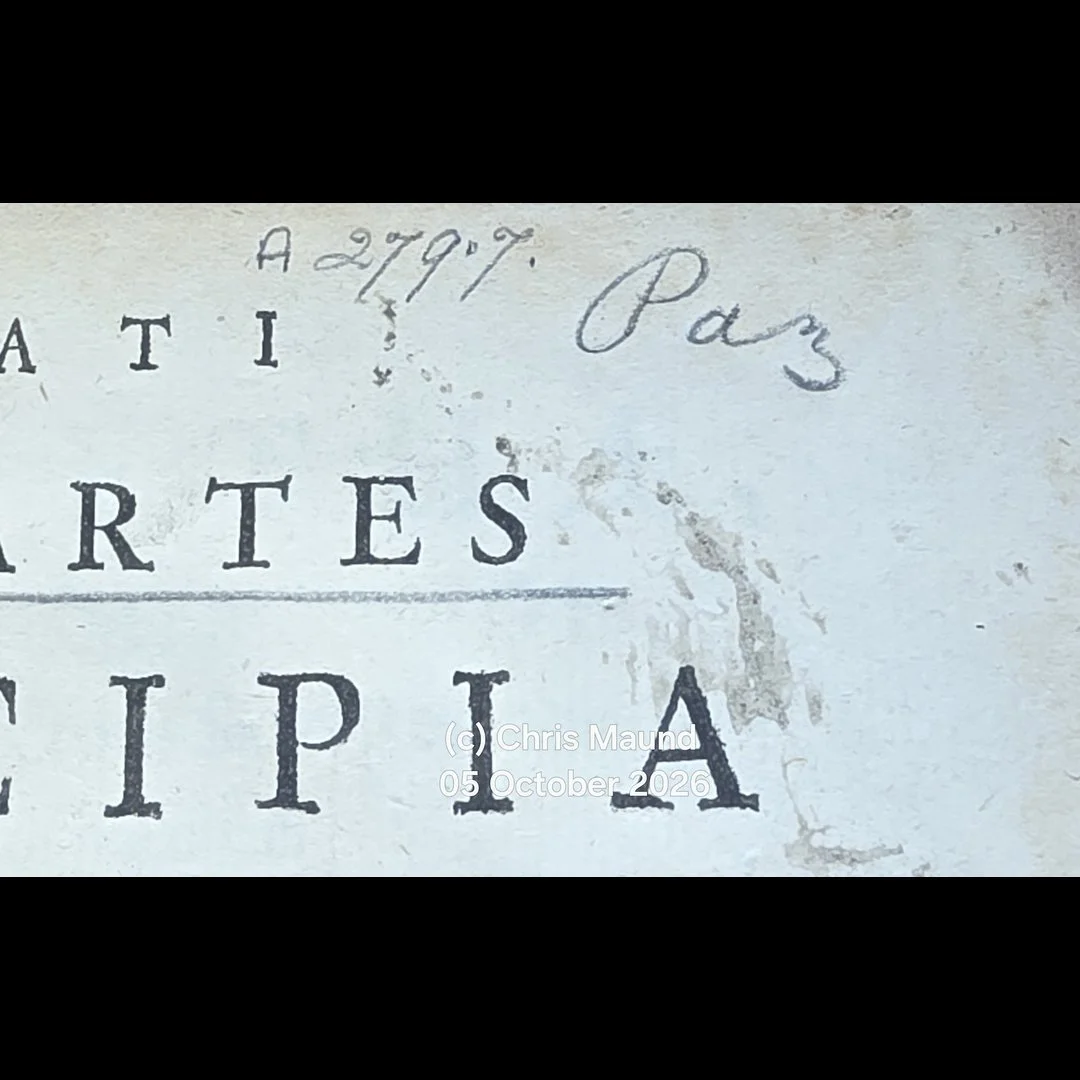 Image 9 of 88
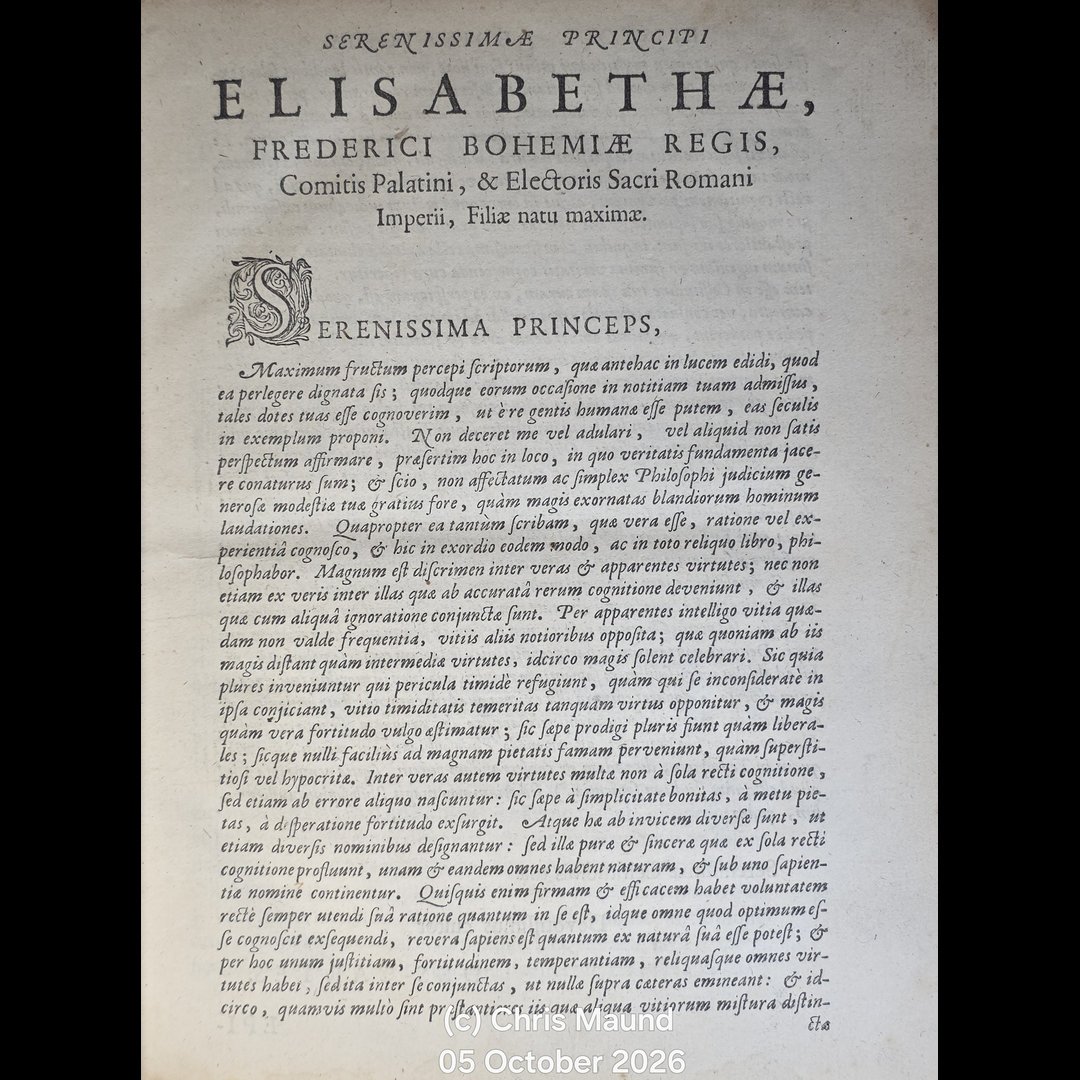 Image 10 of 88
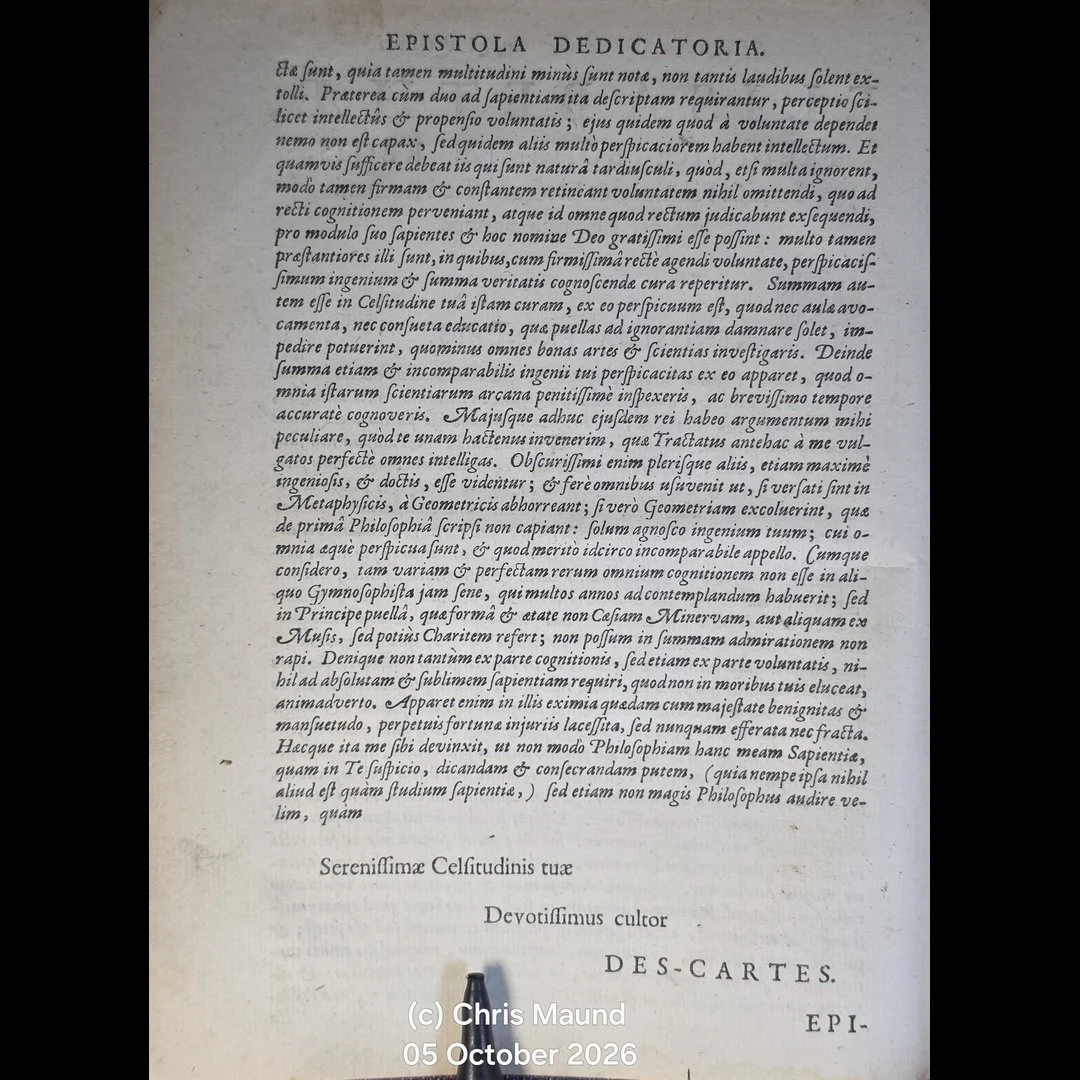 Image 11 of 88
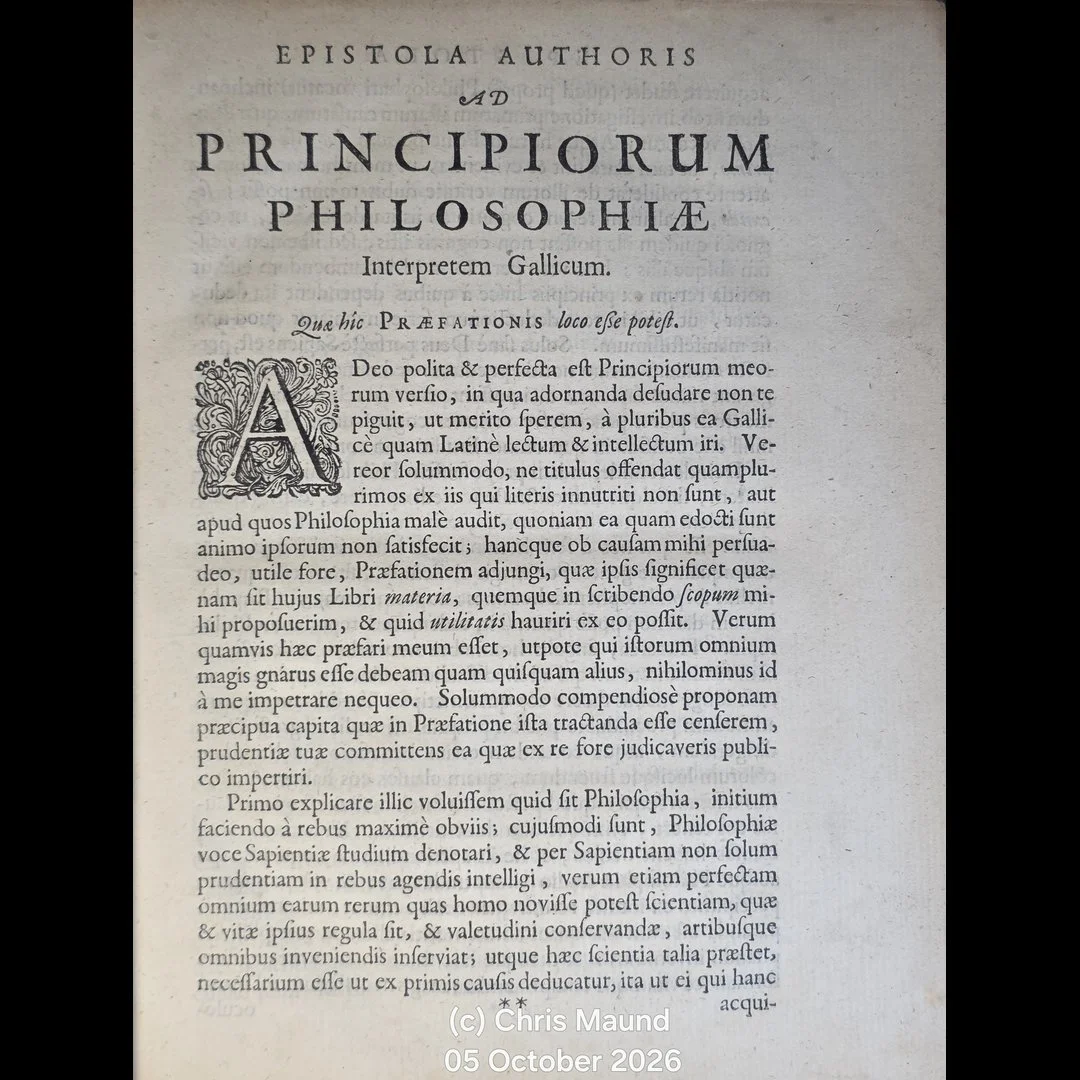 Image 12 of 88
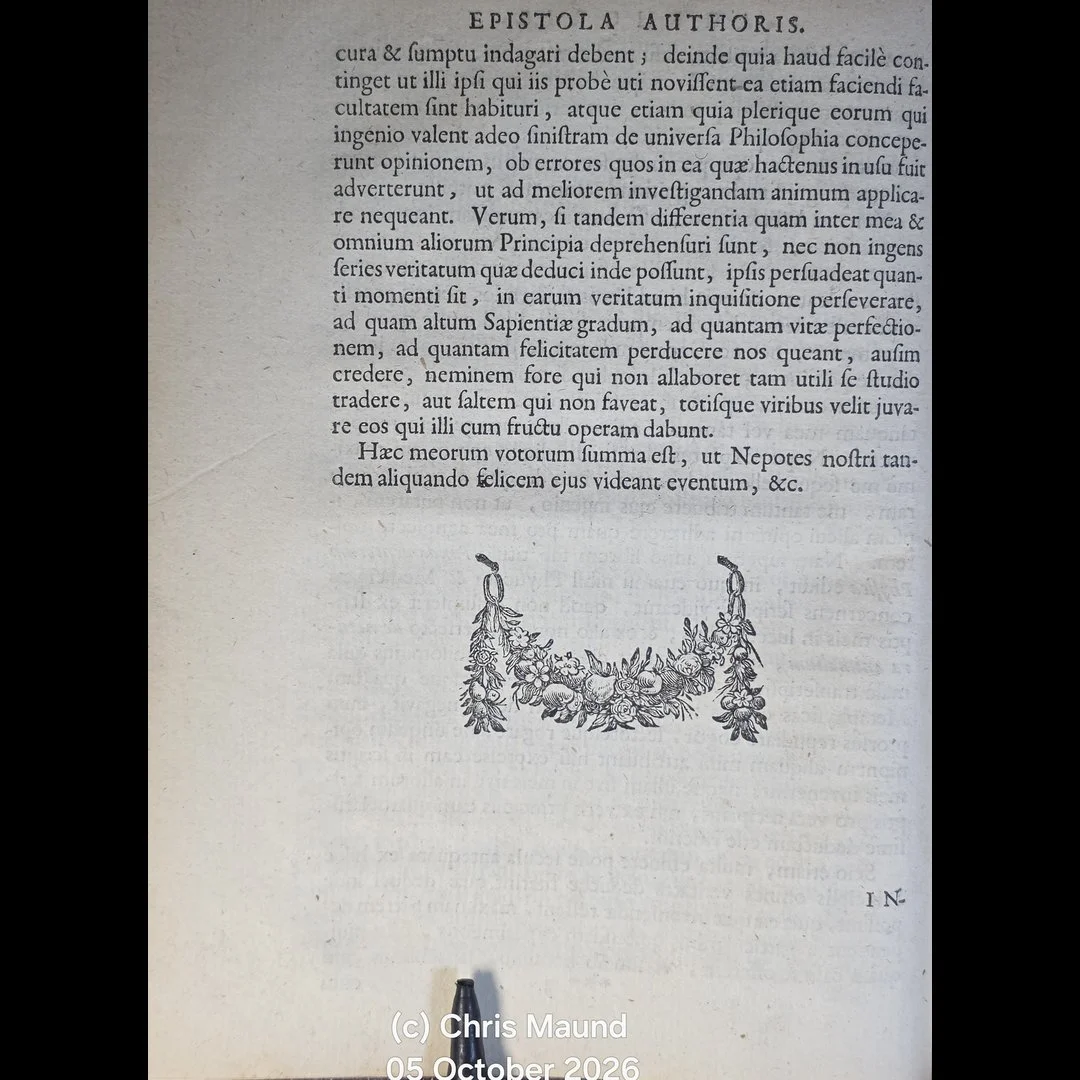 Image 13 of 88
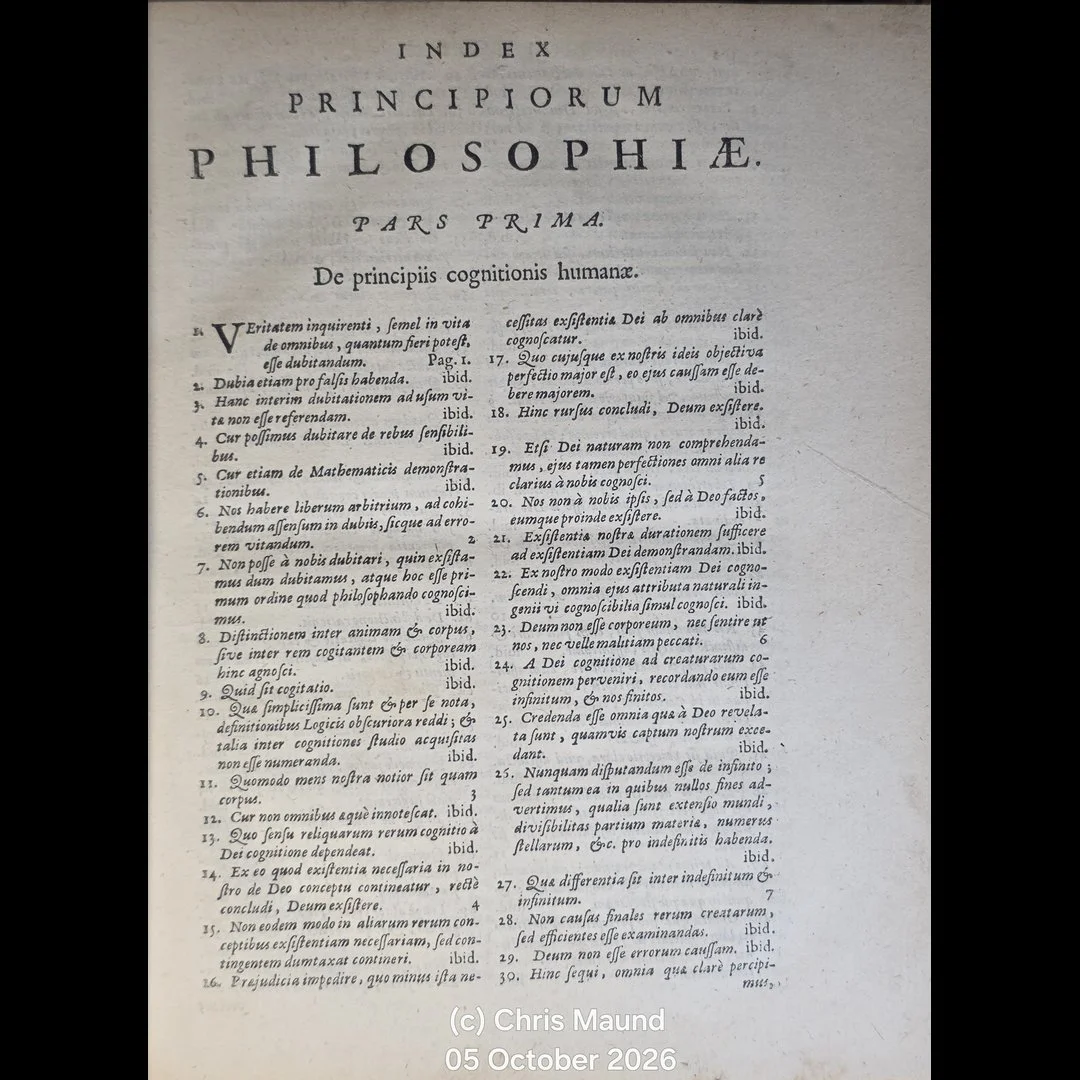 Image 14 of 88
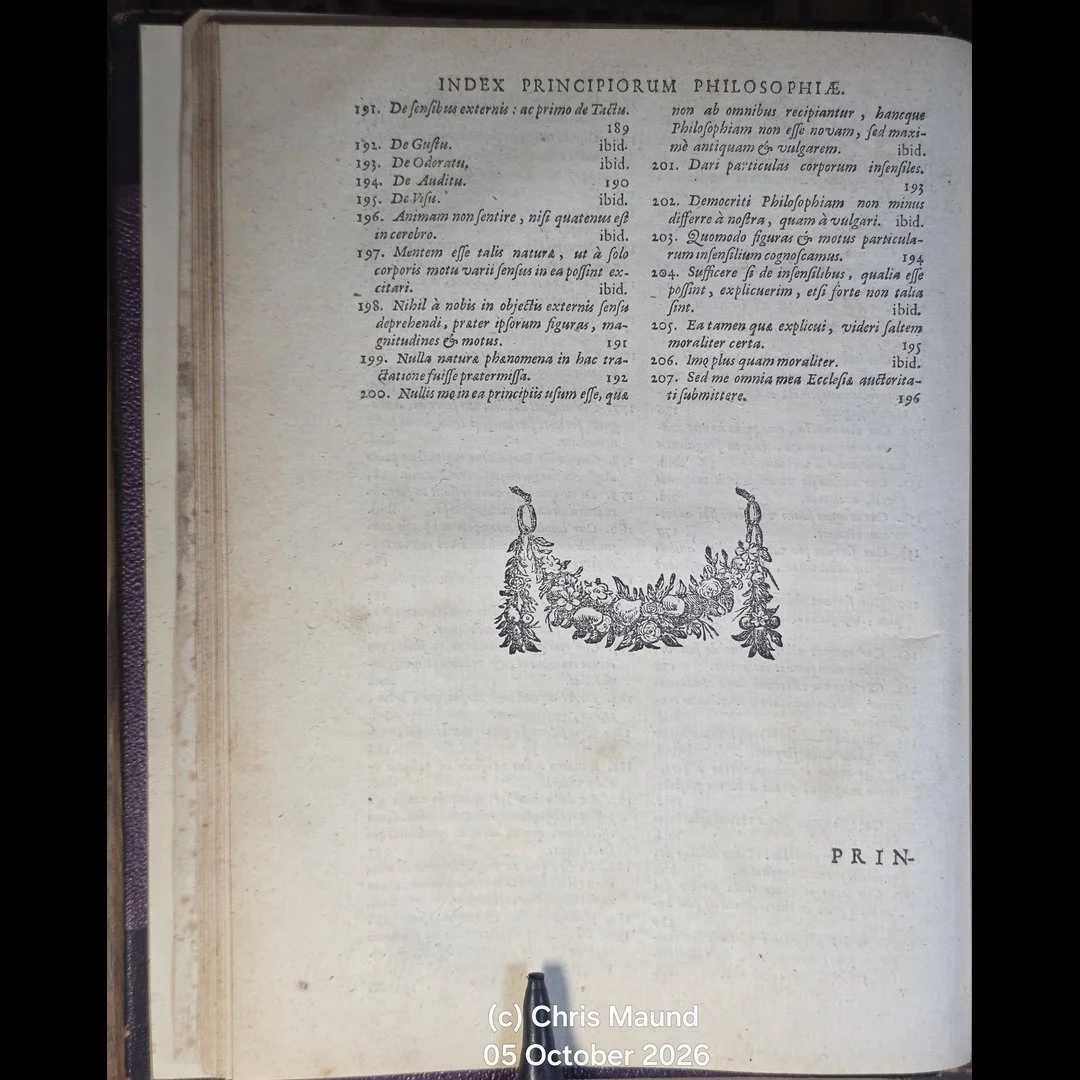 Image 15 of 88
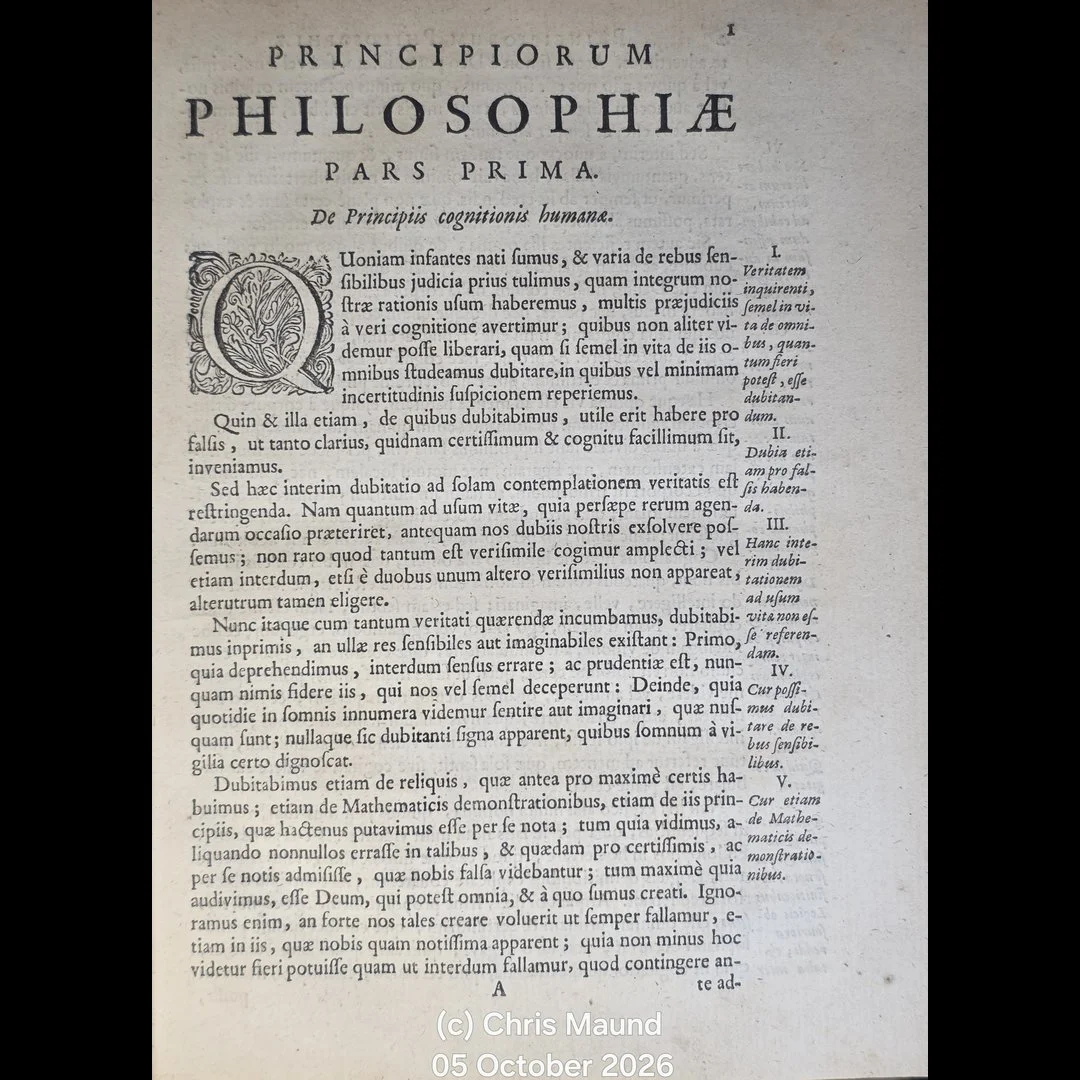 Image 16 of 88
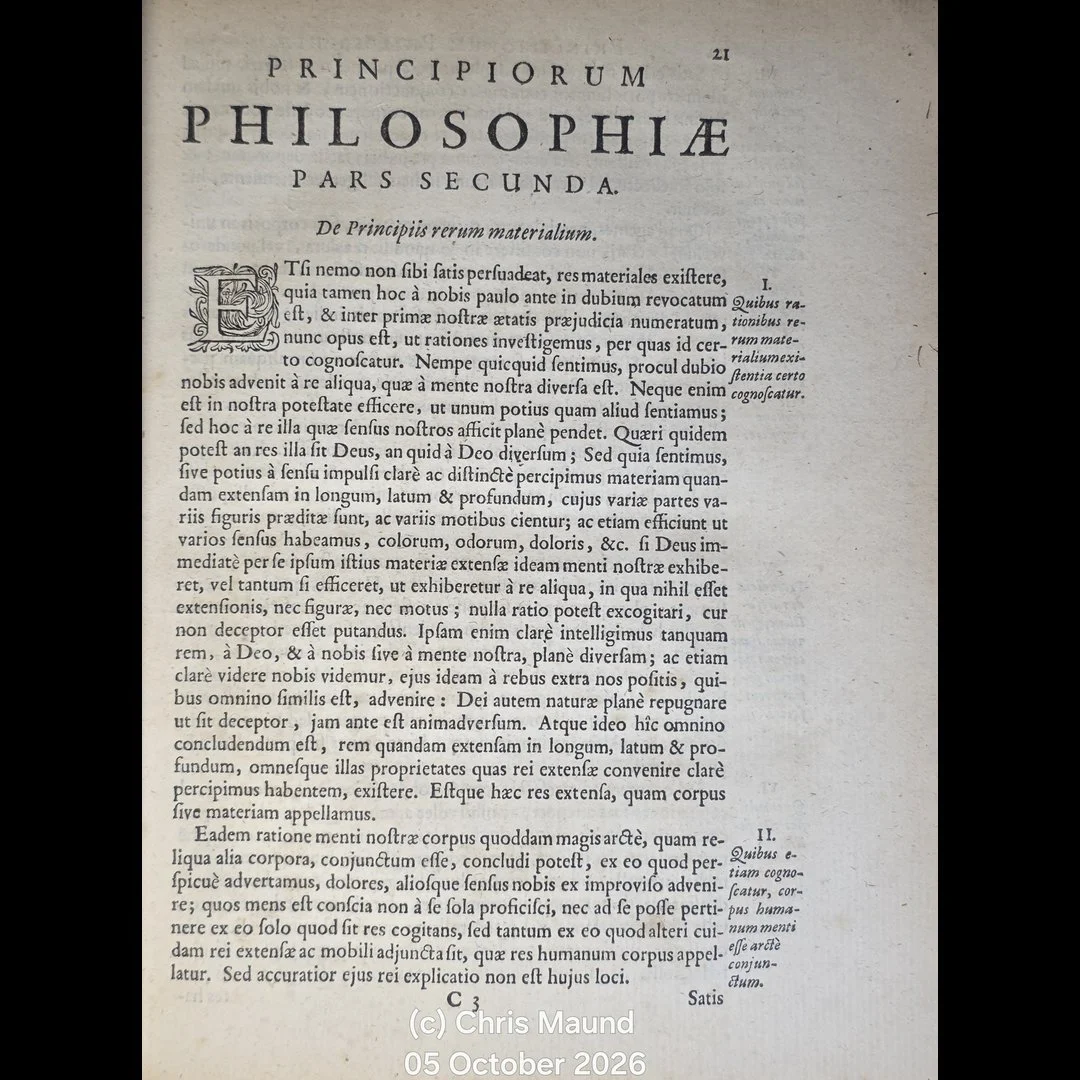 Image 17 of 88
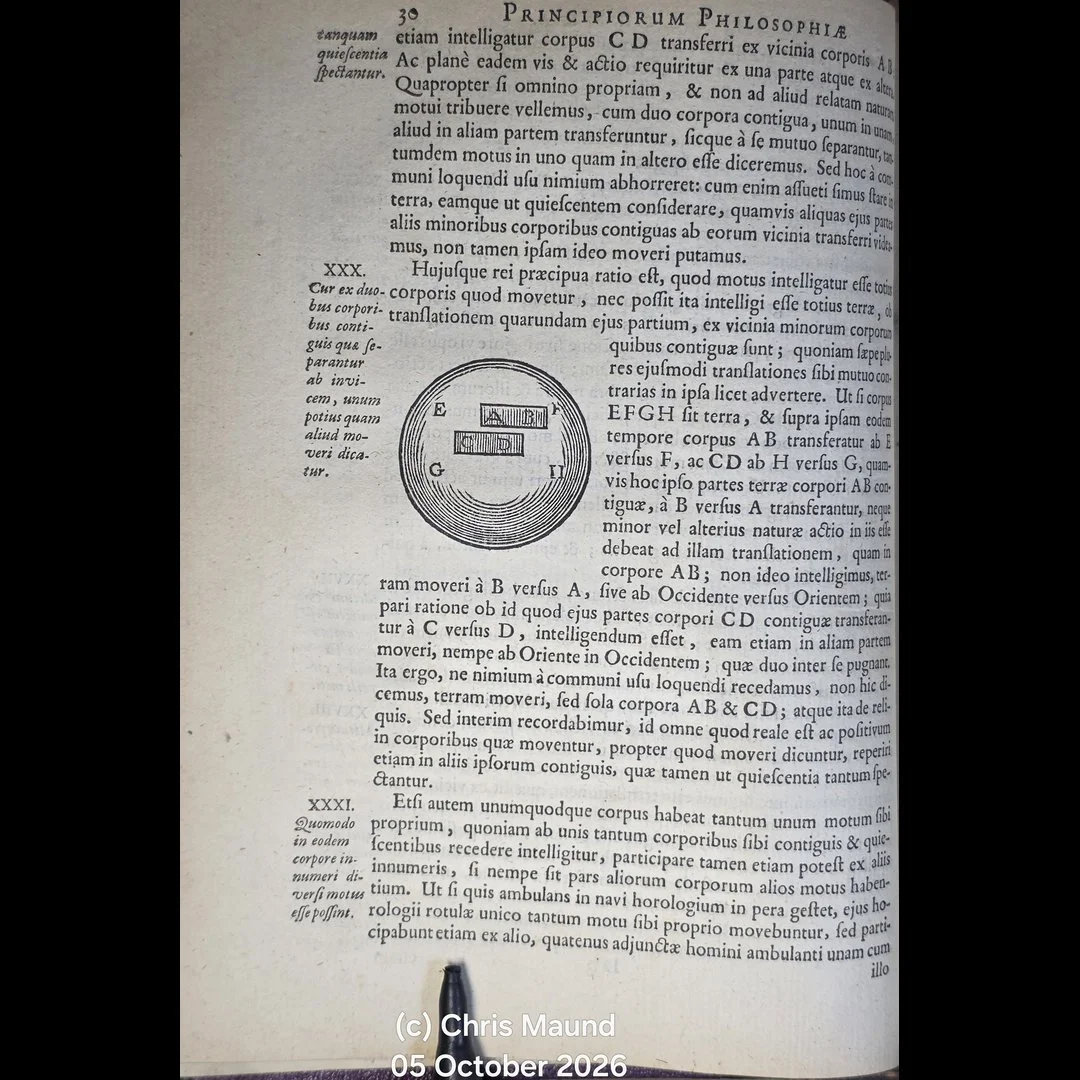 Image 18 of 88
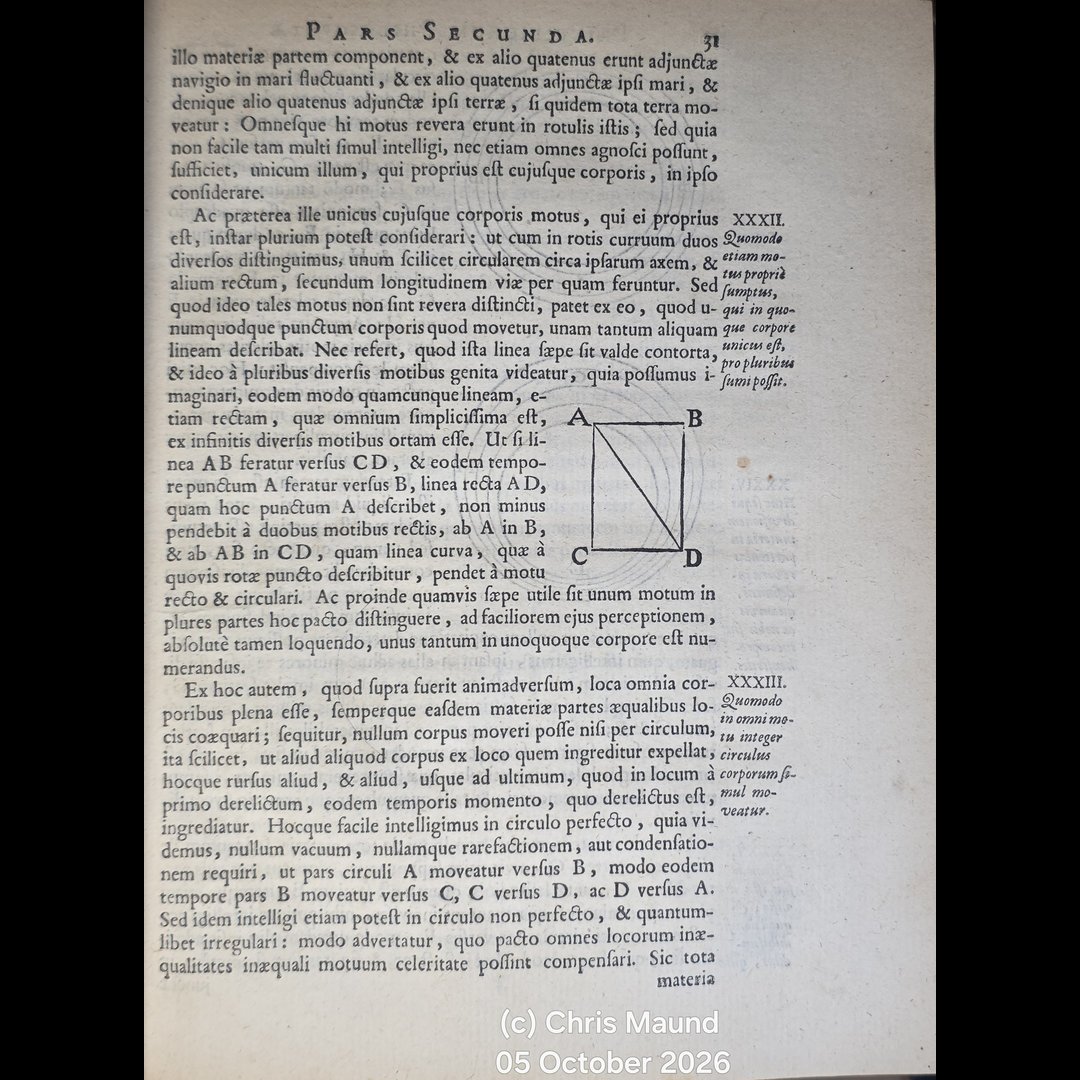 Image 19 of 88
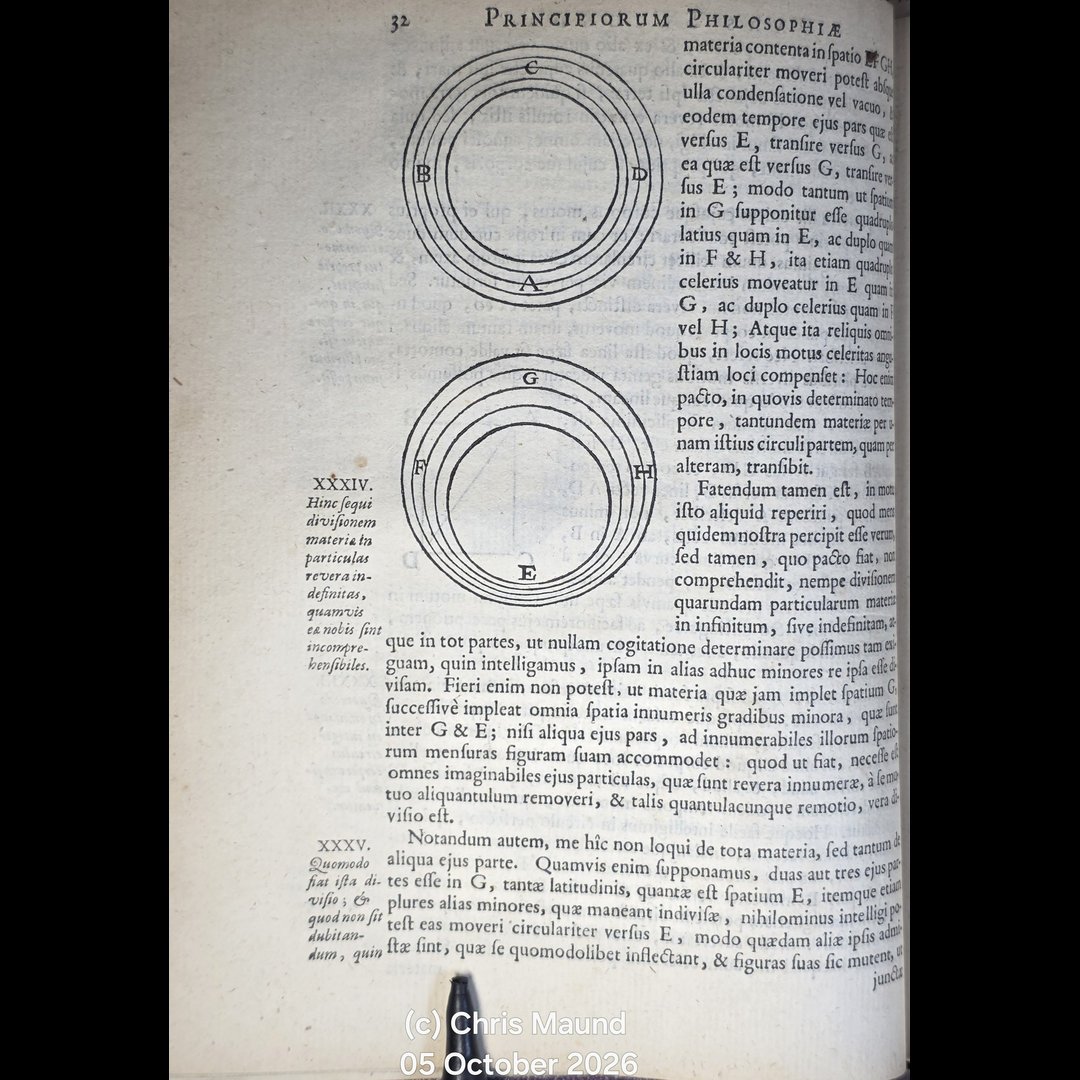 Image 20 of 88
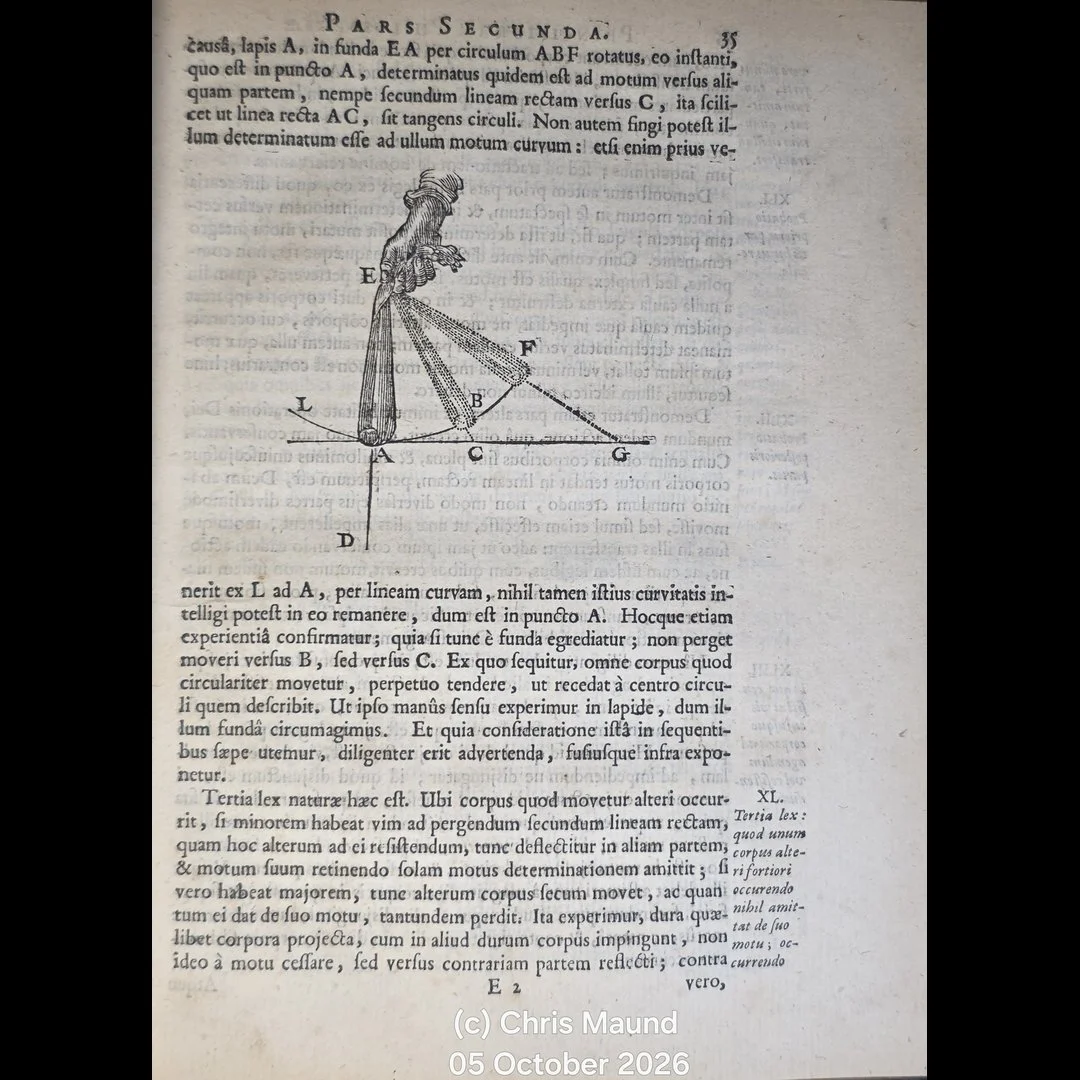 Image 21 of 88
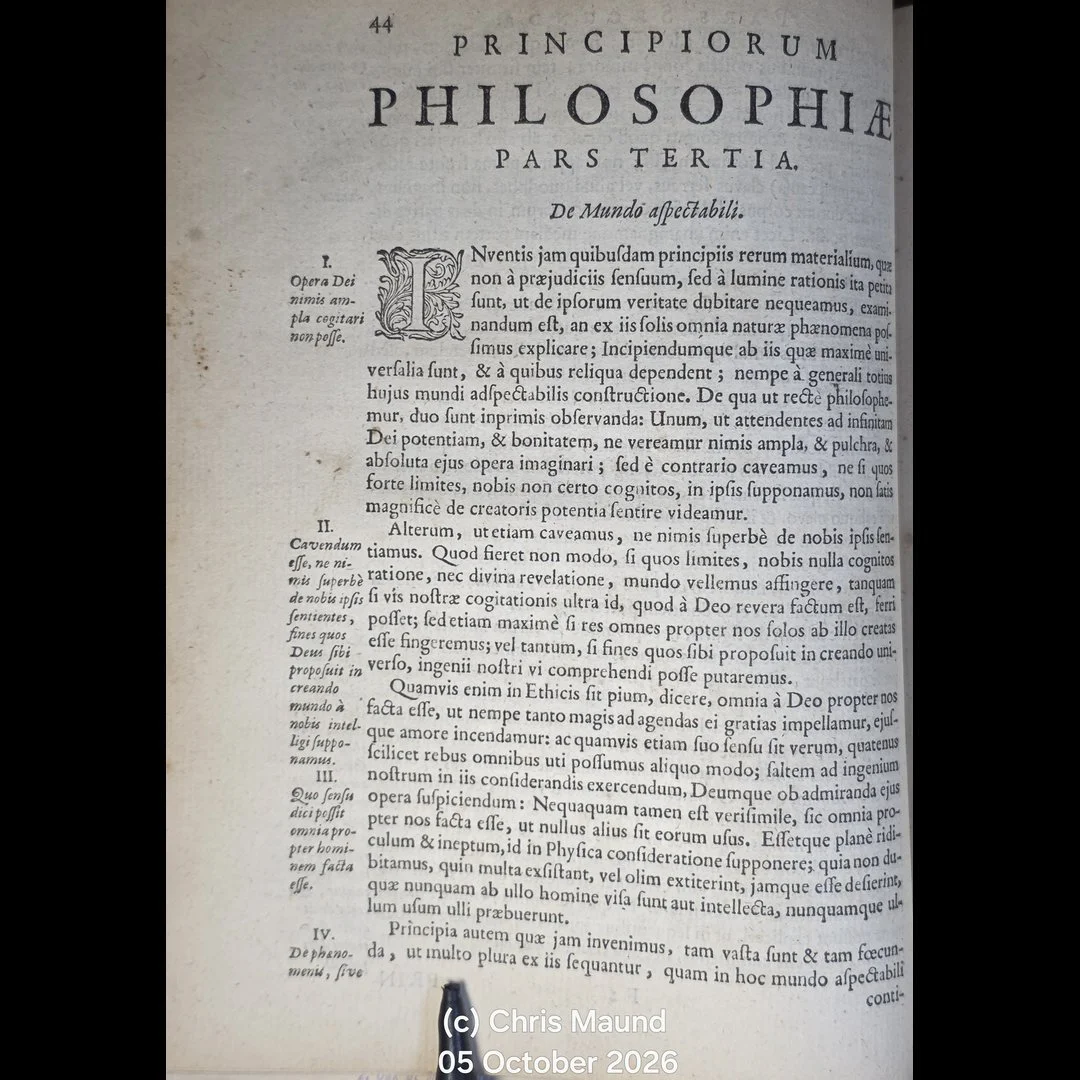 Image 22 of 88
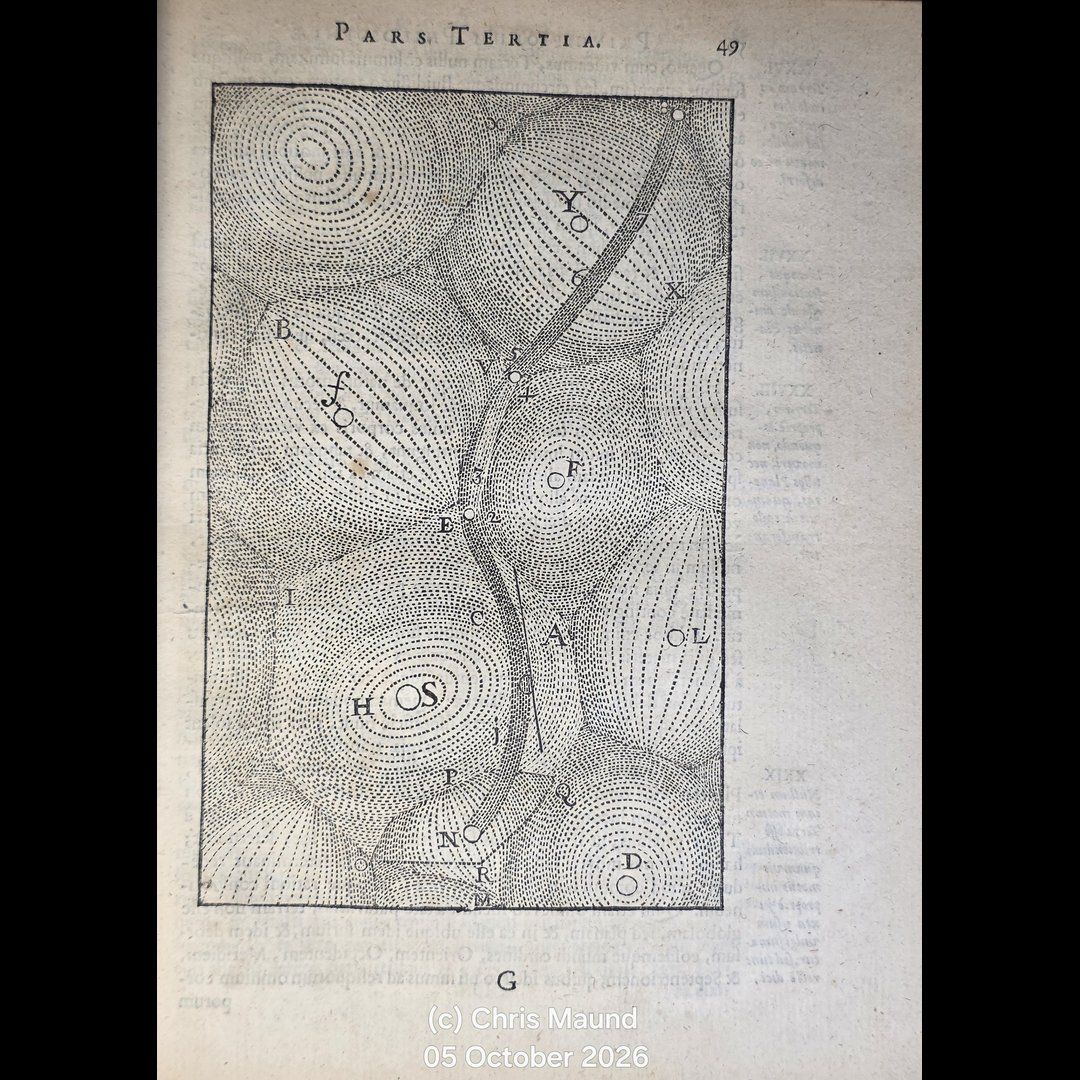 Image 23 of 88
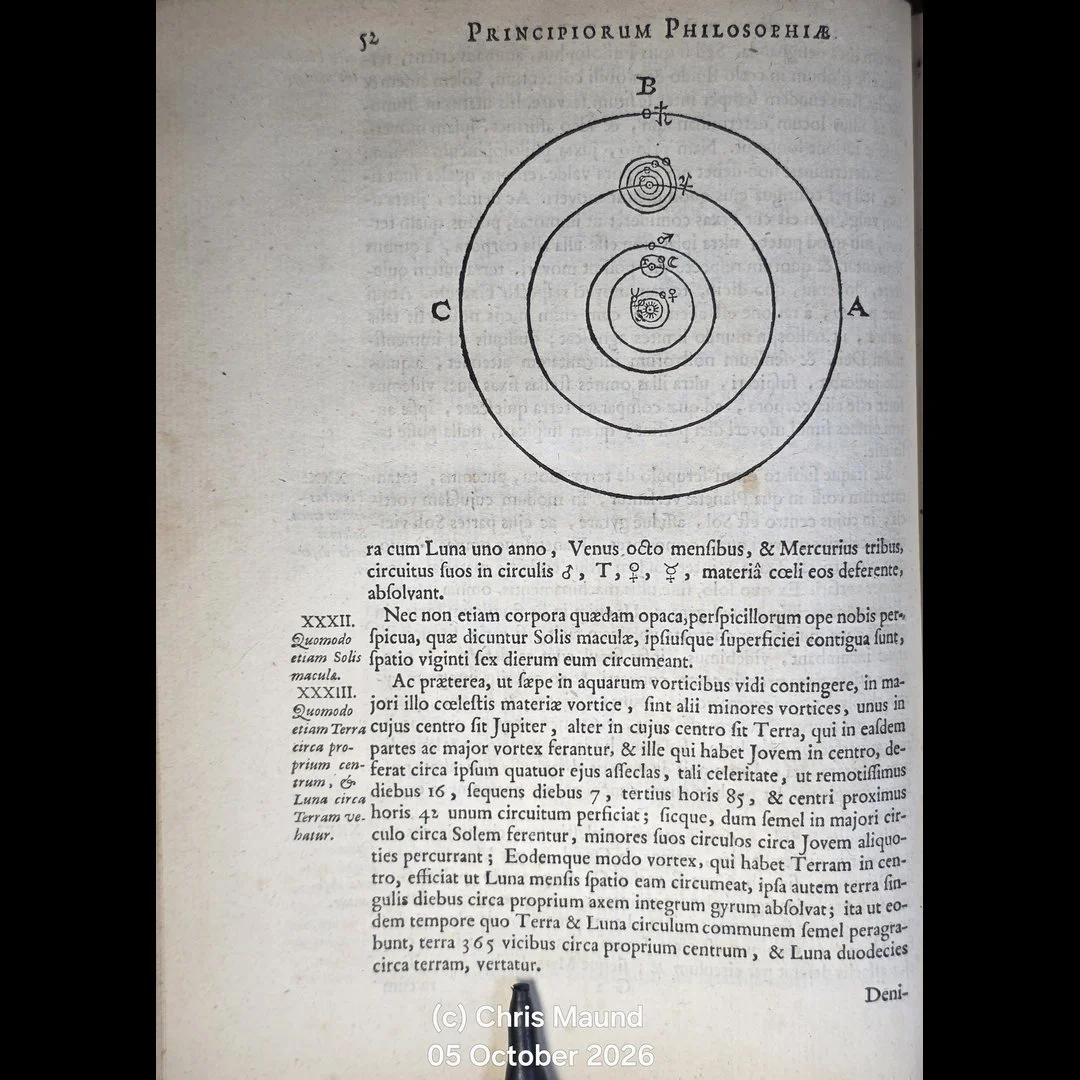 Image 24 of 88
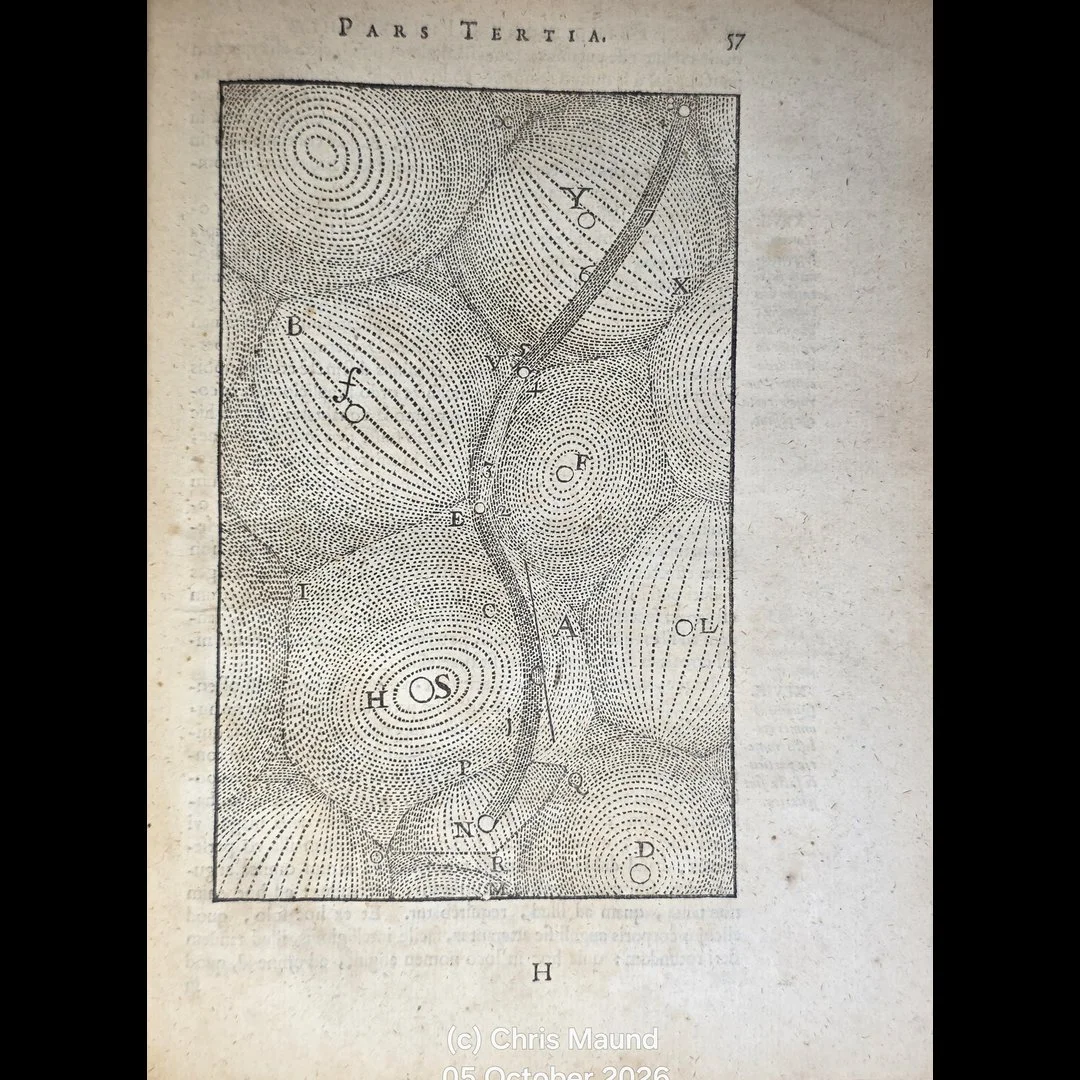 Image 25 of 88
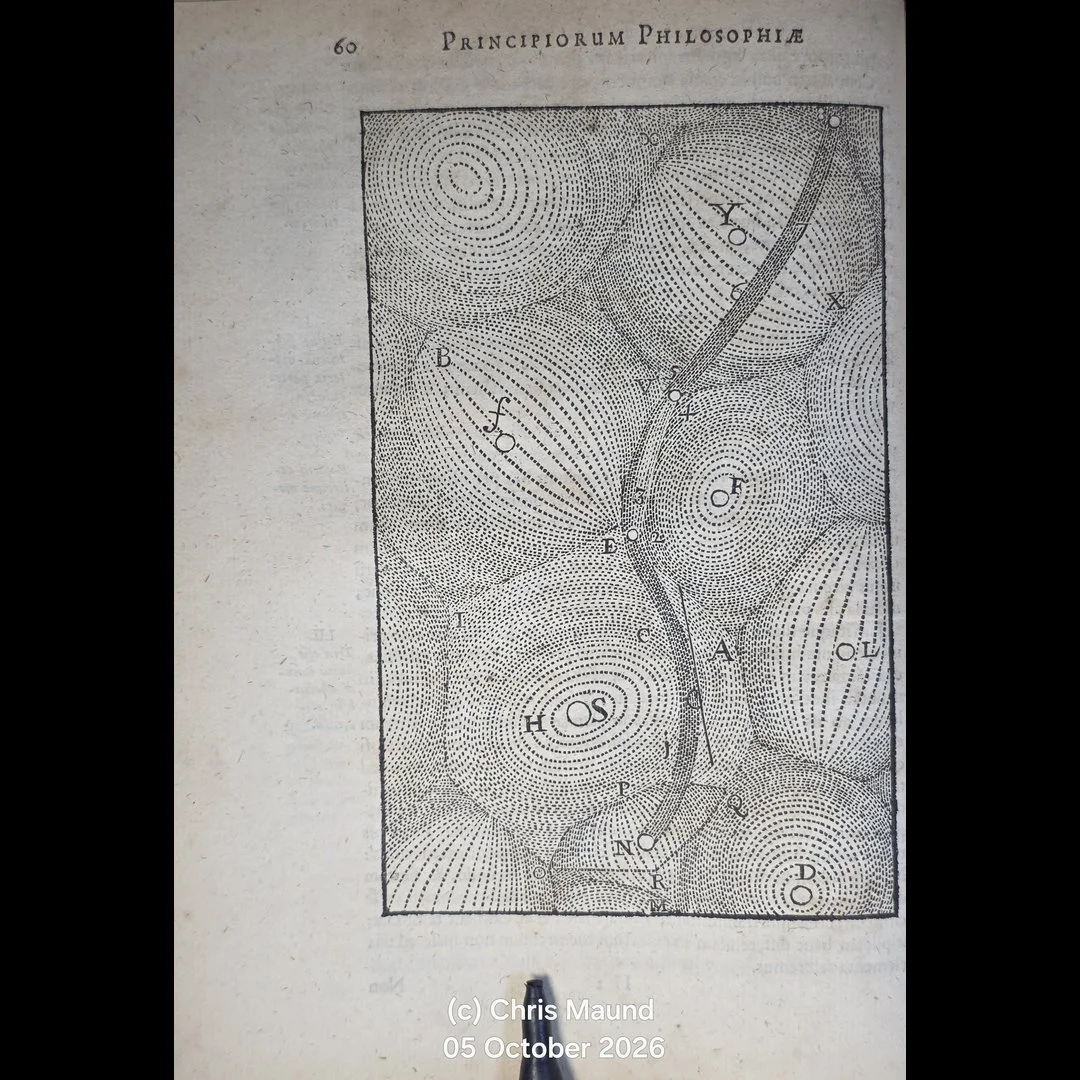 Image 26 of 88
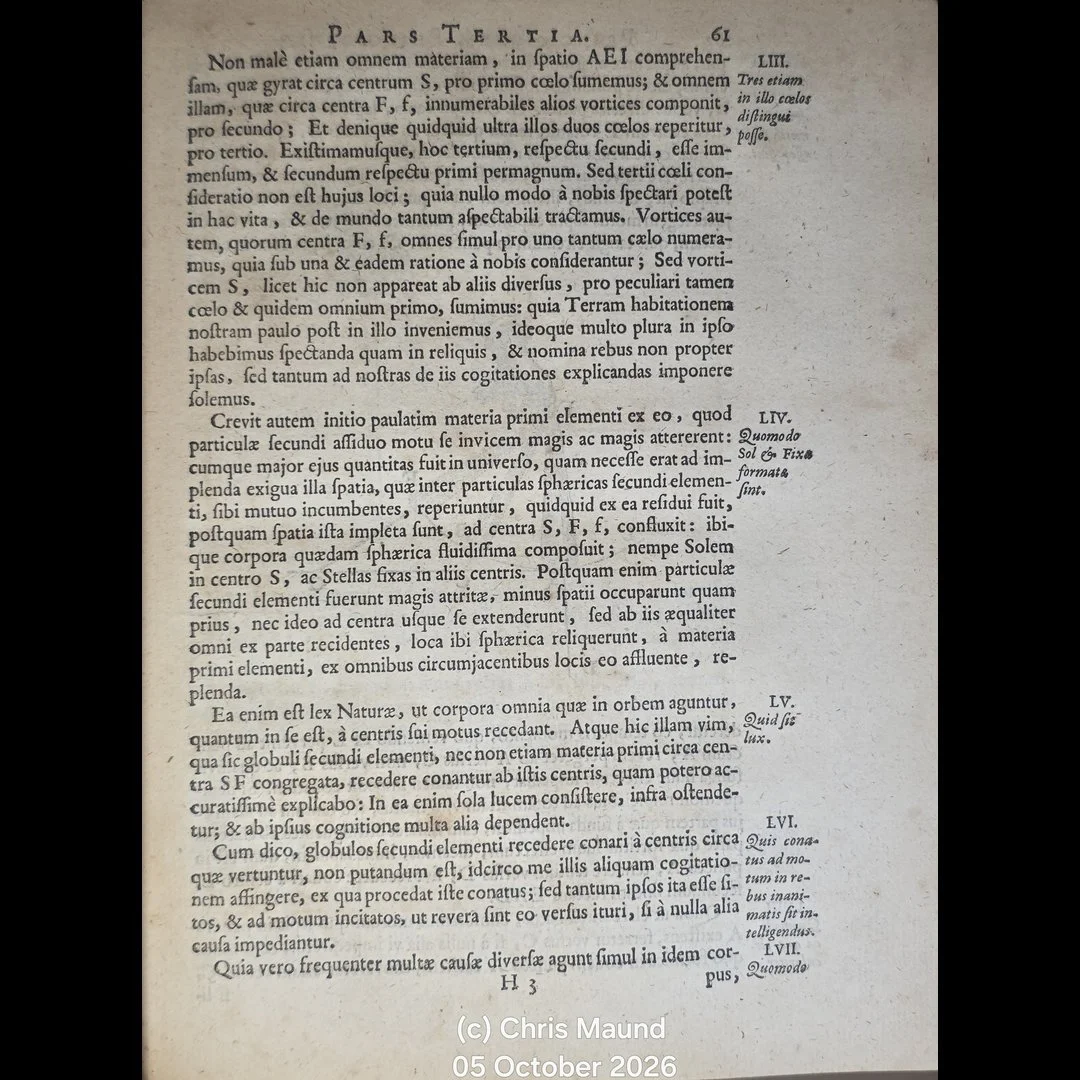 Image 27 of 88
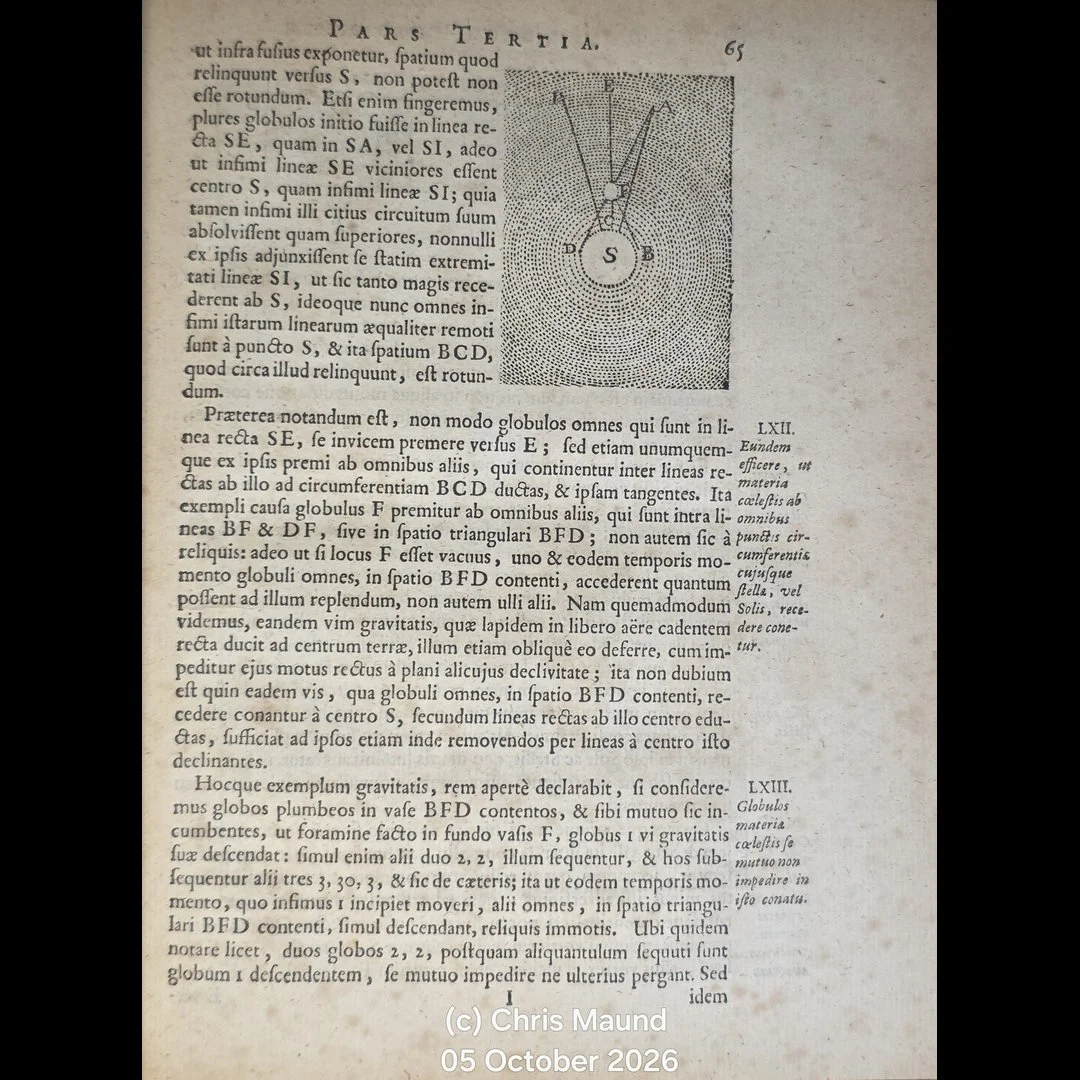 Image 28 of 88
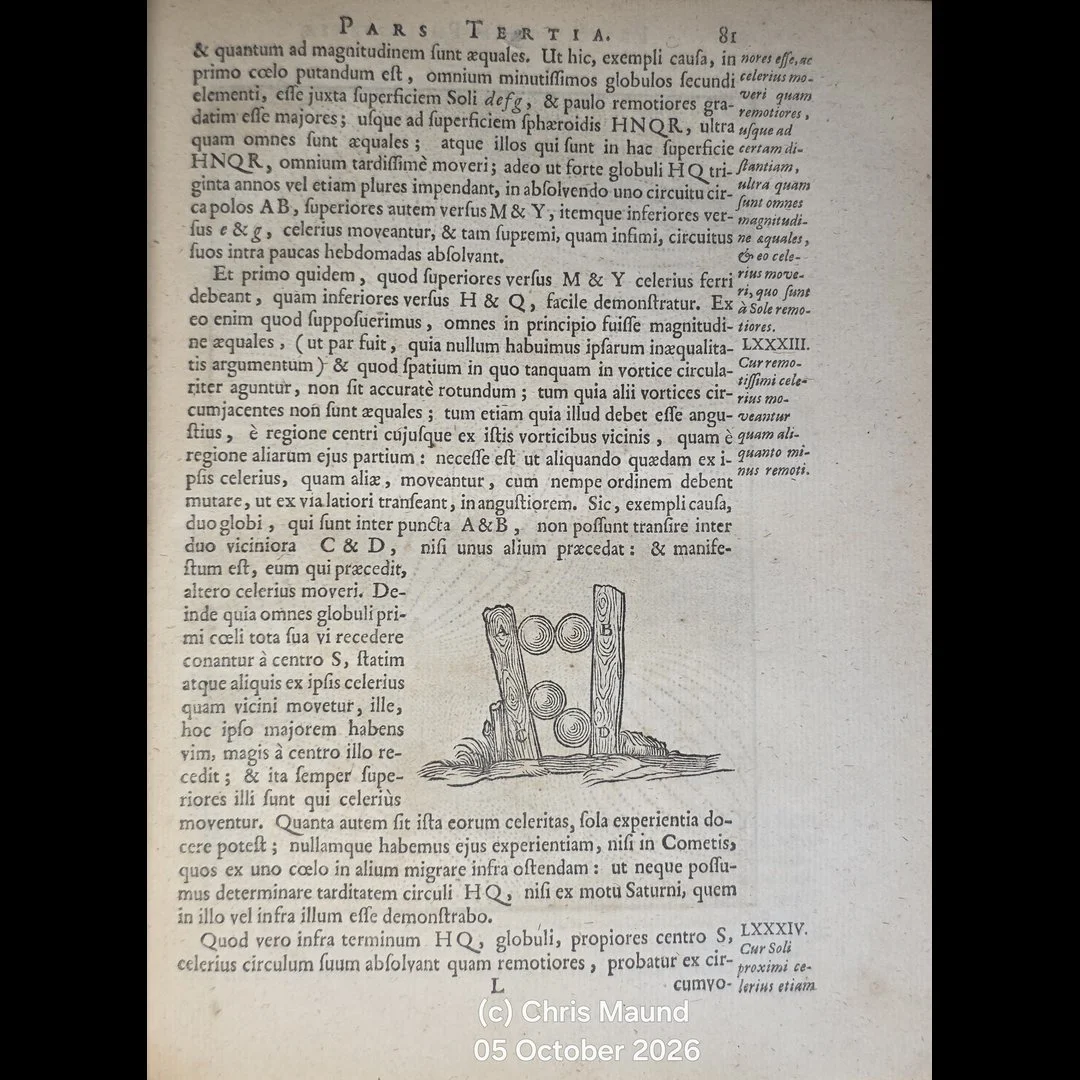 Image 29 of 88
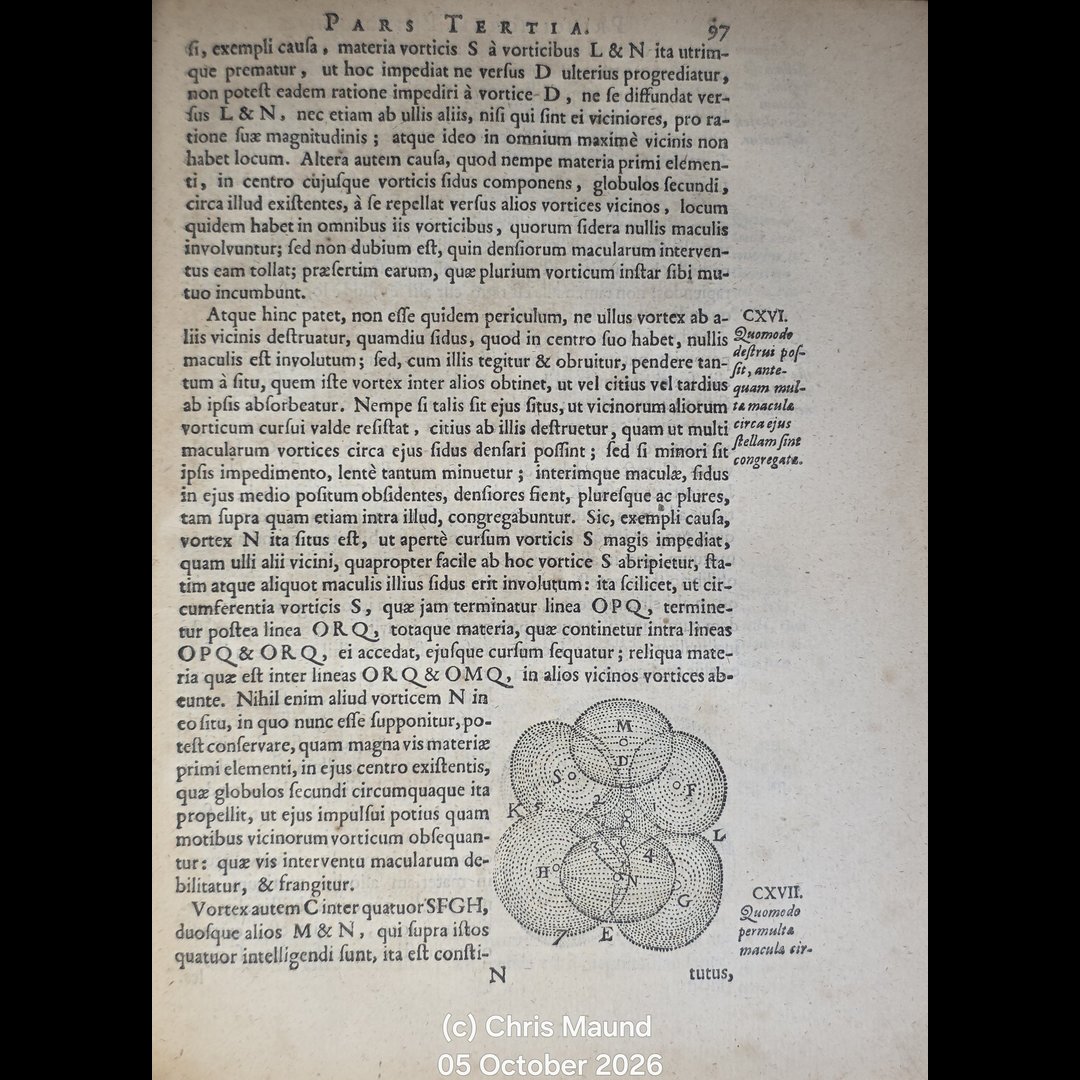 Image 30 of 88
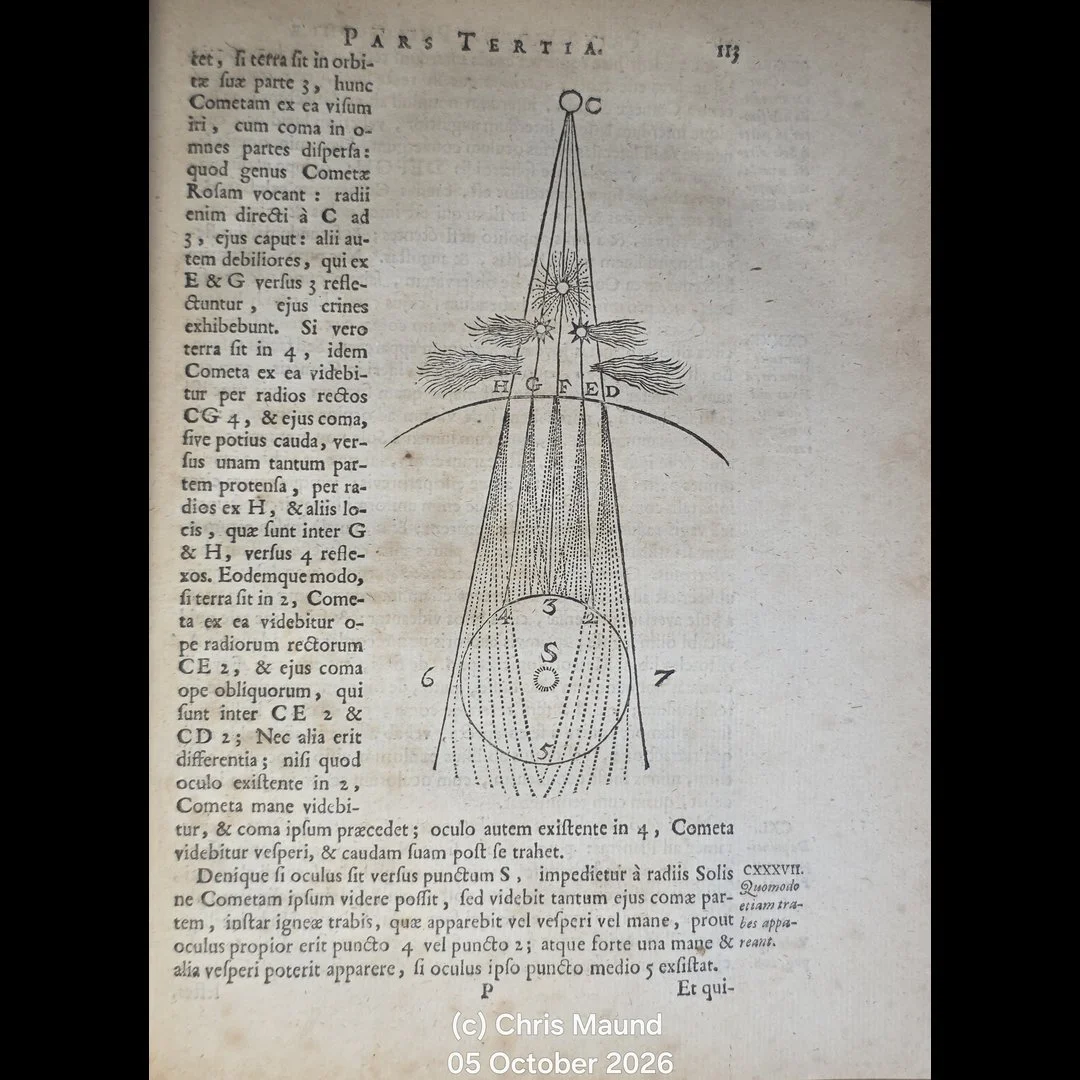 Image 31 of 88
 Image 32 of 88
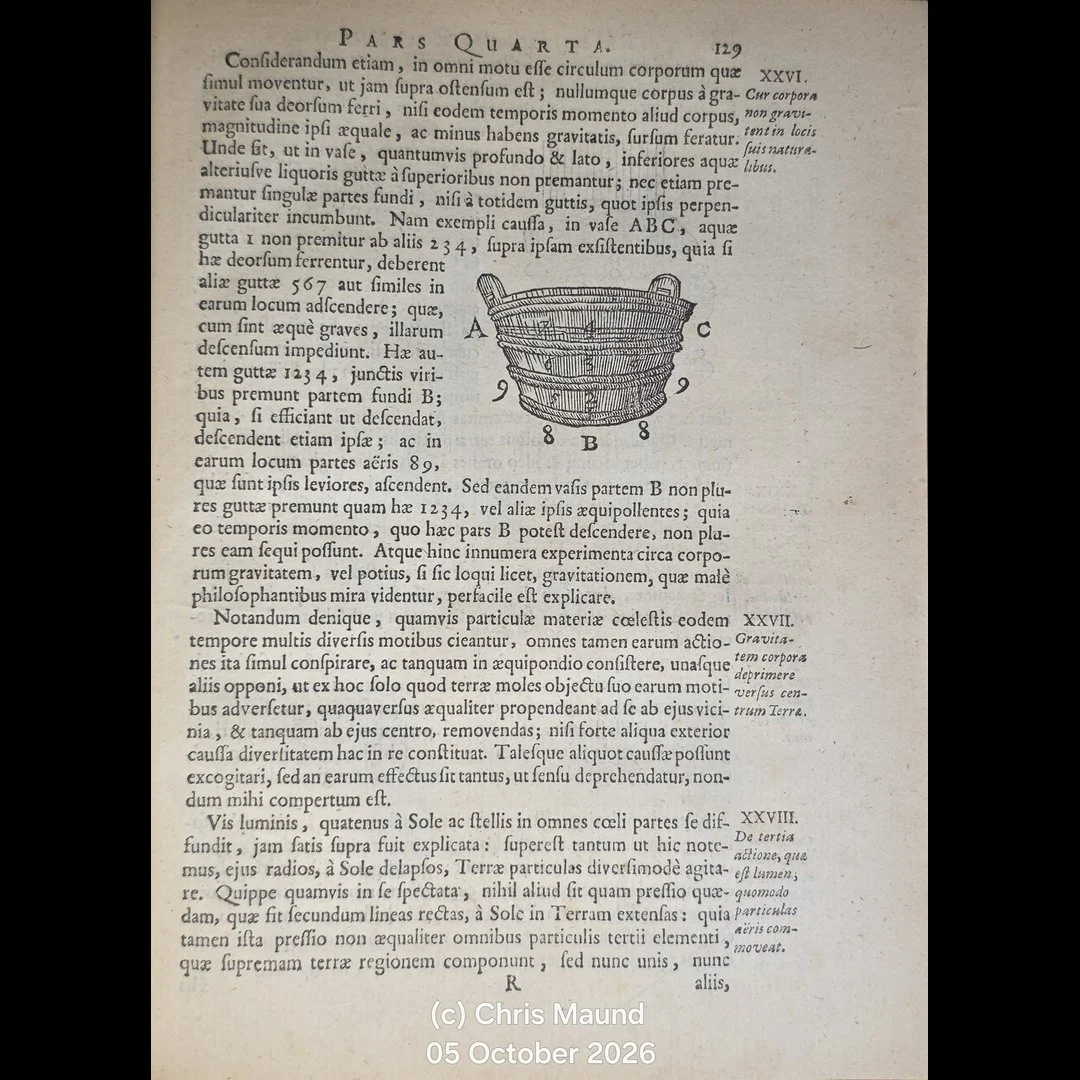 Image 33 of 88
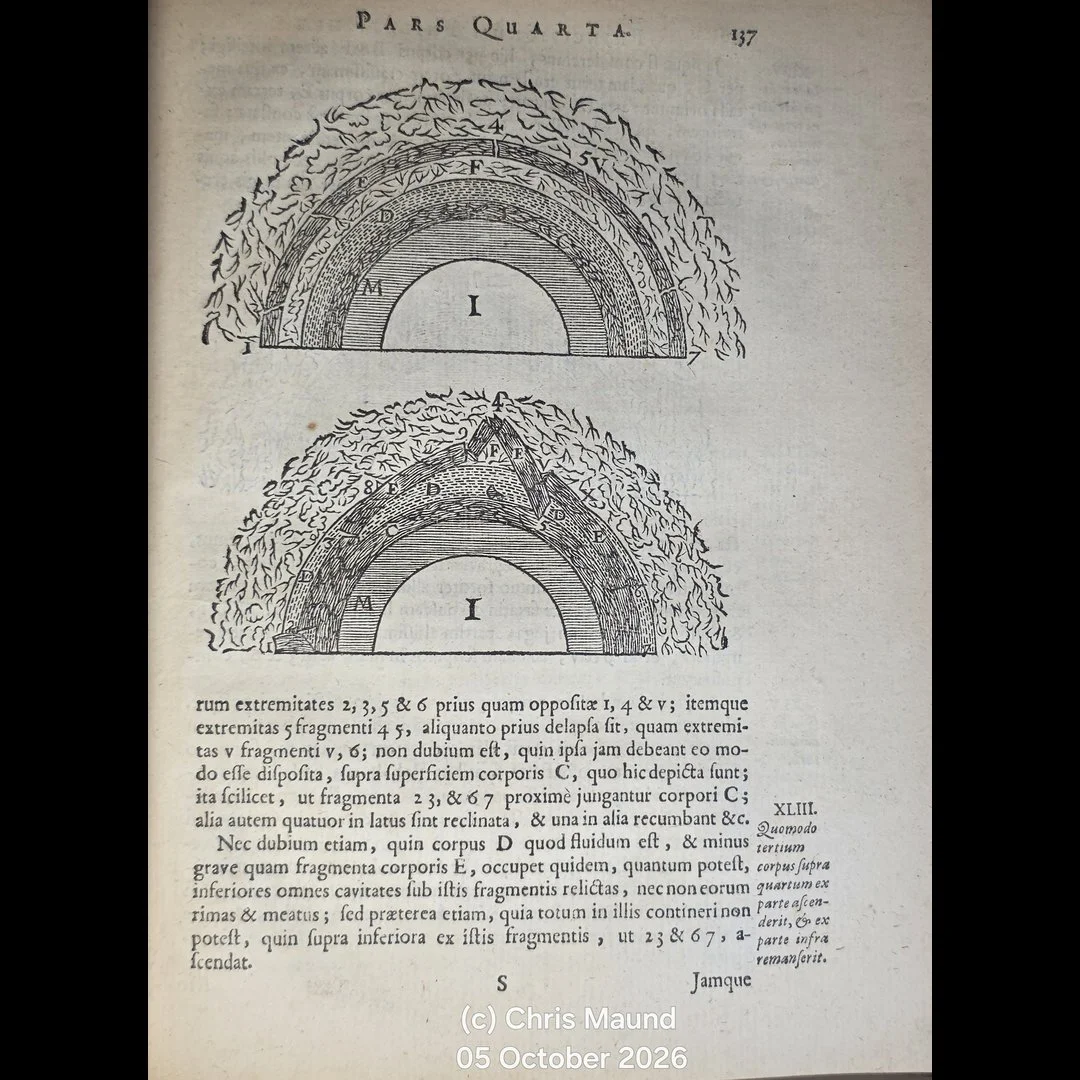 Image 34 of 88
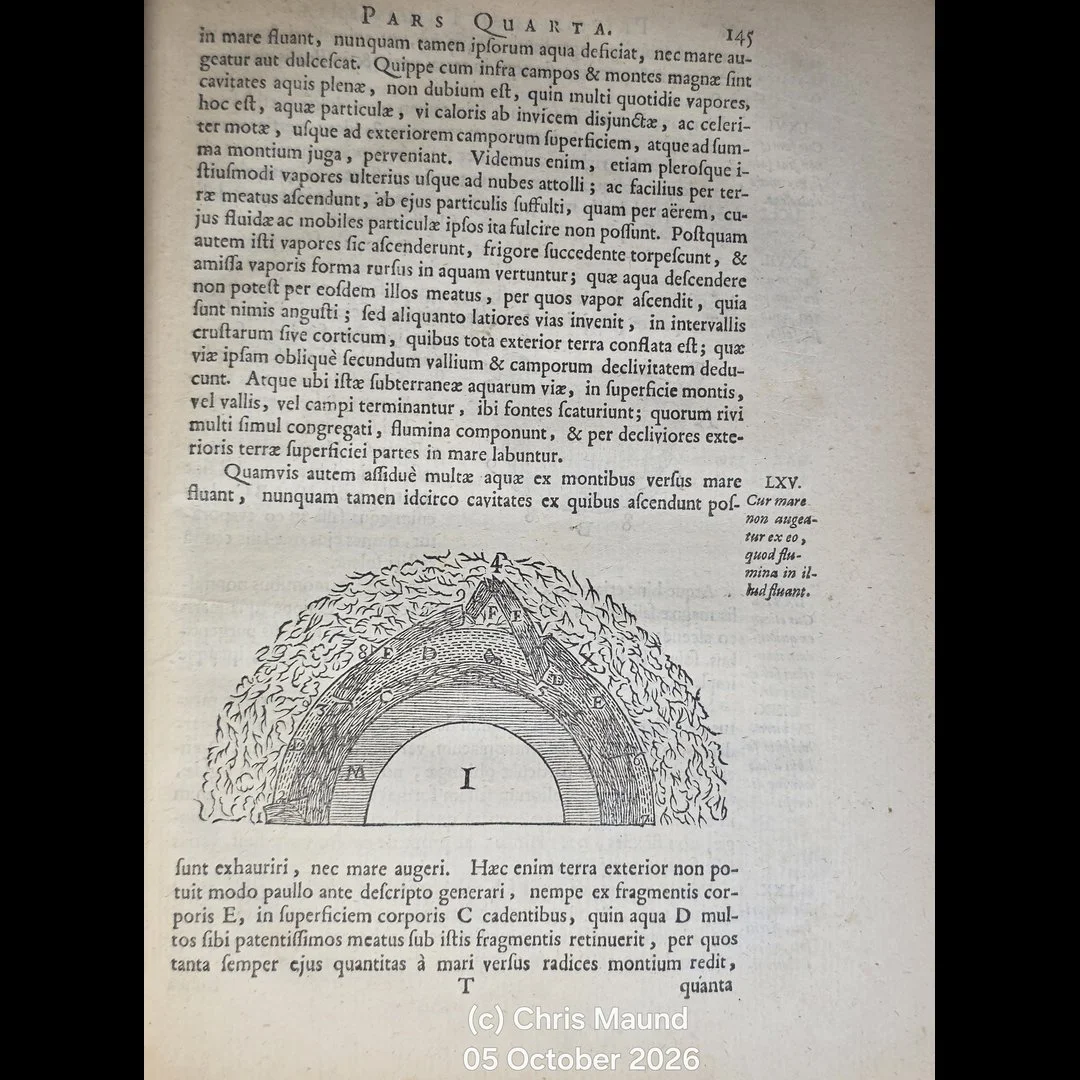 Image 35 of 88
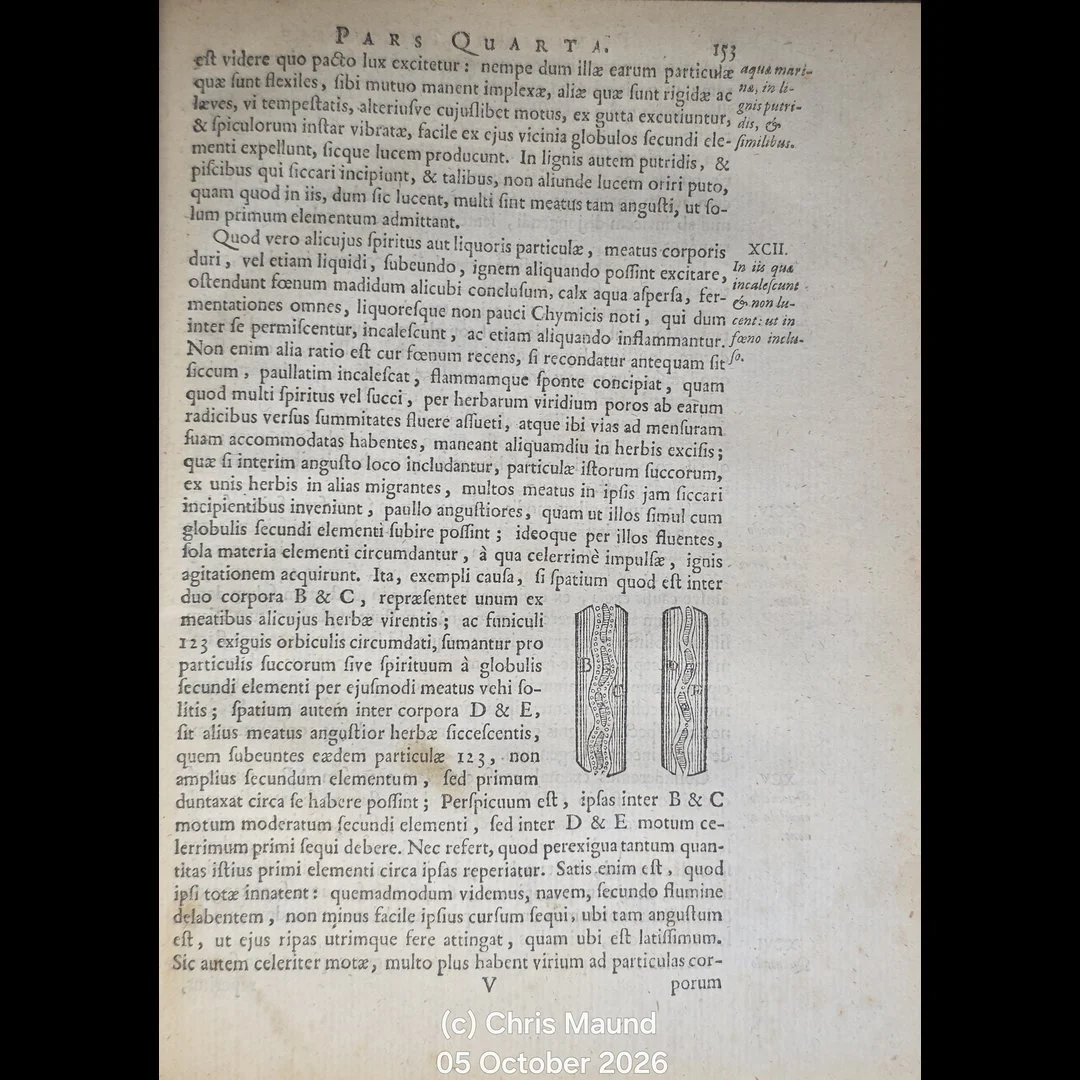 Image 36 of 88
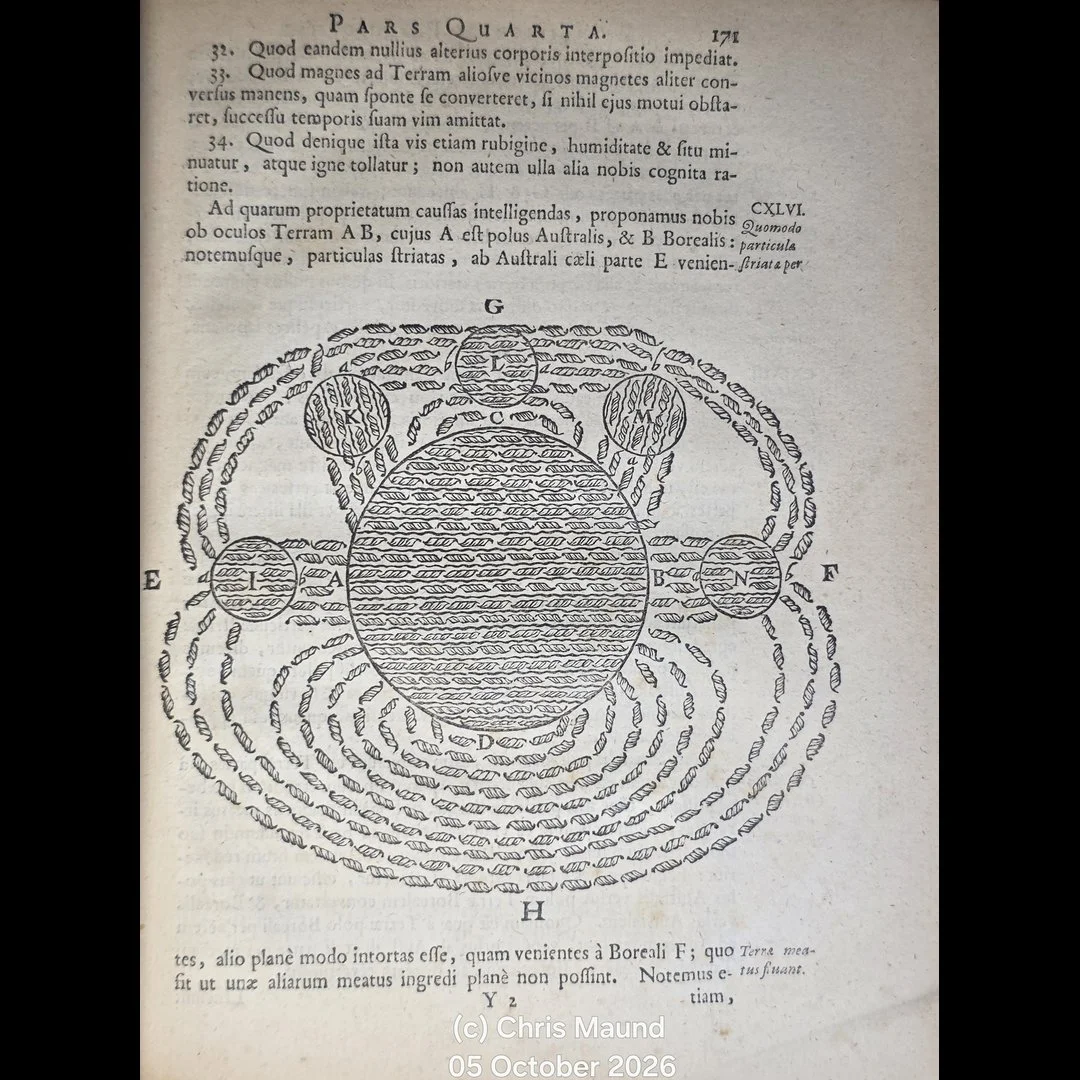 Image 37 of 88
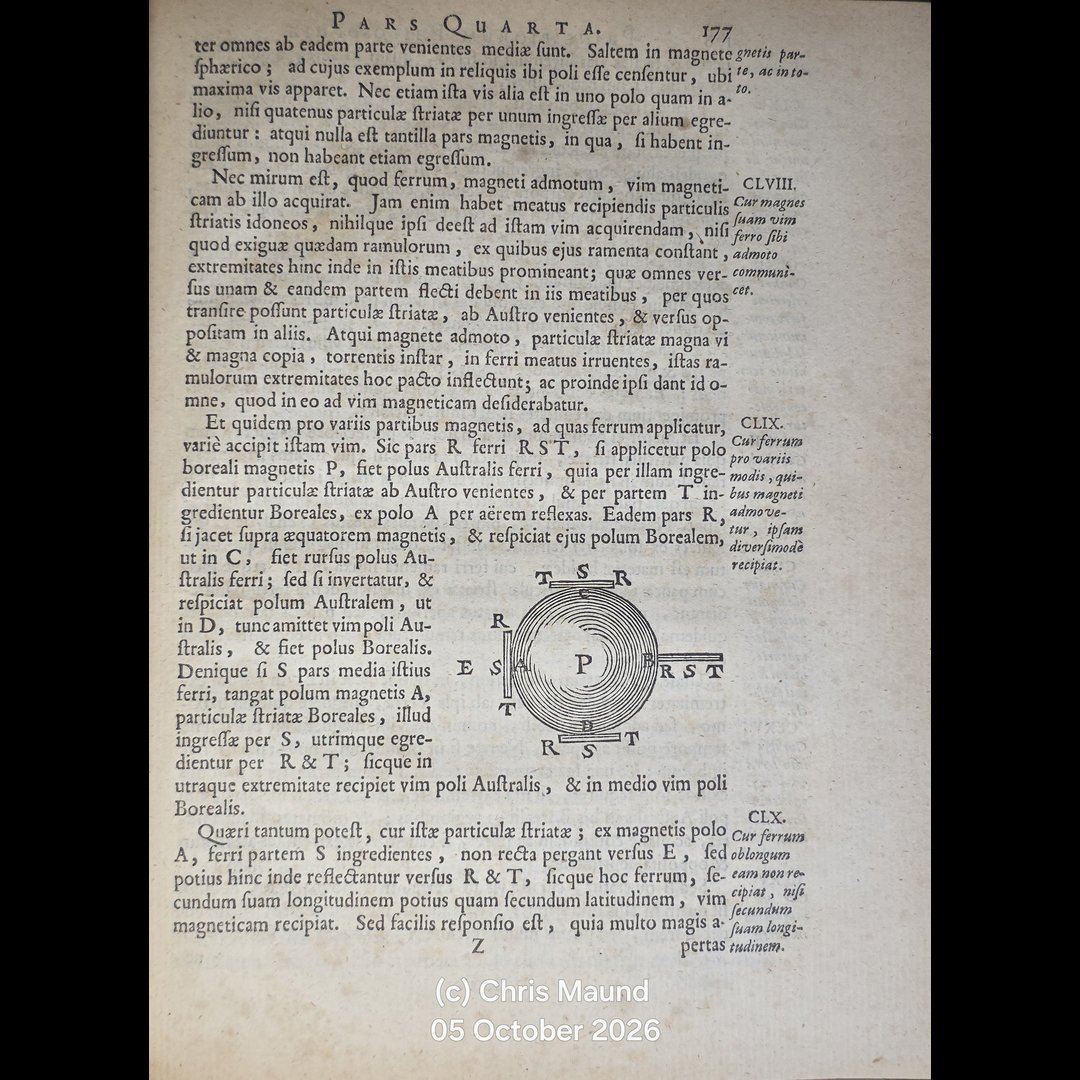 Image 38 of 88
 Image 39 of 88
 Image 40 of 88
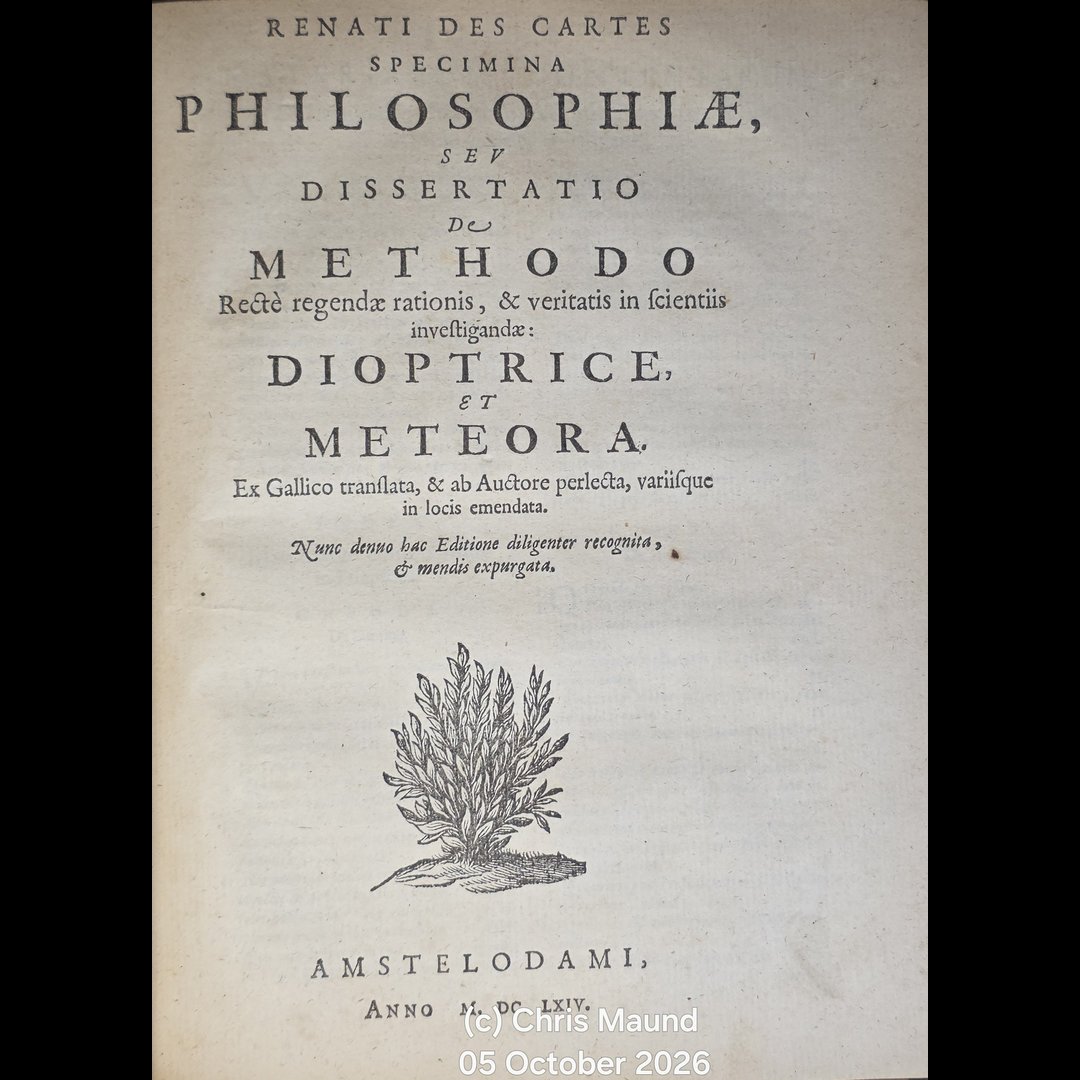 Image 41 of 88
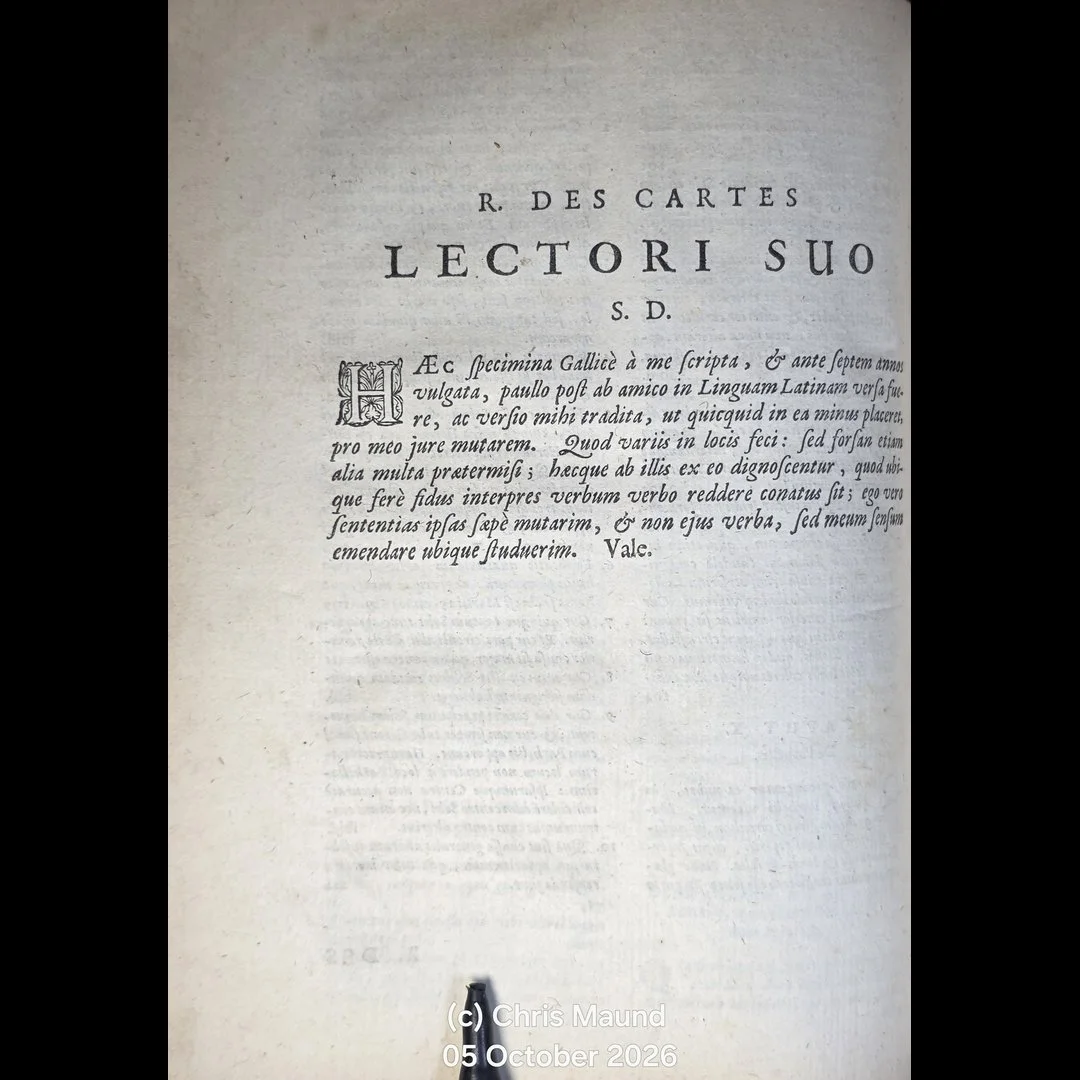 Image 42 of 88
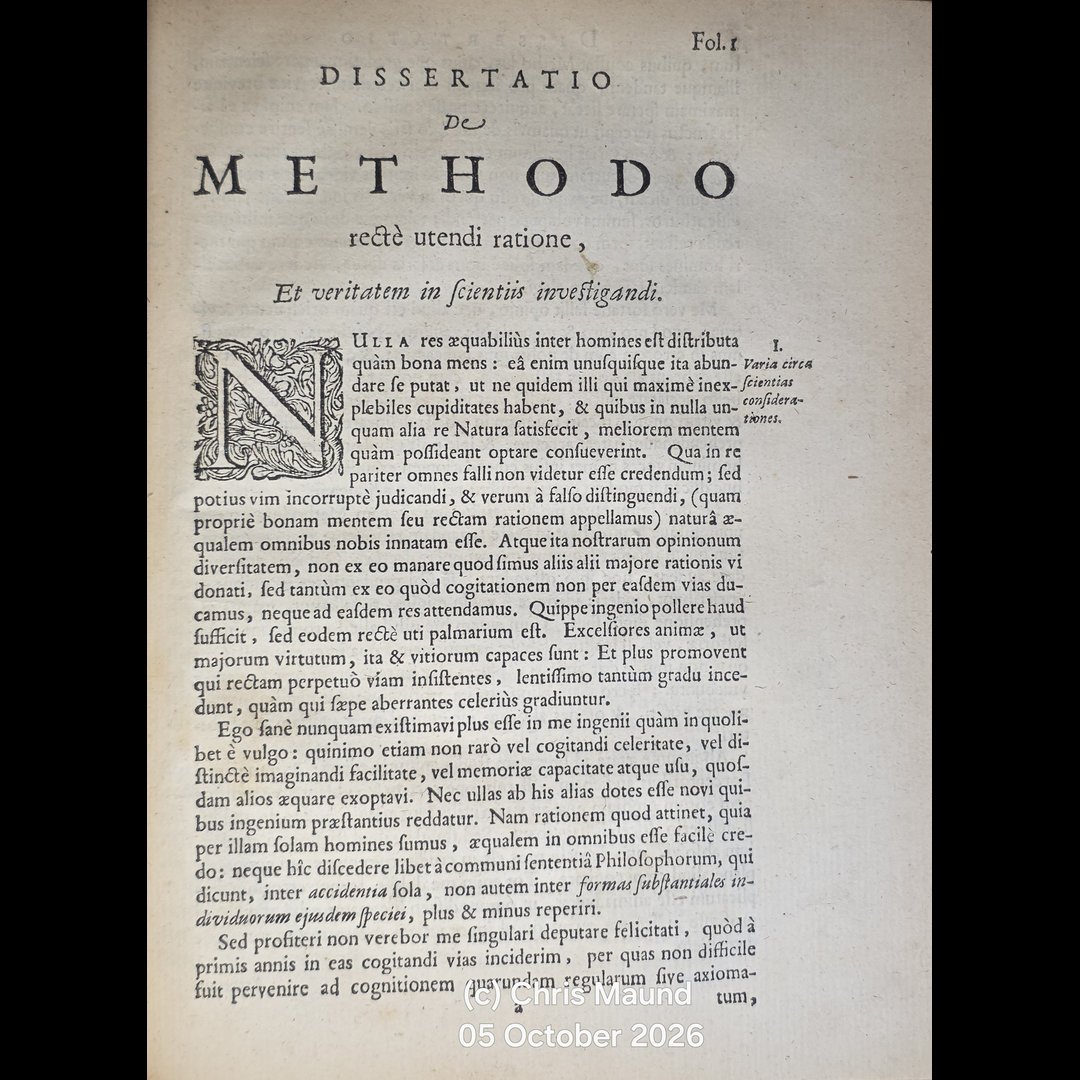 Image 43 of 88
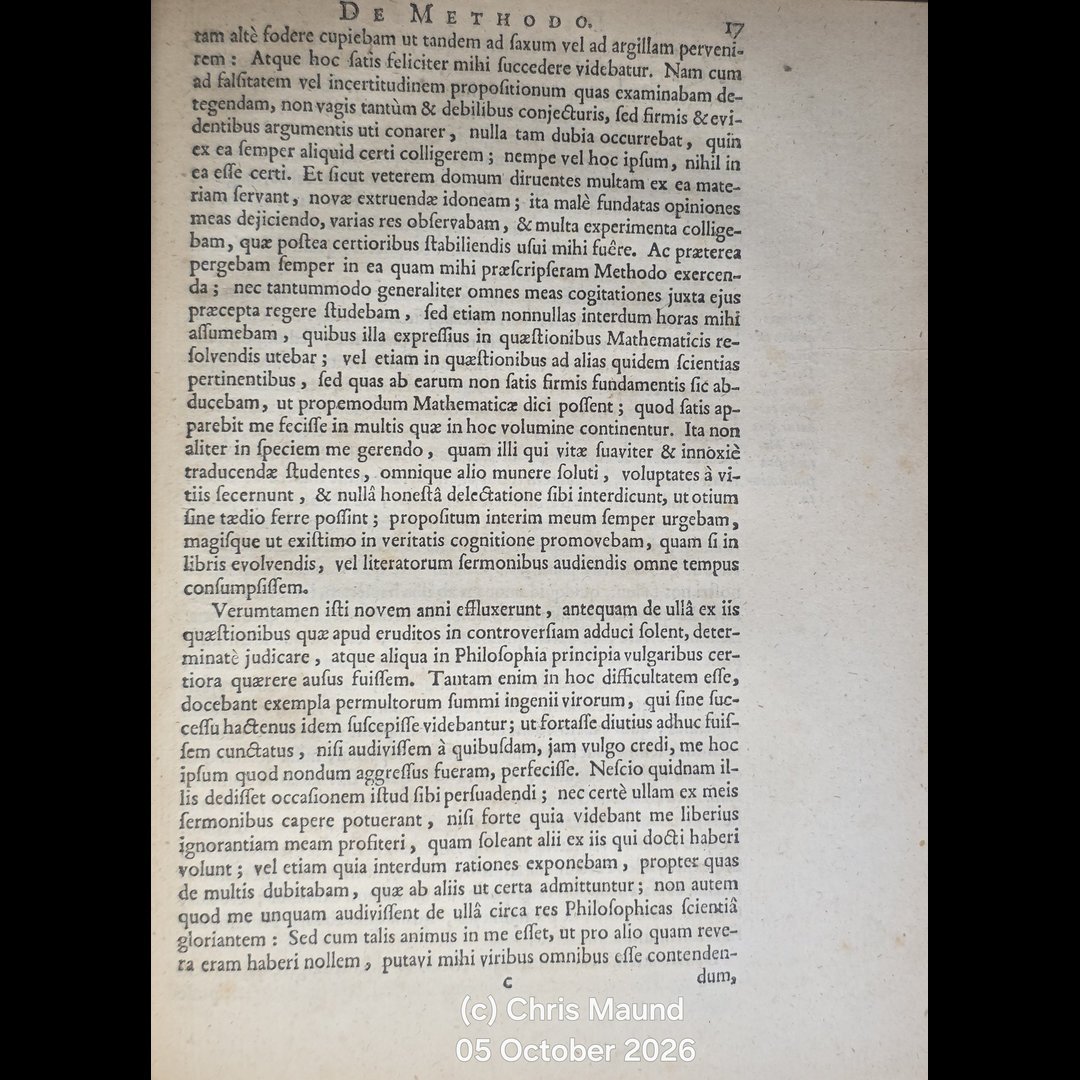 Image 44 of 88
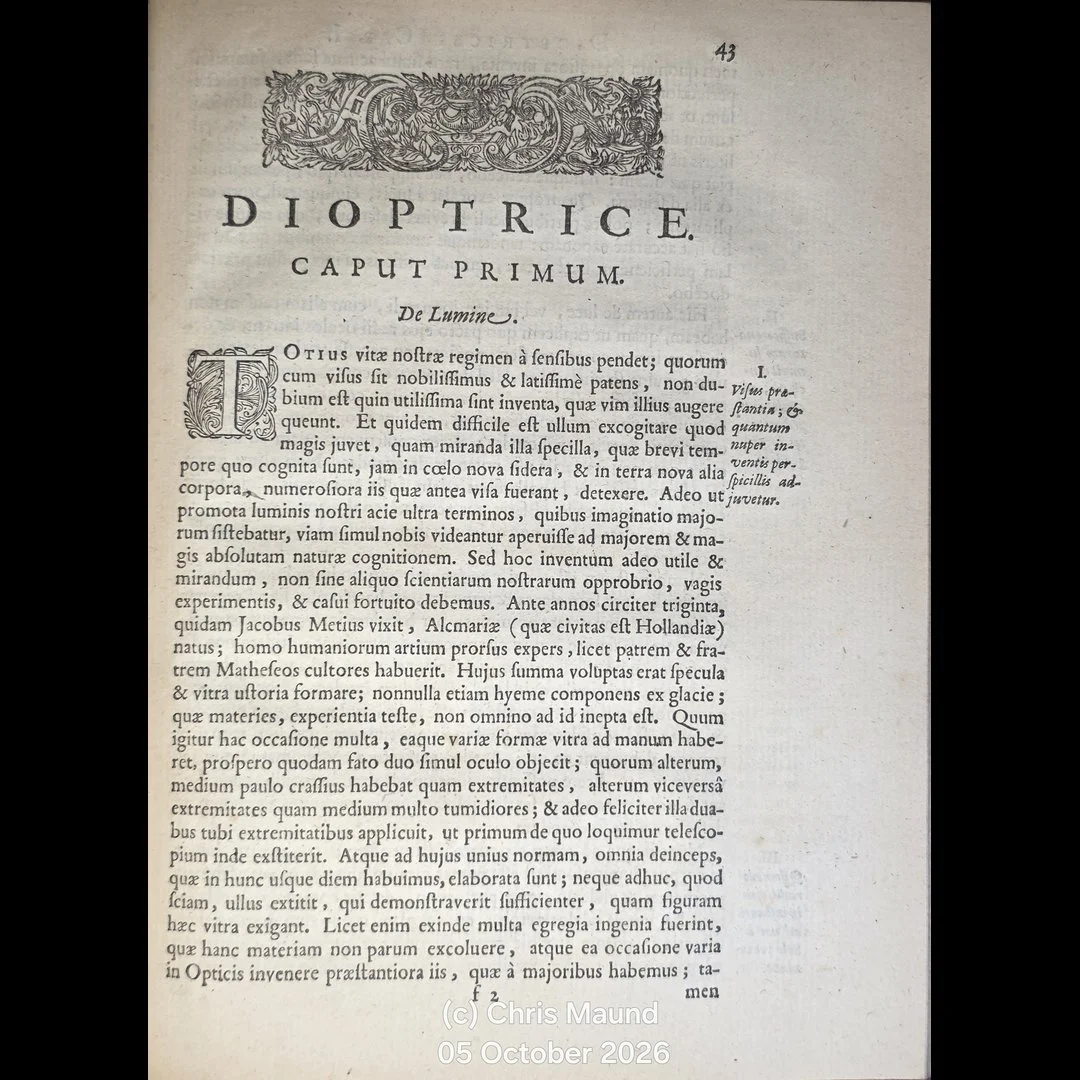 Image 45 of 88
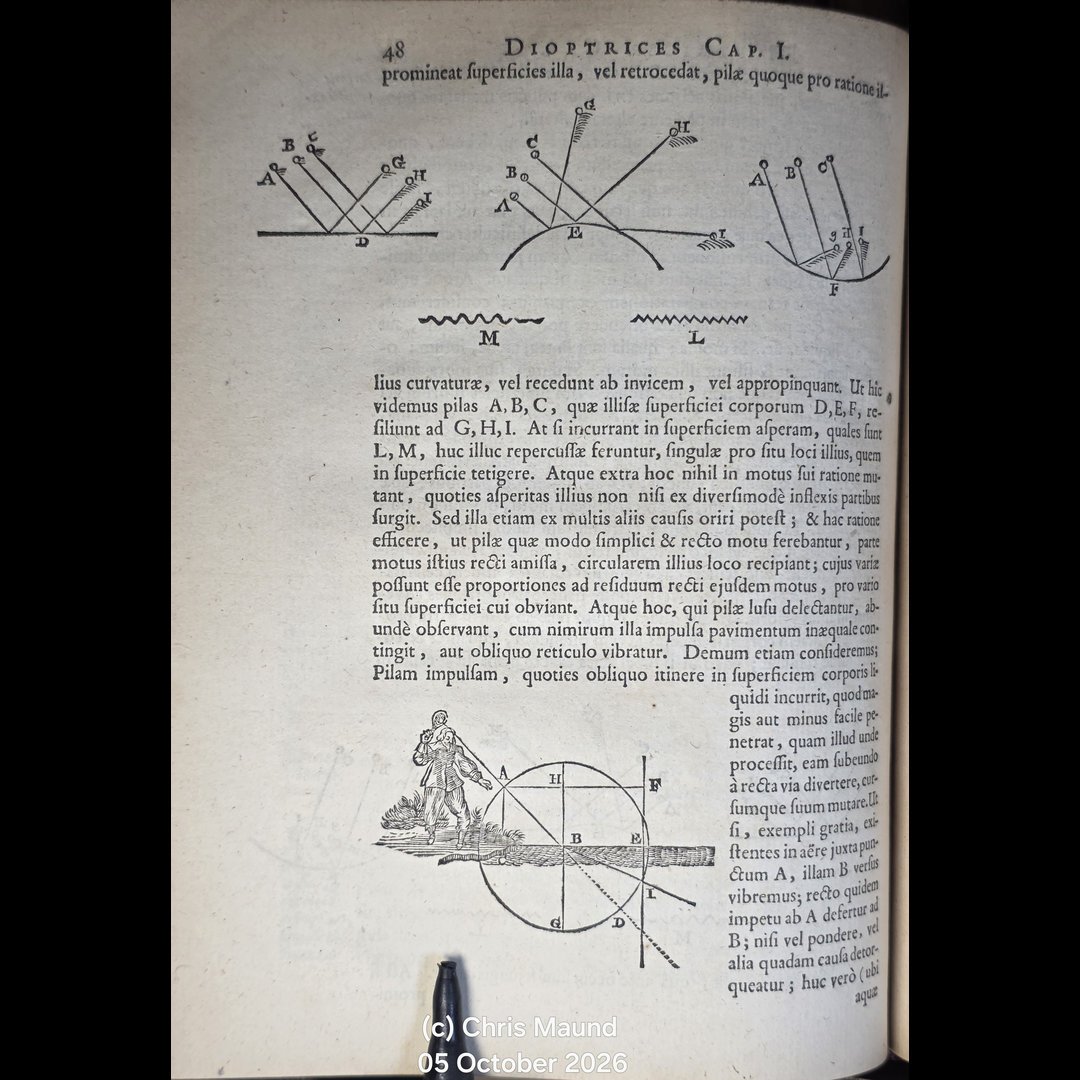 Image 46 of 88
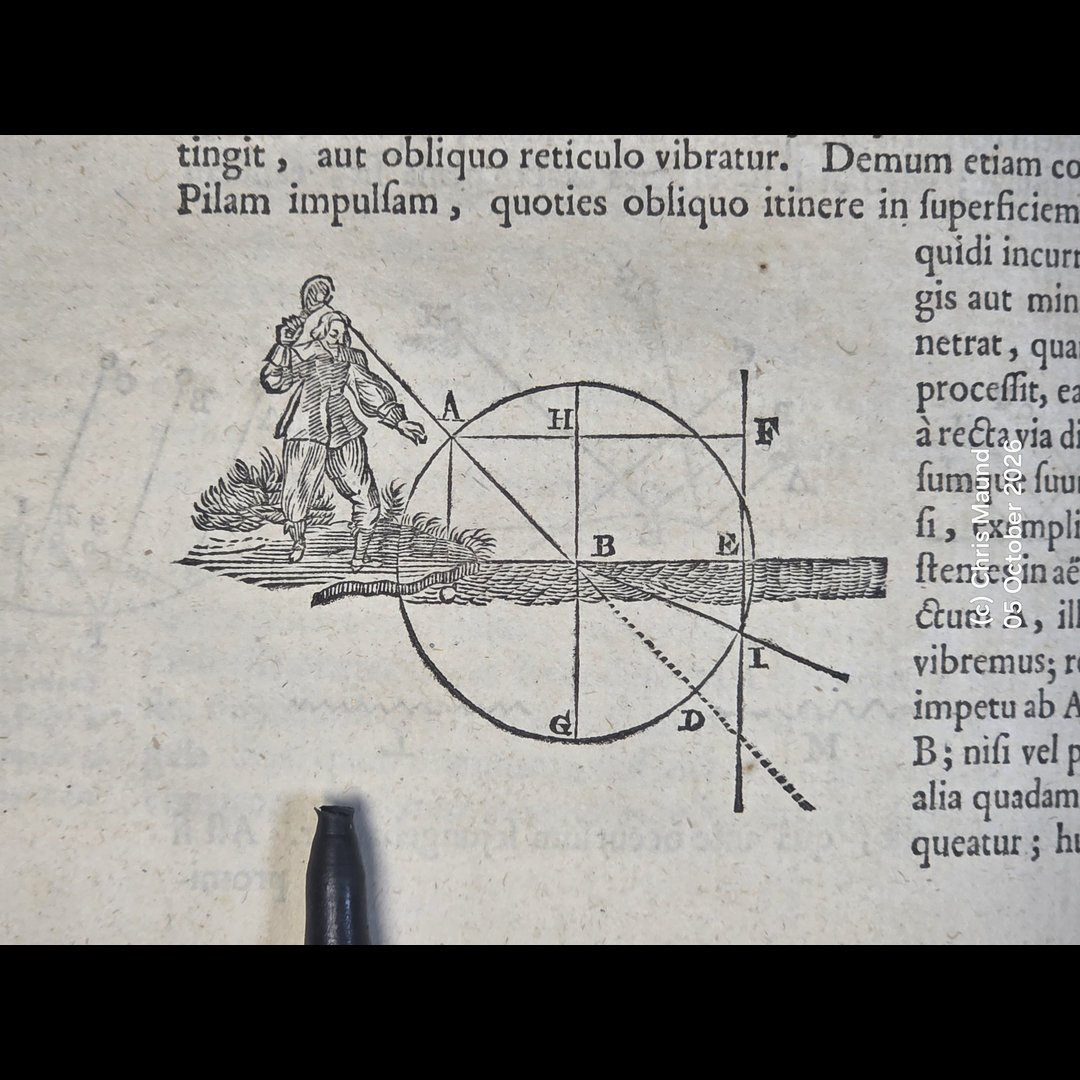 Image 47 of 88
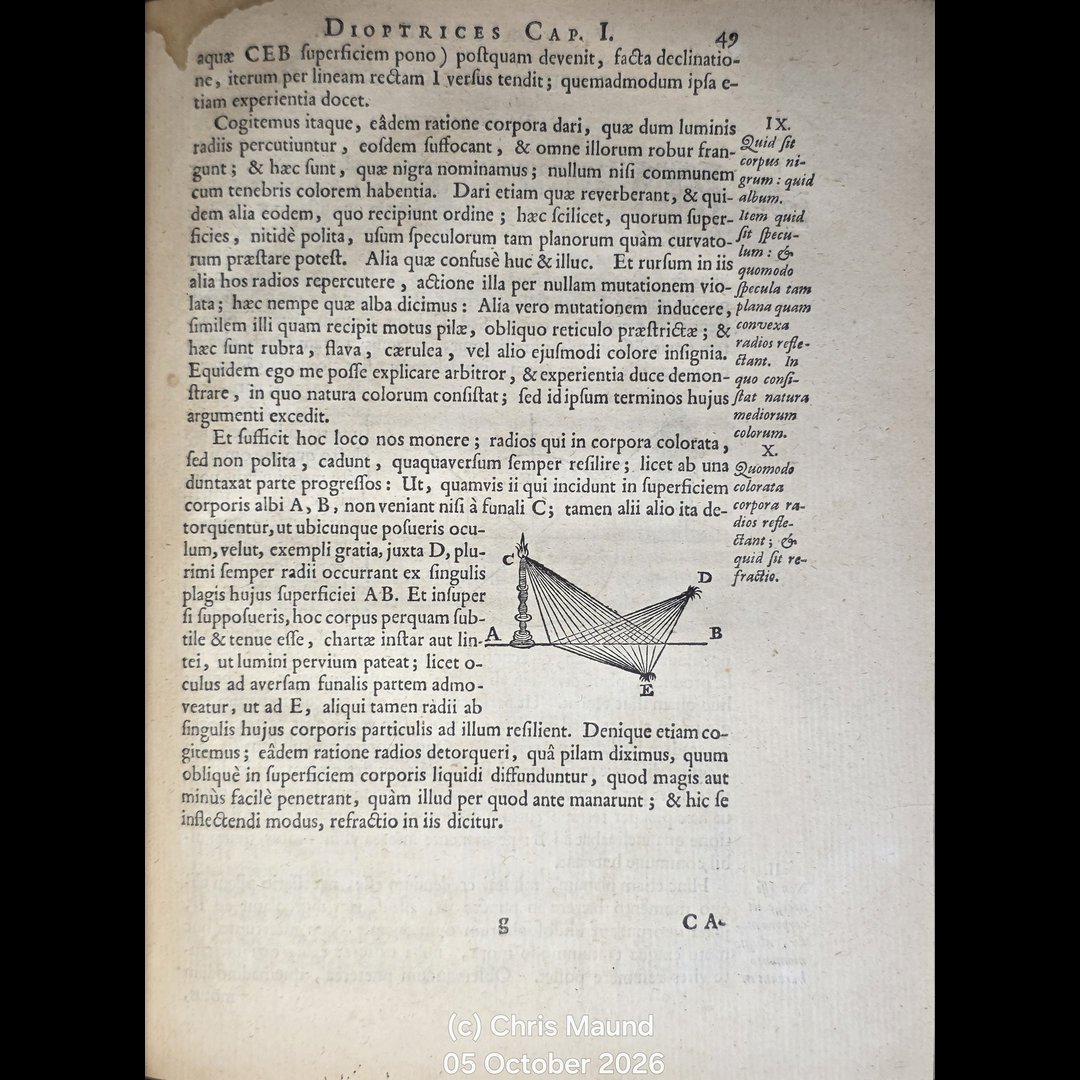 Image 48 of 88
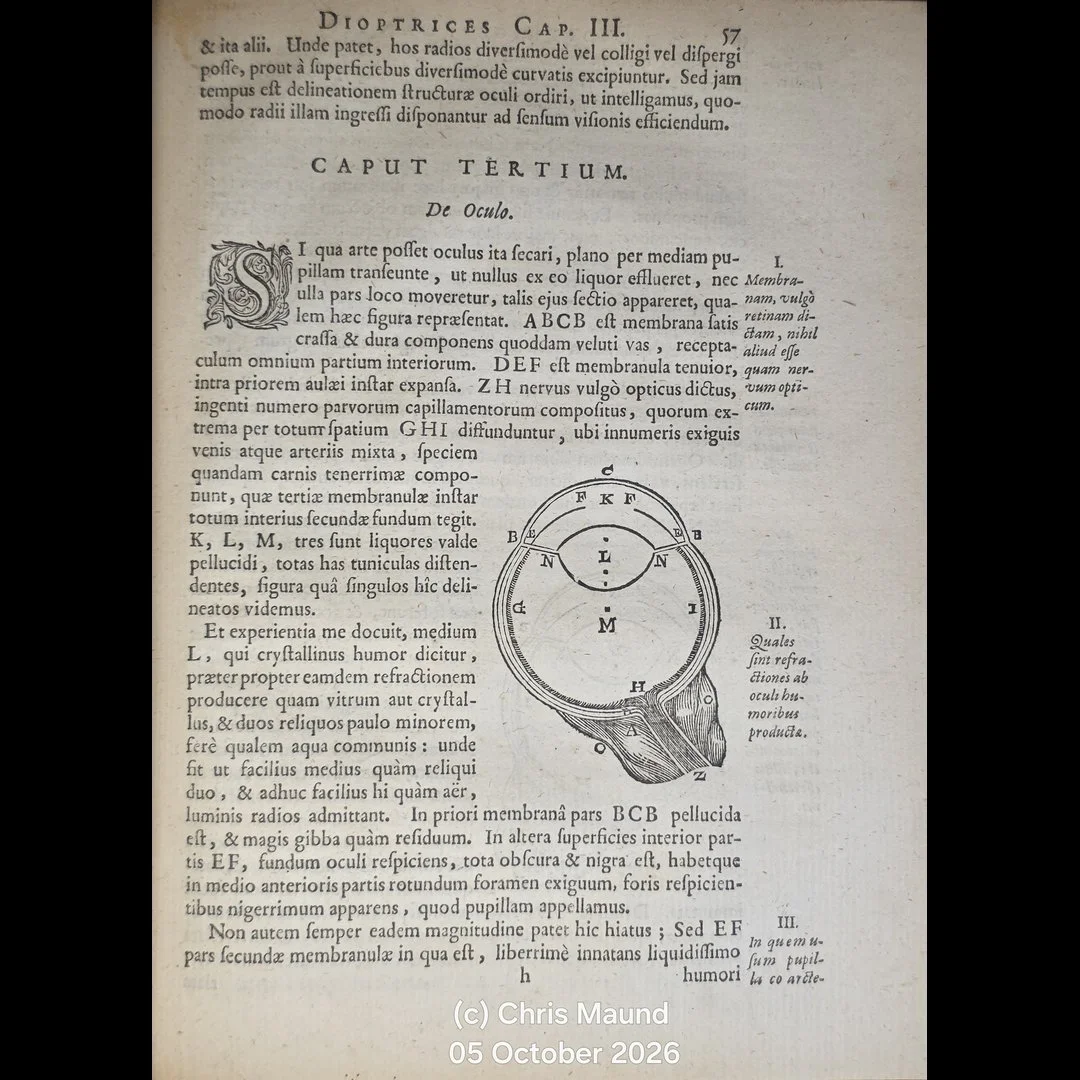 Image 49 of 88
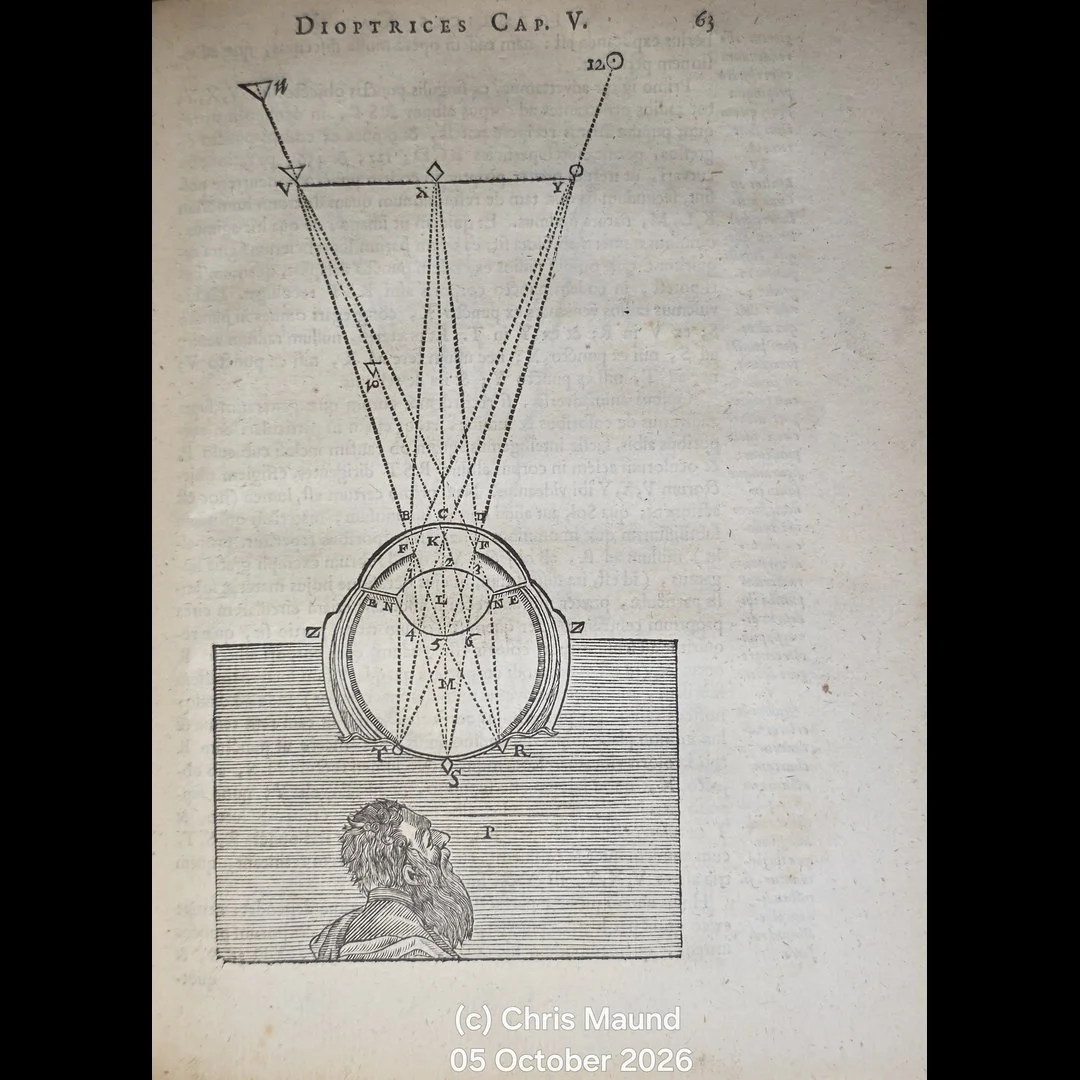 Image 50 of 88
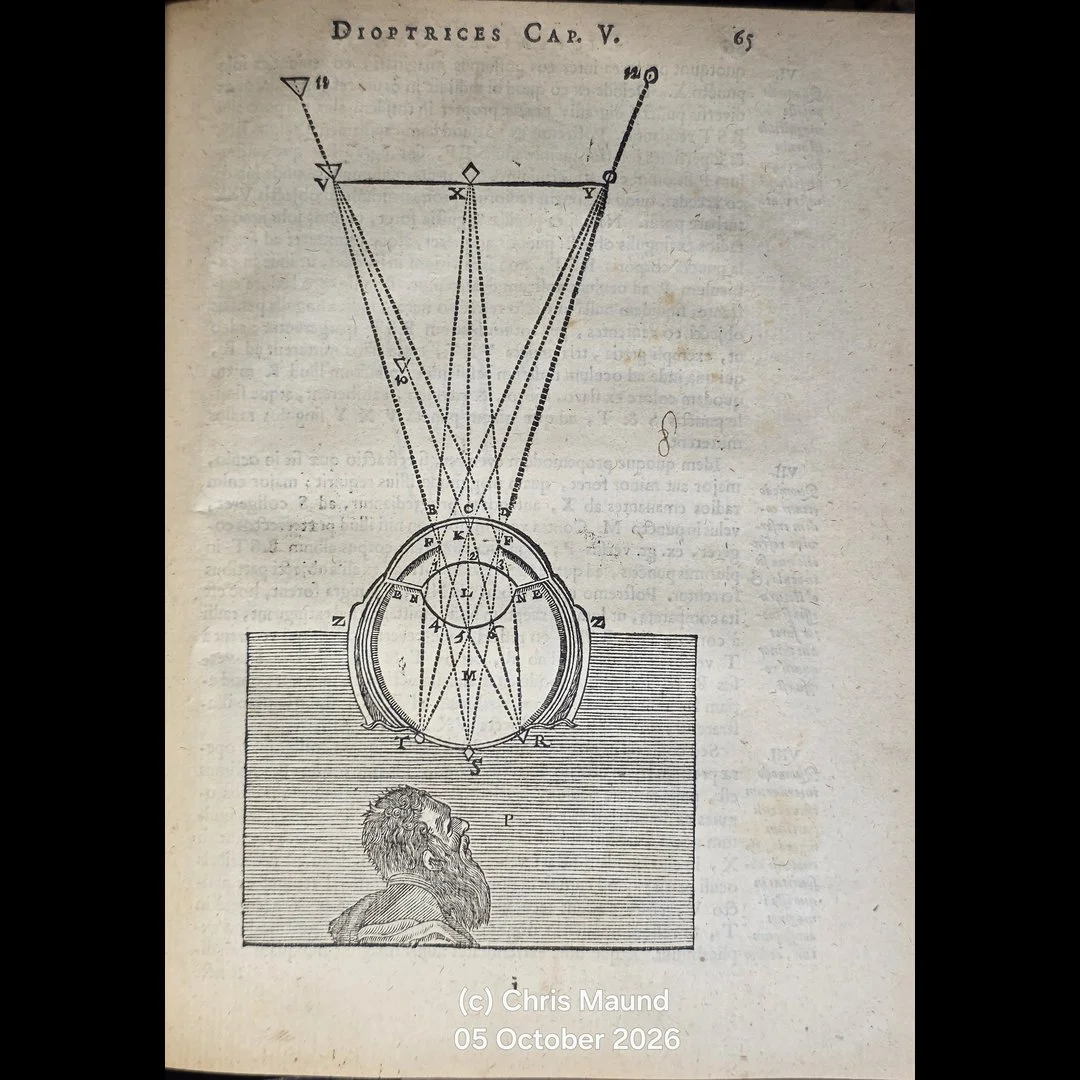 Image 51 of 88
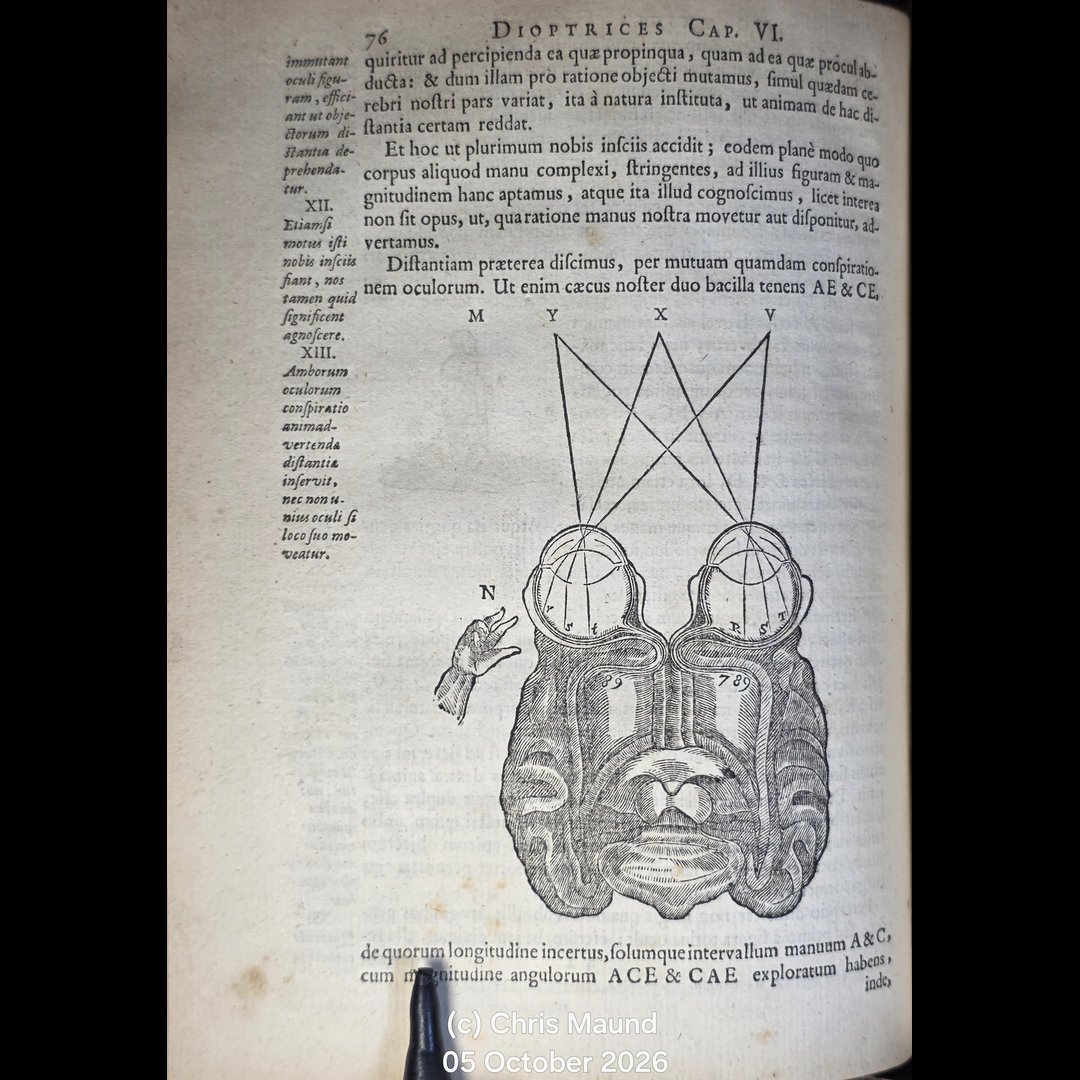 Image 52 of 88
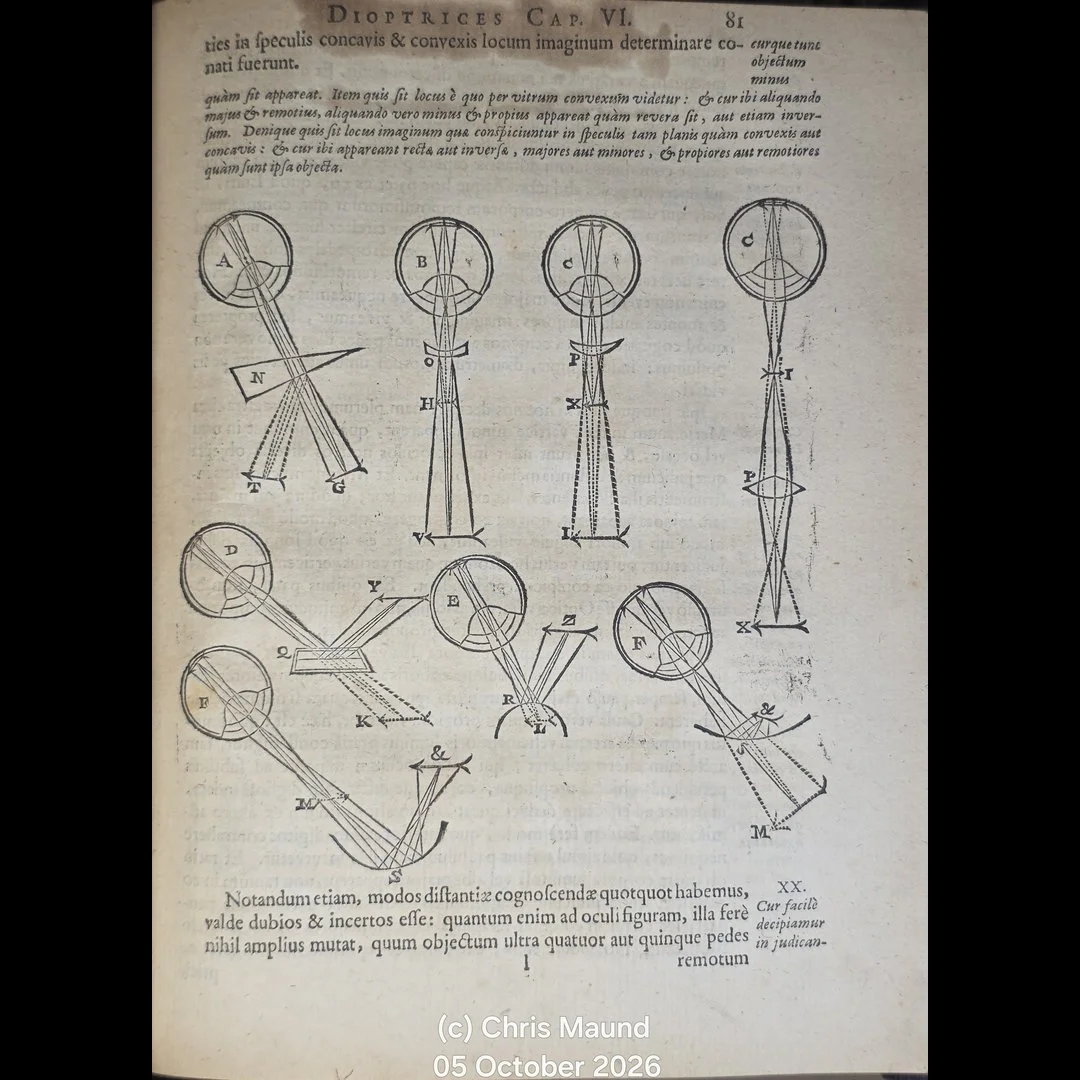 Image 53 of 88
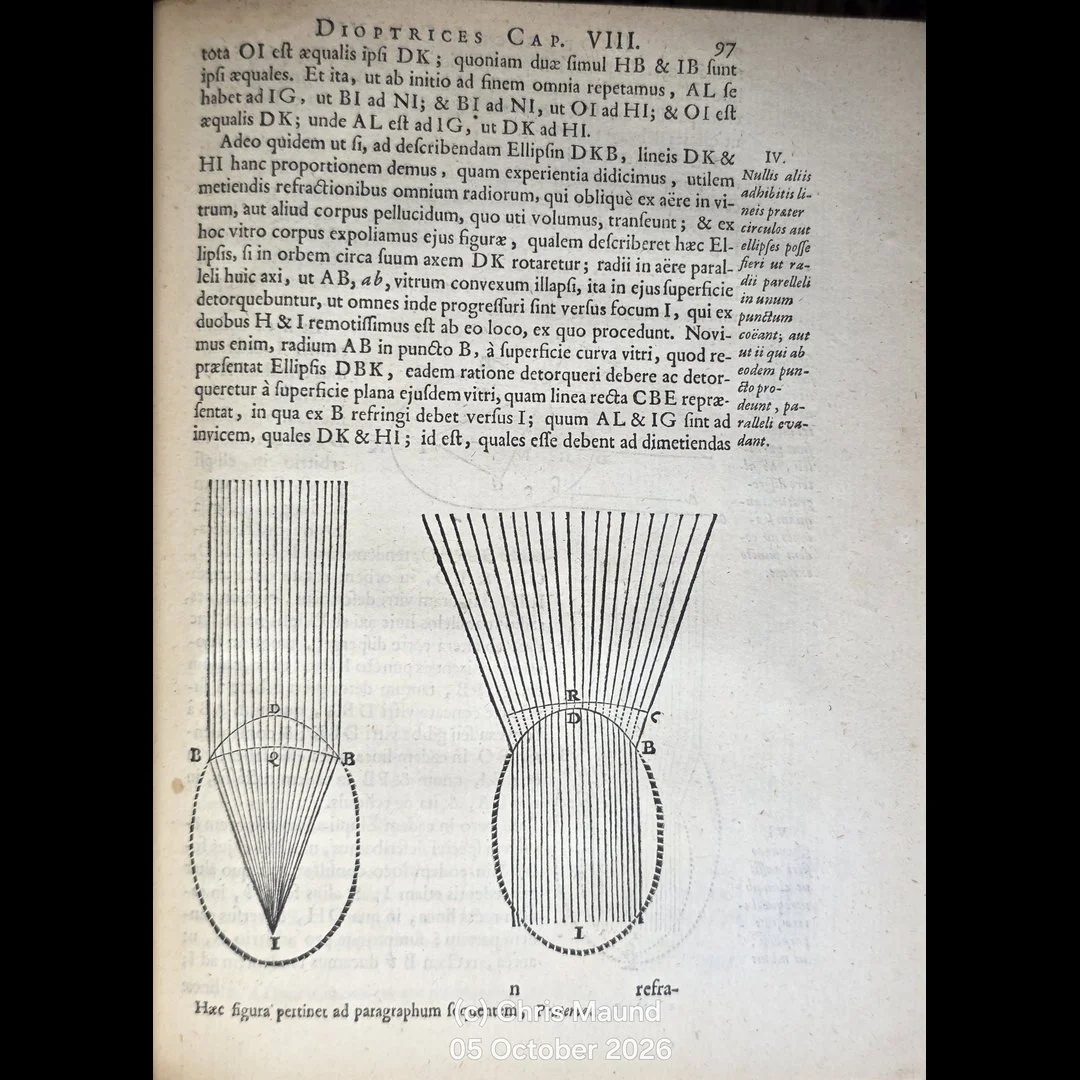 Image 54 of 88
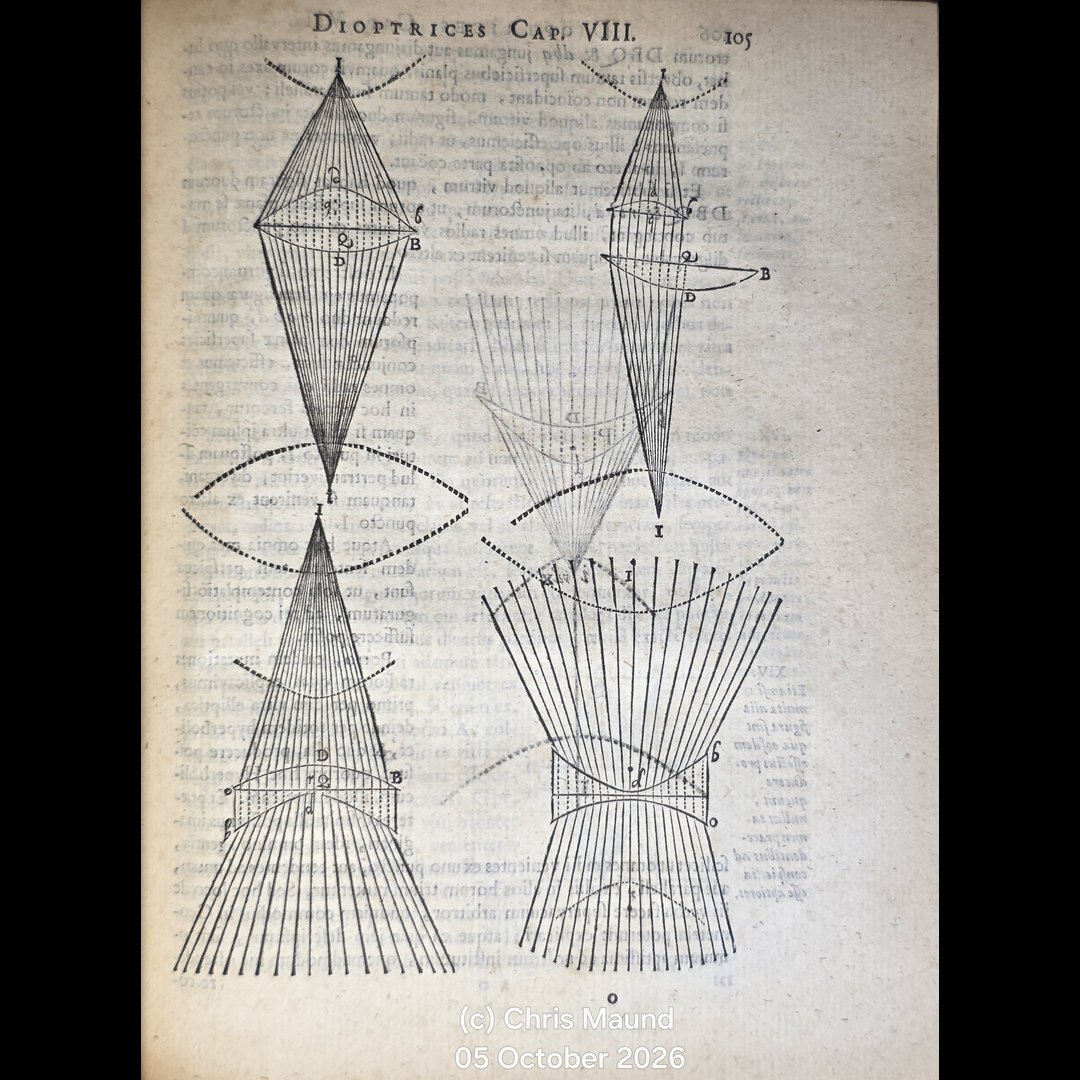 Image 55 of 88
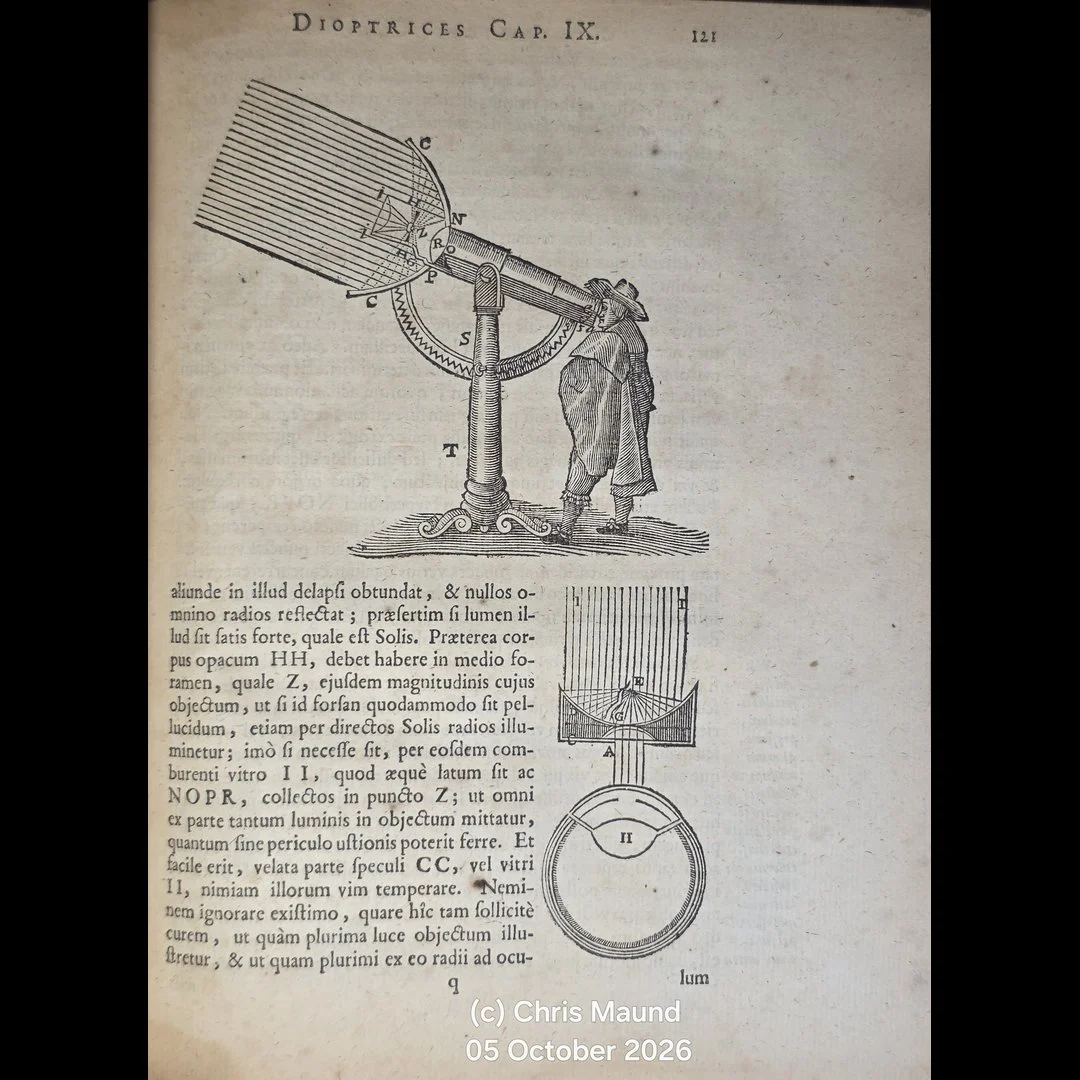 Image 56 of 88
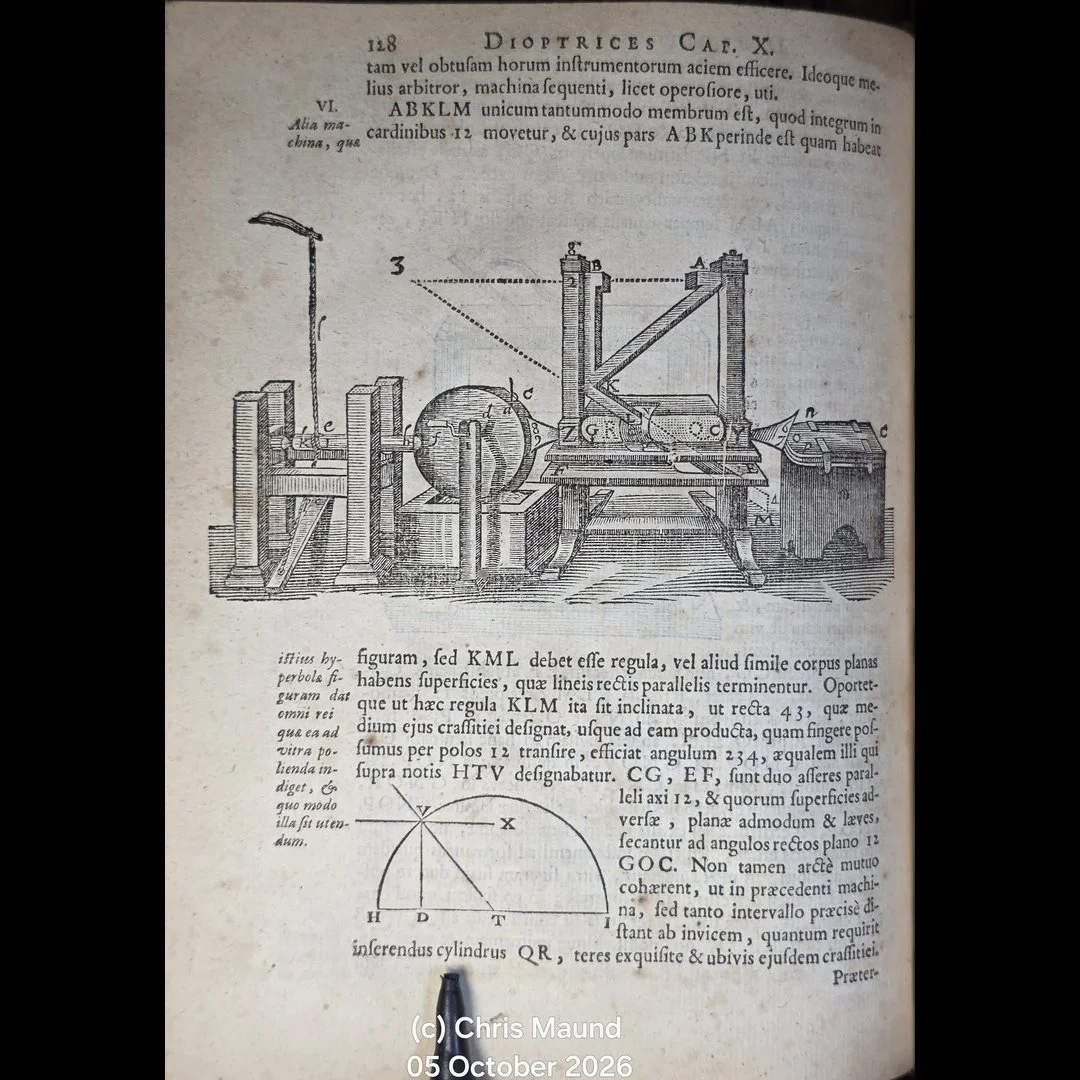 Image 57 of 88
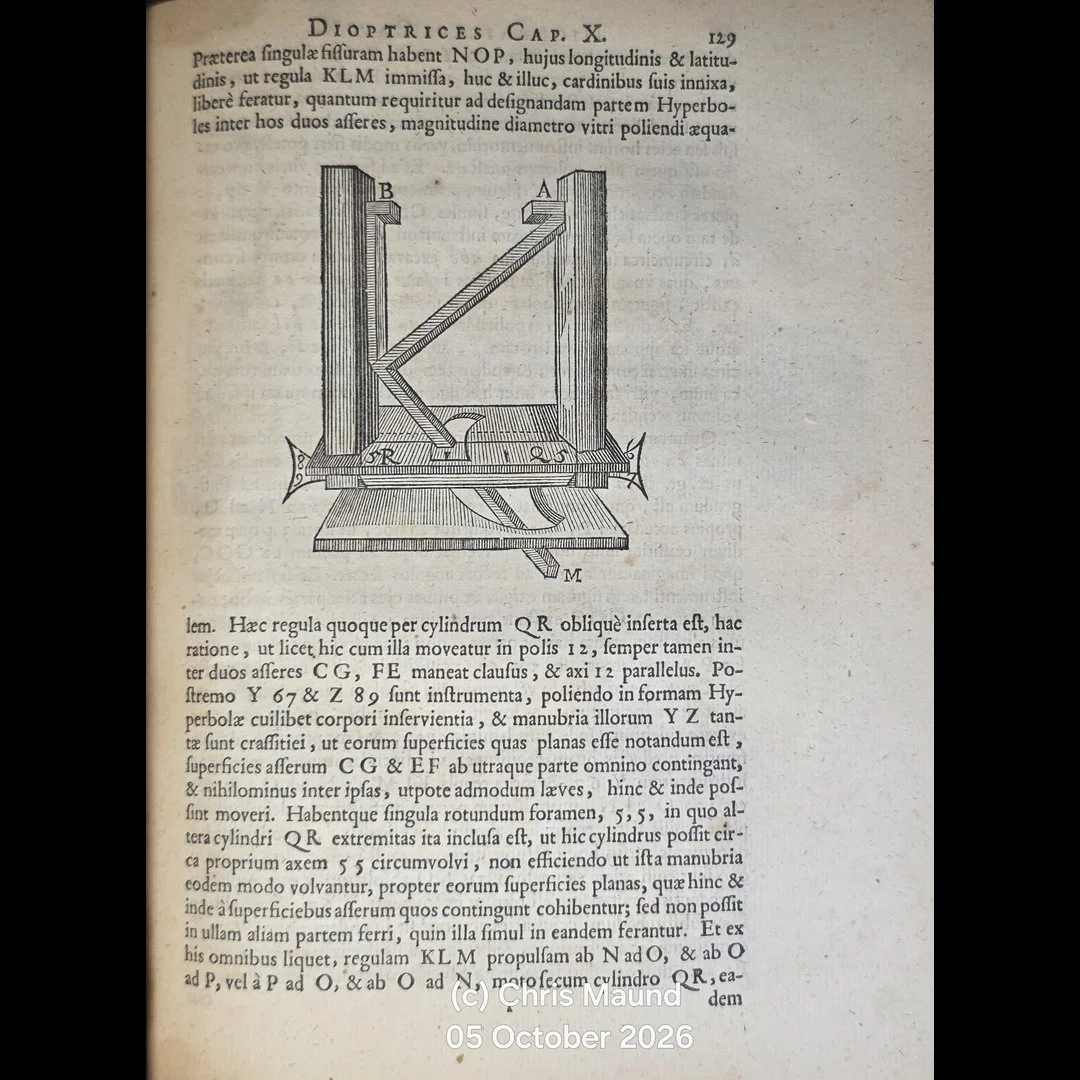 Image 58 of 88
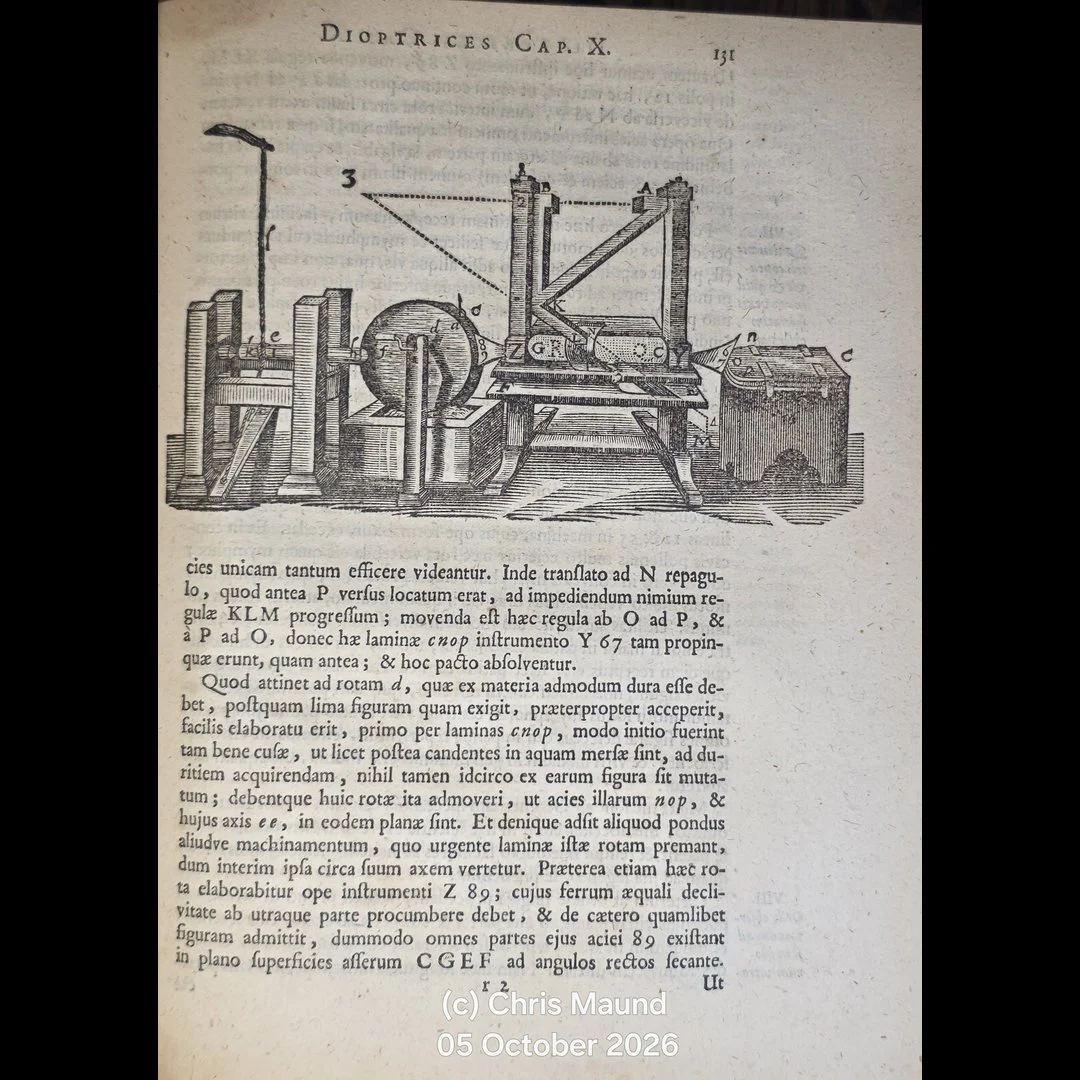 Image 59 of 88
 Image 60 of 88
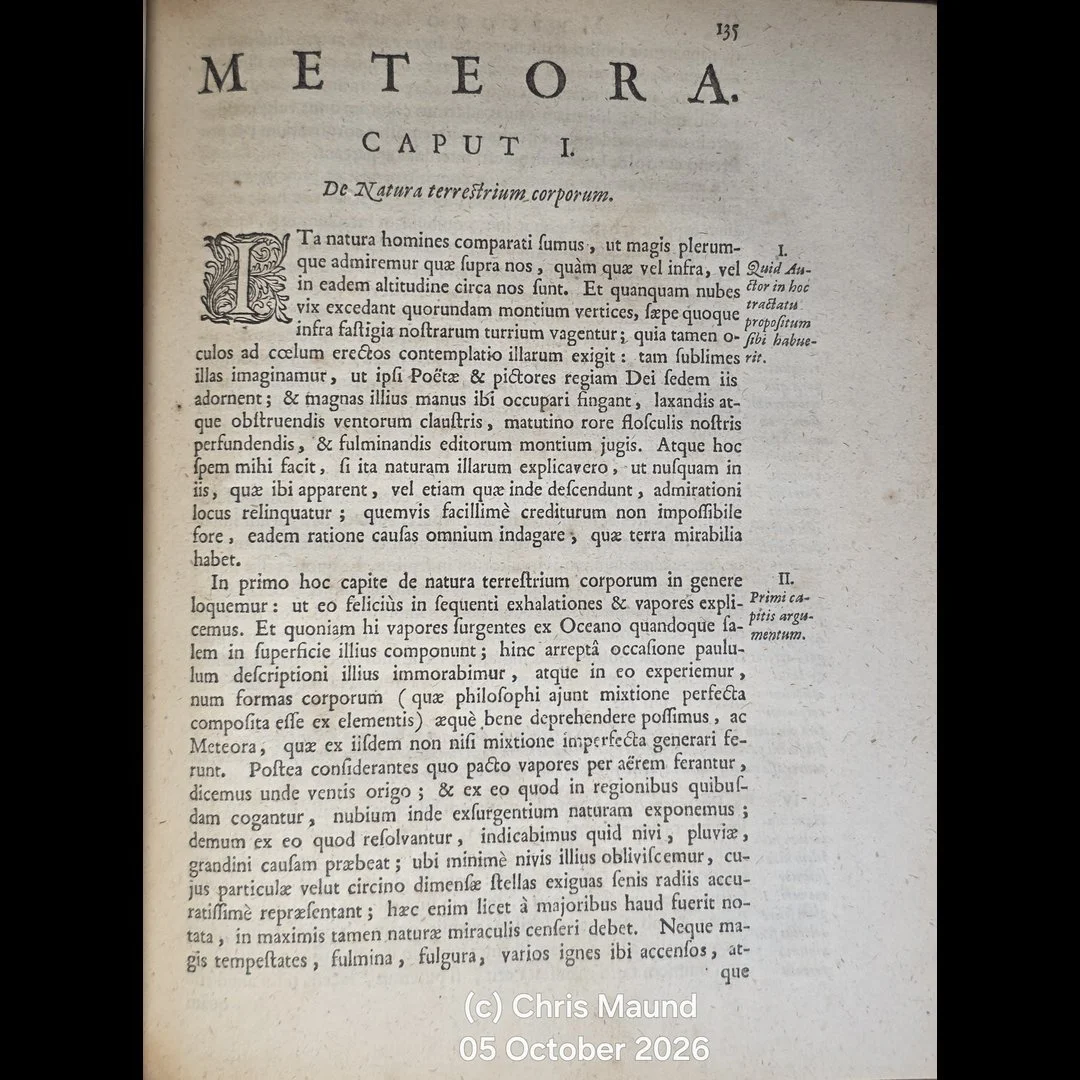 Image 61 of 88
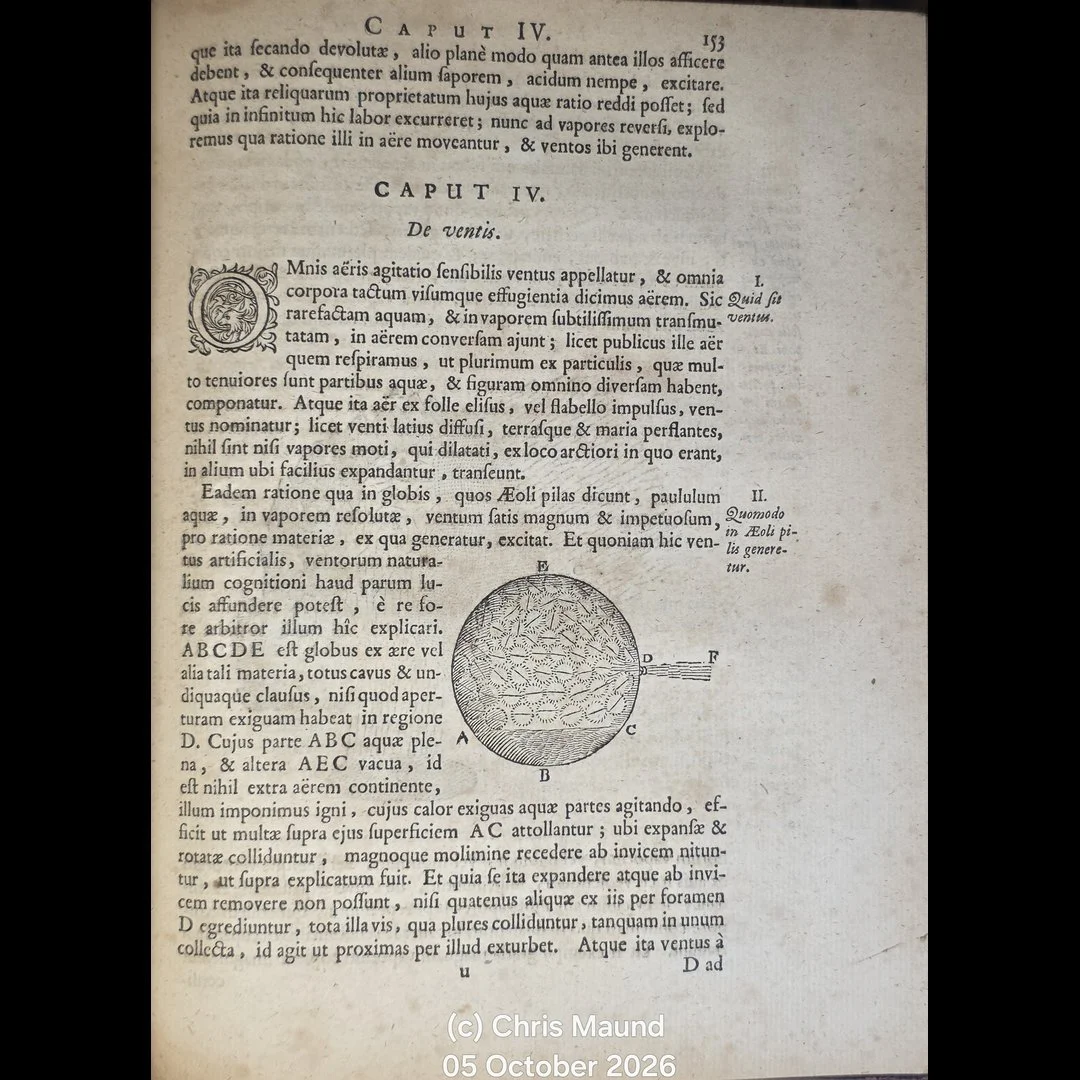 Image 62 of 88
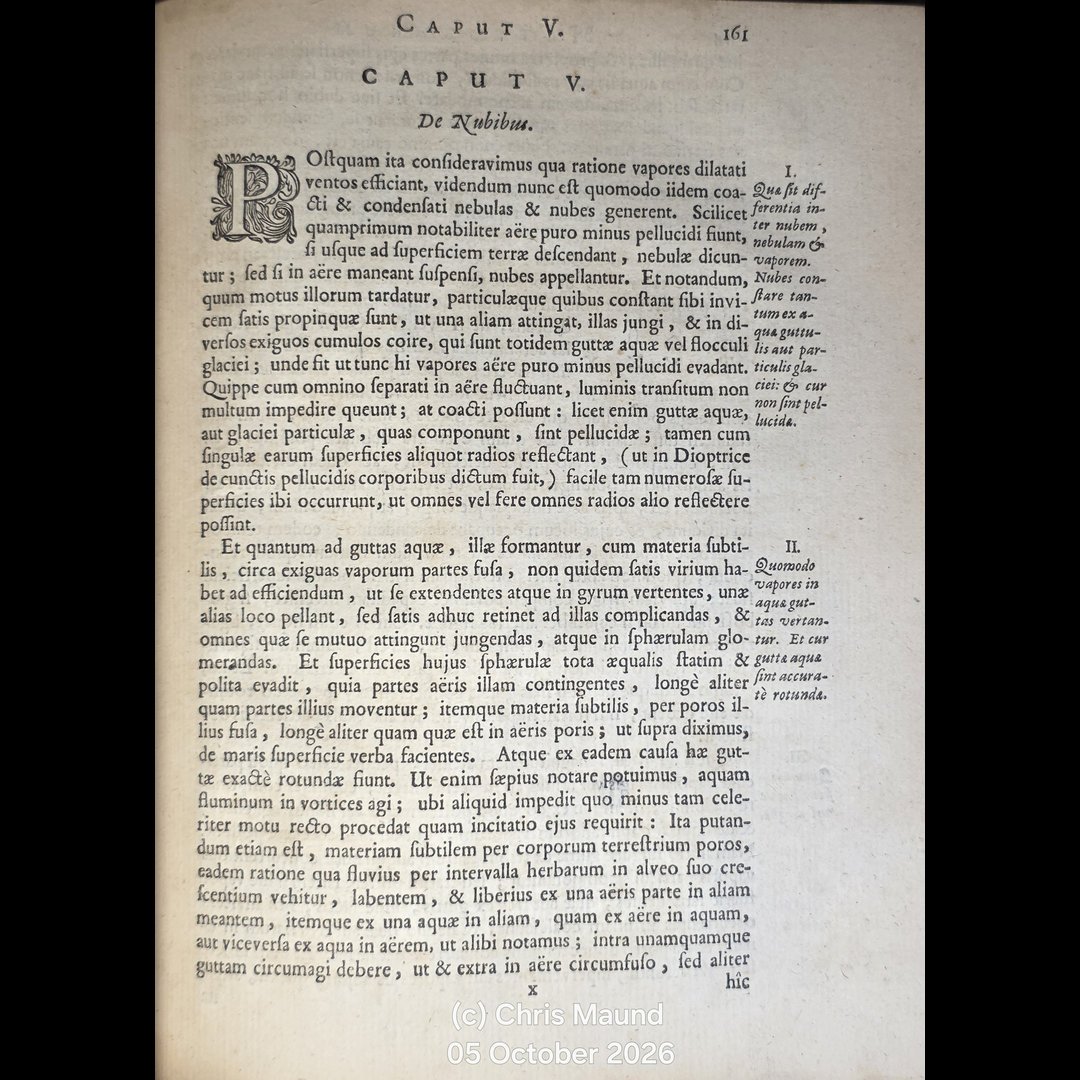 Image 63 of 88
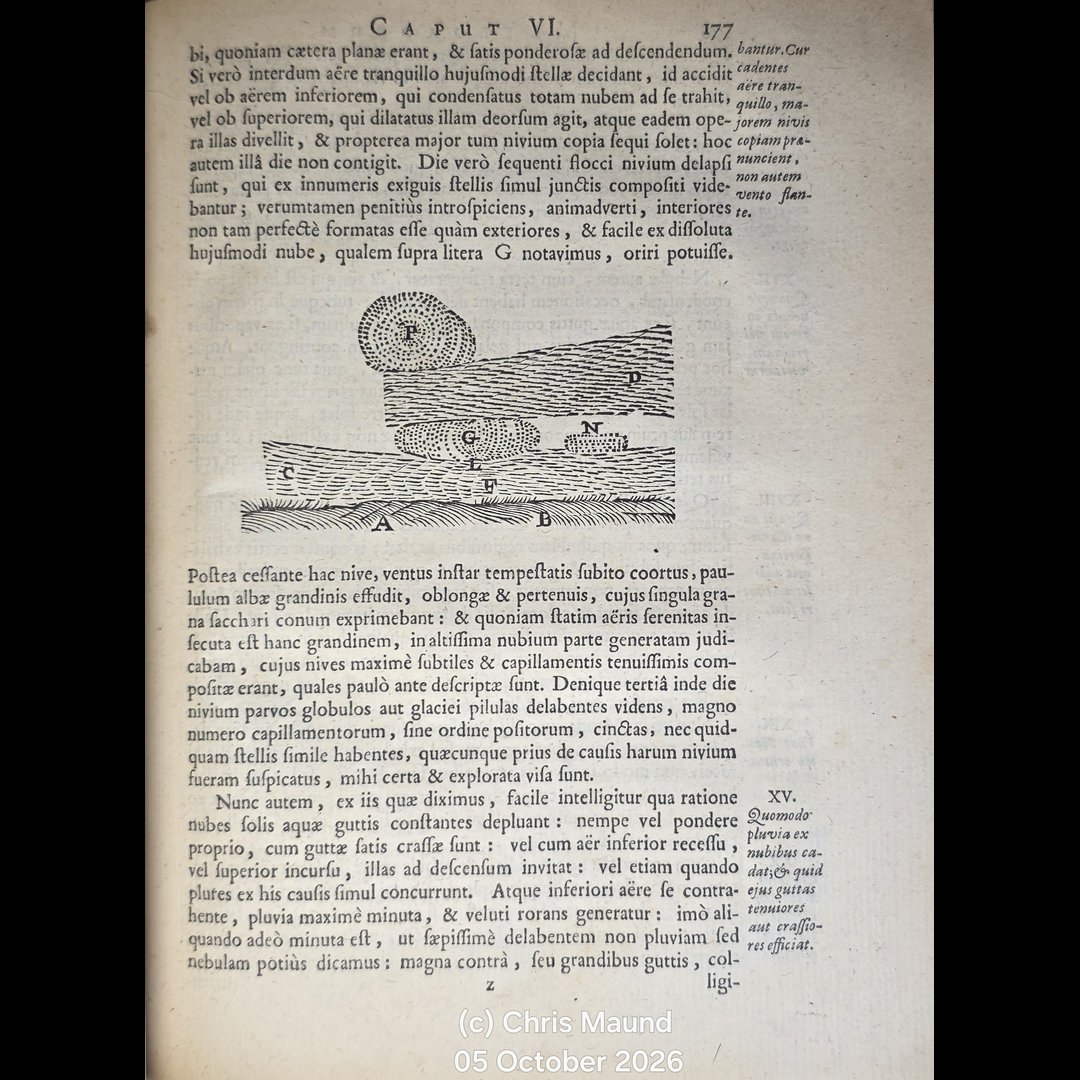 Image 64 of 88
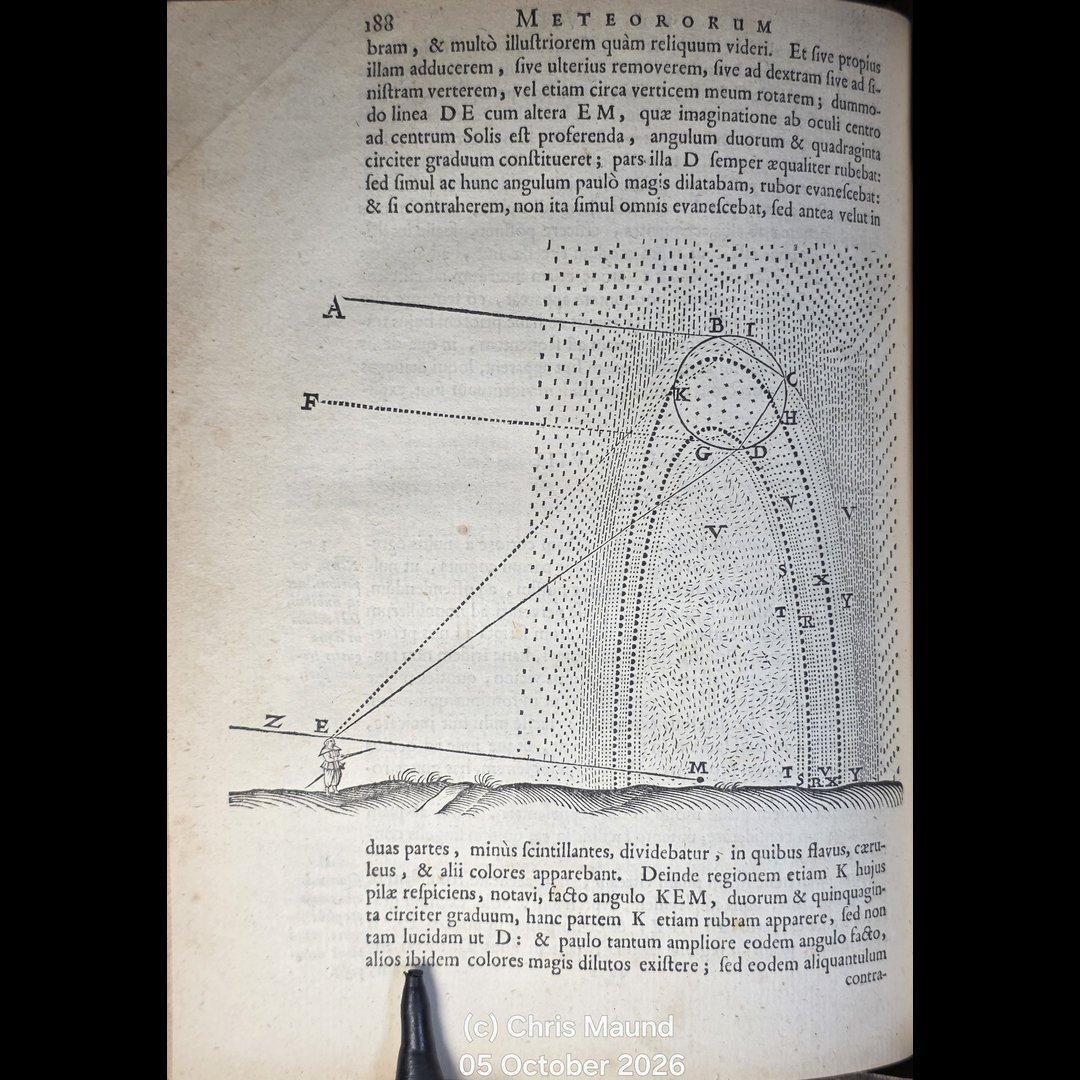 Image 65 of 88
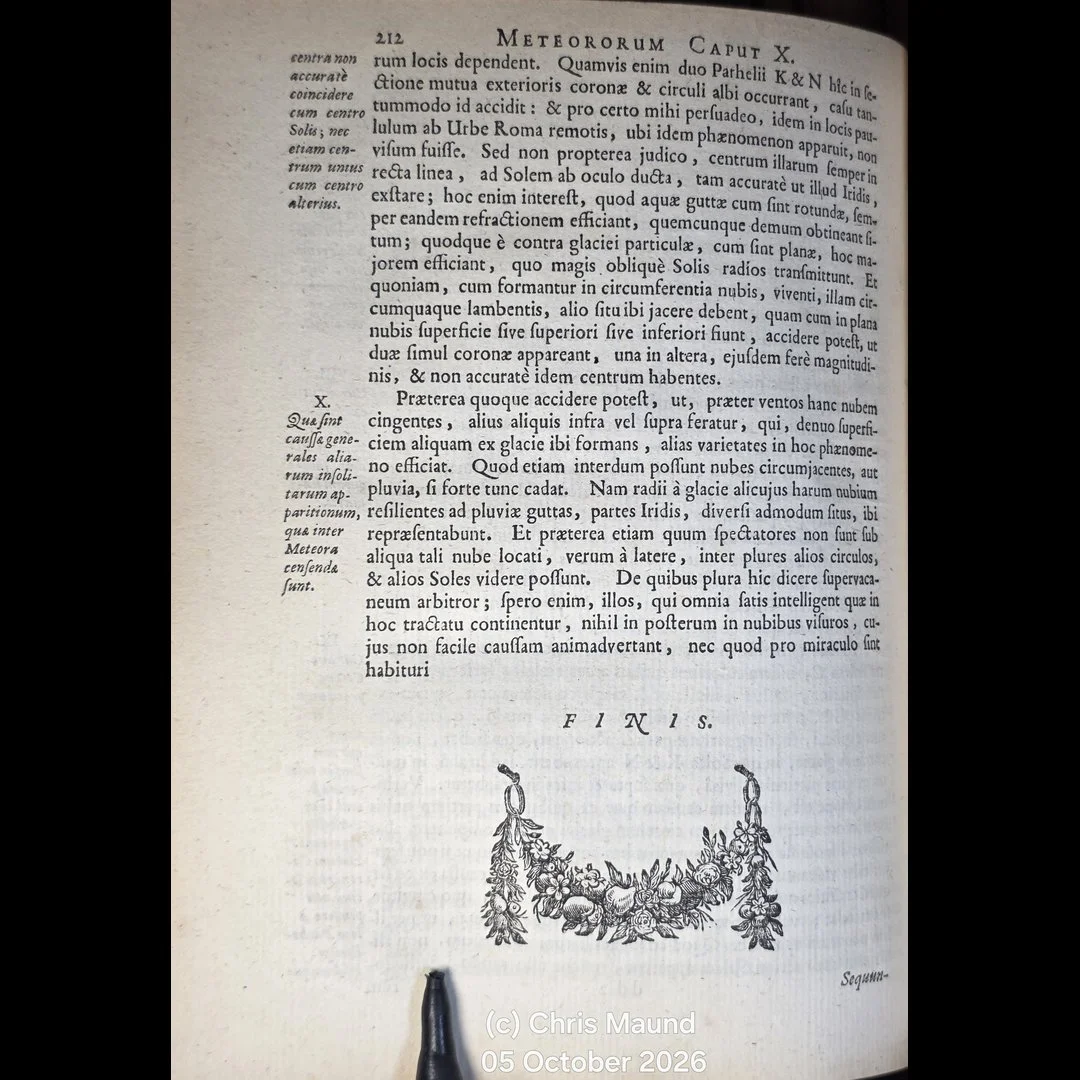 Image 66 of 88
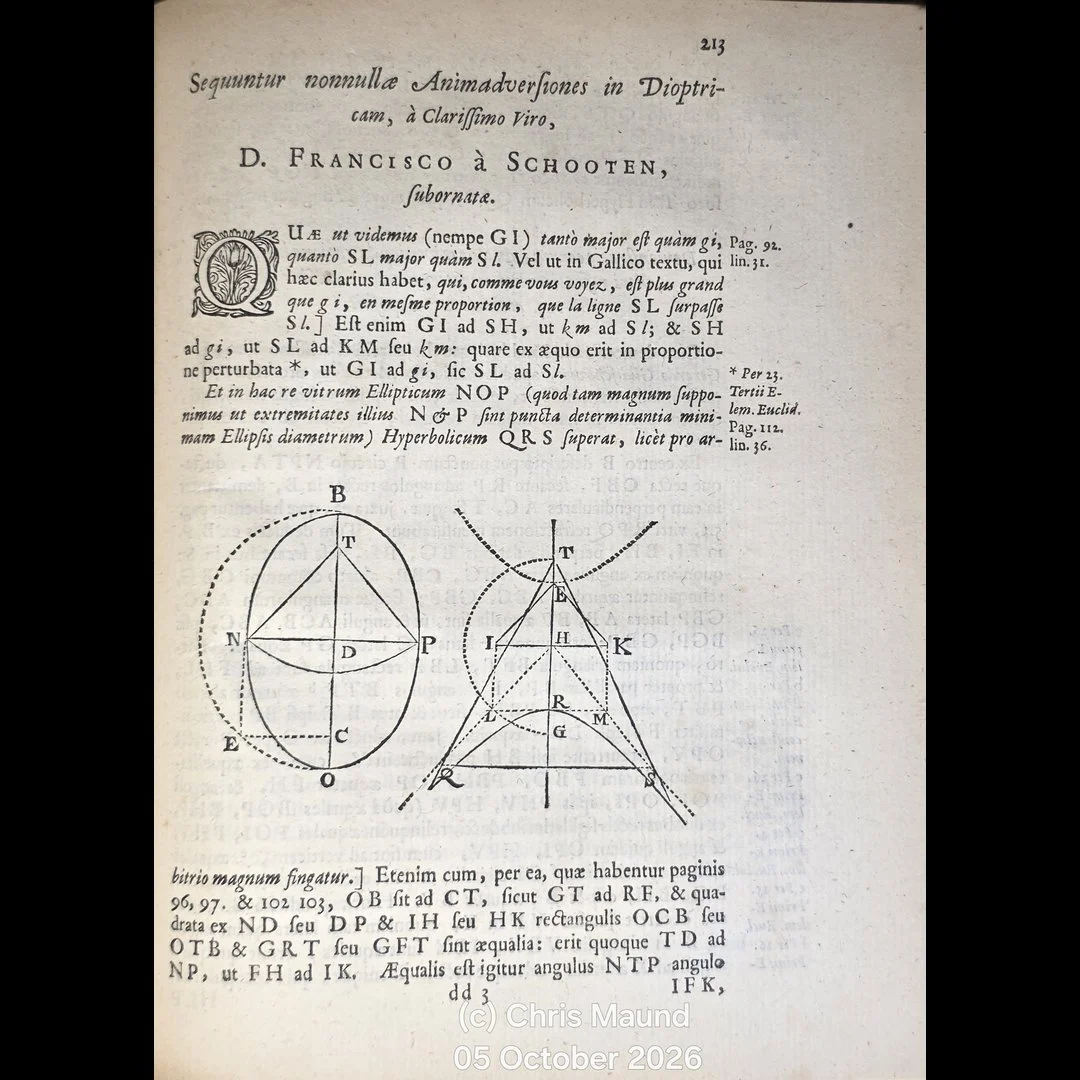 Image 67 of 88
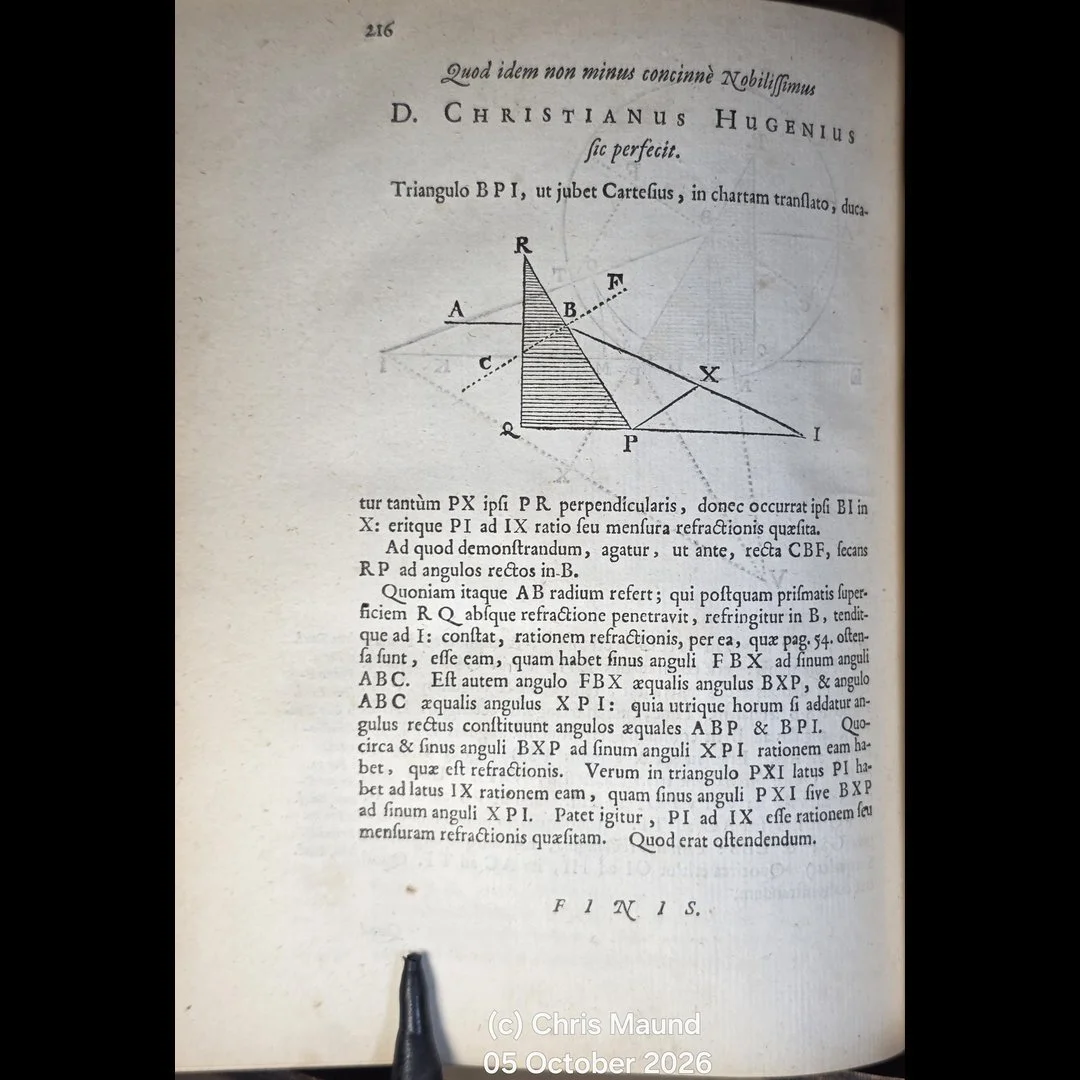 Image 68 of 88
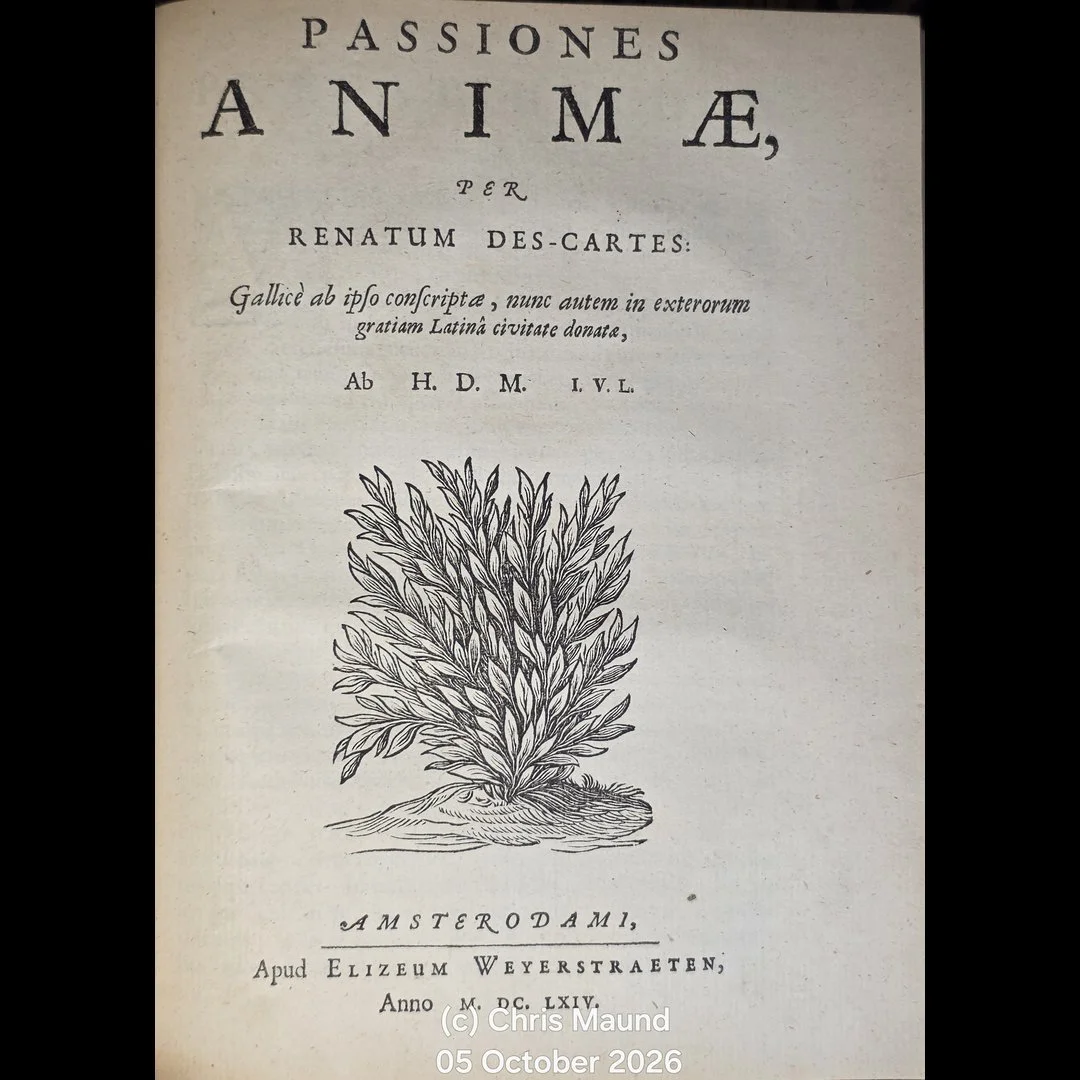 Image 69 of 88
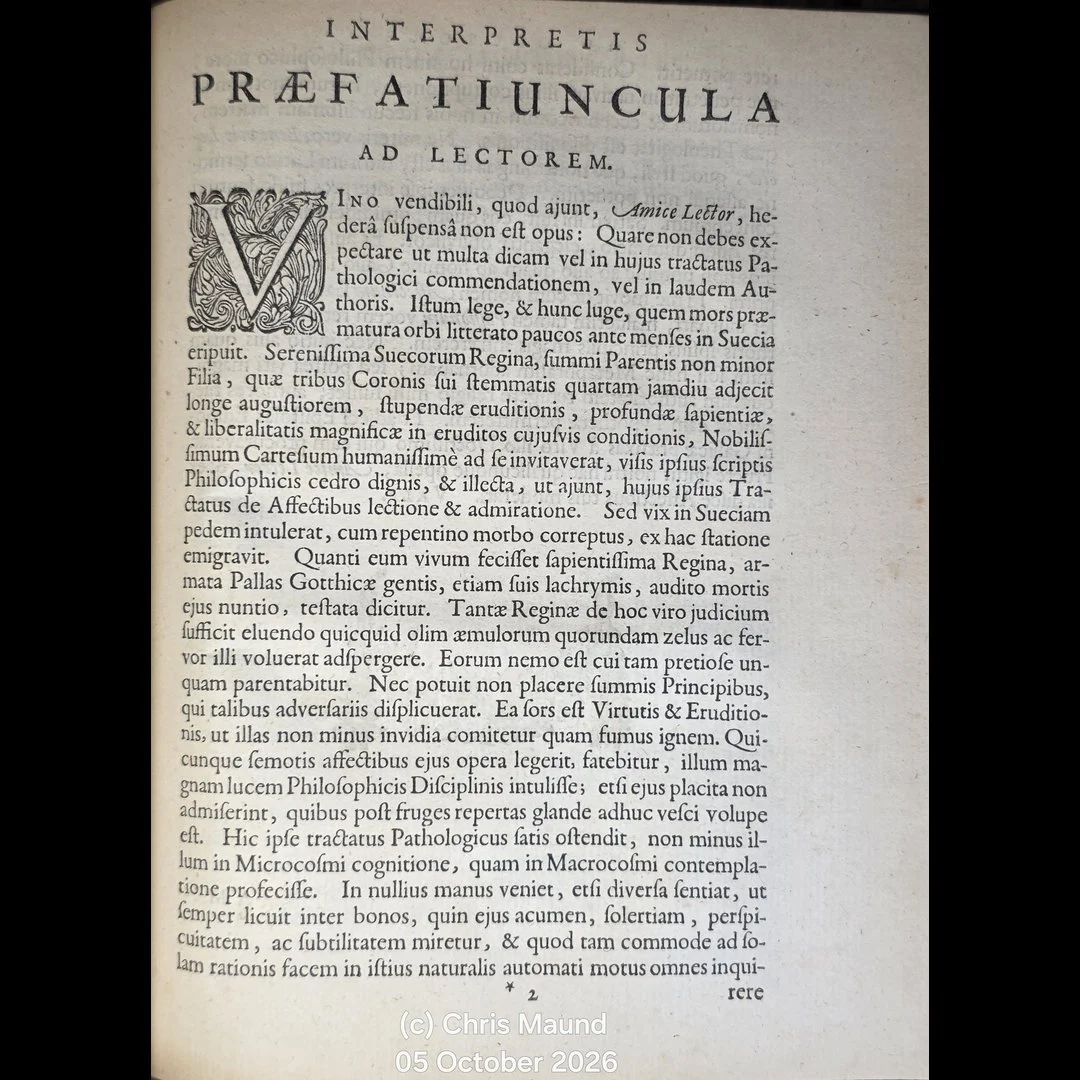 Image 70 of 88
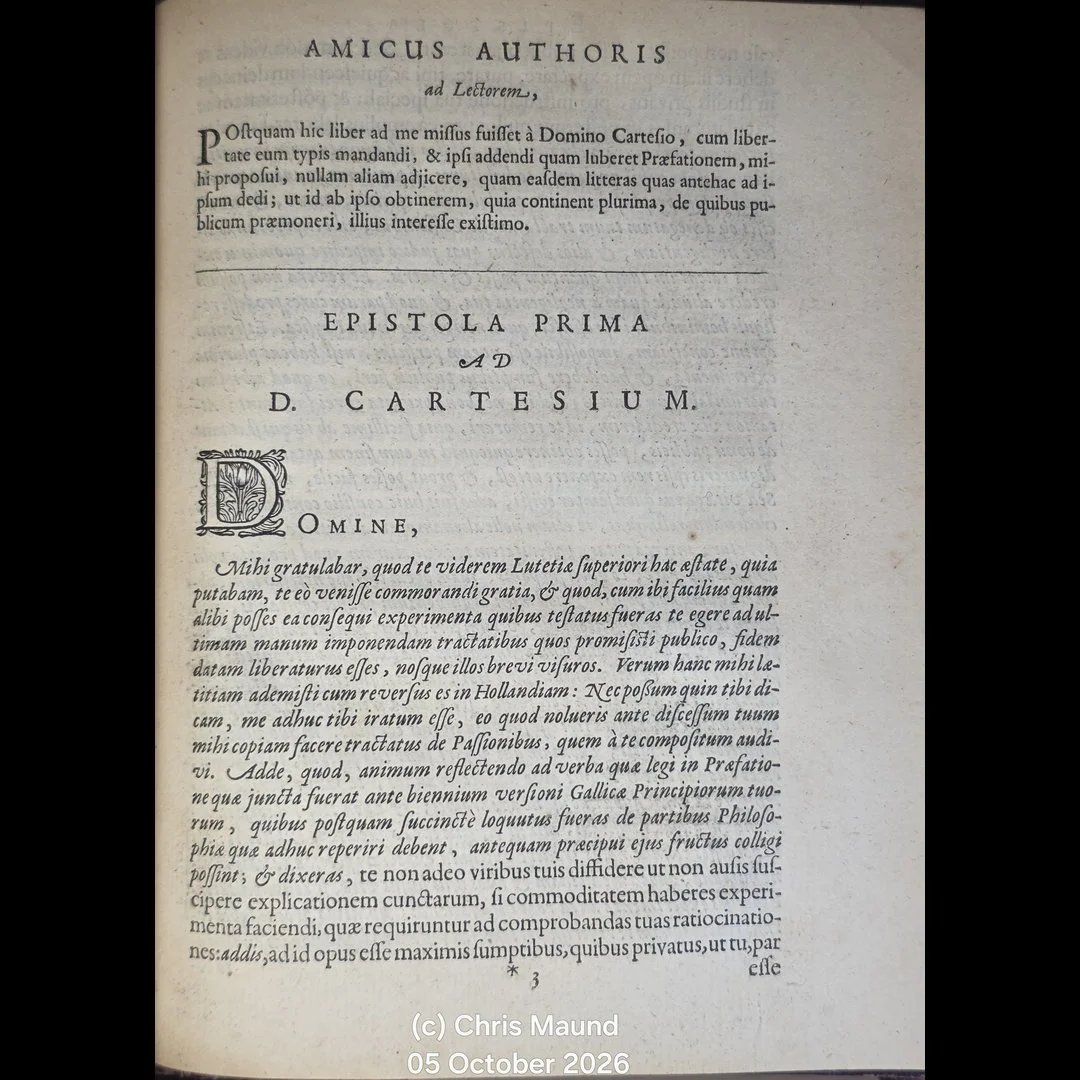 Image 71 of 88
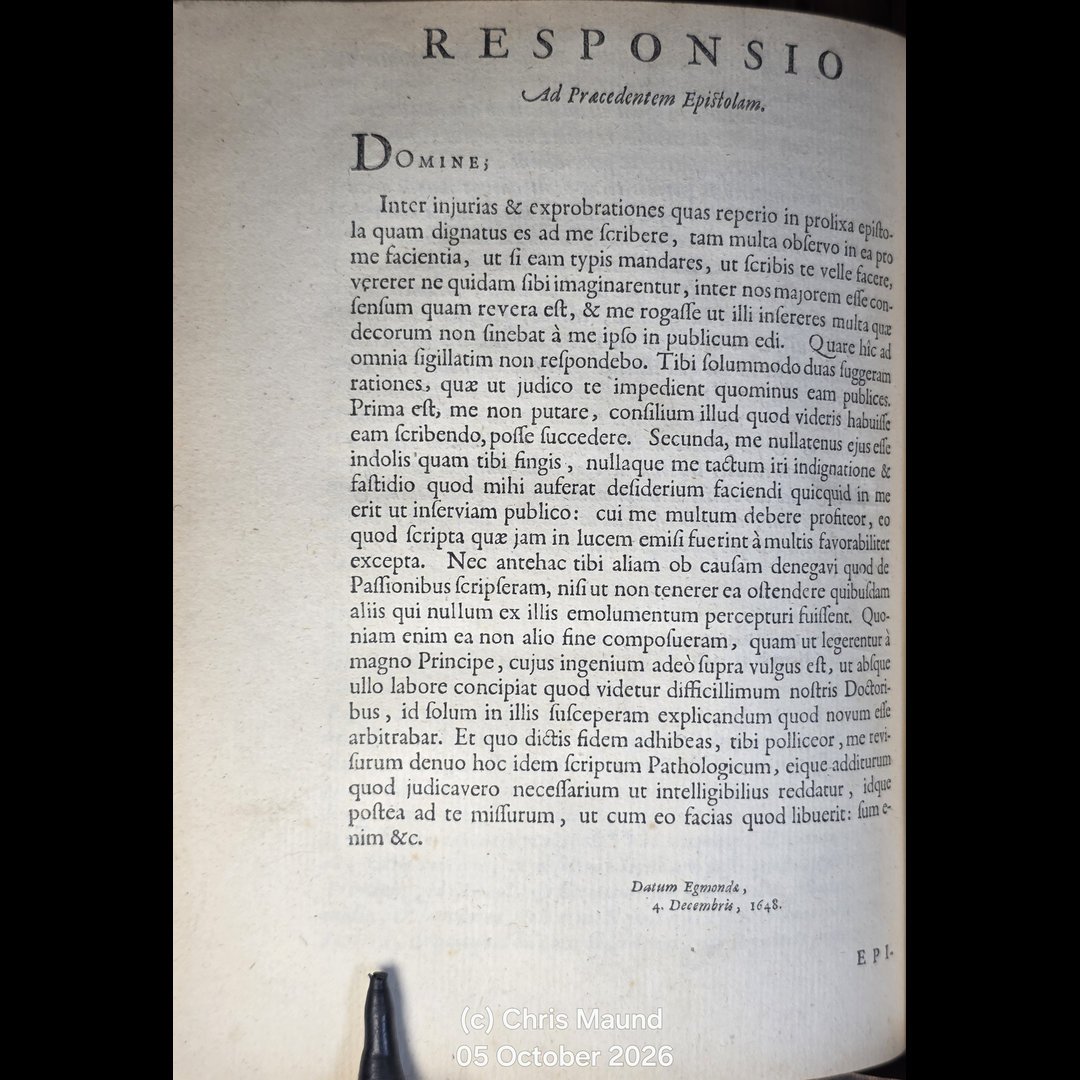 Image 72 of 88
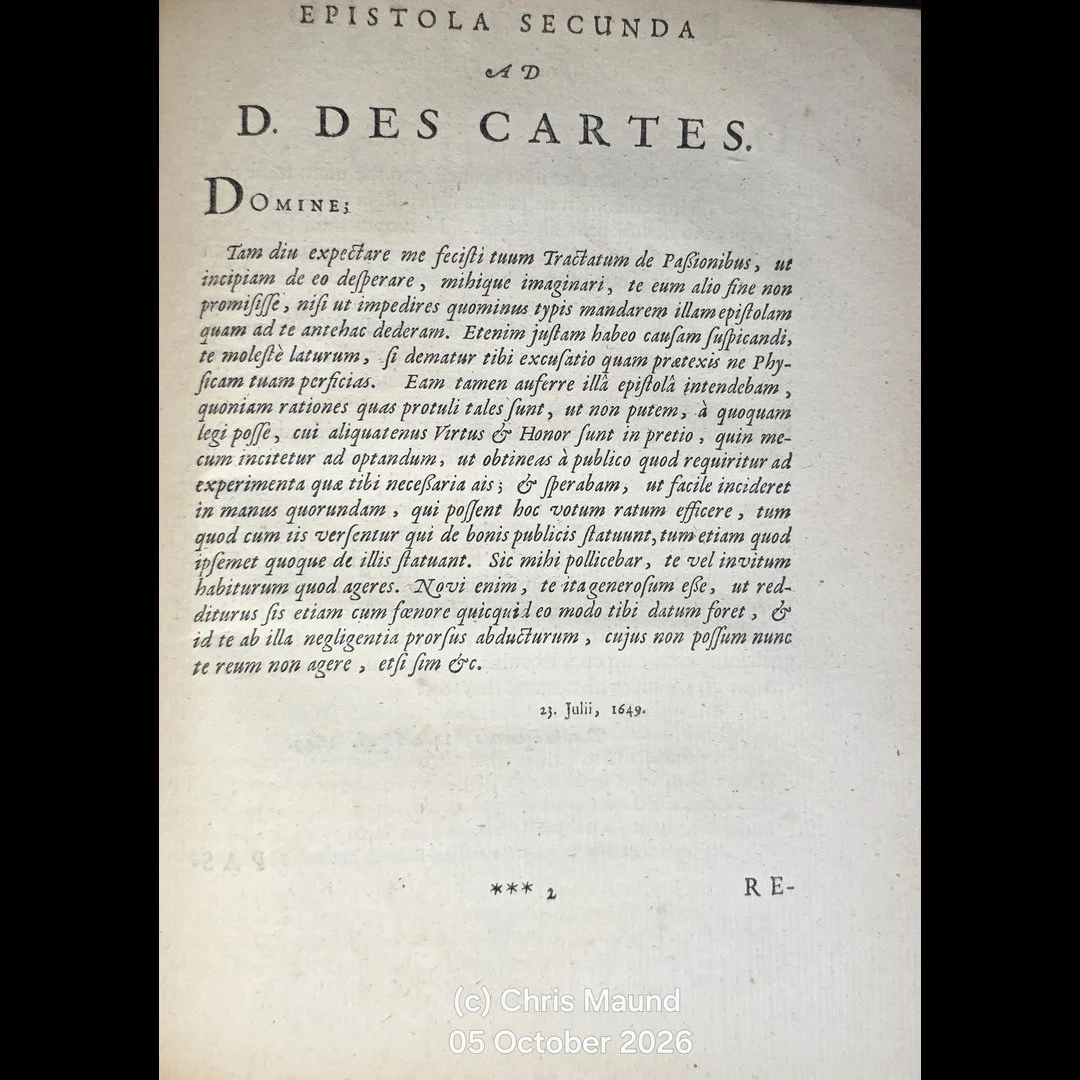 Image 73 of 88
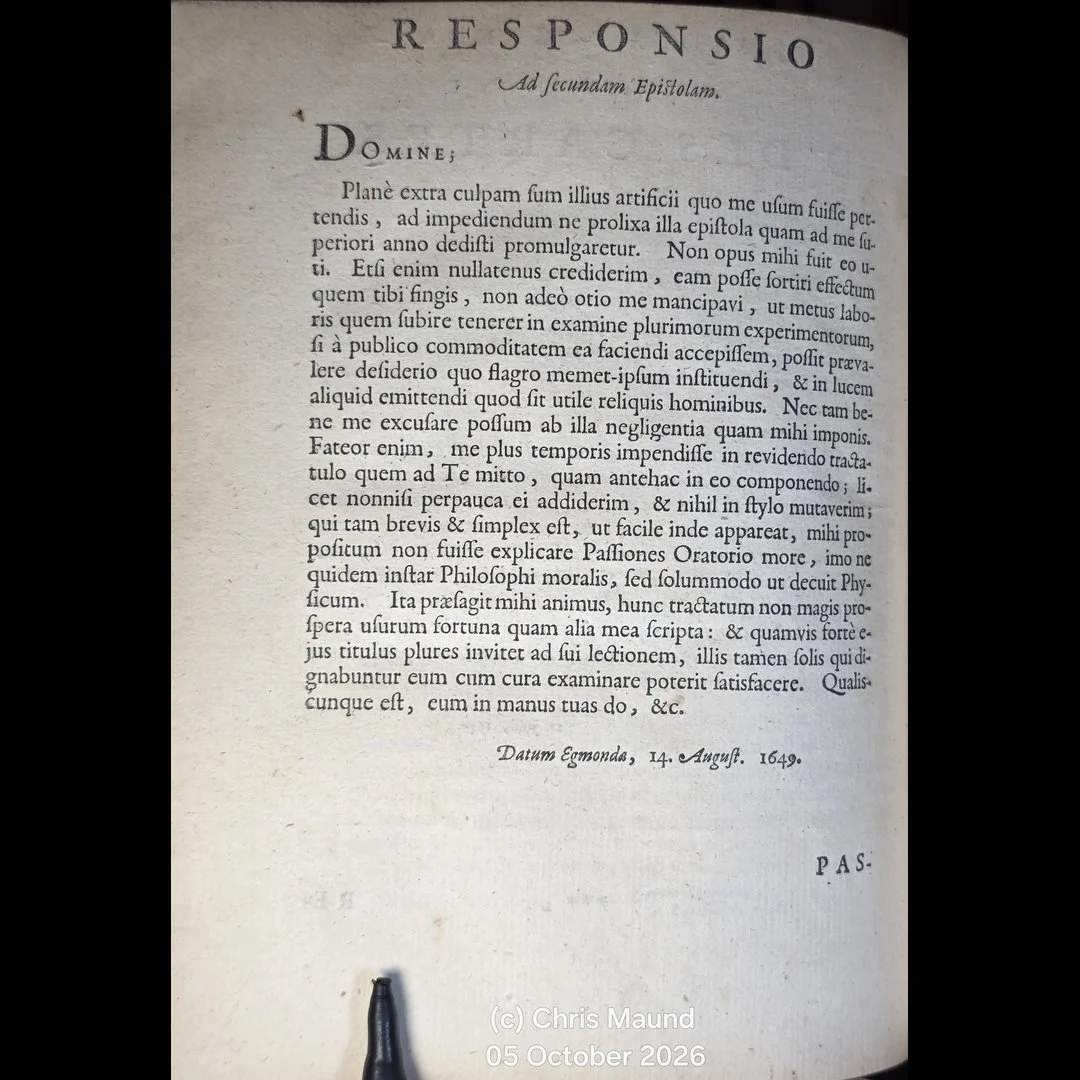 Image 74 of 88
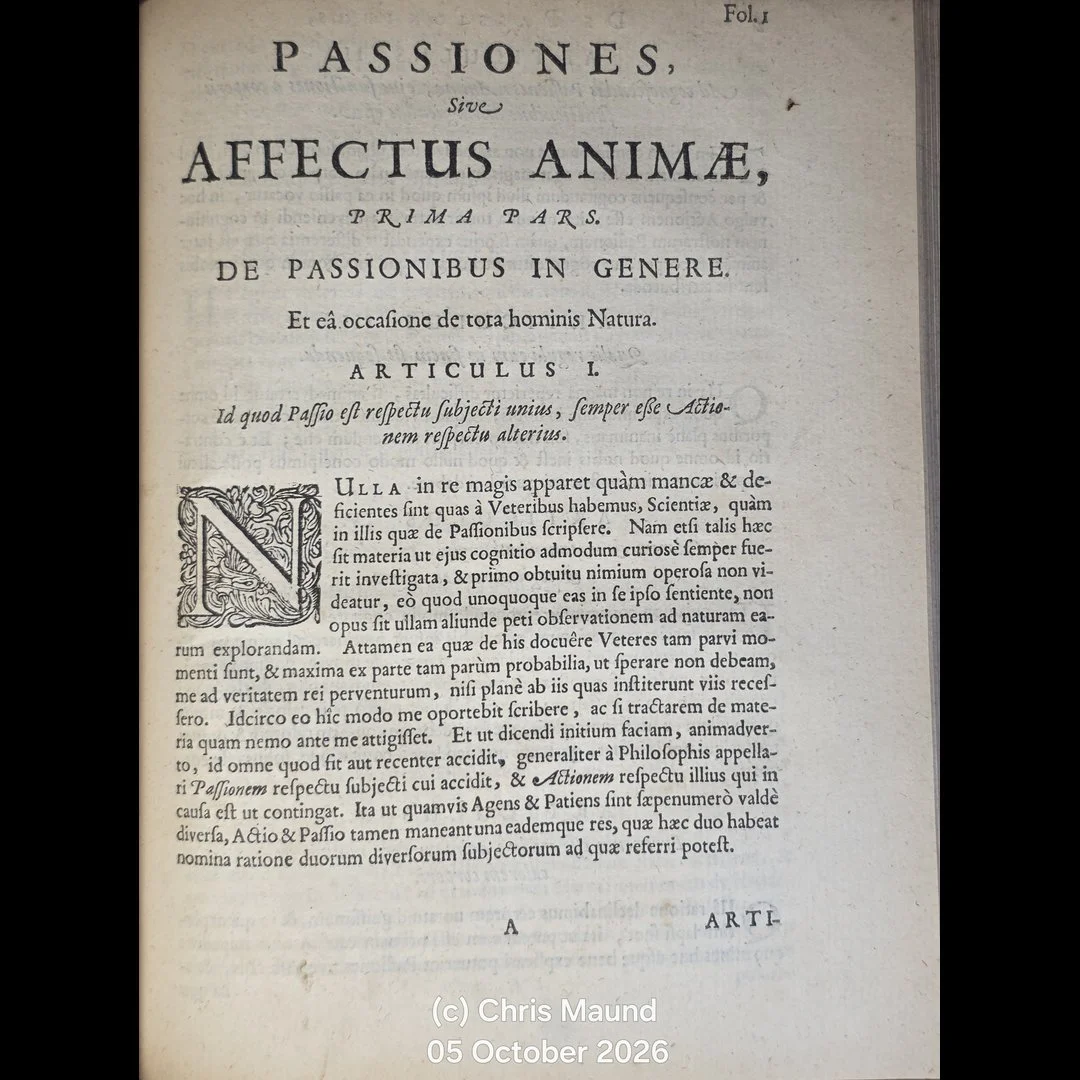 Image 75 of 88
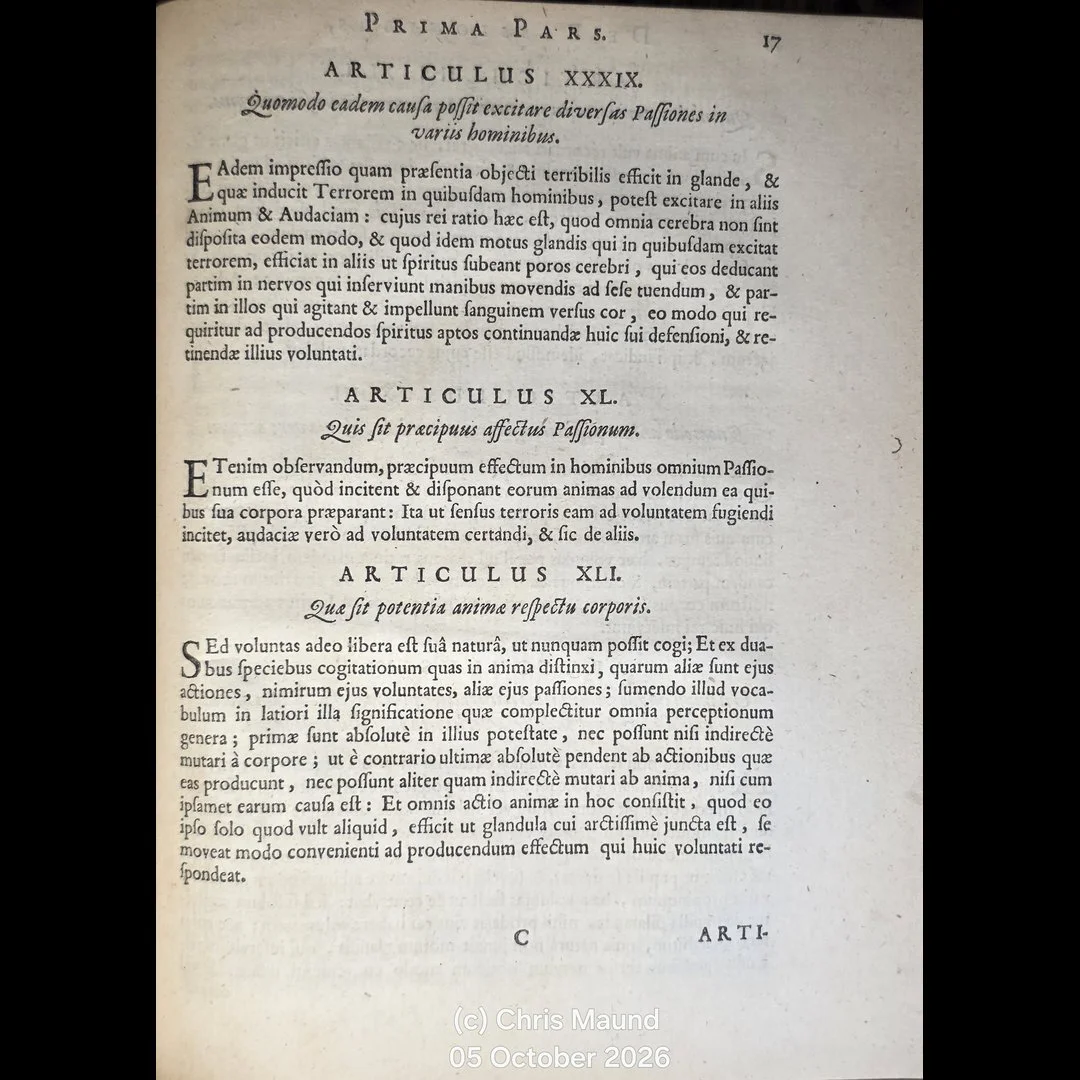 Image 76 of 88
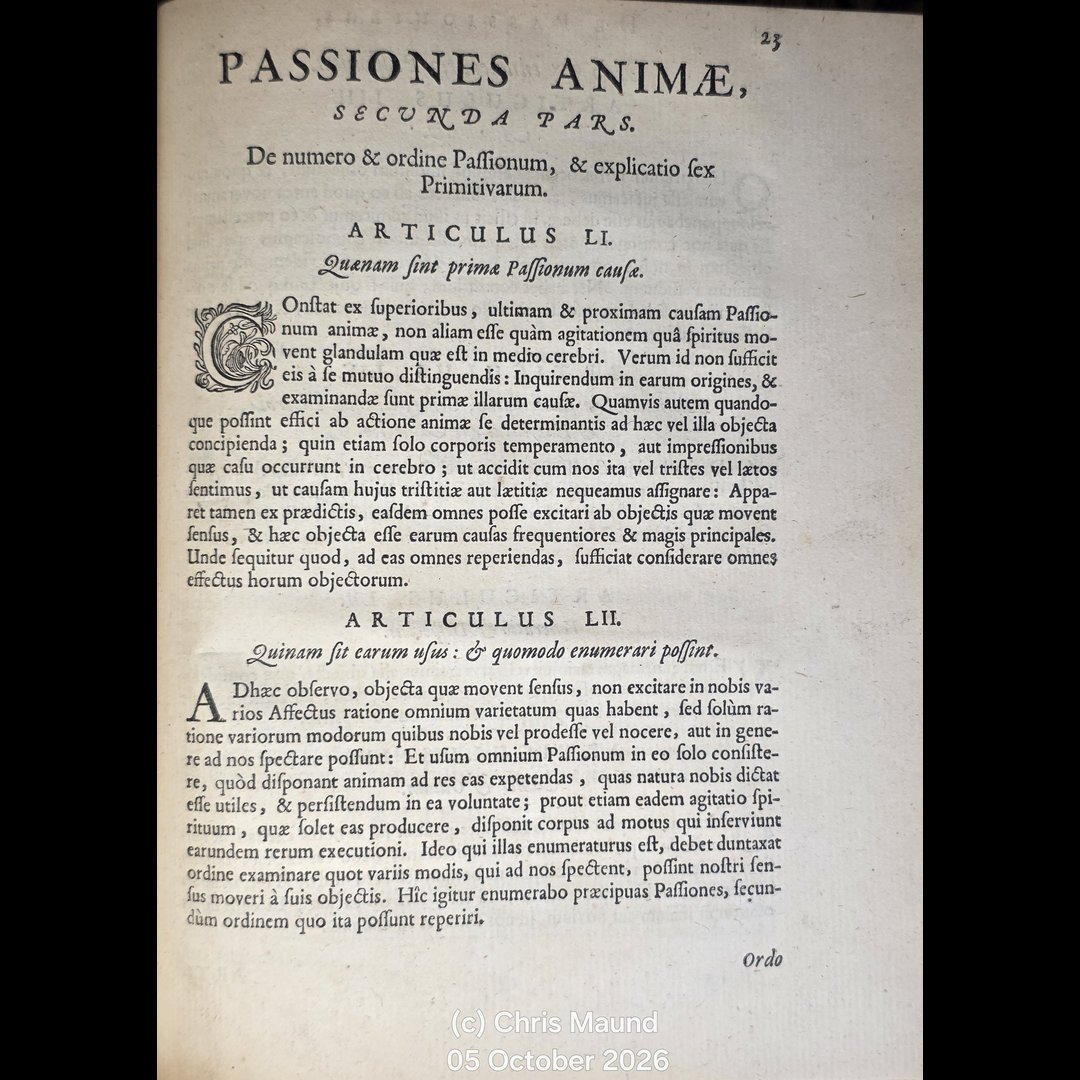 Image 77 of 88
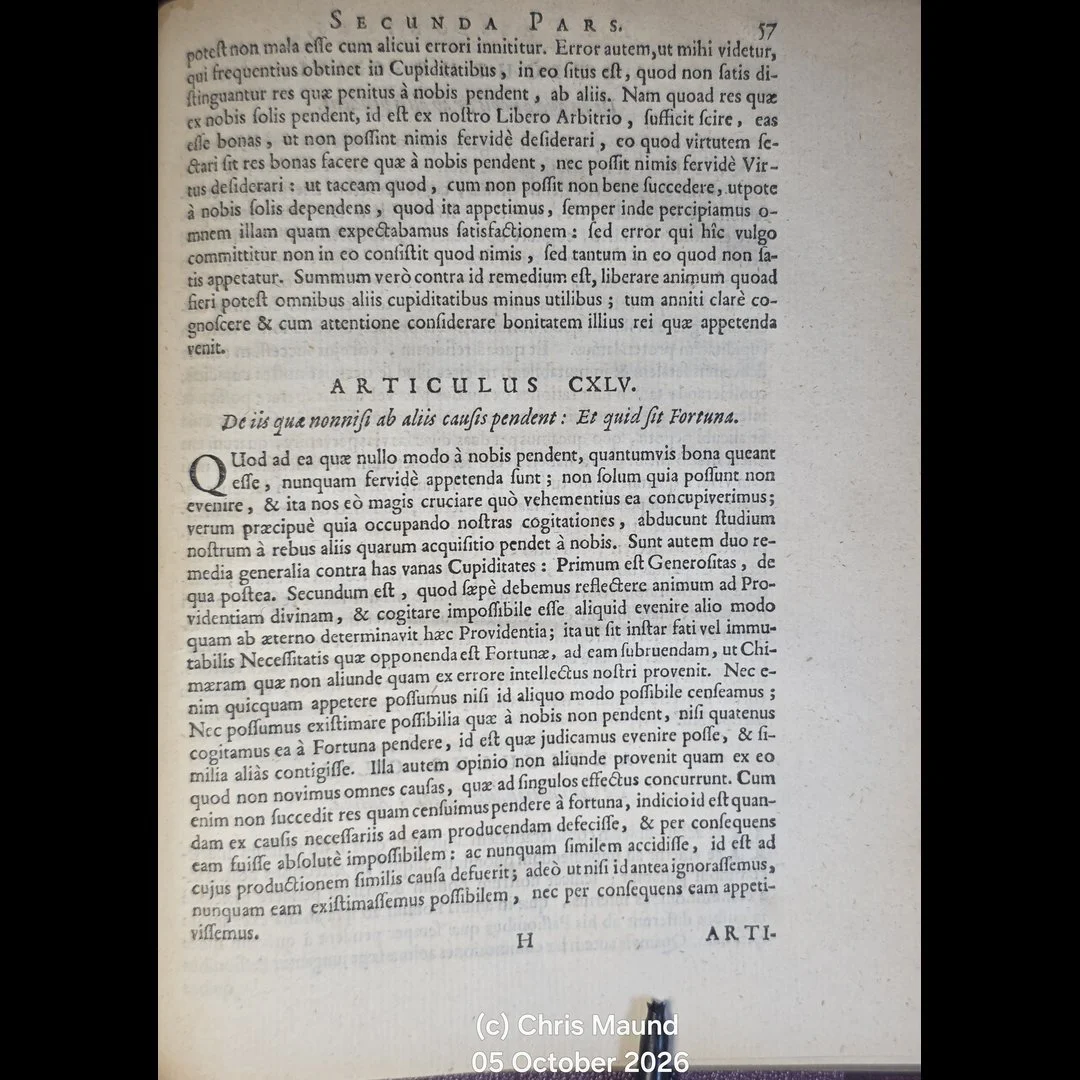 Image 78 of 88
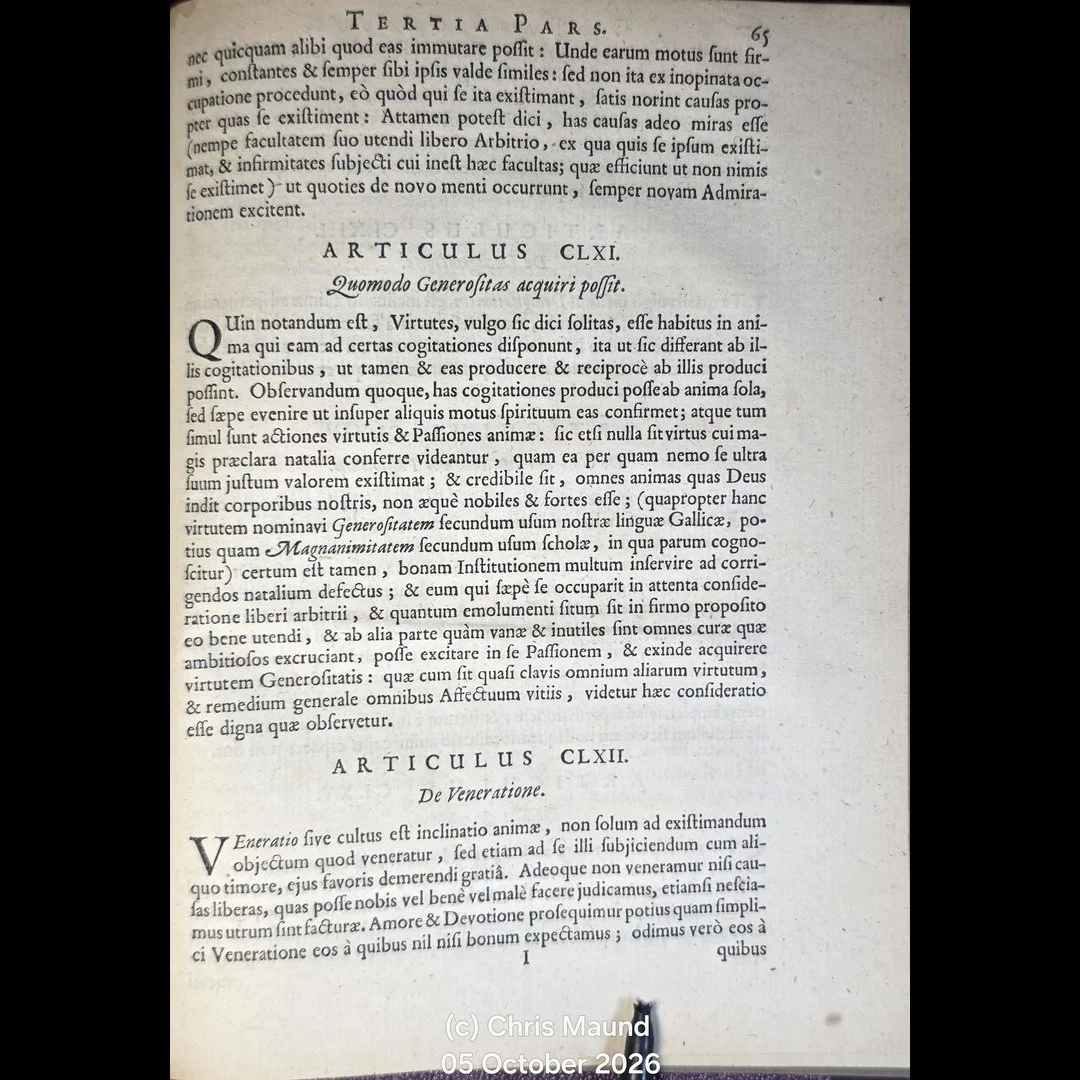 Image 79 of 88
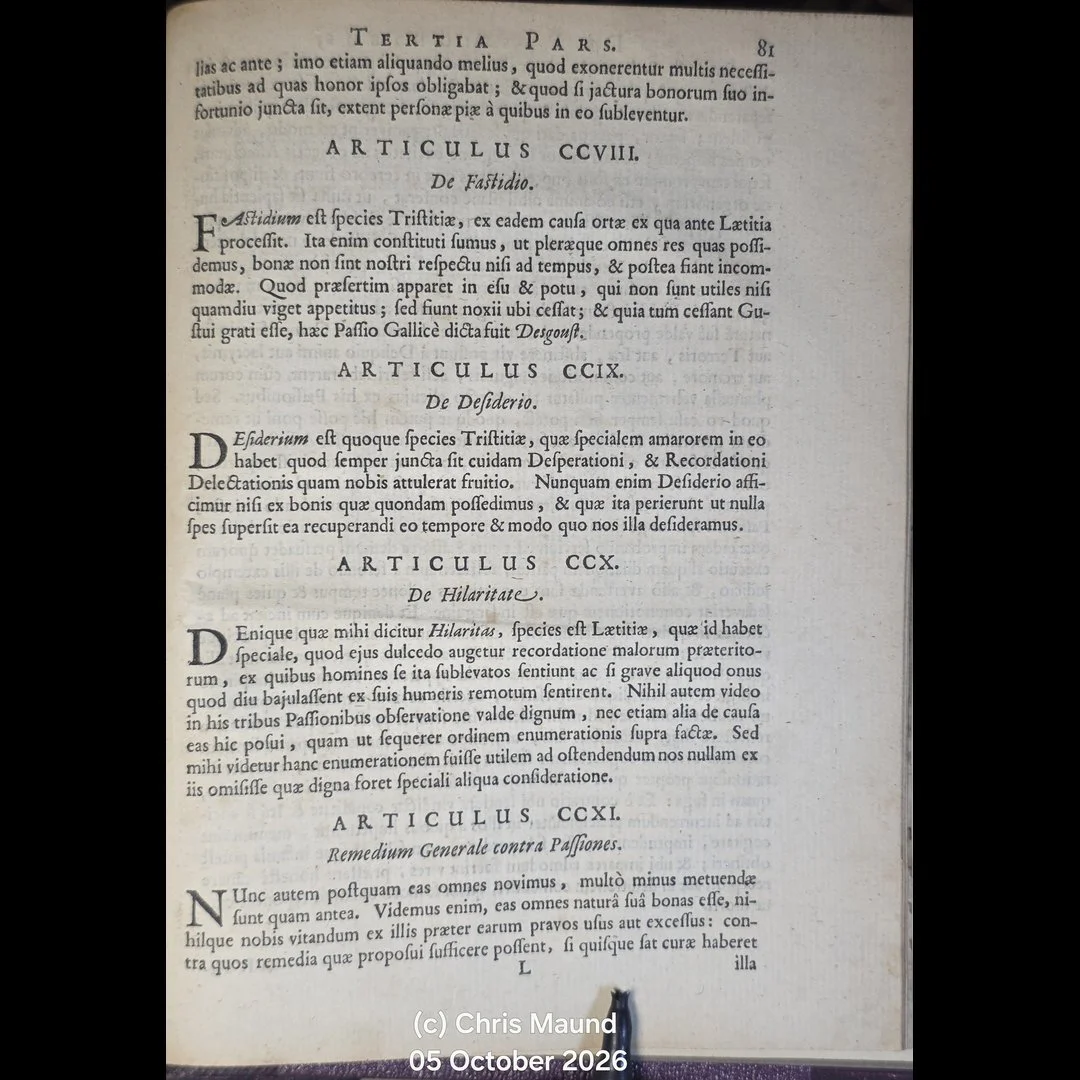 Image 80 of 88
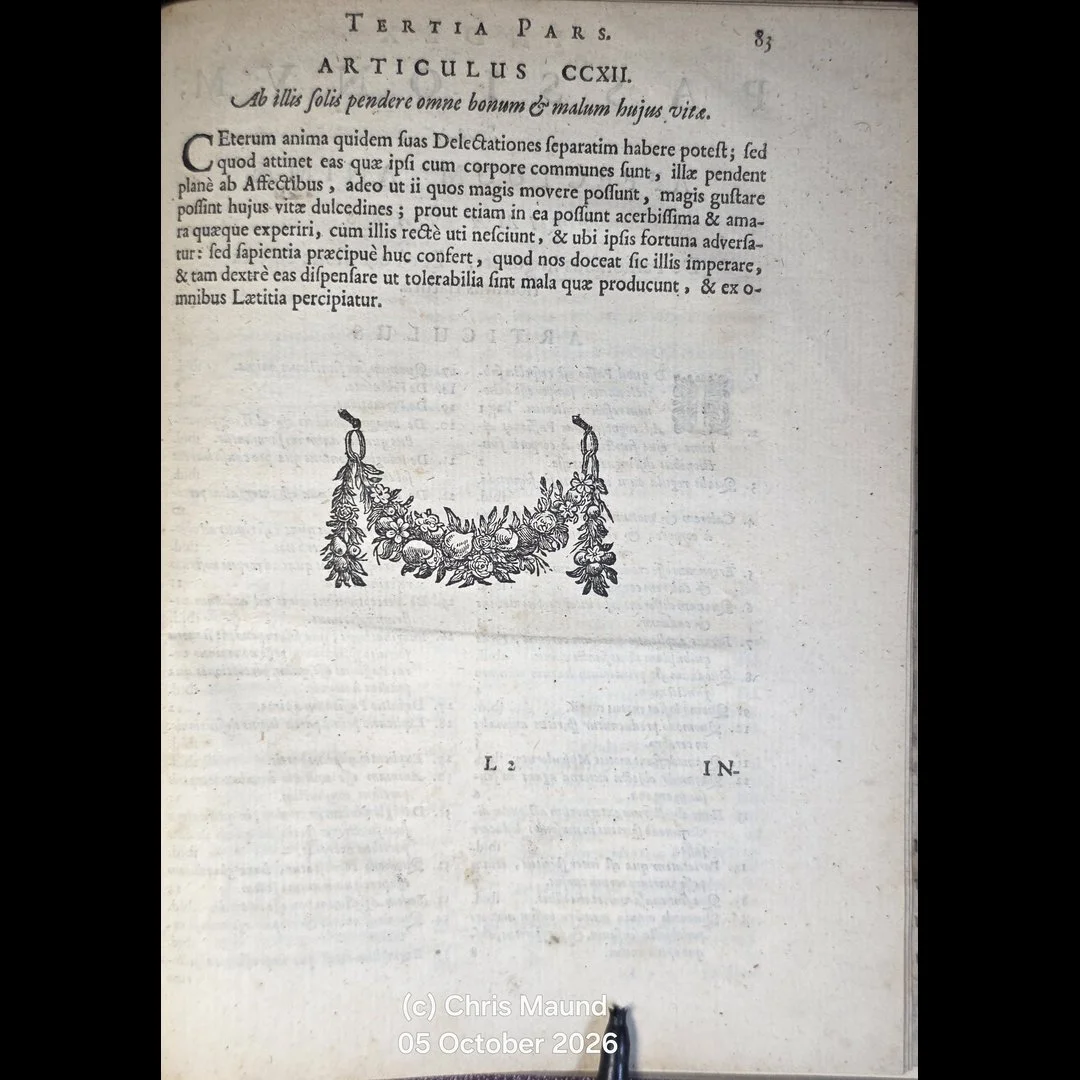 Image 81 of 88
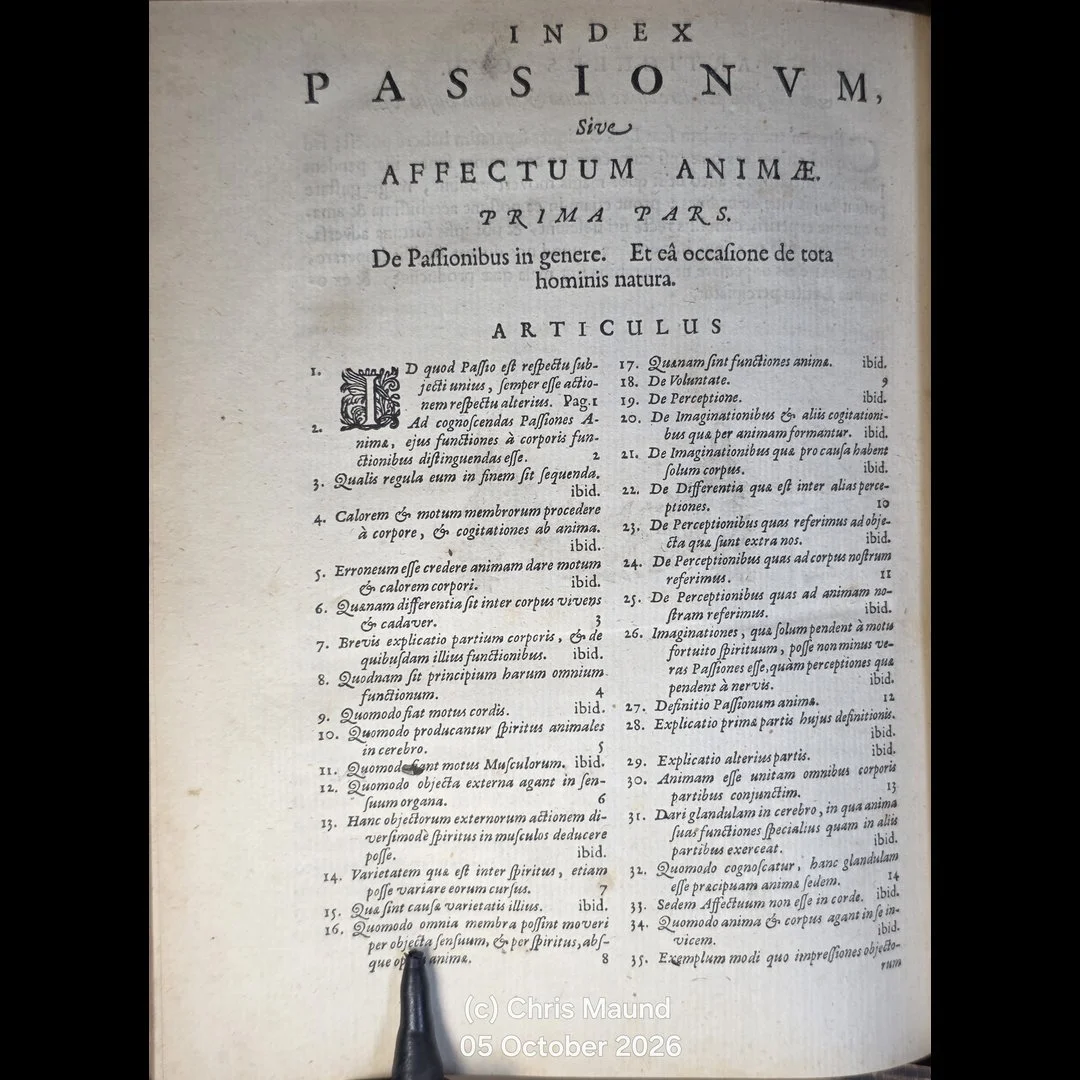 Image 82 of 88
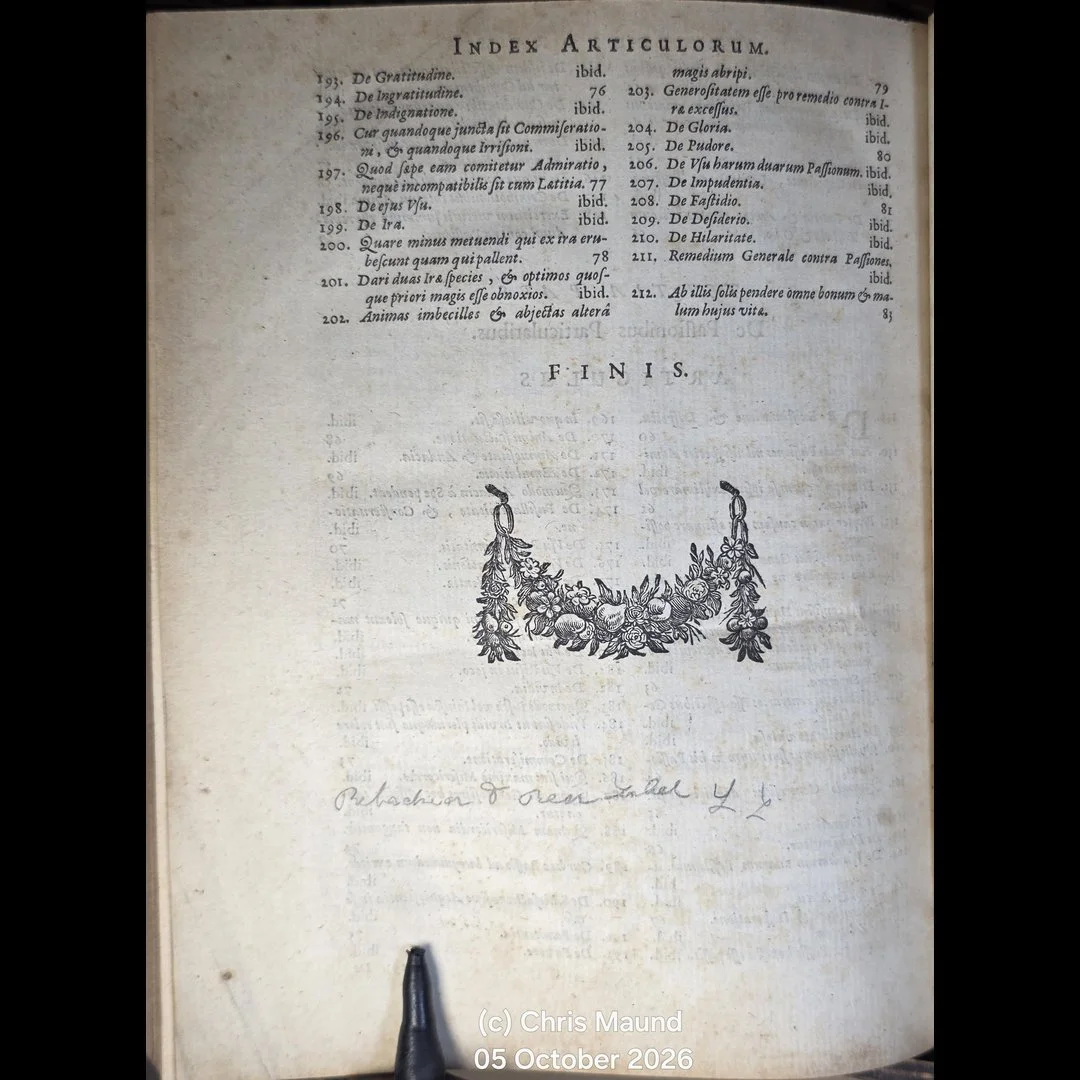 Image 83 of 88
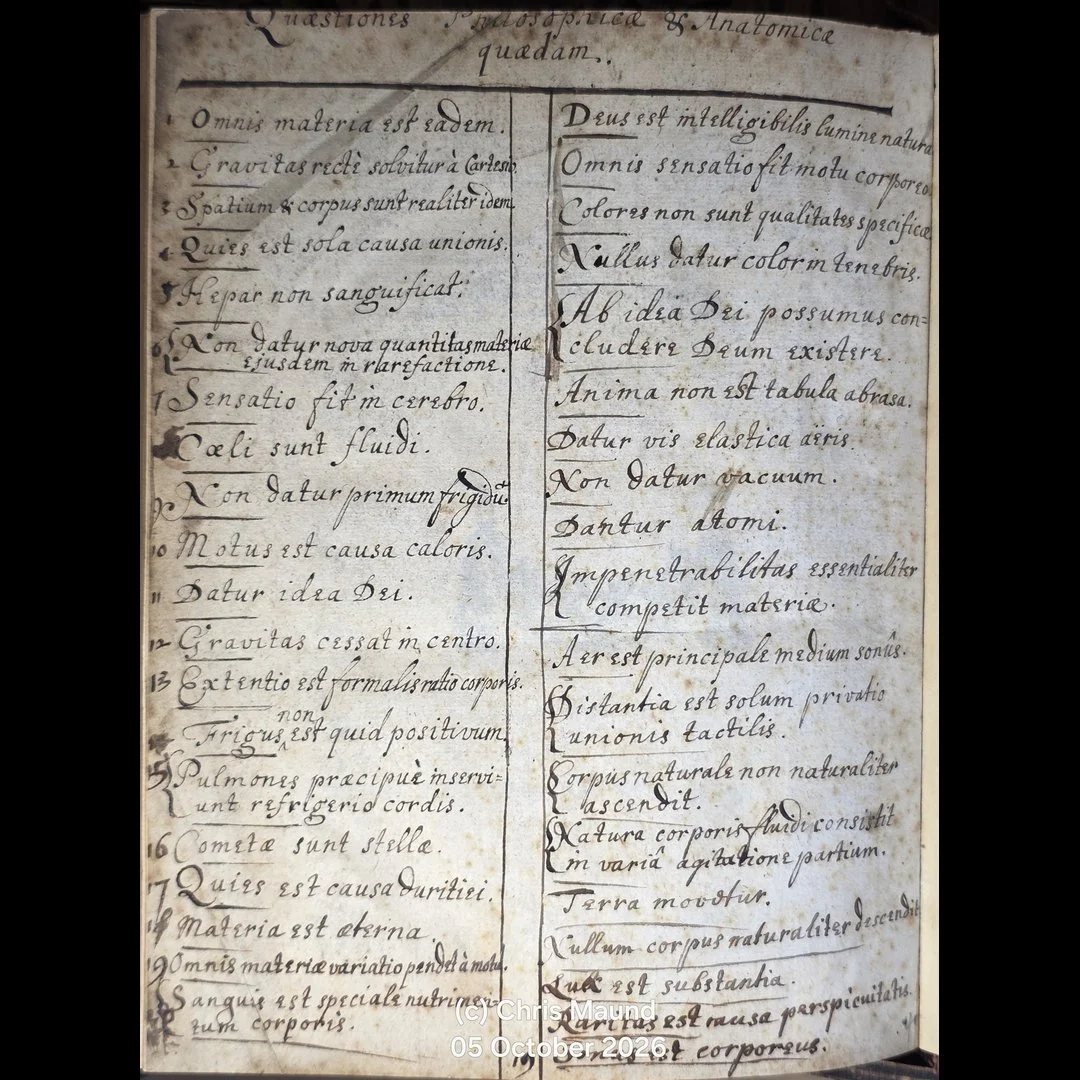 Image 84 of 88
 Image 85 of 88
 Image 86 of 88
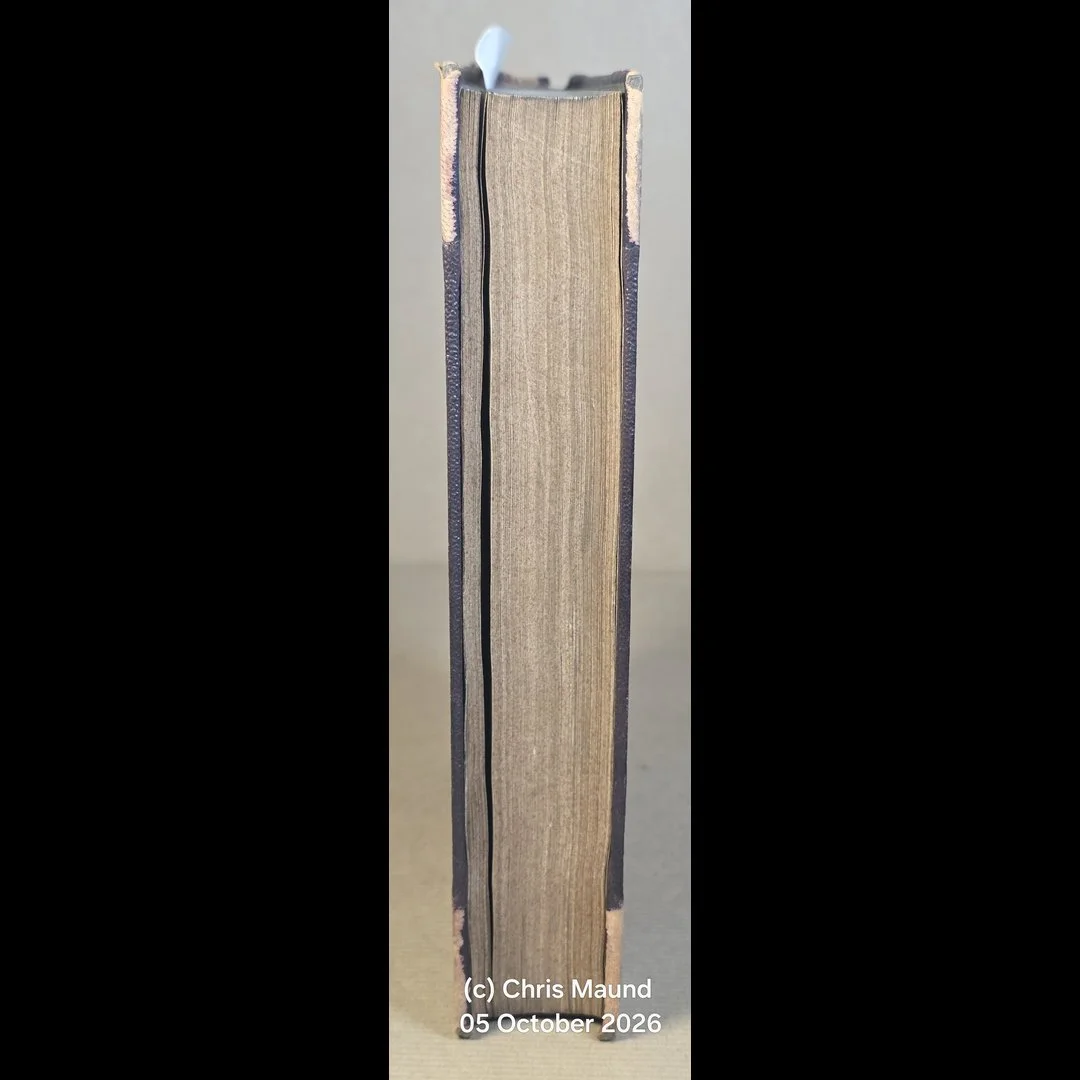 Image 87 of 88
 Image 88 of 88